How we make this list: we compare pricing pages, product documentation and public user reviews. Ratings come from G2, Capterra or Trustpilot, with the date we checked them.
Key takeaways
- Customer journey platforms split into three jobs: mapping the journey, measuring what customers actually do, and acting on that insight with messages or fixes.
- TheyDo, UXPressia, and Smaply are best for mapping and managing journeys as a shared source of truth, while Adobe, Contentsquare, and Amplitude are best for measuring behavior at scale.
- Braze and HubSpot close the loop by turning journey insight into triggered messages and campaigns, which mapping tools alone do not do.
- A map without live data goes stale fast, so check whether the platform can pull in metrics, feedback, and research evidence by stage.
- Price by editor, not by viewer, since mapping tools often charge for people who edit maps while many stakeholders only view them.
Quick comparison
| Tool | Best for | Starting price | Free plan |
|---|
 TheyDo | Enterprise journey management with shared context | See website | No |
 UXPressia | Teams that need maps, personas, and impact maps | See website | Yes |
 Smaply | Service design teams managing journey portfolios | See website | Yes |
 Adobe Customer Journey Analytics | Enterprises analyzing cross-channel journeys | See website | No |
 Braze | Cross-channel journey orchestration and messaging | See website | No |
 HubSpot Marketing Hub | Teams that want journeys inside a CRM platform | See website | Yes |
 Contentsquare | Digital teams finding friction on websites and apps | See website | Yes |
 Amplitude | Product teams analyzing in-product journeys | See website | Yes |
 Qualtrics XM | Enterprises linking feedback to journey outcomes | See website | No |
Is your product missing or out of date?
We review this list regularly. Vendors can request a listing, send updated pricing or ask about featured placement.
A customer journey platform should do more than draw a pretty map. It should help a team agree on what the journey is, show where customers struggle, and make it easier to fix the right stage first. The platforms below cover mapping, analytics, and orchestration, and the right pick depends on which of those jobs is currently missing in your team.
#1
TheyDo
Best for: Enterprise journey management with shared context
Visit theydo.com
Starting priceSee website
Free planNo
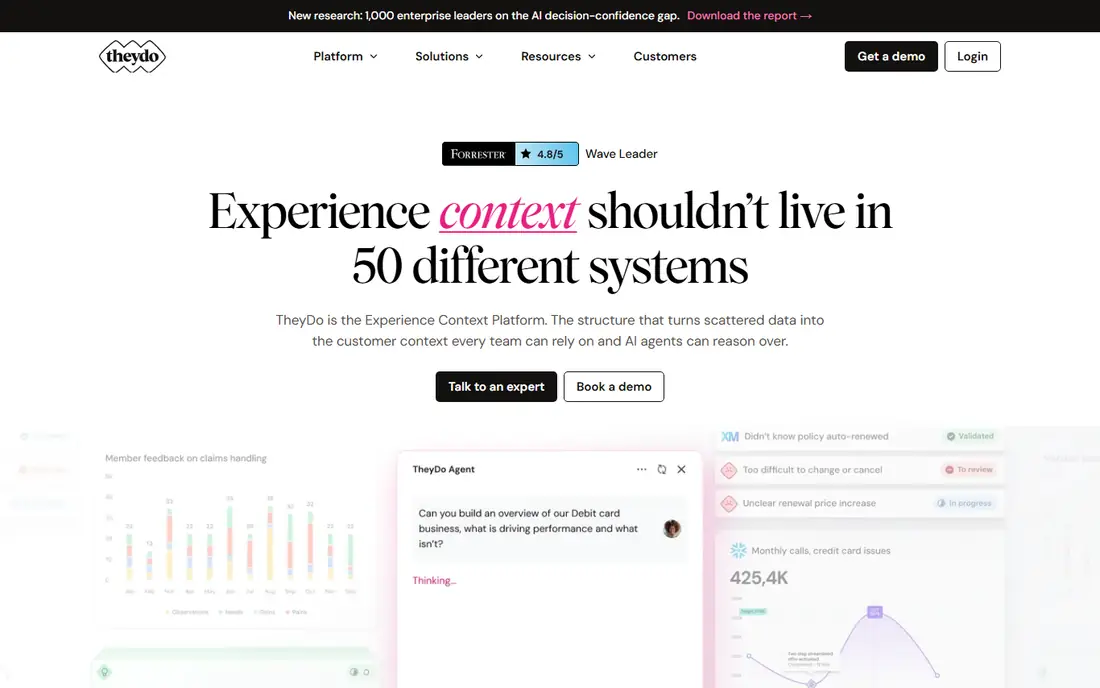
TheyDo treats journeys as a managed system, not as one-off diagrams. Research, metrics, and operational signals connect to journey stages, so teams can see evidence behind each pain point and track whether a fix changed the outcome. That structure helps large organizations where many teams touch the same customer journey and need one agreed view.
The tradeoff is scope and cost. TheyDo is built for CX programs with multiple journeys, owners, and governance needs, and pricing is quoted rather than published. A small team mapping one onboarding flow will likely find a lighter tool faster and cheaper.
What we like- Journey management at scale, links research and metrics to journeys, shared context across teams
Watch out for- Enterprise pricing and setup, more than a small team needs for a single map
Starting priceSee website
Free planYes
UXPressia gives UX, product, and CX teams a single place for journey maps, personas, and impact maps, with templates that speed up the first draft. Maps can be shared, commented on, and presented without rebuilding them in slide software, which helps when a journey needs approval from several stakeholders. Real-time data links let teams back a stage with web analytics or feedback, rather than opinion alone.
The free plan covers one project with limited maps and personas, which is enough to test the approach. Larger teams should check editor pricing and limits before rolling it out, since the cost rises with the number of people who create and edit maps, not with viewers alone.
What we like- Free plan for getting started, templates for maps and personas, data links from analytics and feedback tools
Watch out for- Paid features and editor limits matter as team size grows, analytics depth is lighter than dedicated product analytics
#3
Smaply
Best for: Service design teams managing journey portfolios
Visit smaply.com
Starting priceSee website
Free planYes
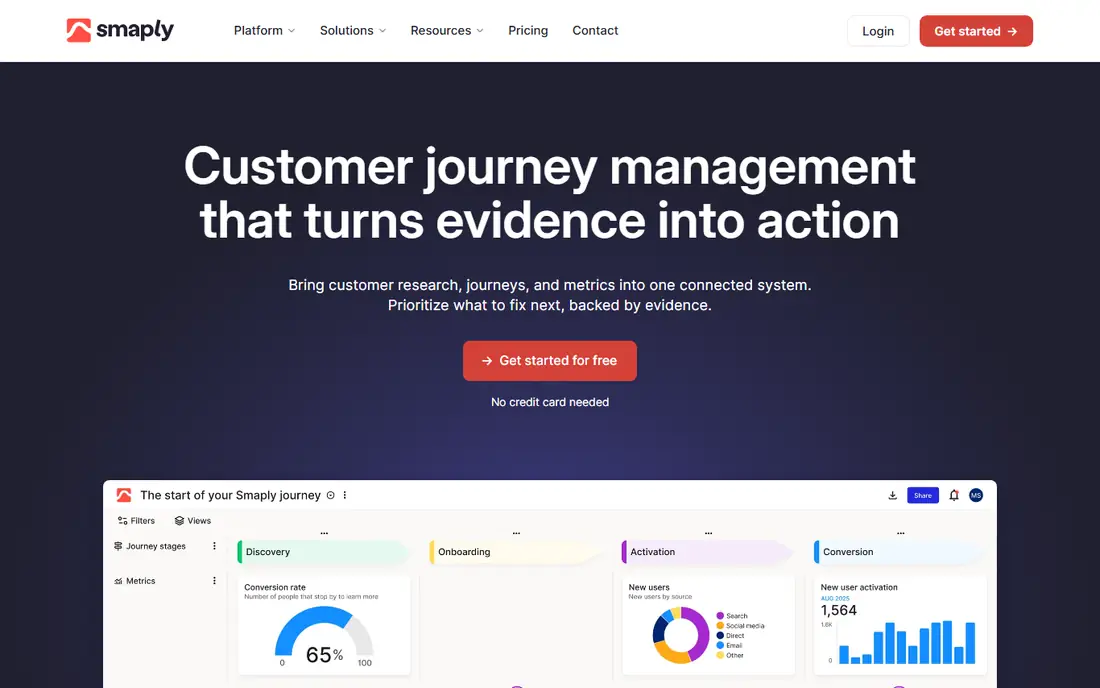
Smaply comes from service design practice, and it shows in how journeys are structured. Maps can be linked into hierarchies, so a high-level journey connects to detailed sub-journeys, and personas, stakeholder maps, and service blueprints sit in the same workspace. Metrics can be attached to stages, which helps teams prioritize fixes by impact rather than by the loudest complaint.
That depth suits CX teams that manage many journeys over time. Smaller teams may use only a fraction of the features at first, so start with one journey and one metric per stage, then expand the portfolio once the habit of updating maps is established.
What we like- Journey hierarchies, personas, service blueprints, metrics by stage, strong governance
Watch out for- Pricing varies by editor tier, and the full portfolio features suit larger CX practices
Starting priceSee website
Free planNo
Adobe Customer Journey Analytics answers a different question from mapping tools: what did customers actually do across channels, in what order, and where did they drop off. It pulls data from Adobe Experience Platform, so web, app, call center, and offline interactions can be analyzed as one journey rather than as separate channel reports. A B2B edition extends the same approach to buying groups and accounts.
The cost is complexity as well as price. Teams need clean, joined data and analysts who can build workspaces and segments, so it fits enterprises with data engineering support better than a small marketing team. For those teams, it is the strongest option when the journey question is about behavior at scale.
What we like- Cross-channel analysis across web, mobile, and offline data, strong governance, B2B edition for account journeys
Watch out for- Enterprise pricing and implementation, requires Adobe Experience Platform data setup
#5Braze
Best for: Cross-channel journey orchestration and messaging4.4/5 on
G2 (1,965 reviews, checked Oct 2026)
Visit braze.com
Starting priceSee website
Free planNo

Braze turns journey insight into action. Customer profiles update in real time, and teams can build multi-step journeys across email, SMS, push, and in-app messages, with branching based on behavior. Experimentation lets teams test message timing and content, and AI features help draft campaigns and optimize delivery.
Braze does not replace a mapping tool for research and service design, but it completes the loop that mapping tools leave open. Teams that already know their journey and need to run it at scale, with personalization and measurement, should shortlist Braze ahead of a pure mapping platform.
What we like- Real-time customer profiles, cross-channel messaging, experimentation and AI-assisted campaign building
Watch out for- Pricing is quoted, and the platform is built for engagement teams rather than journey mapping alone
#6HubSpot Marketing Hub
Best for: Teams that want journeys inside a CRM platform4.4/5 on
G2 (15,978 reviews, checked Oct 2026)
Visit hubspot.com
Starting priceSee website
Free planYes

HubSpot Marketing Hub suits teams that want journey thinking inside the system where contacts, campaigns, and deals already live. Workflows, email, landing pages, and reporting connect to CRM records, so a journey stage can trigger a message or a sales task without a separate integration project. Free tools cover basic marketing needs, which lowers the barrier for small teams.
The tradeoff is depth. HubSpot does not offer the journey governance, research repository, or service blueprinting of TheyDo or Smaply, and its analytics are marketing-centered rather than full cross-channel journey analytics. Choose it when CRM integration and execution matter more than specialist mapping.
What we like- Journeys tied directly to CRM contacts and campaigns, free tools to start, broad marketing and service features
Watch out for- Journey depth is lighter than specialist CX platforms, and advanced features require paid tiers
Starting priceSee website
Free planYes
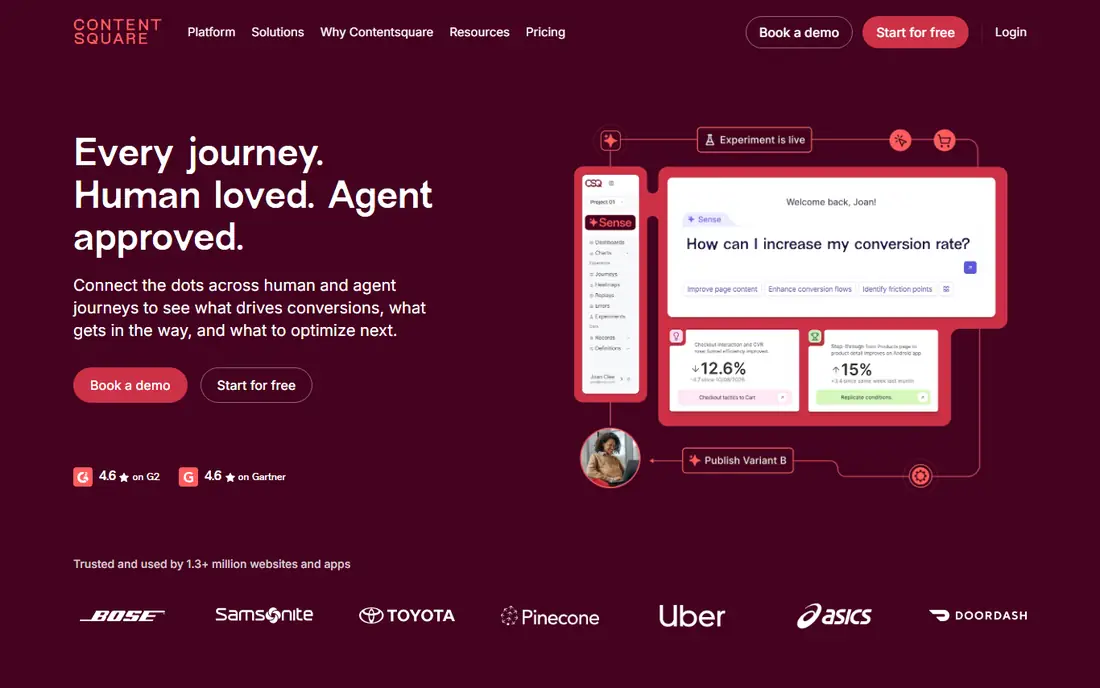
Contentsquare shows why customers struggle on a website or app, using journey analysis, heatmaps, and session replay to find friction and drop-off points. Teams can see which paths lead to conversion and which end in errors, rage clicks, or exits, then prioritize fixes by business impact. A free starting plan with included sessions makes it easy to test on a real site before committing.
The limit is scope. Contentsquare excels at digital journeys, but a full customer journey that includes stores, calls, and support needs data from those channels too. Pair it with a mapping tool or a CRM view when the journey extends beyond the screen.
What we like- Session replay, heatmaps, journey analysis, free plan with sessions included
Watch out for- Focus is digital behavior, so offline journey stages need other data sources
#8Amplitude
Best for: Product teams analyzing in-product journeys4.5/5 on
G2 (2,997 reviews, checked Oct 2026)
Visit amplitude.com
Starting priceSee website
Free planYes
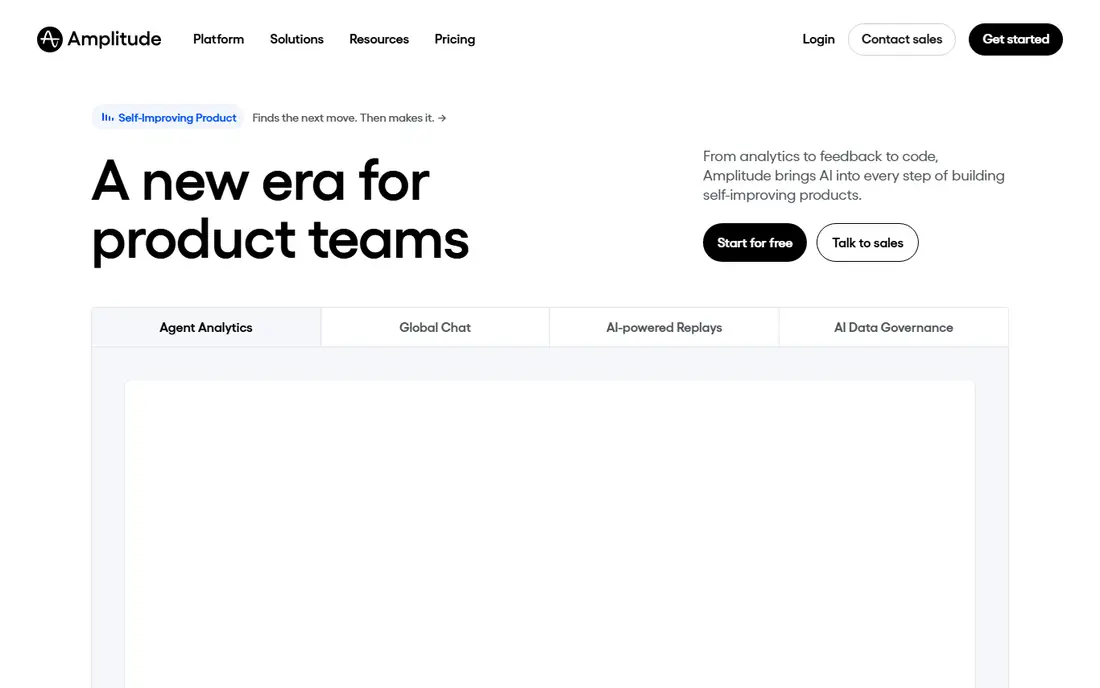
Amplitude helps product teams understand what users do inside a product, from first activation to retention and expansion. Funnels show where users drop off, cohorts show how behavior changes over time, and experimentation links a change to an outcome. The free plan, with a large monthly event allowance, lets small product teams start without a budget discussion.
The work behind the value is instrumentation. Events must be named consistently and tracked correctly, or the journey view will mislead. Teams with strong product analytics practice will get the most from Amplitude, while teams that need a visual journey map should pair it with UXPressia or Smaply.
What we like- Event-based product analytics, funnel and retention analysis, generous free plan
Watch out for- Needs clean event tracking to deliver value, and it is analytics rather than journey mapping or messaging
Starting priceSee website
Free planNo
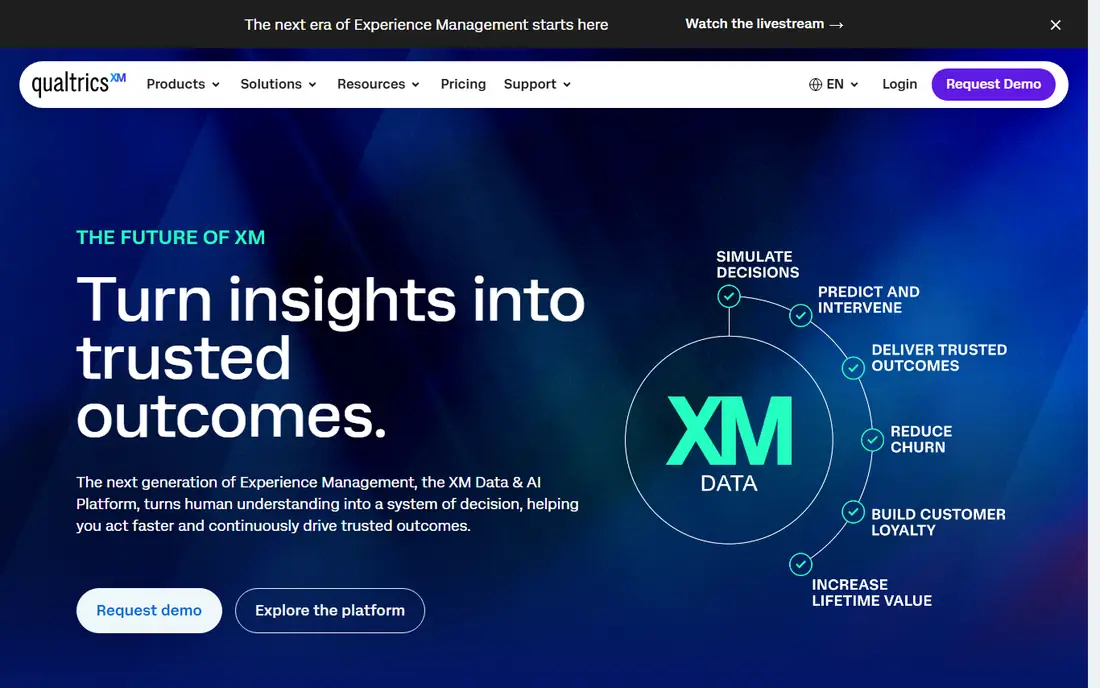
Qualtrics XM collects feedback across touchpoints and links it to journey stages, so teams can see not only what customers did, but what they said about each stage. Text analysis surfaces themes in open feedback, and predictive features flag customers heading toward churn or dissatisfaction. That combination suits enterprises running voice-of-customer programs across many channels.
Qualtrics is not a journey mapping tool on its own, and it does not send the triggered messages that Braze handles. Its strength is evidence: structured and unstructured feedback tied to the journey, which gives mapping and analytics teams the "why" behind the numbers.
What we like- Large-scale feedback collection, text and sentiment analysis, journey-linked experience programs
Watch out for- Enterprise pricing and setup, and it is feedback-centered rather than a mapping or orchestration tool
How we chose
We reviewed vendor homepages, product documentation, and public reviews on G2 and Capterra, and we checked each homepage to confirm the product still exists and fits journey mapping, journey analytics, or journey orchestration. Platforms were kept only if they cover at least one of those jobs in a current product, rather than only mentioning journeys in marketing copy. Pricing is marked as See website where vendors quote by usage, editors, or enterprise scope, rather than publishing a single starting price that would mislead buyers.
What to check before you buy
A journey platform only helps if the team updates it and acts on it, so test the working habits, not just the demo.
Name the job first
Decide whether you need a map, a measurement, or an action. A team with conflicting journey versions needs mapping and governance. A team with maps but no data needs analytics. A team with insight but no follow-through needs orchestration. Buying the wrong job wastes a year.
Pilot one journey end to end
Pick the journey with the highest revenue or retention impact, such as checkout, onboarding, or renewal. Map it, attach one metric and one feedback source per stage, and ship one fix. If the platform did not make that cycle easier in 60 days, it is not the right fit yet.
Check data and editor costs
Ask how data connects, whether live metrics update by stage, and how many editors are included. Mapping tools charge per editor, analytics tools charge by events or sessions, and orchestration tools charge by contacts or messages. Model the cost at your real team size, not at the demo size.
Assign an owner per journey
Every journey needs a named owner who updates the map, reviews the metrics, and tracks fixes. Without an owner, maps go stale and dashboards go unread. Confirm that the platform supports ownership, status, and change history, so accountability is visible.
Frequently asked questions
What is a customer journey platform?
It is software that helps teams map, measure, or act on the path customers take from first contact to purchase and beyond. Some platforms focus on visual maps and research, others on behavior analytics, and others on triggered messages across channels. Many teams use two types together.
Do I need a journey platform if I already use analytics?
Analytics shows what happened, but it rarely shows the agreed journey, the research behind each stage, or the fixes owned by each team. A journey platform adds that shared view and accountability. Teams with simple, single-channel journeys may manage with analytics alone, while multi-team journeys usually need more.
How much do customer journey platforms cost?
Pricing varies by model: mapping tools often charge per editor, analytics tools by events or sessions, and orchestration tools by contacts or messages. Several tools on this list offer free plans, while enterprise platforms like Adobe, TheyDo, and Qualtrics price by quote. Ask for a quote at your real usage level.
Which platform is best for a small team?
UXPressia and Smaply are strong starting points for small teams that need maps and personas, and Contentsquare and Amplitude offer free plans for digital and product analytics. HubSpot fits small teams that already use its CRM. Start with one journey and one platform, then add a second only when the first habit sticks.
Can a journey platform replace a CRM?
No. A CRM stores customer records, deals, and interactions, while a journey platform organizes those interactions into stages, evidence, and actions. HubSpot is the closest overlap on this list, since its CRM and marketing tools sit together, but specialist mapping and analytics platforms still complement a CRM rather than replacing it.
How do I keep journey maps from going stale?
Attach live metrics and feedback to each stage, assign an owner per journey, and review the map on a fixed cadence, such as monthly for high-impact journeys. A map that no one updates becomes a poster, so treat the review cycle as part of the purchase decision, not as an afterthought.
Sources we checked (11)
- https://www.theydo.com
- https://uxpressia.com
- https://www.smaply.com
- https://business.adobe.com/products/analytics/customer-journey-analytics.html
- https://braze.com
- https://www.hubspot.com
- https://www.contentsquare.com
- https://amplitude.com
- https://www.qualtrics.com
- https://www.itechguides.com/best/customer-journey-mapping-software/
- https://vatask.com/blog/software-development/customer-journey-mapping-tools
Is your product missing or out of date?
We review this list regularly. Vendors can request a listing, send updated pricing or ask about featured placement.

Shihab Mia · Founder, Rankite
Shihab has 5+ years in B2B and SaaS SEO. He writes Rankite's software buying guides from pricing pages, documentation and public user reviews. More about Shihab.