How we make this list: we compare pricing pages, product documentation and public user reviews. Rankite is independent; if a vendor ever pays for a featured spot, that listing is clearly labeled Partner.
Key takeaways
- Zendesk ($55/agent/month Suite Team, billed annually) remains the default for mid-market support teams: fast to deploy, strong AI agents, transparent pricing.
- Freshdesk ($19/agent/month Growth) undercuts Zendesk at the entry level and suits small teams that want multichannel ticketing live fast, but AI costs stack up.
- HubSpot Service Hub (from $20/month Starter, with free tools) is the pick for companies already on HubSpot that want service inside the same CRM.
- Qualtrics and Medallia are the enterprise experience-management platforms for voice-of-customer programs, not help desks; expect custom quotes and months-long implementations.
Quick comparison
| Tool | Best for | Starting price | Free plan |
|---|
 Zendesk Zendesk | Mid-market support teams that need to move fast | $55 per agent per month (Suite Team, billed annually) | Free trial (14 days) |
 Freshdesk Freshdesk | Small teams that want the most for the least | $19 per agent per month (Growth, billed annually) | Free trial (14 days) |
 HubSpot Service Hub HubSpot Service Hub | Companies already running on HubSpot | $20 per month (Starter); free service tools available | Yes |
 Qualtrics Qualtrics | Enterprise experience management programs | See website (custom quote) | No |
 Medallia Medallia | Large-scale voice-of-customer programs | See website (custom quote) | No |
 Salesforce Service Cloud Salesforce Service Cloud | Enterprises standardized on Salesforce | See website | Free trial |
 Intercom Intercom | Conversational support for SaaS companies | See website | Free trial |
 Zoho Desk Zoho Desk | Small teams that need a free or cheap help desk | Free for 3 users; paid plans from $14 per user per month | Yes |
 Birdeye Birdeye | Multi-location businesses managing reputation | See website | No |
Is your product missing or out of date?
We review this list regularly. Vendors can request a listing, send updated pricing or ask about featured placement.
A 200-person e-commerce company in Texas was answering customer questions across five inboxes, two chat tools, and a phone system nobody monitored after 6 p.m. Response times averaged eleven hours, and the support lead could not say which issues recurred most because every channel kept its own records. They consolidated onto one customer experience platform, and within a quarter, first-response time fell under two hours. The product did not change. The company could finally see its customers.
Customer experience platforms split into two families that buyers often confuse. Support platforms (Zendesk, Freshdesk, Intercom) handle the conversations: tickets, chat, and phone. Experience management platforms (Qualtrics, Medallia) measure the experience: surveys, sentiment, and voice-of-customer programs across every touchpoint. Most small and mid-size companies need the first family; enterprises with formal CX programs need both.
The nine tools below cover both families for US companies in 2026. Pricing reflects published plans as of September and October 2026.
#1
Zendesk
Best for: Mid-market support teams that need to move fast
Visit zendesk.com
Starting price$55 per agent per month (Suite Team, billed annually)
Free planFree trial (14 days)
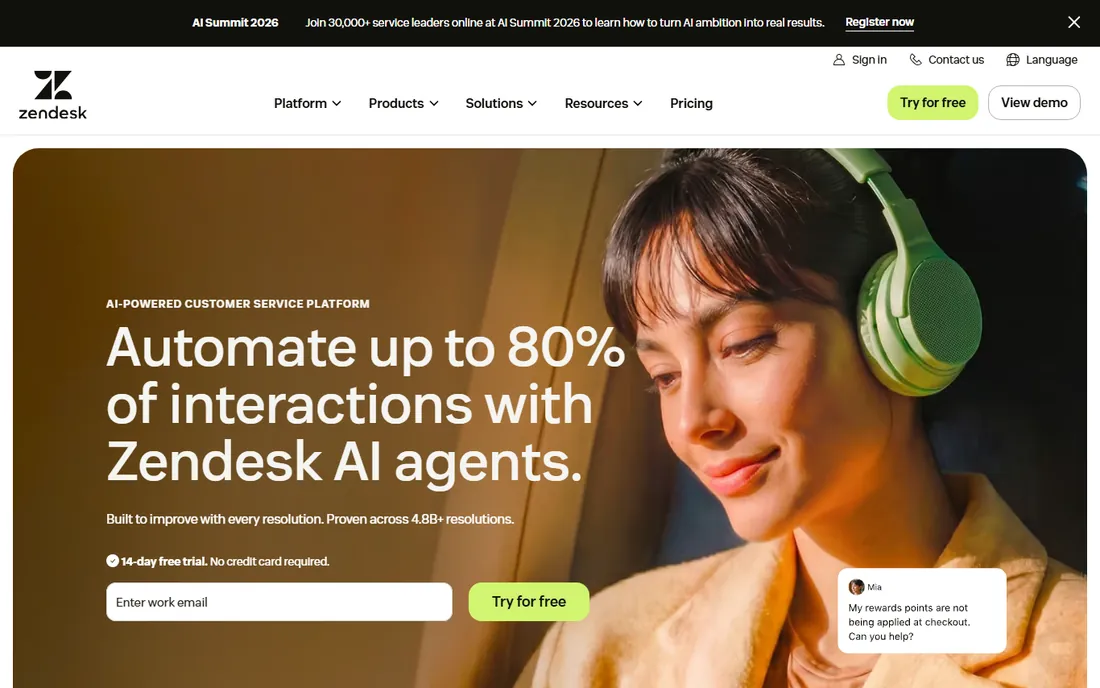
Zendesk is the default choice for mid-market support teams for a simple reason: it goes live in weeks, not months, and agents like using it. The Suite Team plan at $55 an agent a month bundles ticketing, messaging, live chat, and voice, and the 2026 AI agent suite handles FAQ-style tickets well when the knowledge base is maintained. For a growing company that needs professional support operations without an implementation project, it is the safest bet.
The costs compound as the team grows. Per-seat pricing gets expensive past 50 or so agents, and the advanced AI features, workforce management, and quality tools stack on top of the base license. Zendesk is priced for the mid-market and shows it at enterprise scale. It remains the best balance of capability, speed, and price for teams between five and fifty agents.
What we like- Fastest deployment of the serious platforms
- Strong AI agent tooling included
- Transparent published pricing tiers
Watch out for- Per-seat costs scale poorly past 50 agents
- Advanced AI and workforce features are paid add-ons
- Weaker cross-department workflows than Salesforce
Starting price$19 per agent per month (Growth, billed annually)
Free planFree trial (14 days)
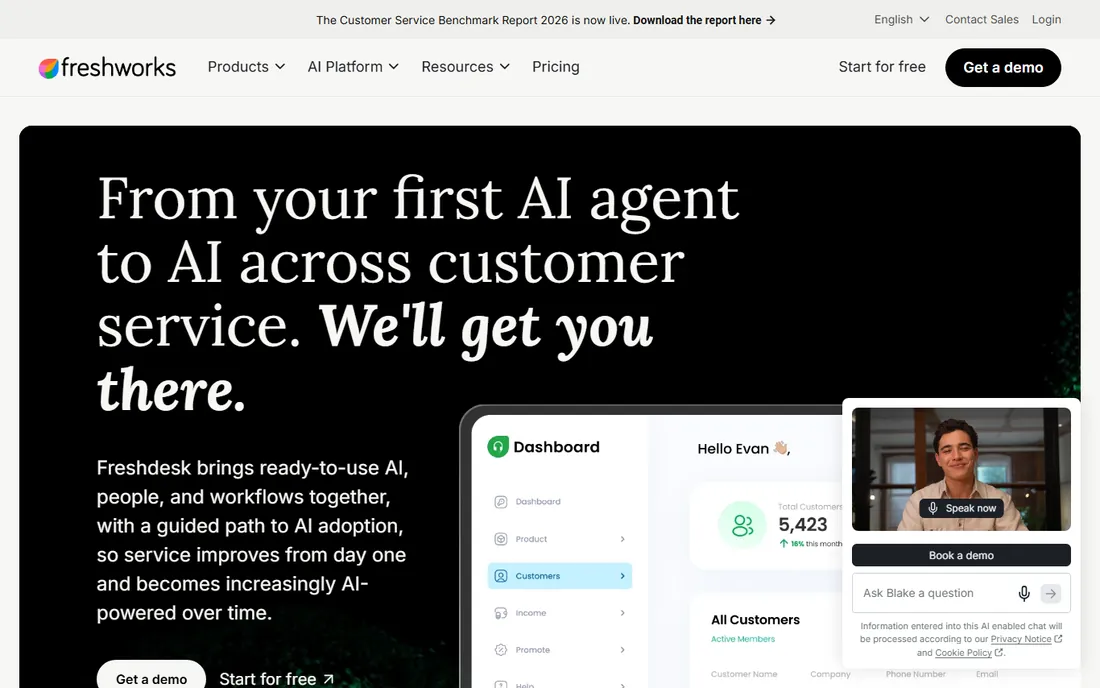
Freshdesk wins the entry-price comparison cleanly: Growth at $19 an agent a month covers ticketing, knowledge base, and automations for less than half of Zendesk's Suite Team. Setup takes an afternoon, and the Freshdesk Omni line adds chat, messaging, and phone at $29 an agent on Growth for teams that need omnichannel. Small and mid-market teams that value speed and price over maximum depth land here.
The honest math includes the AI meter. Freddy AI Copilot costs $29 an agent a month on top of the plan, and AI Agent sessions run $49 per 100 after a one-time 500-session allowance. A 20-agent team on Pro with Copilot pays $84 an agent before any AI sessions. Freshdesk is still cheaper than Zendesk at most configurations, but buyers should price the AI they will actually use, not just the seats.
What we like- Cheapest entry price of the serious help desks
- Quick setup with core ticketing done well
- Omni plans add chat and phone affordably
Watch out for- No real free plan in 2026
- AI costs (Copilot $29/agent, per-session AI Agent fees) stack fast
- Key features gated behind the $55 Pro tier
#3
HubSpot Service Hub
Best for: Companies already running on HubSpot
Visit hubspot.com
Starting price$20 per month (Starter); free service tools available
Free planYes
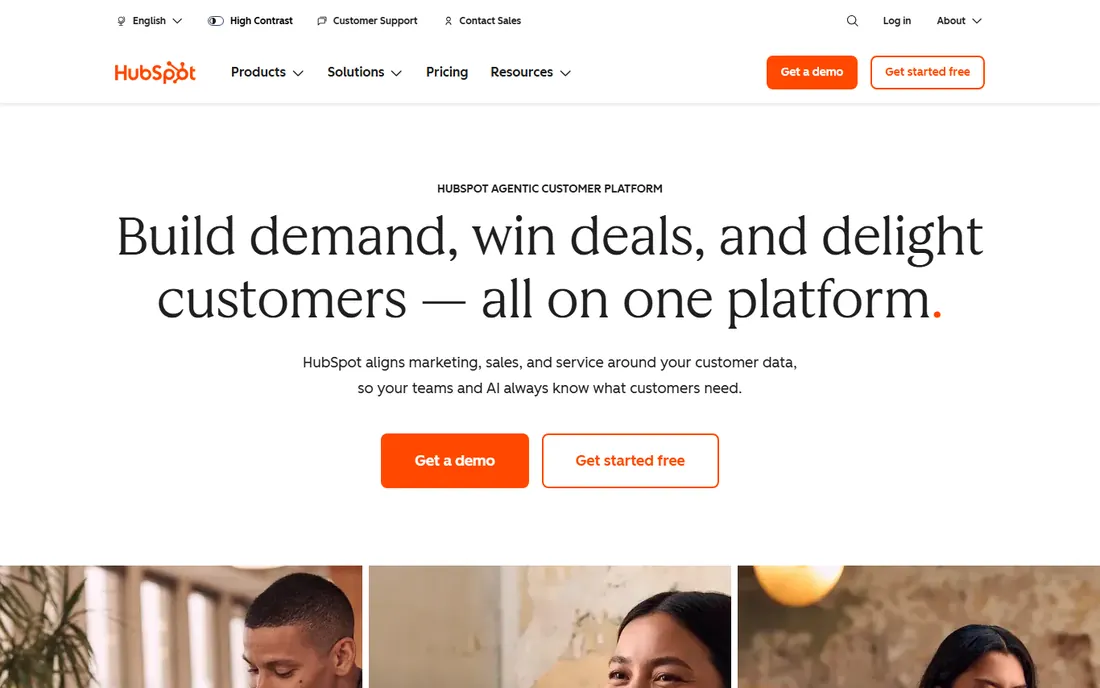
HubSpot Service Hub makes the most sense inside a HubSpot operation, where support tickets, deals, and marketing data share one CRM. That unified view is genuinely valuable: support sees the customer's purchase history and lifecycle stage without integrations. The free service tools handle basic ticketing, and Starter at $20 a month adds the essentials for small teams.
Bought as a standalone help desk, the value fades. Professional and Enterprise tiers carry mandatory onboarding fees ($1,500 and $3,500 respectively) and the per-seat costs climb toward Zendesk territory without matching its depth. It is the right pick for the HubSpot-committed company that wants service in the same system. It is the wrong pick as a first help desk for a company not otherwise on HubSpot.
What we like- Service data lives in the same CRM as sales and marketing
- Free tools cover ticketing basics
- Fast implementation
Watch out for- Advanced features require expensive Professional and Enterprise tiers
- Mandatory onboarding fees on higher tiers
- Weaker as a standalone help desk
Starting priceSee website (custom quote)
Free planNo
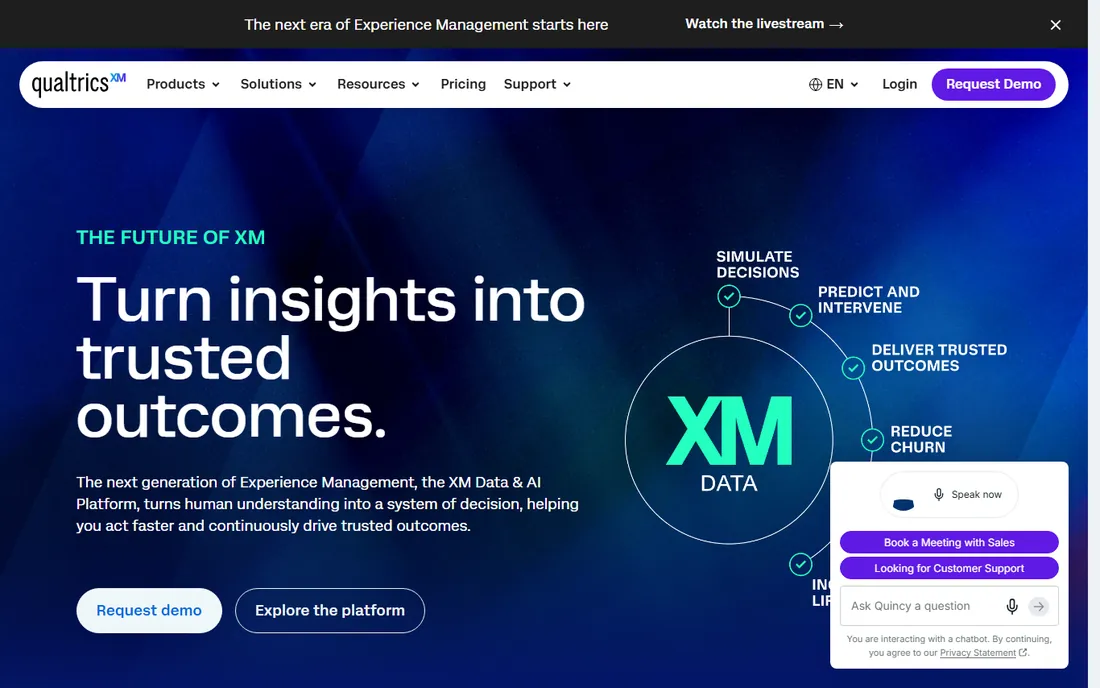
Qualtrics is the leader in experience management: the discipline of measuring and improving customer experience across every touchpoint through surveys, feedback, and analytics. Its text intelligence and predictive capabilities are the best in the category, and large enterprises run company-wide CX programs on it. For organizations where customer experience is a board-level metric, it is the standard.
Everything about the buying process is enterprise: custom quotes, months-long implementations, and pricing that reflects the scope. It is not a help desk and does not try to be one. Companies that need ticketing should buy Zendesk or Freshdesk; companies that need to measure and manage experience across a large organization should evaluate Qualtrics against Medallia.
What we like- The most complete experience management platform
- Predictive analytics and text intelligence are best in class
- Enormous survey and research depth
Watch out for- Custom pricing with enterprise sales cycles
- Implementation takes months
- Massive overkill for simple support operations
Starting priceSee website (custom quote)
Free planNo
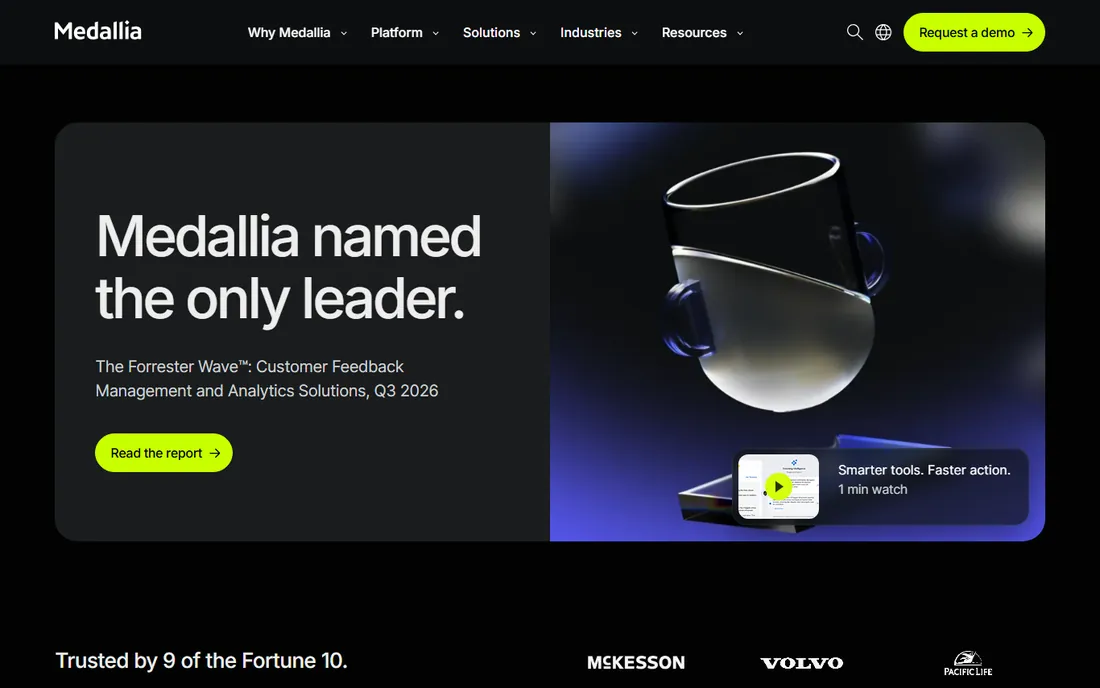
Medallia competes with Qualtrics for the enterprise experience management crown, with particular strength in multi-channel voice-of-customer programs at very large scale. Its speech analytics and Athena AI handle the unstructured feedback, call transcripts, reviews, social mentions, that enterprises drown in. Industries like hospitality and retail, where experience is the product, have run on Medallia for years.
The profile matches Qualtrics: custom pricing, implementations measured in months, and a platform built for organizations with dedicated CX teams. Mid-size companies will find both vendors heavy. The choice between Medallia and Qualtrics usually comes down to industry fit and existing relationships rather than feature checklists; both do the enterprise job.
What we like- Proven at massive multi-channel scale
- Strong speech and text analytics
- Deep experience in hospitality, retail, and telecom
Watch out for- Custom pricing and long implementations
- The platform's breadth can overwhelm mid-size buyers
- Heavyweight for simple feedback needs
Starting priceSee website
Free planFree trial
Salesforce Service Cloud is the enterprise service platform for organizations already on Salesforce. The 360-degree customer view is real here: service agents see the full sales and success history in the same record, and workflows can span departments in ways Zendesk cannot match. The Agentforce AI integration brings serious automation to large support operations.
The commitment is equally serious. Implementations run two to six months, pricing is quote-based and grows with every add-on, and the platform assumes Salesforce expertise on staff. Outside the Salesforce ecosystem, it is the wrong tool at any price. Inside it, it is the obvious choice, and the only real question is which edition matches the operation's complexity.
What we like- Service, sales, and success share one data model
- Agentforce AI is deeply integrated
- Unmatched workflow depth for complex operations
Watch out for- Implementation typically takes months
- Pricing is quote-based and climbs with add-ons
- Overkill outside the Salesforce ecosystem
Starting priceSee website
Free planFree trial
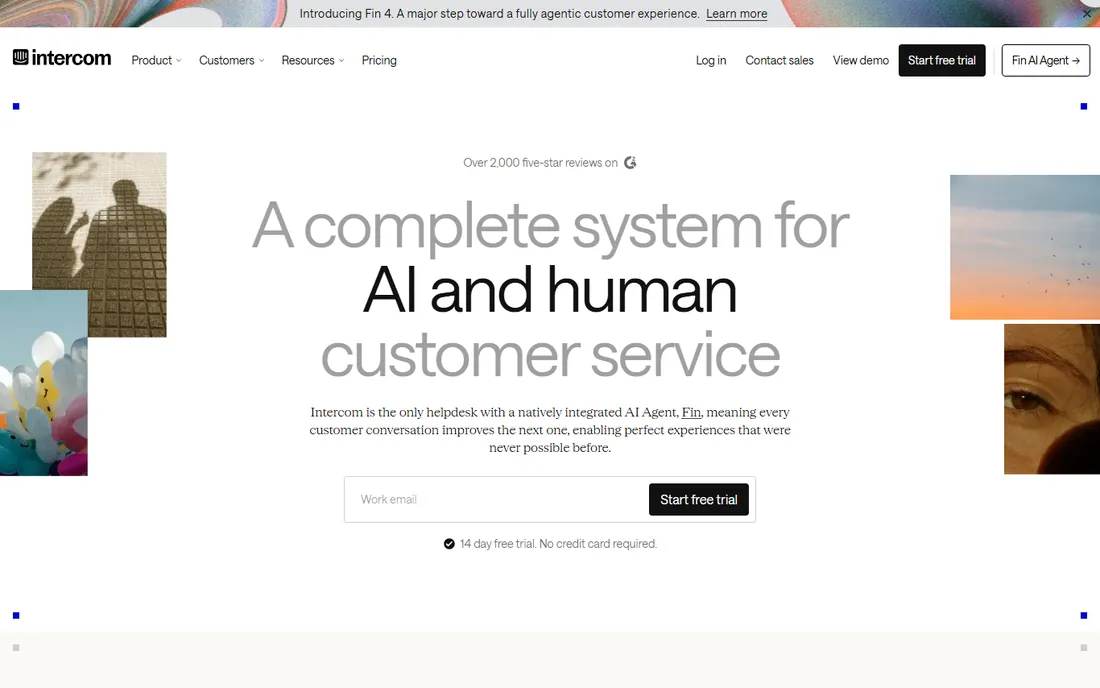
Intercom defined conversational support for SaaS: the messenger-style interface, proactive messaging, and chatbot automation feel native to product-led companies. Implementation is fast, the automation builder is genuinely good, and for startups and SaaS businesses it often fits the workflow better than traditional ticketing.
The pricing is the perennial complaint. Published starting points exist but the real cost depends on seats, contacts, and add-ons, and scaling teams consistently report sticker shock. Reporting depth trails Zendesk. Intercom is the right pick for SaaS companies that live in conversational support and can stomach the pricing model. Traditional support operations usually get more for less from Zendesk or Freshdesk.
What we like- Best-in-class conversational interface
- Strong automation and chatbot builder
- Built for product-led SaaS workflows
Watch out for- Pricing is opaque and scales expensively
- Reporting is thinner than Zendesk
- Per-seat costs punish large support teams
#8
Zoho Desk
Best for: Small teams that need a free or cheap help desk
Visit zoho.com
Starting priceFree for 3 users; paid plans from $14 per user per month
Free planYes
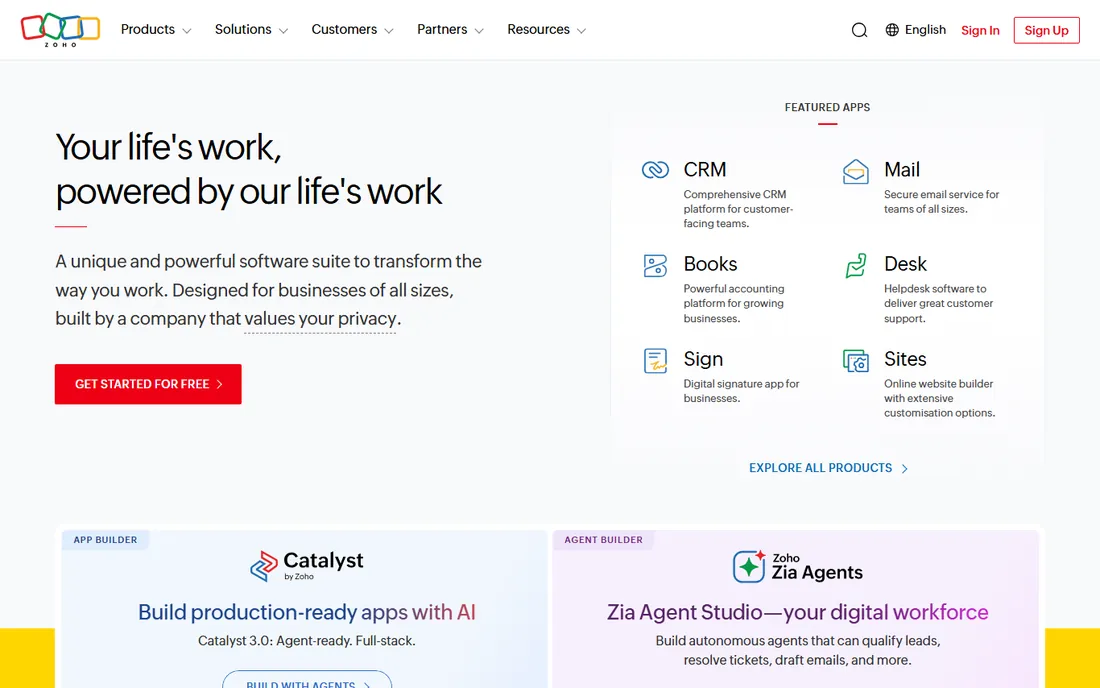
Zoho Desk is the budget champion: a free edition for three users that covers email ticketing, help center, and knowledge base, with paid plans starting around $14 a user a month. For tiny support teams and startups, it is the cheapest path to a real help desk, and the Zia AI assistant adds automation the price would not suggest.
The trade-offs are polish and ecosystem. The interface feels a step behind Zendesk and Freshdesk, integrations are fewer, and advanced workflow features arrive later here than elsewhere. But for the price, the value is undeniable. Small businesses that cannot justify $55 a seat should start here and only upgrade when a specific missing feature costs real money.
What we like- Free edition is free forever for three users
- The cheapest paid plans in the category
- Zia AI assistant included
Watch out for- Interface and polish trail the leaders
- Smaller integration ecosystem
- Advanced features lag Zendesk
Starting priceSee website
Free planNo
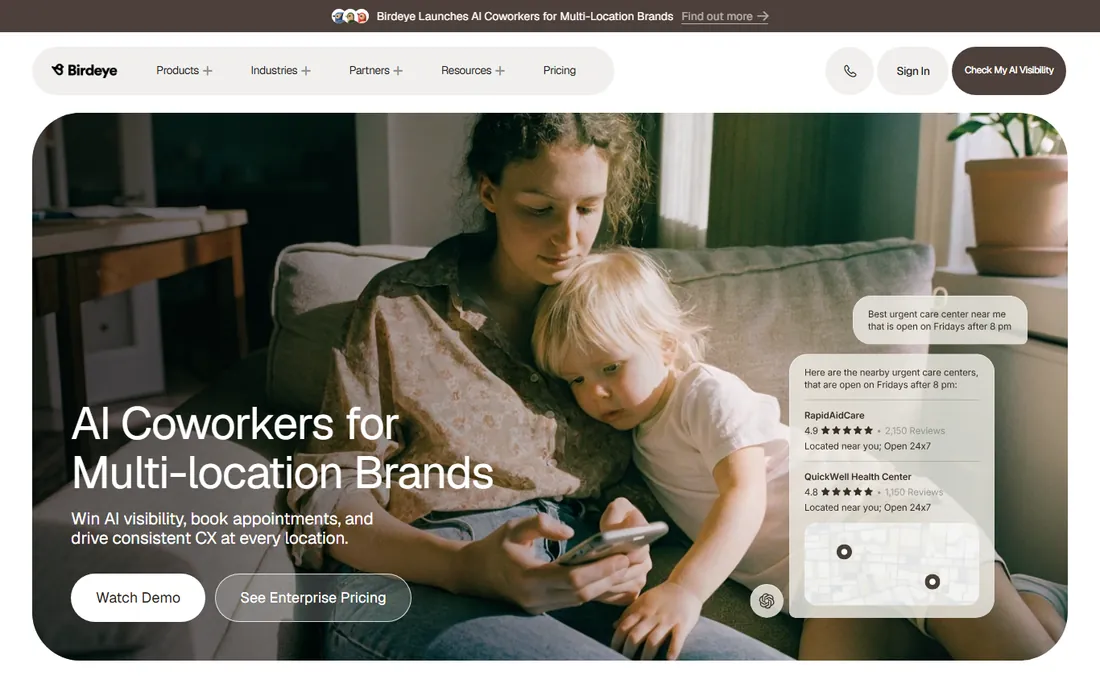
Birdeye serves a specific and valuable job: managing online reputation for businesses with many locations. It automates review requests after service, centralizes responses across Google, Yelp, and hundreds of other sites, and the review volume feeds local search visibility. For franchises, dental groups, and home service companies with dozens of locations, it pays for itself in review-driven leads.
It is not a general CX platform. There is no ticketing, no voice-of-customer analytics at Medallia's depth, and the AI features are basic. Buyers should treat it as a reputation layer that sits alongside a help desk, not a replacement for one. For its niche, it is the category leader; outside the niche, it does not apply.
What we like- Review generation and response automation across 200-plus sites
- Local SEO benefits for multi-location brands
- Purpose-built for reputation
Watch out for- Narrow scope compared to full CX platforms
- Pricing not published
- The AI capabilities are basic next to the leaders
How we put this list together
We compared customer experience platforms that US companies actually buy, identified through CX industry publications, vendor documentation, and reviews on G2, Capterra, and practitioner forums. The list covers both families: support platforms (ticketing, chat, phone) and experience management platforms (surveys, sentiment, voice of customer). Pricing reflects published plans checked in September and October 2026, including Freshdesk's current Growth/Pro/Enterprise tiers and Zendesk's Suite Team rate. Where vendors use custom quotes, the tables say "See website". This is a research-based comparison, not hands-on testing.
What to check before you sign
Start with which family you need, because mixing them up wastes the evaluation. If the problem is answering customers faster and better, you need a support platform: Zendesk, Freshdesk, Intercom, or Zoho Desk. If the problem is measuring and improving experience across the company, you need experience management: Qualtrics or Medallia. If you need both, budget for both; no single tool does both jobs well.
Then price the real configuration, not the headline tier. Freshdesk Growth at $19 looks cheap until the AI Copilot and Pro-tier features the team needs push it to $84 an agent. Zendesk's add-ons for advanced AI and workforce management do the same. HubSpot's mandatory onboarding fees add thousands on day one. Ask each vendor for the all-in annual cost with the features you will actually use, in writing, before comparing.
Finally, check the exit terms and data portability. Ticket history, knowledge base articles, and customer records are business assets; confirm you can export them in usable formats and what happens to data after cancellation. The platforms that make it hardest to leave are often the ones worth leaving, so read the export story before the feature list.
The per-seat trap
Per-seat pricing looks fair until the support team grows, and then it becomes the largest line item in the software budget. A 60-agent team on Zendesk Suite Team pays nearly $40,000 a year before add-ons; the same team on Freshdesk Pro pays the same. The trap is not the price itself but the way it punishes success: every hire increases the software bill, which discourages giving part-time staff or other departments access. Before committing, model the cost at twice your current headcount, and check what viewer, light-agent, or collaborator access costs. The platforms with sensible answers to that question are the ones built for growing companies rather than for maximizing seat revenue.
Frequently asked questions
What is the difference between a help desk and a customer experience platform?
A help desk (Zendesk, Freshdesk) handles support conversations: tickets, chat, and phone. A customer experience management platform (Qualtrics, Medallia) measures experience across touchpoints through surveys and analytics. Many companies need both, but they are different purchases solving different problems.
How much does customer support software cost?
Small teams pay $0 to $20 an agent a month on Zoho Desk, Freshdesk Growth, or HubSpot's free tools. Mid-market teams pay $55 to $115 an agent on Zendesk or Freshdesk Pro. Enterprise platforms use custom quotes that typically start in the tens of thousands annually. AI add-ons can add $29 to $50 an agent on top.
Is there a good free customer experience platform?
Zoho Desk's free edition covers three users with real ticketing, and HubSpot's free service tools handle basics for tiny teams. Freshdesk no longer offers a real free plan in 2026. Free tiers work for very small teams; growing support operations outgrow them quickly.
How long does implementation take?
Zendesk, Freshdesk, and Intercom go live in days to weeks. HubSpot Service Hub takes one to four weeks. Salesforce Service Cloud typically needs two to six months. Qualtrics and Medallia implementations run two to six months. The timeline that matters is not technical setup but workflow design and agent training.
Should I choose Zendesk or Freshdesk?
Choose Zendesk for the stronger platform, better AI tooling, and faster scaling to mid-market complexity, at $55 an agent to start. Choose Freshdesk for the lower entry price ($19 an agent) and faster setup when the team is small. Price both with the AI features and tier upgrades you will actually need, because the gap narrows once those are included.
Do I need Qualtrics or Medallia, or will surveys in my help desk do?
Help desk surveys (CSAT after tickets) measure support interactions, which is enough for most small and mid-size companies. Qualtrics and Medallia measure the entire customer journey across every touchpoint, which matters when experience is a company-wide program with executive ownership. If no executive owns CX as a metric, the enterprise platforms are premature.
Sources we checked (7)
- https://visionarycrm.com/customer-experience/best-customer-experience-platforms
- https://www.scmgalaxy.com/tutorials/top-10-customer-experience-tools-in-2025-features-pros-cons-comparison/
- https://www.sentisum.com/library/customer-experience-management-platforms-tools
- https://hiverhq.com/blog/freshdesk-pricing
- https://www.getmacha.com/blog/freshdesk-review
- https://www.eesel.ai/blog/freshdesk-freddy-ai-pricing-per-agent-2026
- https://sagnikbhattacharya.com/blog/freshdesk-vs-zendesk-small-support-team-using-ai
Is your product missing or out of date?
We review this list regularly. Vendors can request a listing, send updated pricing or ask about featured placement.

Shihab Mia · Founder, Rankite
Shihab has spent more than a decade helping SaaS and e-commerce brands grow through search. He writes Rankite's software buying guides from pricing pages, documentation and public user reviews. More about Shihab.