How we make this list: we compare pricing pages, product documentation and public user reviews. Ratings come from G2, Capterra or Trustpilot, with the date we checked them.
Key takeaways
- Wiz and Orca lead for fast agentless multi-cloud visibility, while Prisma Cloud suits teams already standardised on Palo Alto Networks.
- Microsoft Defender for Cloud is the natural starting point for Azure-heavy estates, because its foundational tier covers basic posture at no extra licence cost.
- Most CSPM pricing is quote-based and tied to accounts, resources or workloads, so a pilot on your real cloud accounts gives a better price than a sales estimate.
- CSPM finds misconfigurations, but it does not replace identity protection, workload runtime defence or incident response.
Quick comparison
Is your product missing or out of date?
We review this list regularly. Vendors can request a listing, send updated pricing or ask about featured placement.

#1Wiz
Best for: Agentless multi-cloud visibility4.7/5 on
G2 (863 reviews, checked Oct 2026)
Visit wiz.io
Starting priceSee website
Free planFree trial
Wiz is the first tool to evaluate for multi-cloud posture. It connects through cloud APIs, builds a graph of resources, identities and exposures, and highlights combinations that create a real attack path. That graph view helps teams prioritise a risky storage bucket with public access over a long list of low-risk findings.
The main limits are price transparency and scope. Enterprise pricing is custom, and a small team with one cloud account may not need the full platform. A pilot on real accounts, with a defined set of compliance frameworks, gives the clearest view of value and cost.
What we like- Fast API-based deployment across clouds
- Security Graph for attack paths
- Strong multi-cloud coverage
Watch out for- Enterprise pricing is quote-only
- Smaller teams may find the full platform more than they need
Starting priceSee website
Free planFree trial
Orca Security appeals to teams that want visibility without installing agents on every workload. Its SideScanning approach reads cloud configuration and workload data from outside, which speeds deployment and reduces operational friction. Prioritisation helps teams focus on issues that combine exposure, vulnerability and sensitive data.
Runtime protection is less deep without the optional sensor, so teams that need live workload defence should test that add-on. Pricing is also quote-only, which means a pilot and a clear account count are needed for a realistic budget.
What we like- Agentless SideScanning
- Quick time to first findings
- Clear prioritisation
Watch out for- Runtime depth needs the optional sensor
- Pricing is quote-only
Starting priceSee website
Free planFree trial

Prisma Cloud, from Palo Alto Networks, covers the full path from code and infrastructure templates to running cloud workloads. That breadth suits large enterprises that want CSPM, workload protection, identity entitlement and infrastructure-as-code checks in one platform. Compliance coverage is wide, with many frameworks supported.
Complexity is the trade-off. Credit-based pricing needs careful modelling, and the platform has many modules that can confuse a small team. Organisations already using Palo Alto Networks elsewhere get the most value, because integrations and support align.
What we like- Broad code-to-cloud coverage
- Many compliance frameworks
- Runtime container defence
Watch out for- Credit-based pricing can be hard to forecast
- Platform breadth adds complexity
Starting priceSee website
Free planYes

Microsoft Defender for Cloud is the obvious starting point for Azure-heavy estates. Its foundational tier provides basic posture management for Azure resources, and paid plans add workload protection and DevOps security. Native integration with Sentinel and Defender XDR helps teams correlate cloud findings with endpoint and identity signals.
Multi-cloud coverage exists for AWS and Google Cloud, but depth varies, and some teams prefer a dedicated multi-cloud tool for non-Azure estates. For a Microsoft-centred company, however, Defender for Cloud often covers the core CSPM need without a separate purchase.
What we like- Free foundational tier for Azure
- Native Azure integration
- Sentinel and XDR correlation
Watch out for- Azure-first design
- Multi-cloud depth varies by module
Starting priceSee website
Free planFree trial
CrowdStrike Falcon Cloud Security suits companies already running Falcon for endpoints or identity. Cloud posture, runtime defence and identity signals sit in one console, which helps analysts trace an issue from a cloud misconfiguration to an endpoint event. That integration is a real advantage during incident response.
Standalone buyers get less of that advantage, and pricing is custom. If your endpoint vendor is different, compare Wiz or Orca on posture alone, rather than paying for integration you will not use.
What we like- Strong integration with Falcon endpoint and identity
- Runtime and posture in one platform
- Attack path analysis
Watch out for- Best value only for existing Falcon customers
- Pricing is quote-only
Starting priceSee website
Free planFree trial
Lacework combines posture management with anomaly detection, which helps teams spot unusual cloud behaviour as well as misconfigurations. Multi-cloud coverage and compliance reporting suit mid-market and enterprise teams that need a single view across AWS, Azure and Google Cloud. Its history in cloud security gives it depth in workload and identity data.
Since Lacework became part of Fortinet, buyers should confirm roadmap, support and integration plans. Ask how the product fits Fortinet's wider platform, and whether standalone deployment remains a priority. A clear answer reduces the risk of a forced migration later.
What we like- Anomaly detection alongside posture
- Multi-cloud coverage
- Compliance reporting
Watch out for- Now part of Fortinet, so roadmap questions matter
- Pricing is quote-only
Starting priceSee website
Free planFree trial
Check Point CloudGuard, formerly Dome9, is a long-standing CSPM option with a focus on compliance and posture across clouds. It suits teams that need continuous checks against frameworks such as CIS benchmarks, PCI DSS and HIPAA, with remediation guidance. Integration with Check Point network security helps companies already using that stack.
The interface feels less modern than Wiz or Orca, and pricing requires a quote. For a compliance-driven buyer, those limits matter less than framework coverage and audit reporting. Test the reporting output against your auditor's needs before committing.
What we like- Strong compliance and posture coverage
- Multi-cloud support
- Integration with Check Point security
Watch out for- Interface can feel dated
- Pricing is quote-only
Starting priceSee website
Free planFree trial
Trend Micro Cloud One Conformity focuses on continuous compliance checks and automated remediation for cloud resources. It suits teams that need to prove posture against common frameworks, with alerts and fixes for common misconfigurations. Broad cloud coverage helps multi-cloud estates.
As part of the wider Cloud One suite, buyers should confirm what Conformity covers alone versus what needs other modules. A standalone CSPM comparison should price the exact modules needed, not the full suite. That clarity prevents a compliance tool from becoming an unexpected bundle.
What we like- Clear compliance checks
- Automated remediation options
- Broad cloud coverage
Watch out for- Part of a larger Cloud One suite, so standalone value needs checking
- Pricing is quote-only
Starting price$350 per month
Free planYes
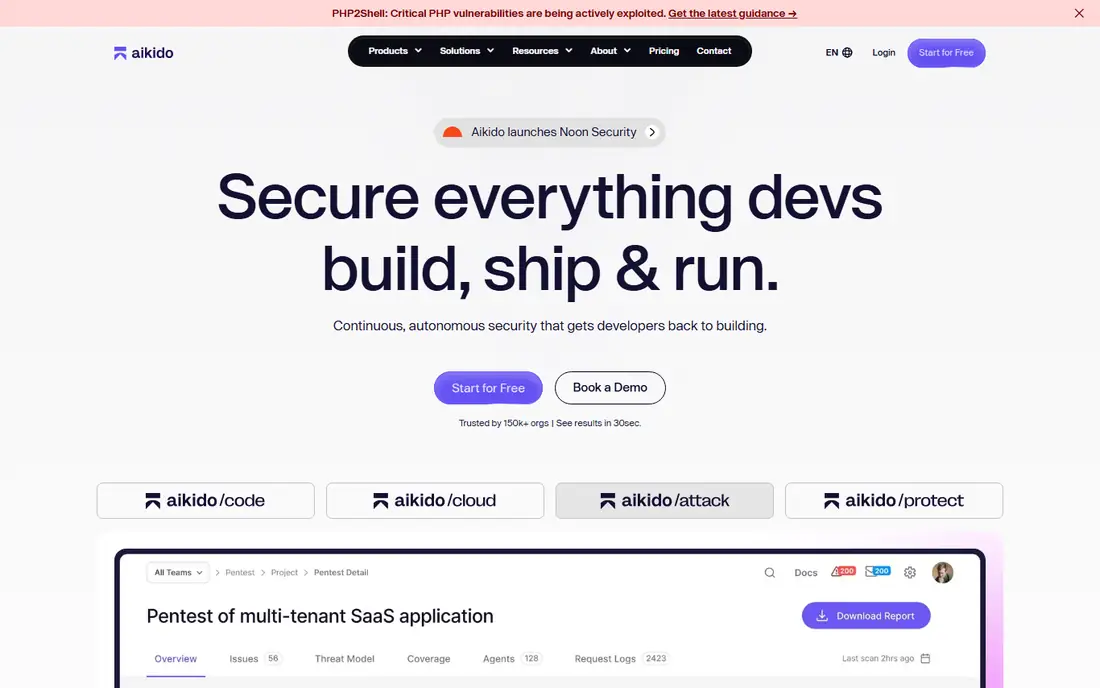
Aikido Security is the smaller, developer-focused option on this list. It aims to reduce noise by grouping related findings and focusing on issues developers can fix, with code-to-cloud coverage. A free tier allows evaluation, and paid plans start at $350 per month, which is more transparent than most enterprise CSPM pricing.
Enterprise buyers should check scale, compliance depth and support against Wiz, Orca and Prisma Cloud. For a development-led team that wants faster fixes and less alert fatigue, Aikido is a credible alternative to the largest platforms.
What we like- Developer-friendly noise reduction
- Free tier for evaluation
- Code-to-cloud coverage
Watch out for- Smaller enterprise footprint than Wiz or Prisma Cloud
- $350 starting price may exceed hobby budgets
How we chose
We compared CSPM tools using vendor pricing pages, documentation, feature lists and public reviews on G2, Capterra and Reddit where available. We favoured tools with current multi-cloud or cloud-native posture coverage, attack path or prioritisation features, and compliance reporting. Most pricing is quote-based, so we wrote See website where a vendor does not publish a rate, rather than estimating. Tools were excluded when we could not confirm a current CSPM offer or an official homepage.
Running a CSPM pilot that proves value
Start with your real accounts, not a demo environment. Connect one production account per cloud, enable the compliance frameworks you actually report against, and run the tool for two weeks. Measure time to first findings, false positive rate and how many findings your team can fix in that period. A tool that produces thousands of findings with no prioritisation will overwhelm a small team, even when the findings are accurate.
Fix the process, not only the findings
Agree on owners for each cloud account, remediation timeframes by severity and a weekly review of new critical findings. Automate fixes where safe, such as public storage buckets, and require human review where a fix could break an application. CSPM value comes from closed findings and fewer repeat issues, not from a dashboard score alone. Track mean time to remediation and repeat rate, and review both monthly.
Know what CSPM does not cover
CSPM checks configuration and compliance, but it does not stop a stolen credential, a vulnerable application or a runtime attack on its own. Pair it with identity protection, workload runtime defence and logging that feeds incident response. A buyer who expects CSPM alone to secure the cloud will be disappointed, no matter which vendor is chosen.
Frequently asked questions
What does CSPM stand for?
CSPM stands for Cloud Security Posture Management. It continuously scans cloud accounts for misconfigurations, compliance violations and risky exposures, then prioritises fixes. Modern platforms often sit inside a wider CNAPP, which adds workload and identity protection.
How is CSPM different from CWPP?
CSPM focuses on configuration and compliance, such as public storage, open ports and weak identity policies. CWPP, or Cloud Workload Protection Platform, focuses on runtime protection for running workloads such as virtual machines and containers. Many modern platforms combine both, but the distinction still matters for buying.
Do I need CSPM if I use AWS, Azure or Google Cloud native tools?
Native tools such as AWS Security Hub, Defender for Cloud and Google Security Command Center cover basic posture for their own cloud. A dedicated CSPM tool adds multi-cloud visibility, attack path analysis and wider compliance reporting. Single-cloud teams may not need it, while multi-cloud teams usually do.
How much does CSPM cost?
Most enterprise CSPM pricing is quote-based and tied to accounts, resources or workloads. Small teams may pay a few thousand dollars per year, while large enterprises pay far more. Aikido publishes a $350 per month starting price, which is an exception. Always pilot on real accounts for a realistic quote.
Can CSPM fix problems automatically?
Many tools offer automated remediation for safe issues, such as closing public access or enabling logging. Riskier fixes, such as changing identity policies or network rules, usually need human approval. Set automation rules by severity and test them in a non-production account first.
How long does CSPM deployment take?
Agentless tools such as Wiz and Orca can show first findings within hours, because they connect through cloud APIs. Agent-based runtime coverage takes longer, as agents must be deployed and tested. Full rollout, including remediation workflows and compliance reporting, usually takes weeks, not days.
Sources we checked (11)
- https://www.wiz.io
- https://orca.security
- https://www.paloaltonetworks.com
- https://azure.microsoft.com
- https://www.crowdstrike.com
- https://www.lacework.com
- https://www.checkpoint.com
- https://www.trendmicro.com
- https://www.aikido.dev
- https://expertinsights.com/cloud-security/the-top-cloud-security-posture-management-cspm-solutions
- https://tech-insider.org/wiz-vs-orca-vs-prisma-cloud-cnapp-2026/
Is your product missing or out of date?
We review this list regularly. Vendors can request a listing, send updated pricing or ask about featured placement.

Shihab Mia · Founder, Rankite
Shihab has 5+ years in B2B and SaaS SEO. He writes Rankite's software buying guides from pricing pages, documentation and public user reviews. More about Shihab.
 Orca Security
 Palo Alto Prisma Cloud
 Microsoft Defender for Cloud
 CrowdStrike Falcon Cloud Security
 Lacework
 Check Point CloudGuard
 Trend Micro Cloud One Conformity
 Aikido Security