How we make this list: we compare pricing pages, product documentation and public user reviews. Rankite is independent; if a vendor ever pays for a featured spot, that listing is clearly labeled Partner.
Key takeaways
- Temenos, Oracle FLEXCUBE, Finacle, Finastra, and FIS are the established enterprise cores.
- Mambu and Thought Machine lead the cloud-native challengers for neobanks and fintechs.
- Finxact gives Fiserv clients a cloud-native path inside the largest US banking tech vendor.
- Core banking pricing is enterprise and quote-based; expect multi-year commitments.
Quick comparison
| Tool | Best for | Starting price | Free plan |
|---|
 Temenos Temenos | global enterprise banks | See website | No |
 Mambu Mambu | cloud-native neobanks | See website | No |
 Thought Machine Thought Machine | tier-1 modernization | See website | No |
 FIS FIS | US institutions at scale | See website | No |
 Oracle FLEXCUBE Oracle FLEXCUBE | Oracle-stack banks | See website | No |
 Infosys Finacle Infosys Finacle | digital transformation | See website | No |
 Finastra Finastra | broad banking portfolio | See website | No |
 Finxact Finxact | US cloud-native core | See website | No |
Is your product missing or out of date?
We review this list regularly. Vendors can request a listing, send updated pricing or ask about featured placement.
The best core banking software
Starting priceSee website
Free planNo
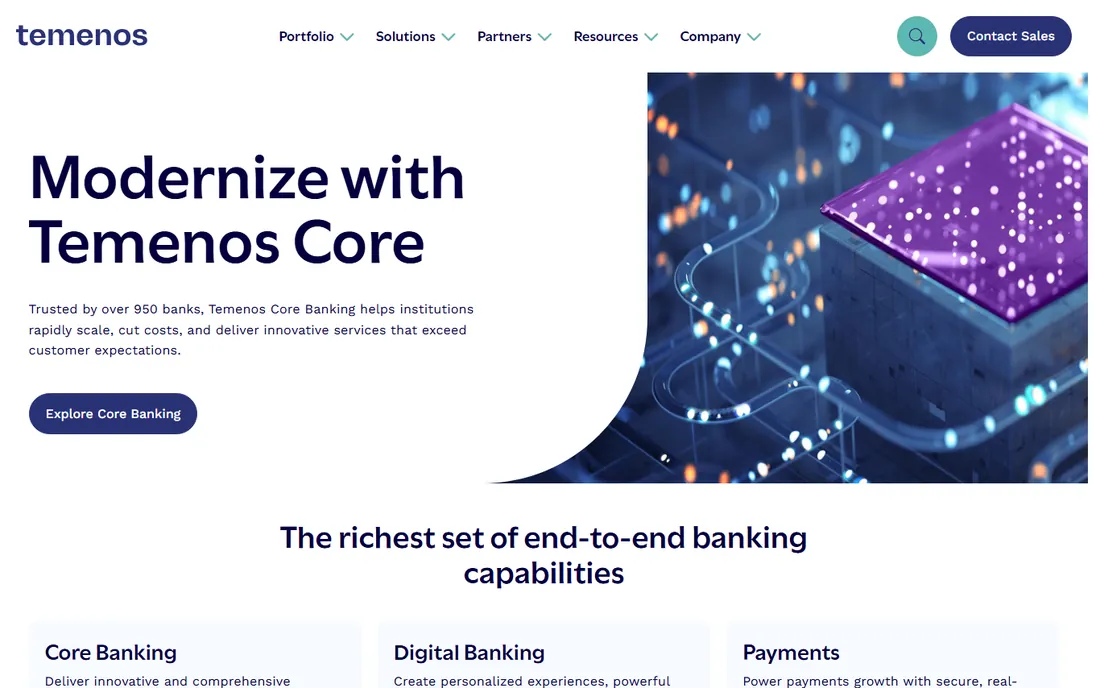
Temenos Transact is the best-selling core banking platform in the world, running at banks across retail, corporate, and private banking. The Geneva-based company's composable architecture and Temenos SaaS offering let institutions modernize incrementally rather than through big-bang replacements.
For large banks needing proven scale, Temenos is the safe choice: thousands of institutions run on it, and the partner ecosystem is unmatched. The honest catch is the enterprise reality: implementations are measured in quarters and budgets in millions. Smaller institutions should look at the SaaS tiers or the cloud-native challengers below.
Temenos also invests heavily in AI and data capabilities across its platform, and its partner network of systems integrators is the deepest in banking technology. For institutions that want a single strategic vendor with a long roadmap, that ecosystem matters as much as the software itself.
What we like- Most widely deployed core banking platform
- Deep retail, corporate, and wealth coverage
- Strong SaaS offering
Watch out for- Enterprise pricing and implementation timelines
- Complexity for smaller institutions
Starting priceSee website
Free planNo
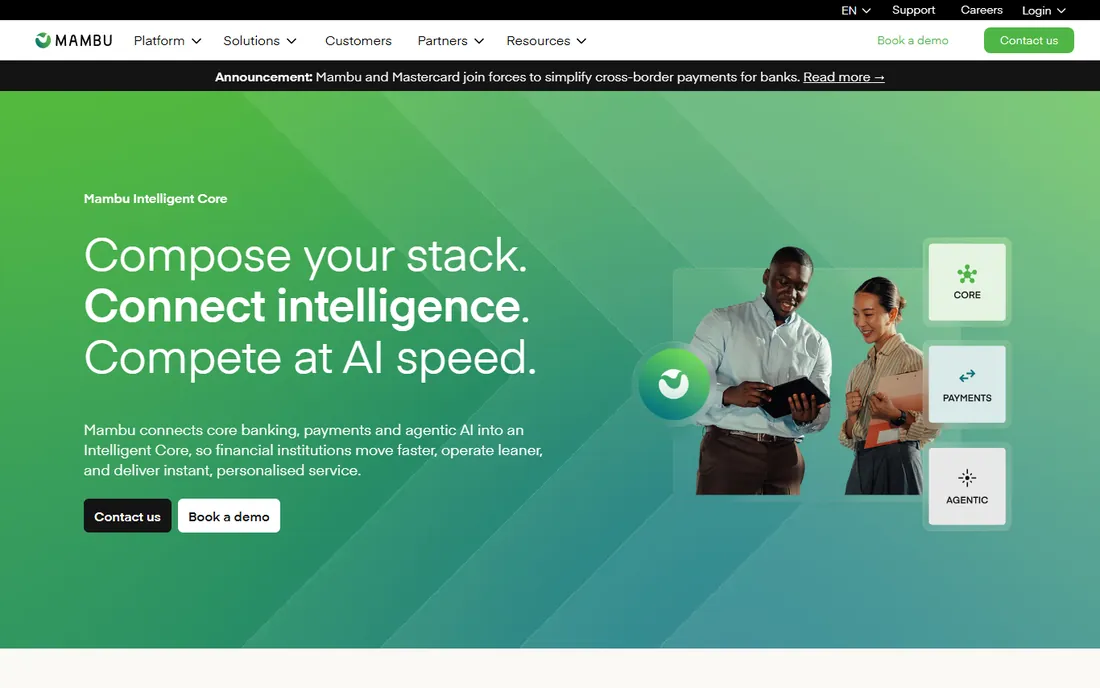
Mambu is the cloud-native core that powered the neobank wave. Its composable SaaS platform lets banks and fintechs assemble banking products from independent components, launching in months rather than years. Customers include N26, Western Union, and ABN AMRO across 65+ countries.
For digital-first institutions, Mambu's speed is the argument: new products launch in weeks. The platform's SaaS economics beat legacy licensing for growing institutions. The limitation is functional depth in the most complex corporate banking scenarios, where the established suites still lead. Fintechs, lenders, and challenger banks should start here.
Mambu's partner ecosystem of fintech integrators keeps implementation light, and its usage-based pricing aligns cost with growth. For lending businesses and embedded finance providers that are not full banks, Mambu's flexibility around product composition is a genuine advantage.
What we like- True SaaS composable core
- Fastest time to market
- Strong fintech and neobank customer base
Watch out for- Less depth for complex corporate banking
- Enterprise pricing at scale
Starting priceSee website
Free planNo
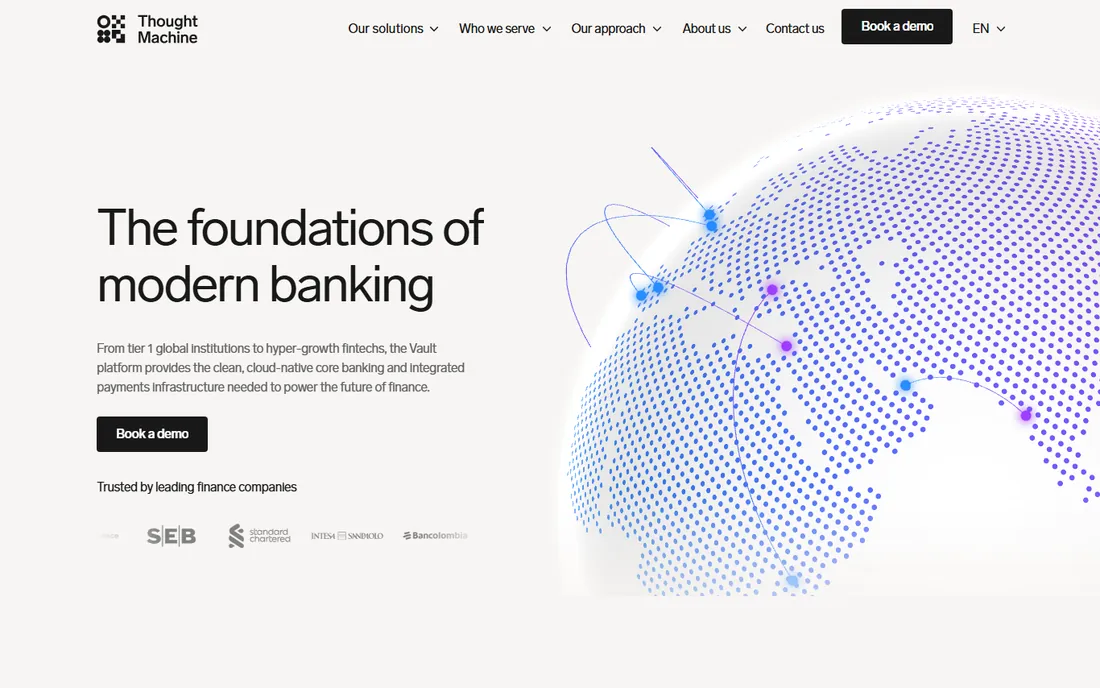
Thought Machine's Vault Core is the engineer's choice: a cloud-native core built from scratch with smart contracts defining product logic, giving banks extraordinary product flexibility. Clients include JPMorgan Chase, Lloyds Banking Group, and Standard Chartered. The platform runs on any cloud or on-premises.
For tier-1 banks modernizing without compromise, Vault's architecture is the most technically ambitious on this list. The smart contract model lets product teams configure complex products without core changes. The honest catch is access: this is an enterprise engagement with partner-led implementations. Only large institutions need apply.
The platform's cloud-agnostic design avoids lock-in to a single hyperscaler, which matters to regulated banks with strict data residency requirements. Thought Machine's client roster of the world's largest banks is the strongest proof point any cloud-native core vendor can offer.
What we like- Smart-contract product engine
- Trusted by JPMorgan and Lloyds
- Cloud-agnostic deployment
Watch out for- Enterprise-only engagement model
- Implementation needs strong partners
Starting priceSee website
Free planNo
FIS is the Fortune 500 backbone of American banking technology. Its Modern Banking Platform offers cloud-enabled, API-driven core capabilities alongside the established core systems that power thousands of US institutions. The company's scale means unmatched regulatory and operational experience.
For US banks and credit unions, FIS's installed base is the argument: the vendor already runs your payments, your digital banking, or your core. Consolidating on one provider simplifies vendor management. The limitation is the large-vendor reality: roadmap pace and customization flexibility trail the cloud-native specialists. Institutions valuing stability and breadth will find the fit.
FIS's Modern Banking Platform is designed to let institutions run digital brands and new products on modern technology while the legacy core keeps running. That coexistence strategy is pragmatic for institutions that cannot afford a full replacement program.
What we like- Dominant US banking technology franchise
- Modern Banking Platform for digital age
- Huge scale
Watch out for- Large-vendor engagement model
- Modernization pace varies by product line
Starting priceSee website
Free planNo
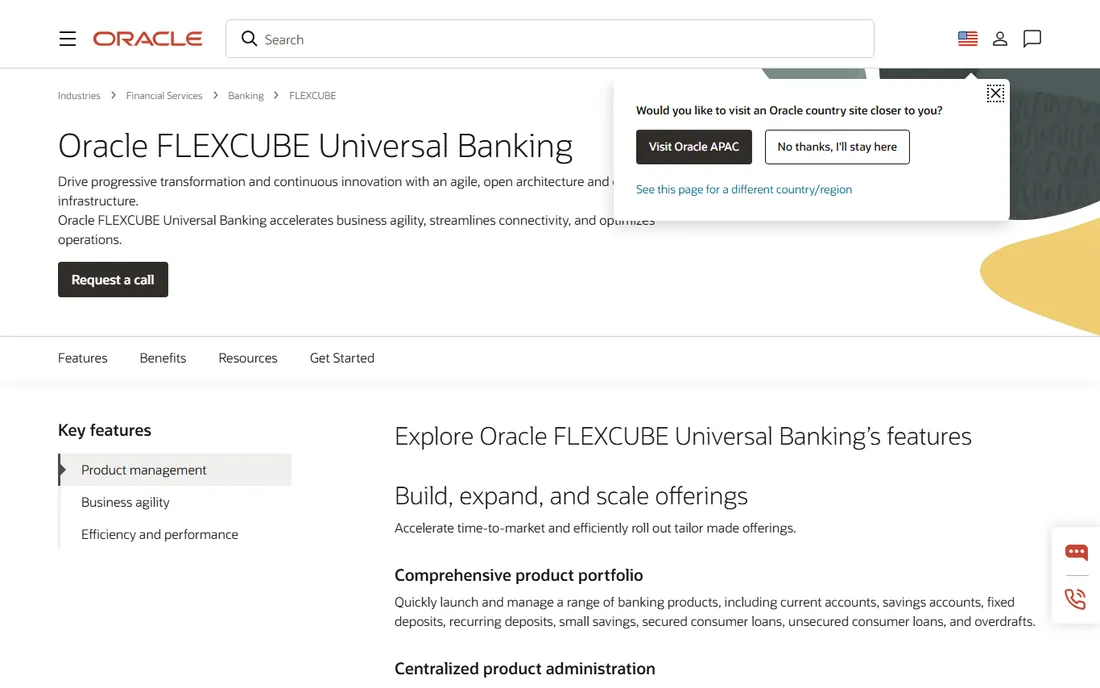
Oracle FLEXCUBE Universal Banking is the enterprise core for banks standardized on Oracle technology. The platform covers retail, corporate, and Islamic banking with extensive parameterization, and it integrates deeply with Oracle Database and Oracle Cloud infrastructure.
For banks already running Oracle estates, FLEXCUBE's integration story is compelling: one vendor from database to core to analytics. Its strength in emerging markets and Islamic banking is notable. The honest catch is Oracle itself: licensing complexity and enterprise sales dynamics that every bank IT leader knows. Oracle shops should evaluate it seriously; others should weigh the lock-in.
FLEXCUBE's parameterization depth means banks can configure complex products without custom code, which shortens time to market for new offerings. Oracle's continued investment in the platform keeps it current with regulatory and digital requirements.
What we like- Comprehensive universal banking coverage
- Deep Oracle database and cloud integration
- Strong in emerging markets
Watch out for- Oracle licensing complexity
- Implementation is a major program
Starting priceSee website
Free planNo
Finacle, the EdgeVerve/Infosys banking platform, runs at banks in over 100 countries serving more than a billion people. The cloud-native suite covers core banking, digital engagement, payments, treasury, and wealth management, with SaaS deployment options for faster transformation.
For banks pursuing full digital transformation, Finacle's breadth is the argument: core plus engagement plus analytics from one vendor. Recent SaaS wins show the platform modernizing effectively. The limitation is the engagement model: Finacle deals are transformation programs, not software purchases, with timelines and budgets to match. Large banks with transformation mandates should evaluate it.
Finacle's SaaS deployment model on public cloud is aimed at mid-sized banks that want transformation without building a large infrastructure team. The platform's analytics and AI capabilities add value beyond the core ledger.
What we like- Massive global deployment base
- Cloud-native SaaS options
- Strong digital engagement suite
Watch out for- Infosys services-led sales model
- Transformation programs are large undertakings
Starting priceSee website
Free planNo
Finastra, formed from Misys and D+H, offers the broadest banking software portfolio in the industry: retail banking, lending, treasury, capital markets, and payments. Its core banking solutions serve institutions from community banks to global giants, with 48 of the world's top 50 banks using Finastra technology.
For institutions wanting one vendor across many functions, Finastra's breadth is unmatched. The FusionFabric open development platform adds ecosystem extensibility. The honest catch is focus: core banking competes for attention with lending, treasury, and payments inside the portfolio. Banks should evaluate the specific core product line against their needs rather than buying on brand alone.
Finastra's strength in lending and treasury means banks can consolidate multiple systems onto one vendor relationship. The FusionFabric platform opens the ecosystem to fintech partners building on top of Finastra's products.
What we like- Broadest financial software portfolio
- 48 of top 50 banks are customers
- Strong lending and treasury
Watch out for- Portfolio breadth means product-line complexity
- Core banking is one of many offerings
Starting priceSee website
Free planNo
Finxact is the next-generation US core banking platform, now part of Fiserv after its 2022 acquisition. The cloud-native SaaS core was engineered for the scale and regulatory requirements of large US institutions, with 100% API accessibility for building products on demand.
For US banks wanting cloud-native architecture with a major vendor behind it, Finxact is the strategic bet: startup technology with Fiserv's distribution and balance sheet. The limitation is maturity: the installed base is smaller than the established cores, and the Fiserv integration story is still developing. Forward-looking US institutions should watch it closely.
Because Finxact was designed API-first, banks can build differentiated digital experiences without waiting for vendor release cycles. Fiserv's backing gives institutions confidence that the platform will be supported for the long term.
What we like- Cloud-native core built for US regulatory scale
- Now backed by Fiserv
- API-first architecture
Watch out for- Newer platform with smaller installed base
- Fiserv integration still maturing
How we chose
We mapped the core banking market across established enterprise suites and cloud-native challengers, verifying each vendor's current homepage directly. We weighted real deployment evidence, customer bases, architectural modernity, and fit for different institution sizes over marketing claims. Core banking pricing is enterprise and quote-based across the board; we do not publish figures vendors do not publish. We never claim hands-on testing.
The build-vs-buy-vs-modernize decision
Core banking decisions come in three flavors, and the right one depends on your starting point.
Greenfield and neobanks
Mambu and Finxact offer the fastest path to a working bank. Cloud-native, SaaS economics, and launch timelines measured in months.
Tier-1 modernization
Thought Machine and Temenos serve large banks replacing or hollowing out legacy cores. Expect multi-year programs with systems integrators.
Steady-state institutions
FIS, Oracle FLEXCUBE, Finacle, and Finastra serve banks that value breadth, stability, and vendor consolidation over architectural novelty.
Why core migrations are hard
Core banking migrations fail more often from organizational than technical causes. Data migration from decades-old systems, regulatory approval, parallel running periods, and change management across thousands of employees make these the hardest projects in banking IT. Successful institutions start with a clear product strategy: which products launch first, which customers migrate when, and what success looks like in year one. Choose the vendor that fits the strategy, not the one with the best demo.
Frequently asked questions
What is the best core banking software?
Temenos leads in global deployments, Mambu leads among cloud-native challengers, Thought Machine leads in architectural ambition, and FIS, Oracle FLEXCUBE, Finacle, and Finastra lead among established enterprise suites. The best choice depends on institution size and strategy.
What is core banking software?
Core banking software is the central system of record for a bank's deposits, loans, and payments. It processes daily transactions, maintains account balances, and connects to digital channels, payment networks, and regulatory reporting.
How much does core banking software cost?
Core banking is enterprise software with quote-based, multi-year pricing. Cloud-native SaaS options like Mambu start in the tens of thousands annually; enterprise implementations run into the millions. No major vendor publishes standard pricing.
What is the difference between legacy and cloud-native core banking?
Legacy cores are monolithic systems, often decades old, that are expensive to change. Cloud-native cores are built on microservices and APIs, enabling faster product launches, elastic scaling, and SaaS economics.
Can fintechs use core banking software?
Yes. Mambu, Finxact, and similar platforms are designed for fintechs, lenders, and neobanks, offering SaaS cores with API-first architectures and faster onboarding than traditional enterprise cores.
How long does a core banking migration take?
Enterprise core migrations typically take 18 months to several years depending on institution size and complexity. Cloud-native implementations for new digital brands can launch in months.
Sources we checked (8)
- https://www.temenos.com
- https://mambu.com/en
- https://www.thoughtmachine.net
- https://fisglobal.com/
- https://www.oracle.com/financial-services/banking/flexcube/core-banking-software/
- https://www.finacle.com
- https://www.finastra.com
- https://www.finxact.com
Is your product missing or out of date?
We review this list regularly. Vendors can request a listing, send updated pricing or ask about featured placement.

Shihab Mia · Founder, Rankite
Shihab has spent more than a decade helping SaaS and e-commerce brands grow through search. He writes Rankite's software buying guides from pricing pages, documentation and public user reviews. More about Shihab.