How we make this list: we compare pricing pages, product documentation and public user reviews. Ratings come from G2, Capterra or Trustpilot, with the date we checked them.
What is the best conversational marketing software in 2026?
HubSpot is the best conversational marketing software for most teams because it pairs live chat and chatbots with a free CRM, so every conversation reaches your sales team with full context. Intercom is the stronger pick for teams that need an AI agent, while Qualified suits Salesforce teams with B2B traffic. Small teams should start with Tidio or Crisp.
Key takeaways
- HubSpot is the best all-round pick, with a free CRM, live chat, and chatbots, and paid plans from $20 per month.
- Intercom leads on AI support with Fin at $0.99 per resolved conversation, on top of seats from $29 per seat per month.
- Qualified and Drift are enterprise B2B tools, with quote-only pricing and $2,500 per month respectively, and Drift is being sunset by Salesloft.
- Tidio, Crisp, and ManyChat cover small teams and ecommerce from $15 to $45 per month, with free plans that work for getting started.
What is conversational marketing software and how does it work?
Conversational marketing software is the set of tools that lets visitors talk to your business in real time, usually through a chat widget on your website, and turns those talks into leads, meetings, and sales. It replaces the static contact form with a live conversation, so a visitor can ask a question and book a meeting in one visit. The core pieces are live chat for human conversations, chatbots that qualify visitors and answer common questions around the clock, and routing rules that send hot leads to the right salesperson. The best platforms connect every chat to your CRM, so the rep who picks up can see the visitor's company, past visits, and earlier messages. Teams that use it well measure success in qualified meetings booked and pipeline created, not in chats answered.
How much does conversational marketing software cost in 2026?
Conversational marketing software costs anywhere from free to $2,500 per month or more, and the pricing model matters as much as the headline number. Small-team tools such as ManyChat, Tidio, and Crisp start at $15 to $45 per month and often include a free plan. Mid-market platforms such as Intercom and LiveChat charge per seat, from $20 to $29 per seat per month on annual billing. Enterprise B2B tools sit at the other end: Drift starts at about $2,500 per month, and Qualified does not publish prices at all, with reported contracts starting around $42,000 per year. AI usage is the charge buyers most often miss. Intercom bills Fin at $0.99 per resolved conversation, Tidio meters Lyro AI conversations separately, and ManyChat charges an extra $29 per month for its AI add-on.
The best conversational marketing tool for B2B teams is the one that fits the CRM the team already runs, because the value comes from routing the right visitor to the right rep with full context. Salesforce teams should look at Qualified first, since it is built natively on Salesforce and its Piper AI agent qualifies visitors and books meetings. HubSpot teams get the same benefit from HubSpot, where chat, chatbots, and the CRM share one database and one contact record, with no integration project in between. Drift created this category, but Salesloft announced a gradual sunset of Drift in March 2026 and named 1mind as its successor, so new buyers should treat it as a legacy option. For most B2B teams, the shortlist is HubSpot, Qualified, or Intercom, chosen by CRM first and budget second.
What should small teams and ecommerce stores look for?
Small teams and ecommerce stores should look for flat pricing, a usable free plan, and automation that works without a dedicated administrator. Per-seat pricing punishes a growing team, so a flat monthly rate such as Crisp at $45 per month or Tidio at $24.17 per month billed annually is easier to budget than a tool that charges for every agent. Ecommerce stores should check for a Shopify or WooCommerce integration, because the chatbot is far more useful when it can look up an order, check stock, and recommend products. Start on the free plan and only pay once you can see meetings or orders coming from chat.
We picked these 8 tools by checking that each one is a real conversational marketing product, is still sold in 2026, and fits a distinct buyer. We verified every starting price against the vendor's own pricing page, checked 11 November 2026. Each tool below lists its website, best fit, starting price, free plan, pros, and at least one real con, so you can compare them on the same terms. Prices change often, so confirm the current price on the vendor's pricing page before you buy.
Quick comparison
| Tool | Best for | Starting price | Free plan |
|---|
 HubSpot | Teams that want chat, chatbots, and CRM in one place | $20 per month (Marketing Hub Starter, 1,000 marketing contacts) | Yes, free CRM with live chat for up to 2 users |
 Intercom | Teams that want an AI agent to resolve chats before a human steps in | $29 per seat per month (Essential, annual billing; $19 new-customer price shown 11 Nov 2026) | No, 14-day free trial only |
 Qualified | Salesforce teams with high-intent B2B website traffic | Quote only (reported from about $42,000 per year) | No, demo only |
 Drift | Enterprise B2B teams that already run Drift playbooks | $2,500 per month (Premium, billed annually) | No, demo only |
 Tidio | Small ecommerce stores that want live chat and an AI agent in one place | $24.17 per month (Starter, billed annually; $29 per month billed monthly) | Yes, 50 conversations per month |
 Crisp | Small teams that want flat per-workspace pricing instead of per-seat billing | $45 per month (Mini) | Yes, Basic plan with 2 seats |
 LiveChat | Sales and support teams that want a polished, agent-first live chat tool | $20 per agent per month (Starter, billed annually) | No, 14-day free trial only |
 ManyChat | Creators and brands that sell through Instagram, Facebook, WhatsApp, and TikTok | $15 per month (Pro, up to 500 contacts) | Yes, limited contacts (25 contacts for accounts created after the March 2026 pricing change) |
Is your product missing or out of date?
We review this list regularly. Vendors can request a listing, send updated pricing or ask about featured placement.
| Tool |
Best for |
Starting price |
Free plan |
| HubSpot |
All-round marketing and sales chat |
$20 per month |
Yes |
| Intercom |
AI-led support and sales chat |
$29 per seat per month |
No, 14-day trial |
| Qualified |
Salesforce B2B pipeline teams |
Quote only |
No |
| Drift |
Enterprise B2B playbooks |
$2,500 per month |
No |
| Tidio |
Small ecommerce stores |
$24.17 per month, billed annually |
Yes, 50 conversations per month |
| Crisp |
Small teams wanting flat pricing |
$45 per month |
Yes, 2 seats |
| LiveChat |
Polished live chat for sales teams |
$20 per agent per month |
No, 14-day trial |
| ManyChat |
Social and messaging automation |
$15 per month |
Yes, limited contacts |
#1HubSpot
Best for: Teams that want chat, chatbots, and CRM in one place1.5/5 on
Trustpilot (1,178 reviews, checked Oct 2026)
Visit hubspot.com
Starting price$20 per month (Marketing Hub Starter, 1,000 marketing contacts)
Free planYes, free CRM with live chat for up to 2 users
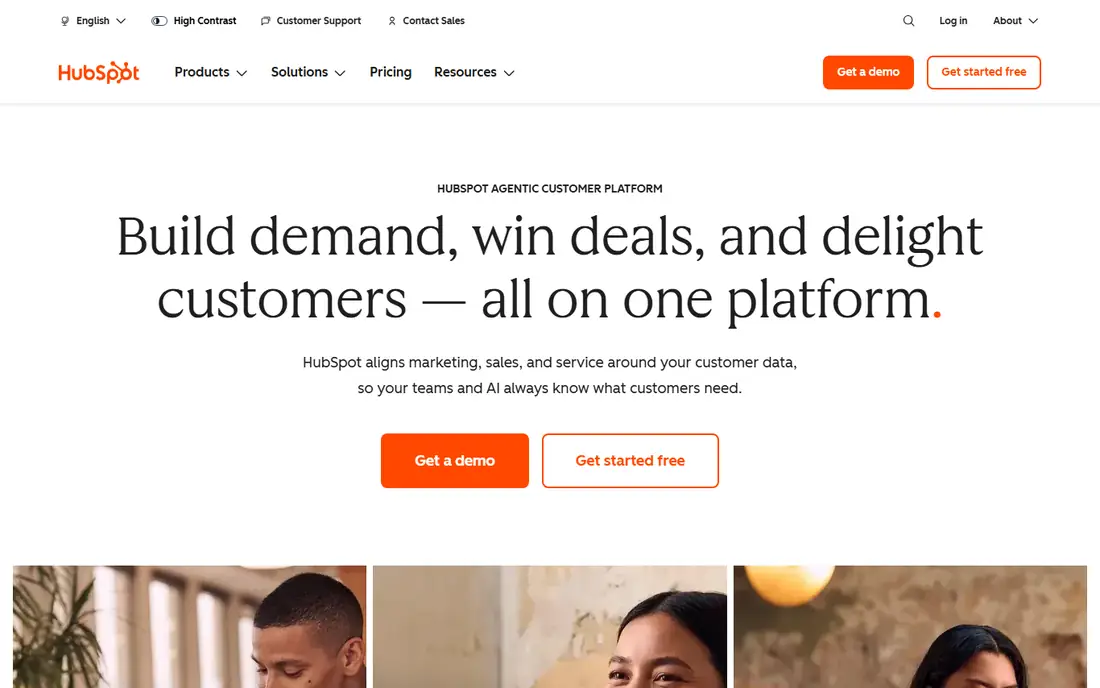
HubSpot is the safest default in this list because the chat tool is part of the CRM itself, not a standalone product bolted on. A visitor who chats becomes a contact with a full history that the rep can see. The free plan covers live chat and basic chatbots. The catch is the cost curve: real automation and custom reporting sit behind Professional at $890 per month, so growing teams should budget for that step early.
What we like- Free CRM included, chat and chatbots share one contact record, strong email and landing page tools in the same platform
Watch out for- The jump from Starter at $20 per month to Marketing Hub Professional at $890 per month is steep, and Professional carries a mandatory $3,000 onboarding fee
#2Intercom
Best for: Teams that want an AI agent to resolve chats before a human steps in4.5/5 on
G2 (3,918 reviews, checked Oct 2026)
Visit intercom.com
Starting price$29 per seat per month (Essential, annual billing; $19 new-customer price shown 11 Nov 2026)
Free planNo, 14-day free trial only
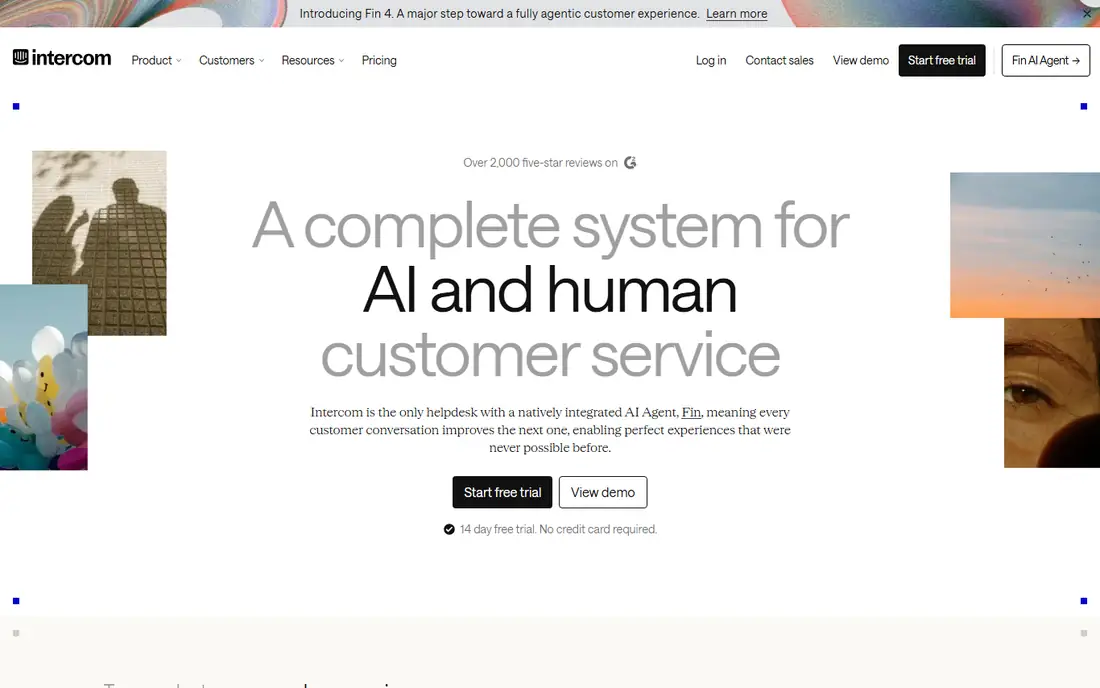
Intercom rebuilt itself around Fin, its AI agent, and that is now the main reason to buy it. Fin answers from your help center and product content, takes action in other systems, and hands off to a human with a summary when it cannot resolve the question. Essential starts at $29 per seat per month on annual billing, with a $19 new-customer price shown on 11 November 2026. Advanced at $85 adds workflow automation, while Expert at $132 adds SSO, HIPAA support, and SLAs. Salesforce completed its acquisition of Intercom in September 2026, and pricing has not changed since.
What we like- Fin AI agent resolves a large share of chats on its own, clean shared inbox, strong workflow automation on higher plans
Watch out for- Fin is billed separately at $0.99 per resolved conversation on top of seats, so a busy month can push the bill well above the seat price
#3
Qualified
Best for: Salesforce teams with high-intent B2B website traffic
Visit qualified.com
Starting priceQuote only (reported from about $42,000 per year)
Free planNo, demo only
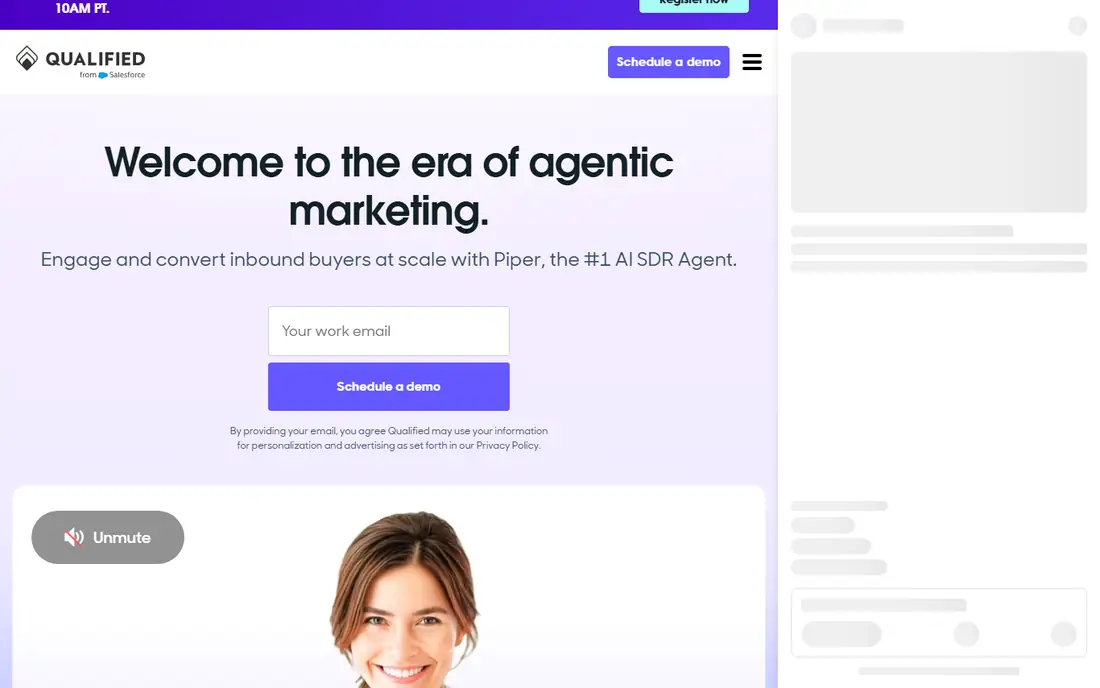
Qualified is the most focused B2B tool in this list, and it is also the most demanding. It runs entirely on Salesforce, which is a strength for teams already on that CRM and a hard stop for everyone else. Its Piper AI agent acts as an always-on inbound rep: it greets visitors, asks qualifying questions, books meetings on a rep's calendar, and follows up by email. Pricing is quote-only, with reported list prices around $68,000 per year for Premier and negotiated deals closer to $40,000 to $50,000 per year.
What we like- Built natively on Salesforce, Piper AI agent qualifies visitors and books meetings
Watch out for- It requires Salesforce, so HubSpot and Pipedrive teams cannot use it at all, and pricing is fully hidden behind a sales conversation
#4Drift
Best for: Enterprise B2B teams that already run Drift playbooks4.4/5 on
G2 (1,255 reviews, checked Oct 2026)
Visit drift.com
Starting price$2,500 per month (Premium, billed annually)
Free planNo, demo only
Drift deserves a place in this list for inventing conversational marketing, but it is the hardest tool here to recommend to a new buyer in 2026. Its playbooks still do the core job well: they greet visitors based on their company or behavior, qualify them with a few questions, and book a meeting with the right rep. The problem is the future. Salesloft acquired Drift in 2024, and in March 2026 it announced a gradual sunset of Drift, naming 1mind as its successor. Existing customers can keep using it while they plan a move.
What we like- Created the conversational marketing category, strong playbooks and account-based targeting, meeting booking built in
Watch out for- Salesloft announced a gradual sunset of Drift in March 2026, so new buyers face an uncertain product future, and the $2,500 per month entry price has no free trial
#5Tidio
Best for: Small ecommerce stores that want live chat and an AI agent in one place4.6/5 on
G2 (1,967 reviews, checked Oct 2026)
Visit tidio.com
Starting price$24.17 per month (Starter, billed annually; $29 per month billed monthly)
Free planYes, 50 conversations per month
Tidio is the best value pick for a small online store that wants chat to sell, not just to answer questions. Starter costs $24.17 per month billed annually and covers 100 billable conversations a month, with 10 seats included. Lyro, its AI agent, answers product and order questions from your website and store catalog. The pricing quirk to understand is the three separate meters: human conversations, Lyro AI conversations, and Flows visitors are billed independently, so the headline $29 can grow if your AI volume grows.
What we like- Lyro AI agent answers from your own content, flat conversation-based pricing with 10 seats included, strong Shopify and WooCommerce integrations
Watch out for- Lyro AI conversations are metered separately, so heavy AI use pushes you to a higher tier or a Lyro package from $39 per month
#6Crisp
Best for: Small teams that want flat per-workspace pricing instead of per-seat billing4.5/5 on
G2 (205 reviews, checked Oct 2026)
Visit crisp.chat
Starting price$45 per month (Mini)
Free planYes, Basic plan with 2 seats
Crisp combines live chat, a shared inbox, chatbots, and a knowledge base in one workspace, and its flat pricing is the main reason small teams pick it. The free Basic plan includes 2 seats and unlimited conversations on one website, which is enough for a solo founder or a two-person team to run chat properly. Mini at $45 per month adds 4 seats, chat triggers, and around 90 AI conversations a month. Essentials at $95 per month adds the omnichannel inbox, workflow automation, an AI chatbot, and a knowledge base, while Plus at $295 per month adds ticketing, white labelling, and 20 or more seats.
What we like- Flat per-workspace pricing covers the whole team, generous free plan with unlimited conversations, omnichannel inbox including WhatsApp and Instagram on higher plans
Watch out for- Crisp restructured pricing in 2026, so the cheapest paid tier is now $45 per month, and the free plan shows Crisp branding
#7LiveChat
Best for: Sales and support teams that want a polished, agent-first live chat tool4.5/5 on
G2 (812 reviews, checked Oct 2026)
Visit livechat.com
Starting price$20 per agent per month (Starter, billed annually)
Free planNo, 14-day free trial only
LiveChat does one job and does it well: fast, reliable live chat with an agent desktop that stays quick under heavy volume. Starter costs $20 per agent per month billed annually, Team is $41, and Business is $59 per agent per month. The platform integrates with more than 500 apps, including Salesforce, HubSpot, Slack, and Shopify, which makes it easy to fit into an existing stack. The main weakness for conversational marketing buyers is that automation is not bundled: the chatbot lives in a separate product, ChatBot, with its own subscription from about $52 per month.
What we like- Fast and polished agent desktop, more than 500 integrations, strong chat routing, queues, and reporting
Watch out for- There is no free plan, only a 14-day trial, and its chatbot is a separate product called ChatBot from about $52 per month
#8ManyChat
Best for: Creators and brands that sell through Instagram, Facebook, WhatsApp, and TikTok4.5/5 on
G2 (165 reviews, checked Oct 2026)
Visit manychat.com
Starting price$15 per month (Pro, up to 500 contacts)
Free planYes, limited contacts (25 contacts for accounts created after the March 2026 pricing change)
ManyChat is the only tool in this list built for social messaging first and websites second, which is exactly why creators and direct-to-consumer brands choose it. Its visual flow builder automates Instagram comment replies, DM funnels, Facebook Messenger sequences, WhatsApp chats, TikTok comment automation, SMS, and email from one dashboard, with no code needed. Pro starts at $15 per month for up to 500 contacts and scales with your contact count. ManyChat restructured its pricing on 2 March 2026, and the free plan for new accounts now covers only 25 contacts, so most real businesses will pay from day one. AI features cost an extra $29 per month as an add-on, and WhatsApp conversation fees from Meta are billed separately.
What we like- Best-in-class comment and DM automation for Instagram and TikTok, visual flow builder needs no code, pricing scales with contacts rather than seats
Watch out for- The March 2026 restructure cut the free plan from 1,000 contacts to 25 for new accounts, and AI costs an extra $29 per month
Frequently asked questions
What is the difference between conversational marketing software and live chat software?
Live chat software is one piece of conversational marketing: the window where a human agent talks to a visitor. Conversational marketing software adds chatbots that qualify visitors, routing rules that send hot leads to the right rep, meeting booking, and CRM records that keep the full conversation history. A live chat tool answers questions, while a conversational marketing platform turns the chat into pipeline.
Do I need a CRM to use conversational marketing software?
You do not need a CRM to start, since tools such as Tidio, Crisp, and ManyChat work on their own, but a CRM makes the conversations far more useful. Without one, each chat starts from zero and the sales team cannot see what the visitor did before. With one, the rep sees the company, past visits, and earlier messages, and the chat becomes a record instead of a one-off talk.
Can chatbots really qualify leads without a human?
Yes, chatbots can qualify leads well when the questions are simple and the routing rules are clear. A good chatbot asks for a name, company size, or timeline, then books a meeting or passes the lead to a rep. Chatbots struggle with open-ended questions, unusual requests, and unhappy customers, so the best setups hand off to a human quickly when the bot cannot answer. Treat the chatbot as a first filter, not a replacement for your sales team.
How much should a small business pay for conversational marketing software?
A small business should expect to pay nothing to about $45 per month to start, and should only pay more once chat is clearly producing leads or orders. Tidio, Crisp, and ManyChat all offer free plans, and their paid plans run from $15 to $45 per month. Costs rise when you add agents on per-seat tools such as Intercom or LiveChat, or when AI usage grows on Tidio and Intercom. Start free and upgrade only when the volume justifies it.
Is Drift still a safe choice in 2026?
Drift still works, but it is not a safe choice for a new buyer in 2026. Salesloft, which acquired Drift in 2024, announced a gradual sunset of Drift in March 2026 and named 1mind as its AI successor, with no published end-of-life date. Existing customers can keep using their playbooks while they plan a move, but a new buyer would be signing up for a product whose owner has publicly moved on.
Sources we checked (12)
- https://www.hubspot.com/pricing
- https://www.intercom.com/pricing
- https://www.qualified.com/pricing
- https://www.drift.com
- https://myaskai.com/blog/drift-complete-guide-2026
- https://tidio.com/pricing/
- https://crisp.chat/en/pricing/
- https://www.livechat.com/pricing
- https://manychat.com/pricing
- https://help.manychat.com/en/articles/17742090-billing-faq
- https://marketbetter.ai/blog/qualified-pricing-breakdown-2026/
- https://www.intercom.com/learning-center/best-live-chat-software
Is your product missing or out of date?
We review this list regularly. Vendors can request a listing, send updated pricing or ask about featured placement.

Shihab Mia · Founder, Rankite
Shihab has 5+ years in B2B and SaaS SEO. He writes Rankite's software buying guides from pricing pages, documentation and public user reviews. More about Shihab.