How we make this list: we compare pricing pages, product documentation and public user reviews. Ratings come from G2, Capterra or Trustpilot, with the date we checked them.
Key takeaways
- ConvertKit, now known as Kit, charges by subscriber count, so the cheapest alternative depends heavily on list size, not just the headline price.
- MailerLite and Mailchimp suit small lists and simple automation, while Beehiiv and Substack suit newsletters that aim to grow through recommendations and paid subscriptions.
- Flodesk flat pricing becomes attractive once a list grows past a few thousand subscribers, since the price does not rise with each new contact.
- Ghost is the strongest pick for creators who want to own their site, memberships, and email in one place, and who are comfortable with a hosted platform fee.
- Before switching, check how each tool handles imports, tags, automations, and landing pages, since those four items cause most migration pain.
Quick comparison
| Tool | Best for | Starting price | Free plan |
|---|
 Mailchimp | small businesses that want broad integrations | $13 per month | Yes |
 MailerLite | simple email and landing pages on a budget | $19 per month | Yes |
 Beehiiv | newsletters built for growth and monetisation | See website | Yes |
 Substack | writers who want paid subscriptions fast | Free | Yes |
 Flodesk | design-led email at a flat monthly price | $38 per month | Free trial |
 AWeber | reliable automation with strong support | $15 per month | Yes |
 GetResponse | funnels, webinars, and automation in one tool | $19 per month | Free trial |
 Ghost | owned newsletters and memberships | See website | Free trial |
Is your product missing or out of date?
We review this list regularly. Vendors can request a listing, send updated pricing or ask about featured placement.
The best ConvertKit alternatives
#1Mailchimp
Best for: small businesses that want broad integrations4.4/5 on
G2 (5,436 reviews, checked Oct 2026)
Visit mailchimp.com
Starting price$13 per month
Free planYes
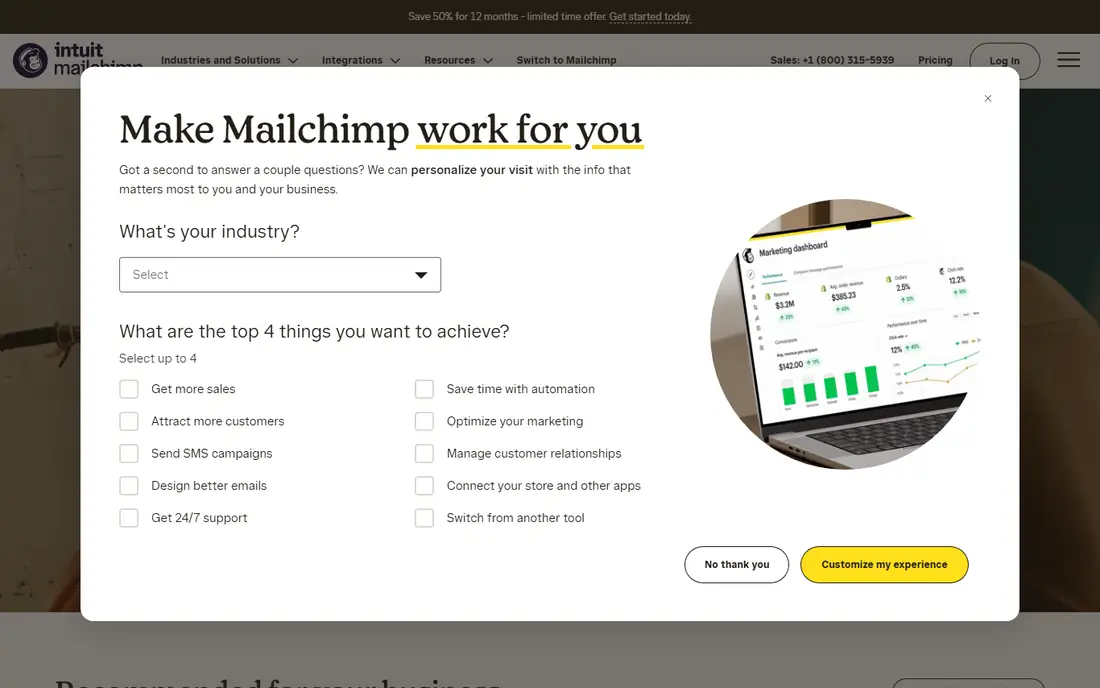
Mailchimp is the safe, widely supported choice. It connects to most ecommerce platforms, CRMs, and website builders, which matters when email is one part of a larger stack rather than the whole business. Its templates, audience segments, and reporting cover the basics well, and most contractors already know how to use it.
The downside is cost at scale. Pricing is tied to contacts, and a list that grows steadily can move into a much higher tier without any change in sending volume. Some automation features also need a higher plan. Choose Mailchimp when integrations and familiarity matter more than the lowest price at a large list size.
What we like- Very broad integration library
- Solid templates and audience tools
- Familiar to many freelancers and agencies
Watch out for- Price rises quickly as contacts grow
- Advanced automation sits on higher plans
#2MailerLite
Best for: simple email and landing pages on a budget4.6/5 on
G2 (1,114 reviews, checked Oct 2026)
Visit mailerlite.com
Starting price$19 per month
Free planYes
MailerLite appeals to creators and small teams that want email, landing pages, and a simple site without learning a complex platform. The editor is straightforward, automation covers common sequences such as welcome series and abandoned cart flows, and the free plan lets a new list get started before paying.
Where it falls short is advanced logic. Branching automations, detailed subscriber scoring, and complex ecommerce flows are thinner here than in GetResponse or ActiveCampaign-style tools. New accounts also go through an approval step, which can slow the first campaign. Pick MailerLite when simplicity and price matter more than deep automation.
What we like- Clean editor and simple automation
- Landing pages and websites included
- Free plan for getting started
Watch out for- Automation depth is below specialist tools
- Approval process can delay first sends for new accounts
#3Beehiiv
Best for: newsletters built for growth and monetisation4.5/5 on
G2 (40 reviews, checked Oct 2026)
Visit beehiiv.com
Starting priceSee website
Free planYes
Beehiiv is built for newsletters first, not for general marketing email. Its recommendation network, referral programme, and paid subscription tools help a publication grow and earn without bolting on extra services. The writing and publishing experience feels closer to a media product than to a traditional email tool, which suits editorial creators.
That focus is also its limit. If the main job is ecommerce flows, product launches, and deep CRM-style automation, Beehiiv is thinner than Mailchimp or GetResponse. Pricing also climbs with subscriber bands, so a fast-growing list needs a cost forecast. Choose Beehiiv when the newsletter itself is the product.
What we like- Built-in referral and recommendation growth tools
- Paid subscriptions and ad network options
- Newsletter-first design
Watch out for- Less suited to general ecommerce email
- Pricing rises with subscriber tiers
#4Substack
Best for: writers who want paid subscriptions fast4.3/5 on
G2 (17 reviews, checked Oct 2026)
Visit substack.com
Starting priceFree
Free planYes
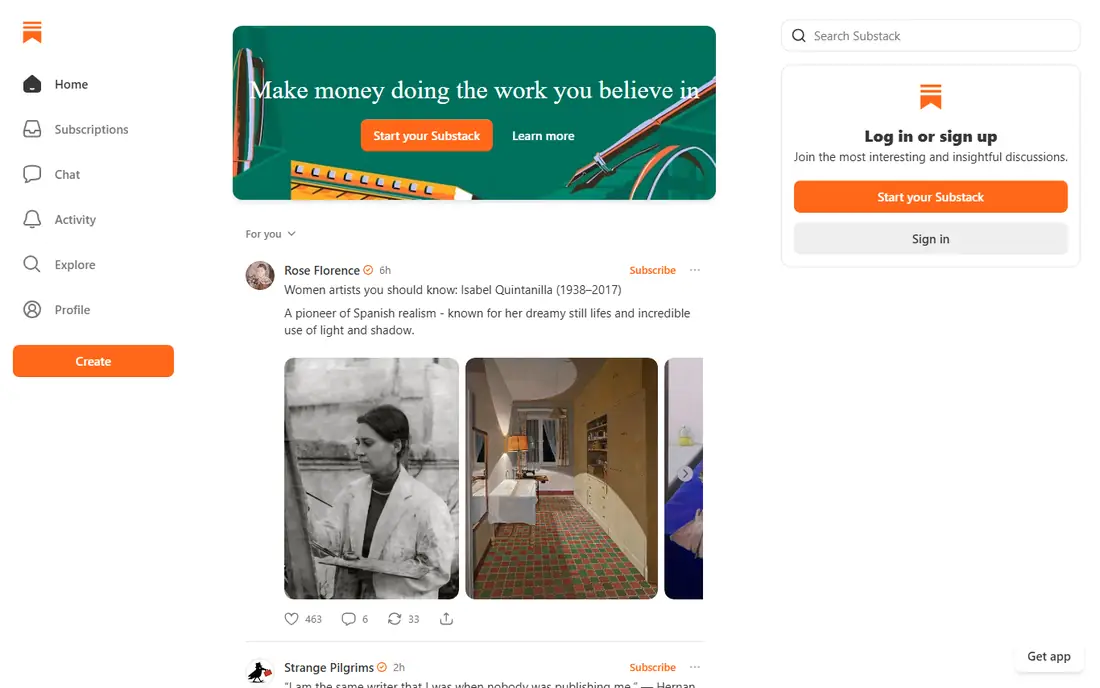
Substack removes almost every barrier to starting a paid newsletter. A writer can publish, offer free and paid tiers, and accept payments without setting up a separate site, payment tool, or email platform. Its recommendation system also helps new readers find a publication, which is hard to replicate on a standalone tool.
The trade is control and cost. Substack takes a percentage of paid subscription revenue on top of payment processing fees, and design, automation, and data options are narrower than in a dedicated email platform. Moving a large audience elsewhere later takes planning. Pick Substack when speed to a paid newsletter matters more than full ownership of the stack.
What we like- Free to start with paid subscriptions built in
- Built-in discovery through recommendations
- Simple publishing
Watch out for- Takes a share of paid subscription revenue
- Limited design and automation control
#5Flodesk
Best for: design-led email at a flat monthly price4.8/5 on
G2 (311 reviews, checked Oct 2026)
Visit flodesk.com
Starting price$38 per month
Free planFree trial
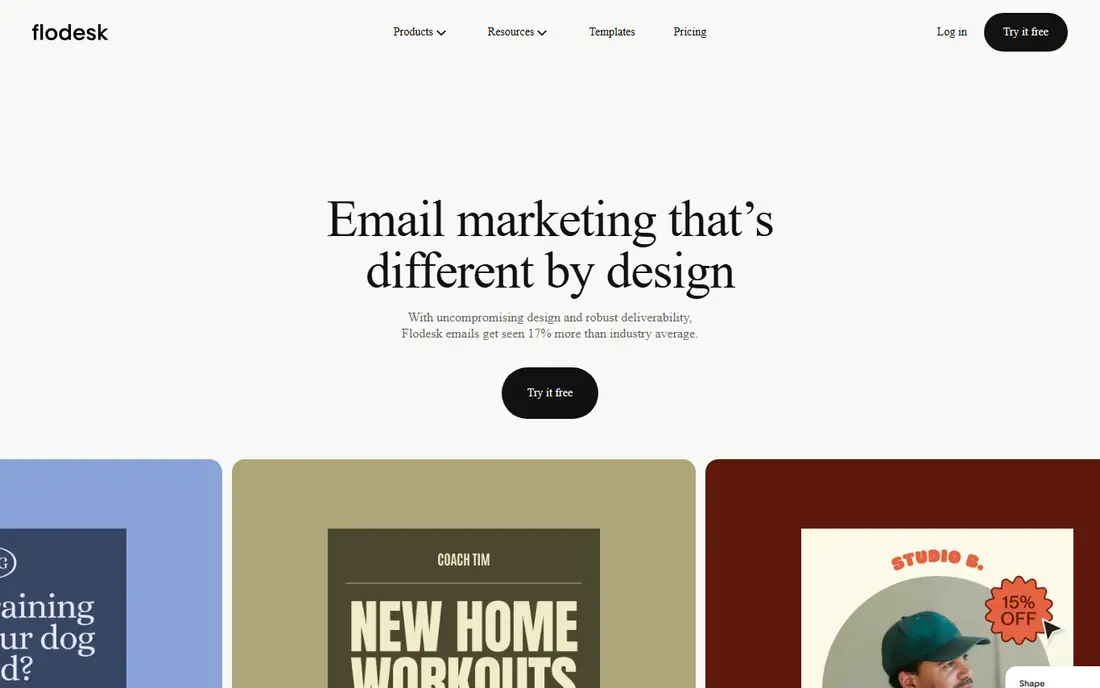
Flodesk stands out for two reasons: its templates look polished with little effort, and its price does not rise as the list grows. For a creator with a large list who sends regular campaigns, that flat price can be far cheaper than per-contact pricing. Workflows cover welcome sequences and basic segmentation without a steep learning curve.
The compromise is depth. Reporting, automation branching, and ecommerce features are simpler than Mailchimp or GetResponse, so data-driven teams may feel constrained. There is also no permanent free plan, only a trial. Choose Flodesk when design and predictable pricing matter more than advanced automation.
What we like- Flat monthly price regardless of list size
- Attractive templates
- Simple workflows
Watch out for- Analytics and automation are simpler than rivals
- No permanent free plan
#6AWeber
Best for: reliable automation with strong support4.2/5 on
G2 (650 reviews, checked Oct 2026)
Visit aweber.com
Starting price$15 per month
Free planYes

AWeber has served small businesses and creators for many years, and that history shows in dependable sending and support that many users praise. It covers the core jobs well: lists, tags, autoresponders, landing pages, and basic ecommerce integrations. For a team that wants a tool that simply works, that reliability counts.
The interface is less modern than Beehiiv or Flodesk, and some newer design features arrive later here. Pricing is also contact-based, so large lists cost more. Pick AWeber when support and reliability matter more than the newest interface.
What we like- Long track record and dependable deliverability
- Helpful support
- Solid automation and landing pages
Watch out for- Interface feels dated next to newer tools
- Price rises with list size
#7GetResponse
Best for: funnels, webinars, and automation in one tool4.3/5 on
G2 (1,143 reviews, checked Oct 2026)
Visit getresponse.com
Starting price$19 per month
Free planFree trial
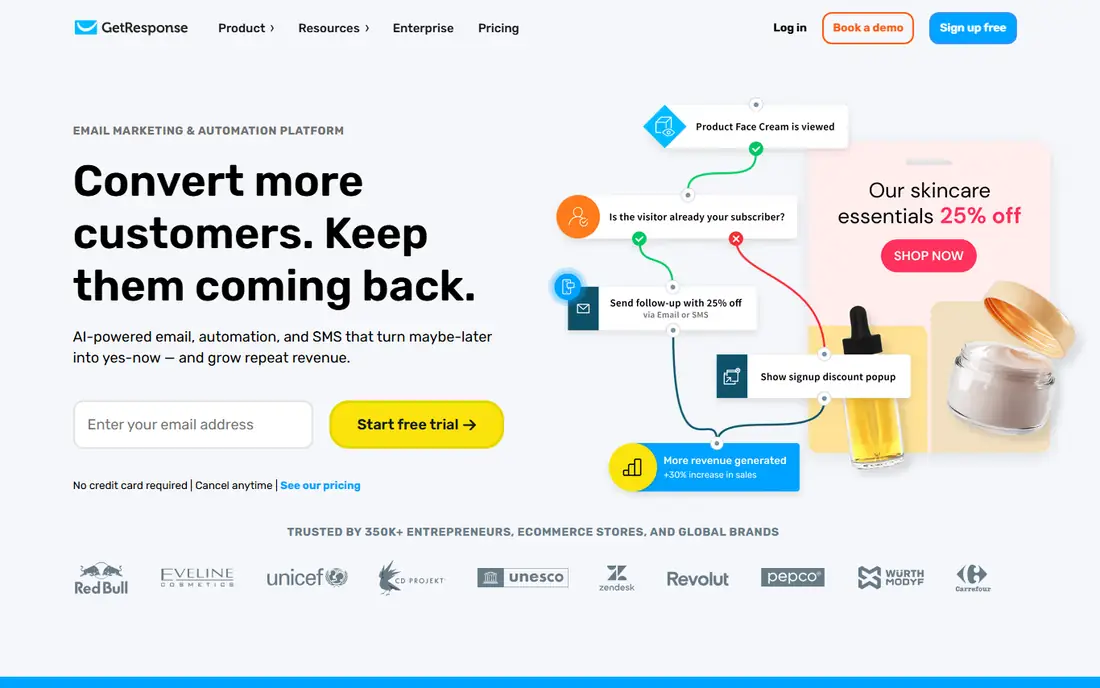
GetResponse suits creators and small businesses that sell through funnels rather than sending a newsletter alone. It combines email, landing pages, funnels, and webinars, so a course launch or product launch can run inside one account. Its automation builder handles branching logic better than the simplest tools here.
That breadth brings complexity. New users may need time to learn where each feature lives, and webinar attendee limits depend on the plan chosen. Pricing is also contact-based. Choose GetResponse when funnels and webinars are part of the plan, not just email.
What we like- Funnels, webinars, and automation under one subscription
- Good landing page builder
- Ecommerce integrations
Watch out for- Interface has a learning curve
- Webinar limits vary by plan
#8Ghost
Best for: owned newsletters and memberships4.0/5 on
G2 (40 reviews, checked Oct 2026)
Visit ghost.org
Starting priceSee website
Free planFree trial
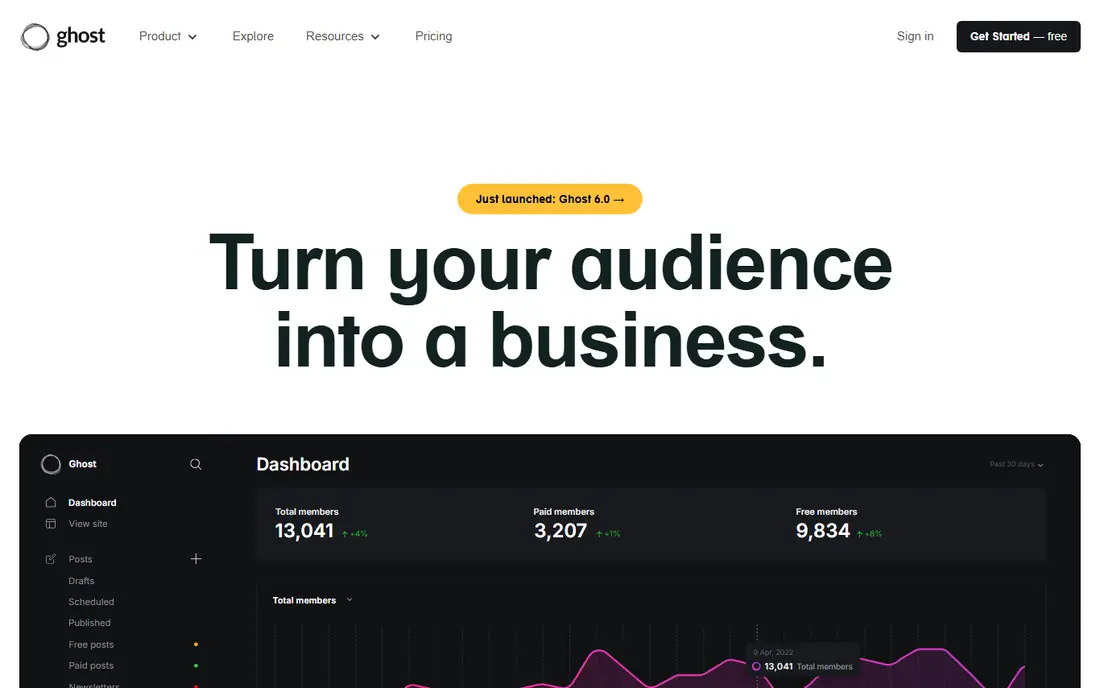
Ghost is the ownership option. It runs the publication site, the newsletter, and paid memberships in one system, and it does not take a share of subscription revenue beyond standard payment processing. Content, members, and email lists can be exported, which reduces lock-in compared with a closed newsletter platform.
The cost is effort. Ghost needs more setup than Substack, and custom themes or integrations may need developer help, even on the hosted version. Pricing is also tied to member count on hosted plans. Pick Ghost when owning the audience, the site, and the revenue model matters more than the fastest possible start.
What we like- Website, newsletter, and memberships in one platform
- No revenue share on hosted plans beyond payment fees
- Full data export
Watch out for- Needs more setup than Substack
- Theme and integration work may need a developer
How we chose
We compared pricing pages, documentation, and public reviews on G2, Capterra, and Reddit, and we checked each tool against the jobs ConvertKit users actually do: growing a list, sending broadcasts, running automations, building landing pages, and selling products or subscriptions. Tools made this list only when they serve creators or small businesses today, with a real free plan or trial and a published way to import a list. We left out enterprise-only platforms and tools that only send transactional email.
Choosing the right switch
Start with list size and growth, since that decides the bill more than any feature list. A tool that looks cheap at 500 subscribers can become expensive at 10,000, while a flat-price tool looks dear at first and cheaper later. Model the price at your current size and at double that size before committing.
Next, check the migration path. Export tags, segments, and automation rules from the current account, and confirm the new tool can import them without losing subscriber history. Test a welcome sequence, a landing page form, and a broadcast to a small segment before moving the whole list.
Features that cause regret
Automation depth is the most common regret. A simple welcome series is easy everywhere, but branching logic, purchase-based triggers, and subscriber scoring differ widely. Landing pages, forms, and ecommerce integrations are the next trouble spots. If those matter, test them during the trial, not after the switch.
A short decision guide
For a newsletter that aims to grow through recommendations, shortlist Beehiiv and Substack. For a small business that needs broad integrations, shortlist Mailchimp and GetResponse. For a creator on a budget, shortlist MailerLite and AWeber. For flat pricing at scale, check Flodesk. For full ownership, check Ghost.
Frequently asked questions
What is the closest alternative to ConvertKit?
MailerLite and AWeber are the closest in spirit for many creators, since both focus on simple lists, tags, and automations at a lower entry price. Beehiiv is closer when the goal is a newsletter publication with growth tools, while GetResponse is closer when funnels and webinars matter.
Can I import my ConvertKit list and tags?
Yes, in most cases. The tools here support CSV import, and several offer a dedicated migration guide or assisted import. Tags and custom fields usually transfer, but automation rules often need rebuilding by hand, so budget time to recreate sequences and test them.
Which ConvertKit alternative is cheapest for a large list?
Flodesk flat pricing often wins once a list is large, since the price does not rise per subscriber. Substack is free to start but takes a share of paid revenue, so its total cost depends on subscription income. Always model the price at your real list size.
Is Substack better than Beehiiv for a new newsletter?
Substack is faster to start and simpler to run, with paid subscriptions built in. Beehiiv gives more growth tools, referral features, and design control, and it suits a publication that plans to monetise through ads as well as subscriptions. The better pick depends on whether speed or growth tooling matters more.
Do these tools work for selling digital products?
Yes, with differences. ConvertKit itself is strong for creator commerce, and GetResponse, Ghost, and Substack all support paid products or memberships. Mailchimp and MailerLite handle product sales through ecommerce integrations, but they are less focused on creator commerce than Ghost or Substack.
Should I keep ConvertKit instead of switching?
Staying makes sense when automations, tags, and landing pages already work well and the price still fits the list size. Switching pays off when a different pricing model, a newsletter growth feature, or full ownership of the site and memberships changes the economics or the workflow in a clear way.
Sources we checked (8)
- https://mailchimp.com/pricing
- https://mailerlite.com/pricing
- https://beehiiv.com/pricing
- https://substack.com
- https://flodesk.com/pricing
- https://aweber.com/pricing
- https://getresponse.com/pricing
- https://ghost.org/pricing
Is your product missing or out of date?
We review this list regularly. Vendors can request a listing, send updated pricing or ask about featured placement.

Shihab Mia · Founder, Rankite
Shihab has 5+ years in B2B and SaaS SEO. He writes Rankite's software buying guides from pricing pages, documentation and public user reviews. More about Shihab.