How we make this list: we compare pricing pages, product documentation and public user reviews. Rankite is independent; if a vendor ever pays for a featured spot, that listing is clearly labeled Partner.
Key takeaways
- Wiz leads the CNAPP market with agentless scanning and a graph-based view of cloud risk that security teams love.
- Orca Security matches Wiz on agentless coverage with strong workload-level detail.
- Palo Alto's Prisma Cloud, Check Point CloudGuard and Trend Cloud One suit enterprises standardizing on those vendors' ecosystems.
- Aqua Security, Sysdig and Upwind offer strong alternatives with container and runtime security depth.
Quick comparison
| Tool | Best for | Starting price | Free plan |
|---|
 Wiz Wiz | teams that want complete cloud visibility without agents | See website (custom quote) | Free trial |
 Orca Security Orca Security | agentless security with deep workload context | See website (custom quote) | Free trial |
 Prisma Cloud Prisma Cloud | enterprises standardized on Palo Alto Networks | See website (custom quote) | Free trial |
 CloudGuard CloudGuard | Check Point customers extending to cloud | See website (custom quote) | Free trial |
 Trend Cloud One Trend Cloud One | Trend Micro shops securing cloud workloads | See website (custom quote) | Free trial |
 Aqua Security Aqua Security | container and Kubernetes security depth | See website (custom quote) | Free trial |
 Sysdig Sysdig | runtime security with forensic depth | See website (custom quote) | Free trial |
 Upwind Upwind | real-time cloud security without alert fatigue | See website | Free trial |
Is your product missing or out of date?
We review this list regularly. Vendors can request a listing, send updated pricing or ask about featured placement.
The best cloud security posture management tools
#1
Wiz
Best for: teams that want complete cloud visibility without agents
Visit wiz.io
Starting priceSee website (custom quote)
Free planFree trial
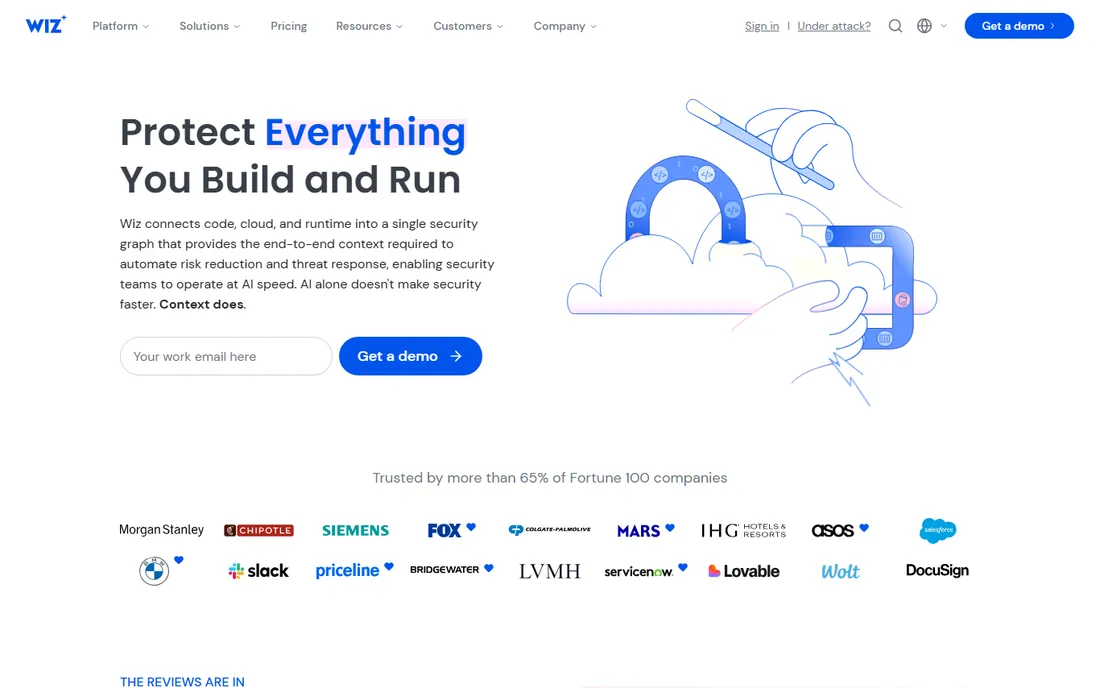
Wiz changed cloud security by proving agentless scanning works: connect your cloud accounts via API and get full visibility into misconfigurations, vulnerabilities, secrets and attack paths within hours, no agents to deploy or maintain. The security graph shows how issues combine into real attack paths, which prioritizes remediation brilliantly.
Pricing is enterprise and quote-based, which frustrates smaller teams. The initial scan can overwhelm with findings until you tune priorities. But for organizations that want the market leader with the best practitioner reputation, Wiz is the default evaluation starting point.
What we like- Agentless scanning deploys in minutes
- Security graph connects risks
- Beloved by practitioners
Watch out for- Enterprise pricing
- Can surface overwhelming findings initially
Starting priceSee website (custom quote)
Free planFree trial
Orca pioneered the agentless approach with SideScanning: inspect workload disk snapshots out-of-band for vulnerabilities, malware and misconfigurations without touching the workloads. The context-rich findings help teams understand not just what is vulnerable but whether it matters.
The Wiz-Orca rivalry drives rapid feature development on both sides, which benefits buyers. Pricing is custom. Teams evaluating Wiz should always evaluate Orca: the two are close enough that your specific environment and the sales experience decide.
What we like- Patented SideScanning technology
- Strong vulnerability context
- Good compliance features
Watch out for- Quote-based pricing
- Wiz rivalry means feature leapfrogging
Starting priceSee website (custom quote)
Free planFree trial
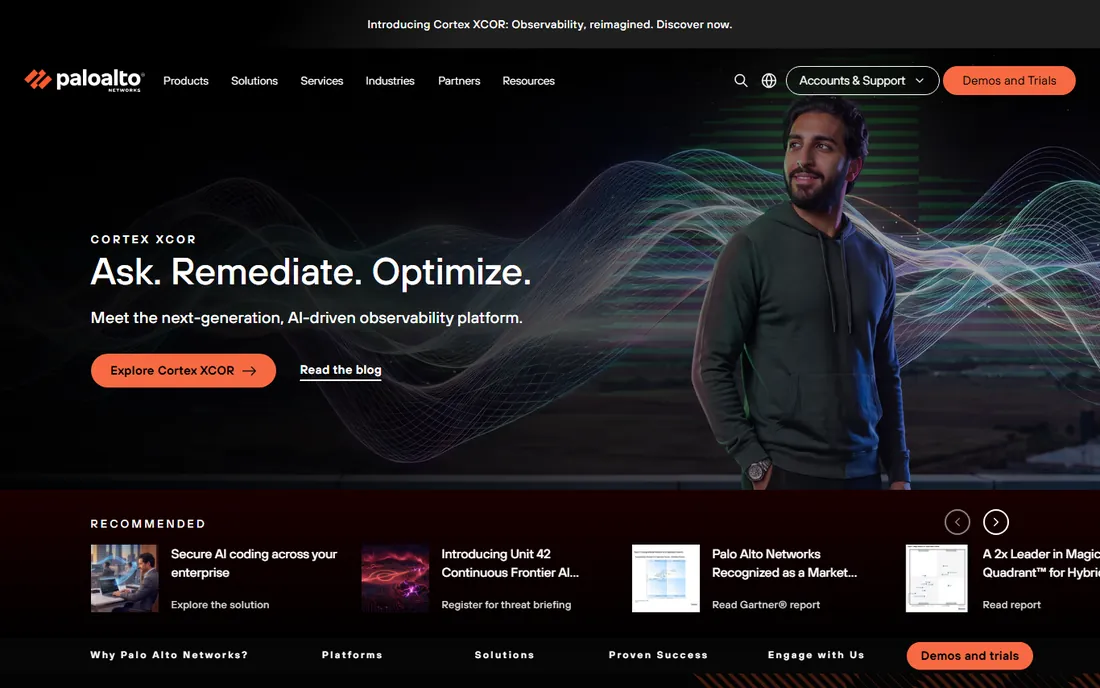
Prisma Cloud (now part of Palo Alto's Cortex Cloud platform) offers the full CNAPP: CSPM, workload protection, network security and code security in one. Organizations already invested in Palo Alto firewalls and SASE get unified policy and visibility that standalone tools cannot match.
The platform breadth creates complexity, and standalone buyers may find better-focused alternatives. Pricing is enterprise. For Palo Alto shops, the integration argument is strong; for others, evaluate the best-of-breed options first.
What we like- Broad CNAPP platform
- Integrates with Palo Alto ecosystem
- Strong compliance
Watch out for- Complexity
- Best value inside the Palo Alto stack
Starting priceSee website (custom quote)
Free planFree trial
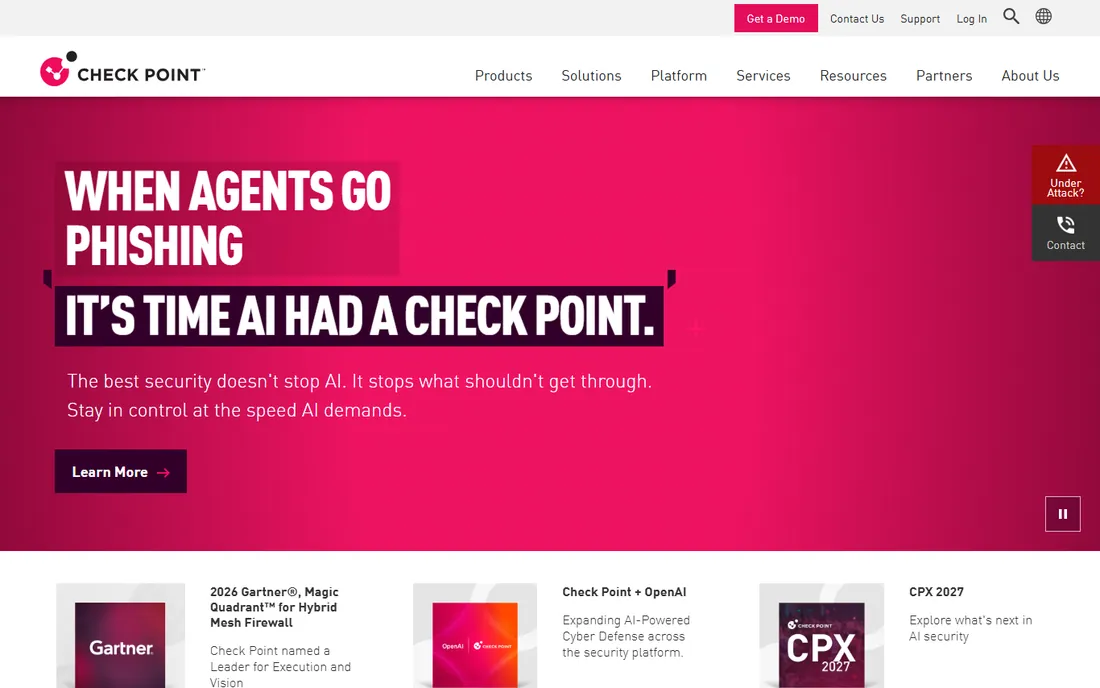
Check Point CloudGuard extends the company's security expertise to public clouds: posture management, workload protection and threat prevention under familiar policy management. Existing Check Point customers get consistent security from on-prem to cloud.
Cloud-native buyers often find Wiz and Orca more innovative. The enterprise sales process is traditional. It is the right choice when standardizing security vendors matters more than having the most advanced standalone CSPM.
What we like- Unified with Check Point security
- Good threat prevention
- Mature policies
Watch out for- Cloud-native depth trails leaders
- Enterprise sales motion
Starting priceSee website (custom quote)
Free planFree trial

Trend Micro Cloud One bundles conformity (CSPM), workload security, container and file storage security for Trend customers moving to cloud. The malware protection heritage shows in strong threat detection. Existing Trend Micro relationships simplify procurement.
Pure-play CSPM vendors offer deeper posture management specifically. This is a platform consolidation play. Organizations standardizing on Trend Micro get competent cloud security without new vendor relationships.
What we like- Integrated workload security
- Good malware protection
- Familiar to Trend users
Watch out for- CSPM breadth less than pure plays
- Platform-centric
Starting priceSee website (custom quote)
Free planFree trial
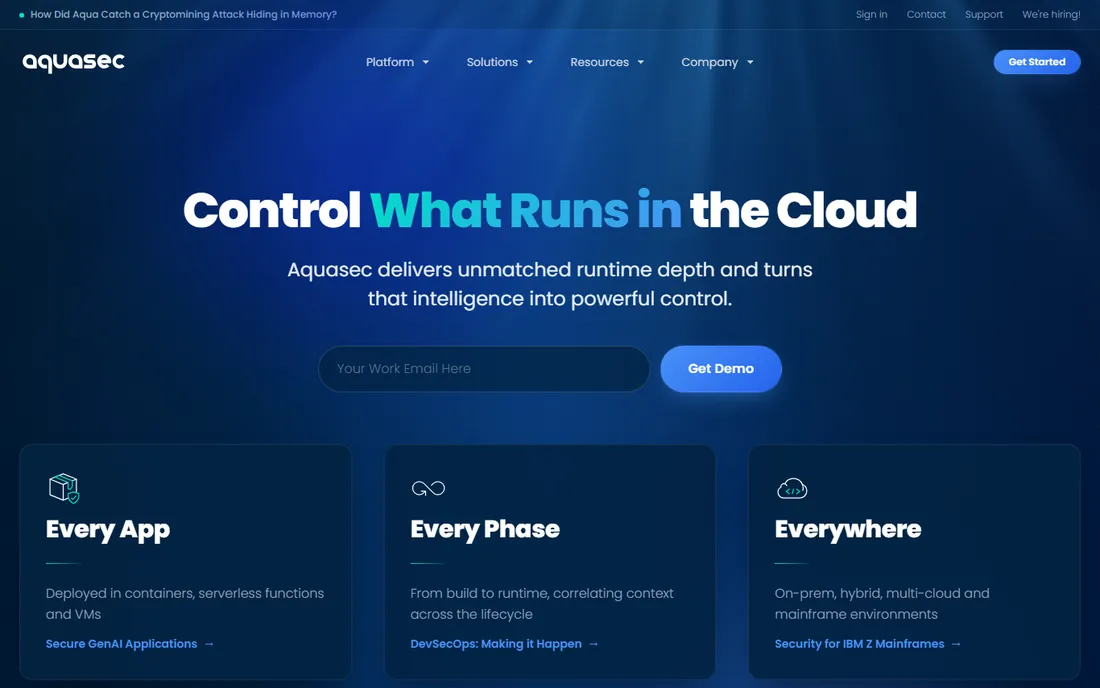
Aqua built its reputation securing containers before it was fashionable: image scanning, Kubernetes policy enforcement, runtime protection and secrets management with genuine depth. The CI/CD integrations catch issues before deployment. Container-heavy organizations get expertise the generalists lack.
Broader cloud posture (non-container infrastructure) is thinner than Wiz or Orca. Pricing is enterprise. If your cloud is mostly Kubernetes, Aqua's specialization outweighs the generalists' breadth.
What we like- Deepest container security
- Strong Kubernetes controls
- Good CI/CD integration
Watch out for- Container focus less broad than CNAPP
- Enterprise pricing
Starting priceSee website (custom quote)
Free planFree trial
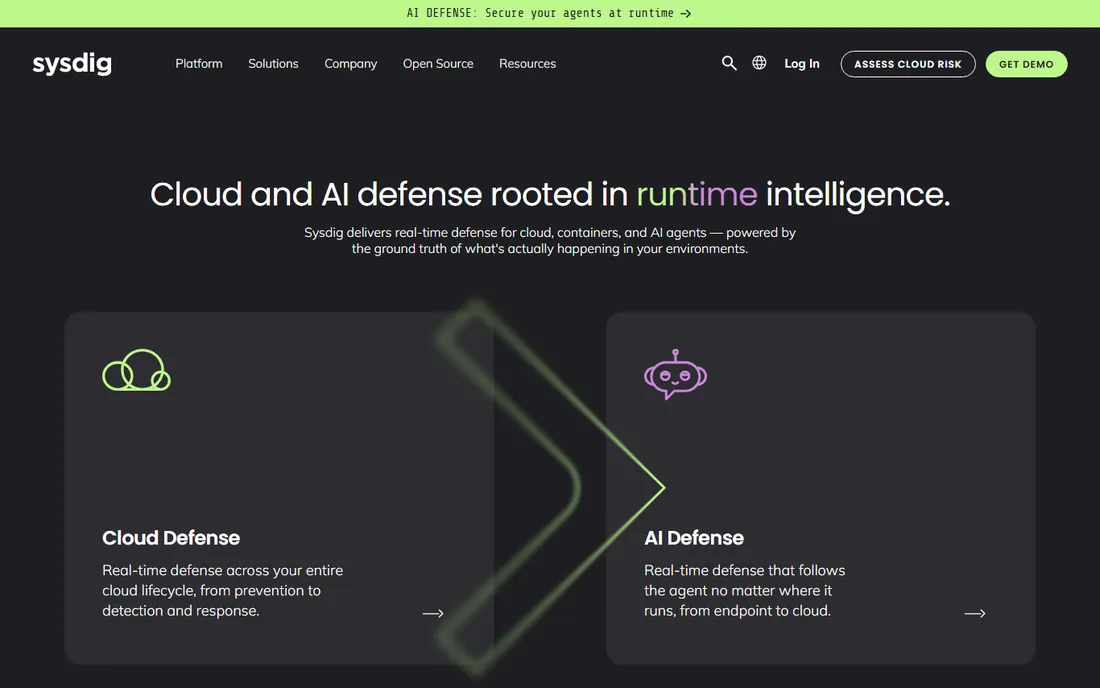
Sysdig sees what happens at runtime: system calls, network activity and process behavior inside containers and hosts, with forensic detail that incident responders love. The Falco open-source project gives it community credibility. CSPM features complement the runtime strength.
The depth creates complexity that needs skilled operators. Pricing requires engagement. Security teams that prioritize runtime threat detection with posture management attached find Sysdig distinctive.
What we like- Excellent runtime visibility
- Open-source Falco heritage
- Strong forensics
Watch out for- Complexity
- Pricing not transparent
#8
Upwind
Best for: real-time cloud security without alert fatigue
Visit upwind.io
Starting priceSee website
Free planFree trial
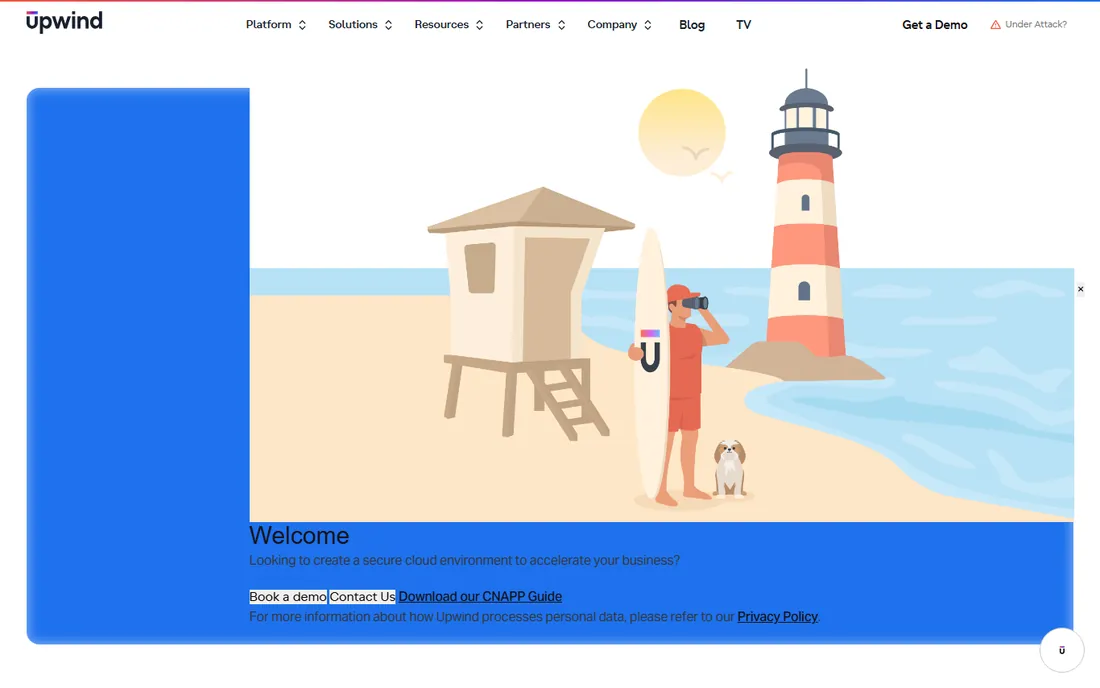
Upwind uses eBPF sensors for real-time cloud workload visibility, correlating posture issues with actual runtime behavior to cut false positives dramatically. The modern architecture appeals to cloud-native teams tired of alert floods. Early adopters praise the signal quality.
As a newer vendor, the track record is shorter and the ecosystem smaller than the leaders. Pricing is not published. Teams willing to bet on innovation over incumbency get a fresh approach to the CSPM noise problem.
What we like- EBPF-based real-time visibility
- Fewer false positives
- Modern architecture
Watch out for- Newer vendor
- Smaller market presence
How we chose
We evaluated current CNAPP/CSPM platforms on coverage, architecture, usability and market position, cross-checked against analyst reports and practitioner communities. Every tool listed is actively maintained with a live homepage as of October 2026. We weighted agentless capabilities, risk prioritization and multi-cloud support because those decide real-world value. Pricing is quote-based across the category.
Agentless vs agent-based: does it matter?
The agentless revolution (Wiz, Orca) proved you can get excellent visibility via cloud APIs without deploying software to every workload. Deployment drops from months to hours, and there is nothing to maintain or patch. For posture management, vulnerability scanning and configuration review, agentless suffices.
Agents still matter for runtime protection, deep forensics and network-level controls. The best architectures combine both: agentless for broad posture coverage, targeted agents where runtime defense is critical. Do not let the agentless marketing convince you agents are obsolete; do let it convince you that posture management should not require them.
What to check before you sign
Start with your cloud footprint. List every cloud provider, account and region, plus containers, Kubernetes and serverless usage. Verify each vendor covers your specific mix: multi-cloud depth varies, and some tools favor AWS over Azure or GCP.
Then test the risk prioritization during a trial. Every CSPM finds thousands of issues; the value is in telling you which ten matter. Check whether the tool correlates issues into attack paths, considers runtime context (is the vulnerable workload actually exposed?), and integrates with your ticketing. A prioritized list of ten beats an unprioritized list of ten thousand.
Finally, verify the remediation workflow. The best tools offer one-click fixes, infrastructure-as-code corrections and guardrails that prevent recurrence. Detection without remediation is just expensive awareness. Ask how the tool closes the loop, not just how it opens findings.
Also assess the compliance and reporting capabilities against your specific frameworks. SOC 2, PCI DSS, HIPAA, CIS benchmarks and regional regulations each have distinct cloud control requirements. Verify the tool maps findings to your frameworks natively and produces auditor-ready reports. Manual mapping of generic findings to compliance controls wastes the automation value.
Frequently asked questions
What is CSPM?
Cloud Security Posture Management continuously monitors cloud configurations for misconfigurations, compliance violations and risks. It answers "is our cloud set up securely?" across all accounts and services, automatically.
How is CNAPP different from CSPM?
CNAPP (Cloud-Native Application Protection Platform) is the broader category combining CSPM with workload protection, network security and code security. CSPM is one component. Most tools on this list are full CNAPPs; buyers often say CSPM when they mean the whole platform.
Do I need agents for cloud security?
For posture management, no: agentless scanning via APIs covers it. For runtime protection and deep forensics, agents (or eBPF sensors) add value. Match the architecture to the use case rather than treating it as a binary choice.
How much does CSPM cost?
Enterprise pricing is quote-based, typically tied to cloud spend, workload count or resource count. Expect significant five-to-six-figure annual contracts for mid-size deployments. Get multiple quotes: the range is wide and negotiation matters.
Can CSPM replace my other security tools?
Partially. It consolidates posture, vulnerability and compliance scanning for cloud. It does not replace identity security, SIEM, or application security testing. Think consolidation of cloud-specific tools, not total replacement.
How long does deployment take?
Agentless tools (Wiz, Orca, Upwind) show value within hours of connecting cloud accounts. Full policy tuning, integration and remediation workflows take 4-12 weeks. Agent-based components add deployment time. The fast time-to-value is the category's hallmark.
Should CSPM come from my cloud provider or a third party?
Cloud-native tools (AWS Security Hub, Defender for Cloud, Google SCC) offer basic posture management integrated with the platform. Third-party CNAPPs provide deeper analysis, multi-cloud consistency and better prioritization. Most serious security programs use both: native for baseline, third-party for depth. Single-cloud shops can start native; multi-cloud needs third-party.
How do I reduce CSPM alert fatigue?
Tune ruthlessly: disable checks that do not apply to your environment, prioritize by attack-path analysis and runtime context, and route findings to the teams that own the resources. The tools that correlate posture with real exposure (Upwind's runtime context, Wiz's security graph) inherently produce less noise. Alert fatigue is a configuration problem more than a tool problem.
Start with the critical few: public exposures, unencrypted sensitive data, and privileged access misconfigurations. Fix those completely before expanding scope. Teams that try to fix everything at once fix nothing; teams that sequence ruthlessly show progress that builds momentum for the broader program. Report the trend, not just the count: "critical exposures down 80% this quarter" sustains executive support better than any dashboard. Tie the improvements to business risk reduction so the security program's value is legible to non-technical leadership. The CISO who speaks in risk reduction gets budget; the one who speaks in finding counts gets questions. Build the reporting habit early: monthly trend reports that connect posture improvements to reduced breach likelihood. Consistency in reporting builds the credibility that sustains long-term security investment and executive confidence.
Sources we checked (8)
- https://www.wiz.io
- https://www.orca.security
- https://www.paloaltonetworks.com
- https://www.checkpoint.com
- https://www.trendmicro.com
- https://www.aquasec.com
- https://www.sysdig.com
- https://www.upwind.io
Is your product missing or out of date?
We review this list regularly. Vendors can request a listing, send updated pricing or ask about featured placement.

Shihab Mia · Founder, Rankite
Shihab has spent more than a decade helping SaaS and e-commerce brands grow through search. He writes Rankite's software buying guides from pricing pages, documentation and public user reviews. More about Shihab.