How we make this list: we compare pricing pages, product documentation and public user reviews. Rankite is independent; if a vendor ever pays for a featured spot, that listing is clearly labeled Partner.
Key takeaways
- Check processing software spans image capture, remote deposit capture (RDC), and fraud screening, so identify which piece you actually need before you shop.
- Mitek and ParaScript focus on the intelligence layer: mobile deposit experiences and recognition-based fraud detection.
- Alogent and CheckAlt offer fuller deposit-automation platforms aimed at banks and credit unions.
- Digital Check and Panini provide the scanner hardware and capture software that feed images into back-office workflows.
- Pricing is quote-based across this category; every vendor here lists enterprise pricing through a sales conversation.
Quick comparison
| Tool | Best for | Starting price | Free plan |
|---|
 Mitek Mitek | Mobile deposit and check fraud defense | See website | No |
 ParaScript ParaScript | AI check recognition and fraud detection | See website | No |
 Alogent Alogent | Cloud check processing for banks and credit unions | See website | No |
 CheckAlt CheckAlt | Integrated receivables and RDC services | See website | No |
 Digital Check Digital Check | Check scanners and capture equipment | See website | No |
 Panini Panini | Check scanners for distributed capture | See website | No |
 Jack Henry Jack Henry | Payment and deposit processing suite | See website | No |
Is your product missing or out of date?
We review this list regularly. Vendors can request a listing, send updated pricing or ask about featured placement.
The best check processing software
Starting priceSee website
Free planNo
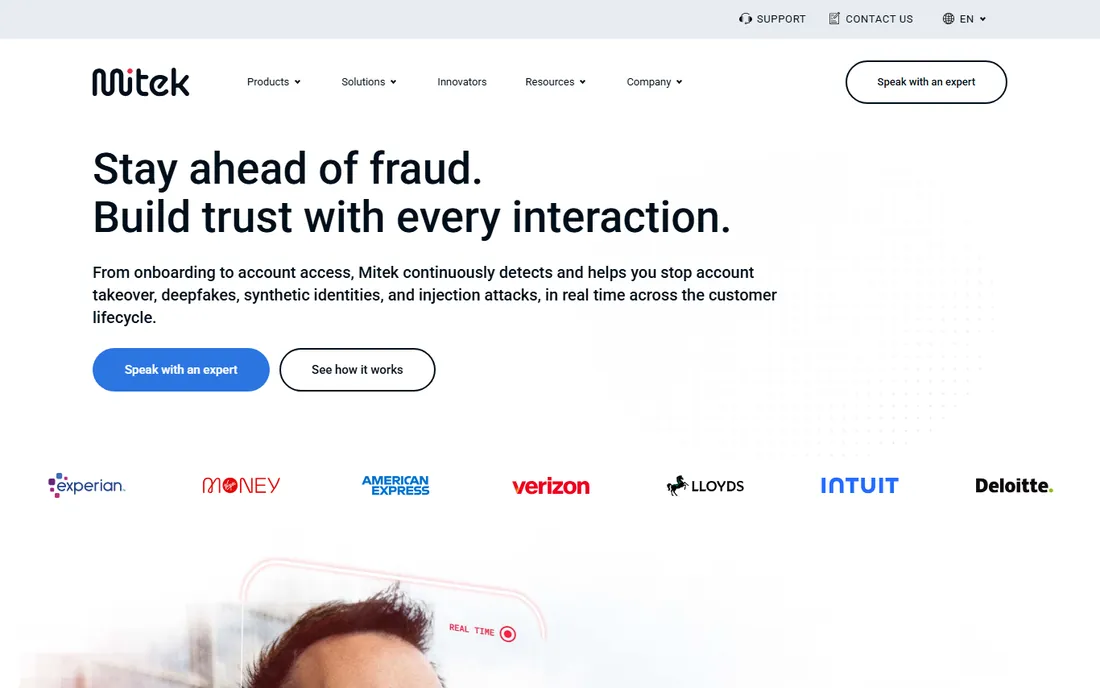
Mitek built its reputation on mobile check deposit, and its MiSnap and Mobile Deposit technology remain the benchmark that most bank apps are measured against. Banks that want their customers to photograph a check and see funds available quickly tend to evaluate Mitek first.
The company has expanded into digital fraud defense, with identity verification, deepfake detection, and transaction screening layered around deposits. For a bank, that means check fraud tools like signature verification and duplicate detection arrive as part of a wider fraud stack rather than a standalone product. The catch is that Mitek sells to institutions at enterprise scale, so smaller banks often encounter it through their core provider rather than by buying direct.
What we like- Industry-standard mobile deposit technology
- Layered fraud detection across the deposit journey
- Used by thousands of financial institutions
Watch out for- Enterprise pricing only
- Core positioning now covers broader identity verification, not just checks
Starting priceSee website
Free planNo
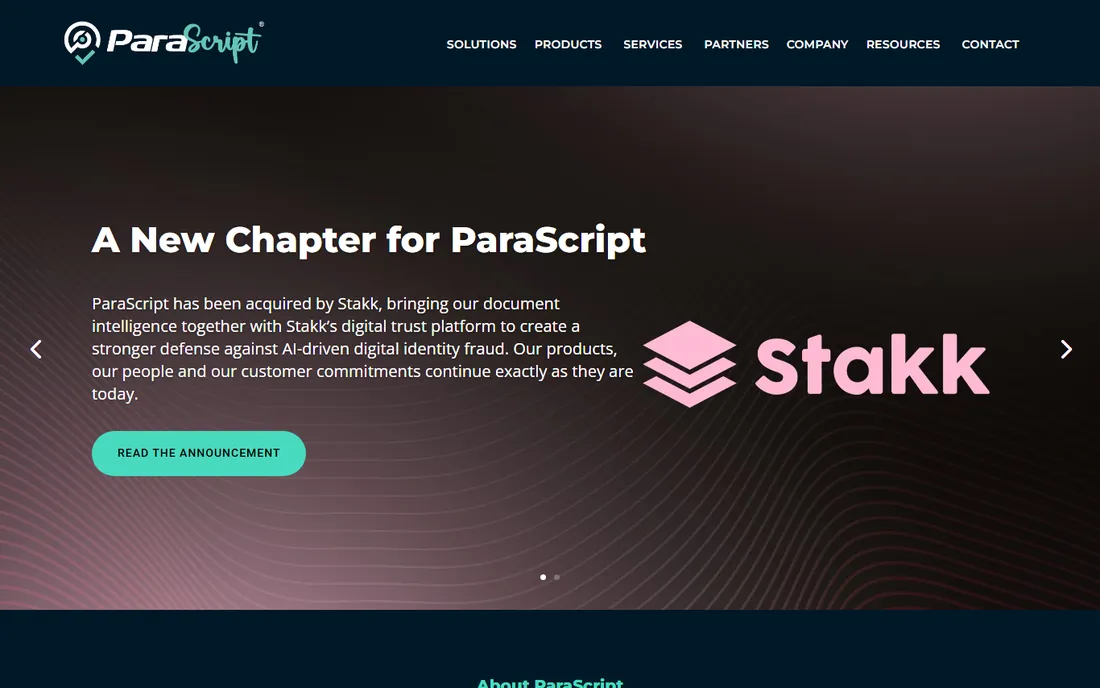
ParaScript is a recognition specialist. Its software reads courtesy and legal amounts, signatures, and handwriting on checks with accuracy levels that matter when millions of items flow through daily. Back-office teams use it to catch mismatched amounts and forged signatures before items clear.
The honest distinction: ParaScript sells the engine, not the deposit experience. Financial institutions license its technology to embed inside their own check processing software, whether that covers remote deposits, branch capture, or lockbox operations. If you need a customer-facing deposit product, you are looking at a partner or a platform like Alogent instead.
What we like- Deep recognition technology for amounts, signatures, and handwriting
- Fraud detection purpose-built for checks
- Integrates into existing workflows
Watch out for- Recognition engine, not a full processing platform
- Pricing is quote-based
#3
Alogent
Best for: Cloud check processing for banks and credit unions
Visit alogent.com
Starting priceSee website
Free planNo
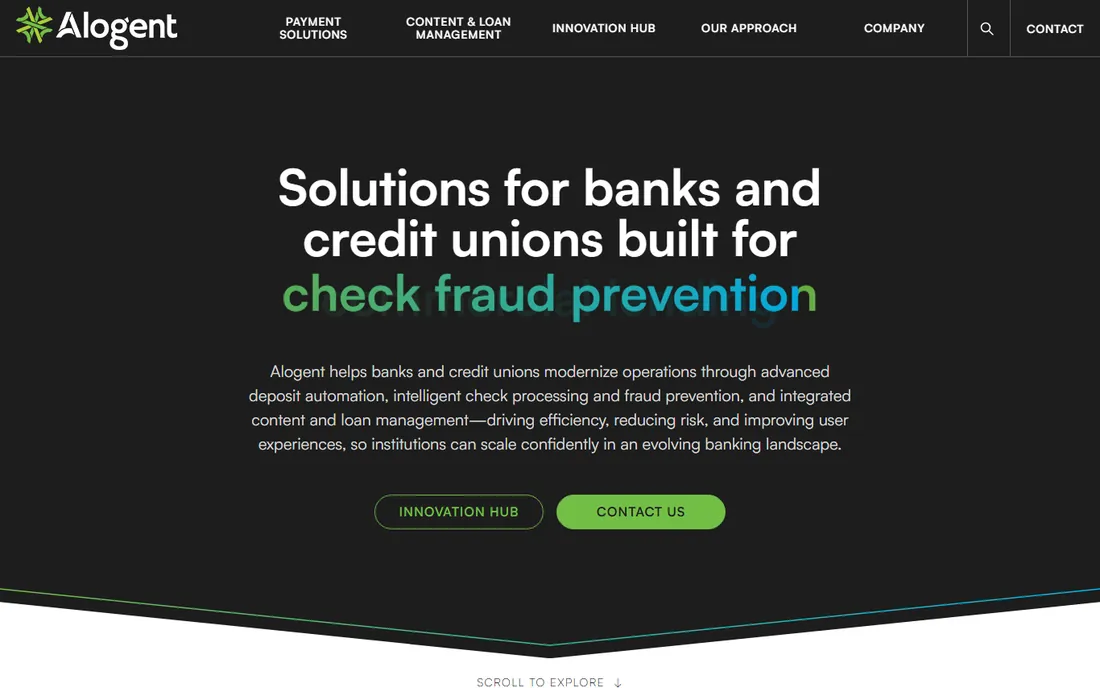
Alogent takes a cloud-first approach to check processing, covering branch, mobile, ATM and ITM, and back-office capture on one platform. Its pitch is that a community bank can run the entire deposit side of the house from a SaaS platform instead of juggling separate vendors per channel.
The platform includes omni-channel check capture, real-time transaction processing, and integrated fraud mitigation. Institutions get enterprise-wide visibility into exceptions and X9 file exchange with the Federal Reserve. This is squarely bank and credit union software; businesses that simply want to deposit checks remotely should look at a service like CheckAlt.
What we like- Cloud-native deposit automation across every channel
- Integrated AI-powered fraud prevention
- Day one and day two processing
Watch out for- Geared toward financial institutions, not corporate depositors
- Enterprise sales cycle
Starting priceSee website
Free planNo
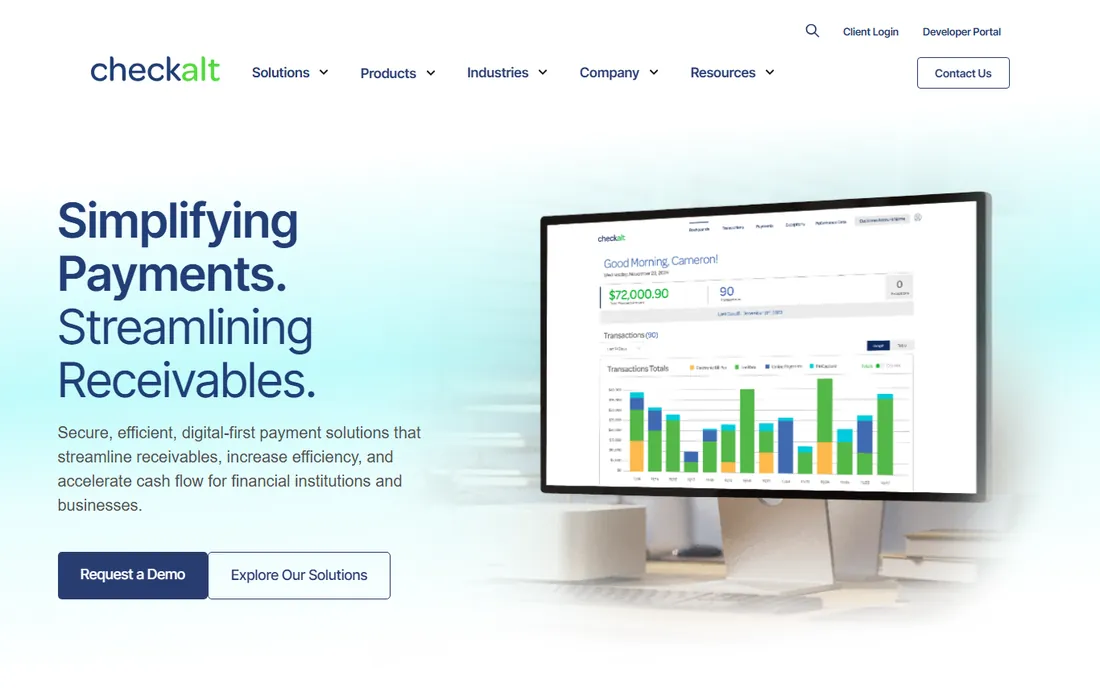
CheckAlt sits on the service side of check processing software. Its platform combines remote deposit capture, traditional and electronic lockbox, and online payments into a single cloud dashboard, which means a bank or a corporate client can outsource check processing entirely or license it as SaaS.
That flexibility is its appeal. A credit union that wants ATM deposit automation, a property manager collecting rent checks, and a municipality processing tax payments can all use CheckAlt differently. Pricing and exact scope come through a sales conversation, and buyers should pin down exactly which services they need before signing.
What we like- Combined RDC, lockbox, and online payments in one dashboard
- Outsourced or SaaS deployment
- Serves banks, credit unions, and businesses
Watch out for- Quote-based pricing
- Breadth of services can blur what you are actually buying
Starting priceSee website
Free planNo
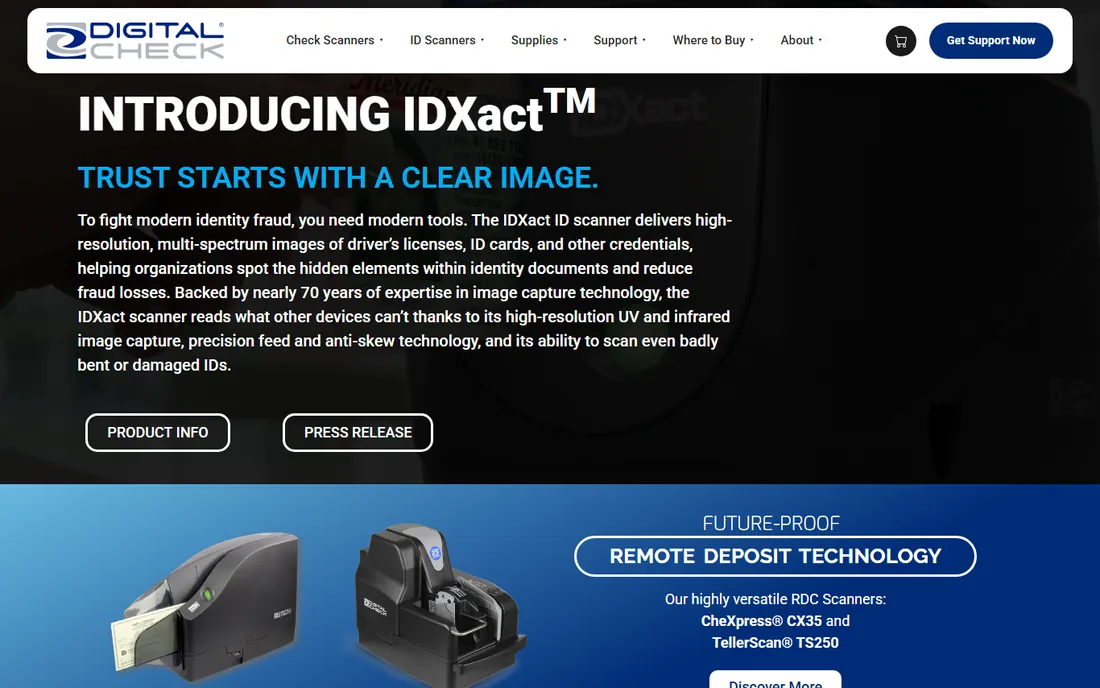
Digital Check makes the scanners that turn paper checks into images. Its TellerScan and CheXpress lines are fixtures at teller windows and back offices, built for volume, MICR reading accuracy, and now macOS support.
Strictly speaking this is hardware, but every check processing software stack needs a capture endpoint, and Digital Check is one of the two names that comes up every time. You buy the scanner through resellers, and the capture software that drives it typically comes from a partner vendor or your core provider.
What we like- Long-established scanner manufacturer
- TellerScan and CheXpress models widely deployed
- US-based manufacturing and support
Watch out for- Hardware-centric
- Capture software comes through integration partners
Starting priceSee website
Free planNo
Panini is Digital Check's main rival in the check scanner market. Its capture platforms cover distributed check processing, from branch teller stations to corporate RDC setups, with a stated focus on performance and reliability at the edge.
Like Digital Check, Panini sells hardware that check processing software depends on. The company also offers help desk services around remote deposit capture, which helps institutions supporting thousands of business depositors. Expect to buy through resellers, and budget for the software layer from a different vendor.
What we like- Scalable capture platforms for branches and businesses
- Strong international presence
- Help desk services for RDC deployments
Watch out for- Hardware-centric
- Sales run through resellers and partners
Starting priceSee website
Free planNo
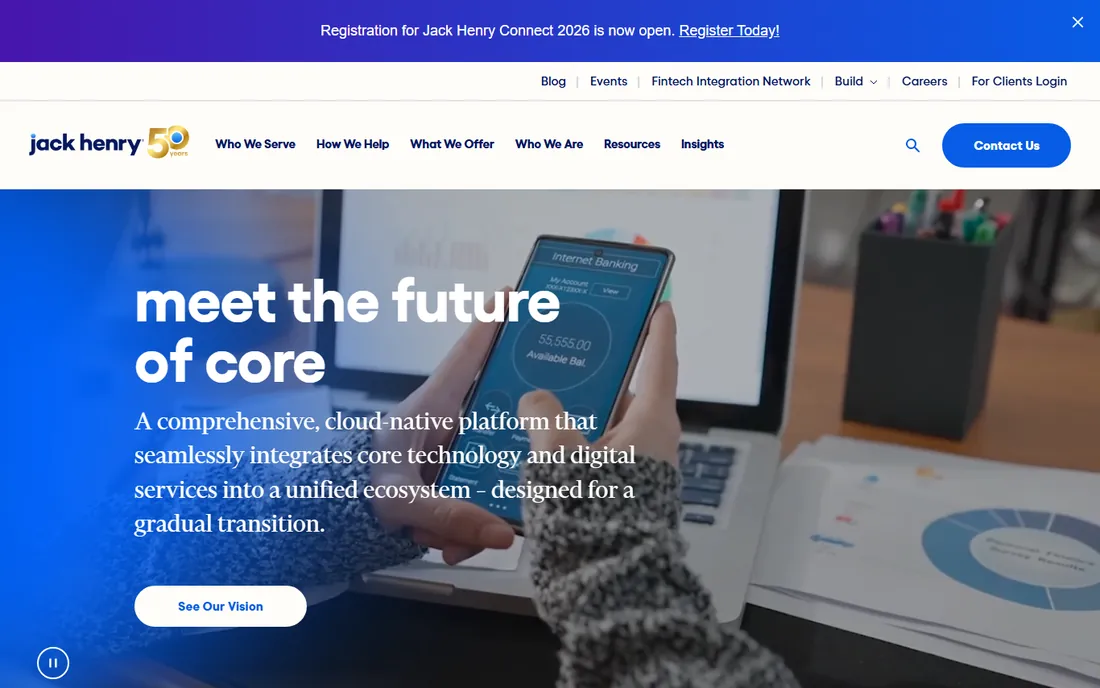
The ProfitStars brand, long known for remote deposit capture and payment products, now sits under the Jack Henry name. For community banks and credit unions running on Jack Henry cores, that means check processing products integrate natively with the rest of the institution's technology.
The suite covers remote deposit capture, image-based processing, and related payments tools. It is most natural for institutions already in the Jack Henry ecosystem. Banks on other cores can still buy the products, but they should check integration points with their own core provider first.
What we like- Deep integration with bank core systems
- Broad payments and deposit product line
- Serves thousands of community banks and credit unions
Watch out for- Best fit for institutions already on its platforms
- Enterprise pricing
How we chose
We reviewed vendor pricing pages and product documentation, plus public reviews on G2, Capterra, and industry forums like Reddit's banking communities. We weighed each product's role in the check lifecycle: capture, remote deposit, back-office processing, and fraud screening. We favored established vendors with verifiable current websites and active product lines, and we dropped OrboGraph because it was acquired by Kinective in 2026. We did not claim hands-on testing; this comparison reflects public documentation and documented market use.
What to ask vendors before you sign
Check processing contracts tend to be multi-year agreements with volume commitments, so the questions you ask during evaluation matter more than they do for typical SaaS. Ask each vendor to walk through your exact deposit flow and name the handoff points where their product ends and another vendor's begins. If nobody can draw that diagram cleanly, your implementation will stall.
Where does capture stop and processing start?
Some vendors sell the camera and the software that drives it. Others sell the back-office workflow. A few sell both. Map your current flow from the moment a check is photographed or scanned to the moment it clears, then ask each vendor exactly which steps their product handles. Gaps are where integration costs hide.
Also ask who owns image quality problems. Blurry or skewed images cause most downstream rejects, and every vendor blames the other side's capture hardware. Get a written answer on who fixes it before you sign.
How does fraud screening work?
Check fraud has grown alongside digital deposit adoption. Ask whether the product validates signatures, flags duplicate deposits, and checks amount mismatches. If fraud screening is a separate module, get the pricing for it separately, because the quote for capture alone rarely includes it.
Pay attention to duplicate deposit detection specifically. A customer depositing the same check twice, once by phone and once by mail, is the most common loss vector. The product should catch duplicates across channels in near real time, not just within one channel.
What are the integration requirements?
Banks need products that talk to their core processor. Businesses need APIs or simple file exports that feed their accounting systems. Ask for the integration list early, and ask for reference customers running the same core or accounting system you use.
Finally, ask about implementation timelines honestly. Vendors will quote weeks for a simple RDC setup and months for full platform replacements. Pin them to a written plan with milestones, because the sales call is the last time everyone is aligned.
A note on scanners versus software
Check processing is a chain: capture, image quality, recognition, fraud screening, clearing. The scanners from Digital Check and Panini handle capture. The platforms from Alogent, CheckAlt, and Jack Henry handle processing. The recognition engines from Mitek and ParaScript handle the intelligence in between. Most institutions buy from more than one of these buckets, so budget for the whole chain rather than a single product.
That layering also explains why pricing is always quote-based. A bank buying scanners for fifty branches plus a SaaS processing platform plus a fraud module is really buying three things, and each is sized to item volume and channel mix. Businesses can skip most of this: if you just need to deposit checks remotely, your bank's business RDC product, often powered by one of the vendors above, is usually the cheapest route.
Frequently asked questions
What is check processing software?
It is software that captures check images, extracts the payment data, screens for fraud, and routes items for clearing through channels like the Federal Reserve or clearinghouses. It covers mobile deposit, branch capture, remote deposit capture, lockbox, and back-office processing.
How much does check processing software cost?
Vendors in this category price by contract, based on item volume, channels, and modules. Expect quote-based pricing and annual agreements rather than posted per-user pricing. Scanner hardware is a separate line item, usually purchased through resellers.
Why does check processing still matter in 2026?
Check volumes have declined for decades, yet checks remain stubbornly common in business-to-business payments, rent collection, and several service industries. Paper items that do arrive now carry more fraud risk per item, because criminals have shifted their attention to the checks that remain. Efficient processing plus strong fraud screening is therefore less about nostalgia and more about protecting a shrinking but still valuable payment channel.
What is remote deposit capture (RDC)?
RDC lets a bank or business deposit checks by scanning or photographing them instead of bringing paper to a branch. It reduces courier runs and speeds up funds availability.
Do I need a scanner or is a phone enough?
Mobile deposit through a bank app is enough for individual checks and low volumes. Branches, lockbox operations, and businesses processing hundreds of checks a day need dedicated scanners for speed, MICR accuracy, and image quality.
How does check fraud detection work in these tools?
Recognition engines validate signatures, compare courtesy and legal amounts, and flag duplicates or altered items. Many banks pair this with hold policies and manual review queues for high-risk items.
Sources we checked (7)
- https://miteksystems.com/
- https://parascript.com/
- https://alogent.com/
- https://checkalt.com/
- https://digitalcheck.com/
- https://panini.com/
- https://www.jackhenry.com/
Is your product missing or out of date?
We review this list regularly. Vendors can request a listing, send updated pricing or ask about featured placement.

Shihab Mia · Founder, Rankite
Shihab has spent more than a decade helping SaaS and e-commerce brands grow through search. He writes Rankite's software buying guides from pricing pages, documentation and public user reviews. More about Shihab.