How we make this list: we compare pricing pages, product documentation and public user reviews. Rankite is independent; if a vendor ever pays for a featured spot, that listing is clearly labeled Partner.

Key takeaways
- Float and Pulse are the go-to tools for SMB cash flow forecasting.
- Dryrun and Fathom add scenario planning and beautiful reporting.
- Jirav and PlanGuru serve teams wanting forecasting inside broader FP&A.
- Centage suits mid-market finance teams needing depth.
- CashAnalytics serves large treasury teams with complex forecasting.
What cash flow forecasting software does
Cash flow forecasting software answers the most important question in business finance: will we have enough cash, and when. It pulls actuals from accounting systems and banks, projects inflows and outflows forward, and lets you model scenarios like losing a big client or delaying a hire.
Spreadsheets can do this until they cannot: multiple entities, rolling forecasts, and scenario comparisons turn spreadsheet models into fragile monsters. Dedicated tools automate the data collection and make the scenarios visual and shareable.
Pricing is typically monthly SaaS, with enterprise tools quoted. Trials are common in the SMB tier. Note that Finmark was acquired by BILL, so it no longer appears as a standalone forecasting tool.
How we chose
We selected tools with real cash flow forecasting products and businesses relying on them. We looked for automated data connections, scenario modeling, and clear visual forecasts.
We covered SMB tools through enterprise treasury platforms because cash forecasting matters at every size. We weighed ease of setup, since a forecast nobody updates is useless, and checked trial availability. Vendor claims were checked against documentation and pricing pages.
Starting priceSee website
Free planTrial available
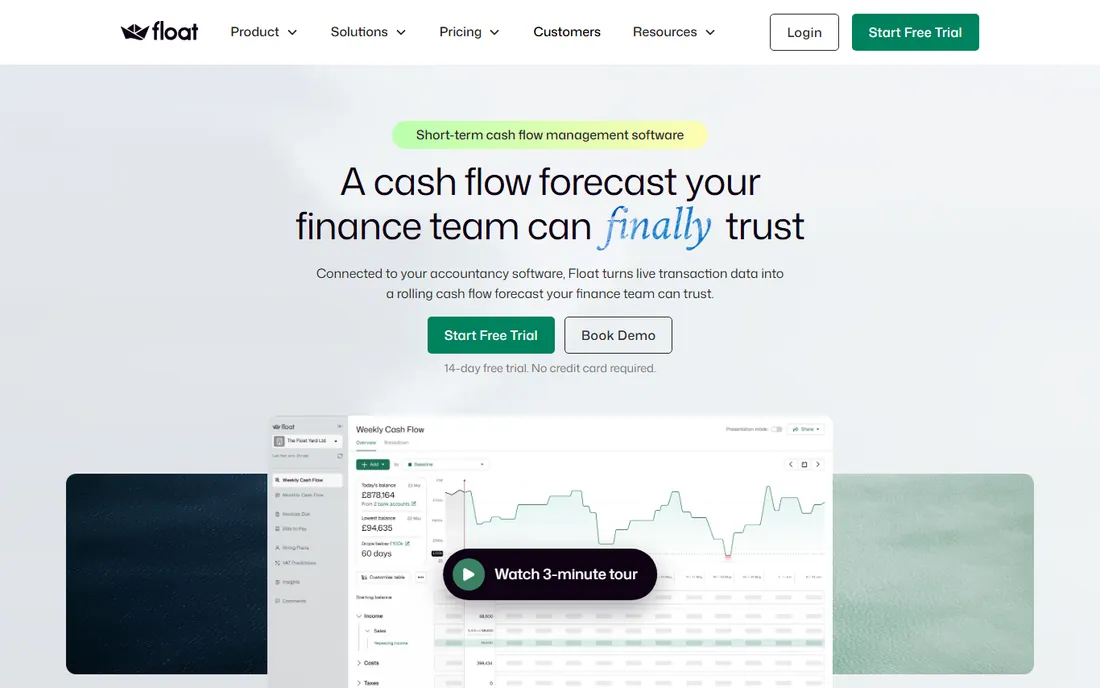
Float turns accounting data into visual cash flow forecasts that owners actually understand: projected balances week by week, with scenarios for best and worst cases. The QuickBooks and Xero integrations keep actuals current automatically.
Accountants recommend it widely because clients engage with the visuals. Scenario modeling answers the "what if we hire" questions without spreadsheet surgery.
Larger multi-entity operations may need more. For SMB cash clarity, Float is the standard recommendation.
What we like- Excellent visual forecasts
- Syncs with QuickBooks, Xero
- Scenario planning
- Well-liked by accountants
Watch out for- Pricing adds up with entities
- Advanced FP&A limited
- Best for SMB scope
Starting priceSee website
Free planTrial available
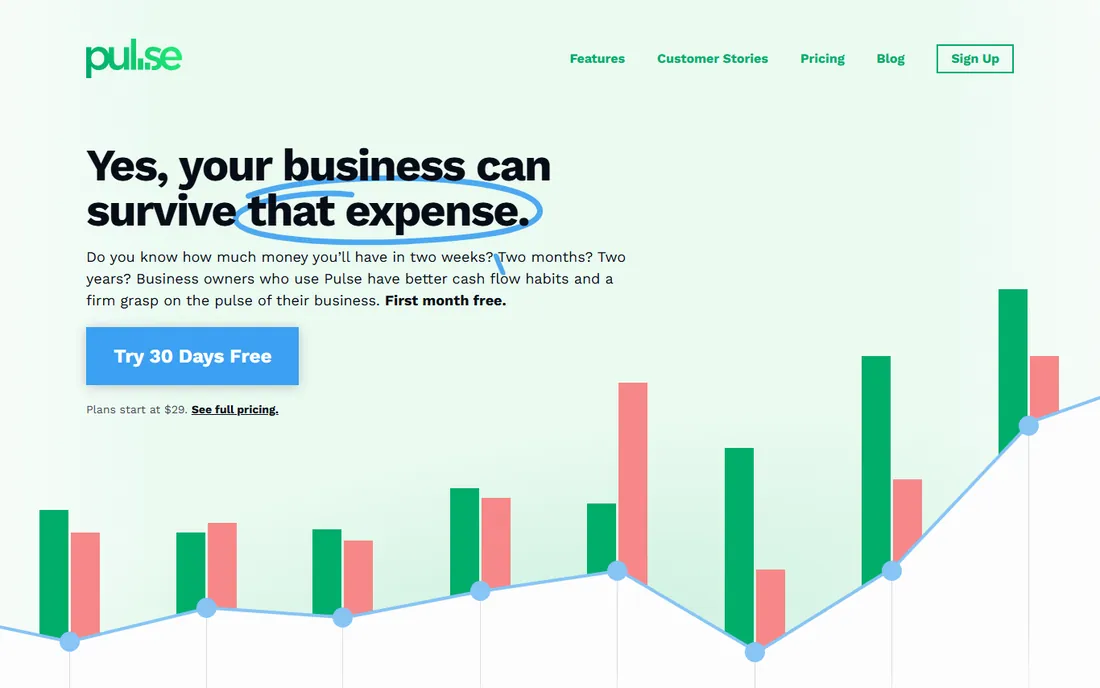
Pulse keeps cash flow forecasting deliberately simple: connect your accounting software, see your projected cash position, adjust assumptions. Small businesses that found Float more than they need land here.
Setup takes minutes and the interface needs no finance training. For the core question, "will we run out of cash," it answers clearly.
Teams wanting deep scenario planning should look at Dryrun or Float. For simple monitoring, Pulse's restraint is the virtue.
What we like- Very simple to use
- Quick setup
- Good for basic forecasting
- Affordable
Watch out for- Feature set basic
- Scenario depth limited
- Integrations fewer than Float
Starting priceSee website
Free planTrial available
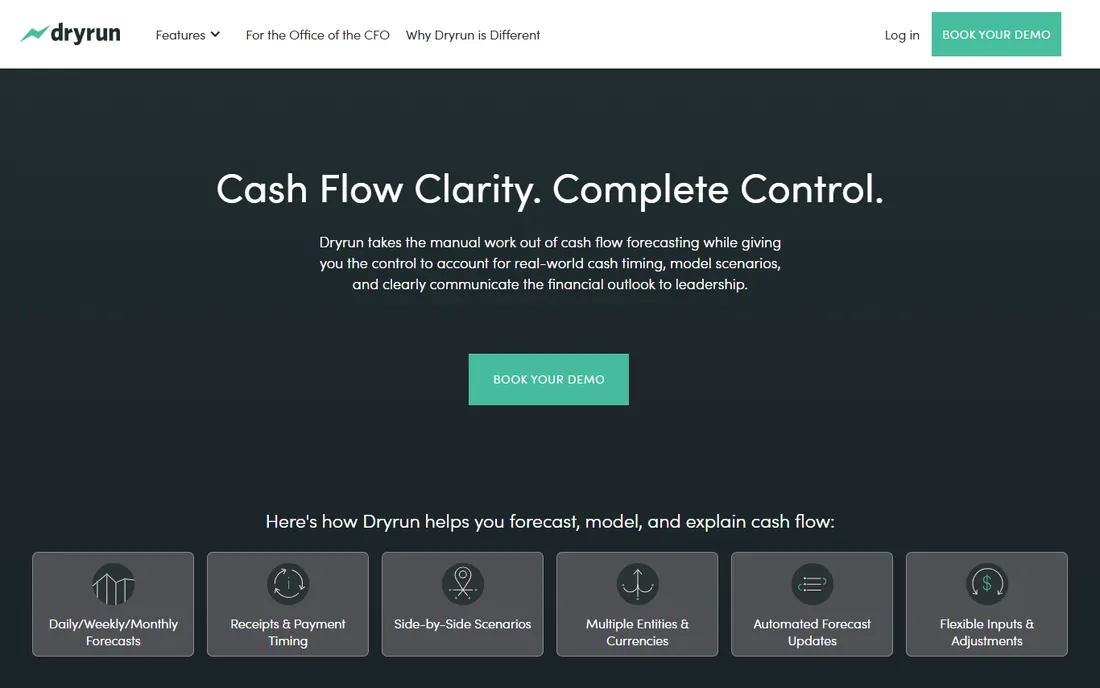
Dryrun is built for finance leaders who think in scenarios: model multiple futures, compare them side by side, and present the cash story to stakeholders with clarity. Project-based businesses like the way it handles lumpy revenue.
The flexibility suits CFOs who outgrew simple tools but do not need enterprise treasury systems. Visuals make board conversations about cash concrete.
It asks more of the user than Pulse. For scenario-driven cash management, the depth pays off.
What we like- Powerful scenario modeling
- Good for agencies and project businesses
- Clear visuals
- Flexible
Watch out for- Learning curve for full power
- Pricing is quote-based at scale
- Smaller company
Starting priceSee website
Free planTrial available
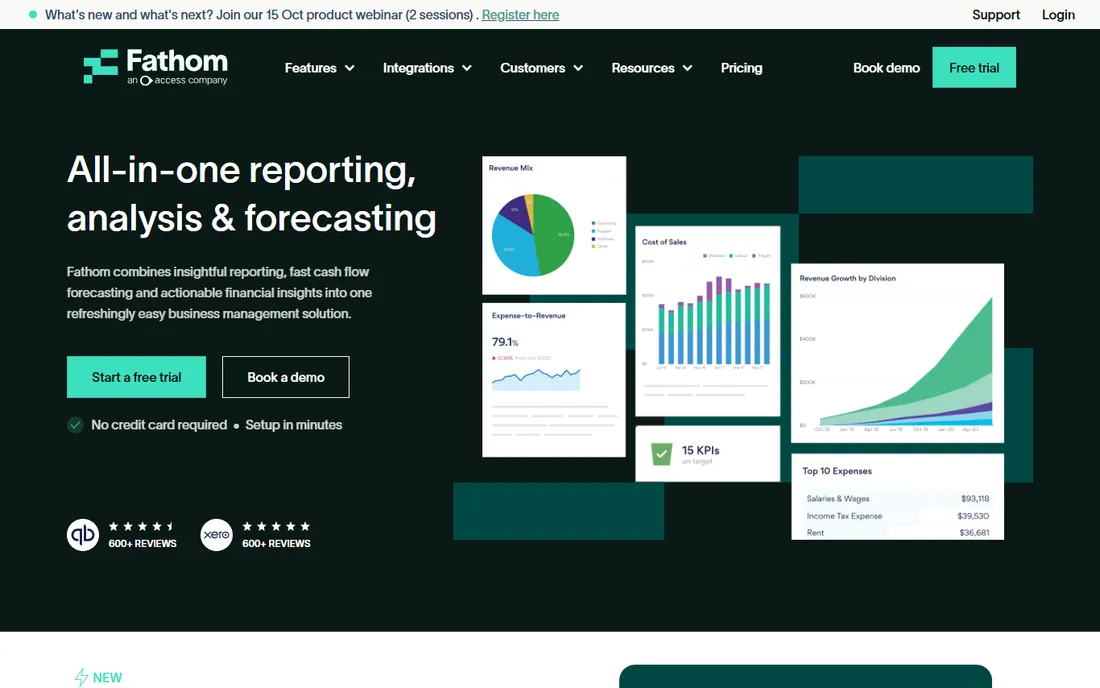
Fathom combines management reporting with cash flow forecasting in presentations clients actually read. Accountants use it for advisory services because the visuals make financial conversations easy.
KPI tracking, benchmarking, and consolidation sit alongside three-way forecasting. The report quality is the best in the category.
Pure forecasting depth trails Dryrun. But when the forecast must also persuade stakeholders, Fathom's presentation wins.
What we like- Gorgeous reports and dashboards
- Forecasting plus analysis
- Loved by accountants
- Good KPI tracking
Watch out for- Forecasting less deep than specialists
- Pricing per company
- Best as reporting-first
Starting priceSee website
Free planTrial available
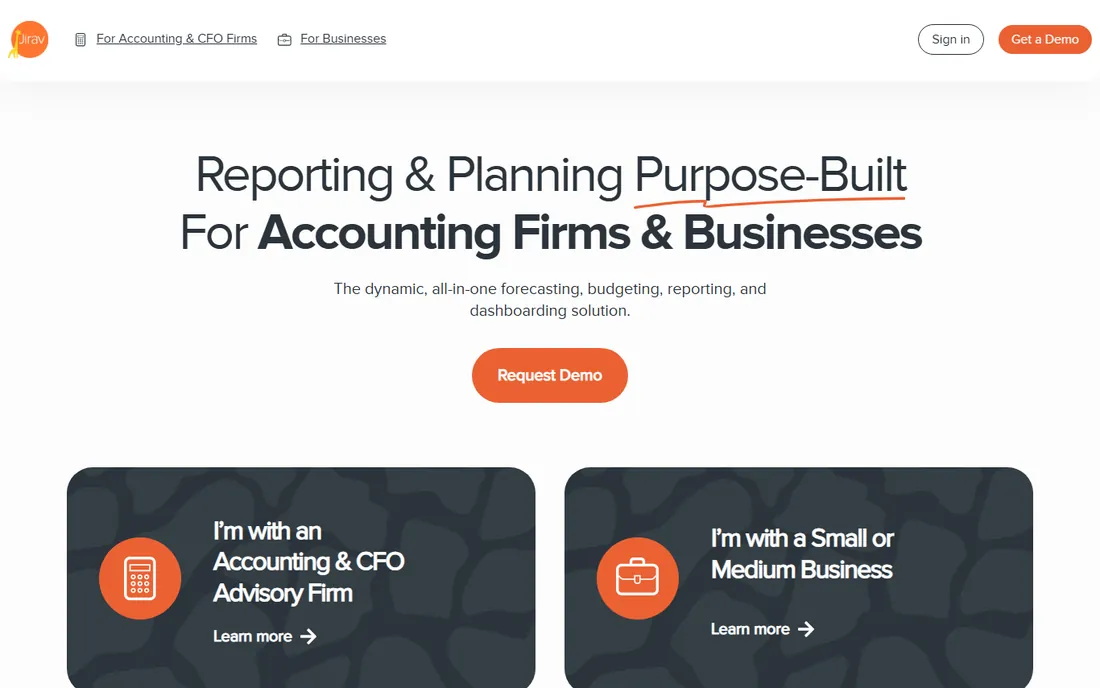
Jirav gives growing companies real financial planning and analysis: cash flow forecasting inside driver-based models that connect headcount, revenue, and spend. Startups use it to plan fundraising and hiring with rigor.
The accounting and HR integrations keep models current, and scenario planning is strong. It is the step up when cash forecasting becomes part of broader financial planning.
Small businesses may find it more than they need. For growth-stage FP&A, Jirav is the accessible choice.
What we like- Full FP&A beyond cash
- Driver-based planning
- Good for startups
- Integrates with accounting and HR
Watch out for- More than pure cash tools
- Setup needs thought
- Pricing scales
Starting priceSee website
Free planTrial available
PlanGuru has served detailed financial planners for decades with budgeting, forecasting, and reporting depth that rivals enterprise tools at accessible prices. Cash flow forecasting integrates with full P&L and balance sheet planning.
Finance professionals who like control appreciate the granularity. The analytical depth suits complex small and mid-sized businesses.
The interface feels older than modern rivals. For planners who value depth over design, it remains excellent.
What we like- Deep budgeting and forecasting
- Long track record
- Good for detailed planners
- Affordable
Watch out for- Interface dated
- Learning curve
- Cloud version less mature
Starting priceSee website
Free planNo, demo available
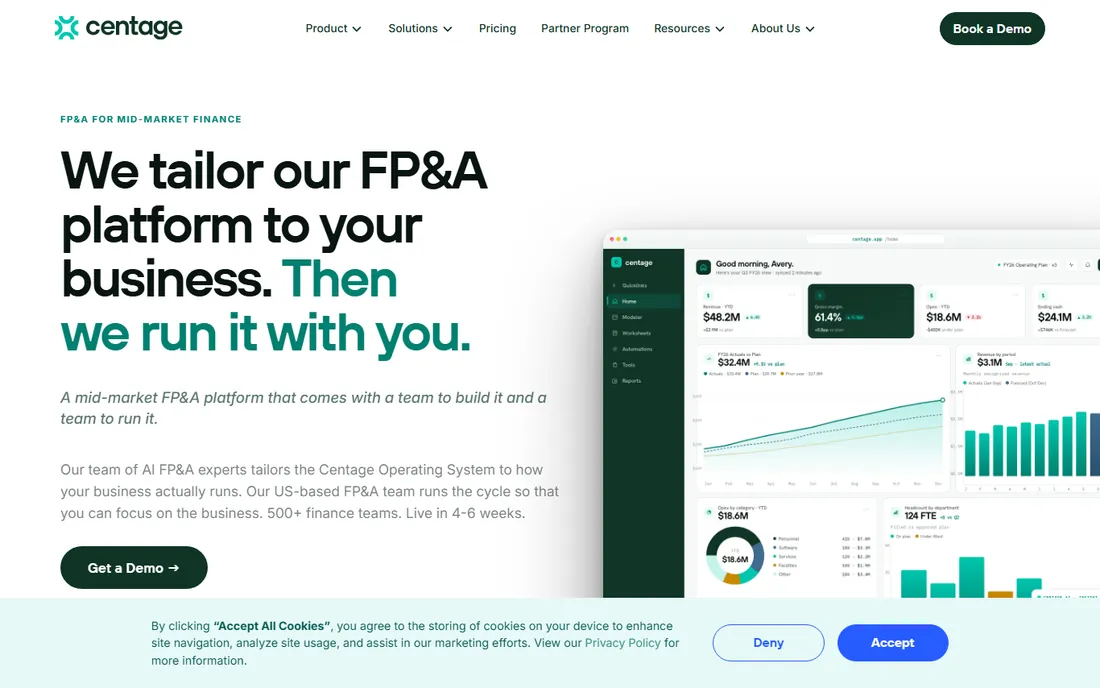
Centage provides planning, budgeting, and forecasting for mid-market finance teams that have outgrown spreadsheets but are not ready for enterprise EPM. Cash flow forecasting sits within proper FP&A workflows.
Implementation is manageable and the support team understands mid-market finance. The depth covers what growing companies actually need without enterprise overhead.
It is finance-software in look and feel, which suits its audience. For mid-market FP&A with cash forecasting included, Centage is a solid pick.
What we like- Strong mid-market FP&A
- Good planning and forecasting
- Reasonable implementation
- Solid support
Watch out for- Pricing is quote-based
- Interface less modern
- Best for finance-led teams
Starting priceSee website
Free planNo, demo available
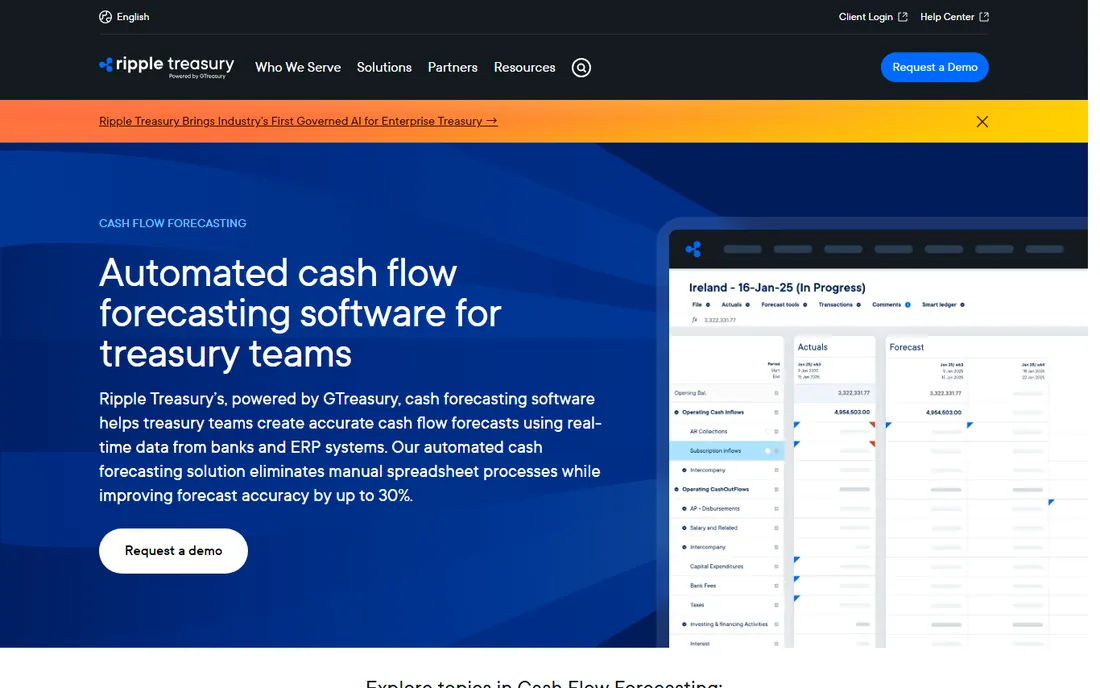
CashAnalytics serves central finance and treasury teams in large companies with automated data collection from ERPs and banks, multi-entity forecasting, and the controls enterprises require. Irish-built and proven with multinationals, it handles the complexity SMB tools cannot.
Submission workflows collect forecasts from entity controllers, and the analytics drill from group to line item. For treasury-grade cash visibility, it is purpose-built.
Small businesses should look elsewhere. For complex corporate cash forecasting, it is the specialist.
What we like- Built for complex corporate treasury
- Multi-entity forecasting
- Bank and ERP connectivity
- Proven with large companies
Watch out for- Enterprise pricing
- Implementation significant
- Overkill for SMBs
Quick comparison
| Tool | Best for | Starting price | Free plan |
|---|
 Float Float | SMBs wanting clear cash flow visibility | See website | Trial available |
 Pulse Pulse | Simple cash flow monitoring for small businesses | See website | Trial available |
 Dryrun Dryrun | CFOs wanting scenario-rich forecasting | See website | Trial available |
 Fathom Fathom | Beautiful reporting plus forecasting | See website | Trial available |
 Jirav Jirav | Startups wanting FP&A with forecasting | See website | Trial available |
 PlanGuru PlanGuru | Detailed budgeting with cash forecasting | See website | Trial available |
 Centage Centage | Mid-market finance teams needing FP&A depth | See website | No, demo available |
 CashAnalytics CashAnalytics | Large treasury teams with complex cash forecasting | See website | No, demo available |
Is your product missing or out of date?
We review this list regularly. Vendors can request a listing, send updated pricing or ask about featured placement.
Start with company size and complexity. Small businesses should trial Float and Pulse on real data. Growth companies needing planning depth should compare Jirav, PlanGuru, and Centage. Enterprises with treasury functions need CashAnalytics or similar.
The deciding test is the scenario: build your actual "what if" question in each trial and see which tool answers it fastest. A forecast you cannot easily question is just a pretty chart.
Cash forecasting mistakes
The fundamental mistake is forecasting from hope instead of data. Revenue projections based on wishes, receivables assumed on time, and expenses underestimated produce beautiful charts that reality ignores. Ground every assumption in historical patterns: actual payment timing, real seasonality, honest pipeline coverage. Conservative inputs beat optimistic outputs.
Second, forecasting once and filing it away. A forecast is a living document that decays the moment reality diverges. Update weekly at minimum, compare forecast to actuals religiously, and investigate variances. The discipline of updating matters more than the sophistication of the model.
Third, ignoring the timing of cash versus profit. Profitable companies fail when growth consumes cash faster than it arrives: payroll weekly, customers paying in sixty days. Model the timing gaps explicitly, especially around hiring sprees and big projects. Profit is an opinion; cash is a fact.
Fourth, hiding the forecast from the team. When only finance sees the cash position, everyone else makes commitments blindly. Share the appropriate view with leadership, and make cash awareness part of planning conversations. Surprises shrink when visibility grows.
Finally, having no contingency plan. Every forecast should include what happens if the worst case arrives: which spending stops first, which credit lines activate, which decisions trigger at which cash level. Decide these in calm times, not during the crisis the forecast was supposed to prevent.
Frequently asked questions
How far ahead should we forecast cash flow?
Thirteen weeks is the standard rolling forecast for operational cash management. Strategic planning looks twelve months out. Most tools here handle both horizons.
Can spreadsheets handle cash flow forecasting?
For simple businesses, yes, for a while. Multiple entities, rolling actuals, and scenario comparisons are where spreadsheets break and dedicated tools earn their price.
What data do these tools need?
Bank balances, accounting actuals, and assumptions about receivables, payables, and payroll timing. Integrations automate the actuals; your judgment supplies the assumptions.
How accurate are cash flow forecasts?
Near-term forecasts with good receivables data can be very accurate. Longer horizons are scenarios, not predictions. The value is in seeing the range, not nailing the number.
Do we need this if we are profitable?
Yes. Profitable companies fail from cash timing constantly: growth consumes cash before it generates it. Forecasting prevents the surprise, not just the loss.
What is the difference between profit and cash flow?
Profit is an accounting measure of revenue minus expenses over a period; cash flow is the actual movement of money in and out. A business can be profitable on paper while running out of cash, because customers pay late, inventory ties up money, and growth demands upfront spending. This is why forecasting matters more than the P&L for survival: the P&L tells you if the model works, cash flow tells you if you live to see it. Watch both, but manage cash weekly.
How do seasonal businesses handle cash forecasting?
By planning the year as a cash cycle, not an average month. Map the peaks and troughs honestly from historical data, build reserves during strong periods specifically to cover weak ones, and arrange credit facilities before you need them. Forecast weekly during transition periods when timing matters most. The seasonal businesses that fail are usually the ones that spent peak-season cash as if it would last. Discipline in good months buys survival in lean ones.
Review the forecast with leadership monthly, so cash decisions stay visible and deliberate rather than reactive.
Sources we checked (0)
Is your product missing or out of date?
We review this list regularly. Vendors can request a listing, send updated pricing or ask about featured placement.

Shihab Mia · Founder, Rankite
Shihab has spent more than a decade helping SaaS and e-commerce brands grow through search. He writes Rankite's software buying guides from pricing pages, documentation and public user reviews. More about Shihab.