How we make this list: we compare pricing pages, product documentation and public user reviews. Rankite is independent; if a vendor ever pays for a featured spot, that listing is clearly labeled Partner.
Key takeaways
- Substack is the fastest way to start a paid newsletter with built-in discovery, taking 10% of subscription revenue.
- Medium offers instant access to a built-in readership, free to publish.
- Ghost gives independent publishers 0% platform fees with open-source ownership.
- Beehiiv combines a free start with growth tools like referral programs and an ad network.
- WordPress.com and Wix suit writers who want a full website, while Buttondown and Write.as serve minimalists.
Quick comparison
| Tool | Best for | Starting price | Free plan |
|---|
 Substack Substack | Newsletters with discovery | Free | Yes |
 Medium Medium | Instant built-in audience | Free | Yes |
 Ghost Ghost | Independent publishers | See website | Free trial |
 WordPress.com WordPress.com | Flexible blog plus newsletter | See website | Yes |
 Beehiiv Beehiiv | Newsletter growth | Free | Yes |
 Buttondown Buttondown | Minimalist newsletters | Free | Yes |
 Wix Wix | Blog plus full website | See website | Yes |
 Write.as Write.as | Distraction-free writing | $6/month | Free trial |
Is your product missing or out of date?
We review this list regularly. Vendors can request a listing, send updated pricing or ask about featured placement.
The best blogging platform for writers
Starting priceFree
Free planYes
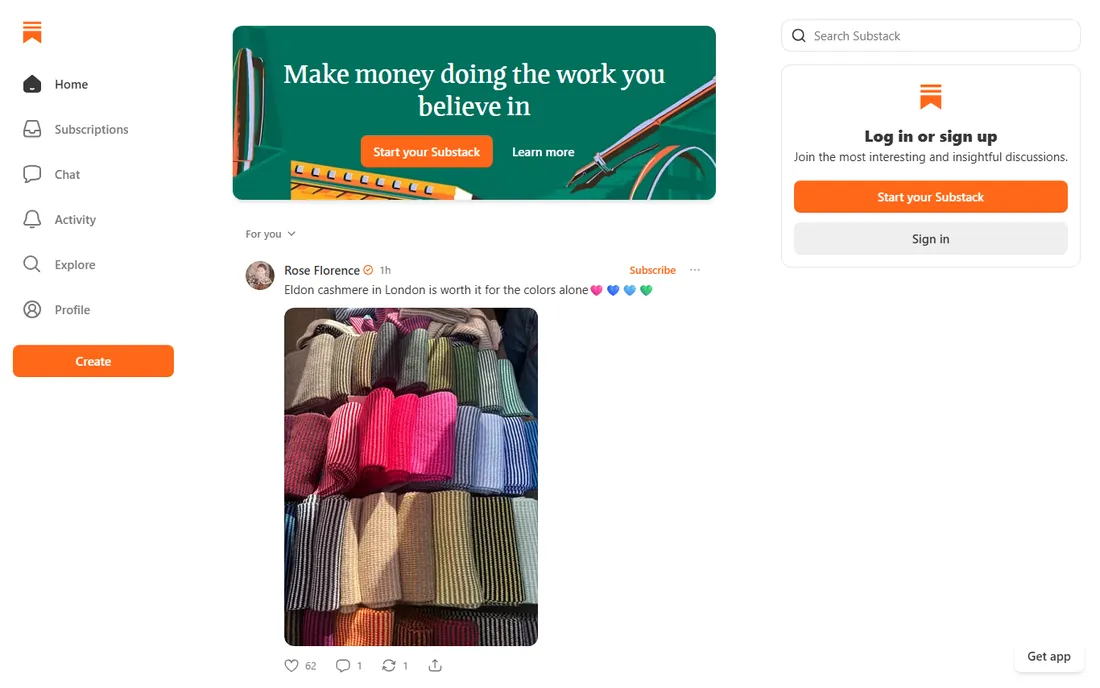
Substack remains the simplest on-ramp to paid writing: publish free or paid posts, build a mailing list, and tap into a recommendation network that surfaces your publication to other readers. You keep full ownership of your intellectual property and subscriber list, and paid tiers work out of the box.
The trade is the 10% revenue share on subscriptions, which adds up as revenue grows. Writers earning serious subscription income often compare the math against Ghost or Beehiiv. For starting out, though, nothing is faster. Substack also keeps adding social features, so check whether the product still feels like a newsletter tool or a social network before committing your audience to it.
What we like- Free to start, built-in paid subscriptions
- Discovery network finds new readers
- You own your list and IP
Watch out for- 10% platform fee on paid subscriptions
- Limited customization
- Evolving social features
Starting priceFree
Free planYes
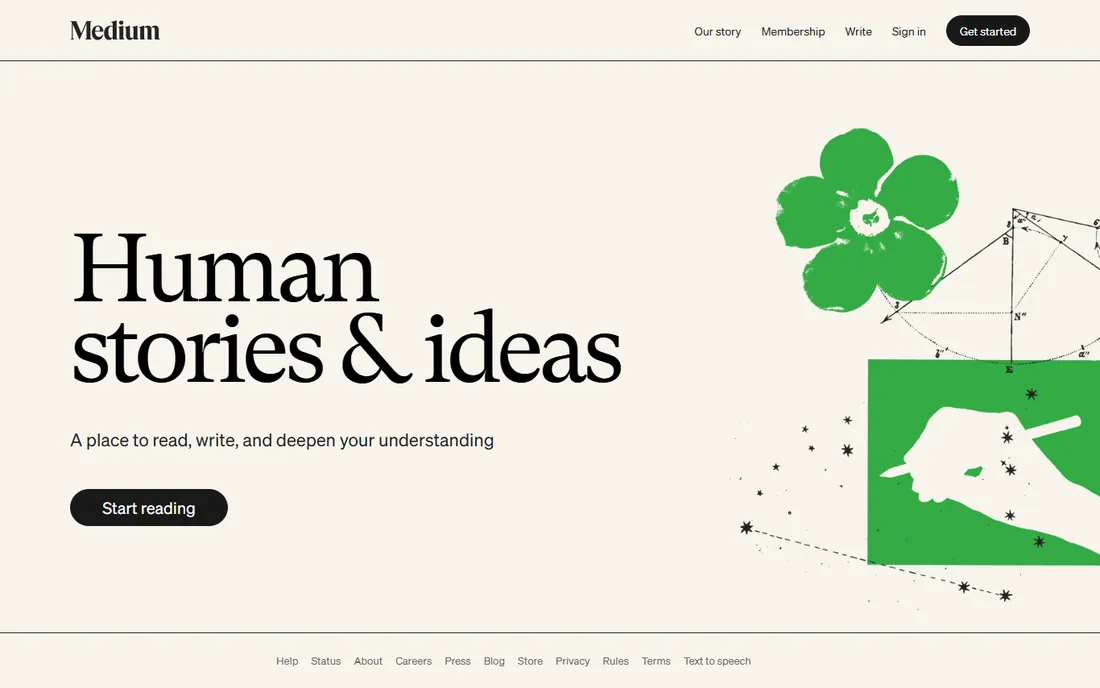
Medium is the purest discovery play: publish and your writing can reach an existing audience of millions without building a website or an email list. The editor is clean, the reading experience is excellent, and the Partner Program can pay for readership.
The downside is ownership. Your brand lives on Medium's domain, the algorithm decides distribution, and monetization terms are theirs to change. It is ideal for writers who want readers now and do not mind renting the platform. Many writers use Medium as a discovery channel that funnels readers to a newsletter they own elsewhere.
What we like- Free to publish with zero setup
- Built-in readership and discovery
- Clean reading experience
Watch out for- You build on someone else's platform
- Limited monetization control
- Algorithm dependence
Starting priceSee website
Free planFree trial
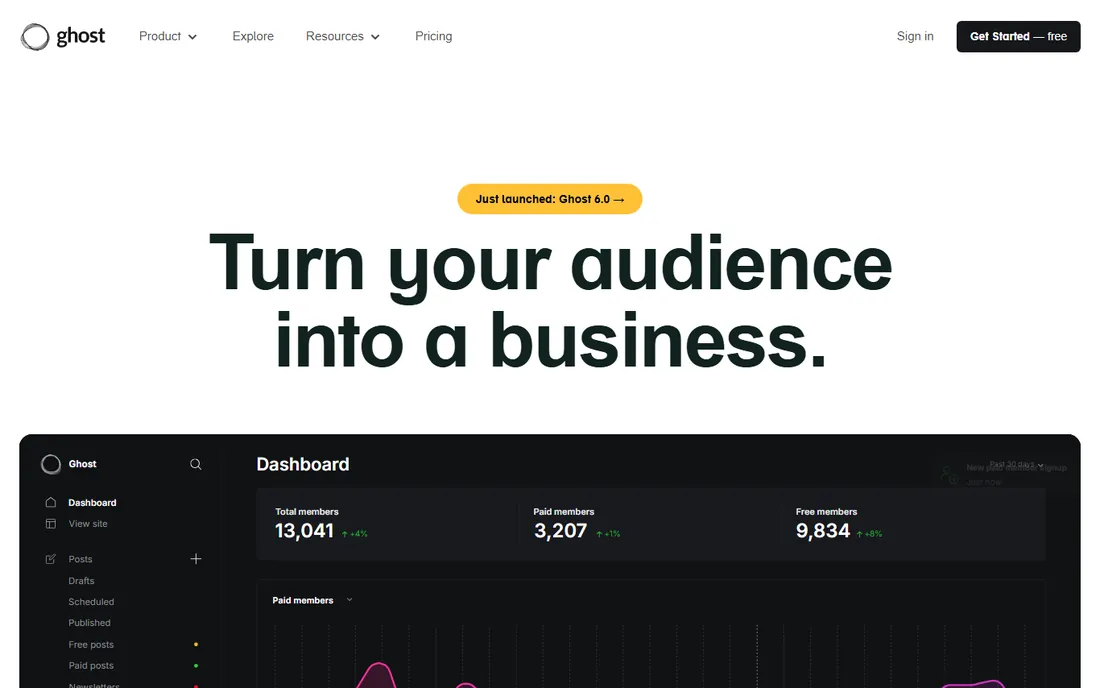
Ghost is the independent publisher's choice: a modern publishing platform with newsletters, memberships, and paid subscriptions built in, taking 0% of your revenue. It is open source and funded entirely by its users, and a 14-day free trial lets you test the managed hosting before paying.
You give up Substack's discovery network, so growing an audience is your job. But writers who value ownership, from indie journalists to creator-businesses, find the trade worth it. The managed hosting removes server headaches, while the open-source code means you can self-host if you ever want out.
What we like- 0% platform fees on subscriptions
- Open source, self-hostable
- Professional publishing tools
Watch out for- No built-in discovery network
- Managed hosting costs money
- Less hand-holding
Starting priceSee website
Free planYes

WordPress.com combines a classic blog with a growing newsletter product: start free with unlimited subscribers and keep full ownership of your content and followers. Managed hosting handles security, backups, and performance.
It sits between the newsletter tools and the full website builders. Writers who want a real blog archive plus email, without managing a server, get a balanced package. Advanced customization requires paid tiers. The WordPress.com Reader adds a small discovery layer that the pure newsletter tools lack.
What we like- Free start with unlimited newsletter subscribers
- Full blog with themes
- Content ownership
Watch out for- Paid plans needed for plugins and custom domains
- Interface can feel dated
Starting priceFree
Free planYes
Beehiiv starts free and scales with growth tools most competitors lack: referral programs, recommendations, a native ad network, and paid subscription support with 0% platform fees. Paid plans start at $49 a month for the Lite tier. A no-code website builder comes along too.
It is the growth-obsessed alternative to Substack: you keep all subscription revenue and get tools to expand your audience. Solo writers just starting out may find the free tier enough for a long time. The built-in ad network is a real differentiator once you have an audience, letting sponsors come to you instead of the other way around.
What we like- Free plan to start
- Built-in referral programs and ad network
- 0% platform fees on subscriptions
Watch out for- Paid plans from $49/month add up
- Growth tools matter less at small scale
- Newsletter-first
Starting priceFree
Free planYes

Buttondown is the anti-platform newsletter tool: a clean, markdown-first service from a small independent business that takes no cut of your paid subscribers and promises to stay boring in the best way. Automations, a full API, and high deliverability come standard.
Writers tired of feature-bloated platforms and venture-funded pivots love its philosophy. You will not find discovery feeds, ad networks, or design playgrounds here, and that is the point. Migration tools make it easy to bring an existing list, and equally easy to leave, which says a lot about the company's confidence.
What we like- Simple, privacy-focused, no bloat
- Markdown-first editor
- No fees on paid subscribers
Watch out for- Fewer growth and design features
- Smaller ecosystem
- No built-in discovery
Starting priceSee website
Free planYes
Wix is for writers who want a full website around their blog: portfolio pages, booking, stores, and 2,000-plus templates, with a genuinely good blog module and SEO tools. Start free with no credit card, upgrade when the Wix ads and subdomain bother you.
It is more website than writing tool, so newsletter features are basic compared with Substack or Beehiiv. Writers building a personal brand site with a blog attached do best here. The AI builder can produce a credible site in minutes, though you will still want to review the copy it generates.
What we like- 2,000+ templates and AI builder
- Blog with SEO tools
- Free plan to start
Watch out for- Less writing-focused than dedicated platforms
- Site lock-in
- Ads on the free plan
Starting price$6/month
Free planFree trial
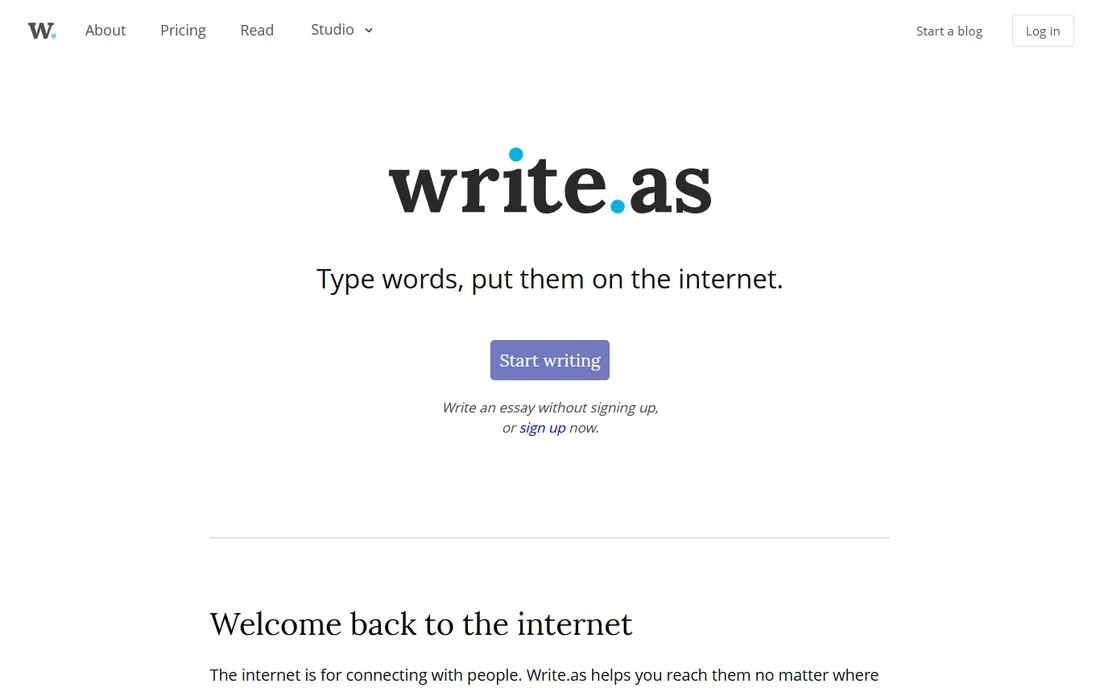
Write.as is a pared-down blogging platform for writers who want to write and nothing else. The editor opens first every time, posts publish to the web, email, RSS, and the fediverse, and privacy is a core principle rather than a marketing line. Pro costs $6 a month billed yearly, with a 14-day trial.
It will never be a growth machine or a design playground. For essayists, journal-keepers, and anonymous writers who value focus and independence, it is a quiet gem. The ActivityPub integration means your posts can reach Mastodon readers without any extra effort.
What we like- Minimal, ad-free, privacy-first
- Markdown editor
- Federated publishing via ActivityPub
Watch out for- Deliberately sparse features
- $6/month Pro for the good stuff
- Tiny ecosystem
How we chose
We compared vendor product pages, pricing pages, and creator-community discussion across publishing blogs and forums, weighing audience discovery, monetization terms, ownership, editor quality, and pricing. Every platform had to be currently available with a working website. We did not claim hands-on testing.
The revenue-share question
The biggest money decision is how the platform takes its cut. Substack's 10% looks small until you run the numbers: at $2,000 a month in subscriptions, that is $200 gone. Beehiiv, Ghost, and Buttondown take nothing, charging flat fees instead. Medium pays through its own program with terms you do not control. For hobbyists the fee structure barely matters; for writers building a business, it is the single most important comparison to make. Run your own numbers at your target subscriber count before choosing, because the cheapest option at 100 subscribers is rarely the cheapest at 10,000.
Start with free, upgrade when it hurts
Almost every platform here lets you begin free, and that is the right move. Write for a month or two, see whether the audience and format click, and only pay when a limit starts costing you something real: a revenue share that exceeds a flat fee, a missing feature you need weekly, or branding that embarrasses you. Switching newsletter platforms is annoying but possible, so do not let the choice paralyze you. Pick the free option that fits today and revisit when the numbers say so.
If your goal is paid subscriptions fast, Substack's discovery network beats everything at zero upfront cost; just know the 10% fee becomes expensive as you scale, at which point Ghost or Beehiiv usually win the math. If your goal is maximum readers with minimum effort, Medium's built-in audience is unmatched, but treat it as rented land.
If ownership matters most, Ghost and Buttondown both give you your list and your revenue with no platform cut, while Write.as offers the most private, minimal home. If you need a full website with the blog as one piece, WordPress.com and Wix fit better than any newsletter-first tool. And if you are monetizing through sponsors rather than subscriptions, Beehiiv's ad network deserves a serious look before you default to Substack.
Frequently asked questions
What is the best free blogging platform for writers?
Substack, Medium, Beehiiv, and WordPress.com all offer genuinely useful free plans. Substack and Beehiiv are best for newsletters, Medium for built-in readership, and WordPress.com for a free blog with newsletter features. Buttondown's free tier is also worth a look for simple newsletters with no fees.
Can I make money writing on these platforms?
Yes. Substack, Beehiiv, Ghost, Buttondown, and WordPress.com support paid subscriptions. Medium pays through its Partner Program. Keep in mind that Substack takes 10% while Beehiiv, Ghost, and Buttondown take 0%.
Substack vs Ghost: which is better?
Substack is better for starting fast with built-in discovery and costs nothing until you earn. Ghost is better for writers who want full ownership, 0% fees, and their own brand, and do not mind growing their audience themselves.
Do I need my own website as a writer?
Not necessarily. Newsletter platforms like Substack and Beehiiv include web archives of your posts. A dedicated site helps for branding, SEO, and portfolio work, which is where WordPress.com and Wix come in.
Which platform is best for SEO?
WordPress.com and Wix offer the most SEO control with custom domains and metadata tools. Ghost is fast and clean for search. Medium and Substack rank well on their own domains, but the SEO value accrues to the platform, not your brand.
Sources we checked (8)
- https://substack.com/
- https://medium.com/
- https://ghost.org/
- https://wordpress.com/
- https://www.beehiiv.com/
- https://buttondown.com/
- https://www.wix.com/
- https://write.as/
Is your product missing or out of date?
We review this list regularly. Vendors can request a listing, send updated pricing or ask about featured placement.

Shihab Mia · Founder, Rankite
Shihab has spent more than a decade helping SaaS and e-commerce brands grow through search. He writes Rankite's software buying guides from pricing pages, documentation and public user reviews. More about Shihab.