How we make this list: we compare pricing pages, product documentation and public user reviews. Ratings come from G2, Capterra or Trustpilot, with the date we checked them.
Key takeaways
- Two buyer types: product businesses (retailers, distributors, manufacturers) need inventory control first; service-plus-product businesses need invoicing and accounting first with lighter inventory.
- Cheapest real inventory: Zoho Inventory (free for 50 orders/month; Standard $29/org/month) and Square for Retail (free per location; Plus $49/location/month).
- Cheapest accounting-with-inventory: QuickBooks Online Plus ($140/month) and Xero (inventory included, unlimited users), both thin on warehouse depth.
- For manufacturing and multichannel depth, expect a jump: Katana (custom Advantage contract), Cin7 Core from $349/month, inFlow (see website), or Odoo ($24.90/user/month billed annually).
The best billing and inventory management software
Billing and inventory software splits by what the business actually does. A retailer or manufacturer lives in stock: purchase orders, warehouses, reorder points, COGS. A service business that also sells products lives in invoices: billing clients, tracking a few hundred SKUs, and reconciling the books. Buy the wrong end of this spectrum and you pay for depth you never touch or hit a wall you cannot work around.
The eight tools below cover both ends, from free inventory to mid-market ERP. Prices come from the vendors' own pricing pages, checked in October 2026.

#1
Zoho Inventory
Best for: Small multichannel sellers and distributors that want order management and invoicing in one affordable subscription
Visit zoho.com
Starting price$0 (free plan: 50 orders/month, 1 user, 1 location); $29 per organization per month billed annually (Standard)
Free planYes (free-forever plan)
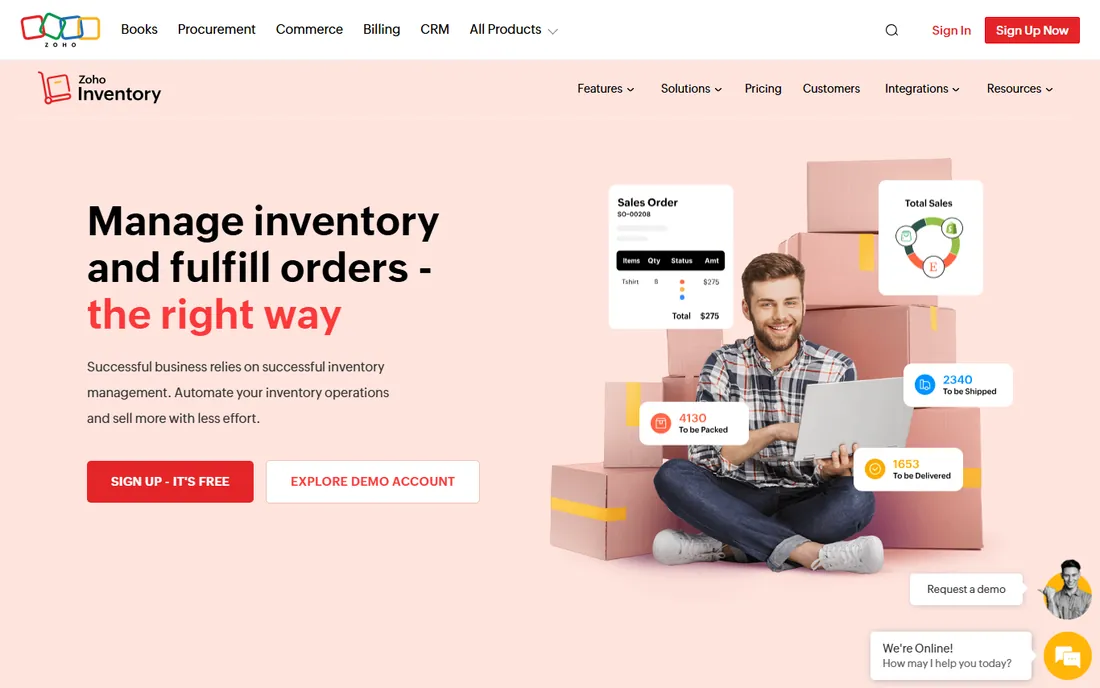
Zoho Inventory is the value leader for product businesses. The free plan handles 50 orders a month with one user and one location, and paid tiers run $29 (Standard, 500 orders), $79 (Premium, 3,000 orders), $129 (Plus, 7,500 orders) and $249 (Enterprise, 15,000 orders) per organization per month billed annually. Pair it with Zoho Books and the billing-to-stock loop stays in one ecosystem.
The honest catch is the cap ladder: the free plan has no overage add-on, so an upgrade is the only fix when order count climbs. Extra users, orders and locations are cheap add-ons on paid tiers. For a small seller doing a few hundred orders a month, it is the cheapest serious inventory available.
What we like- Free-forever plan with real order and inventory management
- Per-organization pricing stays predictable as staff grows
- Native two-way integration with Zoho Books, plus multichannel selling (Amazon, eBay, Etsy, Shopify)
Watch out for- Order, user and location caps scale steeply, so growing businesses jump from $29 to $79 to $129 quickly
- Mobile app trails desktop

#2
Square for Retail
Best for: Brick-and-mortar retailers that want billing, payments and inventory in one system without integration work
Visit squareup.com
Starting price$0 per location (Free); $49 per location per month (Plus)
Free planYes (Free: full POS app, online store, basic inventory)
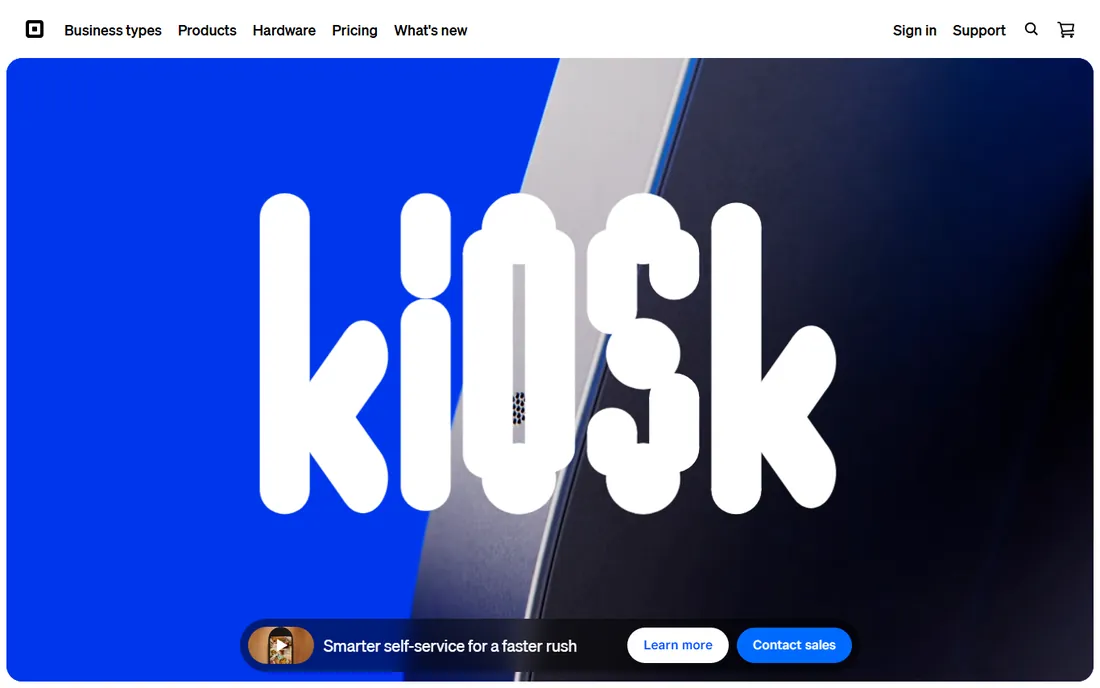
Square for Retail is the zero-start option for shops. A store can open on the free plan, pay only processing fees when it sells, and upgrade to Plus at $49 a month per location for purchase orders, stock intake and COGS reporting. Premium at $149 adds depth for larger retailers.
The honest catch is that processing fees are the real bill: software cost is small next to card fees, so compare effective rates. And it is a register, not a warehouse: no EDI, no manufacturing, thinner accounting integrations than QuickBooks or Xero. For a physical store that needs billing and stock in one dashboard, the free start is unmatched.
What we like- Free plan runs a real register with stock tracking at zero software cost
- Plus adds vendor and purchase order management, barcode labels and COGS reports
- Billing and inventory live in the same dashboard as payments, payroll and banking
Watch out for- Per-location pricing multiplies with storefronts
- Premium's jump to $149/month is steep
- Retail-first POS, not a warehouse system (no EDI, no manufacturing)

#3
QuickBooks Online
Best for: US product businesses that want invoicing, inventory and accounting under one roof with an accountant they already trust
Visit quickbooks.intuit.com
Starting price$0 (limited free tier); $38/month (Simple Start); $140/month (Plus, with inventory)
Free planYes (limited: 1 user, 2 invoices/month)
QuickBooks Online is the accounting-first answer. Simple Start at $38 covers invoicing and books; Plus at $140 a month adds inventory tracking, purchase orders and COGS with no third-party connector to maintain. The free tier exists but is too limited for real businesses.
The honest catch is the per-user model plus price history: Essentials and Plus rose again in August 2026, and a 5-person team pays far more than on flat-priced rivals. Accountant-managed billing can halve the cost, so ask the accountant before signing. Budget the list price, not the 50-percent-off intro. Choose it for the ecosystem and the accountant network, not the price.
What we like- The US default with the deepest accountant network
- Inventory tracking, purchase orders, COGS and project profitability native on Plus
- Native payroll, payments and banking inside Intuit
Watch out for- Per-user seat pricing and repeated price increases make it one of the most expensive options for teams
- Payroll is a separate add-on
- Promos renew at full price
#4
Xero
Best for: Service-led businesses and small product businesses that prioritize accounting quality and multi-user access over deep inventory
Visit xero.com
Starting priceSee website (Early/Growing/Established tiers; 30-day free trial)
Free planNo (30-day trial)
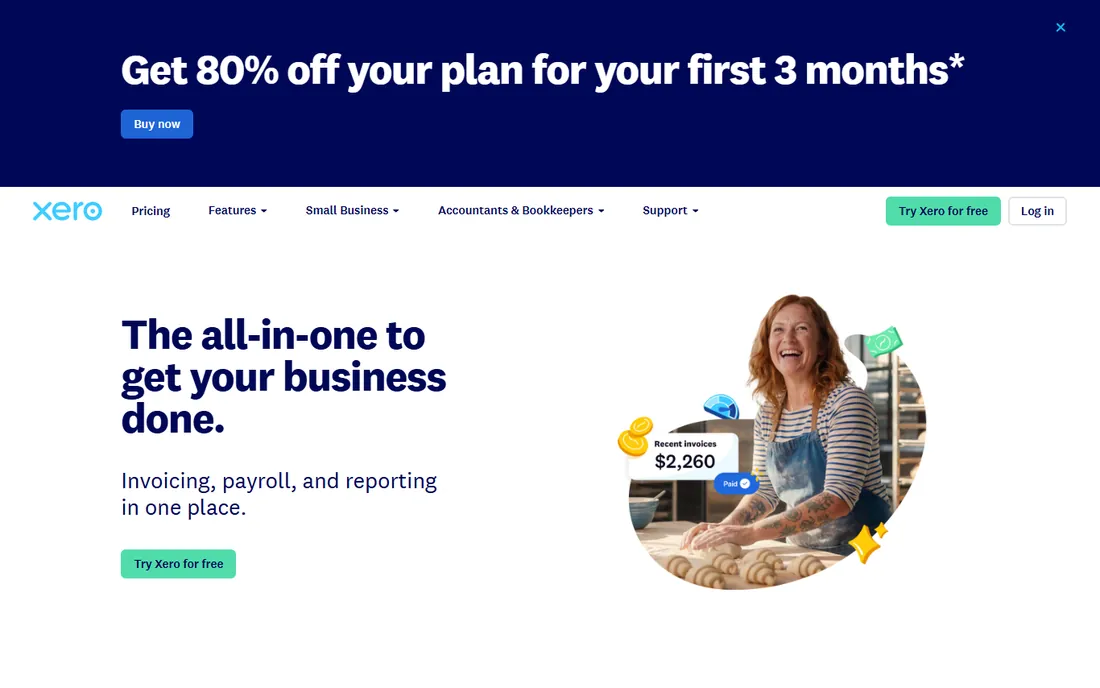
Xero is the accounting hub with inventory attached. Unlimited users makes it the best-value base for teams of 3 to 15, and bank reconciliation is genuinely excellent. The 4,000-item tracked inventory covers small catalogs without extra cost.
The honest catch is that inventory is deliberately thin: real product businesses need Cin7 or Unleashed bolted on, which adds a second subscription. US plan prices were reported at $25/$55/$90 with an October 2026 increase to $27/$59/$97; confirm current figures at xero.com/us/pricing-plans/ before budgeting. For billing-first businesses with light stock, it is the cleanest pick.
What we like- Unlimited users on every plan, so teams of any size pay one base subscription
- Clean double-entry accounting with strong bank reconciliation
- Core tracked inventory (up to 4,000 items) included on all plans
- 1,000-plus app marketplace
Watch out for- Core inventory is basic: no serial or batch tracking, no warehouse workflows
- Early's 20-invoice and 5-bill monthly caps are tight
- Payroll and add-ons inflate the real bill

#5
Odoo
Best for: Businesses that want to consolidate billing, inventory, CRM, POS and more into one platform without paying for five tools
Visit odoo.com
Starting price$0 (One App Free, unlimited users); $24.90 per user per month billed annually (Standard)
Free planYes (One App Free; Community edition is free open source)
Odoo is the consolidation play. Turn on the Inventory and Invoicing apps and the whole workflow runs in one database, with Standard at $24.90 per user per month billed annually covering the full suite. One App Free gives unlimited users on a single app; the Community edition is free and open source for self-hosters.
The honest catch is implementation: license fees are roughly a third of year-one cost, and the 12-month promo discount means budgeting off renewal-year pricing. The Standard plan's API and multi-company limits push any serious integration to Custom. For businesses replacing three or four tools with one, the math still works.
What we like- One subscription covers the whole suite: inventory, invoicing, accounting, sales, CRM, POS and manufacturing in a single database
- Genuinely free entry points
- Barcode operations, warehouse management, dropshipping and replenishment are native
Watch out for- Implementation is the real cost: partners and Success Packs routinely run into five figures
- Standard excludes external API and multi-company, pushing integrations to Custom at $49 per user per month

#6
Katana
Best for: Small manufacturers moving off spreadsheets that need real-time inventory with production tracking
Visit katanamrp.com
Starting priceSee website (Advantage: custom annual contract); free plan with 30 SKUs
Free planYes (Free plan, up to 30 SKUs)
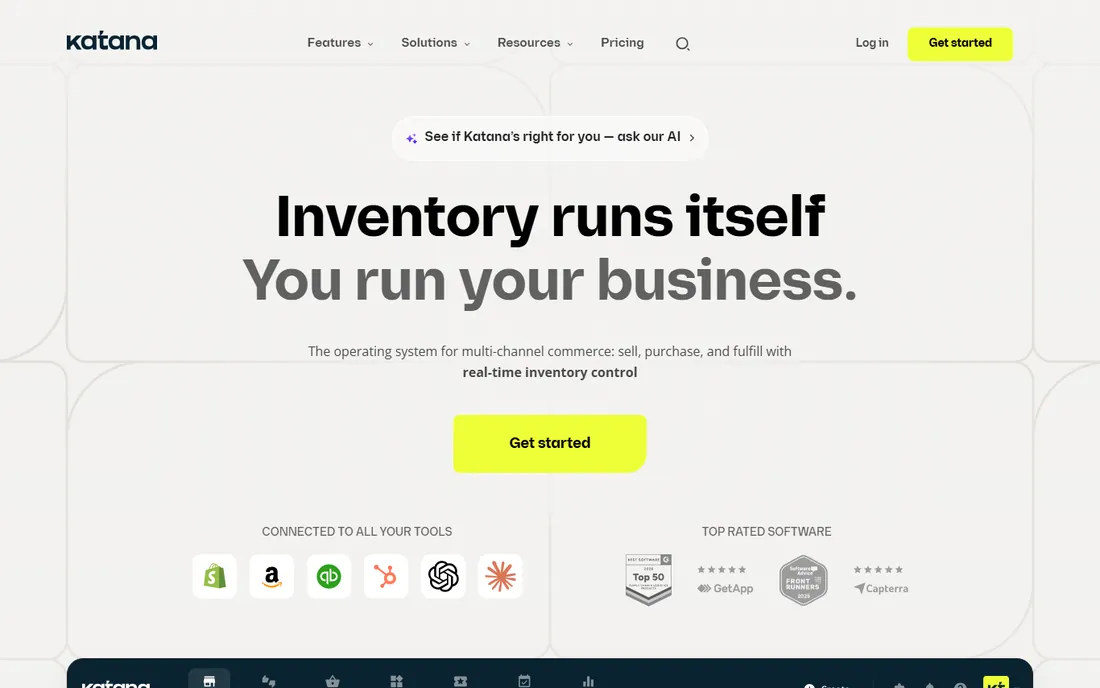
Katana is the manufacturing specialist. The visual production planner keeps raw materials, production and finished goods in sync automatically, with lot and serial traceability for regulated industries. Unlimited users means warehouse and production staff cost nothing extra per head.
The honest catch is the 2026 packaging change: Advantage is a scoped annual contract, so budget and timeline clarity depend on the sales process. The free 30-SKU plan works for evaluation. For a manufacturer that needs production and inventory in one real-time system, it is the most approachable option before full ERP.
What we like- Purpose-built for manufacturers: BOMs, production planning, shop floor app, batch and serial traceability in one visual real-time system
- Unlimited users on every plan
- Strong ecommerce and accounting connectors (Shopify, QuickBooks Online, Xero)
Watch out for- Paid pricing is now custom and sales-led with no published rates
- Overbuilt for pure resellers that only buy and sell stock

#7
Cin7
Best for: Multichannel product businesses with real order volume that need purchasing, warehouse and EDI workflows
Visit cin7.com
Starting price$349 per month (Core Standard: 5 users, 6,000 orders/year)
Free planNo (14-day free trial of Core)
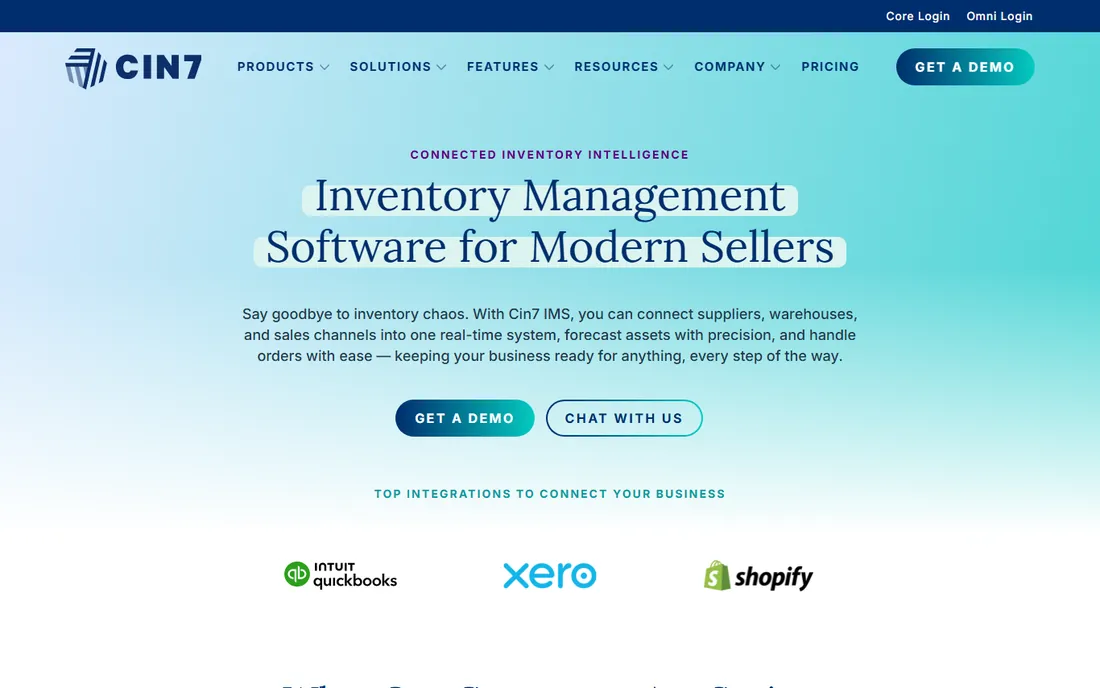
Cin7 is the mid-market inventory workhorse. Core plans run $349 (Standard), $599 (Pro) and $1,199 (Advanced) per month with rising user and order limits; Omni adds built-in EDI for enterprise. One system covers orders, stock, B2B, 3PL and forecasting across Shopify, Amazon, Walmart and eBay.
The honest catch is the floor and the order-count metric: a low-volume business pays for depth it never uses. Very small sellers should start with Zoho Inventory's free tier and graduate to Cin7 when order volume justifies it. For wholesalers and multichannel sellers doing serious volume, it is the connected-inventory standard.
What we like- Deep multichannel inventory and order management with 700-plus integrations
- Built-in EDI on Omni and AI-driven demand forecasting
- Core and Omni editions let a business scale without replatforming
Watch out for- The $349/month floor is steep for small sellers
- No permanent free plan and a sales-led buying process

#8
inFlow Inventory
Best for: B2B wholesalers and small manufacturers that need approachable inventory with a real B2B sales channel
Visit inflowinventory.com
Starting priceSee website
Free planNo (trial available)
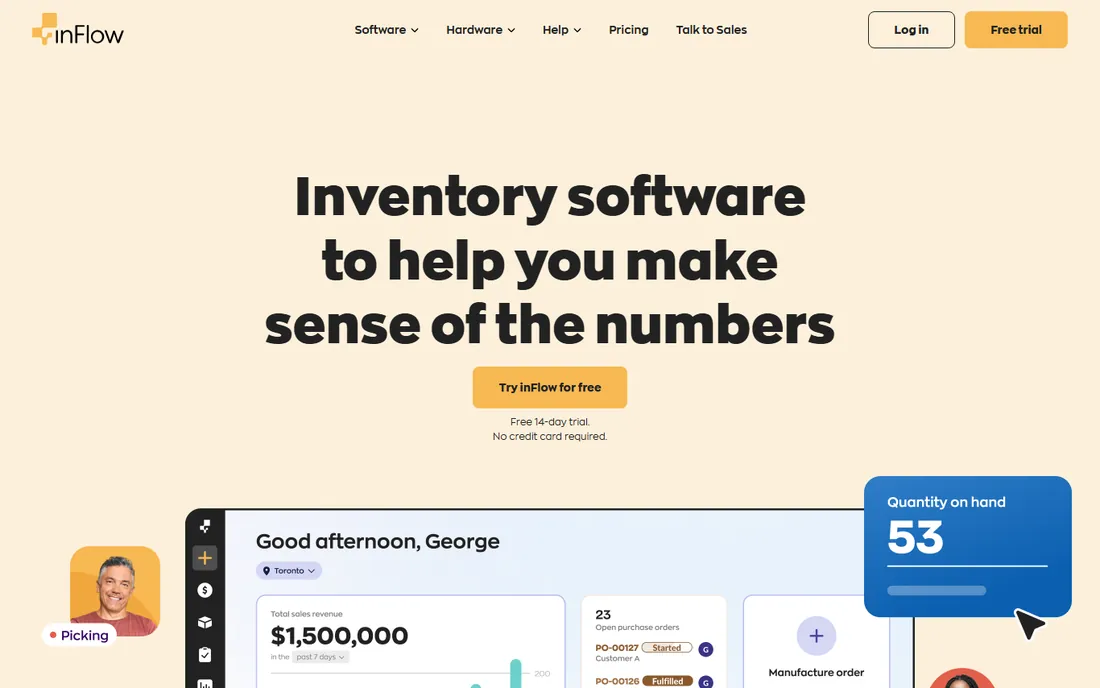
inFlow is the wholesaler's pick. The built-in showroom is the differentiator: wholesale customers browse and order directly, cutting manual order entry. Tier plans include team members (2 on Lite, 5 on Core, 10 on Pro, 25 on Max), so costs step predictably.
The honest catch is pricing opacity right now: plan names and figures changed in 2026 and vendor-adjacent sources disagree, so confirm the current tiers and any onboarding fee on the live pricing page before budgeting. For B2B sellers who want approachable inventory with a customer-facing ordering channel, it fills a gap the others do not.
What we like- Tier pricing with included team members, so costs step at predictable thresholds instead of climbing per hire
- Built-in B2B showroom lets wholesale customers order directly
- Barcodes, purchase orders and vendor history in one approachable package
Watch out for- Pricing and plan naming changed in 2026 and are hard to pin down without the live pricing page
- Add-ons (BOM, API, serial numbers) stack up on lower tiers
Quick comparison
| Tool | Best for | Starting price | Free plan |
|---|
| Zoho Inventory | Small multichannel sellers and distributors that want order management and invoicing in one affordable subscription | $0 (free plan: 50 orders/month, 1 user, 1 location); $29 per organization per month billed annually (Standard) | Yes (free-forever plan) |
| Square for Retail | Brick-and-mortar retailers that want billing, payments and inventory in one system without integration work | $0 per location (Free); $49 per location per month (Plus) | Yes (Free: full POS app, online store, basic inventory) |
| QuickBooks Online | US product businesses that want invoicing, inventory and accounting under one roof with an accountant they already trust | $0 (limited free tier); $38/month (Simple Start); $140/month (Plus, with inventory) | Yes (limited: 1 user, 2 invoices/month) |
| Xero | Service-led businesses and small product businesses that prioritize accounting quality and multi-user access over deep inventory | See website (Early/Growing/Established tiers; 30-day free trial) | No (30-day trial) |
| Odoo | Businesses that want to consolidate billing, inventory, CRM, POS and more into one platform without paying for five tools | $0 (One App Free, unlimited users); $24.90 per user per month billed annually (Standard) | Yes (One App Free; Community edition is free open source) |
| Katana | Small manufacturers moving off spreadsheets that need real-time inventory with production tracking | See website (Advantage: custom annual contract); free plan with 30 SKUs | Yes (Free plan, up to 30 SKUs) |
| Cin7 | Multichannel product businesses with real order volume that need purchasing, warehouse and EDI workflows | $349 per month (Core Standard: 5 users, 6,000 orders/year) | No (14-day free trial of Core) |
| inFlow Inventory | B2B wholesalers and small manufacturers that need approachable inventory with a real B2B sales channel | See website | No (trial available) |
Is your product missing or out of date?
We review this list regularly. Vendors can request a listing, send updated pricing or ask about featured placement.
How deep does your inventory need to go?
This is the decision that eliminates half the list. Level one is tracked stock: quantities, SKUs, purchase orders, COGS. Zoho Inventory, Square for Retail, QuickBooks Plus and Xero all cover this. Level two is warehouse operations: multiple locations, barcode workflows, batch and serial tracking, replenishment. Zoho Inventory's upper tiers, Odoo and inFlow cover this. Level three is manufacturing and distribution: BOMs, production planning, EDI, 3PL. That is Katana, Cin7 and Odoo's manufacturing apps.
Buy one level above where you are if growth is likely; buy two levels above and you pay for complexity that slows you down. A retailer with one store does not need Cin7. A manufacturer does not belong on Square. The billing side follows the same logic: service-heavy businesses should weight the accounting quality (QuickBooks, Xero, Odoo), while product-heavy businesses should weight the stock engine (Katana, Cin7, inFlow) and treat accounting as the integration.
The per-organization, per-user and per-order pricing models
Billing models here are as varied as the products. Zoho Inventory and Odoo-adjacent pricing is per organization: costs stay flat as staff grows but jump at order-volume and feature caps. QuickBooks, Odoo Standard and Custom are per user: predictable per head but punishing for warehouse teams with many logins. Cin7 meters orders per year: fair for seasonal businesses, painful if volume spikes past the tier. Square is per location: simple for one store, multiplicative for chains.
Before shortlisting, model a year of your own numbers: headcount, order volume, locations. A 10-person warehouse team on Odoo Standard pays about $3,000 a year in licenses; on QuickBooks Plus the per-user cost runs higher; on Zoho Inventory Premium the same team costs $948 a year regardless of headcount. The cheapest sticker price is rarely the cheapest total.
Frequently asked questions
What is the best free billing and inventory software?
Zoho Inventory's free plan (50 orders/month, 1 user, 1 location) is the best free inventory tool with real order management. Square for Retail's free plan is the best free option for physical stores, covering POS, online store and basic inventory. Odoo's One App Free covers unlimited users on a single app.
Should I use QuickBooks or a dedicated inventory tool?
Use QuickBooks Online Plus if your accountant works in it and your inventory needs are moderate (tracked stock, purchase orders, COGS). Use a dedicated tool (Zoho Inventory, Katana, Cin7, inFlow) if you need warehouse workflows, manufacturing, multichannel order management or EDI. Many businesses run both: the inventory tool for stock, QuickBooks for the books, synced by integration.
What is the cheapest way to manage inventory and billing?
Zoho Inventory (free to $29/org/month) paired with Zoho Books is the cheapest serious stack for online sellers. Square for Retail (free to $49/location/month) is the cheapest for physical stores. Single-app businesses can also run Odoo's One App Free at $0 for unlimited users.
Do I need manufacturing features like BOMs?
Only if you make or assemble products. BOMs (bills of materials), production planning and batch traceability matter for manufacturers and food, cosmetics and supplement businesses. Pure resellers and retailers should not pay for manufacturing depth: Katana and Cin7's production features would sit unused.
How much does inventory management software cost?
Entry prices run from free to about $350 a month. Representative numbers: Zoho Inventory from $29/org/month, Square Plus $49/location/month, QuickBooks Plus $140/month, Odoo Standard $24.90/user/month, Cin7 Core from $349/month. Implementation (especially Odoo and Cin7) can exceed the license cost in year one.
Can I migrate from spreadsheets to inventory software?
Yes, and every tool here imports products, customers and vendors from CSV. The migration work is cleanup: consistent SKUs, correct opening stock counts and mapped warehouses. Katana and inFlow include guided onboarding; Odoo partners handle larger migrations. Run the new system in parallel with spreadsheets for two to four weeks before switching over.
Sources we checked (10)
- https://zoho.com/us/inventory/pricing/
- https://squareup.com/us/en/point-of-sale/retail/pricing
- https://quickbooks.intuit.com/pricing/
- https://www.xero.com/us/pricing-plans/
- https://www.odoo.com/pricing
- https://katanamrp.com/pricing
- https://www.cin7.com/blog/best-inventory-management-software-solutions/
- https://www.inflowinventory.com/pricing/
- https://www.g2.com/categories/inventory-management
- https://www.capterra.com/inventory-management-software/
Is your product missing or out of date?
We review this list regularly. Vendors can request a listing, send updated pricing or ask about featured placement.

Shihab Mia · Founder, Rankite
Shihab has 5+ years in B2B and SaaS SEO. He writes Rankite's software buying guides from pricing pages, documentation and public user reviews. More about Shihab.