How we make this list: we compare pricing pages, product documentation and public user reviews. Ratings come from G2, Capterra or Trustpilot, with the date we checked them.
Key takeaways
- Betterment is the best all rounder for most investors, with goal based portfolios, tax-loss harvesting, and optional human advisor access.
- Wealthfront suits taxable accounts best, with daily tax-loss harvesting and direct indexing from $100,000.
- Schwab Intelligent Portfolios charges no advisory fee, but a mandatory cash allocation creates a hidden drag on returns.
- Fidelity Go is effectively free under $25,000, making it the best start for small balances.
- Automated investing still involves risk, including loss of principal, and past performance never guarantees future results. This article is general information, not financial advice.
Quick comparison
Is your product missing or out of date?
We review this list regularly. Vendors can request a listing, send updated pricing or ask about featured placement.
The best automated AI investing apps
Starting price0.25% per year
Free planNo
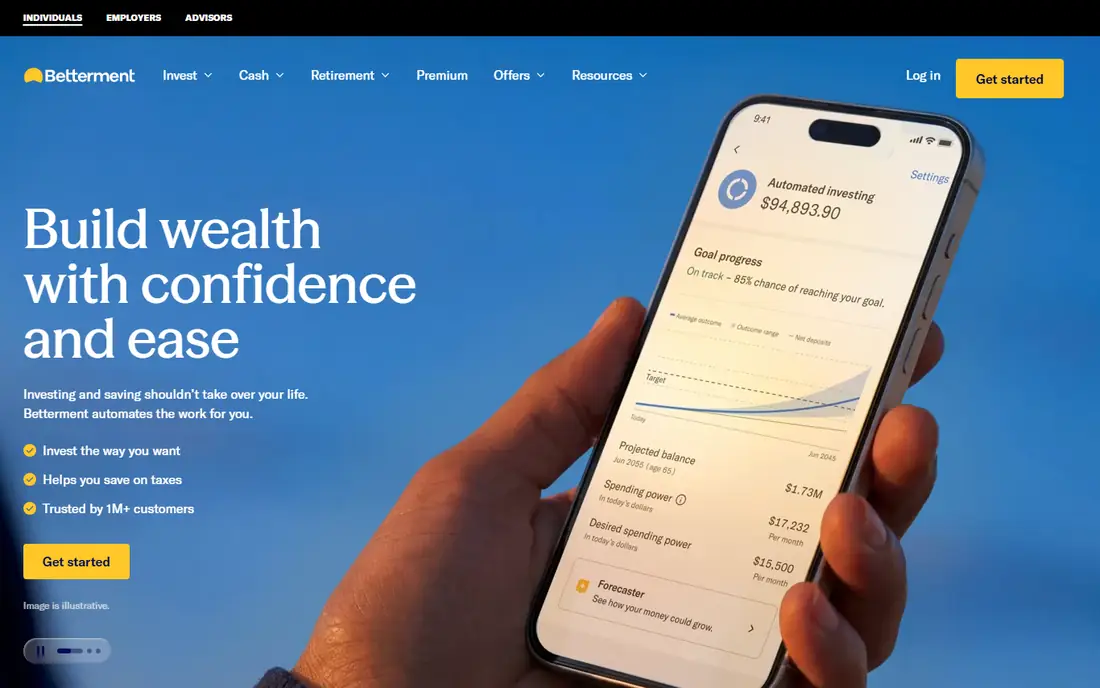
Betterment is the most well rounded automated investing app for most people. It builds goal based portfolios from low cost ETFs, rebalances automatically, and harvests tax losses on taxable accounts regardless of balance. The interface is the friendliest in the category, and socially responsible portfolio options are mature.
Pricing needs a close read. The Digital plan costs 0.25% per year, with a $5 monthly fee applying below certain balances in some structures, while Premium at 0.65% per year adds unlimited access to certified financial planners. There is no account minimum. For an investor who wants automation plus a human safety net, Betterment is the clearest choice.
What we like- Goal based portfolios for retirement, housing, and general wealth
- Tax-loss harvesting on taxable accounts
- Optional human advisor access
Watch out for- Premium plan at 0.65% per year is costly
- Pricing varies by balance and deposit
- No direct indexing at low balances
Starting price0.25% per year
Free planNo
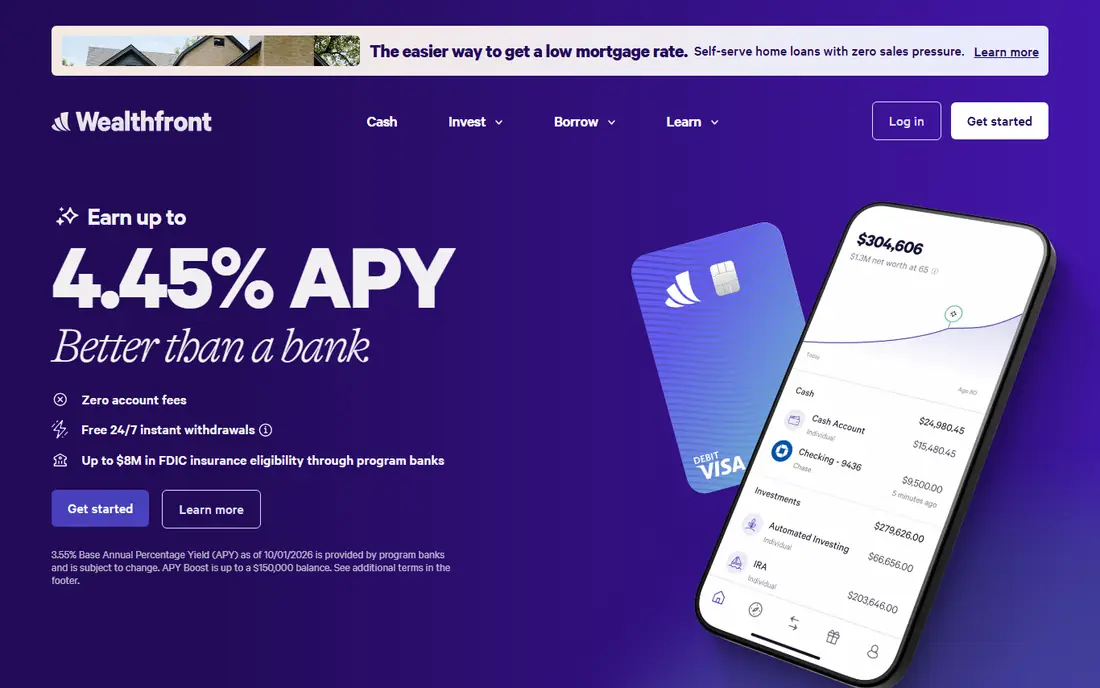
Wealthfront charges a flat 0.25% per year and focuses on tax efficiency. Daily tax-loss harvesting, tax optimized rebalancing, and direct indexing from $100,000 add up to meaningful after tax gains for investors in higher tax brackets with large taxable accounts. Its free Path tool projects retirement readiness and savings goals even for users who do not invest through Wealthfront.
The $500 minimum for automated investing is small but real, and there are no human advisors to call. Tax features also matter far less inside IRAs, where harvesting does not apply. For a taxable account holder who wants the strongest automation on taxes, Wealthfront leads.
What we like- Daily tax-loss harvesting
- Direct indexing from $100,000
- Free Path planning tool for retirement and goals
Watch out for- $500 minimum for automated investing
- No human advisors
- Tax features matter less inside retirement accounts
Starting priceFree
Free planYes
Schwab Intelligent Portfolios charges no advisory fee, which looks unbeatable until the cash allocation is counted. Portfolios must hold 6 to 10 percent in cash, which earns little and does not participate in market returns. That cash drag is a real, if hidden, cost, especially in strong markets.
The $5,000 minimum is the highest on this list for a basic tier, and tax-loss harvesting requires a $50,000 balance on the premium tier. For an investor who already banks with Schwab and accepts the cash allocation, the zero fee is genuine. For a small or tax focused investor, Betterment or Fidelity Go usually wins.
What we like- No advisory fee at all
- Large established brokerage behind it
- Tax-loss harvesting on premium tier
Watch out for- $5,000 minimum
- Mandatory 6 to 10 percent cash allocation drags returns
- Tax-loss harvesting needs a $50,000 balance
Starting priceFree
Free planYes
Fidelity Go is the closest thing to a genuinely free robo-advisor for smaller accounts. It charges no advisory fee under $25,000 and uses Fidelity's own zero expense ratio index funds, with $0 to open and $10 to start investing. For a beginner with a small balance, the cost is effectively zero.
Above $25,000 the fee becomes 0.35% per year, which is higher than Betterment and Wealthfront, and tax-loss harvesting is less developed. For a new investor starting small, Fidelity Go is the best value. For a larger taxable account, the fee crossover favors a switch later.
What we like- No advisory fee under $25,000
- Uses Fidelity zero expense ratio index funds
- $0 to open, $10 to invest
Watch out for- Fee rises to 0.35% per year above $25,000
- Fewer tax features than Betterment or Wealthfront
- Portfolio options are simpler
Starting price0.15% per year
Free planNo
Vanguard Digital Advisor builds portfolios exclusively from Vanguard's own low cost funds, with a fee around 0.15 to 0.20 percent per year depending on strategy and holdings. That makes it a natural fit for investors who already hold Vanguard funds and want one unified strategy. A choice of index, active, or ESG strategies adds flexibility.
The minimum varies by source, commonly cited at $100, and the Vanguard only lineup limits diversification choices. Planning tools are solid but less polished than Betterment's. For a Vanguard loyalist who wants low fees and a simple automated portfolio, Digital Advisor is the right pick.
What we like- Low fee around 0.15 to 0.20 percent per year
- Built on Vanguard's low cost fund lineup
- Choice of index, active, or ESG strategies
Watch out for- Minimum varies by source, commonly $100
- Portfolios use only Vanguard funds
- Less planning polish than Betterment
Starting price0.25% per year
Free planYes
SoFi Robo Investing offers automated portfolio management that is free for SoFi members and 0.25% per year for non members, with low minimums commonly cited at $50 or less. It fits users who already bank or borrow with SoFi, since checking, savings, and investing share one app.
The platform is smaller than Betterment or Wealthfront, and tax-loss harvesting is less developed. For a SoFi member, the free automated investing is a clear win. For anyone else, the 0.25% fee buys less than Betterment at the same price.
What we like- Free for SoFi members
- No account minimum in some structures
- Banking, lending, and investing in one app
Watch out for- 0.25% fee for non members
- Smaller platform than leaders
- Fewer tax features
Starting price$4 per month
Free planNo
Acorns builds an investing habit from spare change: round up everyday purchases and invest the difference automatically. With a $0 minimum, anyone can start, and the app's simplicity makes it the least intimidating entry point on this list.
The flat fee is the catch. At $4 to $12 per month depending on tier, Acorns costs more than a 0.25 percent fee on any balance below roughly $20,000. Portfolio customization is limited and there is no tax-loss harvesting. For a beginner who needs habit formation more than optimization, Acorns works. For a balance above a few thousand dollars, a percentage fee app is cheaper.
What we like- Round ups turn spare change into investments
- $0 minimum
- Very beginner friendly habit building
Watch out for- Flat $4 to $12 monthly fee is costly on small balances
- Limited portfolio customization
- No tax-loss harvesting
Starting price0.30% per year
Free planNo
E*TRADE Core Portfolios charges 0.30% per year with a $500 minimum, and its edge is portfolio customization through smart beta and ESG tilts. Investors who want their automated portfolio to lean toward value, momentum, or sustainability themes will find more choice here than at Fidelity Go or SoFi.
The fee is higher than Betterment and Wealthfront, planning tools are thinner, and tax features are basic. For an E*TRADE customer who wants automation beside a full brokerage account, Core Portfolios is convenient. For a standalone robo-advisor, Betterment offers more for less.
What we like- Smart beta and ESG portfolio tilts
- $500 minimum
- Established brokerage with full trading beside automation
Watch out for- 0.30% fee is higher than leaders
- Fewer planning tools than Betterment
- Tax features are basic
How we chose
We ranked apps by all in cost first, counting advisory fees, fund expenses, and hidden costs like Schwab's cash drag. Tax features came next, since harvesting can add meaningful after tax value on taxable accounts. We also weighed minimums, account types, planning tools, and human advisor access, favoring apps that serve beginners and larger investors alike.
We treated "AI" claims with care. In 2026, robo-advisor AI means automated rebalancing, projections, and goal modeling, not stock picking genius. Any app promising to beat the market with AI should be read with skepticism, and past performance figures should never be taken as a promise of future returns.
Buying guide
Start with account type and balance. For a retirement account, tax features matter little, so pick on fee and interface: Fidelity Go under $25,000, Betterment above it. For a taxable account, weigh tax-loss harvesting and direct indexing: Wealthfront leads for larger balances, Betterment for smaller ones. For a first habit with tiny amounts, Acorns works, but switch to a percentage fee app once the balance grows.
Next, confirm the all in cost. Add the advisory fee, fund expenses, and any cash drag, then compare against a simple target date fund, which may cost less for a retirement account. Check whether the fee changes at balance thresholds, since Fidelity Go and Betterment both shift pricing as balances grow.
Finally, set expectations honestly. Automated investing removes emotion and effort, but it does not remove market risk. Keep an emergency fund outside investments, contribute regularly, and review the portfolio yearly rather than daily. If the situation involves taxes, estate planning, or a large windfall, a human financial planner is worth the extra cost.
Frequently asked questions
What is the best automated investing app overall?
Betterment is the best all rounder for most investors, with goal based portfolios, tax-loss harvesting, and optional human advisors. Wealthfront is best for large taxable accounts, and Fidelity Go is best for small balances.
Do robo-advisors use AI to pick stocks?
Mostly no. The "AI" in robo-advisors covers automated portfolio building, rebalancing, projections, and goal modeling from diversified ETFs. Be skeptical of any app claiming its AI reliably beats the market.
How much do robo-advisors cost?
Most charge 0.15 to 0.35 percent per year, while Schwab charges no advisory fee but holds 6 to 10 percent in cash. Acorns charges a flat $4 to $12 per month, which is costly on small balances.
Can I lose money with a robo-advisor?
Yes. Automated portfolios invest in markets that fall as well as rise, and no diversification or algorithm prevents losses. Only invest money you can leave invested for years, and keep emergency savings separate.
Is a robo-advisor better than a human advisor?
For straightforward goal based investing, a robo-advisor is cheaper and often sufficient. For complex taxes, estate planning, business income, or major life changes, a human advisor's judgment is worth the higher fee.
Sources we checked (0)
Is your product missing or out of date?
We review this list regularly. Vendors can request a listing, send updated pricing or ask about featured placement.

Shihab Mia · Founder, Rankite
Shihab has 5+ years in B2B and SaaS SEO. He writes Rankite's software buying guides from pricing pages, documentation and public user reviews. More about Shihab.
 Betterment
 Wealthfront
 Schwab Intelligent Portfolios
 Fidelity Go
 Vanguard Digital Advisor
 SoFi Robo Investing
 Acorns
 E*TRADE Core Portfolios