How we make this list: we compare pricing pages, product documentation and public user reviews. Ratings come from G2, Capterra or Trustpilot, with the date we checked them.
Key takeaways
- Automated ad platforms split into walled gardens, such as Google Ads and Amazon Ads, and independent demand-side platforms, such as The Trade Desk and StackAdapt.
- Walled gardens offer direct access to their own inventory and audiences, while independent platforms offer broader open-web, video, and connected TV reach.
- Automation helps most when conversion tracking and budgets are set correctly first, since automated bidding amplifies good signals and bad signals alike.
- Most platforms charge through media spend rather than a fixed subscription, so the real cost is your budget plus any platform fee or minimum spend.
- Agencies that run many clients often need Basis-style workflow automation, while single-brand advertisers usually need better bidding and creative tools first.
Quick comparison
| Tool | Best for | Starting price | Free plan |
|---|
 Google Ads | Search, YouTube, and shopping ads with automated bidding | See website | No |
 The Trade Desk | Independent programmatic buying at scale | See website | No |
 Google Display and Video 360 | Enterprises already inside Google Marketing Platform | See website | No |
 Amazon DSP | Brands that want Amazon shopper data and retail media | See website | No |
 StackAdapt | Mid-market programmatic across display, native, and TV | See website | No |
 AdRoll | Ecommerce brands consolidating retargeting and prospecting | See website | No |
 Smartly | Teams that need creative and media automation together | See website | No |
 Basis Technologies | Agencies automating multi-channel campaign workflows | See website | No |
Is your product missing or out of date?
We review this list regularly. Vendors can request a listing, send updated pricing or ask about featured placement.
An automated ad platform should reduce manual bidding, targeting, and reporting work without hiding where money went. Some platforms automate inside one ecosystem, such as search or a single social network, while others automate buying across many publishers and channels. The platforms below cover both models, and the right choice depends on where your customers are and how much budget you can commit.
#1Google Ads
Best for: Search, YouTube, and shopping ads with automated bidding4.3/5 on
G2 (2,047 reviews, checked Oct 2026)
Visit ads.google.com
Starting priceSee website
Free planNo
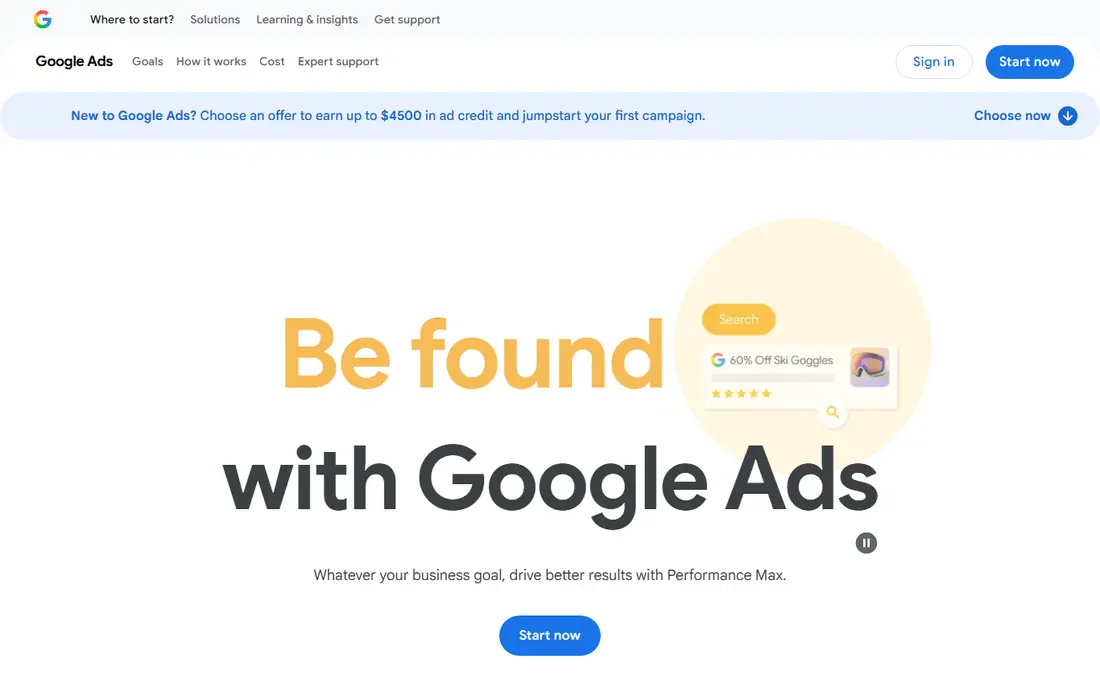
Google Ads remains the default starting point for intent-based advertising, because it reaches people at the moment they search. Performance Max campaigns use automated bidding and placement across Search, YouTube, Display, and Shopping from one campaign, which suits teams that want automation over manual channel management. Search campaigns still allow keyword control, while Smart Bidding adjusts bids toward a target cost per action or return on ad spend.
The tradeoff is transparency and competition. Fully automated campaigns may spend in places a human would avoid, and high-intent keywords can be expensive. Teams should set conversion tracking carefully, review placement and search term reports, and test automated bidding against manual controls before scaling spend.
What we like- Direct access to Search, YouTube, Maps, and Shopping, automated bidding and Performance Max campaigns, flexible budgets
Watch out for- Automated campaigns can limit control over placements, and costs rise quickly in competitive search categories
#2The Trade Desk
Best for: Independent programmatic buying at scale4.4/5 on
G2 (186 reviews, checked Oct 2026)
Visit thetradedesk.com
Starting priceSee website
Free planNo
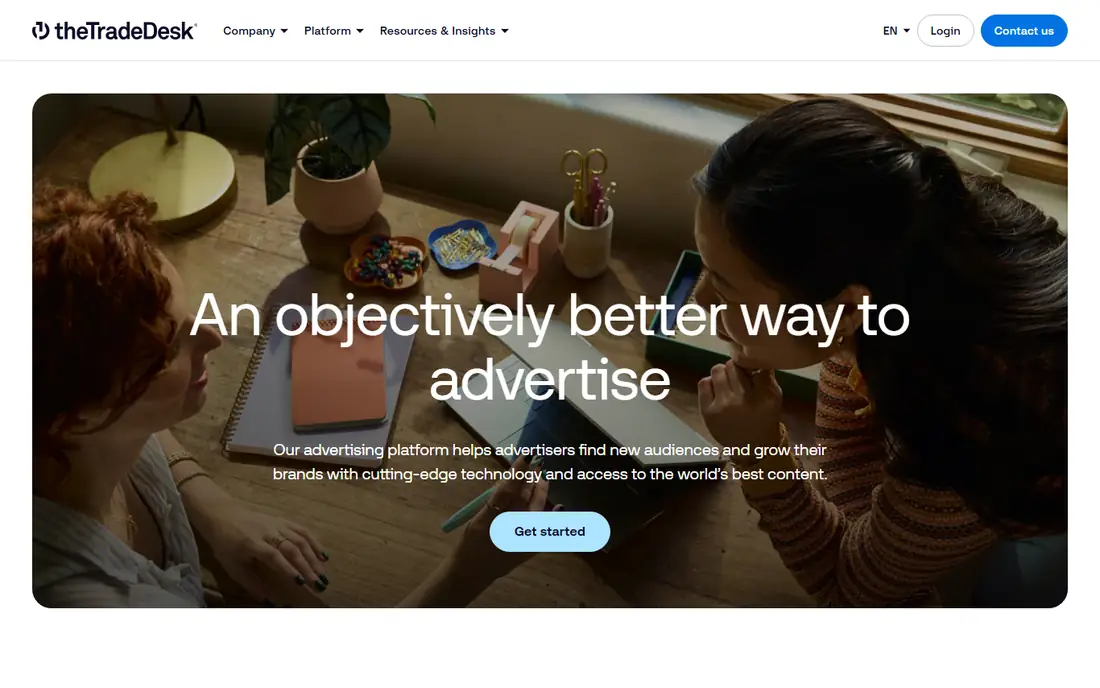
The Trade Desk is the largest independent demand-side platform, buying display, video, audio, native, and connected TV inventory across many publishers and exchanges. It suits advertisers that want reach beyond a single walled garden, with control over audiences, frequency, brand safety, and measurement. Its independence from a single media owner is the main reason large brands and agencies choose it.
That scale comes with complexity. The Trade Desk is typically used through an agency or an experienced trading team, and smaller advertisers may find minimums and setup requirements too high for a first test. Mid-market teams should consider StackAdapt or AdRoll first, and move to The Trade Desk when programmatic becomes a core channel.
What we like- Broad open-web, video, audio, and connected TV inventory, transparent bidding, strong measurement partnerships
Watch out for- Enterprise onboarding and minimums, steeper learning curve than self-serve social ad tools
Starting priceSee website
Free planNo
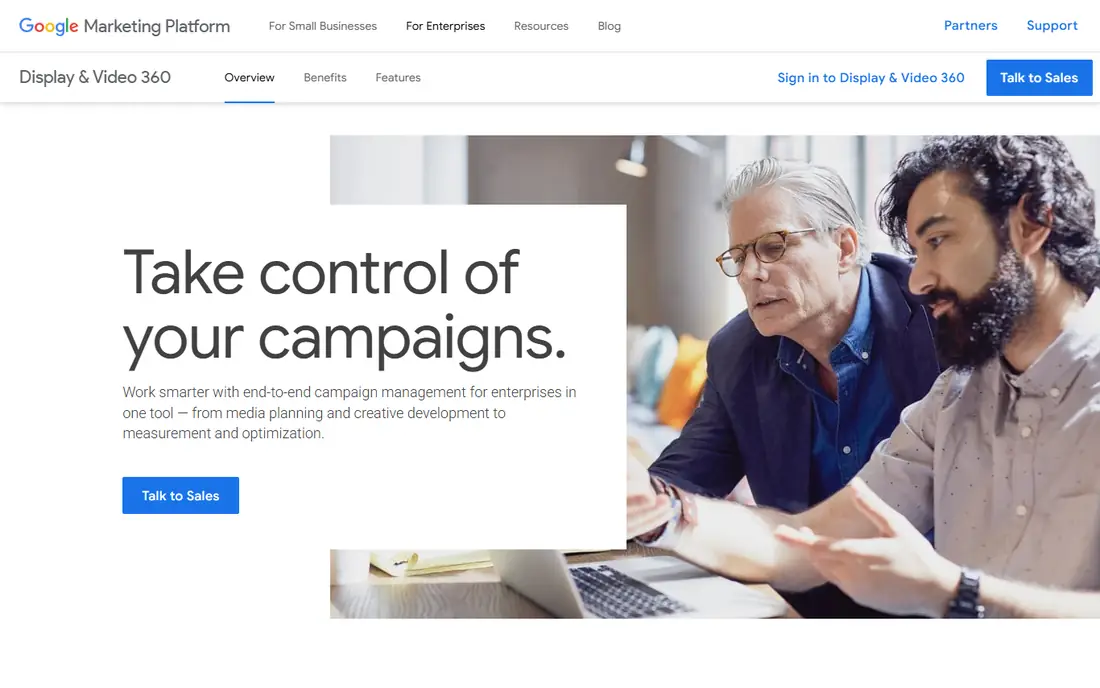
Display and Video 360, often called DV360, is Google's enterprise demand-side platform for planning, buying, and measuring display, video, and connected TV campaigns. Automated bidding and optimization work across its inventory, including YouTube and partner exchanges, while integration with Analytics 360 gives a fuller view of audience and conversion paths. Creative workspaces and team collaboration tools support larger marketing organizations.
DV360 is not a small-business self-serve tool. Access usually comes through Google Marketing Platform sales or a partner, with enterprise terms and implementation. Teams already invested in Google Analytics 360 and Campaign Manager will get the most value, while others may find Google Ads or StackAdapt simpler to start.
What we like- Direct YouTube and Google inventory, automated bidding, integration with Analytics 360 and Campaign Manager
Watch out for- Requires Google Marketing Platform setup, enterprise pricing and process
Starting priceSee website
Free planNo
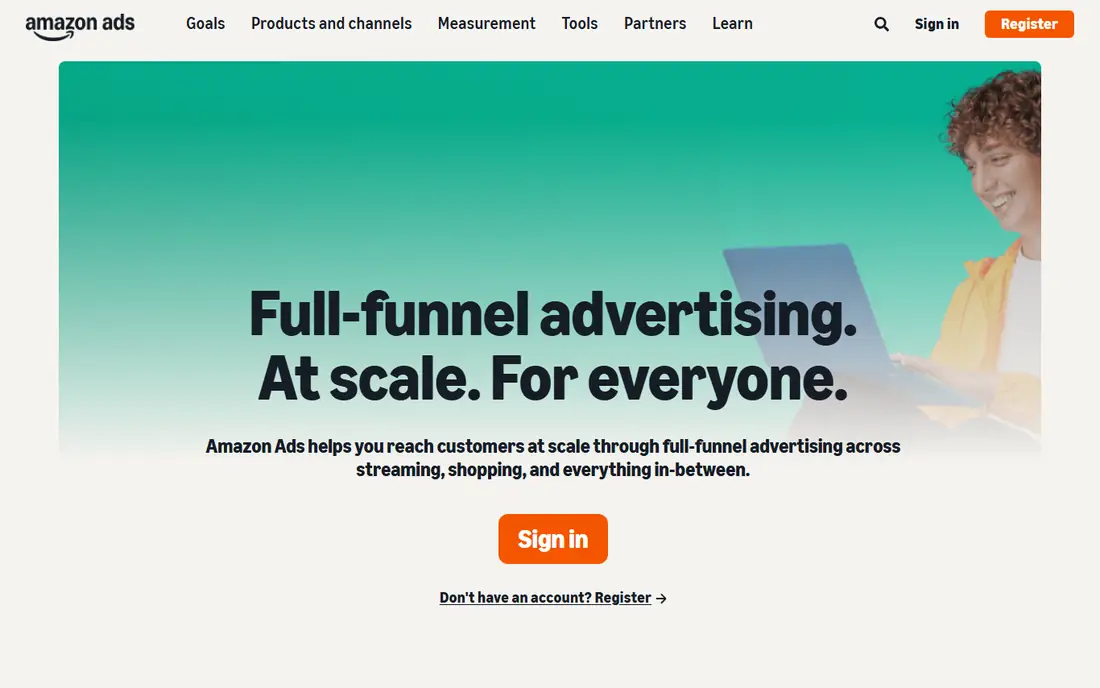
Amazon DSP lets advertisers buy display, video, and audio ads using Amazon's shopping and browsing signals, both on Amazon properties and across publisher sites. That data is the draw: audiences can be built from product views, purchases, and category interest, which is hard to replicate on the open web. Sponsored ads offer a self-serve entry point, while DSP adds programmatic reach and frequency control.
Brands that do not sell on Amazon can still use Amazon Ads, but the value is lower than for sellers who can tie ads directly to product sales. Managed service through an Amazon account executive typically requires a larger minimum spend, so smaller brands should start with sponsored ads and test DSP only when the budget supports it.
What we like- Targeting based on Amazon shopping signals, reach on and off Amazon, self-serve and managed-service options
Watch out for- Most valuable to brands selling on Amazon, managed service typically requires a higher minimum spend
#5StackAdapt
Best for: Mid-market programmatic across display, native, and TV4.7/5 on
G2 (905 reviews, checked Oct 2026)
Visit stackadapt.com
Starting priceSee website
Free planNo
StackAdapt is a self-serve programmatic platform popular with mid-market advertisers and agencies that want connected TV, video, display, and native buying without enterprise DSP complexity. Its AI tools help with planning, forecasting, audience building, and optimization, and creative tools support native and video formats. That combination makes it a practical step up from social-only advertising.
The platform is strongest for brand and prospecting campaigns that benefit from native and TV formats. Teams focused only on search intent or social engagement may find Google Ads or a social platform more direct. Ask for minimum spend and fee terms early, since programmatic pricing varies by channel and inventory.
What we like- Self-serve programmatic, native and connected TV strength, AI planning and optimization, creative tools
Watch out for- Pricing is quoted, and native focus may suit some campaigns better than pure search or social goals
#6AdRoll
Best for: Ecommerce brands consolidating retargeting and prospecting4.1/5 on
G2 (789 reviews, checked Oct 2026)
Visit adroll.com
Starting priceSee website
Free planNo
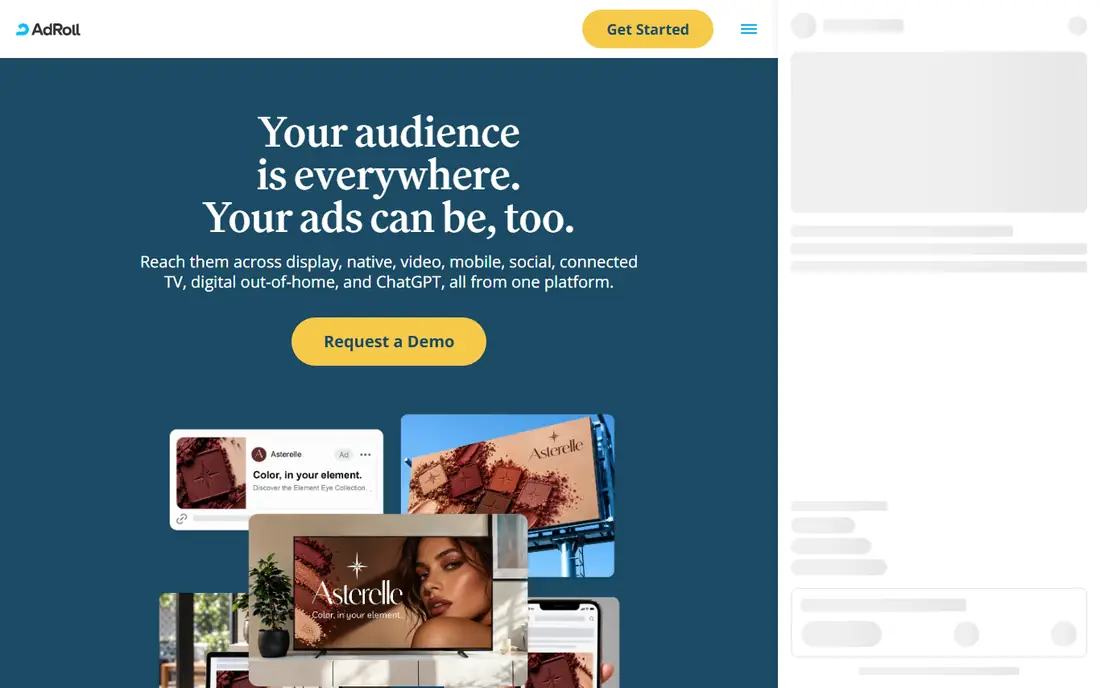
AdRoll consolidates retargeting and prospecting across display, native, video, mobile, social, connected TV, and digital out-of-home from one dashboard. For direct-to-consumer brands, that consolidation matters, since the same customer may see a site visit retargeting ad, a social ad, and a connected TV ad in one week. Machine learning models optimize toward conversions, reducing manual bid adjustments.
AdRoll also offers an account-based marketing product for B2B teams, formerly RollWorks, which adds account targeting and revenue reporting. Ecommerce teams should start with the core platform, while B2B teams should confirm whether the ABM product, with its own pricing, is the right fit for their pipeline goals.
What we like- Multichannel retargeting from one dashboard, prospecting plus account-based marketing options, machine learning optimization
Watch out for- Ecommerce focus means B2B teams may need the separate ABM product for account targeting
#7Smartly
Best for: Teams that need creative and media automation together4.4/5 on
G2 (475 reviews, checked Oct 2026)
Visit smartly.io
Starting priceSee website
Free planNo
Smartly focuses on the gap between creative and media: producing many ad variants, testing them, and scaling winners across social channels without manual rebuilds for each placement. AI features help generate and adapt creative, while automation handles budgeting, bidding, and reporting across campaigns. That workflow suits brands that run large volumes of social ads and need creative testing at scale.
The limit is channel scope. Smartly is built around paid social and digital media workflows, not as a general demand-side platform for open-web programmatic buying. Teams that need connected TV and display at scale should pair it with a DSP, while social-heavy teams may find it covers most of their automation needs.
What we like- AI-assisted creative production, cross-channel campaign automation, unified reporting across social platforms
Watch out for- Pricing is quoted, and the platform centers on social and paid media rather than open-web programmatic
#8Basis Technologies
Best for: Agencies automating multi-channel campaign workflows4.5/5 on
G2 (289 reviews, checked Oct 2026)
Visit basis.net
Starting priceSee website
Free planNo
Basis Technologies, formerly Centro, automates the operational side of advertising: planning, buying, reporting, billing reconciliation, and team collaboration across search, social, programmatic, connected TV, and direct buys. For agencies running dozens of campaigns across clients, that workflow automation saves more time than bidding tweaks alone. Consolidated reporting gives clients and account teams one view of performance across channels.
Single-brand advertisers may find Basis heavier than needed, since its value grows with campaign volume and team size. Agencies should evaluate it against the cost of manual operations, including reporting time, billing errors, and campaign setup delays, rather than against media performance alone.
What we like- Workflow automation across search, social, programmatic, and TV, consolidated reporting and billing, agency-focused tools
Watch out for- Agency-oriented pricing and setup, more process than a single-brand advertiser usually needs
How we chose
We reviewed vendor homepages, product documentation, and public comparisons of programmatic and automated advertising platforms, and we checked each homepage to confirm the platform still operates and fits automated ad buying or campaign automation. Platforms were kept only if they automate bidding, targeting, creative, or campaign workflows in a current product, rather than only selling managed services. Pricing is marked as See website throughout, because most platforms charge through media spend, platform fees, or quoted minimums, and a single starting price would mislead buyers with different budgets.
What to check before you buy
Automation does not fix a weak offer, poor tracking, or an unclear goal, so work through this guide before increasing spend.
Fix tracking before automation
Confirm that conversions, revenue, and lead quality flow correctly into the platform. Automated bidding learns from those signals, so broken tracking teaches it to optimize for the wrong outcome. Test a small campaign manually first, then switch on automation once the data looks clean.
Match the platform to the inventory you need
List the channels that matter: search intent, social feeds, retail media, connected TV, or open-web display. A platform that excels at one may be weak at another, and no single tool covers every channel well. Choose the platform whose inventory matches your customer journey, not the one with the longest feature list.
Ask about minimums, fees, and control
Confirm minimum spend, platform fees, contract length, and what controls remain available under automation, such as placement exclusions, frequency caps, and audience rules. A low media budget on an enterprise DSP can disappear into fees and learning costs before it produces useful data.
Test creative as seriously as targeting
Automated bidding cannot save weak creative. Prepare several message and format variants, test them with a controlled budget, and scale only the winners. Platforms like Smartly and AdRoll help with variant production, but the message strategy still needs human judgment.
Frequently asked questions
What is an automated ad platform?
It is software that automates parts of buying and optimizing ads, such as bidding, audience targeting, budget allocation, creative testing, and reporting. Some platforms automate within one ecosystem, like search or retail media, while others automate buying across many publishers and channels.
How is a demand-side platform different from Google Ads?
Google Ads buys inventory mainly inside Google properties, such as Search, YouTube, and Shopping. A demand-side platform buys inventory across many publishers and exchanges through real-time bidding, including display, video, and connected TV. Many advertisers use both: Google Ads for intent, and a DSP for broader reach.
How much do automated ad platforms cost?
Most platforms charge through media spend rather than a fixed subscription, plus possible platform fees or minimums. Self-serve tools let you set your own budget, while enterprise DSPs and managed services often require higher minimums. Ask for the full fee structure, not just the media budget, before committing.
Do I still need a human to manage automated campaigns?
Yes. Automation handles bidding and optimization, but humans still set goals, check tracking, review placements, approve creative, and decide when to scale or stop a campaign. Teams that treat automation as fully hands-off often miss wasteful spend and creative fatigue.
Which automated ad platform is best for a small business?
Google Ads is usually the best starting point for small businesses, because it reaches high-intent searchers with flexible budgets and no enterprise setup. Amazon sponsored ads suit sellers on Amazon, while AdRoll and StackAdapt become relevant once retargeting or programmatic prospecting justifies a larger test budget.
How long does it take for automated bidding to work?
Automated bidding needs enough conversion data to learn, which can take days or weeks depending on budget and volume. Low-budget campaigns learn slowly, so avoid judging an automated campaign in its first few days. Set a test period and a clear success metric before launch, and review performance at the end of that period.
Sources we checked (10)
- https://ads.google.com
- https://www.thetradedesk.com
- https://marketingplatform.google.com/about/display-video-360/
- https://advertising.amazon.com
- https://www.stackadapt.com
- https://www.adroll.com
- https://www.smartly.io
- https://basis.net
- https://ezmob.com/blog/advertiser/best-dsp-platforms-for-programmatic-advertising-in/
- https://taqtics.com/answers/programmatic-advertising/programmatic-advertising-platforms
Is your product missing or out of date?
We review this list regularly. Vendors can request a listing, send updated pricing or ask about featured placement.

Shihab Mia · Founder, Rankite
Shihab has 5+ years in B2B and SaaS SEO. He writes Rankite's software buying guides from pricing pages, documentation and public user reviews. More about Shihab.