How we make this list: we compare pricing pages, product documentation and public user reviews. Rankite is independent; if a vendor ever pays for a featured spot, that listing is clearly labeled Partner.
Key takeaways
- The enterprise shortlist is Optro (formerly AuditBoard), Workiva, Diligent and LogicGate: all quote-only, all built for SOX, internal audit and connected GRC.
- Accounting firms shopping for engagement tools should look at Fieldguide, Suralink and Caseware instead: they are built for client work, not corporate audit departments.
- Hyperproof fits compliance-led teams (SOC 2, ISO 27001) that want audit management inside a broader GRC platform.
- Nobody here publishes prices: budget for a sales-led enterprise purchase with per-user or per-module licensing, and get the quote in writing.
Quick comparison
| Tool | Best for | Starting price | Free plan |
|---|
 Optro (formerly AuditBoard) Optro (formerly AuditBoard) | Enterprises that want audit, risk and compliance connected in one platform | See website (custom quote, per-module licensing) | No (guided demo) |
 Workiva Workiva | Public companies that want SOX, financial reporting and audit on one platform | See website (custom quote) | No (guided demo) |
 Diligent Diligent | Organizations that want board governance and GRC audit in one place | See website (custom quote; the vendor advertises flexible pricing) | No (guided demo) |
 LogicGate LogicGate | Teams that want to configure their own GRC applications without code | See website (custom quote) | No (guided demo) |
 Hyperproof Hyperproof | Compliance-led teams that need audit management inside a broader GRC platform | See website (custom quote) | No (guided demo) |
 Fieldguide Fieldguide | Audit and advisory firms running client engagements | See website (custom quote) | No (guided demo) |
 Suralink Suralink | Firms that want the client document request process to stop being painful | See website (custom quote) | No (guided demo) |
 Caseware Caseware | Audit firms that want an AI-assisted engagement platform with decades of methodology behind it | See website (custom quote) | No (guided demo) |
Is your product missing or out of date?
We review this list regularly. Vendors can request a listing, send updated pricing or ask about featured placement.
The best auditing software
Ask ten people what "auditing software" means and you get three different answers. A VP of internal audit at a public company means SOX testing and workpapers. A partner at a regional CPA firm means running client engagements and chasing PBC lists. A security team means SOC 2 evidence collection. These are different products, and the vendors below split along exactly those lines: enterprise GRC platforms, firm-focused engagement platforms, and compliance-led platforms. Match the tool to your seat before you compare features.
#1
Optro (formerly AuditBoard)
Best for: Enterprises that want audit, risk and compliance connected in one platform
Visit auditboard.com
Starting priceSee website (custom quote, per-module licensing)
Free planNo (guided demo)
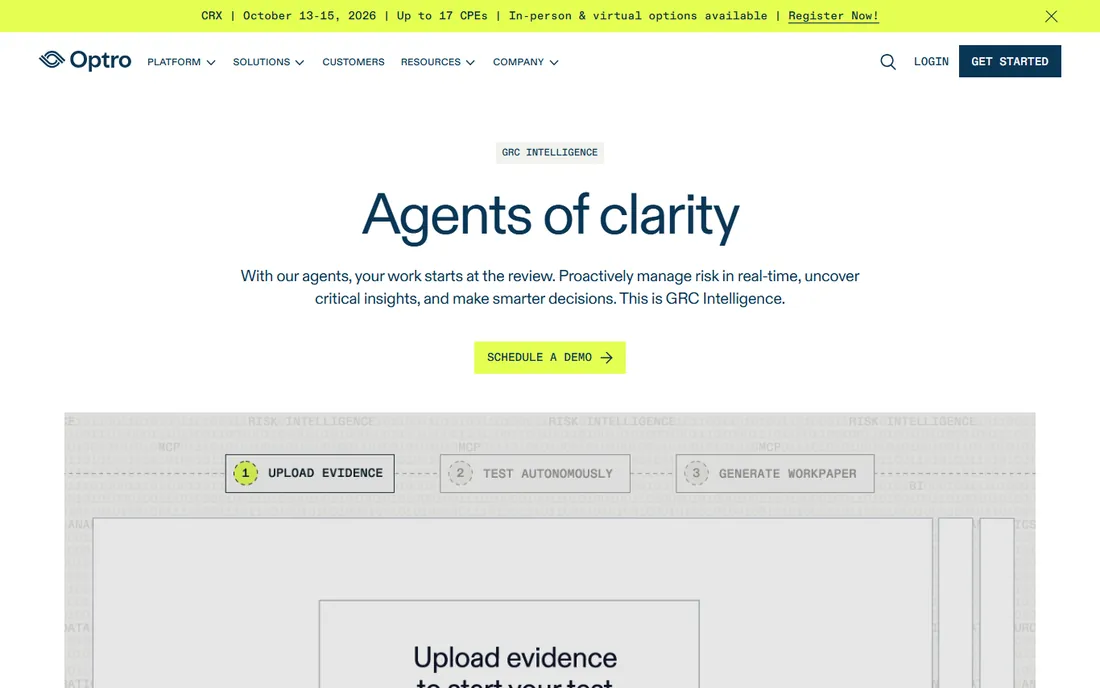
In March 2026, AuditBoard rebranded to Optro, and the site now leads with "GRC Intelligence": AI agents that start work at the review stage, autonomous testing, and real-time risk visibility. Underneath the rebrand, this is still the connected risk platform enterprises buy for SOX compliance, internal audit management, controls testing, IT risk and ESG reporting, with audit, risk, infosec and compliance modules sharing workpapers and dashboards. The connected model is the selling point: a control tested once flows through audit, risk and compliance views without re-entry.
The honest catch is cost and complexity. Pricing is custom and negotiated, licensed per module, and reviewers consistently note that the bill grows as you add modules. Smaller teams and first-time GRC buyers often find the platform heavier than they need. If you run SOX at a public company and want the platform the auditors already know, this is the default. If you are a 50-person company buying your first audit tool, start further down this list.
What we like- The reference platform for SOX and internal audit, trusted by over half the Fortune 500 per the vendor
- Connected workpapers, risk and compliance modules share one data model
- Strong analyst recognition (Forrester and Gartner Leaders)
Watch out for- Enterprise pricing with per-module costs that reviewers say add up
- Getting full value usually requires a dedicated administrator
#2
Workiva
Best for: Public companies that want SOX, financial reporting and audit on one platform
Visit workiva.com
Starting priceSee website (custom quote)
Free planNo (guided demo)
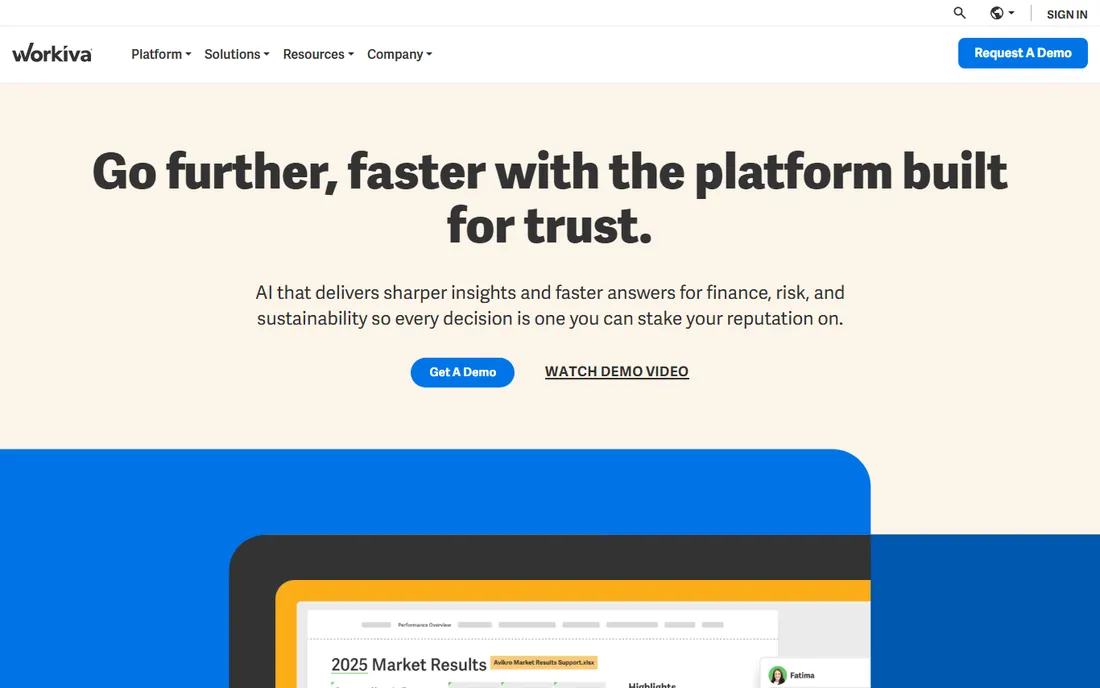
Workiva started in financial reporting (it is the platform behind a huge share of SEC filings) and grew into the audit and GRC space, which gives it an unusual advantage: the SOX controls, the audit workpapers and the financial reports all link to the same data. Change a number once and it updates everywhere, with a complete audit trail. The platform covers controls management, audit planning and testing, evidence collection, risk management and sustainability reporting, with AI agents layered across the workflows.
That breadth is the pitch and the price. Workiva sells to large, often public companies, and the implementation reflects it: dedicated onboarding teams and implementation partners. A company that only needs internal audit management may find the platform more than it bargained for, while a public company running SOX, SEC reporting and ESG disclosures gets genuine consolidation value. Pricing is quote-only, so scope the modules before the demo.
What we like- Unique breadth: SEC reporting, SOX/controls management, audit and sustainability on one connected platform with linked data
- 6,700+ global companies per the vendor
- Full audit trail and XBRL built in
Watch out for- Enterprise purchase with enterprise implementation
- The reporting heritage means audit-only buyers pay for breadth they may not use
#3
Diligent
Best for: Organizations that want board governance and GRC audit in one place
Visit diligent.com
Starting priceSee website (custom quote; the vendor advertises flexible pricing)
Free planNo (guided demo)
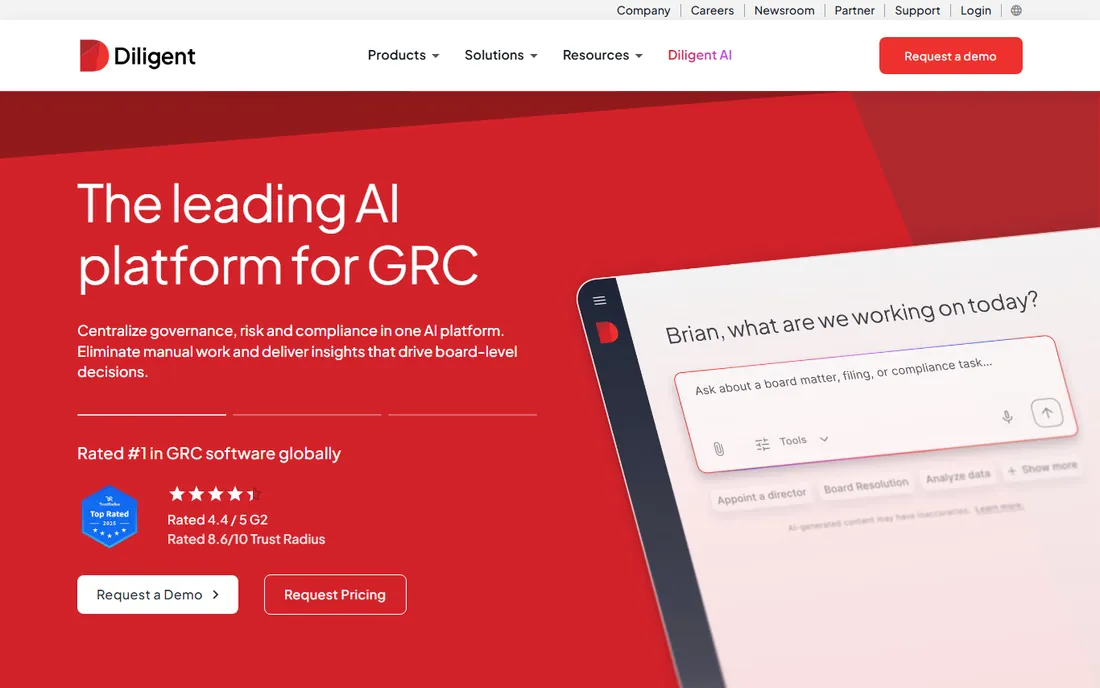
Diligent built its name in the boardroom (board portals and entity management) and expanded into a full GRC platform covering governance, compliance, risk and audit, with AI woven through. The distinctive angle is the top-down view: directors and executives see risk, audit findings and compliance posture in board-ready form, while practitioners run the audit programs underneath. HighBond, the former Galvanize audit product, brought the internal-audit depth into the platform.
For companies where the audit committee and the board are the audience, that governance-to-audit connection is a real differentiator. For a pure internal audit shop, the question to ask in the demo is how deep the audit execution goes: workpaper management, testing workflows and issue tracking versus the governance layer on top. Diligent advertises flexible pricing for organizations of any size, but expect a quote-based enterprise purchase.
What we like- The governance heritage: board management plus audit, risk and compliance on one AI platform
- 25,000+ customers in 150+ countries per the vendor
- Recognized as a Leader by five analyst firms
Watch out for- The platform story is broad, so audit-specific depth should be validated in the demo
- Enterprise sales process
#4
LogicGate
Best for: Teams that want to configure their own GRC applications without code
Visit logicgate.ai
Starting priceSee website (custom quote)
Free planNo (guided demo)
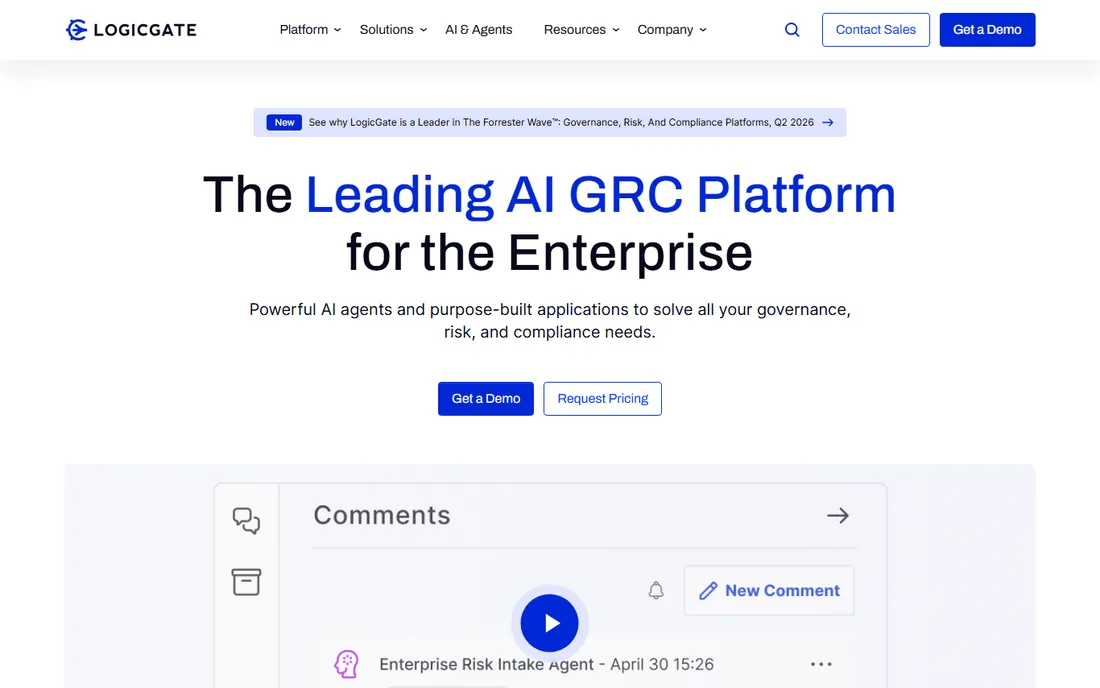
LogicGate's Risk Cloud is the configurability play in GRC. Instead of buying fixed audit, risk and compliance modules, teams build and adapt applications on a no-code platform backed by a graph database that maps how controls, risks, assets and regulations connect. The company reports 20,000-plus active users and an average implementation far shorter than the 6-to-12-month industry norm, and it carries Leader recognition from Gartner and Forrester.
The tradeoff is ownership. A configurable platform rewards teams that know their processes and punishes teams that want a prescriptive out-of-the-box audit program. If your GRC needs are unusual, or you want one platform to absorb new frameworks without new purchases, LogicGate's model fits. If you want the vendor to tell you how to run SOX, the more opinionated platforms above are a better match. Pricing is quote-based.
What we like- No-code Risk Cloud platform with a graph database connecting controls, risks and assets
- 20,000+ active users per the vendor
- Faster implementation than the industry average it cites
Watch out for- Configurability means the program is only as good as the team configuring it
- Quote-only enterprise pricing
#5
Hyperproof
Best for: Compliance-led teams that need audit management inside a broader GRC platform
Visit hyperproof.io
Starting priceSee website (custom quote)
Free planNo (guided demo)
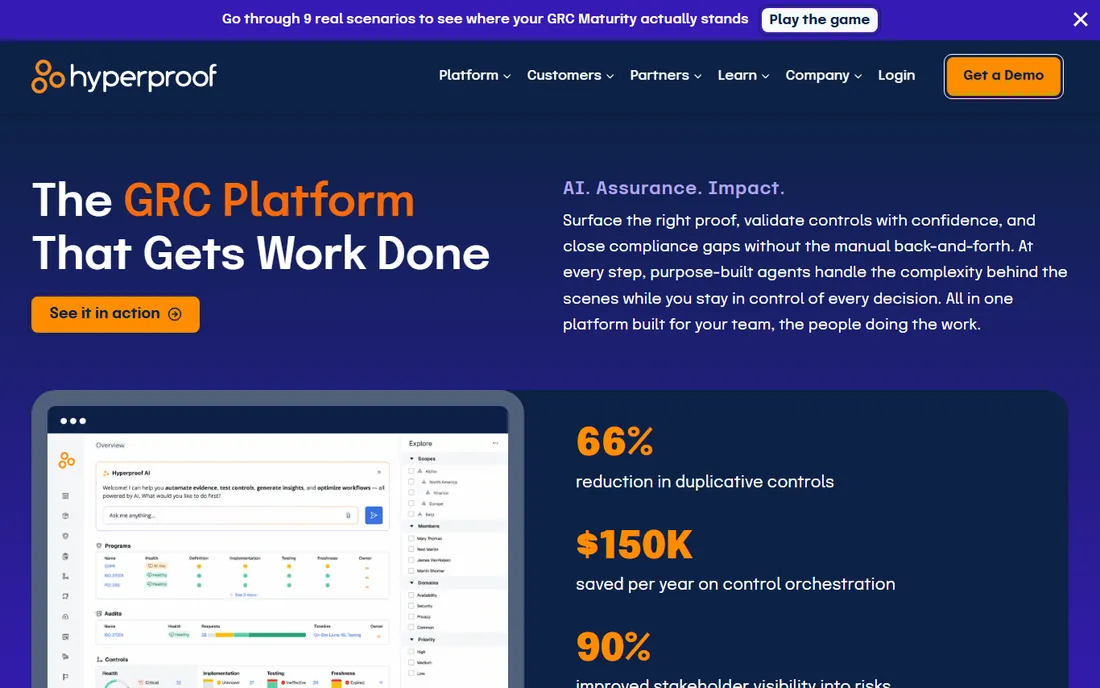
Hyperproof comes at auditing from the compliance side. Its strength is continuous control monitoring: map controls once, reuse them across SOC 2, ISO 27001, HIPAA and other frameworks, and automate evidence collection through 200-plus integrations (AWS, Okta, Jira, GitHub, Slack and the rest). The audit module connects evidence to requests and lets teams collaborate with auditors, and the trust center product turns compliance posture into a sales asset.
For a security or compliance team that also runs internal audits, this is a natural fit: the audit work rides on the compliance infrastructure instead of living in a separate tool. For a traditional internal audit department running operational and financial audits, the pure-play audit platforms above go deeper on workpapers and audit project management. Hyperproof's FedRAMP-authorized government edition is a genuine differentiator for federal-facing teams. Pricing is quote-only.
What we like- Strong compliance automation (controls mapped once across frameworks)
- 200+ integrations for evidence collection
- FedRAMP-authorized Gov option for high-security organizations
Watch out for- The compliance-first design means pure internal-audit workflows are secondary
- Quote-only pricing
Starting priceSee website (custom quote)
Free planNo (guided demo)

Fieldguide is the first tool on this list built for the other side of the desk: the CPA and advisory firm running audits for clients. The platform runs audit and assurance, advisory and consulting, corporate internal audit and federal engagements, with AI "field agents" that execute testing and documentation on the firm's own methodology. The vendor reports that more than half of the top 100 firms partner with Fieldguide, including eight of the top ten.
The pitch is capacity: agents handle the testing volume so practitioners cover more of the audit plan without adding headcount, with every result traceable and reviewable. For firm partners, that is the whole game. Corporate internal audit teams should not buy this; it is priced and built for firms. Pricing is quote-only, sized by firm.
What we like- Built for firms, not corporate departments: engagement workflows across audit, advisory and internal audit practices
- AI agents that run on the firm's own methodology
- Strong traction with large firms (over half of the top 100 per the vendor)
Watch out for- Firm-focused, so corporate internal audit teams should look elsewhere
- Enterprise pricing
#7
Suralink
Best for: Firms that want the client document request process to stop being painful
Visit suralink.com
Starting priceSee website (custom quote)
Free planNo (guided demo)
Suralink attacks the most hated part of every audit: the document request list. The platform manages the full request-to-review flow: firms request documents and e-signatures, clients upload through a portal, both sides track status on real-time dashboards, and AI-assisted review checks accuracy and consistency. The vendor reports 1,200-plus firms, 800,000 users and 2 million-plus engagements, with claimed reductions of 40% in request management time and 25% in engagement hours.
This is a collaboration platform with audit features, not an audit execution platform with collaboration features, and buyers should understand the difference. If your bottleneck is client readiness and the endless email chase, Suralink is the most targeted fix on this list. If your bottleneck is testing methodology and workpaper quality, pair it with (or choose instead) Fieldguide or Caseware. Pricing is quote-only.
What we like- The request-to-review workflow is the product: PBC lists, document collection, e-signatures and review in one place
- 1,200+ firms and 2M+ engagements per the vendor
- Clients get a simple portal instead of email chaos
Watch out for- Collaboration-first, so deep audit testing and workpaper management are lighter than the firm platforms above
- Quote-only pricing
#8
Caseware
Best for: Audit firms that want an AI-assisted engagement platform with decades of methodology behind it
Visit caseware.com
Starting priceSee website (custom quote)
Free planNo (guided demo)
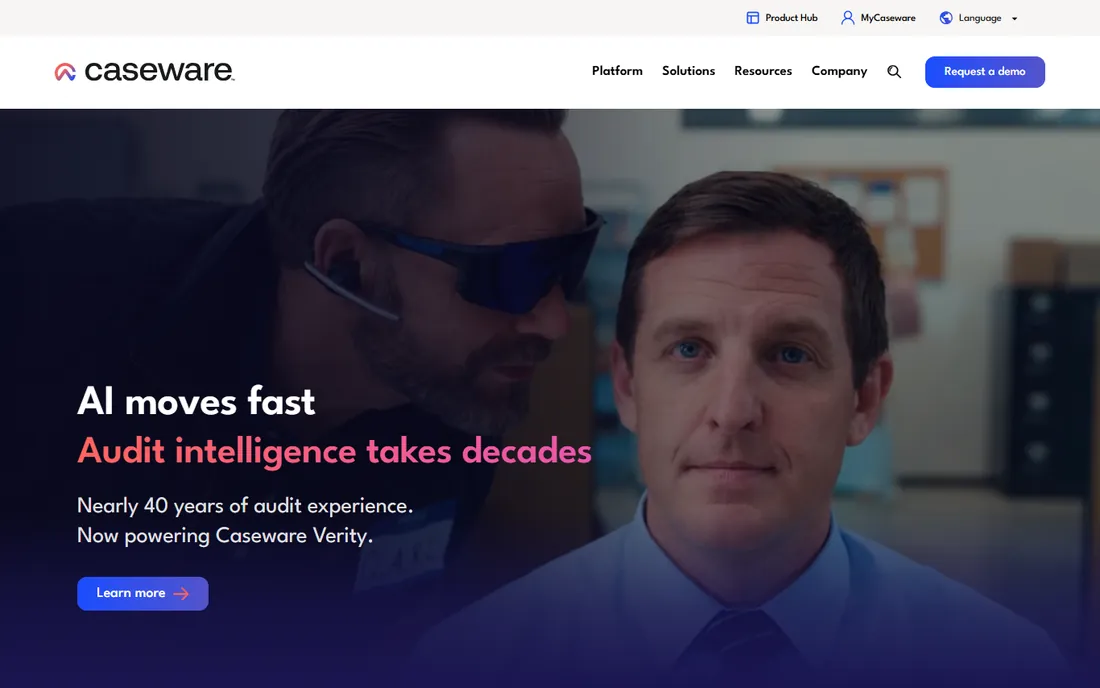
Caseware is the incumbent of the audit profession: 35-plus years of domain depth, 23,000-plus organizations and 475,000 users across 130 countries, per the vendor. The current platform centers on Caseware Verity, an AI orchestration layer embedded in the engagement: agents for data ingestion, risk suggestions, controls testing, disclosure checklists and XBRL tagging, all operating inside the firm's methodology with human review in control. The vendor cites 107 to 167 hours of AI time savings per engagement from firms using Verity live.
The differentiator is methodology-native AI: the agents understand the engagement structure rather than acting as a chatbot beside it. For firms already on Caseware Working Papers, the upgrade path is natural. For firms on other platforms, the evaluation is the classic incumbent-versus-challenger call: Caseware's depth and profession-wide footprint against Fieldguide's newer agent architecture. Pricing is quote-only.
What we like- Nearly 40 years in audit software with 23,000+ organizations and 475,000 users per the vendor
- The Verity AI layer runs agents inside the engagement workflow
- Methodology-native rather than generic AI bolted on
Watch out for- The platform breadth takes implementation effort
- Quote-only enterprise pricing
How to choose auditing software
Start with your seat, because the market splits three ways. Corporate internal audit and SOX teams buy the enterprise GRC platforms (Optro, Workiva, Diligent, LogicGate, Hyperproof). CPA and advisory firms running client work buy the firm platforms (Fieldguide, Suralink, Caseware). Mixing them up is the classic mistake: a corporate team does not need engagement management, and a firm does not need a SOX controls library.
Then scope the frameworks. SOX and ICFR point to Optro or Workiva. SOC 2 and ISO 27001 point to Hyperproof (or the compliance automation vendors). Board-level governance points to Diligent. Multi-framework chaos where one control serves five audits points to LogicGate's connected model. Firm methodology and capacity point to Fieldguide or Caseware; client document chaos points to Suralink.
Then run the enterprise buying process properly. Nobody here publishes prices, so every purchase is a negotiated quote: get per-user and per-module pricing, the implementation scope and timeline, the training plan, and the renewal terms in writing. Ask for two reference customers in your industry and one that churned, and ask what the platform does not do. The demo will show the best version of the product; the references show the real one.
How we chose
We started with the categories buyers search: auditing software, audit management software, internal audit software and GRC software. For each candidate we opened the vendor's own site, checked product documentation and pricing pages, compared features against public reviews on G2, Capterra and TrustRadius and practitioner discussion on Reddit, and weighed company-size fit from mid-market teams to global enterprises and accounting firms. Where a price could not be verified on the vendor's own page we wrote "See website" rather than guessing.
Internal audit vs. external audit vs. IT compliance: know your buyer
The phrase "auditing software" covers three buyers with different budgets and different success criteria. Internal audit teams answer to the audit committee: their software must manage the audit plan, risk assessments, workpapers, issue tracking and SOX testing, with reporting the board can read. That is the Optro, Workiva, Diligent and LogicGate buyer.
External audit firms answer to partners and clients: their software must run engagements efficiently, keep methodology consistent across teams, and make the client experience painless. That is the Fieldguide, Suralink and Caseware buyer, and their ROI math is chargeable hours and capacity, not control coverage.
IT compliance teams answer to security leadership and customers: their software must automate evidence collection, map controls across frameworks, and feed the trust center that closes enterprise deals. That is the Hyperproof buyer (alongside the compliance automation specialists). Before shortlisting, write down which of the three you are. Half the bad purchases in this category come from buying the wrong buyer-type's tool.
Frequently asked questions
How much does auditing software cost?
Vendors do not publish prices; every purchase here is a negotiated quote. Expect per-user or per-module annual licensing, with enterprise platforms typically running into five or six figures annually depending on user count and modules. Implementation, training and integrations are usually separate line items. Get the per-user cost, the module list and the renewal terms in writing before signing.
What is the difference between audit management software and GRC software?
Audit management software runs the audit lifecycle: planning, fieldwork, workpapers, testing, issue tracking and reporting. GRC software is the broader category covering governance, risk management and compliance alongside audit. Most products on this list are GRC platforms with strong audit modules; the pure audit execution depth varies, so validate workpaper and testing workflows in the demo if that is your core need.
Do small businesses need auditing software?
Usually not the enterprise tools on this list. A small business typically needs an accountant and good bookkeeping software, not a GRC platform. The exception is startups pursuing SOC 2 or ISO 27001 for enterprise sales: then a compliance automation platform (Hyperproof's category) pays for itself in closed deals. Internal audit software becomes relevant when you have a dedicated audit function or SOX obligations.
Can auditing software replace external auditors?
No. These platforms make audits faster, more consistent and better documented, but they do not provide the independent opinion that an external audit delivers. What they do replace is the spreadsheet chaos around the audit: scattered workpapers, email-based evidence requests and untracked issues. Firms and internal teams both buy these tools to do more audit work with the same headcount.
How long does implementation take?
It ranges from weeks to many months. Configurable platforms like LogicGate advertise implementations far shorter than the 6-to-12-month enterprise norm; the big GRC suites at global companies can take the better part of a year with data migration and methodology configuration. Firm platforms depend on how many practices and templates you migrate. Ask for the implementation timeline, the vendor's responsibilities versus yours, and two reference customers who went live recently.
Sources we checked (10)
- https://auditboard.com
- https://workiva.com
- https://diligent.com
- https://logicgate.ai
- https://hyperproof.io
- https://fieldguide.io
- https://suralink.com
- https://www.caseware.com
- https://www.g2.com/categories/audit-management
- https://www.capterra.com/audit-software/
Is your product missing or out of date?
We review this list regularly. Vendors can request a listing, send updated pricing or ask about featured placement.

Shihab Mia · Founder, Rankite
Shihab has spent more than a decade helping SaaS and e-commerce brands grow through search. He writes Rankite's software buying guides from pricing pages, documentation and public user reviews. More about Shihab.