How we make this list: we compare pricing pages, product documentation and public user reviews. Rankite is independent; if a vendor ever pays for a featured spot, that listing is clearly labeled Partner.
Key takeaways
- Your attack surface is bigger than your asset inventory says: the best ASM tools (Censys, CyCognito) find forgotten subdomains, shadow cloud and subsidiary assets your team never listed.
- Intruder's free plan (weekly scans, ASM monitoring, 5 external targets) is the only genuine free entry point in a category where everyone else is quote-based.
- Security ratings platforms (BitSight, SecurityScorecard, UpGuard) score what outsiders see; continuous testing platforms (Detectify, Hadrian, Intruder) find what is actually exploitable. Most programs need one of each.
- Expect quote-based annual contracts everywhere except Intruder and Detectify: budget a sales process and insist on a scoped proof-of-value before signing.
Quick comparison
| Tool | Best for | Starting price | Free plan |
|---|
 UpGuard UpGuard | Mid-market teams wanting ASM plus vendor risk in one dashboard | See website (BreachSight ASM is quote-based) | No (free website scanner for one domain; trial unverified) |
 SecurityScorecard SecurityScorecard | Enterprise TPRM teams monitoring large vendor portfolios | See website (quote-only; third-party estimates unverified) | No (14-day trial reported by third parties, unverified) |
 BitSight BitSight | Regulated enterprises and insurers needing defensible ratings | See website (quote-only; no dollar figures published) | No (free Security Ratings Snapshot for your own org only, form-gated) |
 Censys ASM Censys ASM | Security teams wanting the deepest port-level visibility | See website (ASM pricing not published) | Yes (Censys Search community tier: 250 queries/month free) |
 Detectify Detectify | Engineering-led teams wanting continuous web app and surface testing | See website (Starter/Standard/Professional/Enterprise tiers; no numeric price published) | No (free trial: 14 days full-feature, per third-party directory) |
 Intruder Intruder | Startups and SMBs without a dedicated security team | See website (Free/Cloud/Pro/Enterprise; numeric rates JS-rendered) | Yes (permanent Free plan: weekly scans, ASM monitoring, 5 external targets, 3 users) |
 Hadrian Hadrian | Security teams wanting continuous autonomous pentesting | See website (no published pricing) | No (14-day proof-of-value trial reported, unverified) |
 CyCognito CyCognito | Large enterprises with sprawling subsidiary footprints | See website (priced by asset volume; not published) | No (limited free scan reported, unverified) |
 Panorays Panorays | CISOs combining external scans with questionnaire evidence | See website (quote-based; free Starter for up to 5 vendors) | Yes (Starter: monitor own posture plus up to 5 third parties) |
Is your product missing or out of date?
We review this list regularly. Vendors can request a listing, send updated pricing or ask about featured placement.
Your attack surface is bigger than your asset inventory says it is. Forgotten subdomains from a 2019 campaign, a dev's S3 bucket, a subsidiary's mail server, the marketing team's new SaaS signup: all of it is internet-facing, all of it is scannable by anyone, and none of it is in your spreadsheet. These nine attack surface management platforms find what you forgot you own.
#1
UpGuard
Best for: Mid-market teams wanting ASM plus vendor risk in one dashboard
Visit upguard.com
Starting priceSee website (BreachSight ASM is quote-based)
Free planNo (free website scanner for one domain; trial unverified)
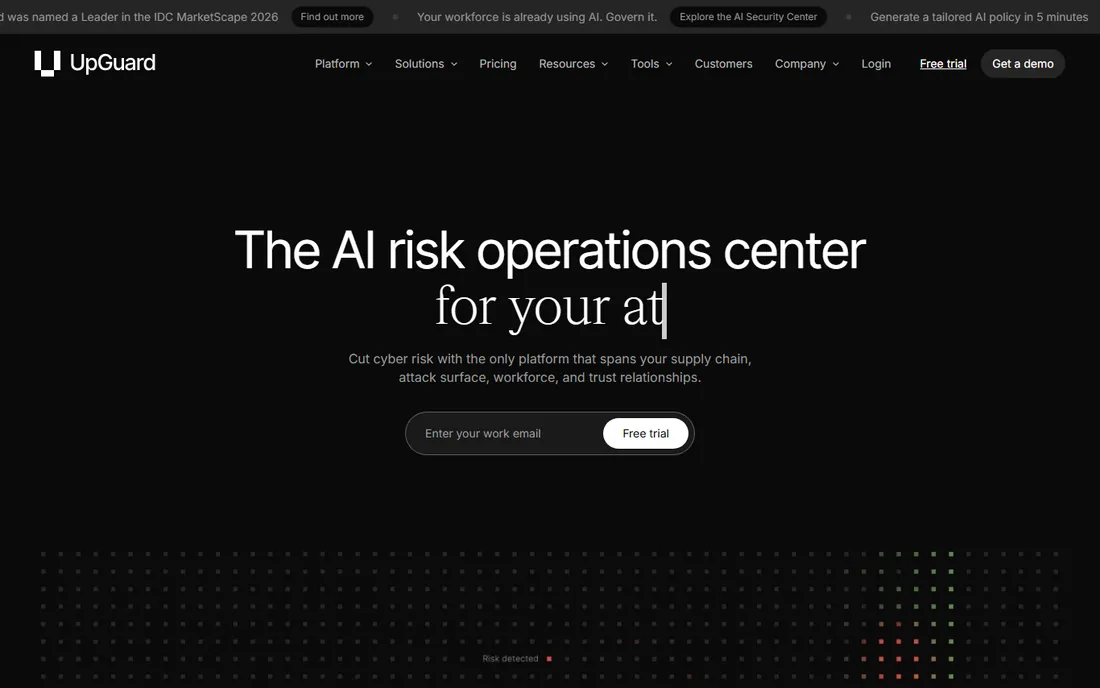
UpGuard's BreachSight continuously scans your domains, IPs and dark web sources for exposures and leaked credentials, while the same dashboard rates your vendors. For a mid-market security or risk team, that combination covers the two questions leadership asks: are we exposed, and are our suppliers exposed? The A-F style ratings translate cleanly to board slides.
The limits are structural. Ratings are built from externally visible signals only, so they miss your internal controls, and they should supplement rather than replace internal vulnerability management. Pricing is not published for BreachSight, so ASM costs require a quote, and the per-vendor pricing model makes budget planning fuzzy at scale. Use it for outside-in visibility and vendor risk; keep a testing tool for exploitability.
What we like- Combines external attack surface scoring with vendor risk management and dark web leak monitoring
- Clear security ratings that executives understand
- Strong remediation workflows
Watch out for- Scores reflect only externally visible signals, missing internal posture
- Pricing climbs with vendor count and third-party estimates vary widely
Starting priceSee website (quote-only; third-party estimates unverified)
Free planNo (14-day trial reported by third parties, unverified)
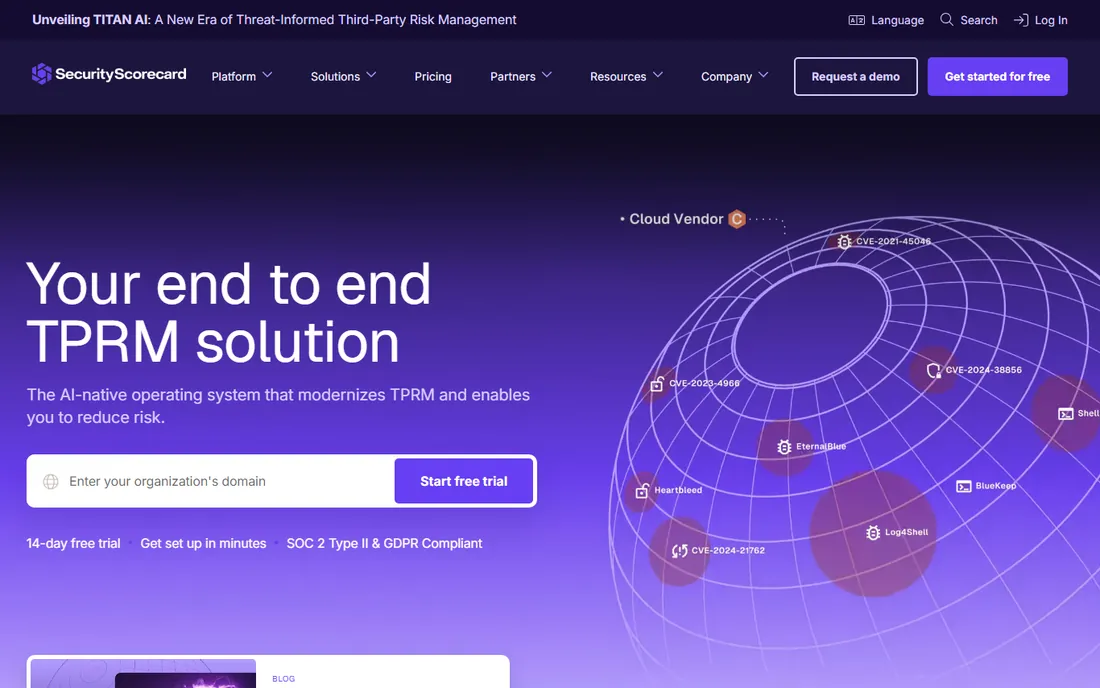
SecurityScorecard is the most widely deployed third-party risk scoring platform, and its strength is coverage: over 10 million companies rated, daily rescans for customers, and the TITAN platform's Watch, Assess and Secure packages covering outside-in visibility, questionnaires and threat-informed response. The Score Planner tells vendors exactly which findings drag their grade down.
The commercial side is enterprise through and through. Pricing is quote-only with real implementation fees reported, and the proprietary methodology means a disputed score is hard to argue: you cannot audit a black box. Budget analyst time if you run BitSight or UpGuard alongside it, because scores are not comparable across platforms. For large vendor portfolios with formal TPRM programs, the coverage justifies the deal.
What we like- 10M-plus companies rated with simple 0-100 scoring
- Daily external scanning for paying customers
- 90-plus integrations and a Score Planner showing how to improve
Watch out for- Quote-only pricing with reported implementation fees of $5,000-$25,000-plus
- Proprietary ratings methodology makes score disputes hard to resolve
#3
BitSight
Best for: Regulated enterprises and insurers needing defensible ratings
Visit bitsight.com
Starting priceSee website (quote-only; no dollar figures published)
Free planNo (free Security Ratings Snapshot for your own org only, form-gated)
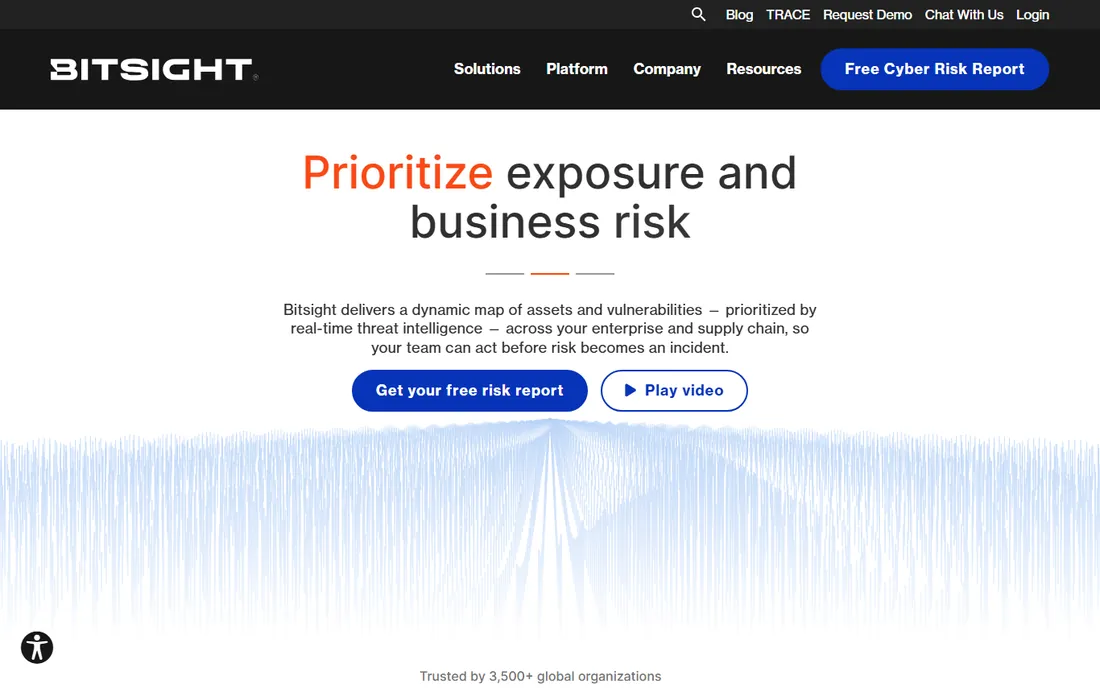
BitSight is the ratings platform auditors and underwriters cite. It attributes internet assets to organizations and scores them daily from internet-wide scanning, no agents, no vendor cooperation required. In regulated finance and cyber insurance underwriting, a BitSight rating is practically a currency.
That position costs money. BitSight sits at the premium end of ratings pricing, full third-party monitoring is a negotiated annual deal, and the free snapshot covers only your own organization. Public-data ratings can misattribute assets, so expect to spend time on attribution cleanup. If your buyers, regulators or insurers ask for a rating by name, it will be this one. If they do not, the cheaper platforms cover the same outside-in ground.
What we like- Most analyst-recognized ratings platform (Forrester Wave Leader, April 2026)
- Daily security ratings from internet-wide scanning with no vendor participation needed
- Strong in finance and insurance underwriting
Watch out for- Premium pricing positioned above SecurityScorecard for comparable scope
- Public-data-only ratings can misattribute assets or miss internal controls
#4
Censys ASM
Best for: Security teams wanting the deepest port-level visibility
Visit censys.com
Starting priceSee website (ASM pricing not published)
Free planYes (Censys Search community tier: 250 queries/month free)
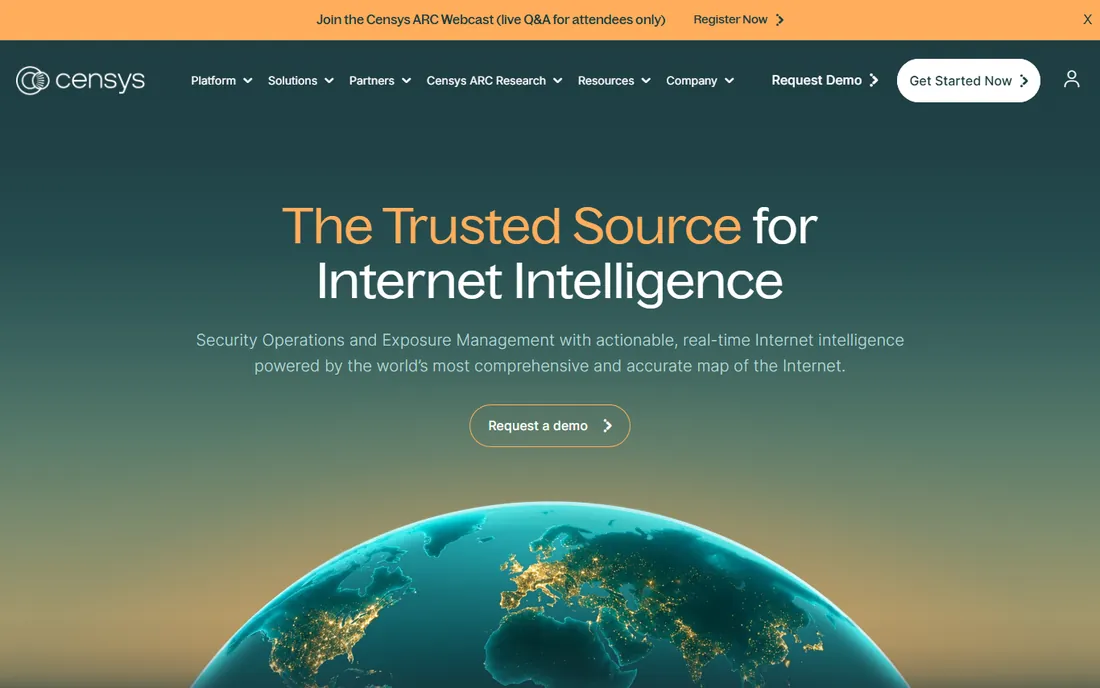
Censys sees what domain-only tools cannot. Scanning all 65,535 ports finds the database on a non-standard port and the forgotten service on a cloud IP that subdomain enumeration misses. CVE detection matched to exact software versions, prioritized by CISA's known-exploited list, tells you what is actually dangerous rather than merely misconfigured. Certificate transparency monitoring catches shadow IT as it appears.
The price of that depth is opacity and noise. No published ASM pricing means budget planning starts with a sales call, and analysts should validate findings because cloud churn generates false positives. The free Search tier (250 queries a month) is genuinely useful for spot checks. For teams that want the deepest possible view of their internet footprint, nothing else scans like Censys.
What we like- Internet-wide scans check all 65,535 ports, finding services on unusual ports competitors miss
- CVE detection matched to exact software versions with CISA KEV prioritization
- Cloud connectors for AWS, GCP and Azure
Watch out for- ASM pricing is not published and third-party estimates vary wildly
- Fast-changing cloud resources generate false positives and slow retests
#5
Detectify
Best for: Engineering-led teams wanting continuous web app and surface testing
Visit detectify.com
Starting priceSee website (Starter/Standard/Professional/Enterprise tiers; no numeric price published)
Free planNo (free trial: 14 days full-feature, per third-party directory)
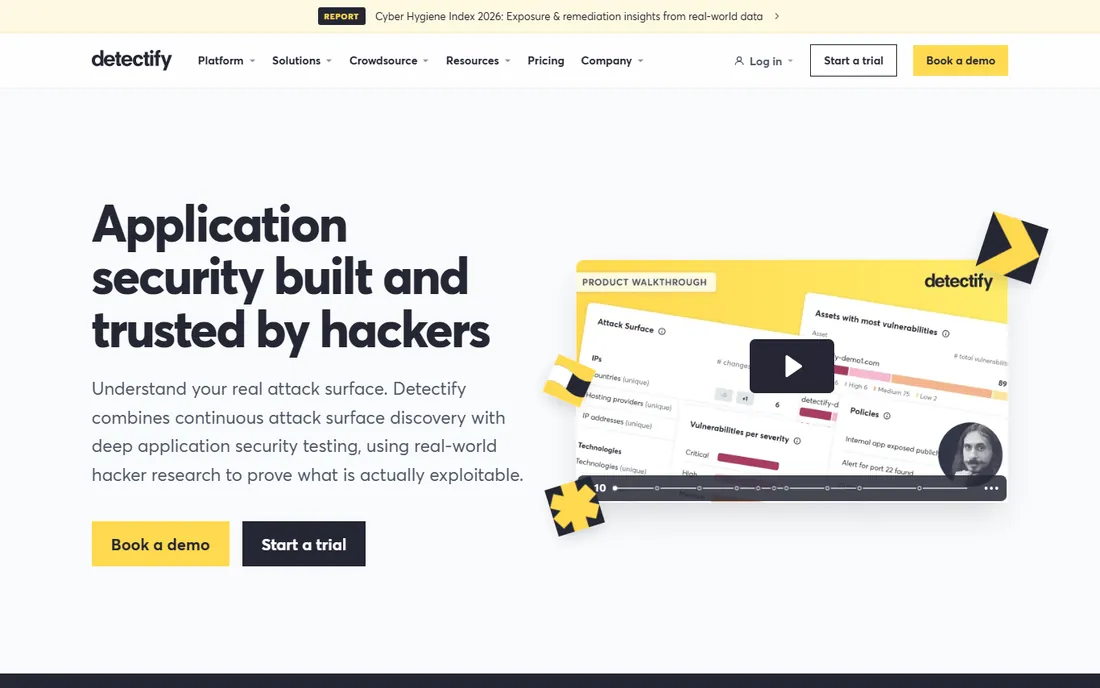
Detectify tests rather than just observes. Its engine runs payload-based checks built by a crowdsourced network of ethical hackers, finding real exploitable issues instead of theoretical misconfigurations, and continuous subdomain monitoring alerts you when the attack surface changes. For engineering-led security teams, that testing depth is the differentiator.
Budget for the surface, not the seat. The base plan covers users and teams, but every domain and target adds cost, so inventory your full attack surface before you sign. Self-serve Starter keeps onboarding cheap; higher tiers add expert onboarding at a real price. If you want continuous proof that your web assets are exploitable or not, rather than a score, Detectify is the pick.
What we like- Payload-based vulnerability testing from a crowdsourced researcher network, not just signature matching
- Continuous subdomain monitoring with asset change alerts
- Predictable flat-rate tiered pricing
Watch out for- Surface Monitoring and Application Scanning are priced per domain/target on top of the base plan
- Expert onboarding beyond self-serve costs extra
#6
Intruder
Best for: Startups and SMBs without a dedicated security team
Visit intruder.io
Starting priceSee website (Free/Cloud/Pro/Enterprise; numeric rates JS-rendered)
Free planYes (permanent Free plan: weekly scans, ASM monitoring, 5 external targets, 3 users)
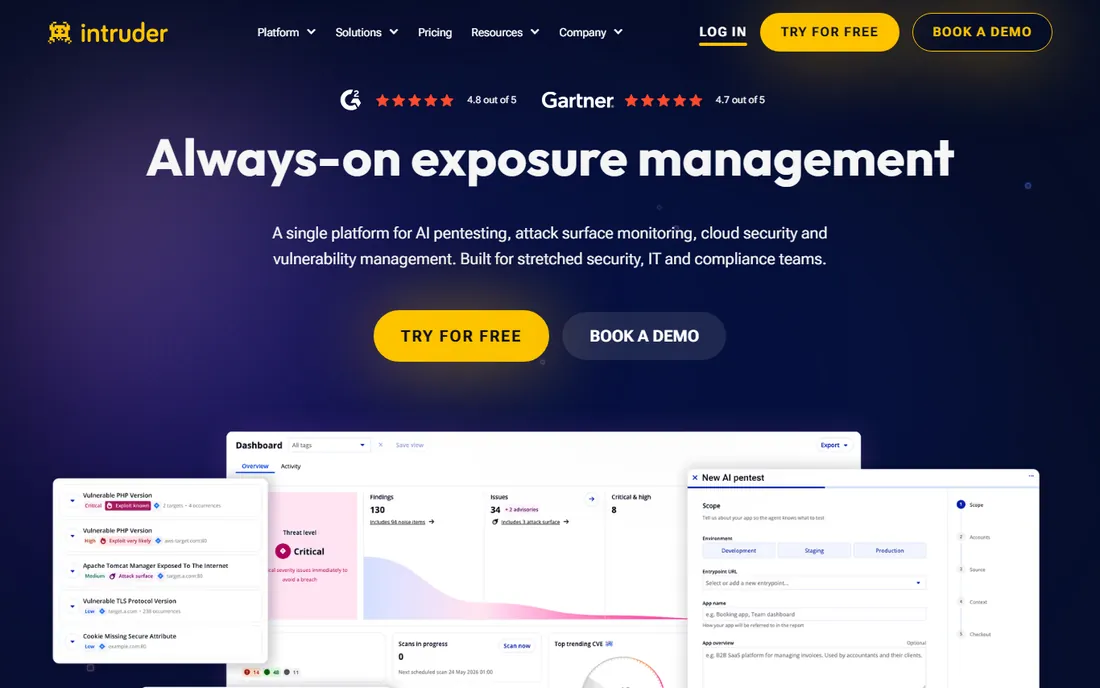
Intruder is the only ASM-adjacent vendor with a genuine free plan: weekly scans, cloud posture checks, attack surface monitoring, 5 external targets and 3 users, free forever since July 2026. The Emerging Threat Scans re-check your targets within hours of new critical CVEs instead of waiting for the next cycle, and the reports are auditor-ready without translation.
The ceiling is real. Serious ASM features like related-domain discovery and the full thousand-plus attack surface checks sit in the custom-quoted Enterprise tier, and pricing is base fee plus per-target fees. Remediation guidance can be thin on the how. But for a startup or SMB that needs automated scanning and ASM basics without hiring a security team, the free plan alone is more than any competitor offers.
What we like- Automated vulnerability scanning with Emerging Threat Scans that re-check targets within hours of new CVEs
- Clear auditor-ready reports
- Built for lean teams
Watch out for- Full attack surface visibility and unknown-asset discovery are Enterprise-only
- Remediation guidance sometimes lacks step-by-step fixes
#7
Hadrian
Best for: Security teams wanting continuous autonomous pentesting
Visit hadrian.io
Starting priceSee website (no published pricing)
Free planNo (14-day proof-of-value trial reported, unverified)
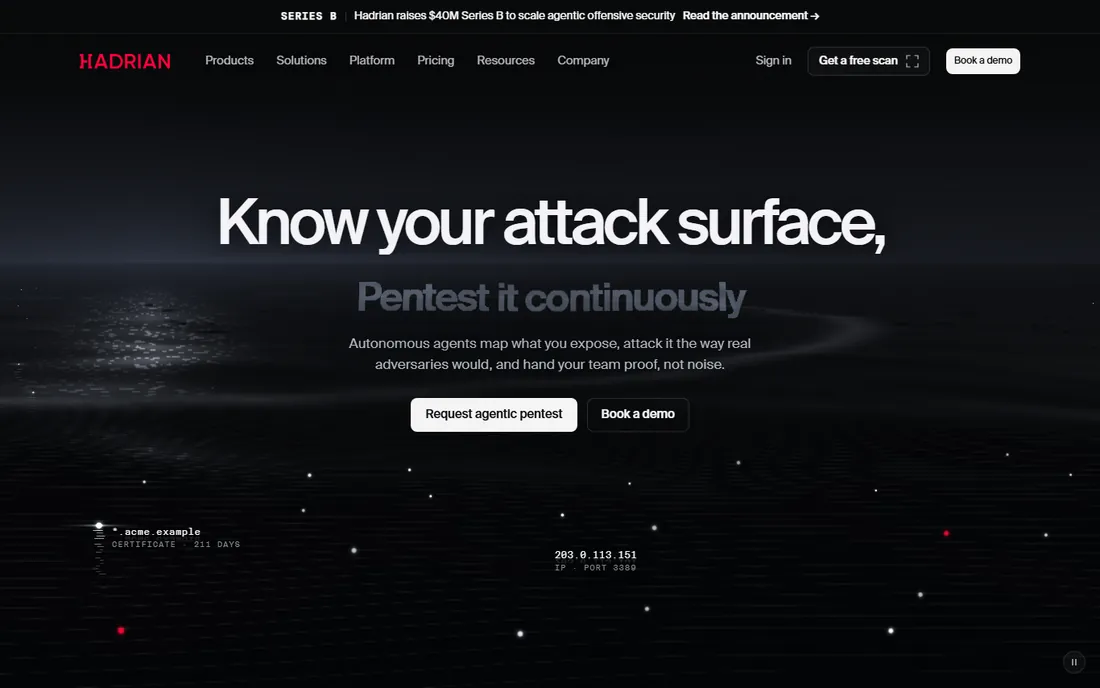
Hadrian does what scheduled scanners cannot: its AI Orchestrator initiates tests the moment new assets or changes appear, thinking like an attacker rather than a calendar. It maps third-party SaaS apps and exposed sensitive files across your footprint and prioritizes findings by exploitability, so the team fixes what matters first.
The trade is maturity and transparency. Founded in 2021, the platform and integration ecosystem trail the incumbents, and with no published pricing every evaluation begins with sales. Validate during the trial that its AI-verified findings map cleanly to your remediation workflow. For teams that want an attacker's perspective running continuously instead of a quarterly pentest, it is the most interesting option here.
What we like- AI Orchestrator autonomously pentests your attack surface continuously, event-driven rather than scheduled
- Maps 10,000-plus third-party SaaS apps and exposed sensitive files
- Findings prioritized by exploitability
Watch out for- No published pricing, so every evaluation starts with a sales process
- Younger vendor with a less mature platform and integration ecosystem
#8
CyCognito
Best for: Large enterprises with sprawling subsidiary footprints
Visit cycognito.com
Starting priceSee website (priced by asset volume; not published)
Free planNo (limited free scan reported, unverified)
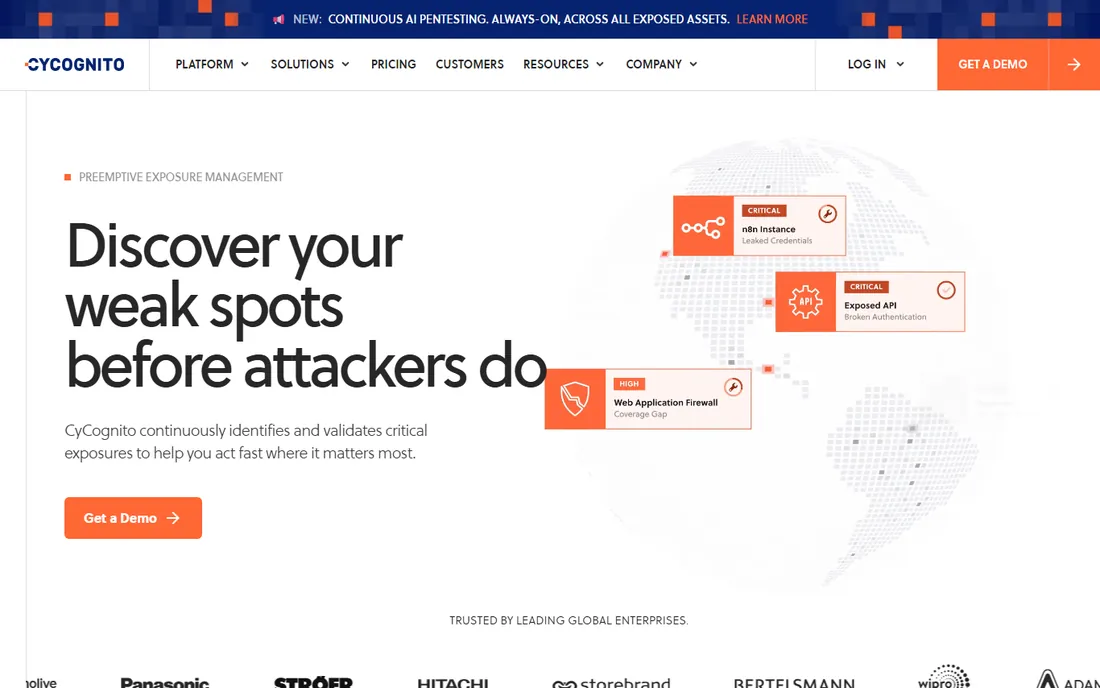
CyCognito solves the post-acquisition nightmare: give it your company name and it maps your internet footprint, subsidiaries included, with evidence showing why each asset is attributed to you. No IP ranges, no asset lists, no agents. The owner-routing feature finds who owns each asset and tracks remediation in ServiceNow, which is where enterprise fixes actually happen.
This is enterprise software with enterprise pricing, quoted by asset volume with no public numbers, and active testing is sold separately. Confirm retest-scan limits during evaluation, since verifying fixes is capped. For a large organization whose digital footprint grew through acquisitions and shadow IT, the zero-input discovery is unmatched. For everyone else, it is overkill at an overkill price.
What we like- Discovers assets from just your company name using a 60,000-node scanning network, no asset lists needed
- Subsidiary mapping with attribution evidence
- Owner routing tracks fixes in ServiceNow
Watch out for- Enterprise-grade pricing out of reach for smaller companies
- Retest scans are capped and searches can be slow
#9
Panorays
Best for: CISOs combining external scans with questionnaire evidence
Visit panorays.com
Starting priceSee website (quote-based; free Starter for up to 5 vendors)
Free planYes (Starter: monitor own posture plus up to 5 third parties)
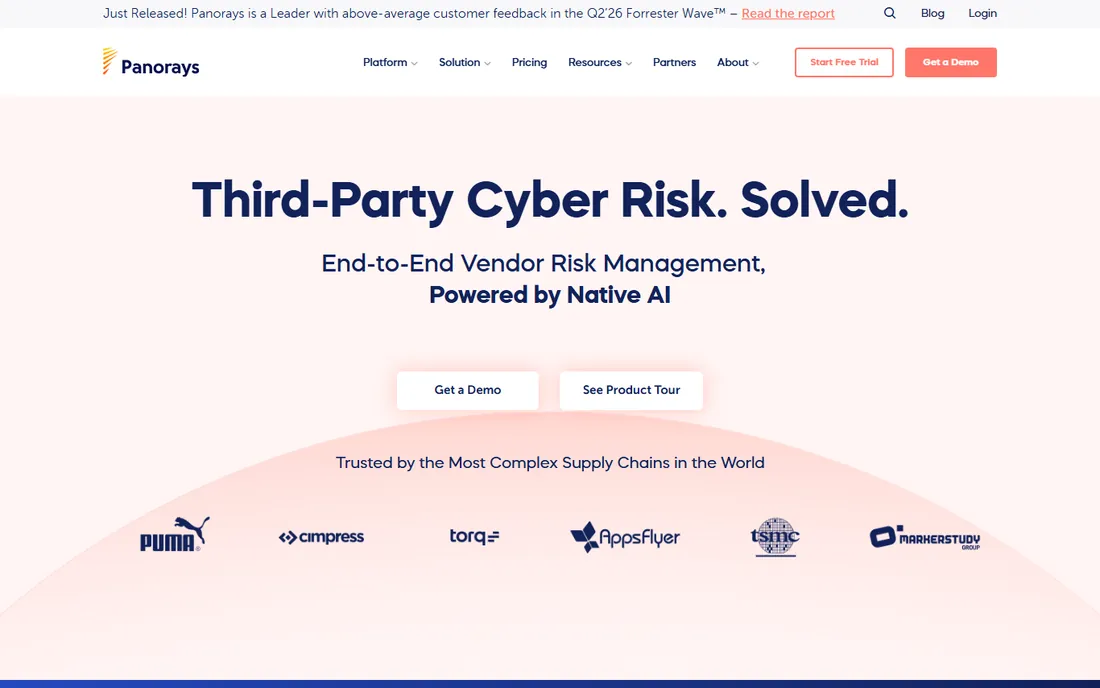
Panorays answers the auditor's real question: not just what the scan found, but what the vendor attests, weighted by how much you depend on them. The platform fuses outside-in attack surface scans with inside-out smart questionnaires, automates the questionnaire chasing with evidence validation, and discovers fourth parties hiding behind your vendors. The combined rating is more defensible than a scan-only score.
The catch is positioning and price. It is built for vendor risk programs, not first-party ASM depth, so pure attack-surface teams should look at Censys or Hadrian instead. Pricing is quote-based with a reported entry around $30,000 a year (unverified), and costs scale with vendor volume and assessment frequency. The free Starter plan (5 vendors) is enough to evaluate the approach. For CISOs running complex supply chains, the combined evidence model is the point.
What we like- Fuses outside-in attack surface scans with inside-out smart questionnaires weighted by business context
- Automated questionnaire workflows with evidence validation
- Fourth-party discovery
Watch out for- Quote-based pricing reportedly around $30,000 a year entry (unverified)
- Optimized for vendor risk programs rather than pure first-party ASM depth
What ASM actually finds that your scanner misses
Internal vulnerability scanners see what you point them at. ASM sees what the internet sees, and the gap between those two views is where breaches start. The consistent findings across ASM deployments: forgotten subdomains pointing at decommissioned infrastructure, dev and staging environments with production data, cloud storage buckets with public read access, certificates expiring on assets nobody owns, and subsidiary infrastructure from acquisitions that never made it into the CMDB.
The tools here find different slices of that gap. Censys and CyCognito find unknown assets through internet-wide scanning. Detectify and Hadrian prove which findings are actually exploitable. UpGuard, BitSight and SecurityScorecard translate the exposure into ratings your board and your vendors' boards understand. Intruder gives small teams the basics for free. A mature program layers asset discovery under continuous testing under ratings, because no single tool covers all three jobs.
How we chose
We started with the searches security teams actually run: attack surface management tools, external attack surface, ASM software and security ratings. For each candidate we opened the vendor's own pricing page, checked plan structures and prices against public reviews on G2 and Capterra and practitioner discussion on Reddit, and compared discovery depth, testing methodology and company-size fit. Where a price could not be verified on the vendor's page we wrote "See website" instead of guessing. The shortlist mixes ratings platforms, deep-discovery scanners and continuous testing tools, because scoring your vendors and pentesting your own surface are different jobs.
ASM vs. vulnerability management: know the difference
Buyers confuse these constantly, and vendors encourage it. Vulnerability management scans known assets, usually from inside, on a schedule, and tells you what is unpatched. ASM discovers unknown assets from the outside, continuously, and tells you what is exposed. You need both: ASM answers "what do we own that is internet-facing," vulnerability management answers "what is unpatched on the assets we know about."
In practice that means ASM sits earlier in the workflow. Censys or CyCognito builds the asset inventory, Detectify or Hadrian proves exploitability, Intruder keeps the small-team basics covered, and the ratings platforms monitor the whole picture including third parties. If your vulnerability scanner already covers known assets well, ASM is the higher-value next purchase. If you do not know your full internet footprint, start with discovery before buying more scanning depth.
Frequently asked questions
What is attack surface management?
Attack surface management is the continuous discovery, inventory and monitoring of everything internet-facing that belongs to your organization: domains, subdomains, IPs, cloud assets, certificates and exposed services. Unlike scheduled vulnerability scans of known assets, ASM starts from the outside, finds assets you did not know you had, and watches for changes. The goal is to shrink what attackers can see before they see it.
How is ASM different from a vulnerability scanner?
A vulnerability scanner checks known assets for known weaknesses, usually from inside your network on a schedule. ASM discovers unknown assets from the internet's perspective and monitors them continuously. Scanners answer "what is unpatched"; ASM answers "what do we own that is exposed." Most security programs need both, with ASM feeding the asset inventory the scanner works from.
Do small businesses need attack surface management?
The full enterprise platforms are overkill, but the problem is real at every size: a forgotten subdomain or an open S3 bucket does not care how big you are. Intruder's free plan (weekly scans, ASM monitoring, 5 targets) covers the basics at zero cost. Censys Search's free tier handles spot checks. Start free, and buy a platform when your footprint outgrows the free limits.
What do security ratings actually measure?
Ratings from BitSight, SecurityScorecard and UpGuard measure externally observable security signals: open ports, certificate hygiene, patching cadence of visible services, leaked credentials, malware associations. They do not see your internal controls, patch management or security policies. Treat a rating as a measure of your internet hygiene, not your security program, and never as a replacement for internal assessment.
How much does ASM software cost?
Almost nothing is published. Intruder's paid plans are the only transparent option and Detectify publishes plan tiers without numeric prices. Enterprise ASM and ratings platforms are quote-based annual contracts; third-party estimates put entry points from roughly $20,000 to $60,000 a year depending on scope (unverified). Budget a sales process, insist on a scoped proof-of-value, and price by your asset or vendor count, not the headline tier.
Can ASM replace penetration testing?
No. ASM finds and monitors exposures continuously; a pentest has humans chaining vulnerabilities into actual compromise paths on a schedule. Hadrian's autonomous pentesting narrows the gap by testing continuously, but it does not replace a scoped human pentest for compliance or high-assurance needs. Use ASM to keep the surface clean between pentests, not instead of them.
Sources we checked (11)
- https://www.upguard.com/platform/breachsight
- https://securityscorecard.com/pricing/
- https://www.bitsight.com/pricing-packaging
- https://censys.com/attack-surface-management/
- https://detectify.com/pricing
- https://www.intruder.io/pricing
- https://hadrian.io/
- https://www.cycognito.com/
- https://panorays.com/pricing/
- https://www.g2.com/categories/attack-surface-management
- https://www.capterra.com/attack-surface-management-software/
Is your product missing or out of date?
We review this list regularly. Vendors can request a listing, send updated pricing or ask about featured placement.

Shihab Mia · Founder, Rankite
Shihab has spent more than a decade helping SaaS and e-commerce brands grow through search. He writes Rankite's software buying guides from pricing pages, documentation and public user reviews. More about Shihab.