How we make this list: we compare pricing pages, product documentation and public user reviews. Ratings come from G2, Capterra or Trustpilot, with the date we checked them.
Key takeaways
- Finch is the gentlest starting point, pairing self-care goals with a virtual pet.
- Habitica is the strongest free option if game mechanics keep you going.
- Forest turns focus time into a visible, growing record you can actually see.
- Headspace teaches meditation step by step, while Calm is stronger for sleep.
- Streaks is the only one-time purchase here, and only for Apple users.
Quick comparison
| Tool | Best for | Starting price | Free plan |
|---|
 Finch | Gentle self-care habits | $9.99 per month | Yes |
 Habitica | Gamified habits and tasks | $4.99 per month | Yes |
 Fabulous | Guided routine coaching | $49.99 per year | Yes |
 Forest | Focus sessions that grow trees | Free | Yes |
 Streaks | Simple Apple-only streaks | $5.99 one-time | No |
 Day One | Journaling and reflection | See website | Yes |
 Headspace | Structured meditation courses | $69.99 per year | Free trial |
 Calm | Sleep stories and relaxation | $69.99 per year | Free trial |
Is your product missing or out of date?
We review this list regularly. Vendors can request a listing, send updated pricing or ask about featured placement.
The best apps for self improvement
Starting price$9.99 per month
Free planYes
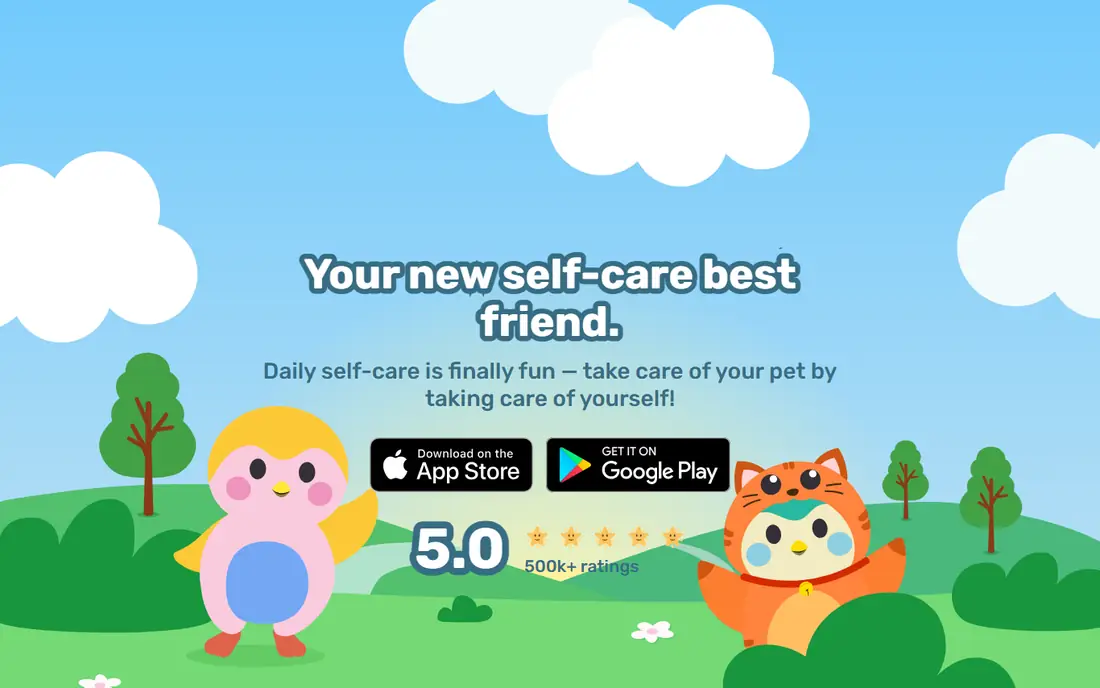
Finch takes a different approach from most habit apps: instead of a streak that resets to zero when you slip, you care for a virtual pet that grows as you complete small self-care goals. Daily check-ins, breathing exercises, reflections, and mood tracking sit alongside the habit loop, so the app feels more like a companion than a scoreboard.
The core app is free, and Finch Plus is an optional subscription, commonly listed at $9.99 per month or $39.99 per year in US app stores, though store prices vary. Finch suits people whose goals tie to mood, rest, or self-care rather than output. If you want hard numbers and charts, a stricter tracker will fit better.
What we like- Warm, low-pressure tone
- Pet grows as you meet goals
- Mood tracking and reflections built in
Watch out for- Soft structure may frustrate goal-driven users
- Plus pricing varies by store and plan
#2Habitica
Best for: Gamified habits and tasks4.0/5 on
G2 (3 reviews, checked Oct 2026)
Visit habitica.com
Starting price$4.99 per month
Free planYes
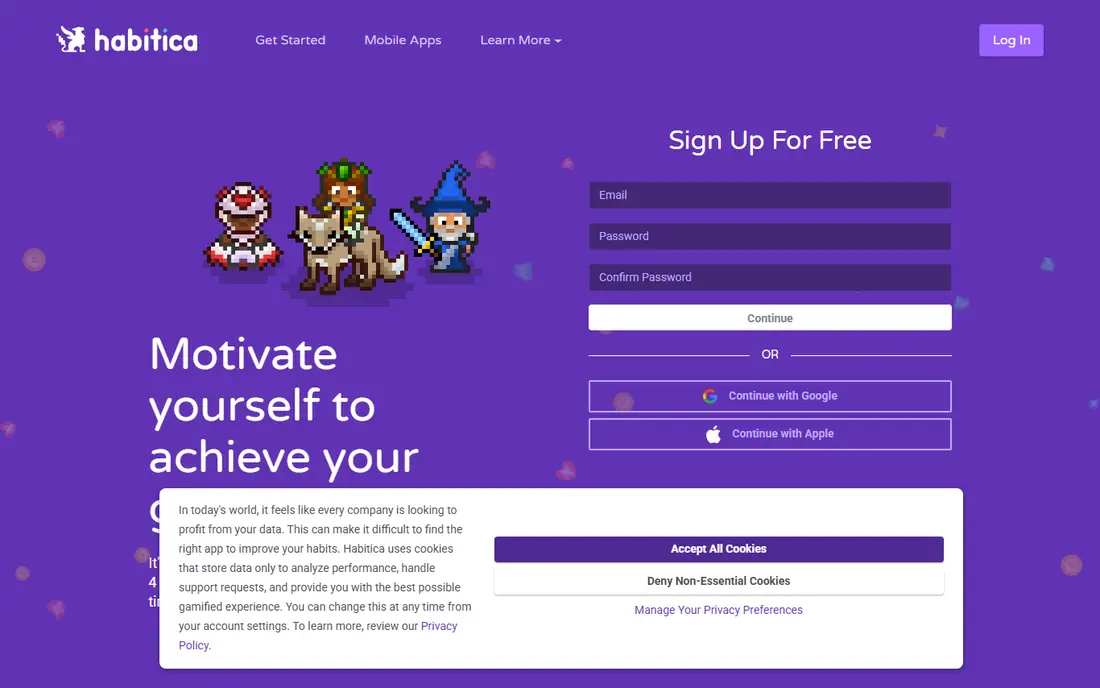
Habitica turns your habits, daily tasks, and to-dos into a pixel-art role-playing game. Completing tasks earns experience and gold, missed daily tasks cost health, and you can join parties of up to 30 people for quests. That game layer is exactly why some people stick with it after plain checklists failed them.
The core is free, and the optional subscription costs $4.99 per month or $47.99 per year, mostly for gems and cosmetic extras rather than core features. The trade-off is setup: Habitica asks you to configure your system before it feels rewarding, and the health penalty for missed days can feel punishing rather than motivating.
What we like- Full RPG system with parties and quests
- Core tracking is free
- Works on web and mobile
Watch out for- Setup takes time
- Missed daily tasks cost health, which some users dislike
Starting price$49.99 per year
Free planYes
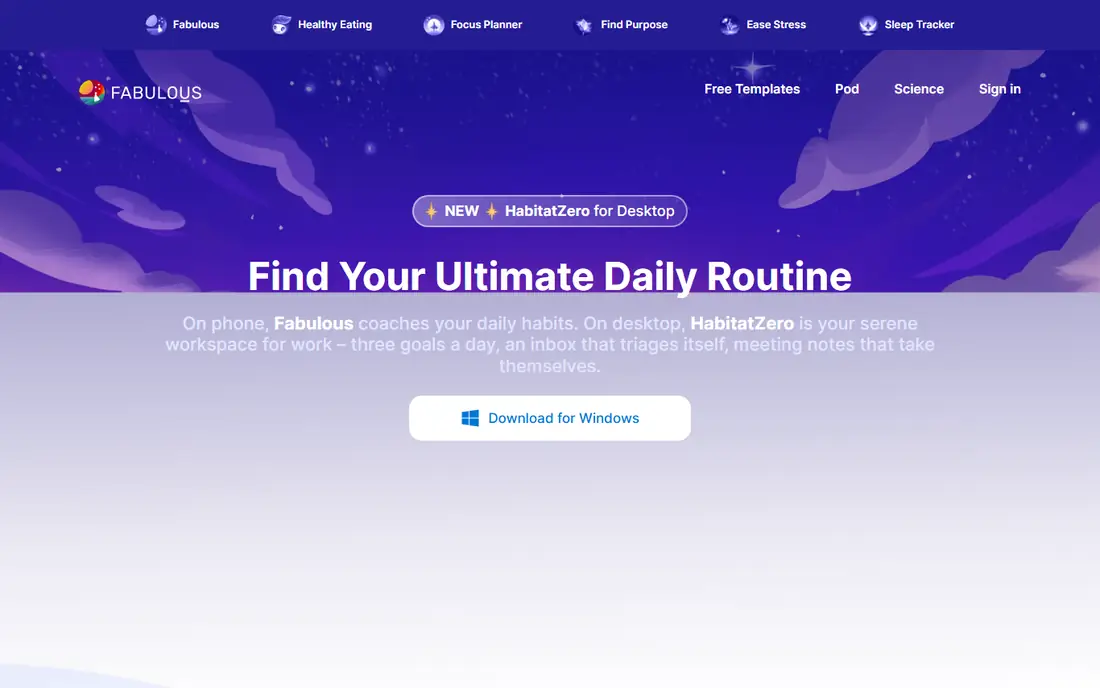
Fabulous is built for people who do not know where to start. Instead of handing you a blank list, it walks you through small, science-based routines: a morning routine first, then evening habits, focus work, and more. A coaching library offers short on-demand sessions, and you can book sessions with a real coach.
Pricing is commonly listed at $49.99 per year, with other plan options in app stores. The guided approach is a strength for beginners and a limit for experienced users who already know their routines and just want a tracker. If you have tried blank habit apps and abandoned them, Fabulous is worth the trial.
What we like- Step-by-step routines for mornings and evenings
- Coaching library and live coaches
- Science-based structure
Watch out for- Less flexible than a blank tracker
- Premium pricing varies by plan and store
Starting priceFree
Free planYes
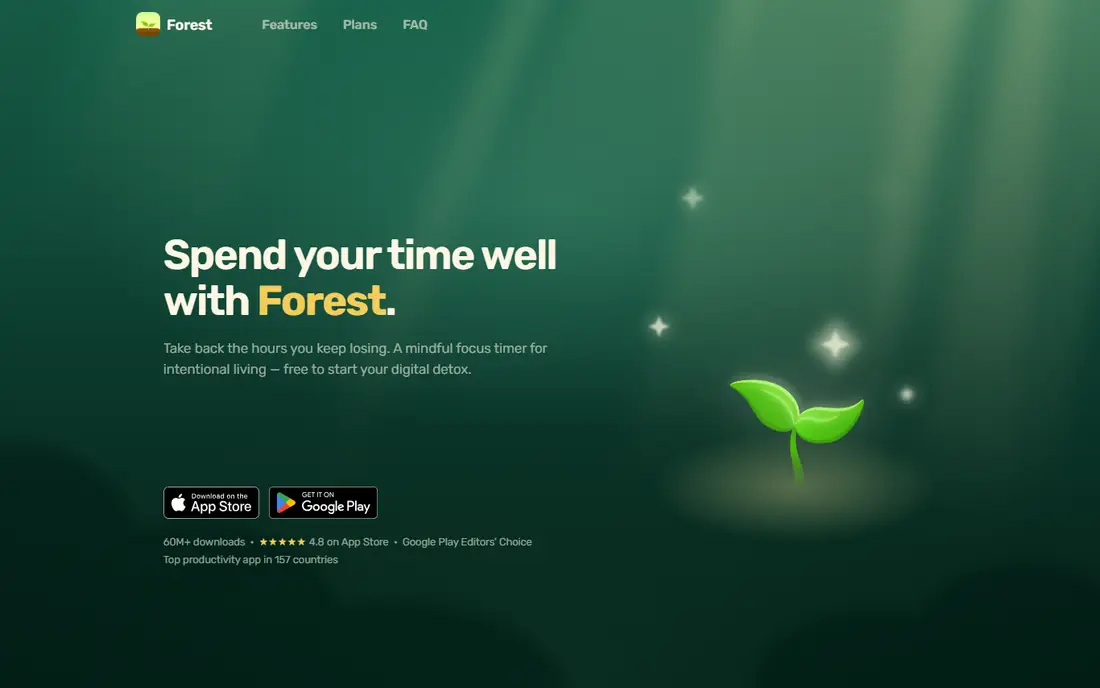
Forest solves a narrower problem than the other apps here, and it solves it well. You plant a virtual tree, focus for a set time, and the tree grows if you stay off distracting apps. Leave the session early and the tree dies. Over weeks, your sessions become a visible forest, which is more motivating than a bare minute count.
The core focus experience is free, including app blocking, group focus sessions with friends, and digital wellbeing tools, with optional upgrades for extras like advanced statistics. Forest has helped fund more than 2 million real trees through its partner Trees for the Future. Pair it with a habit app if you also need daily tracking.
What we like- Focus timer with visible progress
- App blocking is free
- Real trees planted through a nonprofit partner
Watch out for- Not a full habit tracker
- Best for focus, not for general self-improvement goals
Starting price$5.99 one-time
Free planNo
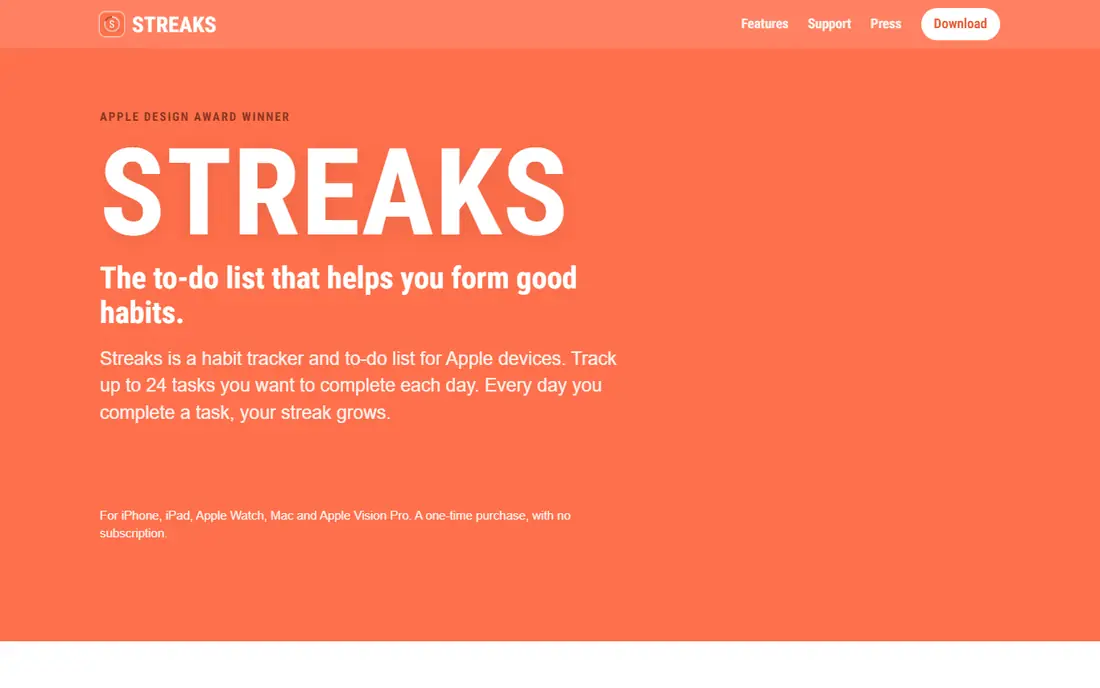
Streaks is the simplest app in this list, and that restraint is the point. You pick up to 24 daily tasks, and the app counts your streak for each one. Link a task to Apple Health and it marks itself complete when the data arrives, for example after a walk or a workout. Widgets, timers, and shared tasks with family round it out.
It costs $5.99 as a one-time purchase with no subscription and no ads, and it won an Apple Design Award. The limit is platform: Streaks runs on iPhone, iPad, Apple Watch, Mac, and Apple Vision Pro, syncing through iCloud, with no Android or web version. If you live on Apple devices and want a quiet streak counter, it is hard to beat.
What we like- One-time purchase, no subscription
- Links to Apple Health so tasks complete themselves
- Clean design
Watch out for- Apple devices only
- Tracks up to 24 tasks
- No Android or web version
Starting priceSee website
Free planYes
Day One is the journaling entry in this list, and reflection is a genuine self-improvement tool: writing about what worked and what did not is how vague goals turn into plans. Entries can include photos, videos, drawings, and audio, and the On This Day feature resurfaces entries from past years, which many long-term users cite as their favorite feature.
The app is free to use, with a Gold plan adding premium features, though the homepage does not display Gold pricing clearly, so check the upgrade screen before buying. Day One will not track habits or remind you to meditate on its own. Use it beside a tracker if you want both structure and reflection.
What we like- Beautiful journaling with photos, audio, and video
- On This Day memories
- Private by design
Watch out for- Gold plan pricing is not shown clearly on the homepage
- Journaling alone will not build habits
#7Headspace
Best for: Structured meditation courses4.6/5 on
G2 (68 reviews, checked Oct 2026)
Visit headspace.com
Starting price$69.99 per year
Free planFree trial
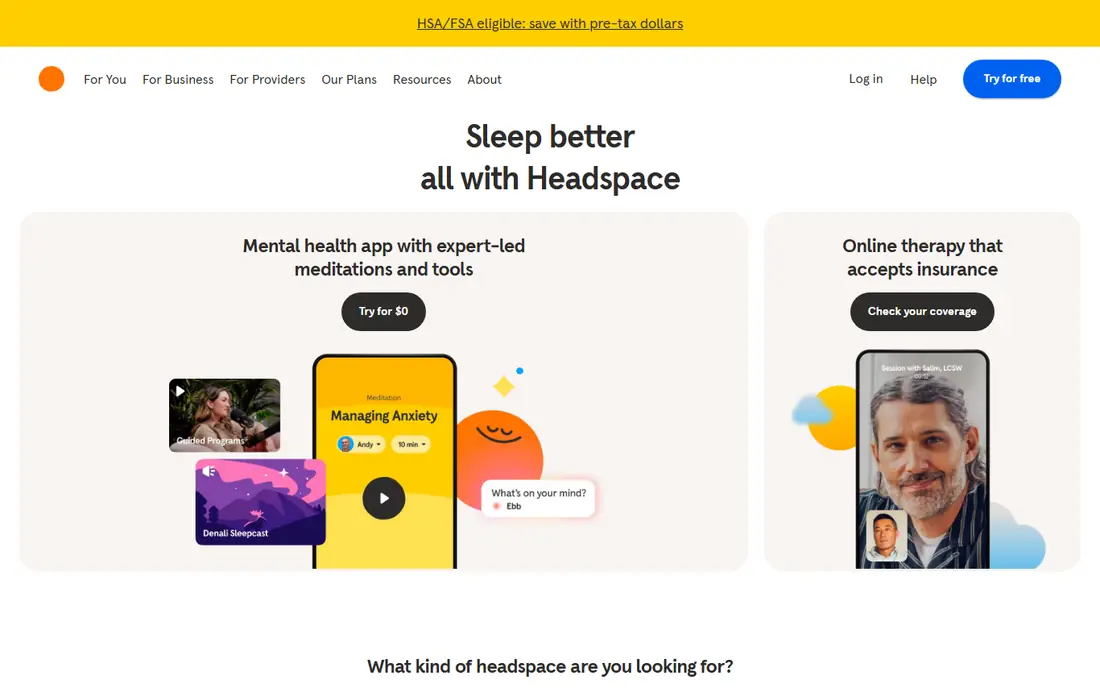
Headspace is the best teacher in this list. Its courses walk beginners through meditation basics in order, so you never wonder what to do next, and its library adds sleepcasts, soundscapes, and short exercises for stress and focus. A 14-day free trial gives you room to test the teaching style.
Pricing is $69.99 per year or $12.99 per month, with student and family plans available. Coaching and therapy through Headspace Care are largely employer benefits rather than direct consumer options. If you want to learn meditation properly rather than browse a large library, Headspace is the stronger pick over Calm.
What we like- Step-by-step courses for beginners
- Sleepcasts and focus content
- Student and family plans
Watch out for- Almost everything sits behind the subscription after the trial
- Structured style can feel restrictive
Starting price$69.99 per year
Free planFree trial
Calm is the sleep specialist here. Its library holds more than 500 Sleep Stories, narrated by familiar voices, plus soundscapes, sleep music, and daily sessions like the Daily Calm. If falling asleep is your main problem, the Sleep tab alone can justify the subscription for many users.
Pricing matches Headspace at $69.99 per year or $14.99 per month, with a lifetime option at $499.99. The free tier covers only a small selection of sessions, and the sheer volume of content can make the meditation itself harder to find. Pick Calm for sleep and relaxation, Headspace for structured learning.
What we like- Largest sleep story library
- Soothing soundscapes and music
- Works on many devices
Watch out for- Free tier is thin
- Library size can overwhelm newcomers
- Meditation teaching is less structured
How we chose
We compared vendor pricing pages, product documentation, and recent October 2026 pricing coverage, and opened each official homepage to confirm it loads and belongs to the named product. Habitica's homepage returned only its title in this session, so it is counted on domain and title confirmation. We favored apps that are actively maintained, usable without a subscription where possible, and honest about what the free tier actually includes.
Start with one change, not eight
The most common mistake with self-improvement apps is installing several at once and quitting all of them within a week. Pick a single change you actually want, like sleeping better or walking daily, and choose the app built for that change. A sleep app will not fix your focus, and a streak counter will not teach you to meditate.
Give the app two full weeks before judging it. The first days are always novel, and the real test is whether you still open it on a bad day. If you miss a day, treat it as data, not failure: apps with gentle tones like Finch suit people who quit after a broken streak, while game layers like Habitica suit people who need stakes to keep going.
Also check where your data lives before you invest months in an app. Journal entries in Day One and health-linked tasks in Streaks are personal records, so confirm export options and sync behavior early. An app that makes it easy to leave is usually an app worth staying with, since you are choosing it for what it does, not because your history is trapped inside it.
Frequently asked questions
What is the best self-improvement app for beginners?
Finch, because its tone is gentle and it starts with small self-care goals rather than a strict system. Fabulous is the alternative if you want guided routines that tell you exactly what to do each morning.
Which app is best for building habits?
Habitica if you like games, Streaks if you want a simple one-time purchase on Apple devices. Both track daily habits, but Habitica adds parties and quests while Streaks stays minimal.
Is there a good free self-improvement app?
Yes. Habitica's core tracking is free, Forest's focus timer is free, and Finch's core app is free. Paid plans mostly add cosmetics, coaching, or premium content rather than basic tracking.
Headspace or Calm: which should I choose?
Headspace for learning meditation through structured courses, Calm for sleep stories and relaxation. Both cost $69.99 per year, so the choice comes down to content, not price.
Can one app cover habits, focus, and meditation?
Not well. Forest covers focus, Habitica covers habits, and Headspace or Calm cover meditation. Pick the app for your top goal first, then add a second app only if the first one sticks.
Do these apps replace therapy or medical care?
No. These apps support everyday habits, sleep, and stress, but they are not medical treatment. If you are dealing with anxiety, depression, or a sleep disorder, talk to a healthcare professional.
Sources we checked (10)
- https://finchcare.com
- https://habitica.com
- https://www.thefabulous.co
- https://www.forestapp.cc
- https://streaks.app
- https://dayoneapp.com
- https://www.headspace.com
- https://www.calm.com
- https://rankite.com/blog/best-apps-for-habit-tracking
- https://habitrewards.me/blog/habit-tracker-app-prices.html
Is your product missing or out of date?
We review this list regularly. Vendors can request a listing, send updated pricing or ask about featured placement.

Shihab Mia · Founder, Rankite
Shihab has 5+ years in B2B and SaaS SEO. He writes Rankite's software buying guides from pricing pages, documentation and public user reviews. More about Shihab.