How we make this list: we compare pricing pages, product documentation and public user reviews. Ratings come from G2, Capterra or Trustpilot, with the date we checked them.
Key takeaways
- Fidelity, Schwab, Robinhood, Webull, SoFi Invest, and Public all offer 0 dollar commissions on online US stock and ETF trades.
- Acorns and Betterment suit hands-off investors, with automated portfolios priced as a monthly subscription or an annual percentage fee.
- Flat subscriptions punish small balances: Acorns at 4 dollars per month costs 48 dollars per year, which is 48 percent of a 100 dollar balance.
- This is not financial advice. Investing involves risk, including possible loss of principal, and no app can guarantee an investment return.
- Fees and returns vary, so check fees and account terms before you fund an account, and confirm current prices on the provider site.
Quick comparison
| Tool | Best for | Starting price | Free plan |
|---|
 Fidelity | Long-term investors and retirement savers | $0 commission on US stocks and ETFs | Yes |
 Robinhood | Simple mobile trading | $0 commission on US stocks and ETFs | Yes |
 SoFi Invest | Investing beside banking and loans | $0 commission on US stocks and ETFs | Yes |
 Acorns | Automatic spare-change investing | $4 per month | No |
 Betterment | Hands-off managed portfolios | $5 per month | No |
 Webull | Active traders and charting | $0 commission on US stocks and ETFs | Yes |
 Charles Schwab | Full-service brokerage and education | $0 commission on US stocks and ETFs | Yes |
 Public | Multi-asset investing with AI research | $0 commission on US stocks and ETFs | Yes |
Is your product missing or out of date?
We review this list regularly. Vendors can request a listing, send updated pricing or ask about featured placement.
The best apps for saving and investing
Starting price$0 commission on US stocks and ETFs
Free planYes
What we like- Fidelity offers 0 dollar commissions on online US stock and ETF trades, fractional shares from 1 dollar, zero expense ratio funds such as FZROX, and every account type a growing investor needs, from brokerage to retirement accounts. It suits long term investors who want research, retirement accounts, and low cost funds in one place, with phone support available around the clock. Details are verified on the provider site in 2026 comparisons.
Watch out for- The interface has more learning curve than Robinhood or Acorns, and the breadth of tools can overwhelm first time investors. Fund and special service charges vary beyond the headline commission. The app is less beautiful than mobile first competitors, though functionality is deeper.
Starting price$0 commission on US stocks and ETFs
Free planYes
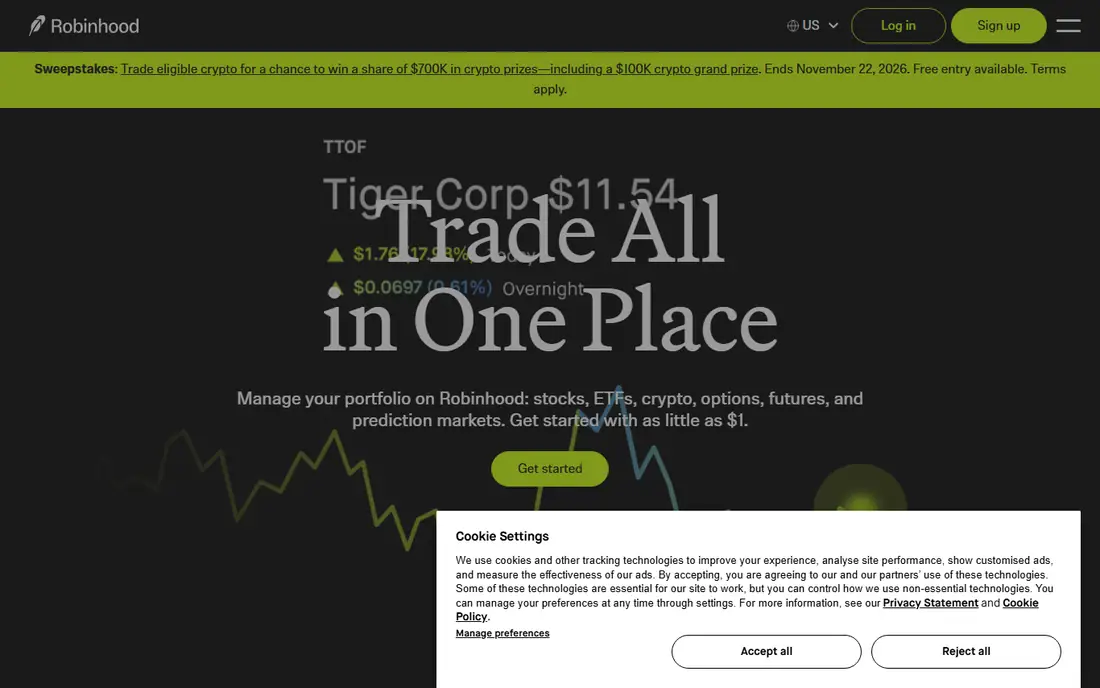
What we like- Robinhood offers 0 dollar commissions on stocks, ETFs, and options, fractional shares from 1 dollar, and the cleanest, most frictionless mobile interface in the category. It suits first time investors and mobile first traders, with a minimum to start of 1 dollar and SIPC member protection. Sign up to first investment takes under 10 minutes in comparison reporting.
Watch out for- The frictionless interface can encourage overtrading, and paid extras such as Gold at around 5 dollars per month and other charges sit separately from the headline commission. It offers no robo advisor, and research depth lags Fidelity and Schwab. Frequent trading can hurt returns more than fees help.
#3
SoFi Invest
Best for: Investing beside banking and loans
Visit sofi.com
Starting price$0 commission on US stocks and ETFs
Free planYes
What we like- SoFi Invest bundles banking and investing into one app, with checking and savings accounts, zero commission stock and ETF trading from 5 dollars to begin, fractional shares, and free financial advisor access via video chat. It suits beginners who want everything in one place, with competitive interest on cash and automated investing at zero management fee. The interface is clean and beginner friendly.
Watch out for- The all in one app can feel bloated, and SoFi is a newer company with less track record than Fidelity or Schwab. A 25 dollar charge per six months of login inactivity applies to Active Invest in some fee schedules. Ecosystem lock in grows as banking, loans, and investing pile into one provider.
Starting price$4 per month
Free planNo
What we like- Acorns automated the round-up model: link a card, round purchases to the next dollar, and invest the spare change in a diversified ETF portfolio. It suits people who need full automation and will not invest manually, with plans at 4, 8, or 12 dollars per month depending on tier, covering investing only versus retirement accounts, banking, and family features. Sign up takes minutes.
Watch out for- Flat subscriptions punish small balances: on a 200 dollar balance, 3 dollars a month is an 18 percent annual fee, and at 4 dollars per month the yearly cost is 48 dollars, or 48 percent of a 100 dollar balance. Round-ups alone rarely add enough to outpace that drag, so recurring deposits of real size, 50, 100, or 200 dollars a month, are needed for the subscription to make sense. There is no free plan.
Starting price$5 per month
Free planNo
What we like- Betterment offers managed portfolios built for goals, with a 0 dollar minimum to start and pricing at 5 dollars a month or 0.25 percent a year depending on plan and balance conditions. It suits hands-off investors wanting goal based automation and tax optimization, with an edge on tax loss harvesting over SoFi automated investing in comparison reporting. Portfolios are diversified and rebalanced automatically.
Watch out for- There is no free plan, and deposit or balance conditions apply to the percentage pricing tier. Management fees apply even in down years, and self directed stock picking is not the product. Investors wanting individual stocks should pair it with a brokerage account.
Starting price$0 commission on US stocks and ETFs
Free planYes
What we like- Webull offers 0 dollar commissions on US stocks, ETFs, and options, fractional shares from 1 dollar, and strong charting plus paper trading for learning without risk. It suits active traders and mobile first investors who want advanced tools that grow with their skills, with no deposit minimum. Crypto trading is also available.
Watch out for- Fractional shares are limited compared with Fidelity and Robinhood, and the advanced interface can overwhelm beginners. Active trading tools can encourage overtrading, and research depth for long term planning lags Fidelity and Schwab. Premium features and margin carry separate costs.
#7Charles Schwab
Best for: Full-service brokerage and education1.5/5 on
Trustpilot (786 reviews, checked Oct 2026)
Visit schwab.com
Starting price$0 commission on US stocks and ETFs
Free planYes
What we like- Charles Schwab offers 0 dollar commissions on online US stock and ETF trades, full service brokerage, and strong education, suiting long term investors who want research, retirement accounts, and low cost funds in one place. It pairs a national branch network with a strong mobile app, and it suits investors who want human help alongside digital tools.
Watch out for- The platform is broader and more complex than Robinhood or Acorns, with a learning curve for first time investors. Some funds and special services carry separate charges. The interface feels more traditional than mobile first competitors.
Starting price$0 commission on US stocks and ETFs
Free planYes
What we like- Public offers 0 dollar commissions on US stocks and ETFs, fractional shares from 1 dollar, multi asset investing across stocks, ETFs, and crypto, plus AI research tools and a social feed for learning from other investors. It suits investors who value community and research in one app, with a clean mobile interface.
Watch out for- The social feed can encourage copying other investors without independent research, and crypto carries higher risk and separate fees. Research depth for retirement planning lags Fidelity and Schwab. The platform is newer, with less track record than established brokerages.
How we chose
We ranked apps on commissions, minimums, fractional share access, automation quality, fee transparency, and account breadth. Apps earned credit for zero commissions, low minimums, goal based automation, tax optimization, and free advisor access. We excluded apps with only crypto trading or only real estate, since broad saving and investing defines this category. Figures come from published pricing and 2026 comparison reporting, and readers should confirm current terms directly, since fees, minimums, and account terms change.
How to choose the right app for saving and investing
Start with your investing style: zero decisions suits Acorns, semi automated advice suits Betterment or SoFi automated investing, and hands-on learning suits Robinhood or Fidelity. Next, check the fee math on your balance: flat subscriptions punish small balances, while percentage fees scale with assets, so a 100 dollar balance should avoid a 4 dollar monthly subscription. Then check account type before comparing the app, since self directed brokerage, automated advisory, and cash management products carry different fees and minimums under the same brand. Then check what you invest in: stocks and ETFs suit most beginners, while options, crypto, and private real estate add risk that beginners should avoid. Finally, remember this is not financial advice, fees and returns vary, and no app can guarantee a return, so fund only money you can afford to leave invested and check fees before funding.
Frequently asked questions
What is the best app for saving and investing for beginners?
Fidelity offers the most complete package for long term beginners, Robinhood offers the simplest mobile start, and Acorns suits people who need full automation. The best pick depends on whether you want zero decisions, semi automated advice, or hands-on learning.
How much money do I need to start investing?
From 1 dollar on Fidelity, Robinhood, and Webull fractional shares, 5 dollars on SoFi Invest, and 0 dollars minimum on Betterment and Acorns, though Acorns charges a monthly subscription. Wealthfront managed portfolios require a 500 dollar minimum.
Are zero commission apps really free?
Zero commission covers online US stock and ETF trades, but fund expenses, spreads, regulatory charges, special service fees, and premium subscriptions still apply. Check the full fee schedule before funding an account.
Is Acorns worth it on a small balance?
On a small balance, the flat subscription is expensive: 4 dollars per month is 48 dollars per year, or 48 percent of a 100 dollar balance. Acorns makes sense with recurring deposits of real size, such as 50 to 200 dollars a month, so the balance grows faster than the fee drag.
What is the difference between a brokerage account and a robo advisor?
A self directed brokerage account lets you choose what to buy and sell, while an automated advisory account selects and manages a portfolio under its agreement with you. A provider may offer both under the same brand, with different fees and minimums.
Can an investing app guarantee returns?
No. No app can guarantee an investment return, and investing involves risk, including possible loss of principal. Be skeptical of any app or influencer promising guaranteed returns.
Sources we checked (0)
Is your product missing or out of date?
We review this list regularly. Vendors can request a listing, send updated pricing or ask about featured placement.

Shihab Mia · Founder, Rankite
Shihab has 5+ years in B2B and SaaS SEO. He writes Rankite's software buying guides from pricing pages, documentation and public user reviews. More about Shihab.