How we make this list: we compare pricing pages, product documentation and public user reviews. Ratings come from G2, Capterra or Trustpilot, with the date we checked them.
Key takeaways
- The best app to learn Hebrew in 2026 depends on your goal: Duolingo and Mondly build a daily habit, Pimsleur builds speaking confidence, HebrewPod101 teaches grammar and culture, and LingQ suits intermediate readers.
- Hebrew reads right to left and uses its own alphabet, so pick an app that teaches the aleph-bet early rather than one that only shows transliteration.
- Free tiers vary widely: Duolingo is free with ads, Mondly gives one daily lesson free, LingQ and Drops limit free use, while Pimsleur and Rosetta Stone have no free plan, only trials.
- No single app covers everything: pair a daily habit app with audio practice or a tutor once you can read the script, since apps alone rarely build real conversation skills.
Quick comparison
| Tool | Best for | Starting price | Free plan |
|---|
 Duolingo | Daily habit | Free | Yes |
 Mondly | Daily lessons and chat | Free | Yes |
 Pimsleur | Speaking confidence | $19.95 per month | No |
 HebrewPod101 | Grammar and culture | $4 per month | No |
 LingQ | Intermediate reading | Free | Yes |
 Drops | Visual vocabulary | $13 per month | No |
 Rosetta Stone | Immersion study | $19.99 per month | No |
 HelloTalk | Language exchange | Free | Yes |
Is your product missing or out of date?
We review this list regularly. Vendors can request a listing, send updated pricing or ask about featured placement.
The best apps to learn Hebrew
Starting priceFree
Free planYes
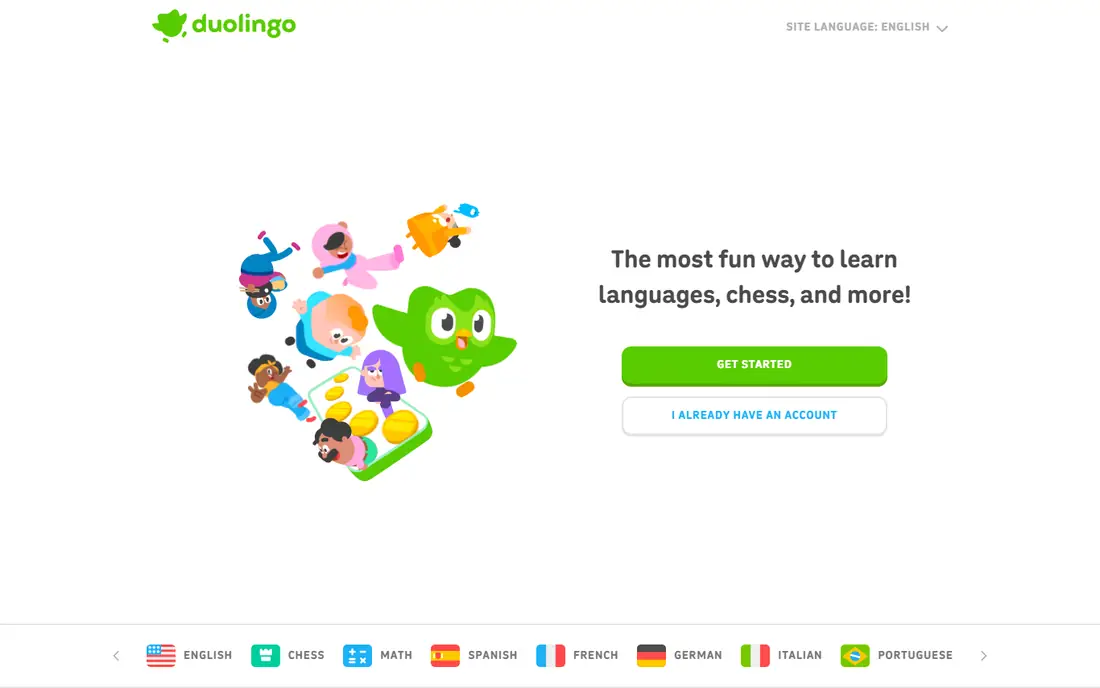
Duolingo suits beginners who want a daily Hebrew habit. Its gamified, low-commitment lessons use fill-in-the-blanks, multiple-choice quizzes, and flashcards, with streaks, leaderboards, and achievement badges to keep you practicing.
The free version gives full access to core lessons, with ads and limited energy as the trade-off, while Super costs 12.99 dollars a month or 83.99 dollars a year (6.99 dollars a month) for ad-free practice, unlimited energy, and offline lessons. For building a daily habit, Duolingo leads.
What we like- Free access to most features
- Fun game-like format encourages regular practice
- Full core lessons on the free tier
Watch out for- No grammar lessons
- Lacks real tutor guidance
- Free version has pop-up ads and limited energy
Starting priceFree
Free planYes
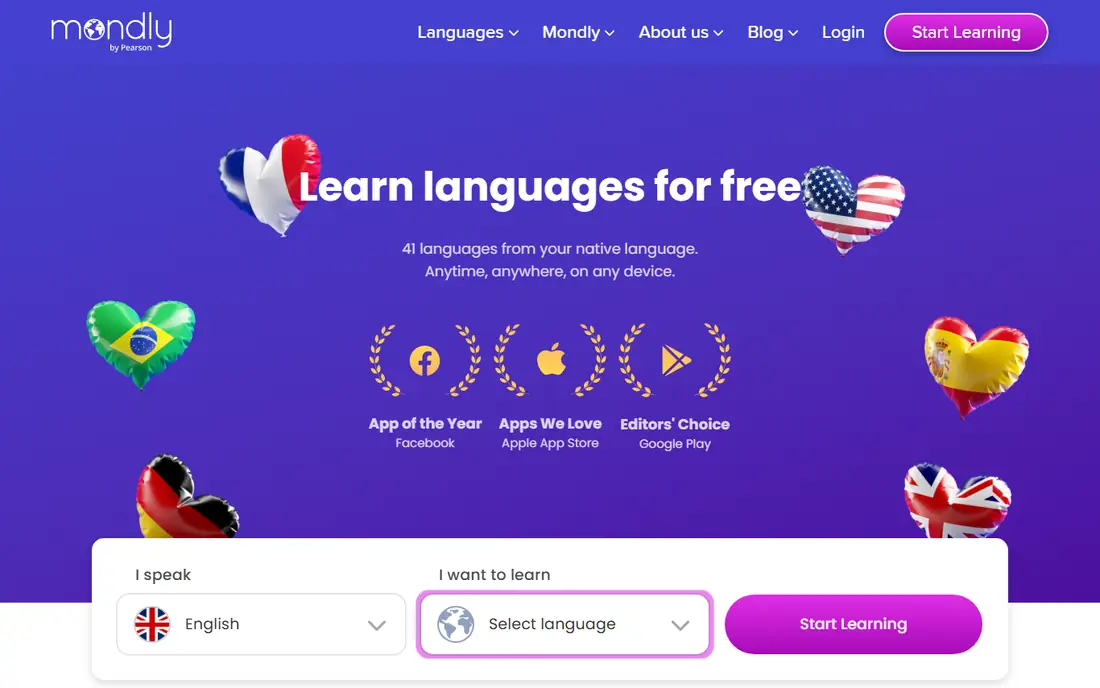
Mondly suits beginners who want lively daily lessons. Every day begins with a quick Hebrew lesson mixing listening, speaking, reading, and a bit of writing, with topic modules such as transportation, weather, and restaurants, plus AI chatbots for low-pressure conversation practice.
The free version gives one daily lesson and weekly and monthly challenges indefinitely, while Premium costs 12.99 dollars a month or 47.99 dollars a year (4 dollars a month) for every lesson, AI conversations, vocabulary review, and grammar guides. For daily lessons and chat, Mondly is the best pick.
What we like- AI chatbot for short low-pressure conversations
- VR and AR vocabulary practice
- Available on web, iOS, and Android
Watch out for- Grammar remains light
- Speech recognition can be imperfect
- Advanced conversation practice is limited
#3Pimsleur
Best for: Speaking confidence4.3/5 on
G2 (2 reviews, checked Oct 2026)
Visit pimsleur.com
Starting price$19.95 per month
Free planNo
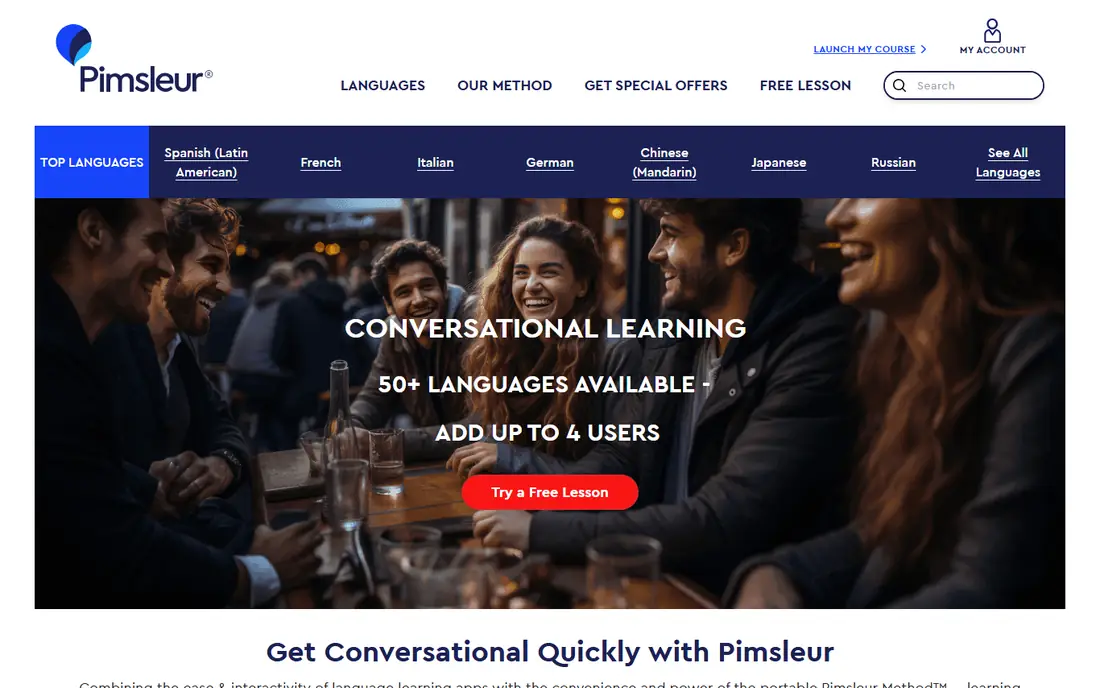
Pimsleur suits auditory learners who want conversational Hebrew. Its audio-first program guides you to speak confidently from day one, with repetition, guided role-play transcripts, an AI Voice Coach for pronunciation, and short culture notes explaining how phrases are used in context.
Premium costs 19.95 dollars a month or 150 to 165 dollars a year, with a 7 day trial and no free plan, so budget for a subscription before committing. For speaking confidence, Pimsleur leads.
What we like- Start speaking Hebrew right away
- Audio-first program builds pronunciation and intonation
- Lessons work offline and sync across devices
Watch out for- No free plan, only a 7 day trial
- Reading, writing, and advanced grammar are limited
- Pricing is steep at 19.95 dollars a month
Starting price$4 per month
Free planNo
HebrewPod101 suits learners who want structured lessons with grammar and culture. Its prerecorded video lessons cover all levels, with grammar explanations and listening practice that gamified apps often skip.
Plans start from 4 dollars a month, with a 7 day trial and no free plan, so check the tier that matches your level before subscribing. For grammar and culture, HebrewPod101 is the best pick.
What we like- Prerecorded video lessons for all levels
- Grammar and listening depth
- Cultural context beside vocabulary
Watch out for- No free plan, only a 7 day trial
- Pricing spans 4 to 47 dollars a month by tier
- Less gamified than Duolingo or Mondly
Starting priceFree
Free planYes
LingQ suits intermediate learners who want to read real Hebrew content. Its immersive content learning builds vocabulary and reading skills through texts you choose, which suits learners who have finished the beginner stage and want to read more than textbook sentences.
The free tier is limited, with Premium at 12.99 dollars a month and a 7 day trial. For intermediate reading, LingQ leads.
What we like- Immersive content learning for intermediate learners
- Vocabulary and reading depth
- Self-directed content-based study
Watch out for- Free tier is limited
- Best for intermediate learners, not beginners
- Self-directed study needs discipline
Starting price$13 per month
Free planNo
Drops suits visual learners with busy schedules. Its quick 5 minute sessions build vocabulary through images and word games, which fits a commute or a coffee break better than a long lesson.
Pricing runs about 13 dollars a month, with a trial rather than a lasting free plan in most guides, so confirm the current offer before subscribing. For visual vocabulary, Drops is the best pick.
What we like- Quick 5 minute sessions for vocabulary building
- Visual learning suits busy schedules
- Focused vocabulary drills
Watch out for- No free plan in most guides, only a trial
- Vocabulary only, not grammar or conversation
- 13 dollars a month is steep for vocabulary alone
Starting price$19.99 per month
Free planNo
Rosetta Stone suits learners who will study one language seriously and like learning by immersion. Its method teaches through images and native audio rather than translation, with pronunciation scored on every phrase.
Pricing runs 19.99 dollars a month or 159 dollars a year, with sample lessons but no free plan, and purchases come with a 14 day money-back guarantee under its terms. For immersion study, Rosetta Stone leads.
What we like- Immersion method with pronunciation scored on every phrase
- Covers 25 languages
- Structured course for serious study
Watch out for- No free plan, only sample lessons
- 19.99 dollars a month or 159 dollars a year is steep
- Tutoring is extra
Starting priceFree
Free planYes
HelloTalk suits intermediate learners who want conversation practice with native speakers. Its language exchange pairs you with Hebrew speakers learning your language, which builds real conversation skills that solo apps cannot teach.
The free tier covers exchange, with Premium at 12.99 dollars a month for extra features. For language exchange, HelloTalk rounds out the list.
What we like- Language exchange with native speakers
- Conversation practice for intermediate learners
- Free tier available
Watch out for- Peer-to-peer exchange, not structured lessons
- Best for intermediate learners, not beginners
- Premium costs 12.99 dollars a month
How we chose
We ranked apps by script teaching, speaking practice, grammar depth, free tier honesty, and value at entry level pricing. We favored apps that teach the aleph-bet early, since Hebrew uses its own alphabet and reads right to left, and an app that only shows transliteration leaves you unable to read real Hebrew text.
We also weighed free tiers honestly. Duolingo is free with ads, Mondly gives one daily lesson free, LingQ and Drops limit free use, while Pimsleur and Rosetta Stone have no free plan, only trials. Price conflicts across sources were handled by using the most commonly cited figure, so readers should check the vendor pricing page before buying.
Buying guide
Start with the alphabet. Spend your first weeks learning the aleph-bet and basic reading, since every later skill depends on it, and pick an app that teaches script early rather than one that leans on transliteration. Duolingo and Mondly both cover early script, while Pimsleur focuses on speaking and leaves reading for later.
Next, match the app to your learning style. Habit builders should pick Duolingo or Mondly, auditory learners Pimsleur, grammar learners HebrewPod101, readers LingQ, and visual learners Drops. Test the free tier or trial for a week before paying, since a method that bores you will not survive a subscription.
Finally, add conversation once you can read. Apps alone rarely build real conversation skills, so pair a daily habit app with HelloTalk exchange or a tutor once you reach intermediate level. Set a realistic pace: 15 minutes a day beats a weekend binge that fades by Monday. Track progress by what you can do, not by streaks alone: can you read a short paragraph, order food, or hold a two-minute conversation? Those milestones tell you more than a badge count, and they show when it is time to move from a beginner app to reading or exchange.
Frequently asked questions
What is the best app to learn Hebrew for beginners?
Duolingo leads for a free daily habit, Mondly for lively daily lessons and chat, and Pimsleur for speaking confidence. Beginners should start with Duolingo or Mondly and add Pimsleur once speaking matters more.
Can I learn Hebrew for free?
Partly. Duolingo is free with ads, Mondly gives one daily lesson free, and LingQ and HelloTalk have free tiers. Pimsleur and Rosetta Stone have no free plan, only trials, so budget for a subscription if you pick them. Free tiers cover the beginner stage well, but serious learners usually pay for one app once they pass the basics.
Does Hebrew read right to left?
Yes. Hebrew reads right to left and uses its own alphabet, the aleph-bet, so pick an app that teaches the script early rather than one that only shows transliteration. Learning the alphabet first makes every later lesson easier. Vowels appear only as small marks under or above letters in learning materials.
How long does it take to learn Hebrew?
It depends on your goal and pace. Daily practice of 15 minutes builds basic reading and vocabulary in a few months, while conversation takes longer and usually needs exchange or tutoring beside an app. Consistency matters more than any single app, and learners who practice every day progress faster than learners who study in long bursts once a week, even if total study time is the same.
Should I pay for a Hebrew app?
Only after testing the free tier or trial for a week. A paid plan helps if the method suits you and you practice daily, but a subscription that bores you wastes money. Start free, then pay for the app you actually open every day, and cancel promptly if you stop using it, since most plans renew automatically and refunds are limited.
Sources we checked (0)
Is your product missing or out of date?
We review this list regularly. Vendors can request a listing, send updated pricing or ask about featured placement.

Shihab Mia · Founder, Rankite
Shihab has 5+ years in B2B and SaaS SEO. He writes Rankite's software buying guides from pricing pages, documentation and public user reviews. More about Shihab.