How we make this list: we compare pricing pages, product documentation and public user reviews. Ratings come from G2, Capterra or Trustpilot, with the date we checked them.
Key takeaways
- AdMob is the safest starting point for Android and iOS apps that want reliable ad demand and simple setup.
- Unity Ads and AppLovin MAX suit mobile games, with rewarded video and mediation built for game economies.
- ironSource, Chartboost, Vungle, and InMobi add demand and mediation options, which can raise fill rates in specific markets.
- RevenueCat and Adapty handle subscriptions, paywalls, and billing, which matters more than ads for many productivity and fitness apps.
- Test mediation with more than one network, and compare revenue per daily active user, not just total earnings.
Quick comparison
| Tool | Best for | Starting price | Free plan |
|---|
 Google AdMob | General app ads on Android and iOS | See website | No |
 Unity Ads | Mobile game ads | See website | No |
 AppLovin MAX | Game ad mediation | See website | No |
 ironSource | Game monetization and mediation | See website | No |
 Chartboost | Game ads and cross-promotion | See website | No |
 Liftoff Vungle | Video ads for games and apps | See website | No |
 InMobi | Global ad demand and mediation | See website | No |
 RevenueCat | Subscription billing and paywalls | See website | Free trial |
 Adapty | Subscription paywalls and analytics | See website | Free trial |
Is your product missing or out of date?
We review this list regularly. Vendors can request a listing, send updated pricing or ask about featured placement.
#1Google AdMob
Best for: General app ads on Android and iOS4.3/5 on
G2 (70 reviews, checked Oct 2026)
Visit admob.google.com
Starting priceSee website
Free planNo
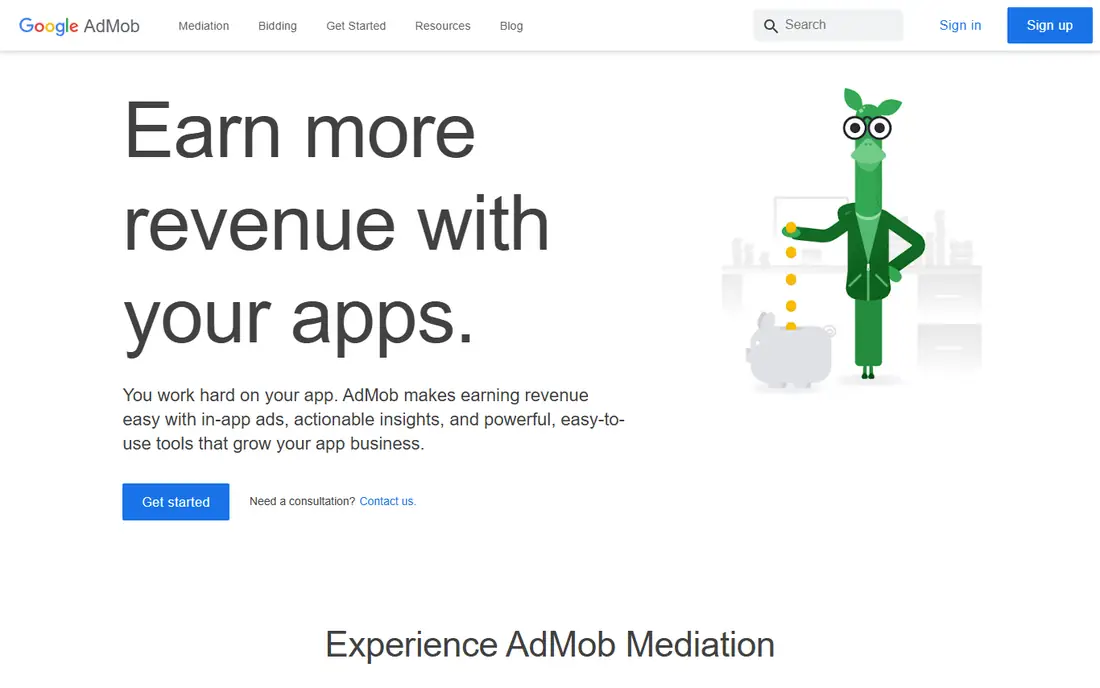
AdMob, from Google, is the default ad platform for many Android and iOS apps. It offers banner, interstitial, rewarded, and native ads, along with mediation that can call other networks when AdMob cannot fill an impression. That breadth helps apps with varied audiences, from utilities to casual games.
Google's policies are strict, and account issues can pause revenue, so follow placement rules and avoid accidental clicks. Revenue per user also varies sharply by country and category, with US and European traffic typically paying more. AdMob is the best first ad platform for most apps, and a good base for mediation tests.
What we like- Large advertiser demand
- Banner, interstitial, rewarded, and native formats
- Mediation with other networks
Watch out for- Policy enforcement can be strict
- Revenue varies by category and region
Starting priceSee website
Free planNo
Unity Ads is built for games made with Unity, though it also supports other engines. Rewarded video is its core format: players watch an ad to earn in-game currency, extra lives, or items. That exchange feels fair to players, which keeps retention higher than forced interstitials in many games.
Non-game apps gain less from Unity Ads, since its advertiser base skews toward games. If your app is a game, Unity Ads is a natural first network, especially when combined with mediation. If your app is a utility or productivity tool, AdMob or a subscription platform will usually fit better.
What we like- Rewarded video built for games
- Strong game advertiser demand
- Simple Unity integration
Watch out for- Less useful outside games
- Smaller demand for non-game apps
#3AppLovin MAX
Best for: Game ad mediation4.2/5 on
G2 (21 reviews, checked Oct 2026)
Visit applovin.com
Starting priceSee website
Free planNo
AppLovin MAX is a mediation platform that lets multiple ad networks compete for each impression through in-app bidding and waterfall setups. That competition can raise revenue per user compared with a single network, especially for games with large, global audiences. AppLovin also runs its own ad network, which adds demand inside the same system.
Mediation adds complexity. You need to configure networks, test placements, and monitor performance by segment. Small apps with low traffic may see little gain over AdMob alone. MAX fits games and larger apps that can invest time in optimization and want to squeeze more revenue from each session.
What we like- Mediation across many networks
- In-app bidding
- Strong game demand
Watch out for- Setup is more complex than a single network
- Best results need optimization time
#4
ironSource
Best for: Game monetization and mediation
Visit is.com
Starting priceSee website
Free planNo
ironSource offers mediation, rewarded video, interstitials, and offerwalls for mobile games, along with tools to test ad placements against game progression. It suits mid-size and large game studios that want granular control over where ads appear and how often. The platform's game focus means advertiser demand matches game audiences well.
Since ironSource joined Unity, its roadmap sits inside a larger group, which may affect long-term product choices. Setup and testing also take longer than a single-network integration. For game studios that already use Unity or need deep mediation control, ironSource remains a strong option.
What we like- Mediation and ad formats for games
- Level-play tools for testing
- Strong game advertiser base
Watch out for- Now part of Unity's ecosystem, so product direction follows that group
- Setup takes time
Starting priceSee website
Free planNo
Chartboost focuses on mobile games, with interstitial and rewarded video ads plus cross-promotion tools. Cross-promotion lets a studio show ads for its own games inside another of its titles, which can move players between games at low cost. That feature is useful for studios with a portfolio, not just a single game.
Overall demand is smaller than AdMob or AppLovin, so Chartboost often works best as an additional network inside mediation, rather than as the sole source of ads. Non-game apps will find little value here. For game studios, Chartboost adds demand and a practical way to promote their own catalog.
What we like- Game-focused demand
- Cross-promotion between your own games
- Mediation support
Watch out for- Smaller overall demand than AdMob
- Less relevant for non-game apps
Starting priceSee website
Free planNo
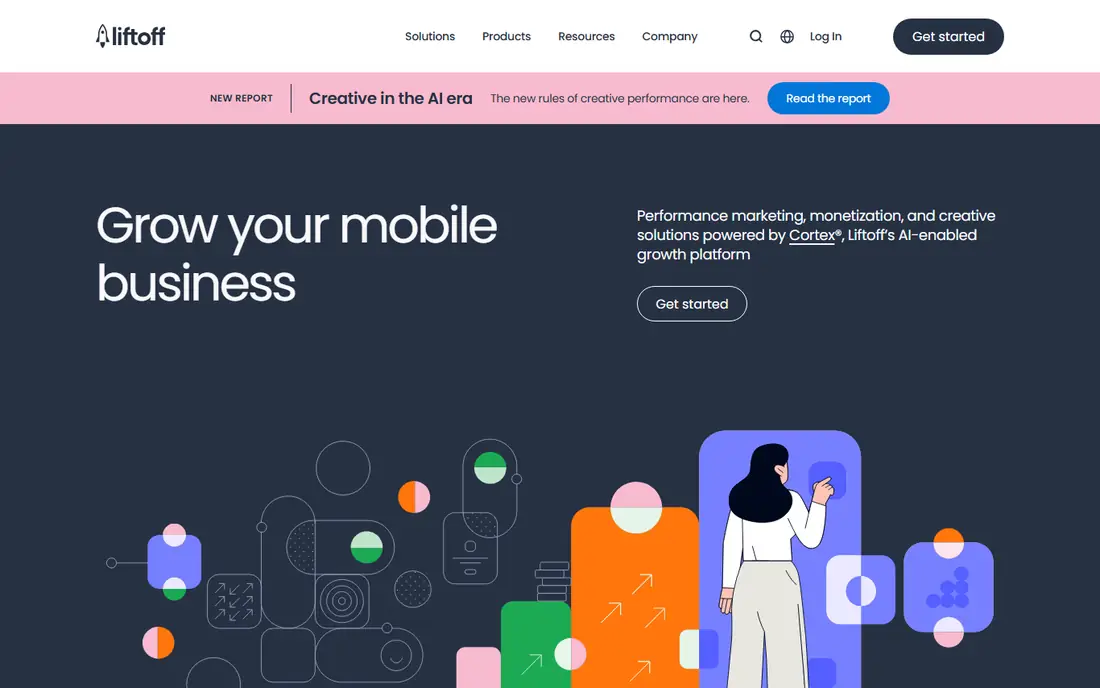
Liftoff Vungle, part of Liftoff, specializes in video ads for mobile games and apps. Its formats include rewarded video and playable ads that let users try a game before installing it. That interactivity can raise engagement compared with static banners, and Liftoff's broader business also covers user acquisition, which helps studios link ad spend to ad revenue.
Video is the strength and the limit. Apps that rely on banners or native ads will need another network for those formats. Performance also varies by game genre and region. Vungle fits games that can use rewarded and playable video well, and it works best inside a mediation stack rather than alone.
What we like- Strong video ad formats
- User acquisition and monetization in one group
- Global demand
Watch out for- Video focus means fewer banner and native options
- Performance varies by genre
#7InMobi
Best for: Global ad demand and mediation3.6/5 on
G2 (14 reviews, checked Oct 2026)
Visit inmobi.com
Starting priceSee website
Free planNo
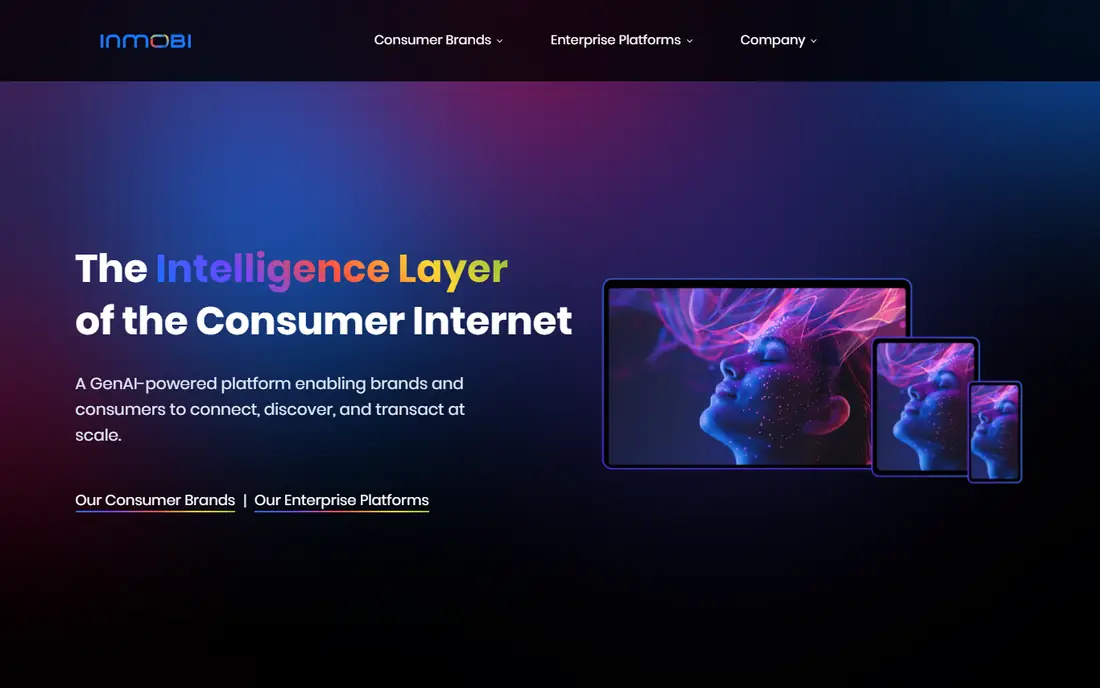
InMobi is a mobile advertising platform with global demand, an exchange, and mediation options. It can be especially useful for apps with audiences in Asia-Pacific, the Middle East, or other markets where US-focused networks fill less inventory. InMobi also supports video, native, and display formats for apps and games.
In the United States, AdMob and AppLovin usually offer deeper demand, so InMobi often serves as a secondary network. Support and integration experience can vary by region and account size. For apps with a global audience, adding InMobi to mediation can raise fill rates and revenue in markets where other networks are thin.
What we like- Global advertiser demand
- Mediation and exchange access
- Strong in Asia-Pacific and emerging markets
Watch out for- Less dominant in the US than AdMob
- Integration and support vary by region
#8RevenueCat
Best for: Subscription billing and paywalls4.8/5 on
G2 (213 reviews, checked Oct 2026)
Visit revenuecat.com
Starting priceSee website
Free planFree trial
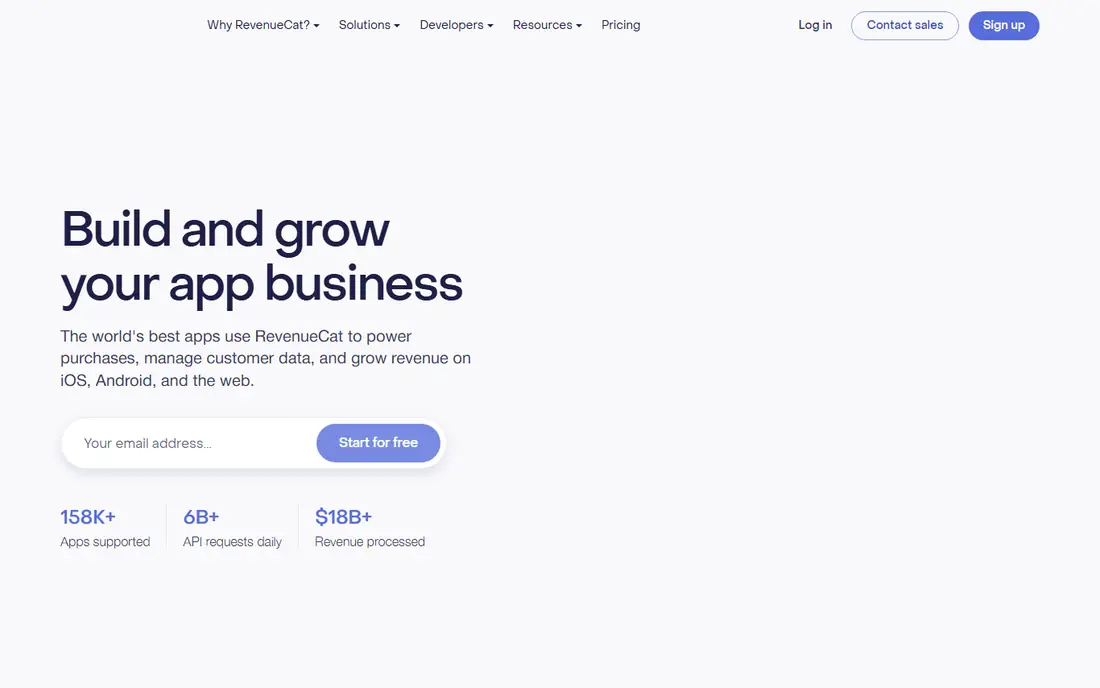
RevenueCat handles in-app subscriptions across iOS, Android, and web, including receipt validation, renewals, and cancellations. It offers paywall builders, pricing experiments, and analytics on trials, conversions, and churn. That infrastructure saves engineering time, since store billing rules, taxes, and edge cases are handled by the platform.
RevenueCat does not monetize ads, so it complements, rather than replaces, an ad platform. Pricing depends on plan and monthly tracked revenue, so check the current pricing page for your volume. For apps that sell premium access, RevenueCat is one of the most practical tools on this list, especially for small teams without billing expertise.
What we like- Handles App Store and Google Play billing
- Paywall tools
- Subscription analytics
Watch out for- Pricing scales with revenue on some plans
- Ads are not covered
Starting priceSee website
Free planFree trial
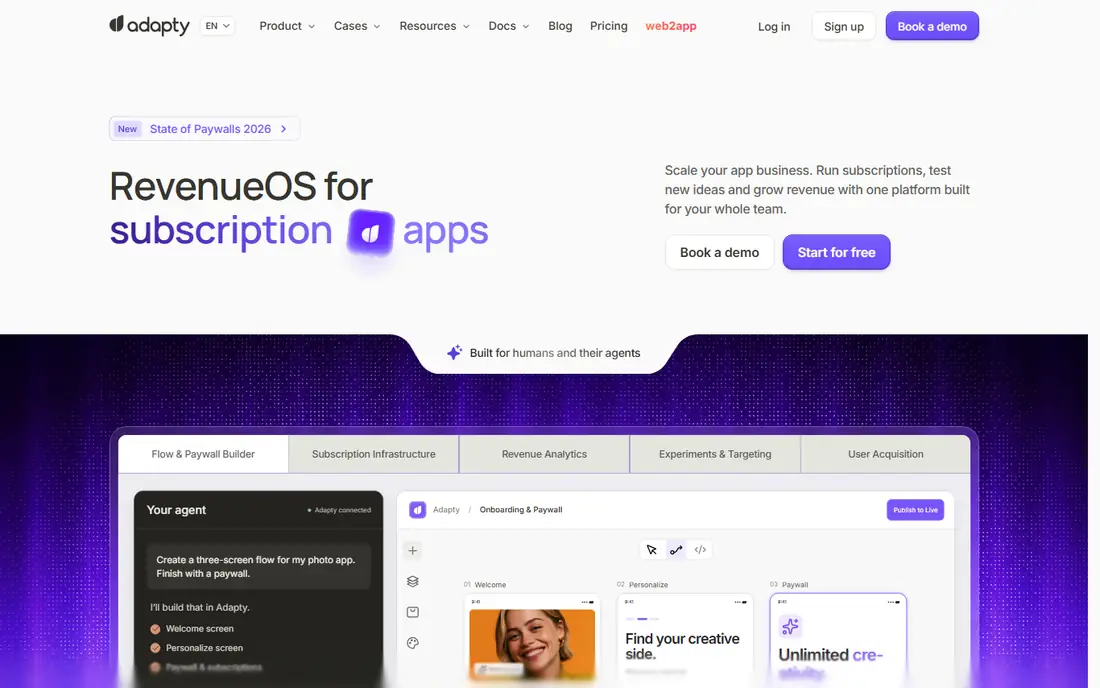
Adapty focuses on subscription paywalls, pricing tests, and analytics for iOS and Android apps. You can build and test paywall designs without an app update, compare pricing, and track trial conversion and retention. Integrations with analytics and attribution tools help teams see which paywall and price drive the best long-term revenue.
The ecosystem is smaller than RevenueCat's, and Adapty does not handle ads. For subscription apps that want fast paywall testing, Adapty is a strong alternative, often at a lower entry cost for smaller apps. Compare its pricing and integrations with RevenueCat before committing, since switching billing infrastructure later takes work.
What we like- No-code paywalls
- Pricing tests
- Subscription analytics and integrations
Watch out for- Smaller ecosystem than RevenueCat
- Ads are not covered
How we chose
We compared platforms on ad formats, mediation support, geographic demand, subscription tools, pricing structure, and current availability, using vendor homepages, pricing pages, and documentation. We favored platforms with real, current demand or billing infrastructure, rather than defunct networks or single-format tools. Prices are listed as See website where revenue share, plan, or volume determines cost.
Building a monetization mix that lasts
Start with your app's core value, not with ad formats. A game with short sessions suits rewarded video. A utility with daily use may suit a subscription with a free tier. A content app with broad traffic may suit a mix of ads and subscriptions, with ads for free users and a paid tier that removes them.
Measure revenue per daily active user and retention together. An aggressive ad setup that raises short-term revenue but drives users away will lose money over time. Test one change at a time, whether it is a new mediation network, a paywall price, or a rewarded video placement, and give each test enough traffic to reach a clear result.
Frequently asked questions
What is the best app monetization platform for a new app?
AdMob is the best starting point for ads, because it offers broad demand and simple setup. If your app sells subscriptions, add RevenueCat or Adapty for billing and paywalls. Most successful apps use more than one tool over time.
Do ad platforms charge a monthly fee?
Most ad networks do not charge a monthly fee. They take a share of ad revenue or operate on a revenue-share basis, and they pay you for impressions and clicks. Subscription tools such as RevenueCat and Adapty charge based on plan and revenue volume, so check their pricing pages.
Should I use mediation or a single ad network?
Mediation usually helps once you have meaningful traffic, since multiple networks compete for each impression. For a very small app, a single network such as AdMob is simpler and may perform just as well until volume grows.
Are rewarded video ads better than interstitials?
Rewarded video often performs better for retention, since users choose to watch in exchange for a reward. Interstitials can earn more per impression but can annoy users if shown too often. Test both placements and watch retention, not just revenue.
Can I combine ads and subscriptions?
Yes, and many apps do. A common model offers a free tier with ads and a paid tier that removes ads and adds features. Keep the free experience usable, so ads do not push users away before they consider paying.
Sources we checked (9)
- https://admob.google.com
- https://unity.com
- https://www.applovin.com
- https://www.is.com
- https://www.chartboost.com
- https://liftoff.io
- https://www.inmobi.com
- https://www.revenuecat.com
- https://adapty.io
Is your product missing or out of date?
We review this list regularly. Vendors can request a listing, send updated pricing or ask about featured placement.

Shihab Mia · Founder, Rankite
Shihab has 5+ years in B2B and SaaS SEO. He writes Rankite's software buying guides from pricing pages, documentation and public user reviews. More about Shihab.