How we make this list: we compare pricing pages, product documentation and public user reviews. Ratings come from G2, Capterra or Trustpilot, with the date we checked them.
Key takeaways
- Penny stocks are highly volatile, most short-term traders lose money, and this article is not financial advice: it compares apps, it does not recommend any stock.
- Webull is the best penny stock app for active traders, with $0 commissions, strong charting, extended hours, and paper trading for practice before real money.
- Robinhood is the simplest first app, while Fidelity and Schwab suit traders who want research, education, and safety behind the trade.
- Check OTC access before you fund an account: not every app trades every penny stock, and some restrict OTC markets.
- Watch for pump-and-dump schemes: sudden social media hype, paid promoters, and thin volume are classic warning signs.
Quick comparison
| Tool | Best for | Starting price | Free plan |
|---|
 Webull | Active traders and charting | $0 commission | Yes |
 Robinhood | Simplest first trades | $0 commission | Yes |
 Fidelity | Research and safety | $0 commission | Yes |
 Charles Schwab | Education and thinkorswim | $0 commission | Yes |
 E*TRADE | Balanced research tools | $0 commission | Yes |
 Public | Simple multi-asset trading | $0 commission | Yes |
 moomoo | Active learning with data | $0 commission | Yes |
 Interactive Brokers | Global platform for growth | $0 commission | Yes |
Is your product missing or out of date?
We review this list regularly. Vendors can request a listing, send updated pricing or ask about featured placement.
The best app for penny stocks
Starting price$0 commission
Free planYes
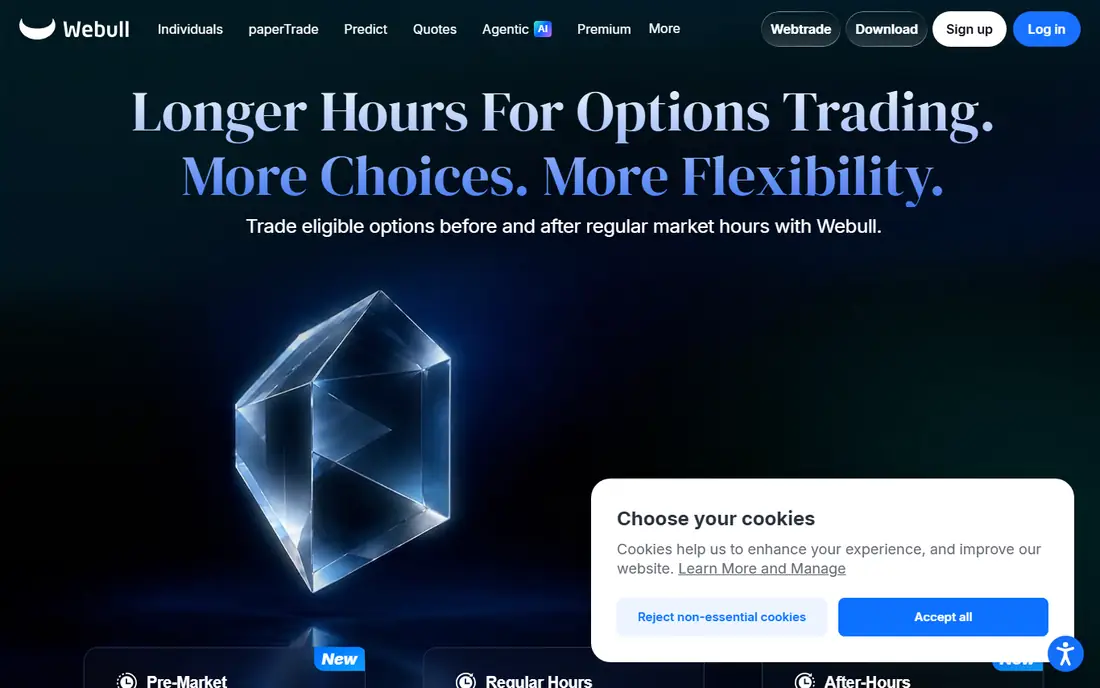
Webull is the best penny stock app for active traders, with $0 commissions on US stocks, ETFs, and options, strong charting, extended hours trading, and paper trading for practice before risking real money. The mobile app gives chart depth that rivals desktop platforms, which matters when penny stocks move in minutes.
Payment for order flow affects execution quality, and the asset range is narrower than Fidelity or Schwab. For a trader who wants charts, paper trading, and $0 commissions in one app, Webull is the top pick, provided position sizes stay small.
What we like- $0 commissions on US stocks, ETFs, and options
- Strong charting
- Paper trading
- Extended hours
Watch out for- Payment for order flow execution
- Limited asset range
- Margin rates need checking
Starting price$0 commission
Free planYes
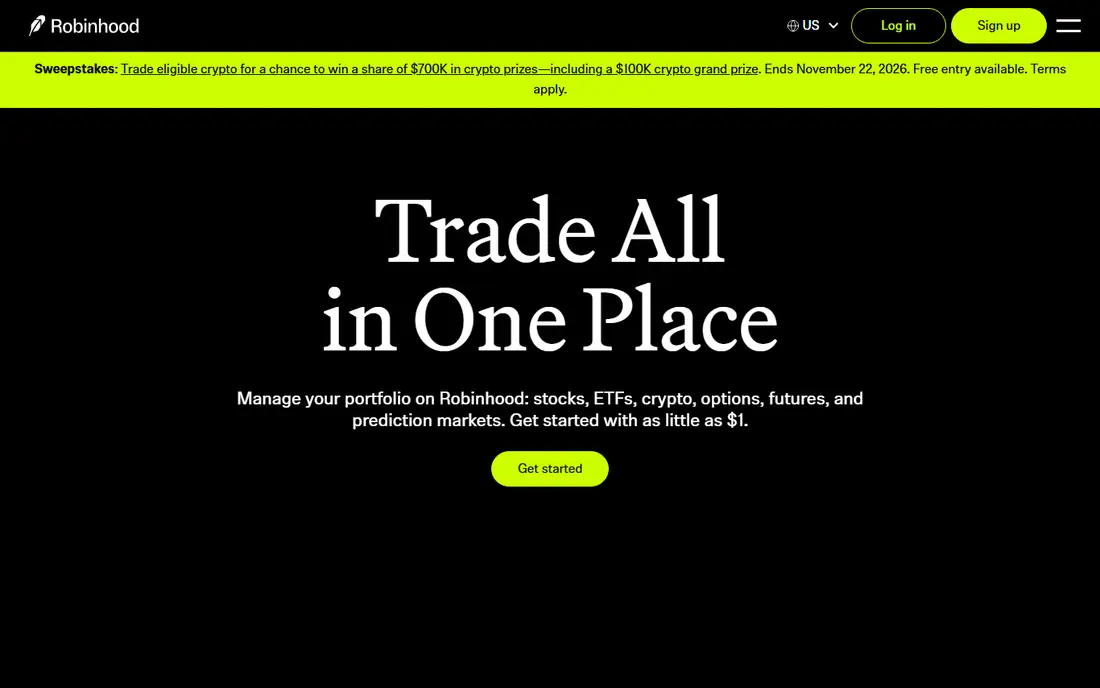
Robinhood is the simplest first app for penny stock trading, with $0 commissions, a clean order screen, fractional shares from $1, and SIPC insurance up to $500,000 on brokerage accounts. For a beginner placing a first small trade, the simplicity is a real advantage.
Charting tools are lighter than Webull, and social features can encourage herd trading, which is dangerous in penny stocks where hype moves prices. For a first app used with small size and strict limits, Robinhood is a fair pick.
What we like- $0 commissions
- Simplest order screen
- Fractional shares from $1
- SIPC-insured up to $500,000
Watch out for- Lighter charting tools
- Social features can encourage herd trading
- Margin rates high by guides
Starting price$0 commission
Free planYes
Fidelity suits penny stock traders who want research and safety behind the trade, with $0 commissions, fractional shares from $1, deep research tools, and retirement accounts in the same place. The research depth helps a trader check financials before buying a thinly traded stock.
The mobile app is less trader-focused than Webull, and OTC access needs checking per stock, since not every penny stock trades on every platform. For a trader who values research over speed, Fidelity is the safest pick here.
What we like- $0 commissions on US stocks and ETFs
- Fractional shares from $1
- Deep research
- Retirement accounts
Watch out for- Mobile app less trader-focused
- OTC access needs checking per stock
- Interface can feel dense
Starting price$0 commission
Free planYes
Charles Schwab suits traders who want education and a full desktop platform behind the mobile app, with $0 commissions, thinkorswim paper trading, and extensive learning content for new investors. Paper trading on thinkorswim lets a penny stock strategy prove itself before real money is at stake.
Options cost $0.65 per contract, unlike Webull $0, and thinkorswim has a learning curve. For a trader who wants to learn properly and practice first, Schwab is a strong, steady pick.
What we like- $0 commissions
- Thinkorswim paper trading
- Extensive education
- Full-service brokerage
Watch out for- Options cost $0.65 per contract
- Cash sweep yields low by guides
- Thinkorswim learning curve
#5E*TRADE
Best for: Balanced research tools4.0/5 on
G2 (24 reviews, checked Oct 2026)
Visit etrade.com
Starting price$0 commission
Free planYes
ETRADE suits traders who want balanced research and tools without choosing between a simple app and a pro platform, with $0 commissions and Power ETRADE behind the mobile app. The research coverage is solid, and the platform handles both casual and active trading.
Options pricing trails Webull, and the interface splits across apps, which confuses some users. For a trader who wants research depth with a capable mobile app, E*TRADE is a balanced pick.
What we like- $0 commissions on US stocks and ETFs
- Power E*TRADE platform
- Balanced research and tools
Watch out for- Options $0.65 per contract by guides
- Interface split across apps
- Less mobile-first than Webull
Starting price$0 commission
Free planYes
Public suits traders who want simple multi-asset investing with AI research, $0 commissions, fractional shares from $1, and no payment for order flow, which can mean better fills. Stocks, ETFs, crypto, and bonds sit in one app.
The social feed can encourage herd trading, which is risky in penny stocks, and charting is lighter than Webull. For a simple, multi-asset app with cleaner execution incentives, Public is a fair pick, used with strict size limits.
What we like- $0 commissions on US stocks and ETFs
- Fractional shares from $1
- No payment for order flow
- Multi-asset
Watch out for- Social feed can encourage herd trading
- Charting lighter than Webull
- Smaller research library
Starting price$0 commission
Free planYes
moomoo suits active learners who want data, charting, and paper trading in one app, with $0 commissions on stocks and options and a learning community built around market data. The charting depth rivals Webull, and paper trading lets strategies prove themselves first.
The interface is dense for beginners, and the brand is less known than Fidelity or Schwab. For a trader who learns by data and wants to practice before trading, moomoo is a strong alternative to Webull.
What we like- $0 commissions on stocks and options
- Strong charting and data
- Paper trading
- Active learning tools
Watch out for- $0 per options contract by guides
- Interface dense for beginners
- Brand less known than Fidelity
Starting price$0 commission
Free planYes
Interactive Brokers suits traders who want a global platform for growth, with $0 commissions on IBKR Lite, fractional shares from $1, and access to 10,500+ US stocks and ETFs. The selection depth helps when a penny stock trades on a less common venue.
Interface complexity is the highest here, and Pro tiered pricing can confuse new users. For a trader who plans to grow beyond penny stocks into global markets, Interactive Brokers is the platform to grow into.
What we like- $0 commissions on IBKR Lite
- 10,500+ US stocks and ETFs
- Fractional shares from $1
- Global access
Watch out for- Interface complexity for novices
- Pro tiered pricing can confuse
- Overkill for a first penny trade
How we chose
We compared penny stock apps on commission, OTC access, charting, paper trading, research depth, fractional shares, and safety, using vendor pages and October 2026 broker guides. We favored apps with $0 commissions and real trading tools, and we left out apps that do not trade US stocks or that charge per-trade commissions that punish small positions.
How to pick an app for penny stocks
Start with OTC access, then tools, then safety. Check that your target stocks actually trade on the app before funding, since OTC access varies by broker and by stock. Then pick charting and paper trading depth that matches your style, and keep position sizes small enough that one bad trade cannot wipe out the account.
Understand the risk before you trade
Penny stocks are highly volatile, thinly traded, and easy to manipulate, and most short-term traders lose money. A stock can drop 50 percent in a day on no news, and low volume can trap you in a position you cannot sell. This article is not financial advice, and no app, indicator, or fee structure changes that risk. Trade only with money you can afford to lose completely, and seek independent financial advice for your own situation.
Spot pump-and-dump schemes
Pump-and-dump schemes follow a pattern: sudden social media hype, paid promoters, claims of guaranteed gains, and thin volume that lets insiders sell into the hype. If a stock appears in your feed with urgent language and no financials, treat it as a warning, not a tip. Check filings, volume, and float before buying anything promoted online, and never buy on a tip alone.
Paper trade first, then trade tiny
Before risking real money, paper trade your penny stock strategy for at least a month on Webull, Schwab thinkorswim, or moomoo, and review every losing trade. If the paper results do not survive fees, spreads, and slippage, the strategy will not survive real trading either. When you do go live, start with a position size so small that a total loss feels annoying, not painful, and increase size only after consistent, disciplined execution over months, not days.
Frequently asked questions
Which app is best for penny stocks?
Webull, for $0 commissions, strong charting, extended hours, and paper trading in one mobile app. Robinhood is simpler for a first trade, while Fidelity and Schwab suit traders who want research and safety behind the trade. Check OTC access first, since not every app trades every penny stock.
Is penny stock trading risky?
Yes, highly. Penny stocks are volatile, thinly traded, and vulnerable to manipulation, and most short-term traders lose money. Trade only with money you can afford to lose completely, keep position sizes small, and never use margin for penny stocks, since borrowed money turns a bad trade into a debt.
Do these apps charge commissions?
All eight apps here charge $0 commission on online US stock and ETF trades. Check options fees, spreads, account fees, and cash sweep terms, since commission-free does not mean cost-free, and spreads on thin penny stocks can cost more than any commission would.
Can I trade OTC penny stocks on every app?
No. OTC access varies by broker and by stock, so check that your target stock trades on the app before funding an account. Some apps restrict certain OTC markets or require phone orders for specific securities, and a stock that trades on one app may not trade on another.
What is a pump-and-dump scheme?
A scheme where promoters hype a thinly traded stock, often through social media or paid newsletters, then sell their shares into the buying wave, leaving later buyers with losses. Warning signs include sudden hype, guaranteed-gain claims, low volume, and urgent language that pushes you to buy before checking financials.
Should I use margin for penny stocks?
No. Margin turns a bad trade into a debt, and penny stock volatility can trigger margin calls that force sales at the worst moment. Trade penny stocks in a cash account with money you can afford to lose, and keep margin for strategies you fully understand, if you use it at all.
Sources we checked (8)
- https://www.webull.com
- https://robinhood.com
- https://www.fidelity.com
- https://www.schwab.com
- https://www.etrade.com
- https://public.com
- https://www.moomoo.com
- https://www.interactivebrokers.com
Is your product missing or out of date?
We review this list regularly. Vendors can request a listing, send updated pricing or ask about featured placement.

Shihab Mia · Founder, Rankite
Shihab has 5+ years in B2B and SaaS SEO. He writes Rankite's software buying guides from pricing pages, documentation and public user reviews. More about Shihab.