How we make this list: we compare pricing pages, product documentation and public user reviews. Rankite is independent; if a vendor ever pays for a featured spot, that listing is clearly labeled Partner.
Key takeaways
- Bitdefender offers the best blend of detection rates and low system impact, with first-year pricing from $29.99.
- Norton 360 justifies its $49.99 first-year price with identity theft protection and LifeLock integration.
- McAfee's unlimited-device plan at $49.99 first year is the value pick for large households.
- Avast One and Windows Defender cover the free tier, but paid suites add VPN, identity monitoring and support.
Quick comparison
| Tool | Best for | Starting price | Free plan |
|---|
 Bitdefender Bitdefender | the strongest all-around protection | $29.99/year (first year) | Free trial |
 Norton 360 Norton 360 | families worried about identity theft | $49.99/year (first year) | Free trial |
 McAfee McAfee | households with many devices | $49.99/year (first year, unlimited devices) | Free trial |
 Kaspersky Kaspersky | privacy-conscious users who want strong tech | $39.99/year (first year) | Free trial |
 Avast One Avast One | users who want a capable free tier | Free; $49.99/year premium (first year) | Yes |
 ESET NOD32 ESET NOD32 | gamers and performance-sensitive users | $29.99/year (first year) | Free trial |
 Malwarebytes Malwarebytes | cleaning already-infected systems | $44.99/year | Yes (scanner) |
 TotalAV TotalAV | budget buyers wanting a full suite | $29.00/year (first year) | Free trial |
Is your product missing or out of date?
We review this list regularly. Vendors can request a listing, send updated pricing or ask about featured placement.
The best antivirus software reviewed
Starting price$29.99/year (first year)
Free planFree trial
Bitdefender consistently tops independent lab tests for malware detection while slowing systems less than any major competitor. The 3 to 5 percent performance impact is genuinely unnoticeable in daily use, which matters on older hardware. Ransomware protection is exceptional, with behavioral detection that catches novel threats.
The first-year price of $29.99 is aggressive, but renewals climb toward $110, so set a calendar reminder. The interface assumes some technical comfort. For pure protection quality per dollar, it remains the benchmark.
What we like- Top-tier detection rates (99%+)
- Minimal system impact (3-5%)
- Excellent ransomware protection
Watch out for- Interface less hand-holding than Norton
- Renewal pricing jumps significantly
Starting price$49.99/year (first year)
Free planFree trial
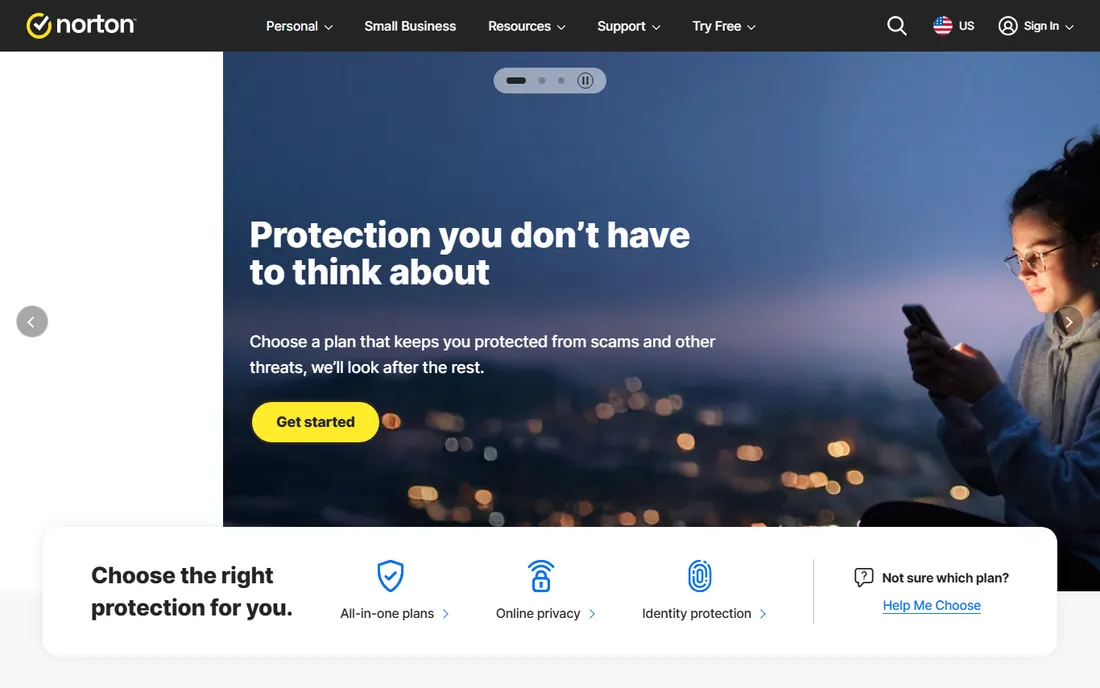
Norton 360 is a security suite, not just antivirus. The differentiator is identity: LifeLock credit monitoring, dark web surveillance and up to $2M identity theft coverage on higher tiers, bundled with solid 98%+ malware detection. For households with significant identity theft risk, that bundle justifies the price.
You pay in performance and renewals. The 10 to 15 percent system drag is the highest here, and the $49.99 first year renews near $125. Buy it for the identity protection; buy Bitdefender if you only need the scanner.
What we like- LifeLock identity monitoring integrated
- 98%+ detection
- Cloud backup included
Watch out for- 10-15% system impact
- Renewal jumps to ~$125
Starting price$49.99/year (first year, unlimited devices)
Free planFree trial
McAfee's unlimited-device plan is the standout value for large households: one $49.99 first-year subscription covers every phone, laptop and tablet you own. Detection at 95 to 97 percent is adequate though not class-leading, and identity monitoring covers the basics.
The software nudges you toward upsells persistently, which wears thin. Performance impact runs 8 to 12 percent. If device count is your problem, the math is unbeatable; if maximum protection is, look at Bitdefender.
What we like- Unlimited devices on one subscription
- Decent identity monitoring
- Frequent deals
Watch out for- 95-97% detection trails leaders
- Upsell prompts annoy
Starting price$39.99/year (first year)
Free planFree trial
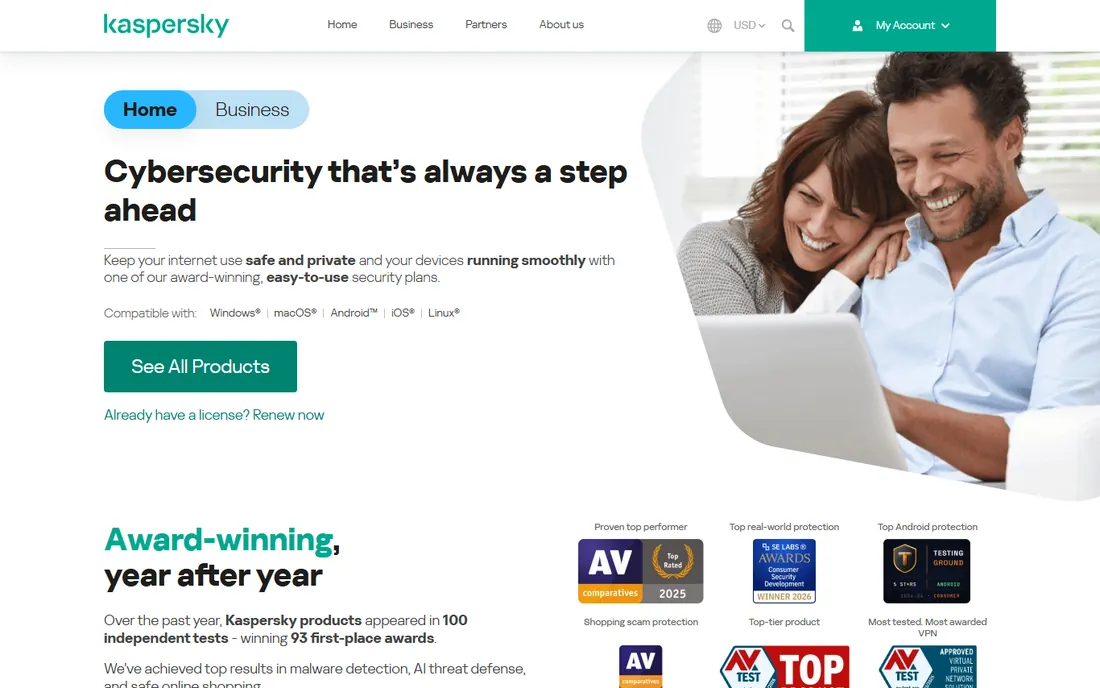
Kaspersky's detection technology has always been excellent, and features like Safe Money encrypted browsing protect financial transactions specifically. At $39.99 first year, it undercuts Norton while matching it on core protection.
Some organizations avoid Kaspersky over jurisdiction concerns, which is a political rather than technical judgment each buyer must make. The interface feels dated next to modern rivals. On pure technical merit, it belongs in the top tier.
What we like- Excellent detection engine
- Encrypted payment protection
- Reasonable pricing
Watch out for- Geopolitical concerns for some buyers
- Interface dated
Starting priceFree; $49.99/year premium (first year)
Free planYes
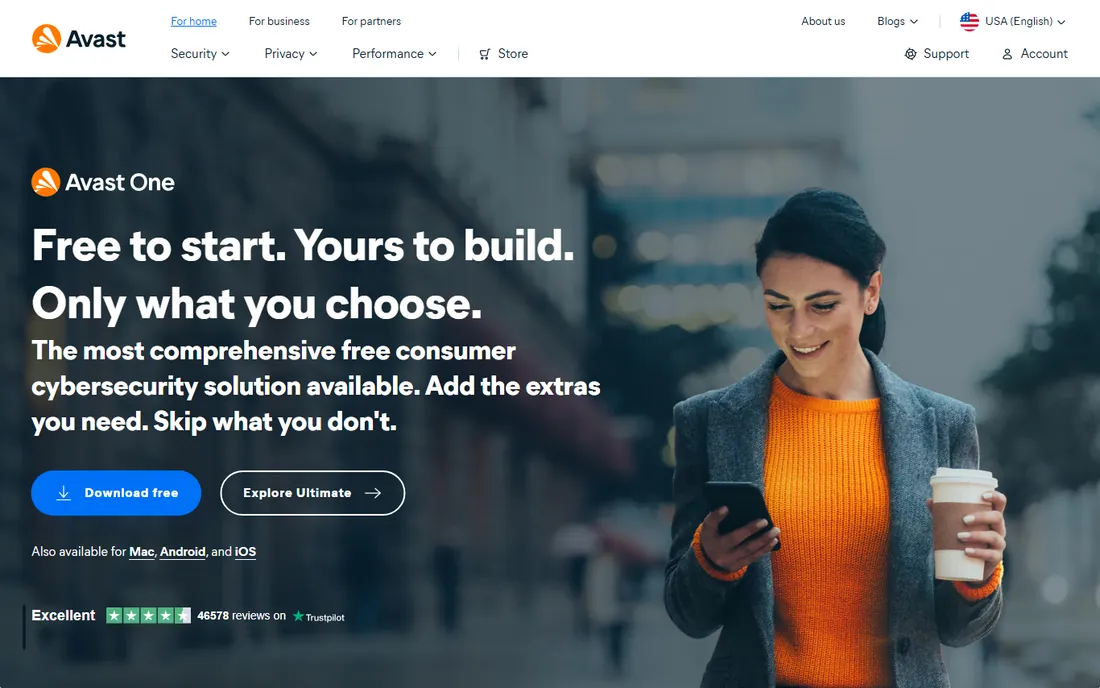
Avast One's free tier is the real deal: 99.97% protection scores in recent independent tests, a VPN, and coverage for multiple devices without paying. The $49.99 premium first year adds more VPN data and extras.
The company monetizes free users with upsell prompts, and the renewal climbs. Privacy-conscious buyers should note the data-sharing history, though current policies are clearer. For free protection that actually protects, it leads the pack.
What we like- Genuinely useful free antivirus
- 99.97% detection in recent tests
- Includes VPN
Watch out for- Premium renewal ~$78
- Free tier includes upsells
#6
ESET NOD32
Best for: gamers and performance-sensitive users
Visit eset.com
Starting price$29.99/year (first year)
Free planFree trial
ESET built its reputation on doing more with less: excellent heuristic detection in a package that barely touches system resources. Gamers love the low overhead and the mode that suppresses interruptions during play.
You get fewer bundled goodies than Norton or Bitdefender suites: no VPN, no identity monitoring at this tier. The interface speaks to technical users. If performance is the priority and you buy extras separately, ESET is ideal.
What we like- Extremely lightweight
- Strong heuristic detection
- Gamer mode
Watch out for- Fewer bundled extras
- Interface technical
Starting price$44.99/year
Free planYes (scanner)
Malwarebytes earned its fame removing infections other tools miss, and the free scanner remains the first thing technicians install on a compromised PC. The premium version adds real-time protection that is light and unobtrusive.
As a primary antivirus it is less complete than Bitdefender or Norton on classic virus detection breadth. Many users pair the free Malwarebytes scanner with another real-time product. For remediation, nothing beats it.
What we like- Best-in-class malware removal
- Light real-time protection
- Simple interface
Watch out for- Weaker on traditional virus detection
- Pricier than some suites
Starting price$29.00/year (first year)
Free planFree trial
TotalAV competes on price and simplicity: $29 first year gets antivirus, VPN, password manager and tune-up utilities in a friendly package. For non-technical users who want one app that handles everything, the simplicity appeals.
Independent lab scores lag the top tier, and renewals jump substantially, which is the classic budget-AV playbook. It is better than nothing by a wide margin, but discerning buyers get more protection per dollar from Bitdefender at similar first-year pricing.
What we like- Very cheap first year
- Includes VPN and system tune-up tools
- Simple interface
Watch out for- Renewal pricing jumps hard
- Lab test scores trail leaders
How we chose
We compared independent lab results (AV-Comparatives, AV-Test), current vendor pricing pages and feature sets, cross-checked against 2026 practitioner reviews. Every product listed is actively maintained with a live homepage as of October 2026. We weighted real-world protection scores and system impact over marketing claims, and we flagged renewal pricing because first-year discounts distort comparisons. Prices shown are first-year rates from each vendor's own pricing page.
The renewal trap: read this before you buy
First-year antivirus pricing is marketing, not pricing. Norton 360 Deluxe at $49.99 renews near $125. Bitdefender Total Security renews around $110. McAfee+ Advanced can more than double. Vendors count on auto-renewal inertia, and it works.
Defend yourself with a simple system: set a calendar reminder for eleven months after purchase, turn off auto-renewal immediately after buying, and shop the new-customer deals each year. Rotating between top vendors on promo pricing routinely cuts the effective annual cost in half. There is no loyalty benefit in antivirus; the labs reset every year, and so should your subscription.
Some buyers ask whether multi-year plans beat the annual rotation game. Occasionally a two-year deal undercuts the promo-hopping math, but read the terms: multi-year plans sometimes renew at the then-current rate with no promo protection. The safest approach remains annual shopping. And keep an eye on bundle creep: suites add VPNs, password managers and identity monitoring that duplicate tools you already pay for. If the bundle replaces a standalone subscription, it saves money; if it duplicates one, you are paying twice for the same protection.
What to check before you sign
Start with independent test scores, not vendor claims. AV-Comparatives and AV-Test publish detection rates, false positives and performance impact quarterly. A 2 percent detection gap sounds small until it represents dozens of missed threats a year on an active system.
Then count your devices and platforms. Unlimited-device plans (McAfee) win for large households; per-device pricing punishes them. Confirm coverage for every OS you use: Windows, Mac, Android and iOS support varies, and some features are Windows-only.
Finally, decide what else you need. If you already pay for a VPN and password manager, a pure antivirus like ESET plus your existing tools may beat a suite. If you want one subscription covering everything, compare suite contents carefully: VPN data caps, identity monitoring depth and backup storage differ enormously.
Also consider the household or small business angle. Family plans with parental controls, multi-device dashboards and centralized management save money and hassle when you protect several people. Norton and Bitdefender both offer family tiers; McAfee's unlimited devices make it the simplest choice for big households. For a home office or micro-business, look at business editions rather than consumer suites: they add device management and prioritized support for a modest premium, and they avoid the consumer upsell circus.
Frequently asked questions
Do I still need antivirus on Windows 11?
Windows Defender provides competent baseline protection, but third-party suites add better phishing protection, identity monitoring, VPNs and cross-device coverage. For careful users, Defender plus common sense suffices; for everyone else, paid protection earns its keep.
What is the best free antivirus?
Avast One Free and Windows Defender lead on protection scores. Avast adds more features; Defender adds zero friction. Both beat no protection by an enormous margin.
How many devices does one subscription cover?
It varies: McAfee covers unlimited devices, Bitdefender covers 5 (25 on Family), Norton 360 covers up to 10 on higher tiers. Count every phone, tablet and laptop before choosing.
Why does antivirus slow down my computer?
Real-time scanning inspects files as they are accessed, which costs CPU and memory. Lightweight products (Bitdefender, ESET) keep this to 3-5 percent; heavier ones (Norton, McAfee) reach 10-15 percent or more during full scans.
Should I worry about renewal price increases?
Yes. First-year discounts of 50 percent or more are standard, and renewals jump accordingly. Disable auto-renewal, set a reminder, and re-shop annually.
Is Kaspersky safe to use?
Technically excellent, but some governments and organizations restrict it over jurisdiction concerns. Evaluate your own risk tolerance and any employer or regulatory guidance that applies to you.
Does antivirus protect against phishing?
Modern suites do, to a degree. They block known phishing sites, scan email attachments and flag suspicious links. But phishing evolves faster than blocklists, so the software is a safety net, not a guarantee. Learn to spot phishing yourself: check sender addresses, hover over links, and never enter credentials from an email link.
Should I run two antivirus programs together?
No. Real-time scanners conflict with each other, causing slowdowns and false positives. Run one real-time antivirus plus the free on-demand Malwarebytes scanner for second opinions. That combination catches nearly everything without the conflicts.
Does antivirus protect my phone too?
Most suites include Android and iOS apps. Android gets real malware scanning; iOS gets phishing protection, VPN and identity monitoring rather than traditional scanning, since Apple's sandbox limits what security apps can do. If your household mixes platforms, check each OS is covered before buying. A suite that skips your teenager's Android phone leaves a real gap.
Sources we checked (11)
- https://www.bitdefender.com
- https://norton.com
- https://www.mcafee.com
- https://www.kaspersky.com
- https://www.avast.com
- https://www.eset.com
- https://www.malwarebytes.com
- https://www.totalav.com
- https://gizmodo.com/best-antivirus
- https://tech-insider.org/bitdefender-vs-norton-vs-mcafee-2026/
- https://www.scmgalaxy.com/tutorials/top-10-antivirus-software-tools-in-2025-features-pros-cons-comparison/
Is your product missing or out of date?
We review this list regularly. Vendors can request a listing, send updated pricing or ask about featured placement.

Shihab Mia · Founder, Rankite
Shihab has spent more than a decade helping SaaS and e-commerce brands grow through search. He writes Rankite's software buying guides from pricing pages, documentation and public user reviews. More about Shihab.