How we make this list: we compare pricing pages, product documentation and public user reviews. Ratings come from G2, Capterra or Trustpilot, with the date we checked them.
Key takeaways
- Elicit is the best AI tool for research for systematic literature reviews, with structured extraction and synthesis tables.
- Consensus suits evidence-based questions, with yes, no, and maybe answers drawn from papers.
- Semantic Scholar is the best free discovery tool, with over 200 million papers and no cost.
- SciSpace suits reading dense PDFs, with an AI copilot that explains and answers questions on papers.
- Perplexity suits broad web research with cited answers, while NotebookLM suits document synthesis from your own uploads.
- ResearchRabbit maps citation networks visually, and scite shows whether papers are supported or contrasted by later work.
- AI research tools can invent citations and misread papers, so always verify every citation against the original paper before you cite it.
Quick comparison
Is your product missing or out of date?
We review this list regularly. Vendors can request a listing, send updated pricing or ask about featured placement.
Starting price$12 per month
Free planYes
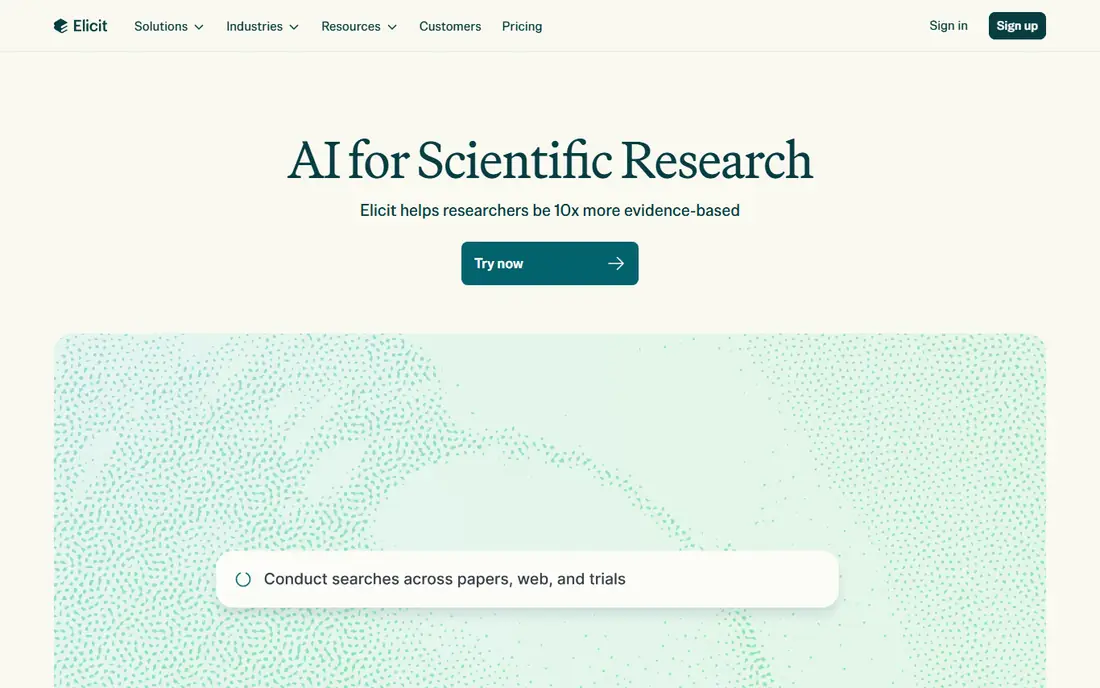
Elicit automates literature review work, extracting data from papers into structured tables and synthesizing findings across many papers. Citations are sentence-level, which helps researchers check claims against the source. The database covers 125 million plus papers, and the free tier offers limited credits per week, with paid plans from $12 per month, though some sources list a higher Pro price, so check the current page.
Synthesis output needs checking, since AI can misread methods or overstate findings. For systematic reviews and structured extraction, Elicit is clearly the best AI research tool, since its tables make cross-paper comparison far faster than reading each paper alone.
What we like- Structured extraction tables
- Sentence-level citations
- 125 million plus papers
Watch out for- Free tier tight at 5 credits per week
- Paid price varies by plan
- Synthesis needs checking

#2Consensus
Best for: Evidence-based answers4.7/5 on
G2 (1,885 reviews, checked Oct 2026)
Visit consensus.app
Starting price$11.99 per month
Free planYes
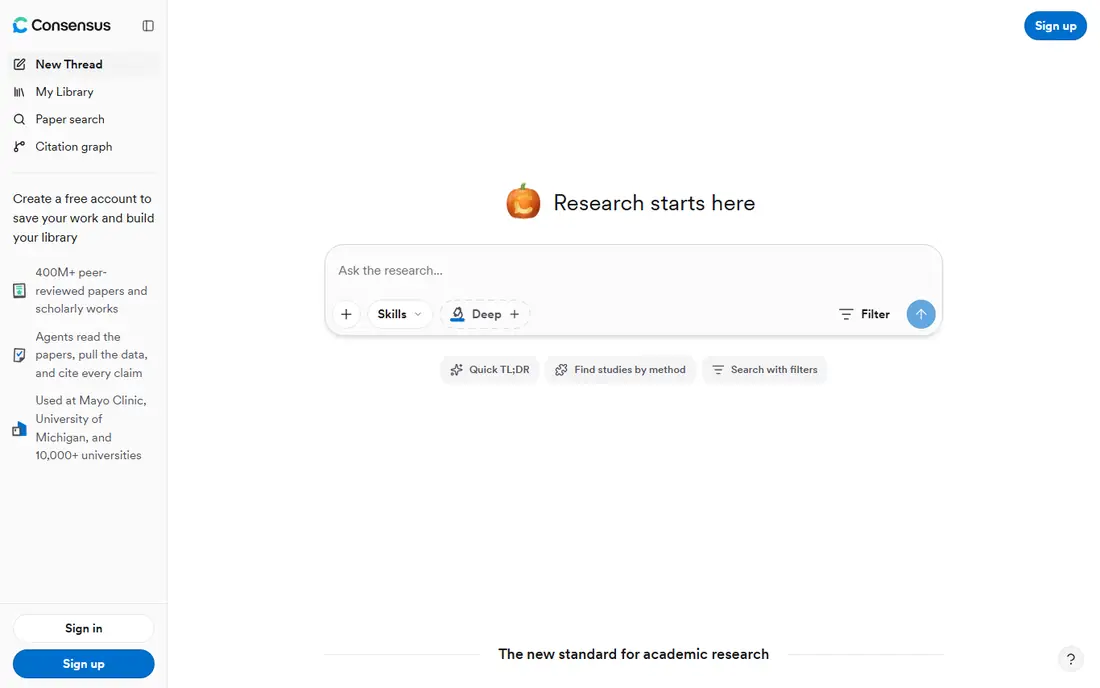
Consensus answers research questions with evidence from papers, showing a consensus meter for yes, no, and maybe answers. The database covers 200 million plus papers, and the free tier is limited, with paid plans from $11.99 per month. It suits quick scientific consensus checks, such as whether a treatment works or a diet helps.
Citations are study-level rather than sentence-level, so checking the exact claim needs opening the paper. For evidence-based questions, Consensus is clearly the fastest check, since its consensus meter summarizes dozens of papers in seconds.
What we like- Yes, no, and maybe answers from papers
- Consensus meter
- 200 million plus papers
Watch out for- Free tier limited
- Answers suit scientific questions best
- Study-level citations only
Starting priceFree
Free planYes
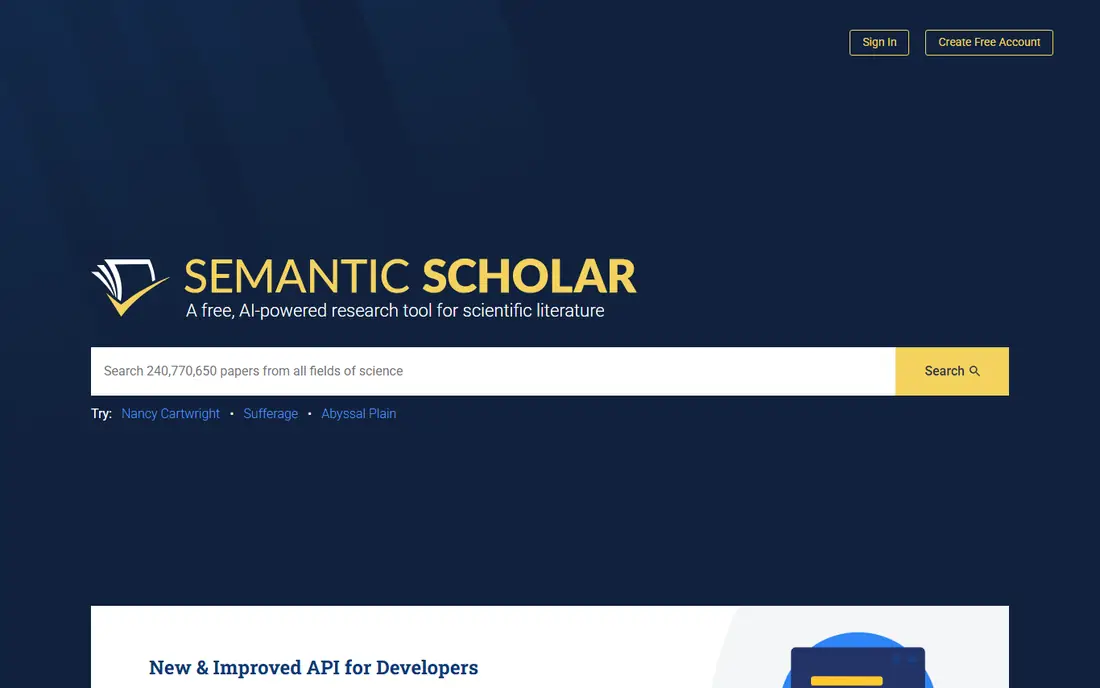
Semantic Scholar is a free academic search engine with over 220 million papers, offering AI features for skimming, summaries, and related-paper discovery. It serves as a free alternative to Google Scholar, with strong metadata and citation data. The service is fully free, with no paid tier for basic use.
There is no structured extraction or writing tool, so Semantic Scholar covers discovery only. For budget-conscious researchers, Semantic Scholar plus a free Elicit or Consensus tier covers most use cases at zero cost, which is very hard to beat indeed.
What we like- Fully free
- 220 million plus papers
- Strong AI features for skimming
Watch out for- No structured extraction
- No writing tools
- Discovery only
Starting price$12 per month
Free planYes
SciSpace offers an AI copilot that explains, summarizes, and answers questions on academic PDFs, with literature search across 280 million plus papers. The tool suits students and researchers who need to read dense papers faster, with writing and review features alongside reading. The free tier is limited, with paid plans from $12 per month.
Copilot answers need checking against the paper, since AI can misread technical sections. For reading and understanding papers, SciSpace is clearly the best copilot, since it answers questions on the exact PDF you are reading.
What we like- AI copilot on PDFs
- Literature search across 280 million papers
- Writing help
Watch out for- Free tier limited
- Paid price varies by plan
- Copilot answers need checking
Starting price$20 per month
Free planYes
Perplexity answers questions with real-time web search and inline citations, covering both web and academic sources. The Pro plan at $20 per month adds deep research mode, which produces multi-page cited reports. The free tier offers limited daily deep research queries.
Citation quality is variable, with verified rates lower than specialist academic tools in recent benchmarks, so every citation needs checking. For broad exploration and orientation before specialist work, Perplexity is clearly the fastest starting point, since its cited answers give a quick map of any topic.
What we like- Real-time cited answers
- Clean inline citations
- Deep research mode
Watch out for- Citation quality variable
- Academic depth less than specialist tools
- Pro at $20 per month
Starting priceFree
Free planYes
NotebookLM, from Google, builds interactive notebooks from your own uploaded documents, answering questions only from those sources, which reduces invented citations. The free tier is generous, with a Plus plan at $19.99 per month for higher limits. Audio overviews turn documents into listenable summaries.
The tool is upload-only, with no live web search, so discovery needs another tool. For synthesizing a paper set you already own, NotebookLM is clearly the most trustworthy AI tool, since it answers only from your uploaded sources.
What we like- Source-only answers
- Free
- Interactive notebooks
- Audio overviews
Watch out for- Upload-only, no live search
- Google account needed
- Synthesis limited to uploads
Starting priceSee website
Free planYes
ResearchRabbit maps citation networks visually, showing how papers connect and helping researchers find related work they would otherwise miss. Starting from a few seed papers, the tool builds a network of citations and recommendations. The free tier is available, with paid plans listed from $120 per year in some sources, so check the current page.
There is no extraction or writing tool, so ResearchRabbit covers discovery only. For mapping a field and finding related papers, ResearchRabbit is clearly the best visual tool, since its networks reveal connections that keyword searches miss.
What we like- Visual citation networks
- Finds related papers
- Free tier available
Watch out for- No extraction or writing
- Pricing varies
- Discovery only

#8scite
Best for: Citation verification4.7/5 on
G2 (27 reviews, checked Oct 2026)
Visit scite.ai
Starting price$20 per month
Free planNo
scite shows how papers cite each other, classifying citations as supporting, contrasting, or mentioning, which reveals whether a paper has held up over time. The database covers 1.2 billion plus citations, and the paid plan starts from $20 per month, with a 7-day trial and no free plan.
There is no discovery or writing tool, so scite covers verification only. For checking a paper before you cite it, scite is clearly the best verification tool, since it shows supporting and contrasting citations at a glance for every single paper.
What we like- Supporting and contrasting citations
- 1.2 billion plus citations
- Shows how a paper held up
Watch out for- No free plan, 7-day trial only
- Paid price varies
- Verification only
How we chose
We compared database size, citation quality, extraction depth, synthesis quality, free tiers, and pricing. We also weighed how each tool handles paywalled papers, since many papers sit behind journal paywalls and an AI tool that cannot access the full text can only summarize the abstract, which often omits methods and limits. Tools with sentence-level or passage-level citations scored higher than tools with variable citation quality. We favored tools with free tiers, since many researchers work on tight budgets. We did not test any tool hands-on, and prices come from vendor and comparison sources, with conflicts noted.
Buying guide: what to check before you pick
Start with your workflow stage. For discovery, use Semantic Scholar or ResearchRabbit, and save promising papers to a collection before you start extraction, since a messy paper set slows every later step. For extraction and synthesis, use Elicit or NotebookLM. For evidence checks, use Consensus. For verification, use scite. For broad web research, use Perplexity. Next, check the free tier limits, since Elicit, Consensus, and SciSpace all cap free use, and subscribe only when your volume justifies it. Finally, verify every AI citation against the original paper, since AI tools can invent citations, misread methods, or overstate findings. Check the journal, year, and authors as well as the claim, since AI tools sometimes attach a real citation to a wrong claim. Keep a reference manager alongside your AI tools, and export verified citations there, so your final bibliography rests on papers you actually opened. Never cite a paper you have not opened, and never present an AI summary as your own reading.
Frequently asked questions
What is the best free AI research tool?
Semantic Scholar is fully free with over 220 million papers, and NotebookLM is free for document synthesis. Elicit, Consensus, and SciSpace also offer limited free tiers, so start there before paying for any paid subscription.
Can I trust AI research tool citations?
No, not without checking. AI tools can invent citations and misread papers, so always open the original paper and verify the claim very carefully before you cite it.
What is the best AI tool for a systematic review?
Elicit suits systematic reviews, with structured extraction tables and synthesis across many papers. Pair it with Semantic Scholar for discovery and scite for verification.
Is Perplexity good for academic research?
Perplexity suits broad exploration with cited answers, but its citation quality is variable compared with specialist academic tools. Use it for orientation, then verify with Elicit, Consensus, or scite.
Do I need to pay for AI research tools?
No, most researchers can start free with Semantic Scholar, NotebookLM, and limited tiers of Elicit, Consensus, and SciSpace. Pay only when your volume exceeds free limits.
Sources we checked (0)
Is your product missing or out of date?
We review this list regularly. Vendors can request a listing, send updated pricing or ask about featured placement.

Shihab Mia · Founder, Rankite
Shihab has 5+ years in B2B and SaaS SEO. He writes Rankite's software buying guides from pricing pages, documentation and public user reviews. More about Shihab.
 Elicit
 Semantic Scholar
 SciSpace
 Perplexity
 NotebookLM
 ResearchRabbit