How we make this list: we compare pricing pages, product documentation and public user reviews. Ratings come from G2, Capterra or Trustpilot, with the date we checked them.
Key takeaways
- Quantilope and Qualtrics suit structured quantitative research, with Quantilope stronger on automated advanced methods and Qualtrics stronger on enterprise programs.
- Remesh and Outset suit qualitative research at scale, using AI-moderated conversations instead of one-to-one interviews.
- Zappi and Suzy suit fast concept, ad, and product testing with consumer feedback in days rather than weeks.
- Brandwatch and Crayon suit secondary research, covering social listening and competitor tracking rather than surveys.
- SurveyMonkey remains the simplest entry point for AI-assisted surveys, with a free plan for basic work.
Quick comparison
| Tool | Best for | Starting price | Free plan |
|---|
 Quantilope | Automated advanced quantitative studies | See website | No |
 Qualtrics | Enterprise research programs | See website | Free trial |
 Zappi | Concept and ad testing | See website | No |
 Remesh | Large-scale qualitative conversations | See website | No |
 Suzy | Fast consumer feedback | See website | No |
 SurveyMonkey | Simple AI-assisted surveys | See website | Yes |
 Outset | AI-moderated interviews | See website | No |
 Crayon | Competitive intelligence | See website | No |
 Brandwatch | Social listening and consumer insight | See website | No |
Is your product missing or out of date?
We review this list regularly. Vendors can request a listing, send updated pricing or ask about featured placement.
Starting priceSee website
Free planNo
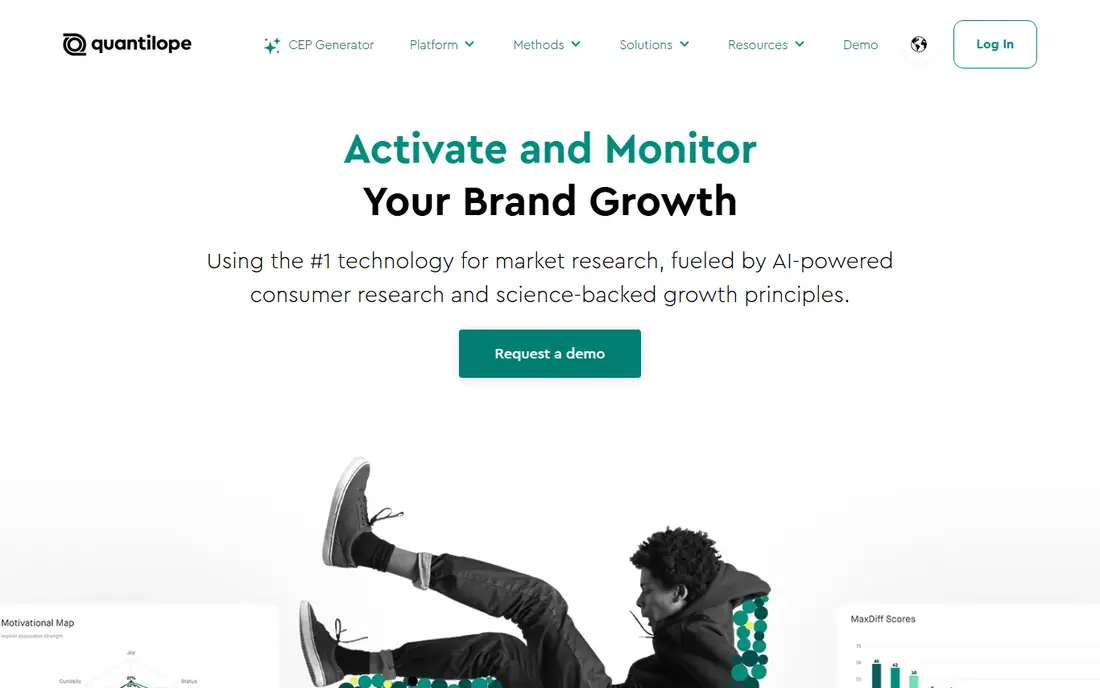
Quantilope is built for teams that run quantitative research often and want advanced methods without hand-building every study. Its platform automates methods such as conjoint, MaxDiff, TURF, pricing studies, and segmentation, and its AI assistant, quinn, helps with survey design and analysis. Brand tracking is also a core use, with structured metrics that can be followed over time.
Automation does not remove method risk. A poorly framed conjoint study still gives a confident-looking wrong answer, so teams without research experience should use Quantilope's guidance and pilot each new method. For insights teams that already know quantitative methods, the speed gain is real: studies that once took weeks of manual analysis can move much faster.
What we like- Automated advanced methods including conjoint, MaxDiff, and TURF
- AI research assistant for survey design
- Brand tracking built in
Watch out for- Pricing is quote-based
- Advanced methods need care in setup despite automation
Starting priceSee website
Free planFree trial
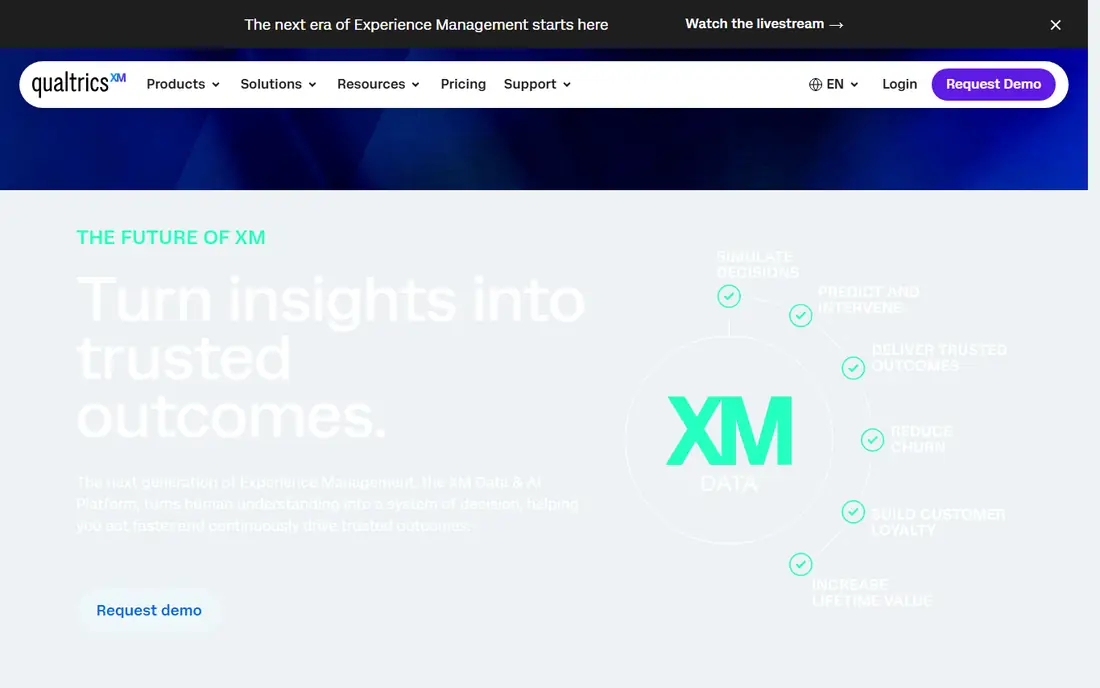
Qualtrics suits organizations that run research as an ongoing program rather than a single survey. It covers survey design, distribution, analysis, and reporting, with controls for permissions, branding, and data governance that large teams need. AI features help draft questions, summarize open text, and surface patterns, but they sit inside a much wider platform.
That breadth is also the drawback. Small teams may pay for enterprise structure they never use, and setup takes longer than a simple survey tool. If you run research across departments, need strict access controls, or must reuse insights in a central hub, Qualtrics is a strong fit. If you need one quick survey, start simpler.
What we like- Broad research and experience management platform
- Strong governance and permissions
- Large template and panel ecosystem
Watch out for- Quote-based pricing
- Complexity can overwhelm small teams
Starting priceSee website
Free planNo
Zappi focuses on a specific job: testing ideas before you commit budget to them. Teams use it to test concepts, packaging, ads, and product claims with consumers, and to compare results against norms and past tests. That standardization helps when a team must decide between several creative routes or product ideas under deadline pressure.
It is not a general-purpose interview tool. If you need deep, open-ended conversations about why customers behave a certain way, pair Zappi with a qualitative tool. If you need a fast, comparable read on which concept performs best, Zappi is one of the clearest choices in this list.
What we like- Fast concept, ad, and product testing
- Consumer audience access
- Standardized metrics for comparison
Watch out for- Quote-based pricing
- Less suited to open-ended qualitative exploration
Starting priceSee website
Free planNo
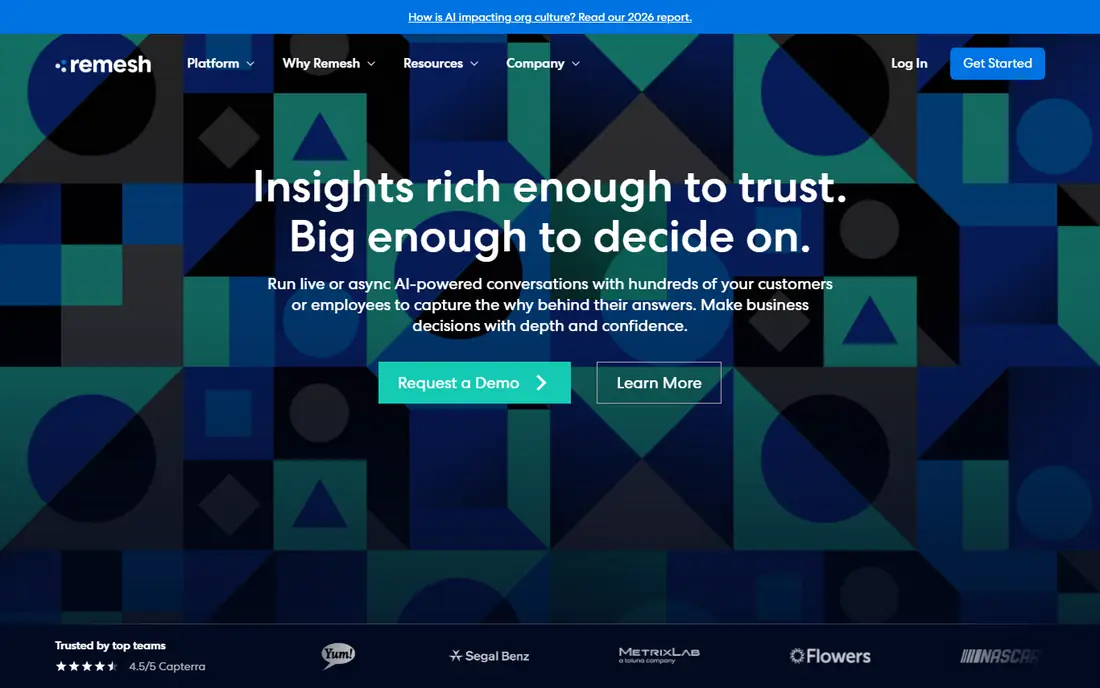
Remesh lets researchers run conversations with large groups in real time, then uses AI to analyze responses as the session runs. Instead of interviewing ten people one by one, a team can hear from hundreds, probe follow-up questions, and see themes emerge during the session. That makes it useful for message testing, brand perception work, and early product exploration.
Live research still needs planning. Question flow, participant screening, and analysis goals must be set before the session, or the volume of responses becomes noise. Teams that invest in that design get qualitative depth at a speed traditional interviews cannot match. Teams that want a simple survey should look elsewhere.
What we like- Live AI-assisted group conversations at scale
- Fast qualitative synthesis
- Handles hundreds of participants at once
Watch out for- Quote-based pricing
- Live sessions need careful moderation design
Starting priceSee website
Free planNo
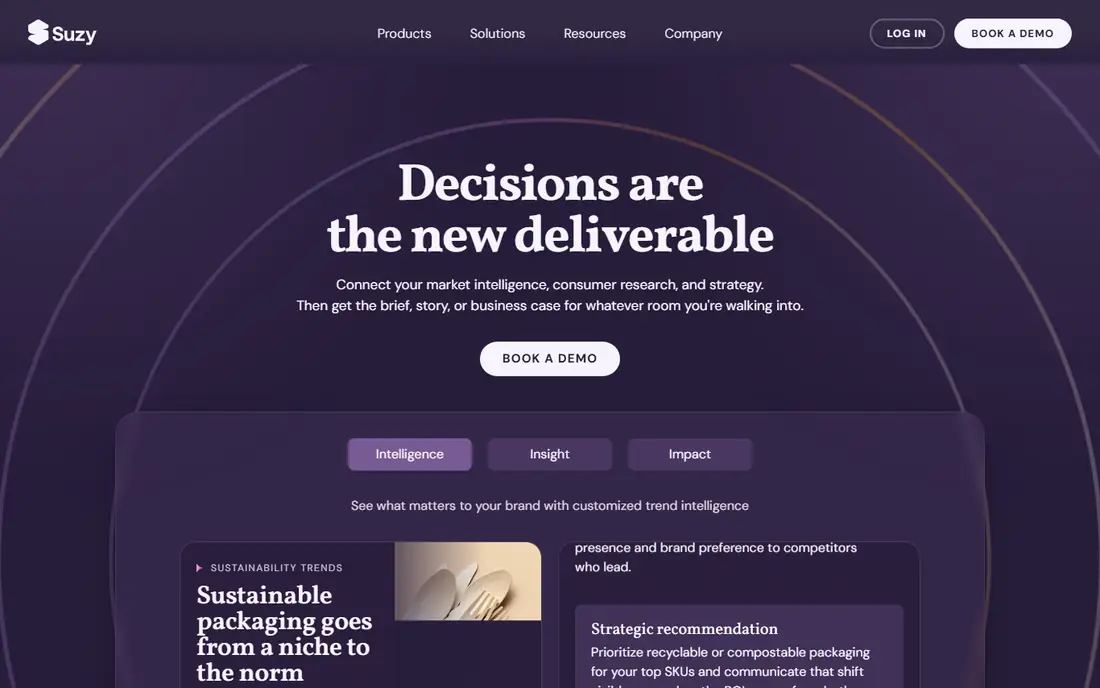
Suzy is designed for teams that need an answer this week, not next quarter. Its platform combines survey tools with access to consumers, so product, marketing, and insights teams can field short studies, test claims, and iterate on questions without arranging a separate panel. That speed suits agile product teams and marketers testing ideas in cycles.
Speed has limits. Short, fast surveys are good for direction and comparison, but they do not replace a carefully designed study for a major launch or pricing decision. Use Suzy for frequent, smaller decisions, and reserve deeper methods for the few choices where accuracy matters most.
What we like- Rapid surveys with built-in consumer audience
- Quick turnaround for iterative questions
- Simple workflow for non-researchers
Watch out for- Quote-based pricing
- Best for quick reads rather than deep studies
#6SurveyMonkey
Best for: Simple AI-assisted surveys4.4/5 on
G2 (23,901 reviews, checked Oct 2026)
Visit surveymonkey.com
Starting priceSee website
Free planYes
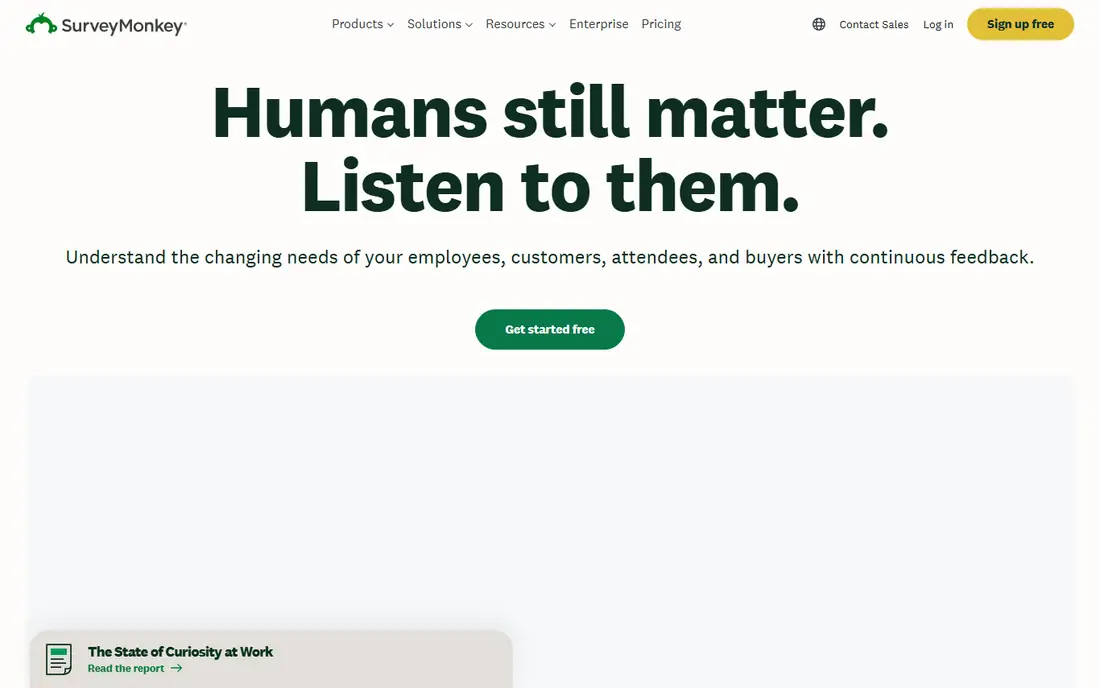
SurveyMonkey remains the easiest starting point for most teams. Anyone can build a survey in minutes, use AI assistance to draft questions, and get a readable summary of results. The free plan covers basic surveys, which makes it useful for internal feedback, small customer surveys, and early concept checks before spending on a specialist tool.
The limits appear as research gets serious. SurveyMonkey does not match Quantilope for advanced quantitative methods, Remesh for qualitative scale, or Brandwatch for social data. Treat it as a fast, general survey tool, not a full research platform, and move up when your questions need stronger methods or larger samples.
What we like- Free plan for basic surveys
- AI help with question writing and summaries
- Familiar and easy to learn
Watch out for- Advanced methods are limited
- Audience and analysis depth lag specialist platforms
Starting priceSee website
Free planNo
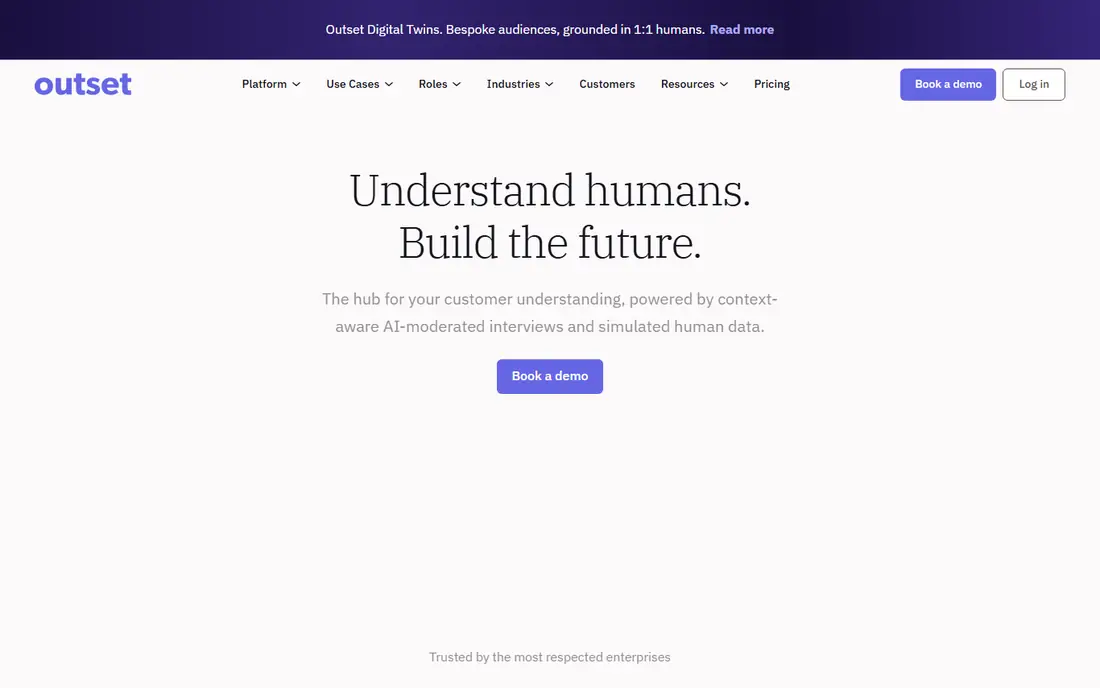
Outset uses an AI interviewer to run qualitative interviews at a scale human moderators cannot match. Participants can answer by text, voice, or video, and the platform produces transcripts, tags, and highlight clips for analysis. That makes it useful for user research, customer feedback, and concept exploration across many participants.
AI interviews are not a full replacement for human moderators. Sensitive topics, complex follow-up, and cultural nuance still benefit from a person in the room. Use Outset to broaden qualitative coverage and find patterns, then follow up with human interviews for the findings that matter most. Review transcripts directly, not only AI summaries, before quoting participants.
What we like- AI-moderated voice, video, and text interviews
- Automatic transcripts and tagging
- Supports many languages
Watch out for- Pricing is usage-based and custom
- AI interviews need human review for sensitive topics
#8Crayon
Best for: Competitive intelligence4.6/5 on
G2 (385 reviews, checked Oct 2026)
Visit crayon.co
Starting priceSee website
Free planNo
Crayon answers a different research question: what are competitors doing right now. It captures changes across websites, pricing pages, reviews, and other public sources, classifies those changes, and alerts teams when something important moves. Sales teams also use its battlecards to prepare for competitive deals.
The tool is only as good as its coverage of your market. Before buying, list your top competitors and the sources that matter, such as pricing pages, product changelogs, and review sites, and confirm Crayon tracks them. For product marketers and competitive intelligence teams, it saves hours of manual monitoring. For teams that only need occasional competitor checks, manual research may be enough.
What we like- Automated competitor tracking across many sources
- Alerts on pricing, messaging, and product changes
- Sales battlecards
Watch out for- Quote-based pricing
- Value depends on keeping tracking sources current
#9Brandwatch
Best for: Social listening and consumer insight4.4/5 on
G2 (730 reviews, checked Oct 2026)
Visit brandwatch.com
Starting priceSee website
Free planNo
Brandwatch helps teams hear what consumers say in public, across social platforms, news, blogs, and review sites. Its AI tools help track sentiment, spot rising topics, and compare brands, which supports campaign measurement, crisis monitoring, and trend discovery. For marketers, it turns a flood of public mentions into a structured view of attention and opinion.
Social data is not a representative sample. Vocal users, bots, and platform biases can distort sentiment, so treat Brandwatch findings as signals to investigate, not as survey results. Pair social listening with survey or interview data when a decision depends on how a whole market thinks, not only how vocal online users talk.
What we like- Large social and web listening coverage
- AI-assisted trend and sentiment analysis
- Strong reporting and dashboards
Watch out for- Quote-based pricing
- Social data needs careful interpretation
How we chose
We compared tools on research type, AI capability, audience access, pricing transparency, and fit for different team sizes, using vendor pricing pages and documentation plus public reviews on G2, Capterra, and Reddit. We favored tools that clearly state what kind of research they do, whether surveys, interviews, concept testing, social listening, or competitor tracking, and we avoided tools that only summarize web pages without a research workflow. We did not claim hands-on testing, since enterprise research platforms are quote-based and cannot be fully judged from a free trial alone. Prices are listed as "See website" where vendors do not publish a standard plan, to avoid presenting a quote as a list price.
Start with the decision, then choose the method, then the tool. A tool that is excellent for one question can mislead on another.
For a launch or pricing decision
Use structured quantitative research, such as Quantilope or Qualtrics, with a defined sample and method. Check sample source, screening, and question wording before fielding, and pilot the survey with a small group first.
For understanding why customers act
Use qualitative tools such as Remesh or Outset, and read raw responses alongside AI summaries. Themes from AI analysis are starting points for interpretation, not conclusions on their own.
For fast concept checks
Use Zappi or Suzy for quick, comparable reads, and accept that fast feedback is directional. When results are close or surprising, run a second check with a different method before committing budget.
For watching the market
Use Brandwatch for public conversation and Crayon for competitor moves. Set alerts for the few changes that would alter your plan, and review them weekly, so monitoring does not become another unread dashboard.
Frequently asked questions
Can AI tools replace traditional market research?
No, they change where human effort goes. AI speeds up survey design, fieldwork, transcription, and first-pass analysis, but humans still decide the question, check the sample, interpret results, and own the decision. The strongest setup pairs AI speed with human review, especially for pricing, positioning, and launch choices.
What is the best free AI tool for market research?
SurveyMonkey is the most practical free starting point on this list, since its free plan covers basic surveys with AI-assisted question drafting. Free tools are fine for internal feedback and early checks, but they do not provide paid respondent panels, validated audience data, or advanced methods. Treat free results as directional until you validate them with a larger or better-targeted sample.
How accurate are AI market research tools?
Accuracy depends on the data source and method, not on the AI label. A tool grounded in a screened consumer panel answers different questions than a social listening tool or an AI interview moderator. Always check who responded, when, how they were screened, and whether each claim traces back to a response, transcript, or export.
Do I need a survey tool, an interview tool, or both?
It depends on whether you need numbers or reasons. Surveys give measurable comparisons across groups, while interviews explain motivations and language. Most product and marketing teams need both over time, but start with the one that matches your next decision, and add the other when the first leaves a gap.
How should I handle privacy with AI research tools?
Check where respondent data is stored, who can access it, and how long it is kept, before fielding a study. Avoid collecting unnecessary personal data, and confirm compliance with rules that apply to your market, such as GDPR. For sensitive topics, use human oversight and clear consent language, and review AI transcripts for personal details before sharing them internally.
Sources we checked (9)
- https://www.quantilope.com
- https://www.qualtrics.com
- https://www.zappi.io
- https://www.remesh.ai
- https://www.suzy.com
- https://www.surveymonkey.com
- https://www.outset.ai
- https://www.crayon.co
- https://www.brandwatch.com
Is your product missing or out of date?
We review this list regularly. Vendors can request a listing, send updated pricing or ask about featured placement.

Shihab Mia · Founder, Rankite
Shihab has 5+ years in B2B and SaaS SEO. He writes Rankite's software buying guides from pricing pages, documentation and public user reviews. More about Shihab.