How we make this list: we compare pricing pages, product documentation and public user reviews. Ratings come from G2, Capterra or Trustpilot, with the date we checked them.
Key takeaways
- CrowdStrike Falcon and SentinelOne lead endpoint protection with behavioural AI, Darktrace and Vectra AI watch the network for anomalies, and Abnormal AI defends the inbox, where most attacks still start.
- Almost every serious platform here is quote priced. Anyone comparing sticker prices is comparing the few tools that publish them, not the market.
- AI detection is a probability tool. Behavioural engines can surface attacks with no known signature, and they also miss attacks designed to look normal and flag innocent activity. A tool raises a security team's ceiling; it does not make an organisation safe by itself.
- Match the tool to the surface you defend worst today: endpoints, network, email, cloud or identity. Buying a second tool for a surface you already cover is the common waste.
Quick comparison
Is your product missing or out of date?
We review this list regularly. Vendors can request a listing, send updated pricing or ask about featured placement.

#1CrowdStrike Falcon
Best for: Endpoint protection and response4.7/5 on
G2 (585 reviews, checked Oct 2026)
Visit crowdstrike.com
Starting priceSee website
Free planNo
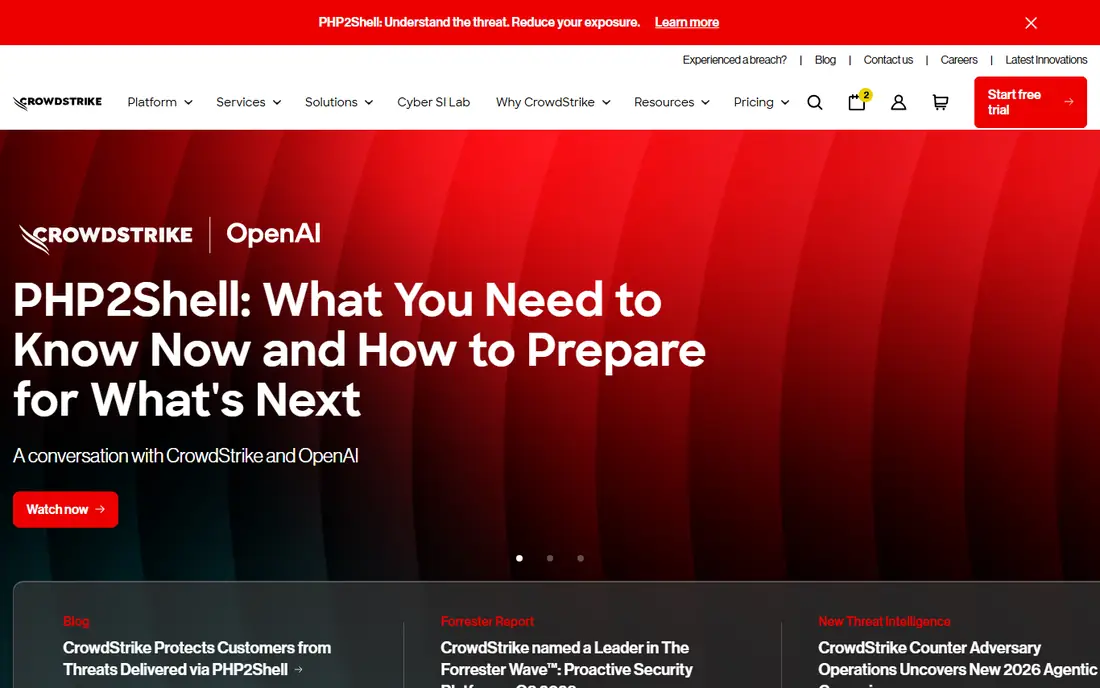
What we like- Falcon is the endpoint platform most enterprise shortlists start with: a single lightweight agent feeding cloud analysis that combines behavioural AI with one of the largest threat intelligence operations in the industry. It covers endpoints, cloud workloads and identity signals, adds AI assisted investigation for analysts, and offers Falcon Complete for companies that want CrowdStrike's own team running detection and response. Published per endpoint pricing bands exist for smaller tiers, which helps a small company estimate before the enterprise conversation starts.
Watch out for- Full platform pricing runs through quotes and climbs with modules, and the managed service is a further line on top. The 2024 outage caused by a faulty Falcon content update is part of its history and a fair due diligence topic: ask about staged rollouts and rollback for agent updates. It is also endpoint centred at heart
- Network and email depth come from integrations and partners rather than the core agent.

#2SentinelOne Singularity
Best for: Autonomous endpoint defence4.7/5 on
G2 (213 reviews, checked Oct 2026)
Visit sentinelone.com
Starting priceSee website
Free planNo
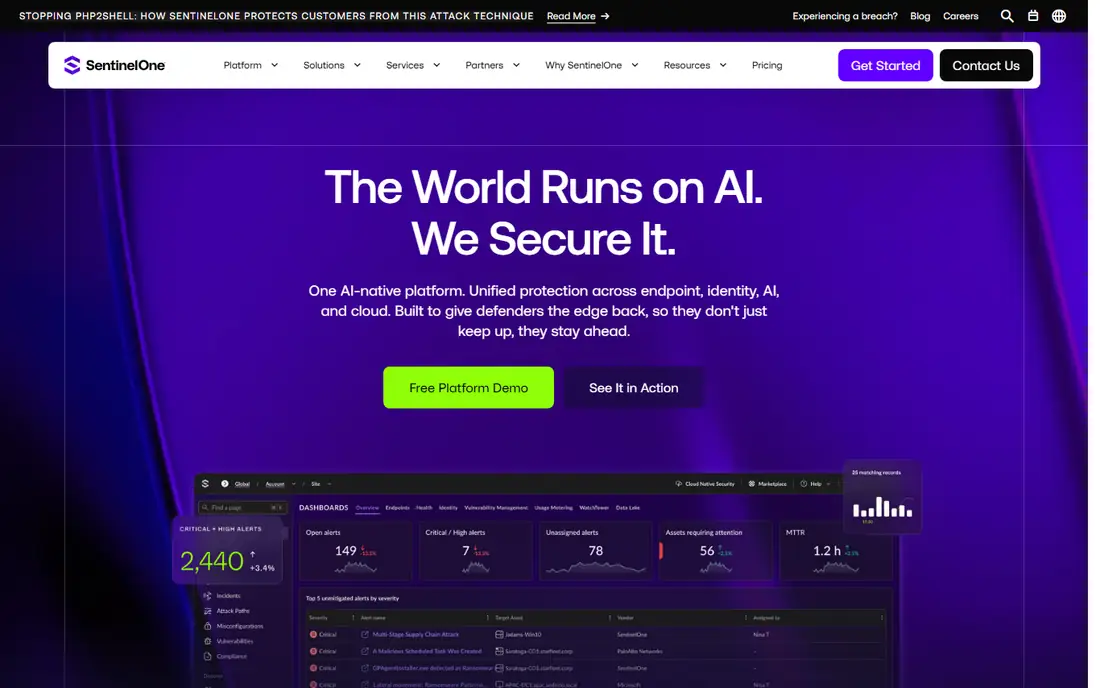
What we like- SentinelOne puts its AI on the device itself: static and behavioural models that keep working when an endpoint is offline, automated response that can isolate a machine, and a signature feature that can roll back files changed by ransomware to their pre attack state. That autonomy suits distributed companies and MSPs managing many small clients. Tiered per endpoint pricing is comparatively visible for the category, and its storyline view reconstructs an incident's sequence for the analyst.
Watch out for- Enterprise tiers still resolve to quotes with volume terms, and published figures vary between channels. Autonomous response is a dial, not a virtue: set it aggressive and it will occasionally stop legitimate software, so tuning in the first weeks is part of the purchase. Like Falcon, it is an endpoint platform first, and a complete programme needs network, email and cloud coverage from somewhere.
Starting priceSee website
Free planNo
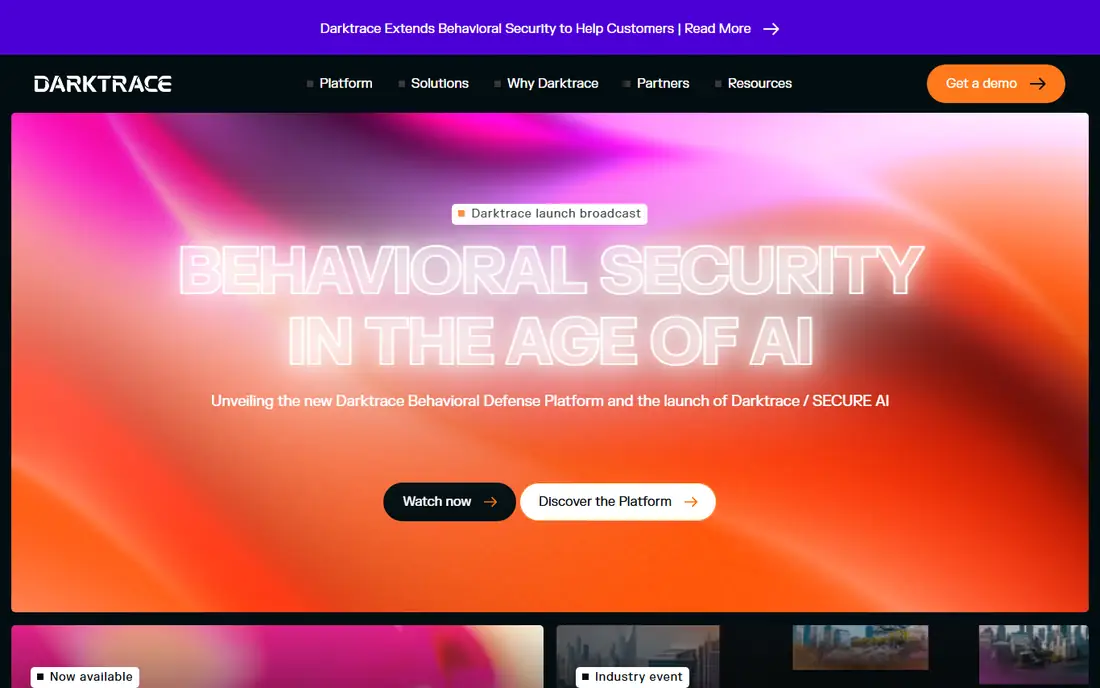
What we like- Darktrace learns the normal pattern of life for a network, its users and its devices, then flags deviations: an unusual data movement, a device behaving unlike its peers, a login pattern that breaks the baseline. Because it needs no signatures, it can surface novel and insider style activity that list based tools never see, and its autonomous response can contain a fast moving incident at machine speed while analysts wake up. Coverage spans network, email, cloud and operational technology variants.
Watch out for- Pricing is sales led with no public list, and reported enterprise medians run to tens of thousands of dollars a year. Baselining takes time, and anomaly detection produces a tuning period where unusual but innocent behaviour raises alerts
- Teams that abandon it in that window never reach the value. It detects deviation, not intent, so a skilled attacker moving slowly inside normal patterns is its known hard case.
Starting priceSee website
Free planNo
What we like- Vectra AI focuses on network detection and response across data centre, cloud and identity systems, with a large set of detection models aimed at attacker behaviours: command and control, lateral movement, privilege escalation and data staging. Its signal approach consolidates many weak alerts into prioritised incidents, which is the difference between a console a SOC can work and one it mutes. It pairs with existing SIEM and endpoint tools rather than demanding a rip out.
Watch out for- It is an enterprise sale with quote pricing and no free tier. Value depends on feeding it the right network and identity telemetry
- A partial deployment sees a partial estate. It does not protect the endpoint itself, so it complements rather than replaces Falcon or SentinelOne class tooling, which means two budgets, not one.

#5Abnormal AI
Best for: Email and account takeover defence4.7/5 on
G2 (90 reviews, checked Oct 2026)
Visit abnormal.ai
Starting priceSee website
Free planNo
What we like- Abnormal defends the channel where most breaches begin. It learns the normal communication patterns of every employee and vendor, then flags business email compromise, invoice fraud, executive impersonation and account takeover signals that gateway filters built on rules and reputation miss. It connects to Microsoft 365 and Google Workspace by API, so deployment avoids mail rerouting, and it extends into account takeover detection across connected apps.
Watch out for- Pricing is quote based and aimed at mid sized and enterprise mailboxes. It is an email and identity specialist, not an endpoint or network tool, so it fills one, albeit critical, layer. Behavioural baselining means its judgement improves over the first weeks, and unusual but genuine executive requests will occasionally be flagged, which is the correct failure direction but needs an internal process ready for it.

#6
Microsoft Defender with Security Copilot
Best for: Microsoft centred security teams
Visit microsoft.com
Starting priceSee website
Free planNo
What we like- For organisations already licensed into Microsoft's stack, this is the path of least resistance: Defender products cover endpoints, identity, email and cloud apps, and Security Copilot adds a generative assistant that summarises incidents, guides investigations and turns analyst questions into queries across that telemetry. The telemetry scale, from the world's largest Windows and Microsoft 365 base, is something no independent vendor can replicate. Bundle economics through agreements such as Microsoft 365 E5 change the buying maths entirely.
Watch out for- Copilot is billed by consumption units, so heavy use needs governance to avoid surprise costs, and its answers still need an analyst's verification. The suite's strength follows your Microsoft footprint
- A Google or mixed estate gets a fraction of the value. Licensing complexity is a genuine cost: working out which Defender features your agreement already includes is a project in itself.

#7Wiz
Best for: Cloud security posture and exposure4.7/5 on
G2 (863 reviews, checked Oct 2026)
Visit wiz.io
Starting priceSee website
Free planNo
What we like- Wiz scans cloud estates agentlessly across AWS, Azure and Google Cloud, builds a graph of resources, identities, vulnerabilities and exposures, and ranks the combinations that actually create an attack path, which stops cloud teams drowning in isolated low risk findings. Its context driven prioritisation is the clearest example in this list of AI era analysis beating raw alert volume. It now sits inside Google Cloud following the acquisition completed in 2026, and remains sold as a multi cloud platform.
Watch out for- It is a cloud platform
- On premises and endpoint estates need their own tooling beside it. Pricing is quote based and scales with workloads, landing well above small business budgets. A graph full of attack paths still needs engineers to fix them, and organisations without cloud remediation capacity buy an excellent map of problems they cannot close.

#8Huntress
Best for: Managed detection for smaller firms4.8/5 on
G2 (908 reviews, checked Oct 2026)
Visit huntress.com
Starting priceSee website
Free planNo
What we like- Huntress answers the resource problem directly: it pairs its detection platform with a human security operations team that reviews signals and responds, sold largely through MSPs to small and mid sized businesses that cannot staff a SOC. Its analysts hunt for the footholds and persistence mechanisms automated tools gloss over, and its reporting explains incidents in plain terms an IT generalist can act on. For a 100 person company, this managed model is often the first real detection capability it has ever had.
Watch out for- Pricing runs through partners and quotes rather than a public list. A managed service means trusting a third party's judgement and response times, which needs a clear agreement about who can isolate a machine at 3 in the morning. Coverage centres on endpoints and Microsoft 365 identities
- Network and cloud detection depth is not its claim.
How we chose
We shortlisted AI security platforms in active sale in October 2026 across the main attack surfaces: endpoint, network, email, Microsoft estates, cloud and managed detection for smaller firms. Machine learning had to be core to detection, not a chatbot badge on a rules engine. Quote only pricing dominates this category, so most entries read see website rather than repeat third party estimates as fact. Vendor detection claims were treated cautiously throughout; independent evaluations such as MITRE Engenuity are the better evidence and buyers should ask every vendor for their latest results. Nothing was hands on tested.
Start from the incident you most fear and the surface it enters by. Ransomware through endpoints points to Falcon or SentinelOne class tooling plus tested backups. Invoice fraud points to Abnormal. An unmapped cloud estate points to Wiz. Buying detection for a surface you already see clearly adds cost, not safety.
Then test in your own environment. Every credible vendor here will run a proof of value; insist it includes your noisiest systems and a purple team style exercise or at least a set of known test techniques, and count false positives as carefully as detections. Ask how the agent or platform itself is updated and rolled back, because the security tool is also software on every machine. Finally, staff the outcome: an unmonitored console detects nothing that matters. If you cannot watch it, buy the managed version or a managed provider, as the Huntress model shows.
Frequently asked questions
Can AI security tools stop zero day attacks?
Sometimes. Behavioural and anomaly engines do not need a signature, so a genuinely new technique can be flagged if it behaves unusually. The honest limit is intent: AI detects deviation and pattern, and a careful attacker working slowly inside normal behaviour can stay under the line. These tools shorten detection time; they do not make novel attacks impossible.
Why do so few of these tools publish prices?
Because enterprise security pricing scales with endpoints, workloads, data volume and modules, and vendors prefer negotiation. Published per endpoint bands exist for some endpoint tiers, but platform totals are quote territory. Treat any precise third party figure for a quote only platform as an estimate and budget from a scoped proposal instead.
Do small businesses need AI security tools?
They need the outcomes, which usually means a managed service or a platform bundled with their existing stack, such as Defender inside Microsoft 365, rather than an enterprise console nobody watches. A 50 person firm gains more from MFA everywhere, patching discipline and Huntress style managed detection than from an unwatched enterprise licence.
How accurate are AI detections?
Good platforms are tuned to surface a manageable number of high quality incidents, but false positives and missed detections both happen, and rates vary by environment. The metric to request is not a lab accuracy claim but the proof of value results in your network: alerts raised, how many were real, and how many test attacks were caught.
Will an AI tool replace our security team?
No. It changes the team's work from watching raw alerts to investigating prioritised incidents and improving defences. Someone still owns tuning, response decisions, the basics of patching and access control, and the call to shut a system down mid incident. Organisations that buy the tool instead of the function end up with expensive, unmonitored software.
Sources we checked (0)
Is your product missing or out of date?
We review this list regularly. Vendors can request a listing, send updated pricing or ask about featured placement.

Shihab Mia · Founder, Rankite
Shihab has 5+ years in B2B and SaaS SEO. He writes Rankite's software buying guides from pricing pages, documentation and public user reviews. More about Shihab.
 Darktrace
 Vectra AI