How we make this list: we compare pricing pages, product documentation and public user reviews. Ratings come from G2, Capterra or Trustpilot, with the date we checked them.
Key takeaways
- The best AI SOC platform depends on your existing stack: Falcon, Microsoft, Palo Alto, Google, or Splunk users should shortlist their own vendor first.
- Dropzone AI and Prophet Security suit teams that want an AI triage layer over a SIEM they already own.
- Torq suits engineering-heavy teams that want to build and govern their own automation logic.
- Autonomy must be staged: start with investigation and recommendations, then allow contained actions with human approval.
- Enterprise SOC pricing is almost always quote-based, so compare data ingest, analyst seats, and automation limits, not just headline fees.
Quick comparison
Is your product missing or out of date?
We review this list regularly. Vendors can request a listing, send updated pricing or ask about featured placement.
Starting priceSee website
Free planFree trial
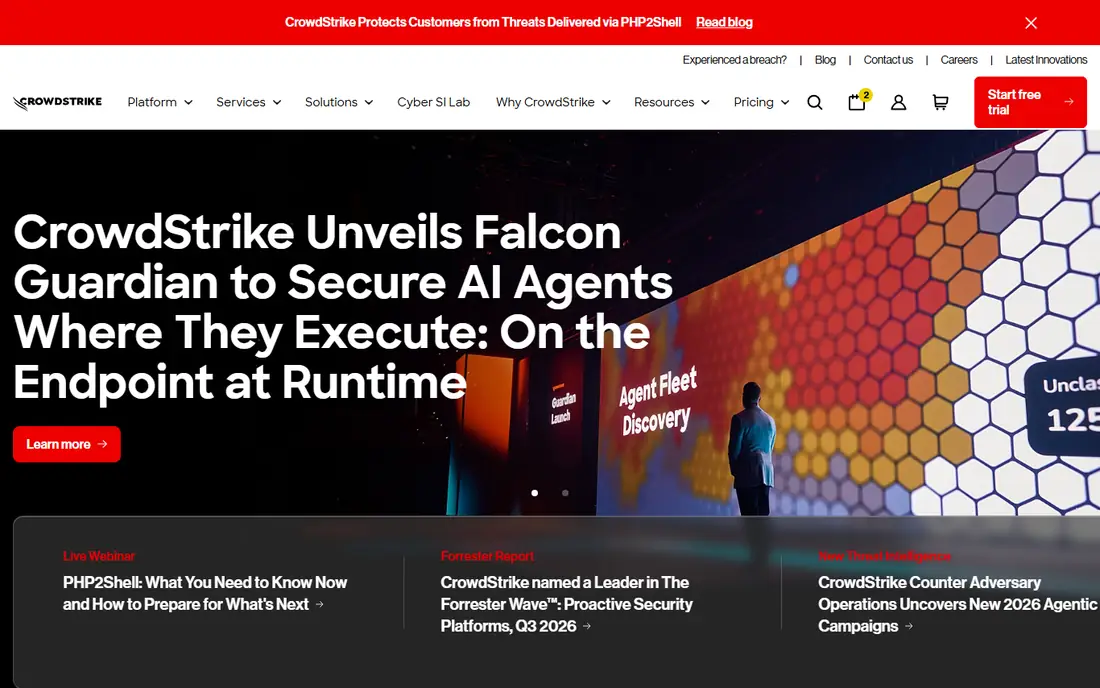
CrowdStrike suits teams already standardized on Falcon endpoints. Charlotte AI helps analysts triage, investigate, and summarize detections using the platform's threat intelligence and endpoint data, while the Next-Gen SIEM extends that view to other sources. That combination reduces the need to stitch endpoint and SIEM data by hand, which is where many SOCs lose time. Falcon Complete adds a managed response option for teams without 24-hour coverage.
The catch is stack fit. Organizations without Falcon endpoints get less of the platform advantage and may find a vendor-neutral triage layer cheaper. SOC pricing also sits above the published endpoint bundle prices, so budget on a quote, not on a per-device list figure. Choose CrowdStrike when Falcon is already your endpoint standard and you want AI triage close to that data.
What we like- Deep endpoint telemetry with AI triage in one platform
- Next-Gen SIEM for broader data
- Managed response option with Falcon Complete
Watch out for- Best value when endpoints already run Falcon
- Full SOC pricing is quote-based

#2
Microsoft Sentinel with Security Copilot
Best for: Microsoft 365 and Azure estates
Visit microsoft.com
Starting priceSee website
Free planFree trial
Microsoft Sentinel with Security Copilot is the default shortlist pick for Microsoft-centric organizations. Sentinel ingests logs from Entra, Defender, Microsoft 365, Azure, and third-party sources, while Copilot agents summarize incidents, suggest next steps, and run guided investigations. Because the telemetry is native, correlation across identity, endpoint, and cloud often works with less custom parsing than a generic SIEM. Existing Microsoft 365 E5 licensing can also change the cost picture.
Ingest cost is the risk. High-volume logs can grow the bill quickly, so retention, filtering, and workspace design matter as much as the AI features. Copilot also needs governance: which actions agents may take, and which need approval. Pick this platform when your estate is already Microsoft-led, and pilot ingest controls before a full rollout.
What we like- Native Entra, Defender, and Microsoft 365 telemetry
- Copilot agents for investigation
- Cloud-native scaling on Azure
Watch out for- Data ingest costs need careful control
- Best value inside Microsoft licensing
Starting priceSee website
Free planNo
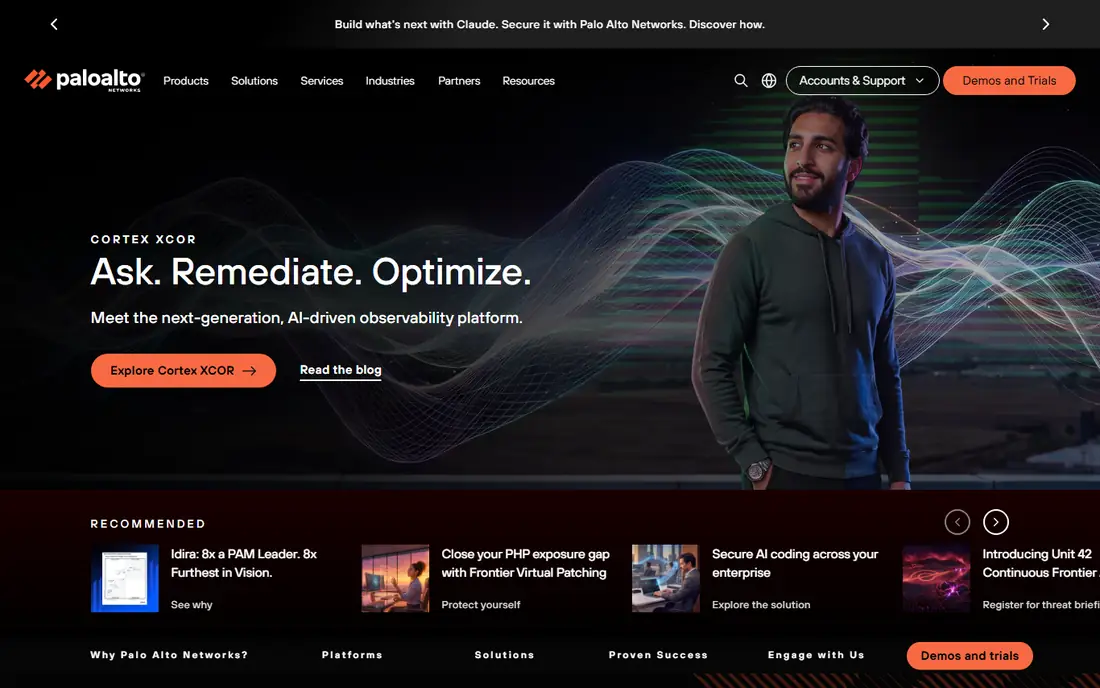
Cortex XSIAM targets teams consolidating security operations onto Palo Alto Networks. It brings network, endpoint, cloud, and identity data into one lake, then uses AI agents to triage, investigate, and respond with automation. That consolidation can cut the tool sprawl that slows investigations, because analysts stop pivoting between consoles for each data type. AgentiX adds agent workflows for common SOC tasks, with human oversight controls.
It is an enterprise platform with quote-based pricing and a serious implementation effort. Teams with little Palo Alto footprint may get similar triage from a vendor-neutral layer at lower cost. Choose XSIAM when you are already consolidating on Palo Alto, or when a single data lake and agent framework justify a platform migration.
What we like- Unified data lake across network, endpoint, and cloud
- AI agents for triage and response
- Strong automation with AgentiX
Watch out for- Enterprise pricing and implementation
- Most value when Palo Alto products already cover the estate
Starting priceSee website
Free planNo
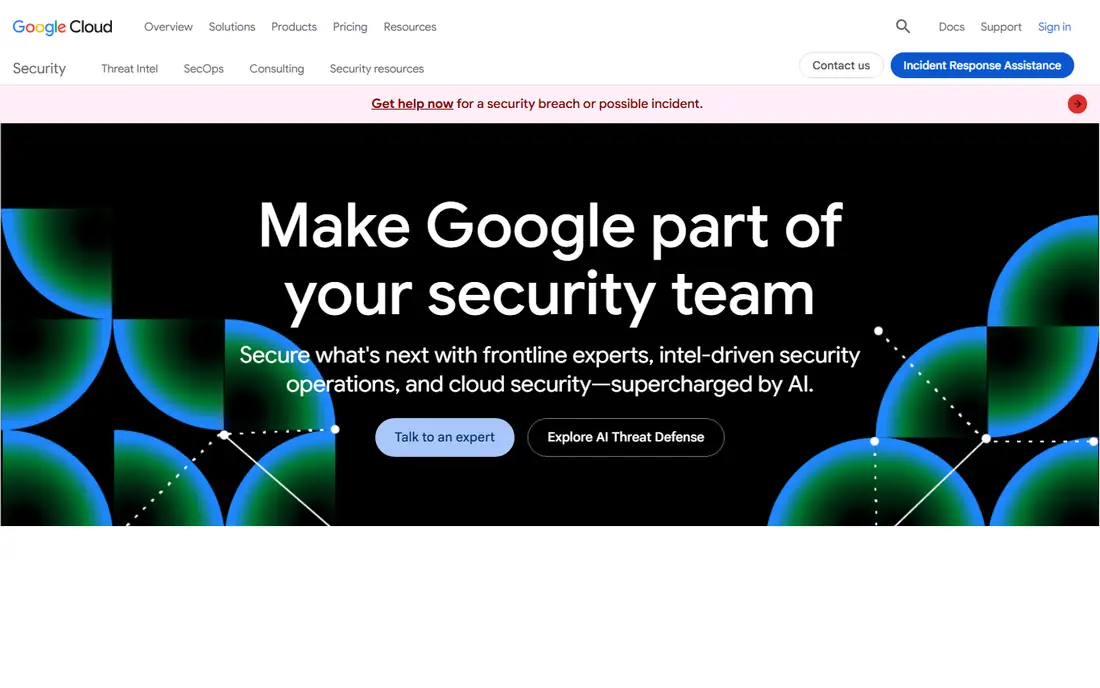
Google Security Operations, formerly Chronicle, suits teams that need to search huge volumes of telemetry over long periods. Its architecture retains data longer than many SIEMs without the same ingest penalty, which helps threat hunting across months of history. Mandiant intelligence and Gemini-powered summaries add context to investigations, and the Agentic SOC direction adds AI triage on top. Google Workspace and Cloud telemetry integrate naturally.
The platform feels heaviest for organizations with little Google footprint, and pricing depends on data volume and retention choices. It also works best as a SecOps hub, not as an endpoint product on its own. Pick it when scale, retention, and Mandiant intelligence matter most, and when your team can manage a cloud-native SOC design.
What we like- Petabyte-scale search with long retention
- Mandiant threat intelligence built in
- Gemini AI for summaries and detection help
Watch out for- Google Cloud setup and pricing model
- Less natural for non-Google estates
Starting priceSee website
Free planFree trial
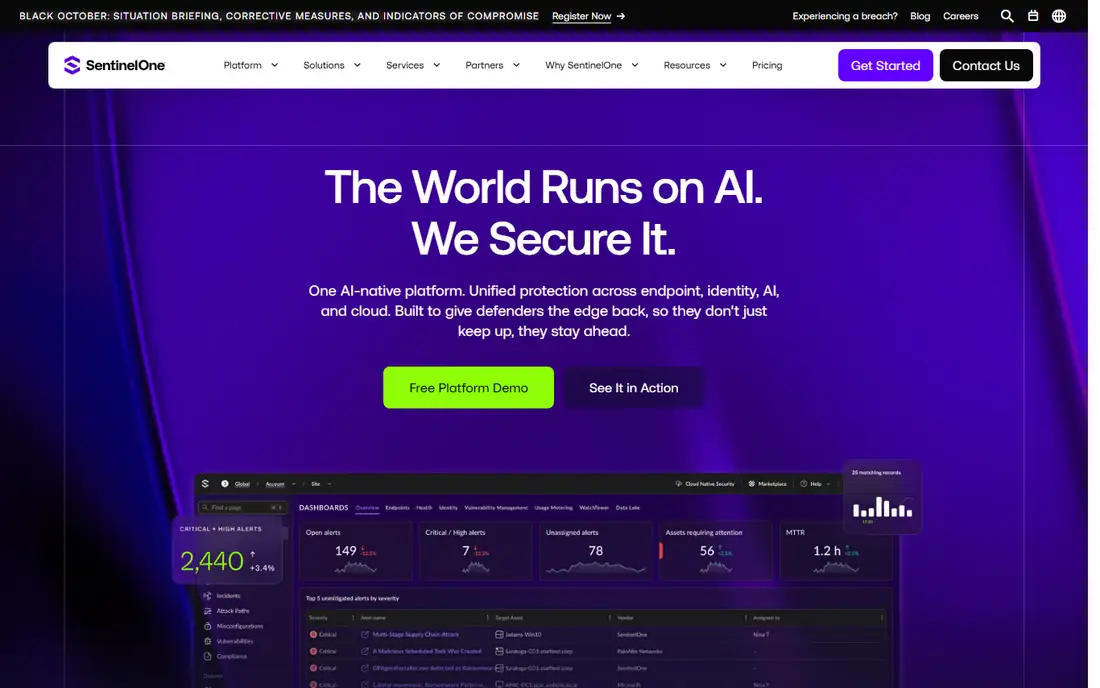
SentinelOne with Purple AI appeals to teams already running Singularity endpoints. Purple AI handles agentic investigation, triage, and correlation, so analysts get a reasoned case file instead of a raw alert stream. The single console spans endpoint, identity, and cloud, which shortens the path from detection to containment. Autonomous response can isolate hosts and roll back changes, with controls for what runs without approval.
As with CrowdStrike, the advantage shrinks if endpoints run another vendor. SOC features also sit above basic endpoint pricing, so a quote is needed for a real comparison. Choose SentinelOne when Singularity is your endpoint standard and you want AI investigation tied closely to that agent and its rollback capability.
What we like- AI-native endpoint protection with agentic investigation
- Single console for endpoint, identity, and cloud
- Autonomous response options
Watch out for- Full SOC value depends on SentinelOne coverage
- Enterprise pricing by quote
#6Splunk Enterprise Security
Best for: Large Splunk investments4.3/5 on
G2 (248 reviews, checked Oct 2026)
Visit splunk.com
Starting priceSee website
Free planFree trial
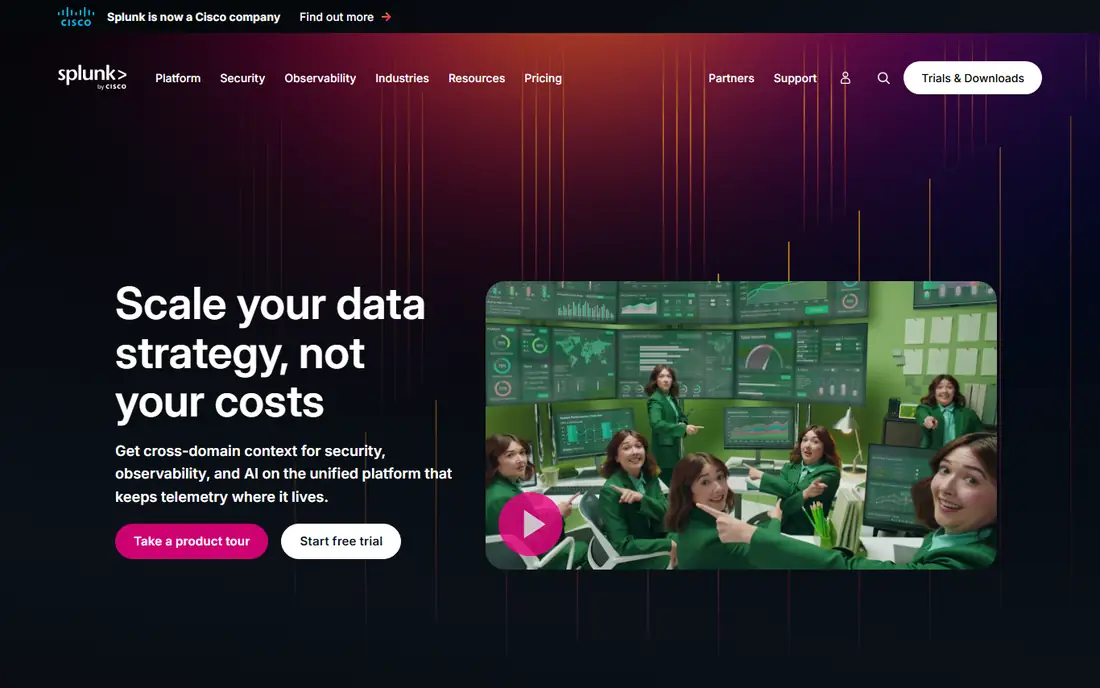
Splunk Enterprise Security remains the choice for organizations with a large existing Splunk investment. It adds security content, risk-based alerting, and investigation workflows on top of Splunk's search and data platform, with an integration library few rivals match. Newer AI agent features help analysts investigate and summarize cases without leaving the platform. For teams with years of Splunk searches, dashboards, and detections, staying put avoids a costly migration.
Cost and staffing are the honest limits. Ingest-based pricing rewards careful data design, and running Splunk well needs experienced engineers. AI features do not remove that operational load. Choose Splunk Enterprise Security when your data, detections, and team skills already live there, and when you can fund the platform properly.
What we like- Mature detection, search, and dashboard ecosystem
- Huge integration library
- AI agents for investigation on top of existing data
Watch out for- Ingest and licensing costs at scale
- Needs skilled staff to run well
Starting priceSee website
Free planNo
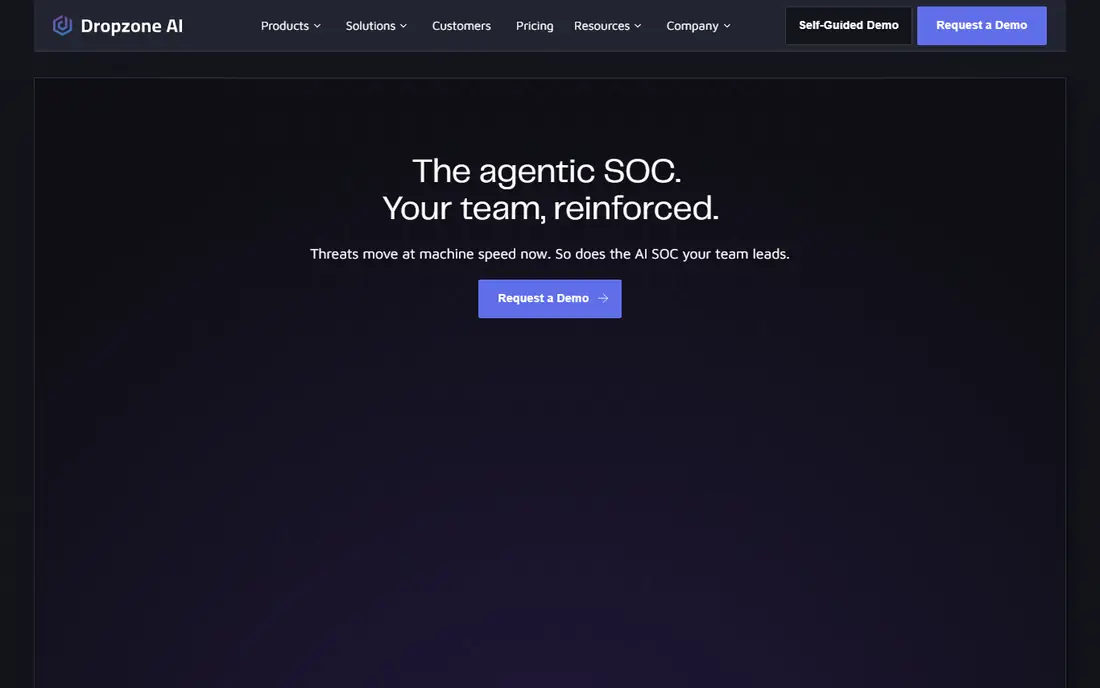
Dropzone AI is the most focused pick on this list: an AI SOC analyst that investigates alerts end to end across your existing tools. It queries your SIEM, EDR, cloud, identity, and email systems through APIs, without requiring a data migration or normalization project. Each verdict comes with an evidence trail, which helps analysts trust the result and audit it later. Threat hunting and threat intel agents extend the same approach beyond triage.
It does not replace a SIEM. You still need a place to collect and retain logs, and Dropzone works best when those sources are already clean and connected. Pricing is quote-based and scales with alert volume and integrations. Choose Dropzone when your SIEM works but your analysts cannot keep up with alert volume, and you want AI triage without a platform migration.
What we like- Investigates alerts across 90 plus integrations without moving data
- Shows evidence behind each verdict
- Deploys in minutes per vendor
Watch out for- Triage layer, not a full SIEM replacement
- Needs a SIEM or EDR already in place
Starting priceSee website
Free planNo
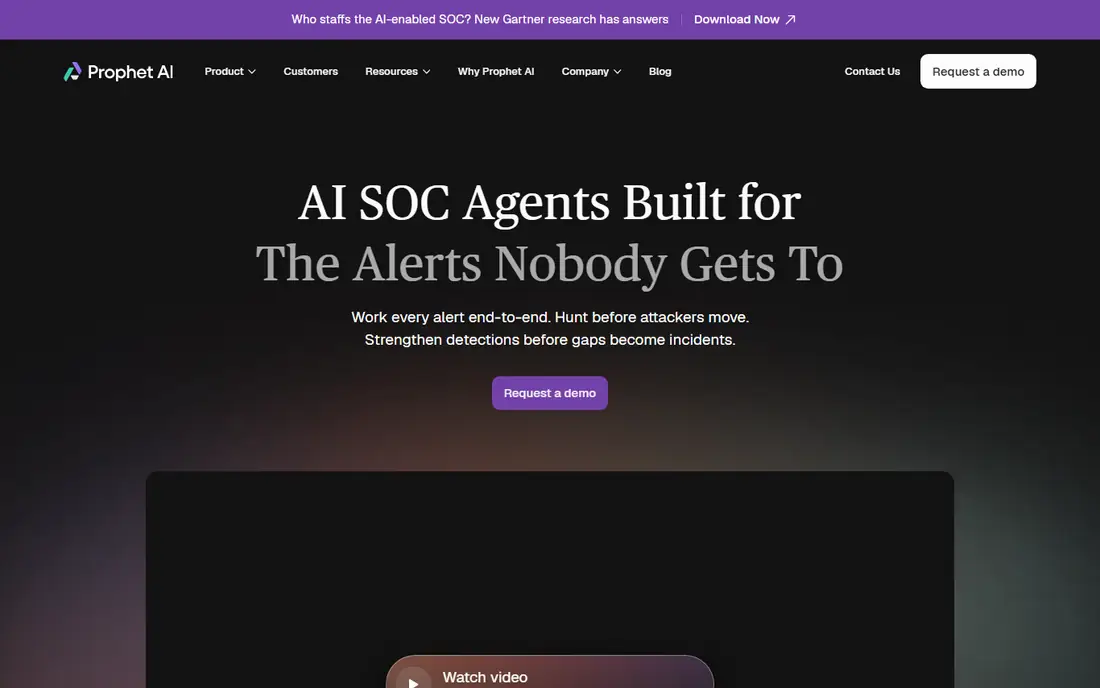
Prophet Security targets lean SOC teams that need senior-analyst depth across every alert, not just the top few. Its agents investigate end to end, hunt proactively, and feed findings back into detection engineering, so the system improves rather than just clearing queues. Single-tenant deployment with a bring-your-own-key option addresses data control concerns, and the platform claims no training on customer personal data. That combination suits regulated teams that cannot send telemetry to a shared model without controls.
As a newer specialist, Prophet has a smaller ecosystem than CrowdStrike or Microsoft, and it still needs your telemetry sources to be in place. Pricing is quote-based. Choose it when headcount is the constraint, investigation quality matters more than platform breadth, and you want an AI SOC layer that learns your environment.
What we like- Agents cover investigation, hunting, and detection engineering
- Single-tenant deployment with bring-your-own-key
- Adapts to customer context
Watch out for- Newer vendor with smaller footprint than platform giants
- Needs existing telemetry sources

#9
Torq HyperSOC
Best for: Engineering-led automation
Visit torq.io
Starting priceSee website
Free planNo
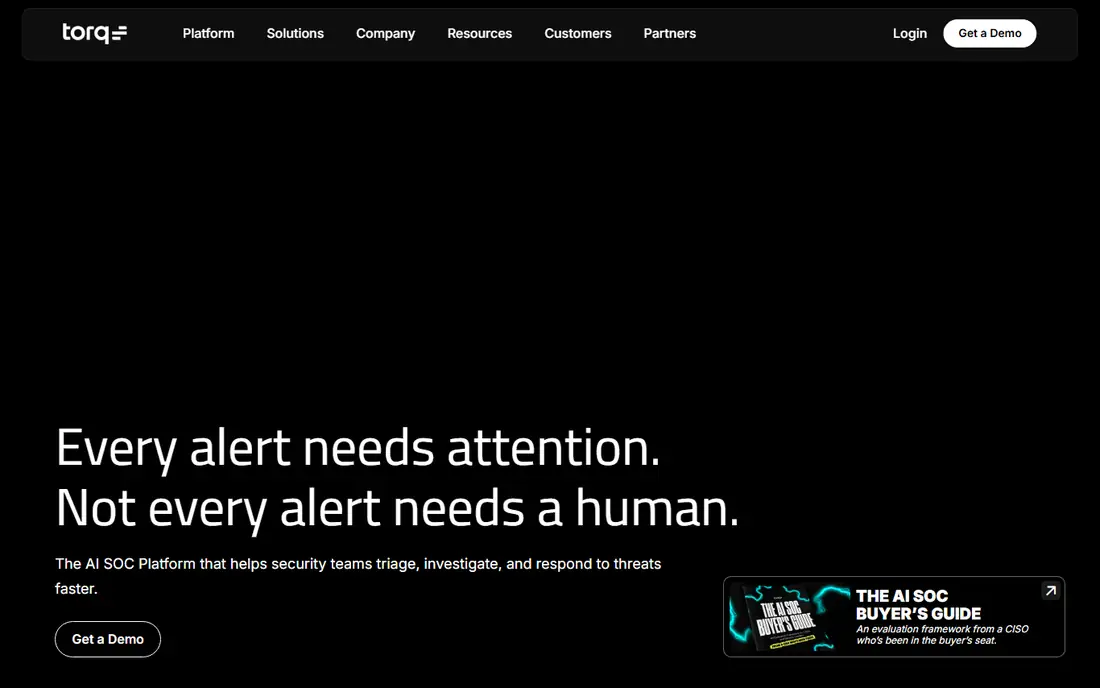
Torq HyperSOC suits SOC teams with engineering strength who want to design their own automation, not just accept a vendor's playbooks. Its agents triage and investigate cases, while the workflow engine automates enrichment, containment, and ticketing across tools. Socrates, its natural language agent, lets analysts describe a remediation goal and have the system carry it out with guardrails. That flexibility helps mature teams encode their own response logic.
The same flexibility is a demand on staff. Teams without automation skills may use only a fraction of the platform, and enterprise pricing reflects its target audience. Choose Torq when your SOC already builds workflows, when you want AI agents and automation governed in one place, and when you can staff the platform properly.
What we like- Agentic AI plus workflow automation in one platform
- Natural language agent for remediation
- Strong fit for sophisticated SOC teams
Watch out for- Needs engineering skill to get full value
- Enterprise pricing and implementation
How we chose
We compared vendor documentation, product pages, and analyst and peer reviews, and we opened each homepage to confirm the product still exists and fits AI SOC work. We favored platforms with a distinct fit, such as endpoint-led, Microsoft-led, Google-led, Splunk-led, or vendor-neutral triage, over tools that only add a chatbot to a SIEM. Enterprise SOC pricing is quote-based across this category, so we wrote See website rather than inventing per-seat figures. This is not financial or legal advice; security purchases should go through a proof of concept on your own telemetry.
Running an AI SOC proof of concept
Start with your own alert history, not a vendor demo. Pick 30 days of real alerts, including false positives, and measure how many the platform triages correctly, how clear its evidence is, and how often analysts overturn its verdict. Track time to triage, time to contain, and analyst hours saved, because those numbers decide whether the price is justified.
Set autonomy boundaries before the pilot. Decide which actions need human approval, such as isolating a production server or disabling an account, and which can run automatically, such as enriching an alert or opening a ticket. Review agent logs weekly, check data residency and model training terms, and confirm how the platform handles sensitive logs. A platform that cannot explain its verdicts will not survive an audit, no matter how fast it closes tickets.
Frequently asked questions
What is an AI SOC platform?
It is a security operations platform that uses AI agents to triage alerts, investigate incidents, hunt threats, and automate response, with humans setting boundaries and approving sensitive actions. It builds on a SIEM, EDR, or data lake rather than replacing basic log collection entirely.
Should a small team buy a full AI SOC platform?
Often not. Small teams should start with a managed detection service or a triage layer such as Dropzone AI or Prophet Security over their existing tools, rather than buying a full enterprise platform they cannot staff.
How much does an AI SOC platform cost?
Almost all enterprise options are quote-based, priced by data volume, endpoints, analysts, or alert volume. Get quotes on the same telemetry volume from each vendor, and include ingest, retention, and automation costs in the comparison.
Can AI agents act without human approval?
Some can, within guardrails you set, such as isolating a low-risk host. Most teams start with investigation and recommendations only, then allow contained actions after a pilot proves accuracy. Sensitive actions should stay human-approved.
Which AI SOC platform is best for Microsoft shops?
Microsoft Sentinel with Security Copilot, because it ingests Entra, Defender, and Microsoft 365 telemetry natively and adds Copilot agents for investigation. CrowdStrike or SentinelOne may still win if endpoints run on those platforms.
Sources we checked (9)
- https://www.crowdstrike.com/pricing
- https://www.microsoft.com/en-us/security/pricing
- https://www.paloaltonetworks.com/pricing
- https://cloud.google.com/security/pricing
- https://www.sentinelone.com/pricing
- https://www.splunk.com/pricing
- https://dropzone.ai/pricing
- https://prophet.security/pricing
- https://torq.io/pricing
Is your product missing or out of date?
We review this list regularly. Vendors can request a listing, send updated pricing or ask about featured placement.

Shihab Mia · Founder, Rankite
Shihab has 5+ years in B2B and SaaS SEO. He writes Rankite's software buying guides from pricing pages, documentation and public user reviews. More about Shihab.
 CrowdStrike Falcon with Charlotte AI
 Palo Alto Cortex XSIAM
 Google Security Operations
 SentinelOne with Purple AI
 Dropzone AI
 Prophet Security