How we make this list: we compare pricing pages, product documentation and public user reviews. Ratings come from G2, Capterra or Trustpilot, with the date we checked them.
Key takeaways
- Profound is the most complete AI visibility platform, tracking brand mentions across ChatGPT, Perplexity, Gemini and AI Overviews.
- Peec AI and Otterly.AI suit smaller teams that want clear AI visibility dashboards without enterprise cost.
- Scrunch suits agencies that need AI visibility reporting across many clients.
- AthenaHQ and Goodie suit teams that want prompt-level tracking and content recommendations together.
- AI search results change with every model update, so track trends weekly rather than single-day rankings.
AI search checking tools answer a new question: when someone asks ChatGPT, Perplexity, Gemini or Google AI Overviews about your category, does your brand appear, and what does the AI say about it? These tools run prompts across AI platforms, track brand mentions, citations and sentiment, and show which content the models cite. The eight below cover the leading options.
Pricing is usually monthly per brand or prompt set, with tiers for tracked prompts and platforms. Prices below are marked "See website" where tier pricing changes often. A trial on your own brand and five competitors shows the tool's value fast, since coverage and citation quality vary by platform.
Quick comparison
| Tool | Best for | Starting price | Free plan |
|---|
 Profound | Complete AI visibility | See website | Free trial |
 Peec AI | Clear visibility dashboards | See website | Free trial |
 Otterly.AI | Simple AI monitoring | See website | Free trial |
 Scrunch | Agency reporting | See website | Free trial |
 AthenaHQ | Prompt-level tracking | See website | Free trial |
 Goodie | Content recommendations | See website | Free trial |
 ZipTie | AI Overviews tracking | See website | Free trial |
 Brandlight | Brand AI monitoring | See website | Free trial |
Is your product missing or out of date?
We review this list regularly. Vendors can request a listing, send updated pricing or ask about featured placement.
#1Profound
Best for: Complete AI visibility4.6/5 on
G2 (640 reviews, checked Oct 2026)
Visit profound.com
Starting priceSee website
Free planFree trial
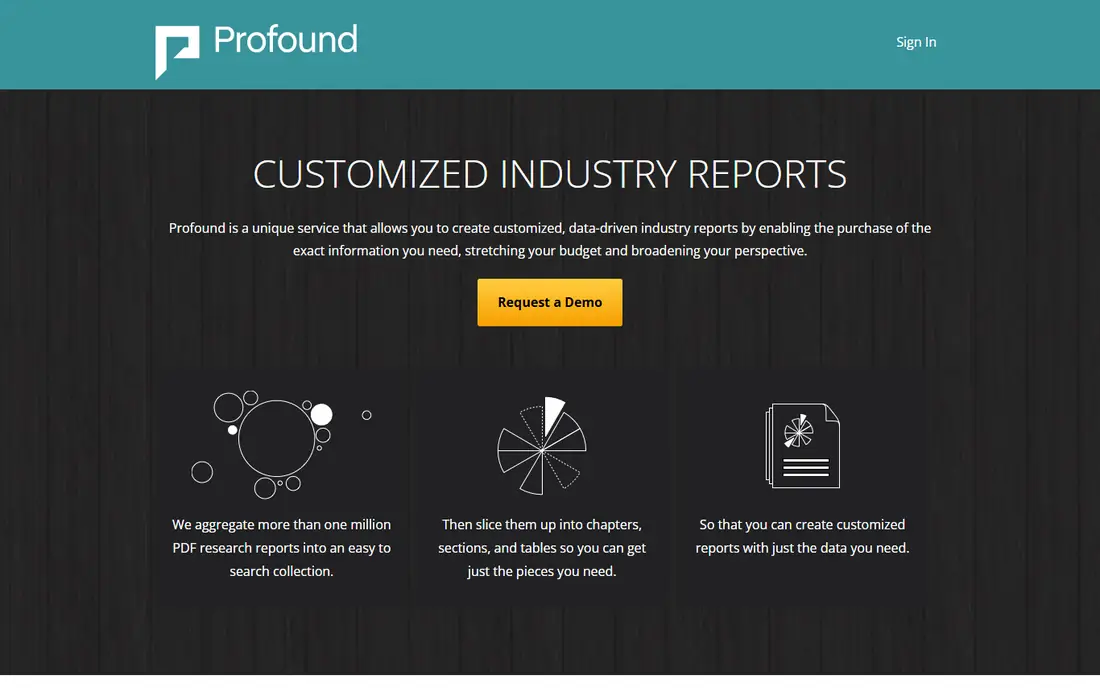
Profound tracks how AI platforms answer prompts about your brand, products and category, covering ChatGPT, Perplexity, Gemini, Copilot and Google AI Overviews. It shows mention rates, citation sources, sentiment and the exact wording models use, plus which competitor brands appear alongside yours. Conversation-level views reveal the prompts that trigger your brand and the ones that do not.
Pricing suits larger teams, and large prompt sets need setup time. For a brand or agency that wants the most complete AI visibility picture, Profound is the leading platform.
What we like- Tracks mentions across major AI platforms
- Citation and sentiment analysis
- Conversation-level insights
Watch out for- Enterprise pricing
- Setup takes time for large prompt sets
#2Peec AI
Best for: Clear visibility dashboards4.7/5 on
G2 (21 reviews, checked Oct 2026)
Visit peec.ai
Starting priceSee website
Free planFree trial
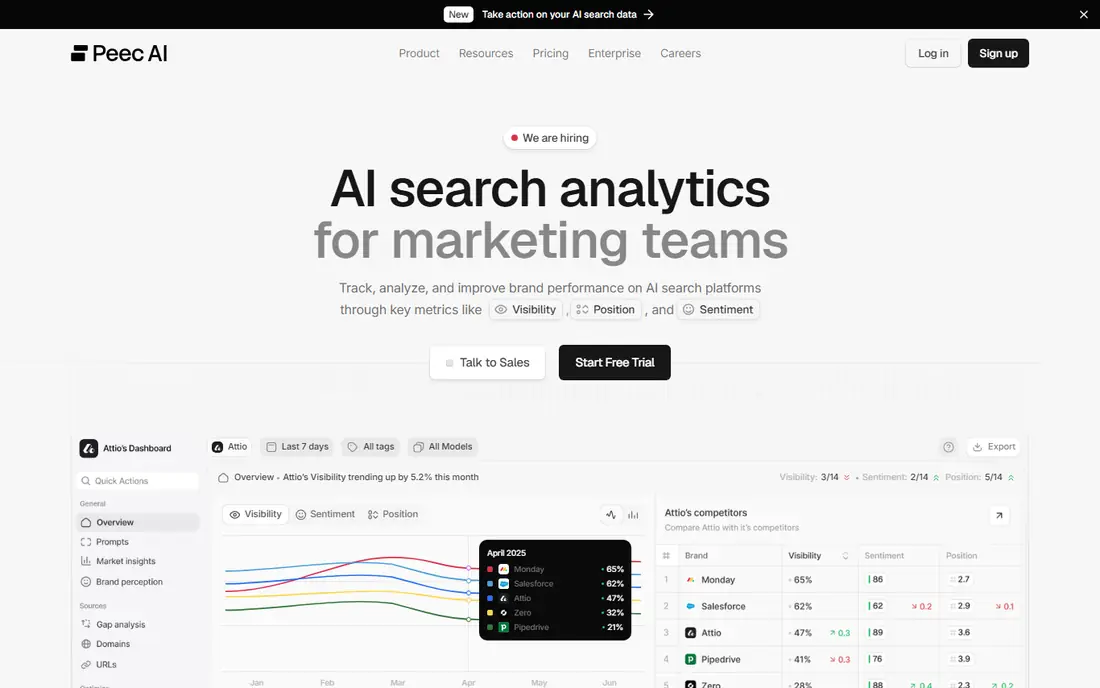
Peec AI offers a clean dashboard for AI search visibility, tracking brand mentions, share of voice and competitor comparisons across ChatGPT, Perplexity and other AI platforms. Prompt sets cover your brand, products and category questions, and the interface stays readable for marketing teams without an analytics background.
Feature depth trails Profound on conversation analysis and citation detail. For a marketing team that wants clear AI visibility reporting without enterprise complexity, Peec AI is the most accessible choice.
What we like- Clear dashboards for AI visibility
- Tracks prompts across major platforms
- Competitor comparisons
Watch out for- Smaller feature set than Profound
- Citation depth varies by platform
#3Otterly.AI
Best for: Simple AI monitoring4.7/5 on
G2 (54 reviews, checked Oct 2026)
Visit otterly.ai
Starting priceSee website
Free planFree trial
Otterly.AI keeps AI visibility monitoring simple. Connect a brand, add prompts, and get weekly reports on mentions, citations and share of voice across ChatGPT, Perplexity and Google AI Overviews. Trend views show whether visibility rises or falls after content changes, which suits teams that publish regularly.
Platform coverage is narrower than Profound, and recommendations stay basic. For a small team that wants simple, regular AI visibility checks, Otterly.AI is the easiest tool here.
What we like- Simple setup and clear reports
- Tracks ChatGPT, Perplexity and AI Overviews
- Weekly trend views
Watch out for- Fewer platforms than Profound
- Recommendations are basic
#4Scrunch
Best for: Agency reporting3.6/5 on
G2 (14 reviews, checked Oct 2026)
Visit scrunch.com
Starting priceSee website
Free planFree trial
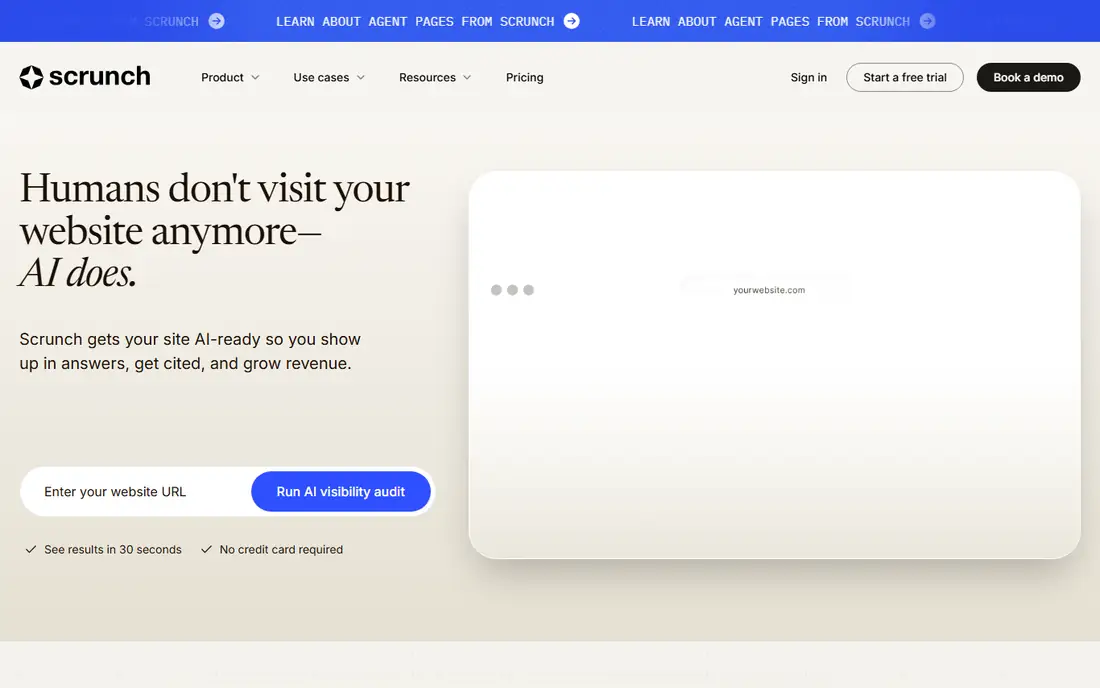
Scrunch is built for agencies and larger marketing teams, with multi-client dashboards, persona-based prompt sets and content gap analysis. It tracks how AI platforms answer category questions for each client, compares brands against competitors, and highlights content topics that could improve citations. White-label reporting suits agency client work.
Pricing grows with client count, and the interface takes learning. For an agency that reports AI visibility across many clients, Scrunch is the most agency-ready tool here.
What we like- Multi-client reporting for agencies
- Persona-based prompts
- AI visibility and content gap analysis
Watch out for- Pricing grows with clients
- Interface takes learning
Starting priceSee website
Free planFree trial
AthenaHQ tracks AI visibility at the prompt level, showing the full answer each platform gives, the brands it mentions, the sources it cites and the sentiment around your brand. Content teams use the detail to find which pages get cited and which topics need stronger content. The interface suits teams that act on individual prompts rather than aggregate scores.
The platform is newer, with a smaller ecosystem and coverage that varies by platform. For a content team that wants prompt-level detail to guide publishing, AthenaHQ is a strong choice.
What we like- Prompt-level tracking with detailed answers
- Sentiment and citation views
- Good for content teams
Watch out for- Newer platform with a smaller ecosystem
- Platform coverage varies
Starting priceSee website
Free planFree trial
Goodie pairs AI visibility tracking with content recommendations, showing which prompts your brand misses and which content could win citations. Action lists prioritise topics by visibility gap, and competitor benchmarking shows where rivals appear and you do not. The tool suits marketing teams that want tracking plus a to-do list.
Recommendations still need editorial judgement, since AI citations depend on content quality and authority, not just topic coverage. For a team that wants visibility tracking tied to content actions, Goodie is the most practical option.
What we like- AI visibility tracking plus content recommendations
- Clear action lists
- Competitor benchmarking
Watch out for- Recommendations need editorial judgement
- Coverage varies by niche
Starting priceSee website
Free planFree trial
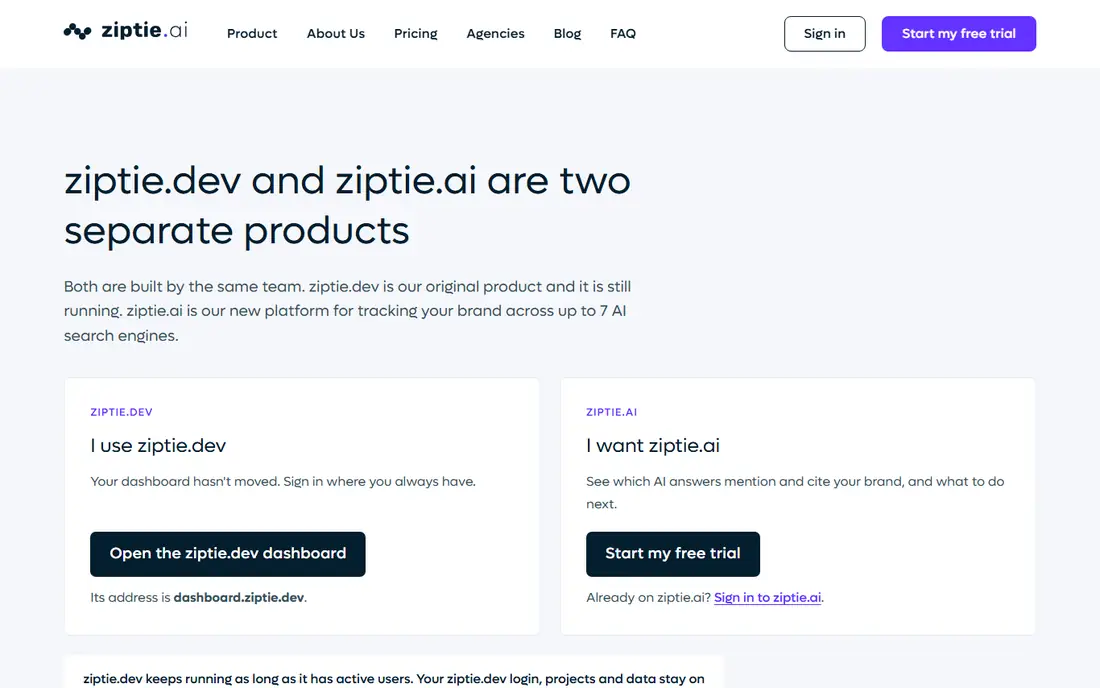
ZipTie focuses on Google AI Overviews, tracking which queries trigger an overview, whether your domain appears or is cited, and how that changes over time. SEO teams use it to measure the traffic risk and opportunity from AI Overviews, since overviews now sit above traditional results for many queries. Domain-level views show visibility across a whole site.
The focus is narrower than full platforms, with fewer chat platforms covered. For an SEO team whose main AI concern is Google AI Overviews, ZipTie is the most specialised tool here.
What we like- Strong Google AI Overviews tracking
- Domain-level visibility
- Useful for SEO teams
Watch out for- Narrower focus than full AI visibility platforms
- Fewer chat platforms covered
Starting priceSee website
Free planFree trial
Brandlight monitors how AI platforms mention and describe your brand, with sentiment views and simple reporting for marketing teams. The tool covers major chat platforms and presents results in plain dashboards, which suits brand managers who want a regular check without deep analytics.
The platform is smaller, with less published coverage data and thinner features than Profound or Scrunch. For a brand manager who wants straightforward AI brand monitoring, Brandlight is an easy option.
What we like- Brand-focused AI monitoring
- Tracks mentions and sentiment
- Simple reporting
Watch out for- Smaller platform with less coverage data
- Feature depth trails leaders
How we chose
We compared tools on their published AI platform coverage, prompt tracking, citation analysis and pricing pages, plus public reviews from marketers and SEO teams. We favoured tools that track multiple AI platforms, show citations and sentiment, and offer a trial. Prices were marked "See website" because tier pricing changes often. We did not claim hands-on testing.
Acting on AI visibility data
Tracking alone does not improve visibility. The levers that matter are content quality, structure and authority. AI platforms cite pages that answer questions directly, with clear headings, facts and original data, so rewrite key pages to answer category questions plainly in the first paragraphs. Structured data, FAQs and comparison pages help models extract accurate facts.
Also watch sentiment, not just mentions. An AI answer that mentions your brand negatively or with wrong facts needs a content fix or a correction request, depending on the platform. Track weekly trends rather than daily noise, since model updates shift answers without any change on your side. Over months, the brands that appear most are usually the ones with the strongest, most cited content in the category.
AI visibility reporting should connect to content work, not sit in a separate dashboard. Each month, pick the five prompts where your brand is absent but competitors appear, and assign each one a content action: a new page, a rewritten section, or a data point the AI can cite. Track those same prompts the following month to see whether the content moved the answer, since visibility work without follow-up measurement drifts into reporting for its own sake. Share one short summary with the content team monthly, naming the prompts, the actions and the results, because a long dashboard link rarely gets opened. Over two quarters this loop usually shows which content types earn citations in your category, and that knowledge is worth more than any single visibility score.
Prompt sets should mirror real buyer questions. Build your tracked prompts from actual customer language, including sales call transcripts, support tickets and search queries, rather than from marketing slogans, since AI answers respond to how buyers phrase questions. Include comparison prompts, such as your brand versus two competitors, and problem prompts, such as how to solve the issue your product addresses, because those are the moments AI recommendations form. Refresh the prompt set quarterly as products and markets change, and retire prompts nobody asks any more. A prompt set grounded in real buyer language gives visibility data that actually guides content and sales work.
Frequently asked questions
What is an AI search checking tool?
An AI search checking tool tracks how AI platforms like ChatGPT, Perplexity, Gemini and Google AI Overviews answer questions about your brand and category. It shows brand mentions, citations, sentiment and competitor share of voice, helping marketers see whether AI answers recommend their brand.
Which AI platforms do these tools track?
Most track ChatGPT, Perplexity, Gemini and Google AI Overviews, with some adding Copilot and other chat platforms. Coverage varies by tool, so check the platform list before buying, especially if your audience uses a specific AI assistant.
Is AI visibility the same as SEO?
No, though they overlap. SEO tracks rankings in traditional search results, while AI visibility tracks mentions and citations in AI-generated answers. Strong SEO content often helps AI visibility, since models cite authoritative pages, but AI answers also depend on model training and prompt phrasing.
How often should I check AI visibility?
Weekly tracking suits most teams, since AI answers shift with model updates and daily noise misleads. Track trends over months, and check promptly after major content launches or rebrands. Agencies reporting to clients usually report monthly with weekly internal checks.
Can I improve my brand's AI visibility?
Yes, by publishing clear, authoritative content that answers category questions directly, with facts, comparisons and original data. Structured headings, FAQs and comparison pages help models extract accurate information. Citations also follow brand authority, so PR, reviews and third-party coverage matter.
What is the best AI search checking tool for small teams?
Peec AI and Otterly.AI suit small teams with clear dashboards and lower entry costs. Profound suits larger teams that want complete coverage and conversation analysis. Start with a trial on your own brand and five competitors to judge value before committing.
Sources we checked (8)
- https://www.profound.com
- https://peec.ai
- https://otterly.ai
- https://scrunch.com
- https://athenahq.com
- https://www.goodie.ai
- https://ziptie.dev
- https://brandlight.ai
Is your product missing or out of date?
We review this list regularly. Vendors can request a listing, send updated pricing or ask about featured placement.

Shihab Mia · Founder, Rankite
Shihab has 5+ years in B2B and SaaS SEO. He writes Rankite's software buying guides from pricing pages, documentation and public user reviews. More about Shihab.