How we make this list: we compare pricing pages, product documentation and public user reviews. Ratings come from G2, Capterra or Trustpilot, with the date we checked them.
Key takeaways
- AI pricing tools use machine-learning product matching, demand-aware price recommendations, and impact forecasting to turn pricing signals into margin and demand outcomes.
- Pricefx leads overall B2B pricing plus CPQ with a modular suite and a vendor-claimed 8.4 percent average margin gain, while Vendavo leads enterprise B2B manufacturers.
- Competera leads enterprise retail with contextual AI and a vendor-claimed 95 percent prediction accuracy, while Omnia Retail offers transparent pricing from 399 euros per month.
- The AI recommends, your floors decide: whatever the model suggests should execute through dynamic pricing rules with a hard minimum margin per SKU, which keeps an algorithm from discounting you into a loss.
- AI output accuracy limits apply: vendor margin and accuracy claims are vendor claims, not measured results, so pilot with your own data and set floors before trusting recommendations.
Quick comparison
| Tool | Best for | Starting price | Free plan |
|---|
 Pricefx | Overall B2B pricing plus CPQ | See website | No |
 Vendavo | Enterprise B2B manufacturers | See website | No |
 PROS | AI-forward complex pricing | See website | No |
 Zilliant | Mid-market B2B pricing | See website | No |
 Competera | Enterprise retail and e-commerce | See website | No |
 Omnia Retail | EU e-commerce dynamic pricing | €399 per month | No |
 Prisync | E-commerce retailers on a budget | $99 per month | No |
 BlackCurve | Mid-size e-commerce AI optimization | See website | No |
Is your product missing or out of date?
We review this list regularly. Vendors can request a listing, send updated pricing or ask about featured placement.
#1Pricefx
Best for: Overall B2B pricing plus CPQ4.4/5 on
G2 (133 reviews, checked Oct 2026)
Visit pricefx.com
Starting priceSee website
Free planNo
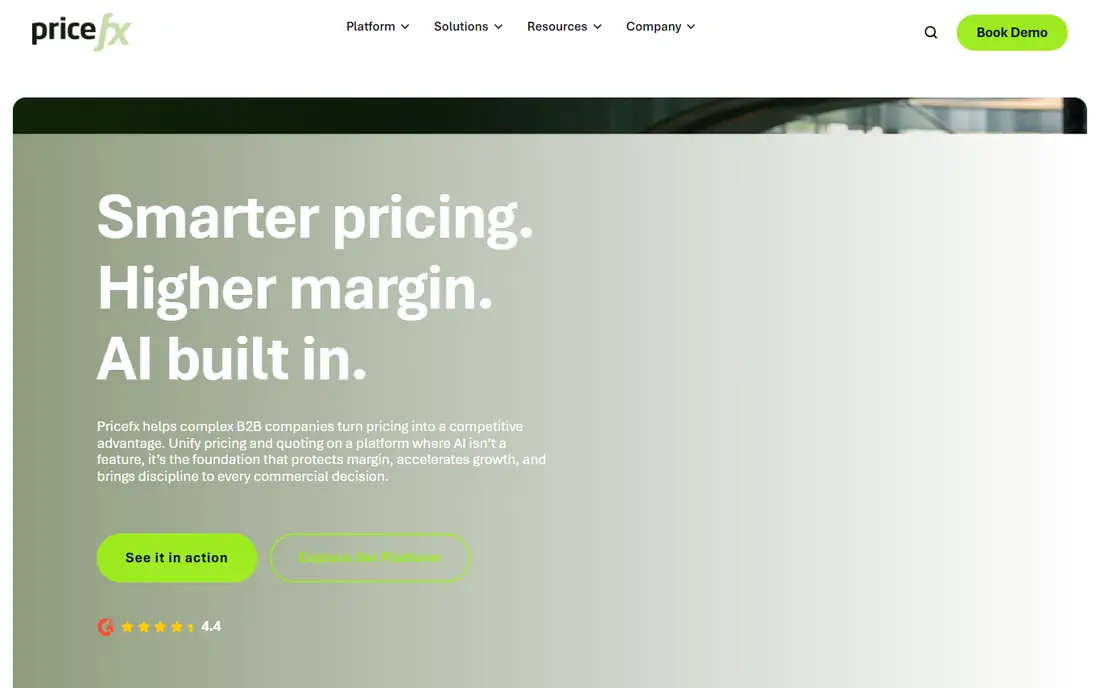
Pricefx is the reigning champion of the B2B pricing software category, founded in 2011 with dual headquarters in Germany and the Czech Republic, and the most comprehensively modular platform on this list. Its PricingAI engine runs optimization at the deal level, not just the price list level, so sales reps get real-time guidance on every quote, and the 2025 launch of Pricefx Copilot added conversational AI so pricing managers can ask questions in plain language and get visual analytics back. Pricefx claims an average 8.4 percent margin improvement with 70 times ROI, which is a vendor claim, not a measured result, and its 50 or more pre-built use cases speed time-to-value.
The drawbacks are price opacity and learning curve. Custom pricing only means no transparent starting point for budgeting, advanced features have a steep learning curve, and mid-market companies may find the feature set overwhelming. Pricefx suits B2B companies in manufacturing, distribution, and industrial sectors looking for a single platform to transform pricing end-to-end.
What we like- Broadest modular suite covering price management, CPQ, AI optimization, rebate management, and analytics
- PricingAI engine with deal-level optimization
- Pricefx Copilot conversational AI
- G2 number 1 pricing software across multiple categories
Watch out for- Custom pricing only, with basic figures near 500 dollars per month in one comparison
- Advanced Price Optimizer has steep learning curve
- Mid-market companies may find feature set overwhelming
- Median deployment six months
#2Vendavo
Best for: Enterprise B2B manufacturers4.3/5 on
G2 (68 reviews, checked Oct 2026)
Visit vendavo.com
Starting priceSee website
Free planNo
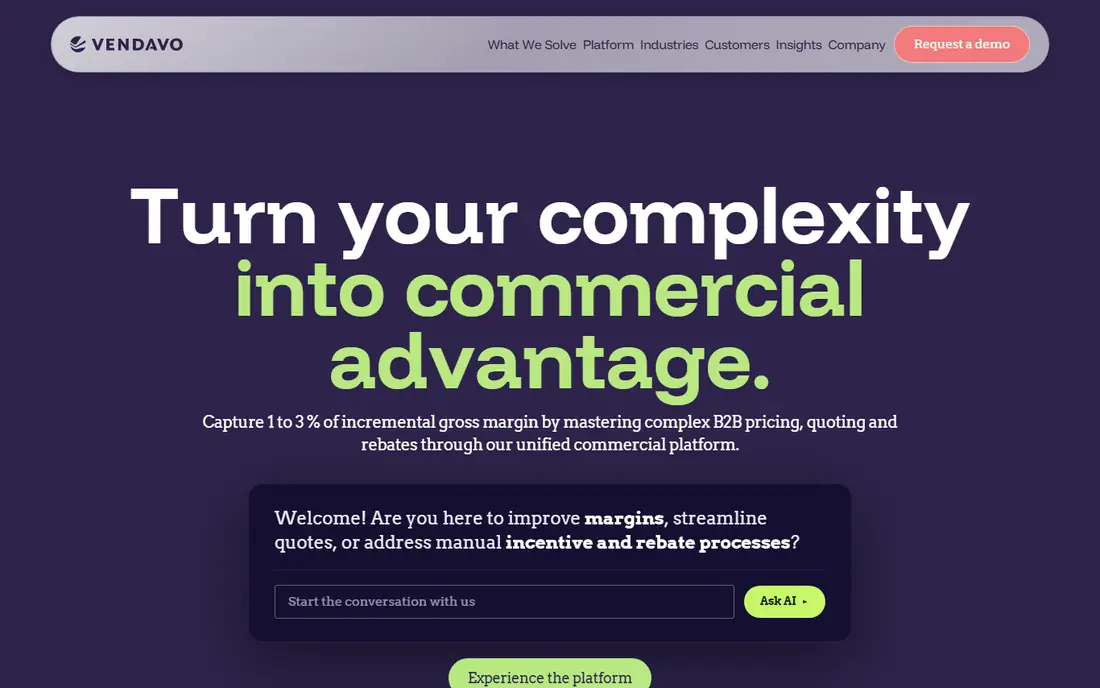
Vendavo suits enterprise B2B manufacturers with a unified commercial operating system, AI Pricing Assistant, and ML price rules that handle negotiated-price complexity at scale. Its vendor-claimed margin lift of 100 or more basis points reflects enterprise deployments, though results vary by company and data quality. Its commercial OS design unifies pricing, CPQ, and rebate workflows for manufacturers with complex product lines and channel structures.
The drawbacks are cost and complexity. Custom pricing at six-figure annual levels puts it out of reach for mid-market teams, and enterprise implementation is a project. Vendavo suits enterprise B2B manufacturers that need a unified commercial OS and can fund six-figure annual pricing.
What we like- Unified commercial operating system
- AI Pricing Assistant and ML price rules
- 100 or more basis points margin lift claimed by vendor
- Strong for complex B2B manufacturers
Watch out for- Custom pricing at six-figure annual levels
- Enterprise implementation is a project
- Complexity exceeds mid-market needs
#3PROS
Best for: AI-forward complex pricing4.2/5 on
G2 (195 reviews, checked Oct 2026)
Visit pros.com
Starting priceSee website
Free planNo
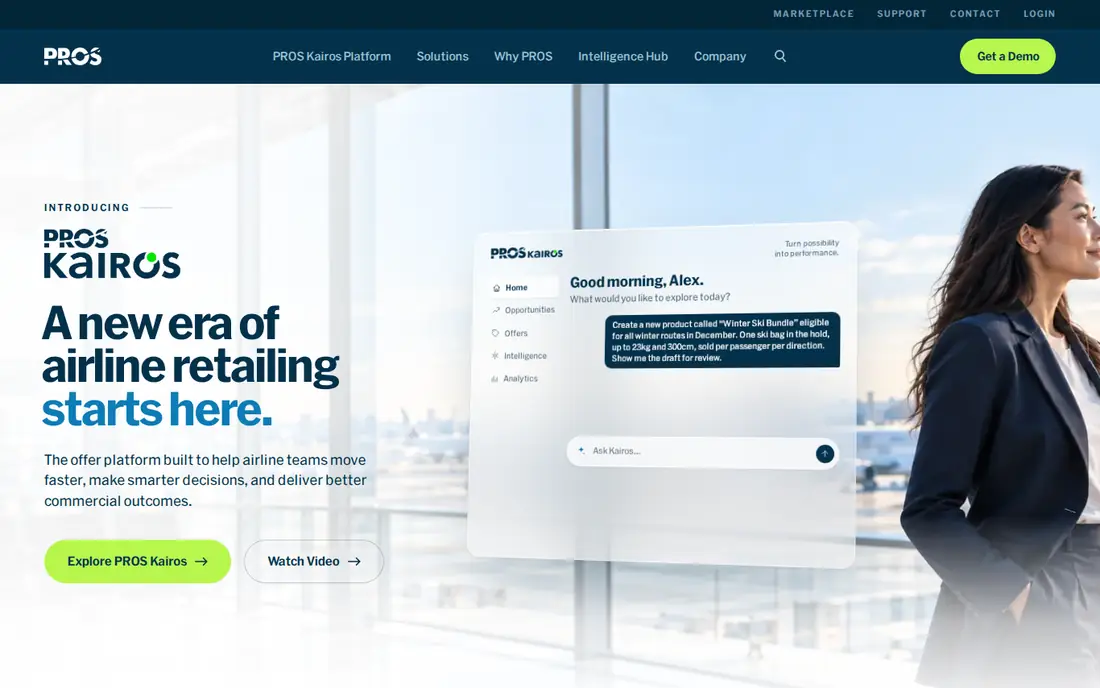
PROS offers the most advanced AI agent capabilities on this list, with AI Agents for Bundling, Fare Finder, and Insights that automate complex pricing decisions across industries. Its AI-forward approach suits complex pricing where bundles, fares, and dynamic offers interact, and its optimization heritage covers airlines, manufacturing, and distribution at enterprise scale. For teams that want agentic AI rather than only recommendations, PROS leads.
The drawbacks are price opacity and complexity. Pricing is custom enterprise with no published figures, implementation is a project, and complexity exceeds simple retail needs. PROS suits enterprises with AI-forward complex pricing needs that can fund custom enterprise pricing.
What we like- Most advanced AI agent capabilities with Bundling, Fare Finder, and Insights agents
- AI-forward complex pricing for airlines, manufacturing, and distribution
- Deep optimization heritage
Watch out for- Custom enterprise pricing with no published figures
- Implementation is a project
- Complexity exceeds simple retail needs
#4Zilliant
Best for: Mid-market B2B pricing4.4/5 on
G2 (61 reviews, checked Oct 2026)
Visit zilliant.com
Starting priceSee website
Free planNo
Zilliant suits mid-market B2B pricing with the fastest time-to-value among enterprise B2B tools, offering GenAI Analytics and a Self-Service AI Assistant that let pricing teams query data without waiting for analysts. Its vendor-claimed margin impact of 135 basis points reflects B2B deployments, and its custom pricing from 50,000 to 150,000 dollars per year positions it below Vendavo six-figure-plus levels for mid-market teams. Its quote and CPQ workflows handle negotiated-price complexity well.
The drawbacks are price opacity and B2C limits. Pricing is custom with no transparent starting point, its B2B focus makes it less ideal for B2C retail, and initial setup and integration can be intensive. Zilliant suits mid-market B2B companies that want fast time-to-value with GenAI analytics.
What we like- Fastest time-to-value among enterprise B2B tools
- GenAI Analytics and Self-Service AI Assistant
- Vendor-claimed 135 basis points margin
- Custom pricing from 50,000 to 150,000 dollars per year
Watch out for- Custom pricing with no transparent starting point
- B2B focus, not ideal for B2C
- Initial setup and integration can be intensive
#5Competera
Best for: Enterprise retail and e-commerce4.9/5 on
G2 (14 reviews, checked Oct 2026)
Visit competera.ai
Starting priceSee website
Free planNo
Competera is the most sophisticated demand-based pricing AI for large retailers, built around the insight that optimal prices depend on how demand for your specific products responds to price changes in your specific market. Its platform builds demand elasticity models at the SKU level using historical sales data, promotional history, and seasonal patterns, then recommends prices that hit margin or revenue targets, predicting impact over a 1 to 12 week window. Its 930 custom deep learning models analyze product, price, season, promotion, and competitor dimensions simultaneously, with a vendor-claimed 95 percent prediction accuracy that should be tested on your own data.
The drawbacks are price opacity and data needs. Pricing is custom enterprise with no published figures, and its models need rich historical sales and promotion data to work well. Competera suits enterprise retailers with large catalogs that need assortment-wide optimization with competitor-aware simulation.
What we like- Contextual AI with vendor-claimed 95 percent prediction accuracy
- 930 custom deep learning models
- Demand elasticity engine with SKU-level models
- What-if simulations
- Retail-specific AI
Watch out for- Custom enterprise pricing with no published figures
- Enterprise retail focus exceeds small catalog needs
- Implementation needs historical sales and promotion data
#6Omnia Retail
Best for: EU e-commerce dynamic pricing4.4/5 on
G2 (100 reviews, checked Oct 2026)
Visit omniaretail.com
Starting price€399 per month
Free planNo
Omnia Retail suits EU e-commerce dynamic pricing with transparent pricing from 399 euros per month to custom, plus Omnia Agent agentic AI that automates pricing decisions. It ranks number 1 for retail pricing on G2, reflecting strong satisfaction among European e-commerce teams, and its dynamic pricing engine reacts to competitor moves with rules and AI recommendations. Its transparent starting price contrasts with custom-only enterprise rivals, making budgeting easier for mid-size retailers.
The drawbacks are regional focus and scale pricing. Its EU focus means a smaller US presence, and larger catalogs need custom pricing. Omnia Retail suits EU e-commerce retailers that want transparent dynamic pricing with agentic AI.
What we like- Transparent pricing from 399 euros per month to custom
- Omnia Agent agentic AI
- G2 number 1 retail pricing
- EU e-commerce focus with dynamic pricing engine
Watch out for- EU focus means smaller US presence
- Custom pricing for larger catalogs
- Agentic AI features vary by plan
#7Prisync
Best for: E-commerce retailers on a budget4.7/5 on
G2 (172 reviews, checked Oct 2026)
Visit prisync.com
Starting price$99 per month
Free planNo
Prisync is the best budget pick for e-commerce retailers, with transparent per-product pricing from 99 dollars per month, a 14-day free trial, and a 4.8 rating on Capterra. Its AI product matching feeds rule-based repricing, recognizing competitor listings as your SKUs even when titles differ, which suits catalogs under 5,000 SKUs. For small businesses on a budget, Prisync offers real monitoring without a fixed enterprise cost, upgrading as the catalog grows.
The drawbacks are reactive scope and AI depth. As a reactive tool, it tracks and reacts to competitor moves after they happen rather than modeling demand elasticity before price changes, and its AI depth trails Competera and PROS. Prisync suits small to mid-size e-commerce retailers that want transparent, budget-friendly competitor monitoring and repricing.
What we like- Transparent per-product pricing from 99 dollars per month
- 14-day free trial
- 4.8 rating on Capterra
- Dynamic pricing with AI product matching
- Solid for catalogs under 5,000 SKUs
Watch out for- Reactive tool, tracking competitor moves rather than prescriptive elasticity modeling
- Catalog limits on lower tiers
- AI depth trails Competera and PROS
#8BlackCurve
Best for: Mid-size e-commerce AI optimization4.8/5 on
G2 (13 reviews, checked Oct 2026)
Visit blackcurve.com
Starting priceSee website
Free planNo
BlackCurve suits mid-size e-commerce and B2B companies that want AI optimization without enterprise suite weight, with data-driven insights and demand-aware recommendations. Its strength is distribution, manufacturing, and B2B services with complex pricing structures, negotiated contracts, and sales teams that quote deals, where elasticity modeling and quote optimization matter. Its price waterfall analysis visualizes where margin is lost across discounts, rebates, freight, and payment terms.
The drawbacks are price opacity and retail limits. Pricing is custom with no published figures, its B2B focus makes it less relevant for standard retail, and setup can be intensive. BlackCurve suits mid-size B2B and e-commerce teams that want AI optimization for complex pricing.
What we like- AI optimization for mid-size e-commerce
- Data-driven insights
- Distribution, manufacturing, and B2B services fit
- 4.5 rating on G2
- Demand-aware recommendations
Watch out for- Custom pricing with no published figures
- B2B focus limits pure retail fit
- Setup and integration can be intensive for smaller teams
How we chose
We compared AI pricing tools on AI feature depth, including product matching, elasticity modeling, and impact forecasting, plus published pricing, vendor margin claims, and time-to-value, using 2026 AI pricing comparisons. We favored tools with concrete AI definitions over vague "AI-powered" claims, while flagging vendor margin and accuracy claims as vendor claims, not measured results. We also separated reactive tools from prescriptive tools, since they answer different pricing questions.
Start by naming your pricing question: if you need to react to competitor moves, choose reactive tools such as Prisync or Omnia; if you need to model demand before changing prices, choose prescriptive tools such as Competera, PROS, or Zilliant. Next, set hard floors before trusting recommendations: whatever the model suggests should execute through dynamic pricing rules with a hard minimum margin per SKU. Then pilot with your own historical data, testing prediction accuracy and margin impact on a subset of SKUs before full rollout. Finally, confirm total cost including setup, modules, and data integration, since enterprise tools run from 50,000 dollars to six figures per year.
Frequently asked questions
What is an AI pricing tool?
It is software that uses machine learning to match competitor products, recommend demand-aware prices from elasticity models, and forecast the revenue impact of price changes before you apply them. It turns pricing signals into margin and demand outcomes using competitor feeds, transaction data, and optimization rules.
Which AI pricing tool is best for B2B?
Pricefx leads overall B2B pricing plus CPQ with a modular suite, while Vendavo leads enterprise manufacturers and Zilliant leads mid-market B2B with the fastest time-to-value. Choose Pricefx for breadth, Vendavo for enterprise scale, and Zilliant for mid-market speed.
Which AI pricing tool is best for retail?
Competera leads enterprise retail with contextual AI and SKU-level elasticity models, while Omnia Retail leads EU e-commerce with transparent pricing from 399 euros per month, and Prisync leads budget retail from 99 dollars per month.
Can AI pricing tools guarantee margin gains?
No, vendor margin claims such as Pricefx 8.4 percent, Vendavo 100 basis points, and Zilliant 135 basis points are vendor claims, not measured results for your business. Pilot with your own data and set hard minimum margin floors per SKU before trusting recommendations.
What is the difference between reactive and prescriptive pricing tools?
Reactive tools such as Prisync and Omnia track competitor moves and trigger your adjustments based on rules you define, while prescriptive tools such as Competera and PROS model demand elasticity and simulate impact before you change prices. Both matter, but they answer different questions.
Should AI set prices automatically?
Only within floors you define. The AI recommends, your floors decide: execute recommendations through dynamic pricing rules with a hard minimum margin per SKU, which keeps an algorithm from discounting you into a loss. Review recommendations regularly and audit outcomes against forecasts.
Sources we checked (0)
Is your product missing or out of date?
We review this list regularly. Vendors can request a listing, send updated pricing or ask about featured placement.

Shihab Mia · Founder, Rankite
Shihab has 5+ years in B2B and SaaS SEO. He writes Rankite's software buying guides from pricing pages, documentation and public user reviews. More about Shihab.