How we make this list: we compare pricing pages, product documentation and public user reviews. Rankite is independent; if a vendor ever pays for a featured spot, that listing is clearly labeled Partner.
Key takeaways
- Best overall: Rankscale, ideal for teams that want simple AI visibility metrics: purpose-built for AI visibility measurement.
- On price transparency, Cituna stands out at $39 per month, which makes budgeting straightforward.
- Writesonic suits content teams that want tracking next to writing tools, while AthenaHQ fits teams evaluating newer dedicated AI trackers.
- Shortlist two or three tools and trial each with real work before signing anything longer than monthly.
- Scrunch is worth a look as a specialist alternative if the mainstream picks do not fit your workflow.
Quick comparison
| Tool | Best for | Starting price | Free plan |
|---|
 Rankscale Rankscale | Teams that want simple AI visibility metrics | See website | No |
 Writesonic Writesonic | Content teams that want tracking next to writing tools | See website | No |
 AthenaHQ AthenaHQ | Teams evaluating newer dedicated AI trackers | See website | No |
 Cituna Cituna | Price-sensitive teams that need core AI metrics | $39 per month | No |
 ZipTie ZipTie | Teams that need occasional AI visibility checks | About $0.01 per check | No |
 Profound Profound | Enterprises that want a dedicated AI search analytics platform | See website | No |
 OtterlyAI OtterlyAI | Small teams that want affordable AI search monitoring | $29 per month | No |
 Peec AI Peec AI | Marketers who want readable AI visibility reports | See website | No |
 Scrunch Scrunch | Content teams that want monitoring plus publishing guidance | See website | No |
Is your product missing or out of date?
We review this list regularly. Vendors can request a listing, send updated pricing or ask about featured placement.
The Best AI Mode Analysis Software
Starting priceSee website
Free planNo
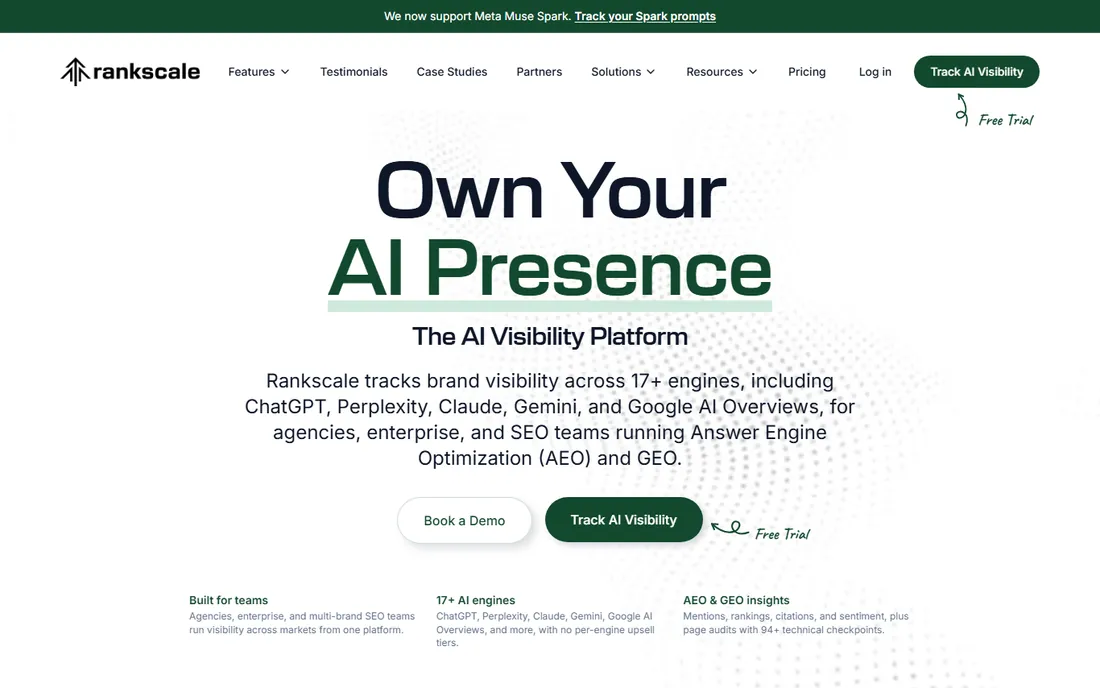
Teams that want AI visibility numbers without learning a new analytics platform tend to like Rankscale. The product focuses on the core metrics: where your brand appears in AI answers and how that changes over time. Everything else stays out of the way.
That restraint suits monthly reporting rhythms. A quick check shows direction and magnitude, and the data is easy to drop into a slide. Small marketing teams can run it without SEO expertise.
The unknowns are pricing transparency and track record. With limited public pricing and fewer reviews than established tools, buyers should trial carefully. But the product itself is clean and focused on the right job.
What we like- Purpose-built for AI visibility measurement
- Metrics simple enough for monthly reporting
- Quick onboarding
Watch out for- Pricing information is limited
- Smaller review footprint than established tools
Starting priceSee website
Free planNo
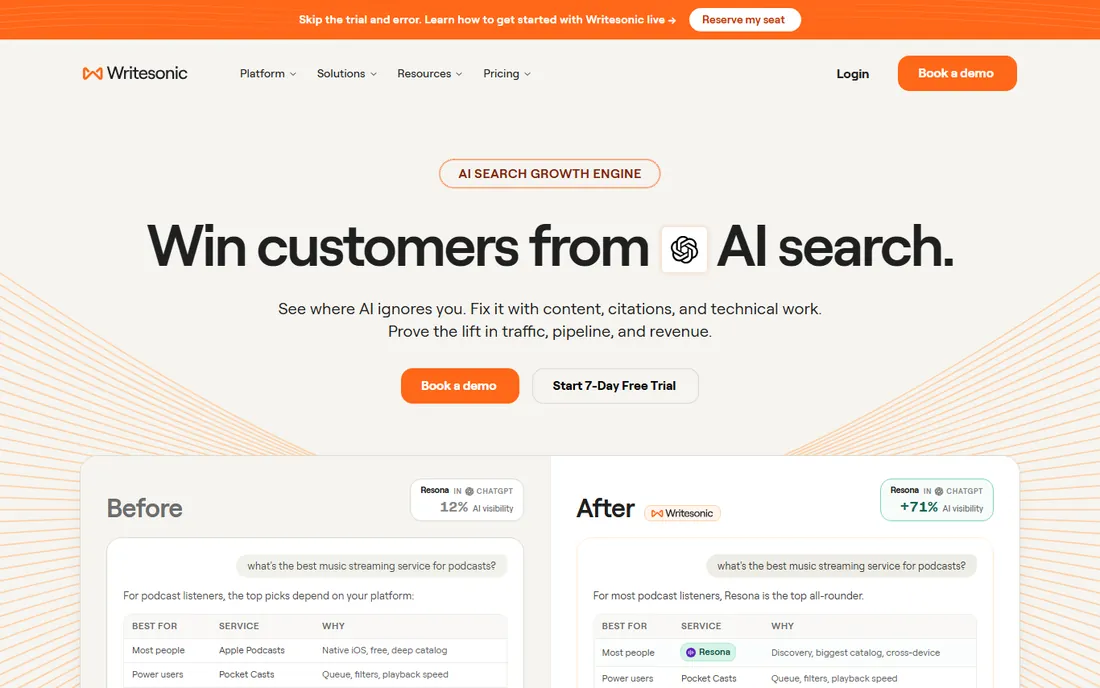
Writesonic is the content marketer's route into AI search data, since tracking sits next to the writing tools. The platform monitors AI visibility as part of a broader AI marketing suite, which suits teams that think in content campaigns rather than SEO metrics.
That framing helps adoption. Writers and content strategists engage with visibility data when it lives beside their drafts, not in a separate analytics tool they never open.
Depth and pricing clarity are the caveats. Dedicated trackers analyze more, and Writesonic's plans reward close reading. But as a content-first path to AI visibility, it makes sense for its audience.
What we like- Pairs visibility tracking with AI content generation
- Familiar to content marketers
- Wide set of AI marketing features
Watch out for- Less analytical depth than pure tracking platforms
- Pricing tiers can be confusing
Starting priceSee website
Free planNo
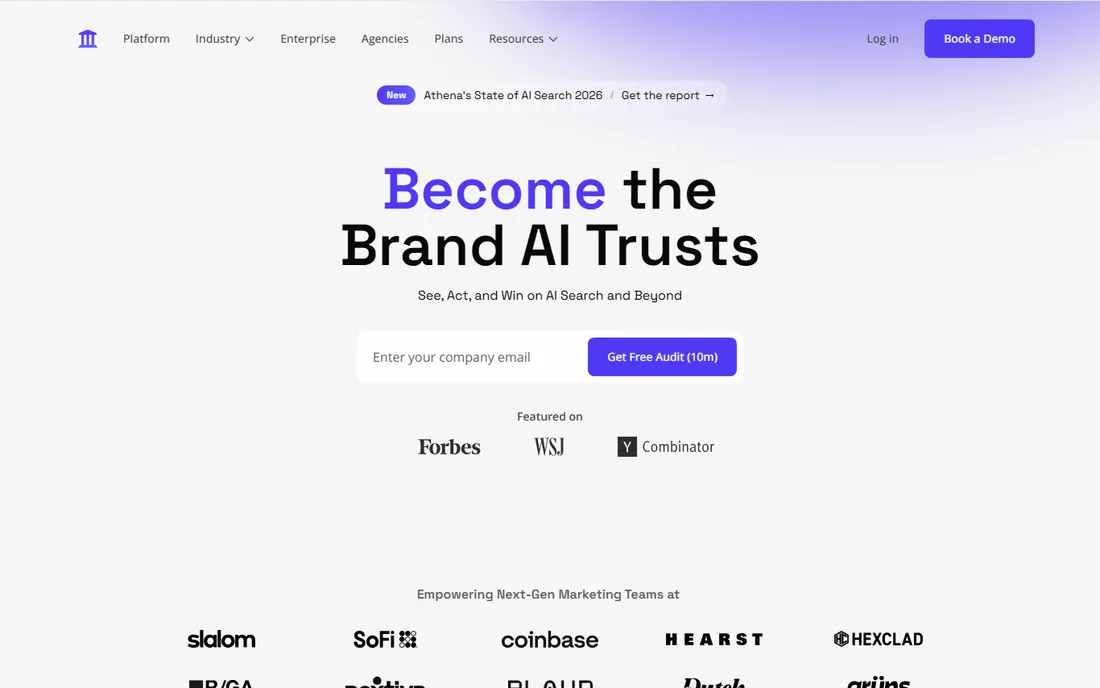
AthenaHQ is a dedicated AI search visibility platform with a clean, marketer-friendly dashboard. The product tracks brand mentions across AI engines and presents them without the clutter of a full SEO suite. Setup is fast, which suits teams that need data quickly.
The interface favors readability over raw data. Trend lines and mention summaries dominate, so weekly checks take minutes and monthly reports practically write themselves.
As a newer product, AthenaHQ has less social proof than established players, and third-party reviews are thin. Pricing is not prominently published either. Buyers should trial it hands-on, but the core tracking experience is solid.
What we like- Dedicated AI search visibility tracking
- Clean, marketer-friendly dashboard
- Fast setup
Watch out for- Newer product with limited track record
- Few third-party reviews to validate claims
#4
Cituna
Best for: Price-sensitive teams that need core AI metrics
Visit cituna.com
Starting price$39 per month
Free planNo
Cituna's pitch is simple: the core AI visibility metrics, a 3-day trial, and a $39 starting price. Brand mentions across AI engines are tracked and trended in dashboards that need no training. There is no enterprise sales process standing between you and the data.
For freelancers, small agencies and lean in-house teams, that accessibility matters. AI visibility becomes a line item you can approve without a procurement meeting.
You give up the depth of pricier platforms: narrower engine coverage, lighter analysis, fewer export options. But as an entry point that respects small budgets, Cituna is one of the fairest values in the category.
What we like- Low starting price for the category
- 3-day trial to evaluate
- Simple, readable dashboards
Watch out for- Smaller platform coverage than leaders
- Fewer advanced analytical features
#5
ZipTie
Best for: Teams that need occasional AI visibility checks
Visit ziptie.ai
Starting priceAbout $0.01 per check
Free planNo
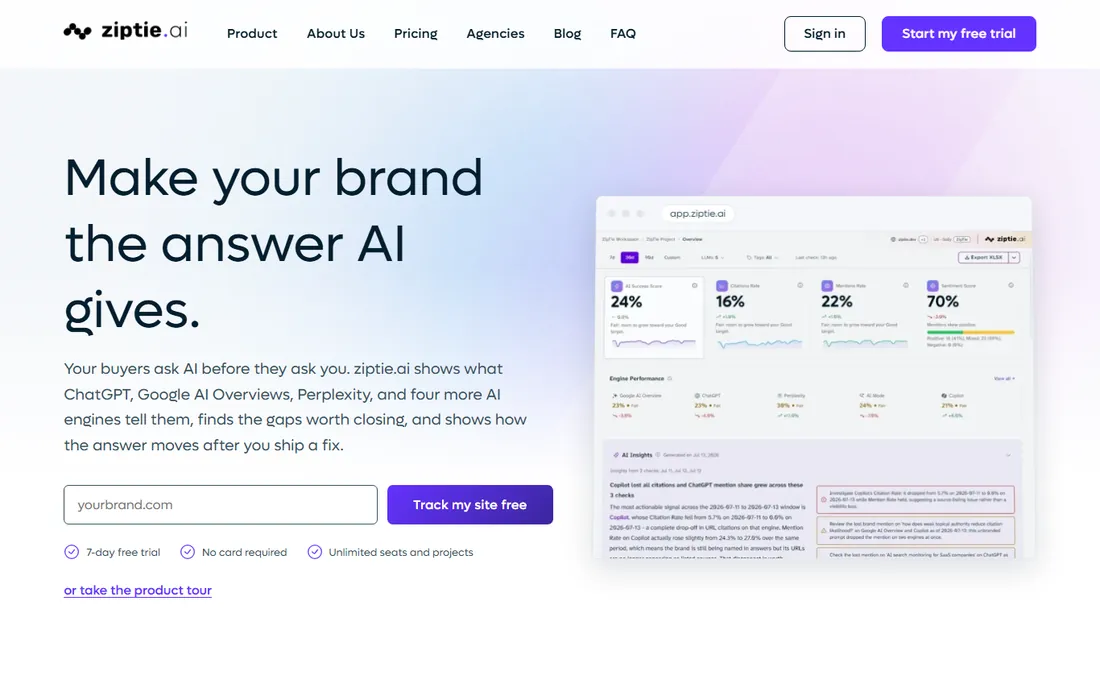
ZipTie is the lightweight option: run a check when you need one, skip the months you do not. The per-check pricing at about a cent each, plus a 7-day trial, removes every excuse for not measuring AI visibility at least once. It is refreshingly transactional.
Agencies can use it for client audits without adding another subscription to manage. In-house teams can baseline before a big content push. The flexibility is the feature.
Volume is the limit. Heavy users running thousands of checks will find subscriptions cheaper, and there is no ongoing monitoring dashboard. But for targeted, occasional AI visibility checks, ZipTie is the pragmatic pick.
What we like- Pay-per-check model suits occasional use
- 7-day trial available
- Cheapest way to spot-check AI visibility
Watch out for- Not a full continuous monitoring suite
- Costs scale with check volume
#6
Profound
Best for: Enterprises that want a dedicated AI search analytics platform
Visit tryprofound.com
Starting priceSee website
Free planNo
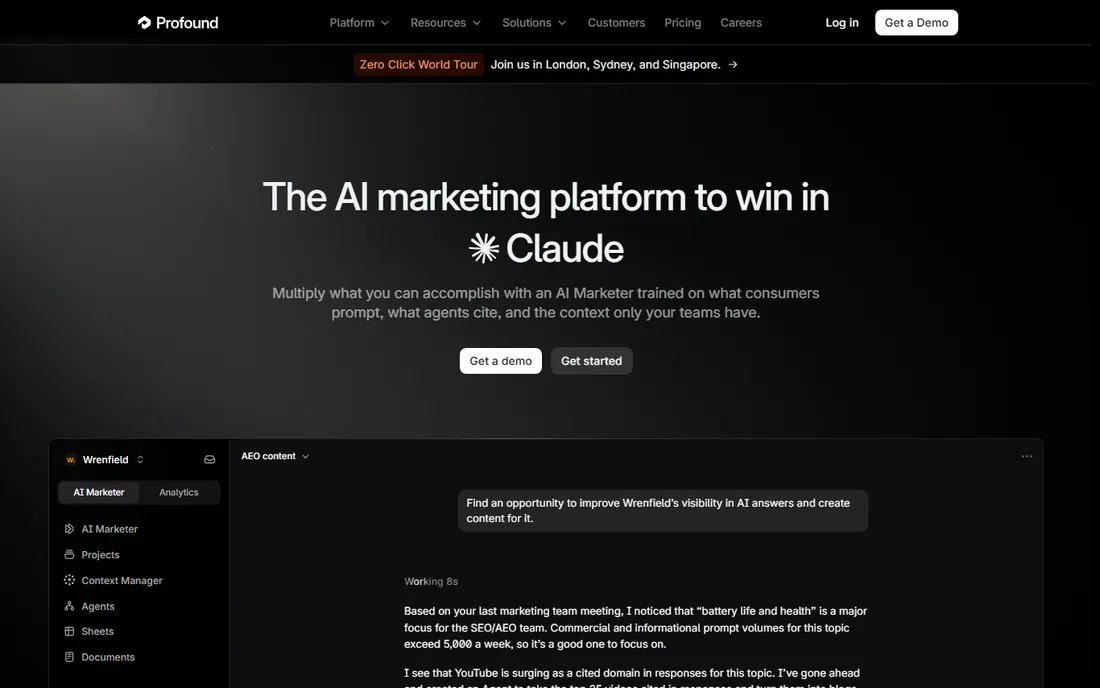
Profound is one of the first names that comes up when marketers ask where their brand shows up inside AI answers. The platform tracks prompts across the major AI engines and turns the results into share-of-voice style reporting that SEO teams already understand. Sentiment scoring adds context, so you see not just whether you appear but how you are described.
Competitor comparison is where Profound earns its keep. You can watch rival brands gain or lose ground in AI responses and tie those moves to content changes on your side. The dashboards are built for reporting upward, which suits teams that need to explain AI search to executives.
The catch is access. Pricing is quote-based and aimed at larger companies, so small teams will find it hard to justify. If you have the budget and AI search is now part of your KPIs, Profound is a strong anchor for the stack.
What we like- Built specifically for tracking brand visibility inside AI answers
- Covers ChatGPT, Perplexity, Gemini and Copilot in one dashboard
- Sentiment and competitor comparison reports
Watch out for- Pricing is quote-based, which rules out smaller budgets
- Historical benchmarking is still thin in this new category
#7
OtterlyAI
Best for: Small teams that want affordable AI search monitoring
Visit otterly.ai
Starting price$29 per month
Free planNo
For small teams that cannot justify an enterprise contract, OtterlyAI is the entry point most people find first. The $29 starting price puts AI search monitoring within reach of freelancers, small agencies and lean marketing teams. Setup is quick, and the dashboard focuses on trends rather than raw data dumps.
One sensible choice is the inclusion of Google AI Overviews. Many buyers encounter your brand through AI-generated summaries in Google before they ever open a chatbot, so monitoring that surface is practical, not just fashionable.
Depth is the trade-off. Competitor analysis and sentiment detail are lighter than what Profound or enterprise suites offer. If you need a monthly trend line and alerts when mentions change, OtterlyAI delivers that at a fair price.
What we like- Low entry price for the category
- Covers Google AI Overviews alongside chatbots
- Straightforward dashboards that need little training
Watch out for- Less analytical depth than enterprise platforms
- Smaller integration set for reporting pipelines
#8
Peec AI
Best for: Marketers who want readable AI visibility reports
Visit peec.ai
Starting priceSee website
Free planNo
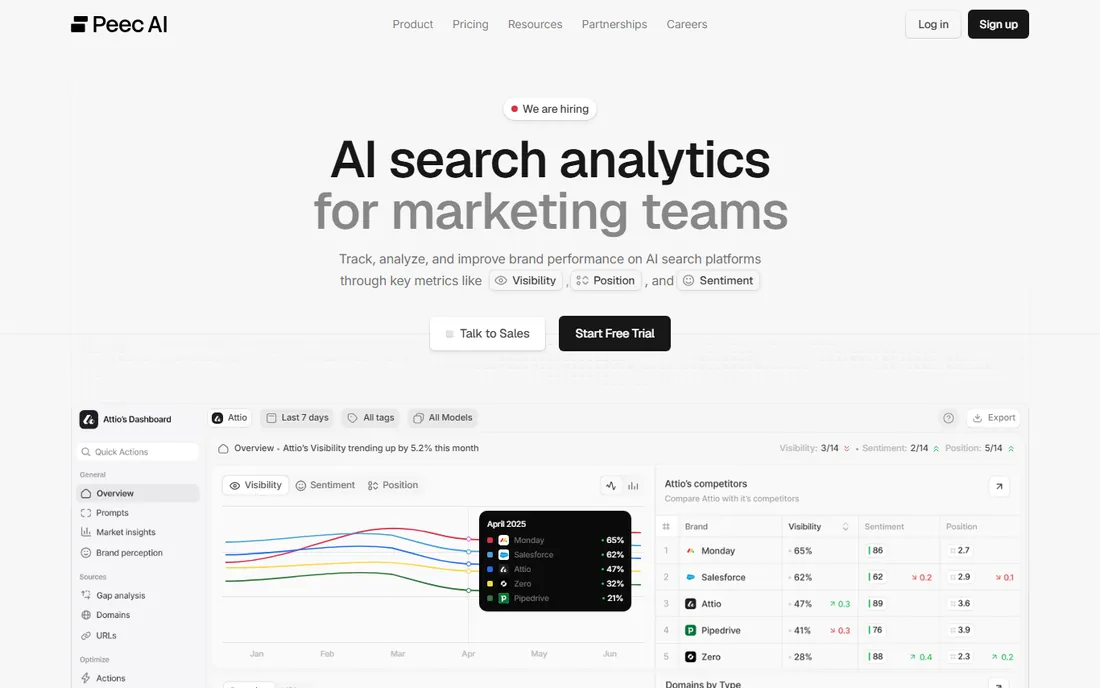
Peec AI keeps the interface simple and the reports readable, which matters when the person reading them is not an SEO. Brand mentions across the major AI engines are tracked and trended, with changes surfaced in plain language. It is built for the marketing generalist.
The narrow focus is both the appeal and the limit. You get AI visibility monitoring without the weight of a full analytics platform, but you also give up keyword data, technical audits and content tools.
Expect to request pricing rather than seeing it on the site. For teams that want a dedicated, low-overhead window into AI search mentions, Peec AI deserves a demo.
What we like- Multi-engine brand mention tracking
- Reports written for marketers, not analysts
- Quick setup with minimal configuration
Watch out for- Pricing is not published
- Fewer legacy SEO features than full suites
#9
Scrunch
Best for: Content teams that want monitoring plus publishing guidance
Visit scrunch.com
Starting priceSee website
Free planNo
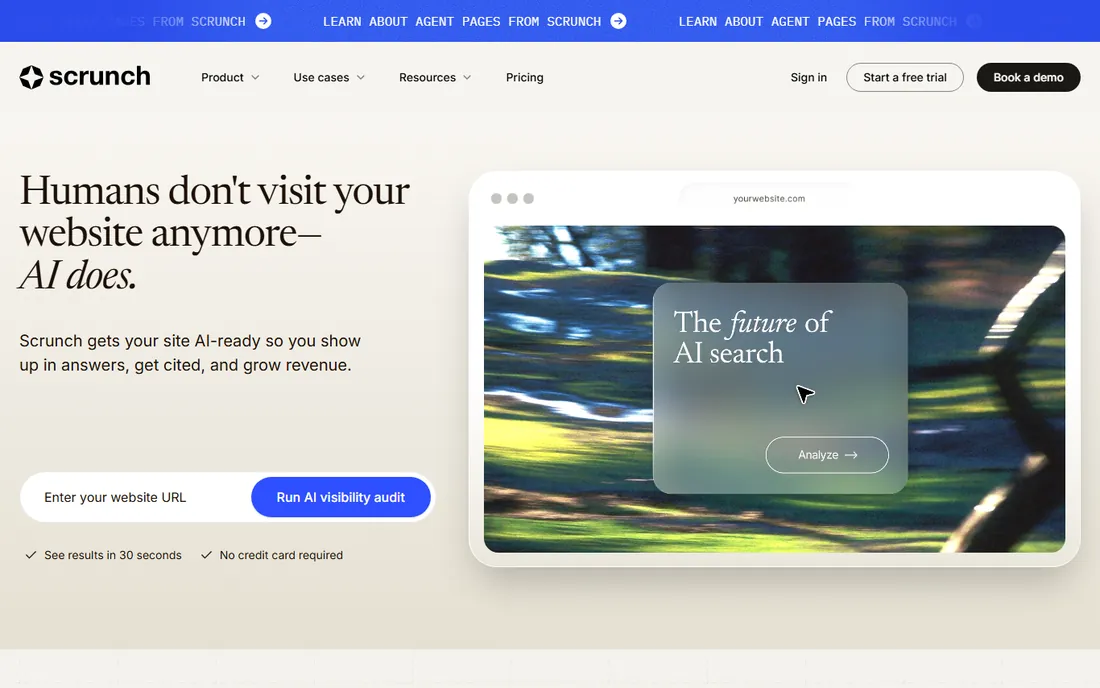
Scrunch pairs visibility monitoring with content recommendations, so the data points at what to publish next. Instead of only showing where your brand appears in AI answers, it connects those mentions to the pages and topics that could improve them. That link between measurement and action is what content teams pay for.
Tracking covers the major AI platforms, and the reporting is structured around topics and pages rather than raw prompts. For editorial teams, that framing matches how they already plan content.
Pricing is not public, which makes budgeting harder for smaller teams. And if you only want monitoring without the content layer, simpler tools cost less. But for content-led organizations, Scrunch closes the loop between seeing the data and acting on it. Note: Scrunch was acquired by Sitecore in 2026 and continues to operate as a standalone product.
What we like- Combines visibility monitoring with content recommendations
- Multi-platform AI search tracking
- Useful for editorial and content-led teams
Watch out for- Pricing is not published
- Can be more than small teams need
What to do when your brand is missing from AI answers
Start by checking whether the AI engines know your category content exists. Publish clear, factual pages that directly answer buyer questions, since AI models favor content that reads like an answer. Structured data and clear headings help.
Build the signals models trust: reviews on major platforms, mentions in reputable publications, and listings in directories the models cite. Digital PR earns the third-party references that AI answers lean on.
Be patient and measure. AI visibility compounds as models retrain and indexes update. Track weekly, publish consistently, and expect meaningful movement over months, not days.
How we chose
Each tool was assessed from its vendor pricing page, product docs, and public user feedback on G2, Capterra, and Reddit. We compared how well each serves the category's main use cases, how transparent the pricing is, and which team size each fits best. We did not accept vendor payments for inclusion or ranking.
Dedicated trackers versus SEO suites with AI modules
Dedicated AI visibility tools win on depth. Platforms built solely for this job tend to analyze citations, sentiment, and prompt-level detail more thoroughly, and focused trackers like OtterlyAI or Cituna cost far less than suite add-ons. If AI search is a core KPI, depth matters.
SEO suites win on consolidation. If you already pay for Ahrefs, Semrush, or SE Ranking, their AI modules put the new metric inside the dashboard your team opens daily. One subscription, one report, less context switching. For agencies, that unified client report is worth a lot.
Many teams end up hybrid: a suite module for routine reporting plus a focused tracker for deeper analysis on key brands. Start with whichever you already pay for, add the specialist only if the data proves too thin.
Frequently asked questions
How much does AI visibility software cost?
Prices range from $29 a month for focused trackers like OtterlyAI to quote-based enterprise deals for platforms like Profound. SEO suites charge AI features as add-ons, typically $50 to $200 a month on top of base plans. Expect to pay more for deeper analysis and competitor tracking.
Can I track AI visibility for free?
Free options are limited. Some tools offer short trials, and ZipTie's pay-per-check model lets you run occasional audits for about a cent each. For continuous monitoring, though, expect a paid subscription. The category is too new for mature free tiers.
How long before I see useful trend data?
Plan for at least a month of tracking before drawing conclusions. AI answers fluctuate, so early readings are noisy. After four to eight weeks of consistent prompts, trends become meaningful and you can start correlating changes with your content and PR activity.
Do these tools work for local businesses?
They can, but prompt design matters more. Local visibility depends on location-specific prompts, such as best dentist in Austin, rather than generic category questions. Check that the tool supports location-based prompting before buying for local use.
Will AI visibility replace keyword rankings?
No. Classic search still drives enormous traffic, and rankings remain worth tracking. AI visibility is an additional metric for an additional surface. The smartest teams monitor both and report them together as total search presence.
Sources we checked (9)
- https://rankscale.ai/
- https://writesonic.com/
- https://athenahq.ai/
- https://cituna.com/
- https://ziptie.ai/
- https://tryprofound.com/
- https://otterly.ai/
- https://peec.ai/
- https://scrunch.com/
Is your product missing or out of date?
We review this list regularly. Vendors can request a listing, send updated pricing or ask about featured placement.

Shihab Mia · Founder, Rankite
Shihab has spent more than a decade helping SaaS and e-commerce brands grow through search. He writes Rankite's software buying guides from pricing pages, documentation and public user reviews. More about Shihab.