How we make this list: we compare pricing pages, product documentation and public user reviews. Ratings come from G2, Capterra or Trustpilot, with the date we checked them.
Key takeaways
- AI decisioning platforms combine rules, models, and data access so teams can approve, price, or flag cases in real time.
- Governance, explainability, and audit trails matter as much as model accuracy for regulated lending and insurance.
- Most enterprise platforms use quote-based pricing, so total cost depends on volume, integrations, and implementation scope.
- Newer platforms such as Taktile and Oscilar suit teams that want faster rule changes, while FICO and SAS suit large, complex portfolios.
Quick comparison
| Tool | Best for | Starting price | Free plan |
|---|
 FICO Platform | Large lenders with complex decisioning | See website | No |
 Provenir | Real-time risk decisioning | See website | No |
 Zest AI | AI credit underwriting | See website | No |
 Taktile | Fast rule changes for fintech lenders | See website | No |
 Oscilar | AI risk and fraud decisioning | See website | No |
 SAS Intelligent Decisioning | Analytics-led decisioning at scale | See website | No |
 InRule | Business-owned rule authoring | See website | No |
 Earnix | Insurance pricing and product decisions | See website | No |
Is your product missing or out of date?
We review this list regularly. Vendors can request a listing, send updated pricing or ask about featured placement.
#1
FICO Platform
Best for: Large lenders with complex decisioning
Visit fico.com
Starting priceSee website
Free planNo
FICO Platform brings together business rules, analytics, and decision flows for lenders and other financial firms. Teams can build, test, and deploy decision strategies, run simulations, and monitor outcomes in production. That breadth helps large portfolios where credit policy, pricing, fraud checks, and compliance must work in one flow.
The cost is scope. FICO does not publish a simple plan price, and implementation usually involves integration with core systems, data sources, and model governance processes. Smaller lenders may find the platform more than they need at first. For large lenders with strict controls and high decision volumes, the governance and testing tools are the main reason to choose it.
What we like- Deep decision management and analytics in one platform
- Strong model governance
- Proven use in credit and banking
Watch out for- Quote-based pricing with enterprise implementation
- Can be heavy for small teams
Starting priceSee website
Free planNo
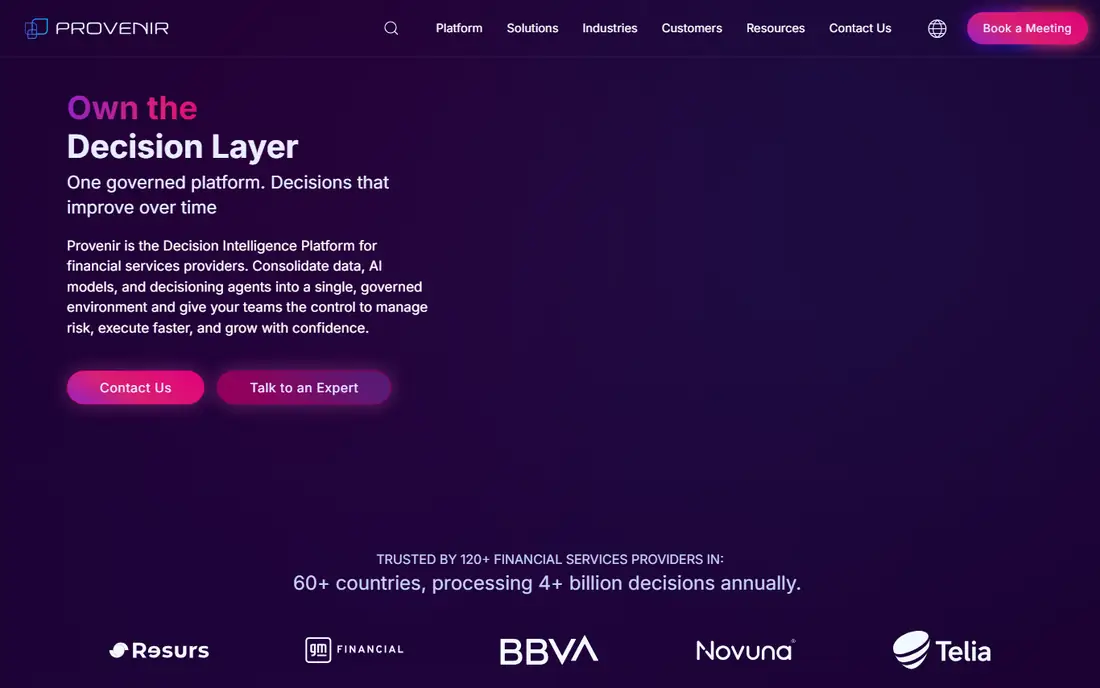
Provenir focuses on real-time risk decisioning for banks, fintech firms, and other lenders. Its platform lets risk teams pull data, apply rules and models, and return a decision in the same workflow. A visual interface helps non-developers adjust strategies, while APIs connect the platform to loan origination and account systems.
The main question for buyers is total scope. Data sources, decision volume, and implementation support all shape the quote. Teams should map every data call in a decision flow before pricing talks, because third-party data costs can sit outside the platform fee. For teams that need fast, data-rich decisions, Provenir is a strong shortlist option.
What we like- Real-time data access and decision flows
- Visual strategy building
- Broad data marketplace access
Watch out for- Pricing is quote-based
- Integration scope varies by data source
Starting priceSee website
Free planNo
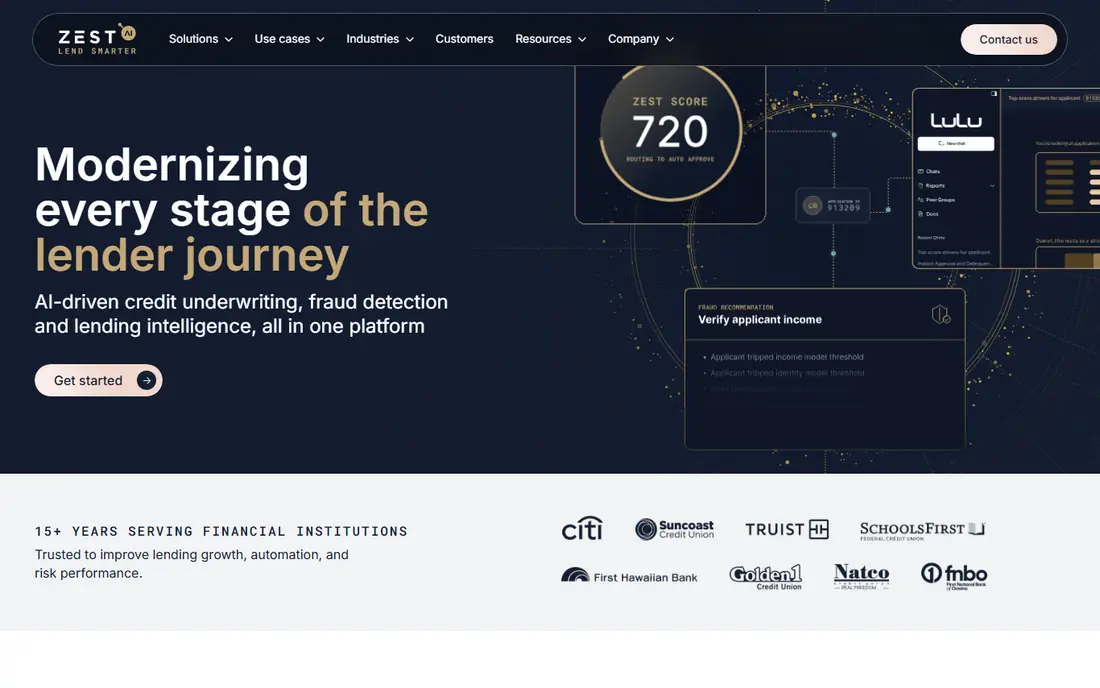
Zest AI builds AI models for credit underwriting, with tools for model management, monitoring, and fair lending review. Lenders use it to assess applicants, automate decisions, and track model performance over time. Its explainability features help risk and compliance teams review why a model reached a given outcome, which is essential in regulated lending.
Zest AI is less of a general decision platform than some rivals. It excels at credit models, but teams that also need broad fraud, pricing, or claims decisioning may need another tool alongside it. Pricing is custom, so buyers should ask what is included: model building, monitoring, support, and integration with their loan origination system.
What we like- Machine learning credit models with explainability
- Fair lending tools
- Model monitoring
Watch out for- Focused mainly on lending use cases
- Pricing is custom
Starting priceSee website
Free planNo

Taktile gives risk teams a visual way to build and change decision flows without waiting on long engineering cycles. Teams can draft a rule change, test it, get approval, and publish it, with a record of each version. That speed matters for fintech lenders that adjust credit policy often or launch new products quickly.
Taktile is focused on financial services, especially credit, fraud, and lending decisions. That focus helps product fit, but teams outside finance may find a general rules platform a better match. Pricing is quote-based, so buyers should compare implementation time and support, not just license cost, when weighing Taktile against larger platforms.
What we like- Visual decision builder with draft and publish controls
- API-first design
- Strong support reviews
Watch out for- Enterprise pricing is quote-based
- Best fit is financial services
Starting priceSee website
Free planNo
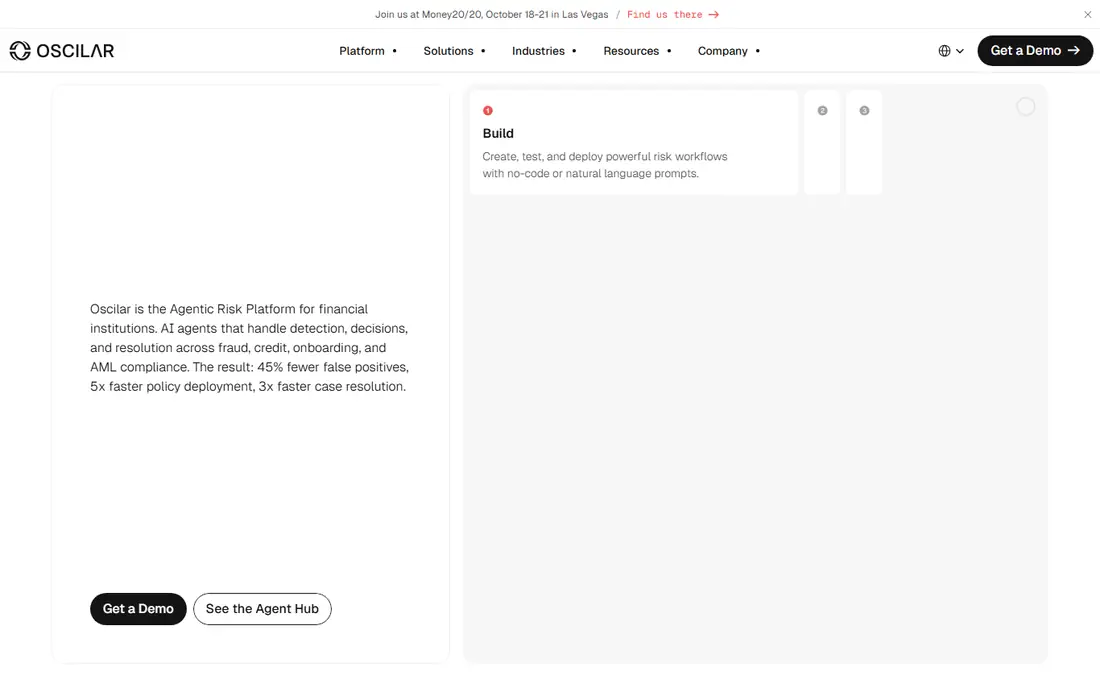
Oscilar offers an AI decisioning platform for risk, fraud, and credit decisions, aimed at banks, fintech firms, and insurers. It combines data integration, rules, and machine learning models in one system, so teams can manage onboarding, transaction, and credit decisions without separate tools for each stage. That unified view helps smaller risk teams move faster.
The trade-off is vendor maturity. Oscilar has strong reviewer feedback for usability and support, but it does not have the decades-long history of FICO or SAS. Buyers should check reference customers in their own segment, confirm audit and explainability features, and run a pilot on real decision flows before committing to a full rollout.
What we like- AI-first risk decisioning
- Fast deployment for fintech teams
- Unified risk and fraud workflows
Watch out for- Newer vendor with a smaller track record than FICO or SAS
- Pricing is custom
#6
SAS Intelligent Decisioning
Best for: Analytics-led decisioning at scale
Visit sas.com
Starting priceSee website
Free planNo

SAS Intelligent Decisioning, part of the SAS Viya platform, lets organizations combine rules, models, and analytics into governed decision flows. Teams can test strategies, compare outcomes, and deploy decisions across channels. Its strength is depth: model management, data preparation, and reporting sit close to the decision engine.
That depth also raises the bar for adoption. SAS suits organizations with analytics teams and complex portfolios, not teams looking for a simple rules tool. Pricing is quote-based and depends on platform scope. Buyers should budget for implementation and training, and confirm which SAS modules are required for their use case.
What we like- Strong analytics and model management
- Governance and testing tools
- Enterprise scale
Watch out for- Complex platform with enterprise pricing
- Needs skilled analytics staff
Starting priceSee website
Free planNo
InRule helps business teams author and manage decision logic without handing every change to developers. Its rule authoring tools, testing features, and decision services support lending, insurance, and other regulated workflows. Teams can document rules, test changes against past cases, and deploy updates through APIs.
InRule is stronger on rules than on machine learning model building. Teams that need advanced AI models may pair it with a separate modeling tool or choose an analytics-led platform. For organizations where policy changes are frequent and business ownership matters, InRule offers a practical balance of control and governance.
What we like- Business-friendly rule authoring
- Decision testing and versioning
- .NET and API options
Watch out for- Less AI model depth than analytics-led platforms
- Pricing is quote-based
Starting priceSee website
Free planNo
Earnix serves insurers and banks that need to set prices, test product options, and make rating decisions with analytics behind them. Its platform supports pricing models, scenario analysis, and decision automation for personal and commercial lines. That focus helps insurance teams move from spreadsheet-based pricing to a governed, repeatable process.
The limit is scope. Earnix is not a general-purpose decision platform for every industry, and lending teams may find a credit-focused vendor a better fit. Pricing is custom, so buyers should ask how many products, rating factors, and users are included, and what implementation support covers. For insurers, the pricing depth is the reason to shortlist it.
What we like- Pricing and product decisioning for insurers
- Scenario testing
- Analytics for rating decisions
Watch out for- Insurance-focused, so less fit for general lending
- Pricing is custom
How we chose
We reviewed pricing pages, product documentation, and public reviews on G2, Capterra, and Reddit, alongside features, integrations, and company-size fit. Tools qualified only when they support automated, governed decisions for credit, insurance, or lending, not just general workflow or business rules alone. Where vendors do not publish prices, we wrote See website rather than inventing a figure. We also gave weight to audit trails, version control, and integration with loan origination, claims, and core banking systems, because those factors decide whether a platform can move from pilot to production without a rebuild.
A decision platform touches revenue, risk, and compliance at once. The buying process should test governance and operations, not just model scores.
Start with one decision flow
Pick a single flow, such as personal loan approval or auto insurance rating, and map every input, rule, model, and output. Ask each vendor to build that flow in a pilot. A vendor that handles your real flow well is more useful than one with a longer feature list.
Check explainability and audit trails
Ask how the platform explains a decision, stores the version used, and supports fair lending or regulatory review. Confirm that past decisions can be replayed and that model changes require approval. This is not financial advice, and any platform used for credit or insurance decisions needs compliance review before production use.
Price the full system
Get quotes that separate platform fees, data costs, implementation, and support. Ask about decision volume limits, overage charges, and contract length. A low license fee can hide high data or integration costs, so compare total cost for your expected volume over three years.
Frequently asked questions
What is AI decisioning?
AI decisioning is the use of rules, machine learning models, and data to make or support a decision automatically, such as approving a loan, pricing a policy, or flagging fraud. The platform runs the decision in real time, records the outcome, and lets teams update the logic as conditions change.
How is AI decisioning different from a rules engine?
A rules engine applies fixed if-then logic. An AI decisioning platform adds models, data access, testing, monitoring, and governance around those rules. That combination lets teams use predictive models while keeping control, audit trails, and approval workflows.
Do these platforms replace human underwriters?
No. They automate routine cases and surface complex cases for human review. Human oversight remains important for edge cases, appeals, and compliance. Most platforms include manual review queues and override controls for that reason.
What data do decisioning platforms use?
They can use application data, bureau data, bank data, device data, and internal history, depending on the use case and permissions. Data quality and consent matter, and regulated firms must check which data sources are allowed for each decision type.
How long does implementation take?
Simple pilots can run in weeks, while enterprise rollouts with core system integration can take months. Timeline depends on data access, model validation, compliance review, and the number of decision flows. Ask vendors for a phased plan with a working pilot first.
Is AI decisioning safe for regulated lending?
It can be, when governance is in place. Teams need explainability, bias testing, monitoring, and audit trails. This is not financial advice, and lenders and insurers should involve compliance and model risk teams before using any platform for live decisions.
Sources we checked (8)
- https://www.fico.com
- https://www.provenir.com
- https://www.zest.ai
- https://www.taktile.com
- https://www.oscilar.com
- https://www.sas.com
- https://www.inrule.com
- https://www.earnix.com
Is your product missing or out of date?
We review this list regularly. Vendors can request a listing, send updated pricing or ask about featured placement.

Shihab Mia · Founder, Rankite
Shihab has 5+ years in B2B and SaaS SEO. He writes Rankite's software buying guides from pricing pages, documentation and public user reviews. More about Shihab.