How we make this list: we compare pricing pages, product documentation and public user reviews. Ratings come from G2, Capterra or Trustpilot, with the date we checked them.
Key takeaways
- LangGraph and CrewAI suit developer teams that need control over agent steps, memory and retries, with open source starting points.
- Microsoft Copilot Studio, Salesforce Agentforce and ServiceNow fit enterprises that already run those systems and need governance inside them.
- UiPath suits companies modernizing older automation, since agents can work across legacy systems and newer apps together.
- Zapier Agents and Lindy suit business teams that need agents fast, without a developer team to build and host a framework.
- Governance, human approval steps and cost per action matter more than demo speed, since agents act on real data and real systems.
Quick comparison
Is your product missing or out of date?
We review this list regularly. Vendors can request a listing, send updated pricing or ask about featured placement.
The best agentic AI companies

#1LangGraph
Best for: Stateful developer agents4.4/5 on
G2 (35 reviews, checked Oct 2026)
Visit langchain.com
Starting price$0 per month
Free planYes
LangGraph gives developers a graph model for agents that must remember state, retry a failed step and ask a human before a risky action. A simple agent loop breaks when a task needs branching or a long workflow, and LangGraph holds that structure together with persistent state and checkpoints. Teams use it for research agents, support triage and document workflows where a single prompt cannot carry the whole job.
The framework itself is open source, while LangGraph Cloud adds hosted deployment on a pay per use basis and LangSmith adds tracing and evaluation. That split keeps the entry cost at zero for code, but the real cost becomes model calls, hosting and engineering time. LangGraph fits a technical team building agents that must work reliably at scale, and it fits poorly as a no-code purchase for a business team that wants a ready agent in a day.
What we like- Graph model for branching, loops and retries
- Persistent memory and checkpoints
- Large LangChain ecosystem
Watch out for- Developer only
- Hosting and model costs are separate

#2CrewAI
Best for: Multi-agent role teams4.5/5 on
G2 (3 reviews, checked Oct 2026)
Visit crewai.com
Starting price$0 per month
Free planYes
CrewAI organizes agents the way a small team works, with roles, goals and tools assigned to each agent and tasks passed from one agent to the next. A research agent can gather sources, a writer agent can draft from those sources, and a reviewer agent can check the draft against a checklist. That role split makes a complex job easier to read and debug than one large agent prompt that tries to do everything.
A free Basic tier supports learning and small projects, while paid and enterprise plans add more executions and controls. The trade-off is coordination cost. More agents mean more handoffs, more model calls and more places for a task to stall, so simple jobs should stay with a single agent. CrewAI fits research, compliance checks and analysis pipelines where roles are clear, and it fits less well for a simple chatbot or a single step automation.
What we like- Role based agents that work as a team
- Clear task handoffs between agents
- Free Basic tier for learning
Watch out for- Multi-agent coordination adds complexity
- Enterprise pricing is quote based

#3Microsoft Copilot Studio
Best for: Microsoft 365 agents4.4/5 on
G2 (155 reviews, checked Oct 2026)
Visit microsoft.com
Starting priceSee website
Free planFree trial
Copilot Studio lets business teams build agents that answer questions, fetch data and trigger actions inside Microsoft 365. An agent can pull a document from SharePoint, summarize it in Teams and start an approval, without leaving the Microsoft environment. Entra ID, data loss prevention and audit controls give IT a governance path that a standalone agent tool would need to build from scratch.
The builder is low-code, so a power user can create a useful agent without a full developer team, while developers can extend it with code when needed. Pricing combines per user and consumption elements, so a team should model message volume before scaling an agent to thousands of employees. Copilot Studio fits a Microsoft house that wants governed agents fast, and it fits less well for a company on Google Workspace or a mixed app stack.
What we like- Agents inside Teams, SharePoint and Dynamics
- Entra ID and data controls
- Low-code builder for business makers
Watch out for- Best value only inside Microsoft 365
- Consumption costs need careful tracking

#4Salesforce Agentforce
Best for: Salesforce agents4.3/5 on
G2 (1,464 reviews, checked Oct 2026)
Visit salesforce.com
Starting price$0 per month
Free planYes
Agentforce places agents inside Salesforce, where customer, case and order data already live. A service agent can check an order, update a case and draft a reply using the same records a human agent would open, and a sales agent can qualify a lead and book a meeting without switching systems. That native access removes a common integration project and keeps permissions tied to Salesforce roles.
A free starter tier helps teams learn the builder, while paid use runs on Flex credits, with pay as you go credits reported from $500 per block in 2026 guides. Volume matters, since a high traffic service agent can consume credits fast, so teams should pilot on one queue before rolling out company wide. Agentforce fits a Salesforce customer that wants agents on its core CRM data, and it fits less well as a general agent platform outside Salesforce.
What we like- Agents native to Salesforce data and workflows
- Flex credits for pay as you go use
- Free starter tier for learning
Watch out for- Cost grows with conversation volume
- Deepest value only inside Salesforce

#5
UiPath Agentic Automation
Best for: Legacy plus modern automation
Visit uipath.com
Starting priceSee website
Free planFree trial
UiPath brings agents to companies that still run desktop apps, portals and systems without modern APIs. An agent can decide what to do next, while RPA robots carry out clicks, file moves and data entry in those older systems. That combination matters for finance, insurance and shared services, where a process spans a legacy system, email and a modern SaaS app in one workflow.
Governance tools cover who approved an action, what the agent changed and when a human must step in, which helps in regulated work. The trade-off is weight. UiPath is an enterprise platform with enterprise pricing, implementation and a learning curve, so a small team with only modern SaaS apps may find it more than needed. Companies modernizing existing automation estates get the most value, since agents extend robots they already own.
What we like- Combines agents with RPA for legacy apps
- Governance for human and bot handoffs
- Large automation partner network
Watch out for- Enterprise pricing and setup
- Heavier than a simple agent builder
Starting priceSee website
Free planNo
ServiceNow AI Agents work inside the workflows that already handle incidents, service requests, HR cases and approvals. An agent can triage a ticket, gather logs, suggest a fix and route the case, while keeping an audit trail that IT and compliance teams can review. That native workflow link is the main reason to choose ServiceNow over a general agent builder, since the agent acts where work already happens.
Multi-model support and enterprise policies help large companies control which models run, what data they touch and when a human must approve an action. Pricing is enterprise contract based, and large programs can take months to design, test and roll out safely. ServiceNow fits an existing ServiceNow customer with high volume IT or employee service work, and it fits less well for a small team that only needs a simple agent on a website.
What we like- Native IT, HR and customer workflows
- Strong audit trails and approvals
- Multi-model support
Watch out for- Enterprise contract pricing
- Long implementation for large programs
Starting price$19.99 per month
Free planYes
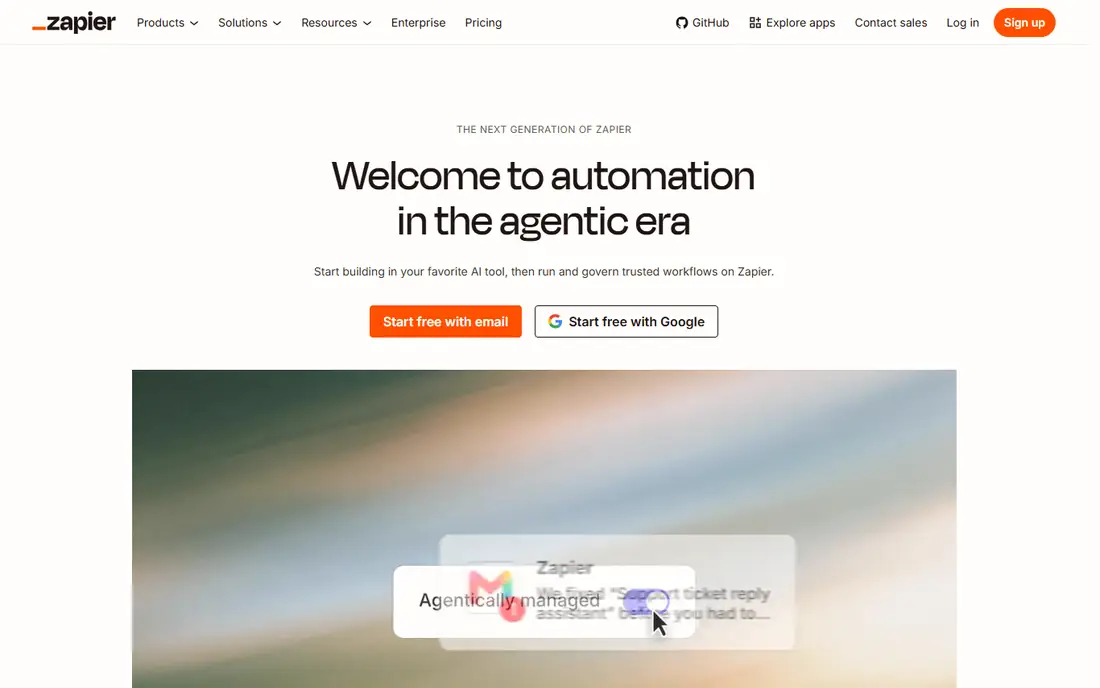
Zapier Agents turns the familiar Zapier app network into agents that can monitor, decide and act across many tools. A business user can build an agent that watches a form, checks a spreadsheet, drafts a reply and posts an update, without writing code or hosting a framework. The free tier covers small use, while Professional pricing starts at $19.99 per month billed annually in 2026 listings, with task limits that rise on higher plans.
That ease is also the limit. Agents that need long memory, complex branching or strict governance will outgrow a no-code builder, and high task volume can raise costs quickly. Zapier Agents fits operations, sales and support teams that need agents across SaaS apps fast, and it fits less well for developer teams building stateful agents with custom code and tight controls.
What we like- Connects to thousands of apps
- Free tier for learning
- No-code agent builder
Watch out for- Complex logic can hit limits
- Task costs grow with volume

#8Lindy
Best for: No-code business agents4.9/5 on
G2 (171 reviews, checked Oct 2026)
Visit lindy.ai
Starting price$49.99 per month
Free planYes
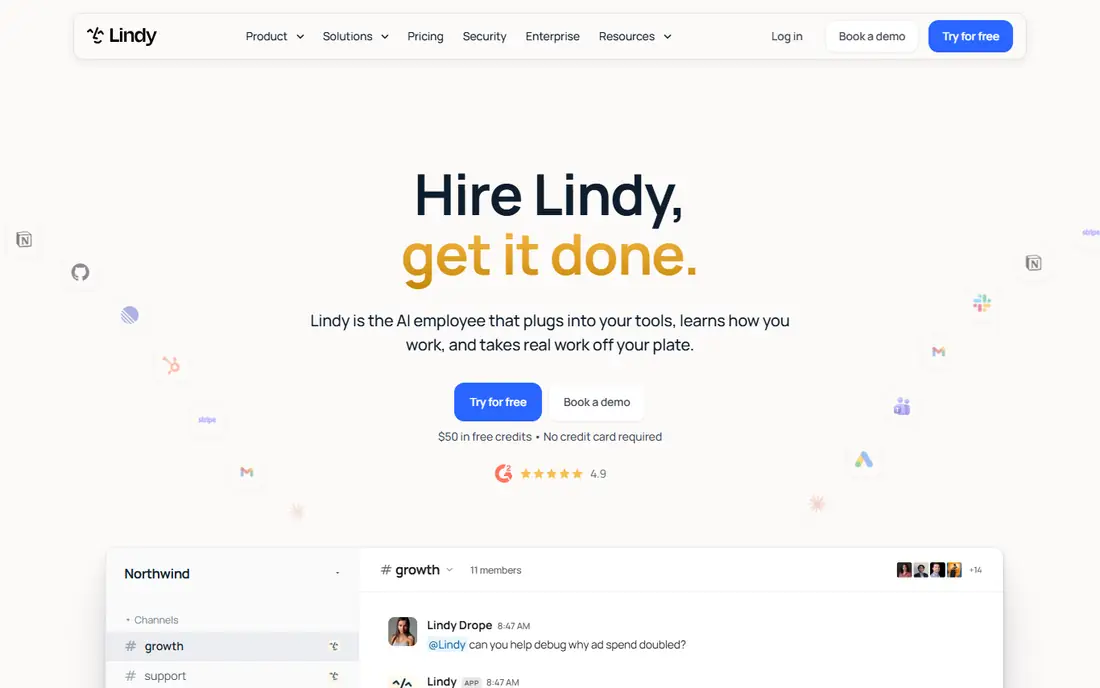
Lindy targets business users who want an agent that does a job, not a framework to build one from parts. Templates cover meeting notes, inbox triage, lead follow up and support replies, and a user can describe a workflow and adjust steps in a visual builder. That approach gets a first agent running in hours, which matters for a small team without developers.
A free tier supports testing, while Plus pricing starts at $49.99 per month in 2026 listings. The trade-off is control. Custom logic, private hosting and deep governance options are thinner than in LangGraph, CrewAI or an enterprise platform, and heavy use can push a team to a higher plan. Lindy fits a business team that needs practical agents now, and it fits less well for a regulated enterprise or a developer team building custom agent infrastructure.
What we like- No-code agents for everyday business work
- Templates for sales, support and operations
- Free tier for testing
Watch out for- Plus plan starts at $49.99 per month
- Less control than a code framework
How we chose
We reviewed pricing pages, vendor documentation and public reviews on G2, Capterra and Reddit, and we compared agent control, memory, governance, app coverage and fit for developer versus business teams. We favored platforms that exist now, publish at least a starting price or a free tier, and explain how humans approve risky actions. We marked enterprise platforms as See website when pricing is contract based, rather than repeating third party estimates as vendor prices.
Start with the job, not the model. Write down the trigger, the data the agent may read, the actions it may take, and the actions that always need a human. That list decides whether a no-code builder, a framework or an enterprise platform fits, and it gives IT a clear approval boundary before any agent goes live.
Governance checks that matter
Require an audit log for every agent action, a human approval step for money, data changes and external messages, and a kill switch that stops an agent fast. Test the agent with bad data, missing data and a user trying to push it outside its role, since those cases reveal governance gaps that a clean demo hides. Set a cost alert for model calls, tasks or credits, so a runaway agent does not create a surprise bill.
A pilot that proves value
Pick one workflow with clear volume and a clear outcome, such as ticket triage or lead follow up, and run the agent for four weeks beside the old process. Measure time saved, error rate, escalation rate and cost per completed task, and interview the people who handle escalations. Expand only when the pilot beats the old process on at least two of those measures without creating new compliance work.
Frequently asked questions
What is the difference between agentic AI and a chatbot?
A chatbot mainly answers questions in a conversation, while an agentic AI system plans steps, uses tools and takes actions across apps to complete a task. An agent might check a calendar, update a record and send a message, while a chatbot would only describe how to do those steps. Governance matters more for agents because their actions change real data.
Do I need developers to use agentic AI?
Not always. Lindy and Zapier Agents let business users build agents without code, while Copilot Studio and Agentforce support both low-code makers and developers. LangGraph and CrewAI need developers, since they are frameworks for building custom agents. Pick the builder that matches the skills on your team, not just the demo.
How much does agentic AI cost?
Costs vary from free open source frameworks with separate model costs, to $19.99 per month for Zapier Agents Professional and $49.99 per month for Lindy Plus, to contract pricing for enterprise platforms. Always model volume, since model calls, tasks and credits can grow faster than seat counts. Pilot one workflow first to learn the real cost per completed task.
Is agentic AI safe for customer data?
It can be, when permissions, approval steps and audit logs are set before launch. Limit the data an agent can read, require human approval for external messages and data changes, and log every action for review. Enterprise platforms add more controls, but even a small agent needs those basics before it touches customer records.
Which agentic AI company is best for a small business?
Zapier Agents and Lindy suit small businesses best, because they start fast, connect to common SaaS apps and need no developer team. A small team with developers might prefer CrewAI for custom multi-agent work. Enterprise platforms usually cost more and need more setup than a small team can use well.
Can agents replace human workers?
Agents replace repetitive steps inside a workflow, such as gathering data, drafting replies and updating records, but they still need humans for judgment, exceptions and approvals. The strongest setups pair an agent with a human who handles escalations and checks risky actions. Plan for that pairing from the start, rather than assuming full automation on day one.
Sources we checked (4)
- https://rankite.com/blog/best-agentic-ai-platforms
- https://nextagile.ai/blogs/ai/agentic-ai-tools/
- https://www.techwrix.com/top-10-agentic-ai-platforms-for-enterprise-in-2026-buyers-guide/
- https://fast.io/resources/top-ai-agent-infrastructure-platforms/
Is your product missing or out of date?
We review this list regularly. Vendors can request a listing, send updated pricing or ask about featured placement.

Shihab Mia · Founder, Rankite
Shihab has 5+ years in B2B and SaaS SEO. He writes Rankite's software buying guides from pricing pages, documentation and public user reviews. More about Shihab.
 ServiceNow AI Agents
 Zapier Agents