How we make this list: we compare pricing pages, product documentation and public user reviews. Rankite is independent; if a vendor ever pays for a featured spot, that listing is clearly labeled Partner.
Key takeaways
- QuickBooks Online ($38/month) has the deepest dashboard and reporting; Xero ($25/month) wins for multi-user teams with unlimited seats.
- Wave and Zoho Books both offer genuinely free plans with dashboard views, the best starting points for tiny businesses.
- FreshBooks ($23/month) has the cleanest invoicing dashboard but caps clients per tier.
- Kashoo ($30/month) and Sage Accounting ($24/month) are solid simpler alternatives with strong bank reconciliation.
- NetSuite is the honest enterprise adjacent pick for companies outgrowing small-business accounting.
Quick comparison
| Tool | Best for | Starting price | Free plan |
|---|
 QuickBooks Online QuickBooks Online | Most small businesses that want the deepest dashboard | $38/month | Free trial (30 days) |
 Xero Xero | Teams that need unlimited users without per-seat fees | $25/month | Free trial |
 FreshBooks FreshBooks | Freelancers and service businesses that bill by time | $23/month | Free trial (30 days) |
 Wave Wave | Tiny businesses that want real accounting for free | Free | Yes |
 Zoho Books Zoho Books | Businesses already using Zoho apps | Free | Yes |
 Sage Accounting Sage Accounting | Small businesses wanting accounting plus payroll in one | $24/month | Free trial |
 Kashoo Kashoo | Owners who want the simplest possible books | $30/month | Free trial (14 days) |
 NetSuite NetSuite | Growing companies outgrowing small-business accounting | See website | No |
Is your product missing or out of date?
We review this list regularly. Vendors can request a listing, send updated pricing or ask about featured placement.
The best accounting software with dashboard
A good accounting dashboard answers five questions at a glance: how much cash is in the bank, who owes me money, who do I owe, am I profitable this month, and what is due for taxes. Every tool below offers a visual home screen built around those numbers, but the depth behind the dashboard varies enormously: QuickBooks and Xero give you customizable KPIs and cash-flow forecasting, while the free tools give you the essentials. Eight tools, from free to enterprise.
Starting price$38/month
Free planFree trial (30 days)
QuickBooks Online is the industry standard for a reason. The dashboard shows profit and loss, expenses, bank balances and invoices due at a glance, and higher tiers add customizable KPI dashboards, cash-flow forecasting, project profitability and inventory tracking. Plans run Simple Start $38 (1 user), Essentials $75 (3 users), Plus $115 (5 users) and Advanced $275 (25 users) a month.
The pricing traps are well documented: adding a fourth user forces Essentials to Plus, the 50%-off-for-3-months promo expires into the full list price, and payroll and payment processing are separate. But for dashboard depth, no small-business tool matches it, and most US accountants prefer it, which matters at tax time.
What we like- The most customizable dashboards and reports in small-business accounting
- Largest accountant and app ecosystem
- Scales from solo to 25 users
Watch out for- User caps force upgrades as you hire
- Promo discounts expire after 3 months
- Payroll and payments cost extra
#2
Xero
Best for: Teams that need unlimited users without per-seat fees
Visit xero.com
Starting price$25/month
Free planFree trial
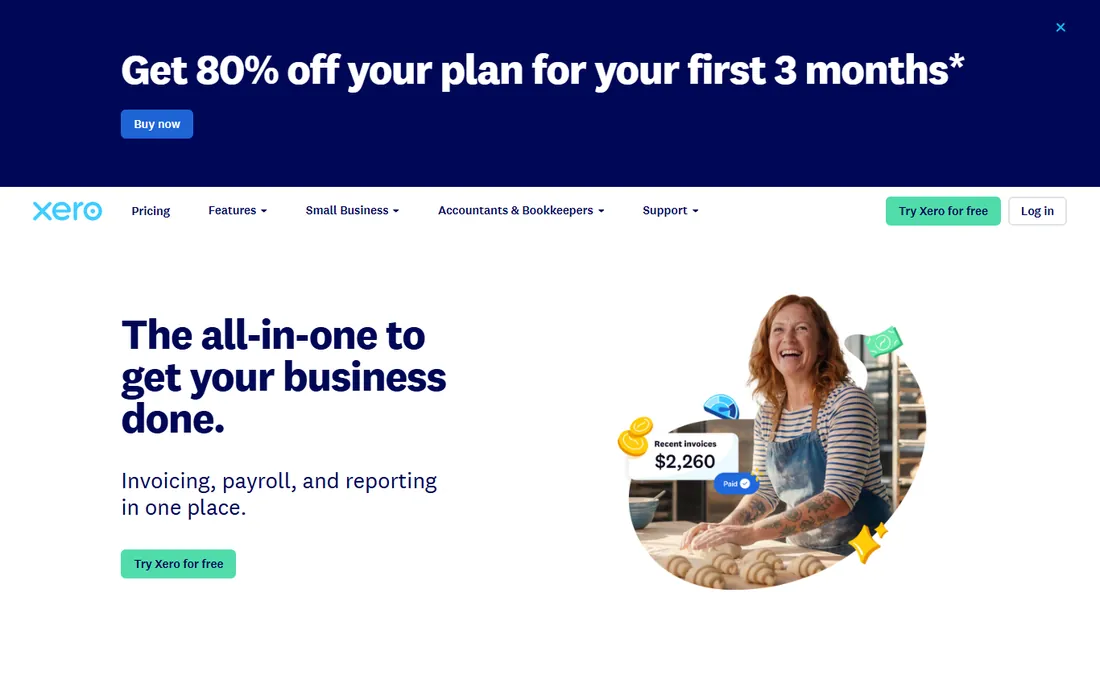
Xero's dashboard is clean and genuinely useful: bank balances, invoices owed, bills to pay and a short-term cash-flow view, with Growing adding performance dashboards and Established adding 180-day forecasts and KPI analysis. Plans are Early $25, Growing $55 and Established $90 a month, all with unlimited users, a commercial advantage QuickBooks cannot match for teams.
The trade-off is the app stack: US payroll through Gusto ($49-plus a month), receipt capture and inventory often via paid integrations, so a typical SMB spends $50 to $200 a month in marketplace apps on top. For teams of 3 to 15 that want flexibility and hate per-seat pricing, Xero is the best-value dashboard in accounting.
What we like- Unlimited users on every plan
- The best bank reconciliation experience
- Strong multi-currency and a 1,000-plus app marketplace
Watch out for- US payroll runs through a partner (Gusto)
- Advanced features often need paid marketplace apps
- Cash-flow forecasting gated to higher tiers
Starting price$23/month
Free planFree trial (30 days)
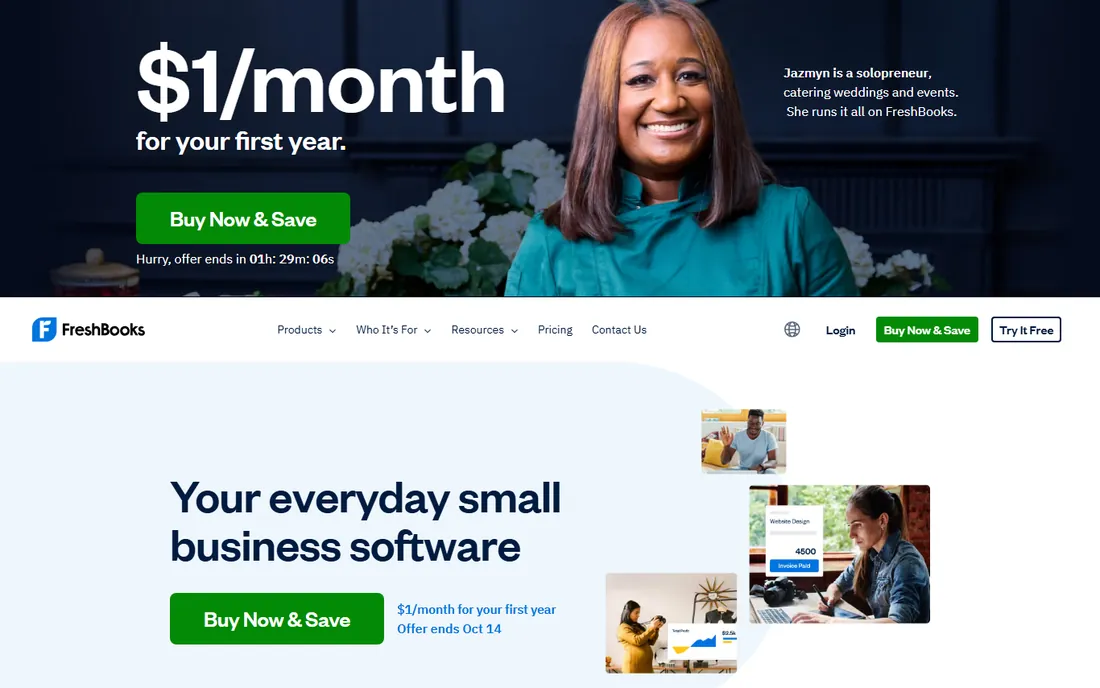
FreshBooks built its name on invoicing, and the dashboard reflects it: outstanding invoices, overdue balances, profit and unbilled time front and center. Lite at $23 a month suits solo freelancers with up to 5 billable clients; Plus at $43 raises the cap to 50 and adds real accounting reports; Premium at $70 removes the cap for agencies.
The client cap is the sharpest constraint in this category: a freelancer with six clients cannot use Lite. Every plan is a one-person plan, so a three-person firm on Plus pays $65 rather than $43. For service businesses that live on invoices and time tracking, the workflow is unmatched; product businesses should look at QuickBooks or Xero.
What we like- Best-in-class invoicing with time tracking baked in
- Simplest interface for non-accountants
- 30-day trial with no credit card
Watch out for- Billable-client caps (5 on Lite, 50 on Plus) force upgrades
- One user per plan with $11 per extra seat
- No real inventory
Starting priceFree
Free planYes
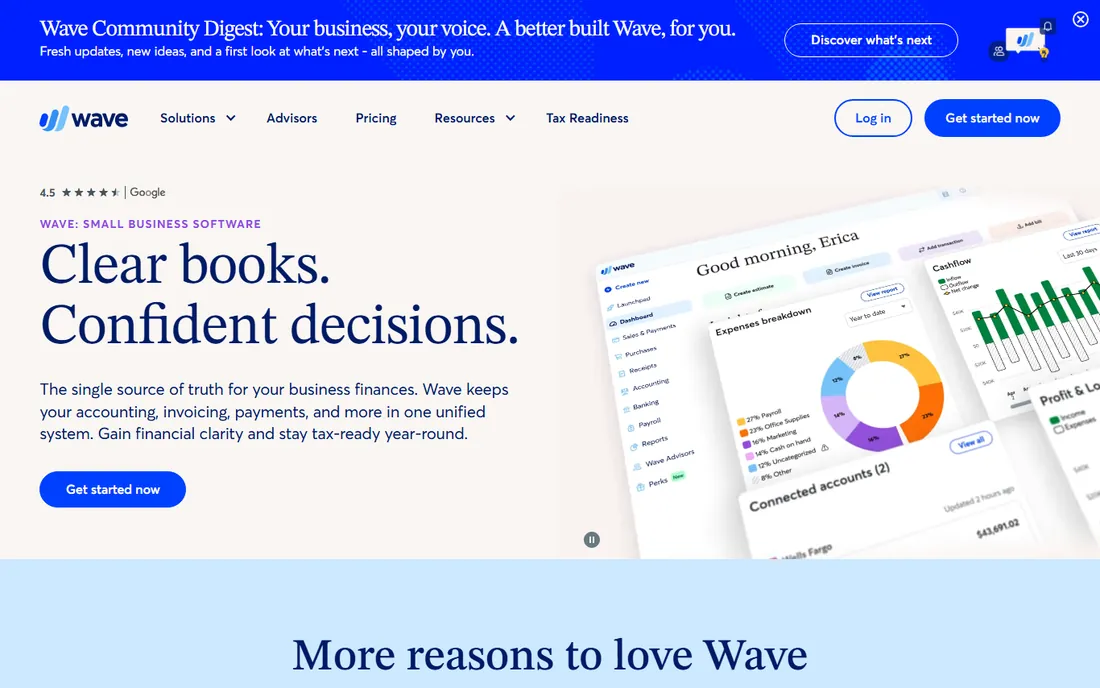
Wave's Starter plan is free and includes invoicing, expense tracking and a clear dashboard showing cash flow, profit and loss and overdue invoices. Pro at $19 a month (or $190 a year) adds automatic bank imports, receipt capture and waives the fixed card fee on the first 10 transactions monthly.
The business model sits in payments: 2.9% + $0.60 per card transaction, so a business taking 30 card payments a month pays $18 in fixed fees alone on Starter. For freelancers and micro-businesses that mainly need invoices and clean books, Wave is the best free dashboard available; growing businesses will outgrow it.
What we like- Genuinely free Starter plan with invoicing and bookkeeping
- Clean dashboard for cash flow and profit
- Pro at $19 adds bank imports and receipt capture
Watch out for- Payment processing fees (2.9% + $0.60) are where Wave makes money
- Payroll only in limited regions
- Reporting depth trails paid tools
#5
Zoho Books
Best for: Businesses already using Zoho apps
Visit zoho.com
Starting priceFree
Free planYes
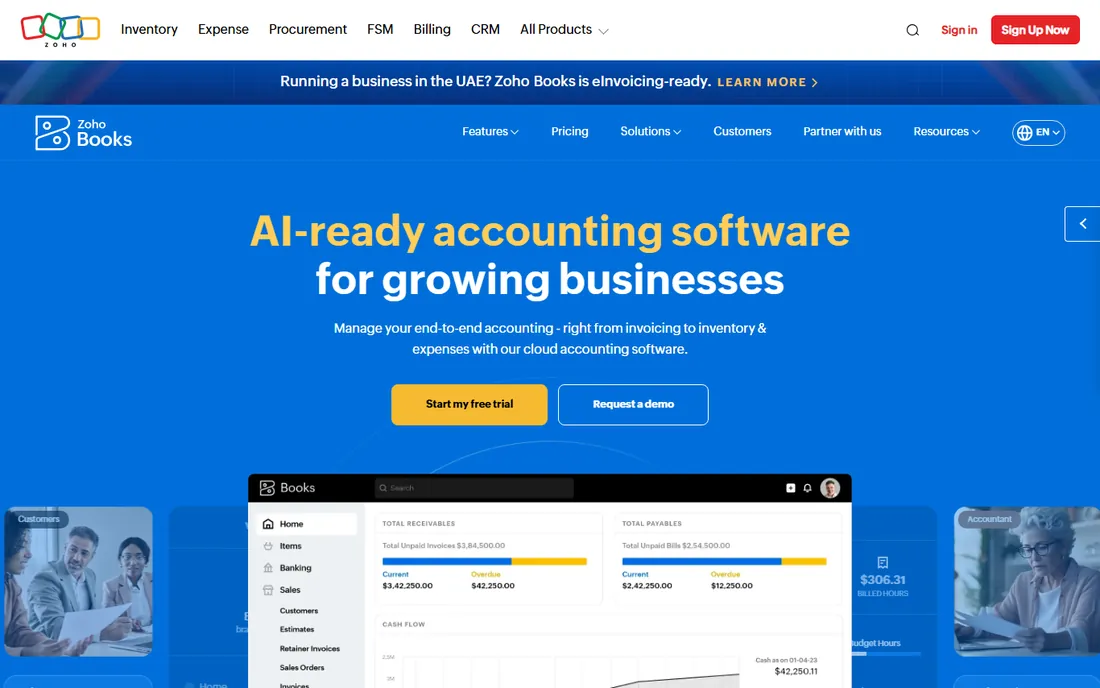
Zoho Books offers one of the most functional free accounting plans: 1 user plus 1 accountant, up to 1,000 invoices a year, bank reconciliation and basic reporting, all free under a country-specific revenue threshold. Paid plans run Standard $20, Professional $50, Premium $70, Elite $150 and Ultimate $275 a month, priced per organization so the whole team shares one subscription.
The dashboard covers cash flow, receivables, payables and project profitability on higher tiers. For businesses inside the Zoho ecosystem (CRM, Inventory, Projects), the integration is the selling point. US businesses should weigh accountant familiarity: fewer American CPAs know Zoho than QuickBooks.
What we like- Permanent free plan for businesses under the revenue threshold
- Per-organization pricing, not per-user
- Deep Zoho ecosystem integration
Watch out for- Free plan caps at 1,000 invoices a year
- No native payroll anywhere
- US accountant familiarity trails QuickBooks
#6
Sage Accounting
Best for: Small businesses wanting accounting plus payroll in one
Visit sage.com
Starting price$24/month
Free planFree trial
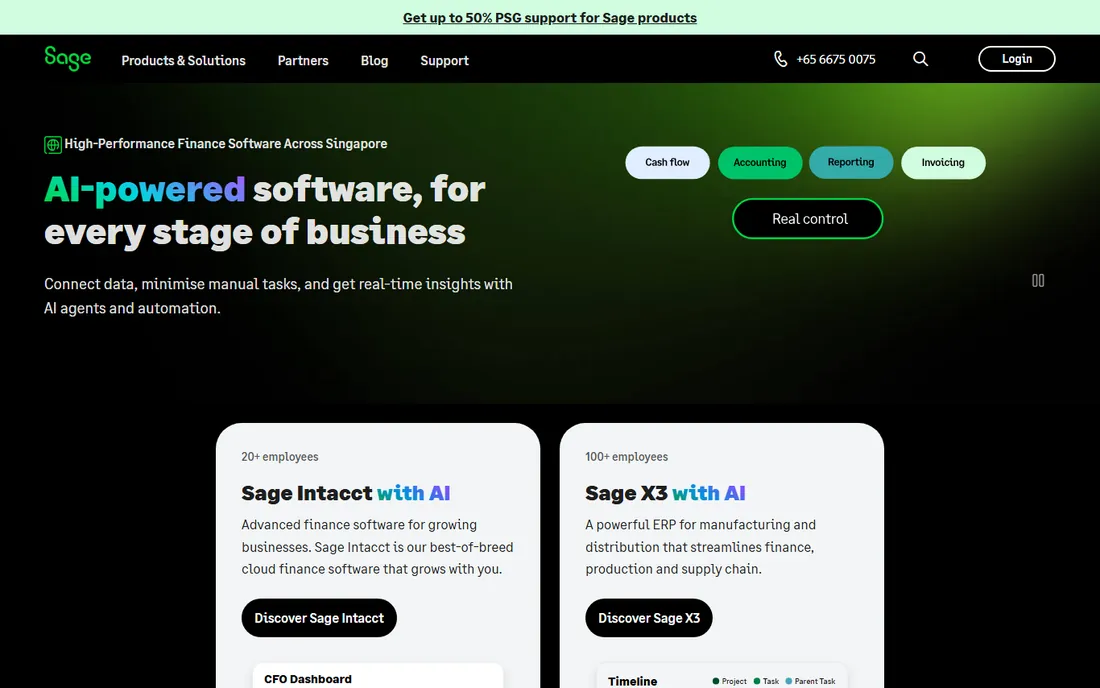
Sage Accounting (formerly Sage One) is the cloud small-business product from the accounting giant: invoicing, bank reconciliation, cash-flow management and a clear dashboard, with US pricing from $24 a month and a free trial. It suits owners who want a traditional accounting brand behind their books.
It does not lead on any single dimension: the interface is more functional than delightful, the integration ecosystem is smaller than QuickBooks or Xero, and regional pricing differences confuse comparisons. But for a straightforward small business that values Sage's longevity and wants payroll nearby, it is a dependable choice.
What we like- US plans from $24 a month with a free trial
- Decades of accounting credibility
- Payroll available as an add-on
Watch out for- Dashboard and UX trail QuickBooks and Xero
- Smaller app marketplace
- Pricing varies confusingly by region
Starting price$30/month
Free planFree trial (14 days)
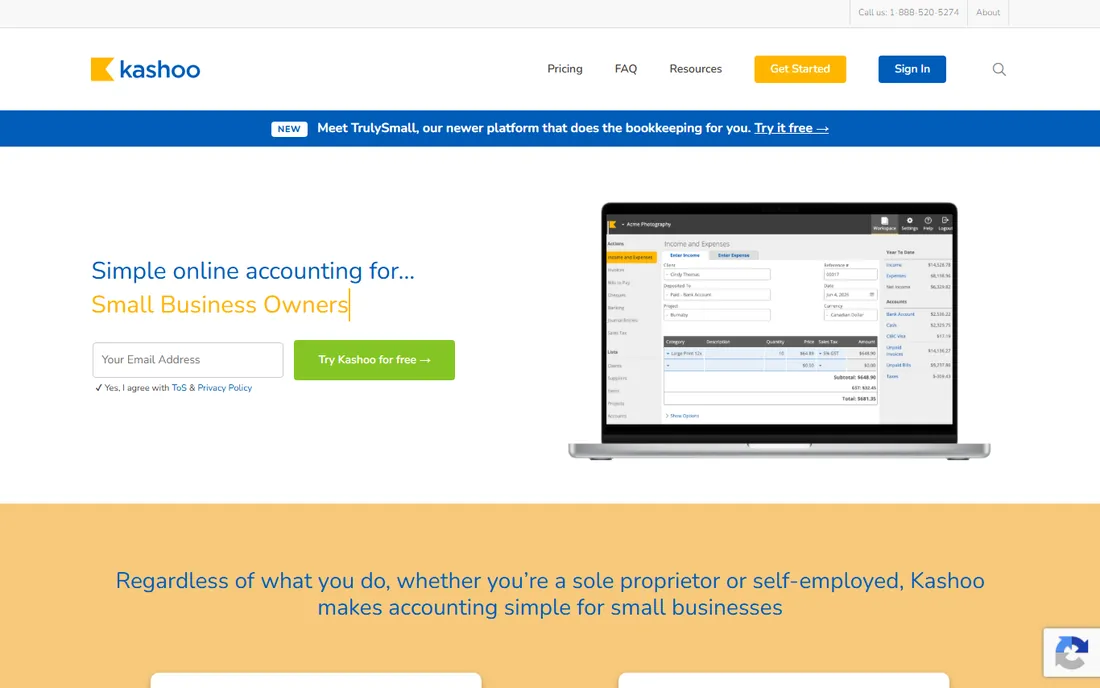
Kashoo markets itself as the world's simplest accounting software, and the dashboard shows it: income, expenses, invoices and bank balances with minimal clutter. The full Kashoo plan runs $30 a month with a 14-day trial; the Trulysmall Accounting tier at $20 a month covers lighter needs.
Honesty requires the caveats: integrations are limited (Square, Stripe, SurePayroll and little else), some long-term users report duplicate bank entries, and third-party reviews are thinner than the leaders'. For a solo owner who wants to do their own books with the least possible accounting jargon, the simplicity is real; anyone needing integrations should choose Xero or QuickBooks.
What we like- Deliberately simple interface for non-accountants
- Multi-currency support
- Automatic bank feeds with 5,000-plus bank connections
Watch out for- Thin integration library
- Duplicate-entry complaints in reviews
- Trulysmall sibling brand confuses the lineup
#8
NetSuite
Best for: Growing companies outgrowing small-business accounting
Visit netsuite.com
Starting priceSee website
Free planNo
This is the honest adjacent pick. Oracle NetSuite is not small-business accounting software; it is the ERP companies adopt when QuickBooks Advanced runs out of room. The dashboards cover consolidated financials across entities, departments and subsidiaries with a depth no SMB tool approaches.
Pricing is custom and starts well above $1,000 a month with implementation costs to match. It belongs here for one reason: businesses reading accounting comparisons while scaling fast should know what the next step looks like, and should not try to force an SMB tool past its limits. Everyone else should ignore it for now.
What we like- True ERP with financials, inventory, CRM and ecommerce in one
- Dashboards scale to hundreds of users
- The standard graduation path from QuickBooks
Watch out for- Custom pricing starting well over $1,000 a month
- Implementation is a major project
- Absurd overkill below roughly $5M in revenue
How we chose
We compared the accounting platforms small and mid-sized businesses actually evaluate in 2026: QuickBooks Online, Xero, FreshBooks, Wave, Zoho Books, Sage Accounting and Kashoo, plus NetSuite as the honest enterprise adjacent pick. We verified pricing from vendor pricing pages and 2026 pricing analyses, distinguishing promotional prices from ongoing list rates. We weighed public review patterns on G2, Capterra and NerdWallet for dashboard quality, reconciliation experience and support, checked free-plan limits and payroll availability, and matched each tool to a business size and accounting sophistication level. No vendor paid for placement.
Every major vendor in this category advertises a price you will not pay for long. QuickBooks shows 50% off for three months, then bills the full $38 to $275. Xero's page leads with a six-month promotion before the $25 to $90 ongoing rates. FreshBooks advertises 90% off for three months against $23 to $70 list prices.
The discipline is simple: find the struck-through or fine-print number and budget from that. Then add the real stack: payroll (QuickBooks and FreshBooks charge separately; Xero routes through Gusto), payment processing (2.9% plus a fixed fee everywhere), extra users ($11 a seat on FreshBooks, tier jumps on QuickBooks), and the marketplace apps Xero practically requires. A $25-a-month plan becomes $120 a month quickly; that is normal, but it should be a decision, not a surprise.
Pick the dashboard for the business you have
Dashboard needs scale with the business. A freelancer needs to see who owes them money and whether they are profitable: Wave's free plan or FreshBooks Lite answers that. A five-person agency needs project profitability and multi-user access: Xero Growing or QuickBooks Plus. A product business needs inventory and cost of goods: QuickBooks Plus or Xero Established with an inventory app.
The most common mistake is buying for the business you hope to become. A solo consultant does not need NetSuite, and a 20-person company should not run on a free plan with 1,000 invoices a year. Count your monthly invoices, your users, and whether you sell products or time. The right dashboard is the one that shows those three numbers without making you build a custom report.
Frequently asked questions
What is the best accounting software with a dashboard for small business?
QuickBooks Online has the deepest dashboards and reporting; Xero is the best value for teams with its unlimited users; Wave and Zoho Books offer the best free dashboards. The right pick depends on your user count, invoice volume, and whether you sell products or services.
Is there really free accounting software with a dashboard?
Yes. Wave's Starter plan and Zoho Books' free plan both include invoicing, expense tracking, bank reconciliation and visual dashboards at no cost, with limits on users and invoice volume. They are genuinely usable, not trials, and suit freelancers and micro-businesses.
How much does accounting software cost?
Free plans exist at Wave and Zoho Books. Paid entry runs $20 to $38 a month: Zoho Standard $20, FreshBooks Lite $23, Sage from $24, Xero Early $25, Kashoo $30, QuickBooks Simple Start $38. Mid-tier plans run $43 to $115; advanced tiers reach $275. Budget extra for payroll, payments and additional users.
Which is better, QuickBooks or Xero?
QuickBooks has deeper reporting, more US accountants, and native inventory and payroll. Xero has unlimited users on every plan, better bank reconciliation, and stronger multi-currency. Teams of 3-plus often save money with Xero; businesses needing inventory depth or a US accountant's familiarity usually pick QuickBooks.
Do I need payroll in my accounting software?
If you have employees, yes, and it is almost always a separate cost: QuickBooks and FreshBooks sell it as an add-on, Xero routes through Gusto, and Sage offers it as an add-on. Factor $40 to $50 a month plus per-employee fees into the budget.
When should I move from QuickBooks to NetSuite?
When you need multi-entity consolidation, advanced inventory across warehouses, or financial controls QuickBooks Advanced cannot provide, typically around $5M-plus in revenue or multi-subsidiary operations. Below that, NetSuite's cost and implementation burden far outweigh its benefits.
Sources we checked (10)
- https://quickbooks.intuit.com/pricing/
- https://www.xero.com/us/pricing-plans/
- https://www.freshbooks.com/pricing
- https://www.waveapps.com/pricing/
- https://www.zoho.com/books/pricing/
- https://www.sage.com/en-us/products/sage-accounting/
- https://www.kashoo.com/pricing/
- https://www.netsuite.com/portal/products/erp.shtml
- https://www.nerdwallet.com/business/software/learn/quickbooks-pricing
- https://www.flozic.ai/blog/xero-vs-quickbooks
Is your product missing or out of date?
We review this list regularly. Vendors can request a listing, send updated pricing or ask about featured placement.

Shihab Mia · Founder, Rankite
Shihab has spent more than a decade helping SaaS and e-commerce brands grow through search. He writes Rankite's software buying guides from pricing pages, documentation and public user reviews. More about Shihab.