How we make this list: we compare pricing pages, product documentation and public user reviews. Ratings come from G2, Capterra or Trustpilot, with the date we checked them.
Key takeaways
- 15Five publishes its pricing openly: from $4/user/month for engagement surveys to $16 for the full platform, rare transparency in this category.
- Lattice and Culture Amp lead for companies wanting reviews tied to goals, engagement data and development in one system.
- Small Improvements and PerformYard suit mid-size companies that want capable reviews without enterprise complexity or pricing.
- 360 feedback only works with rater anonymity and manager follow-through; the software enables the process, it does not replace it.
Quick comparison
| Tool | Best for | Starting price | Free plan |
|---|
 Lattice Lattice | Performance plus HRIS in one | See website | No |
 Culture Amp Culture Amp | Engagement-rooted performance | See website | No |
 15Five 15Five | Transparent pricing, manager enablement | $4/user/month | No |
 Leapsome Leapsome | All-round people enablement | See website | No |
 PerformYard PerformYard | Flexible reviews for mid-size firms | See website | No |
 Small Improvements Small Improvements | Simple reviews for SMBs | See website | No |
 Trakstar Trakstar | Straightforward performance management | See website | No |
 Engagedly Engagedly | Talent management beyond reviews | See website | No |
Is your product missing or out of date?
We review this list regularly. Vendors can request a listing, send updated pricing or ask about featured placement.
The best 360 feedback software
360-degree feedback gathers performance input from managers, peers, direct reports and sometimes clients, giving employees a fuller picture than top-down reviews. The tools below run the rater selection, anonymity, question libraries and reporting that make it work. Eight platforms.
Starting priceSee website
Free planNo
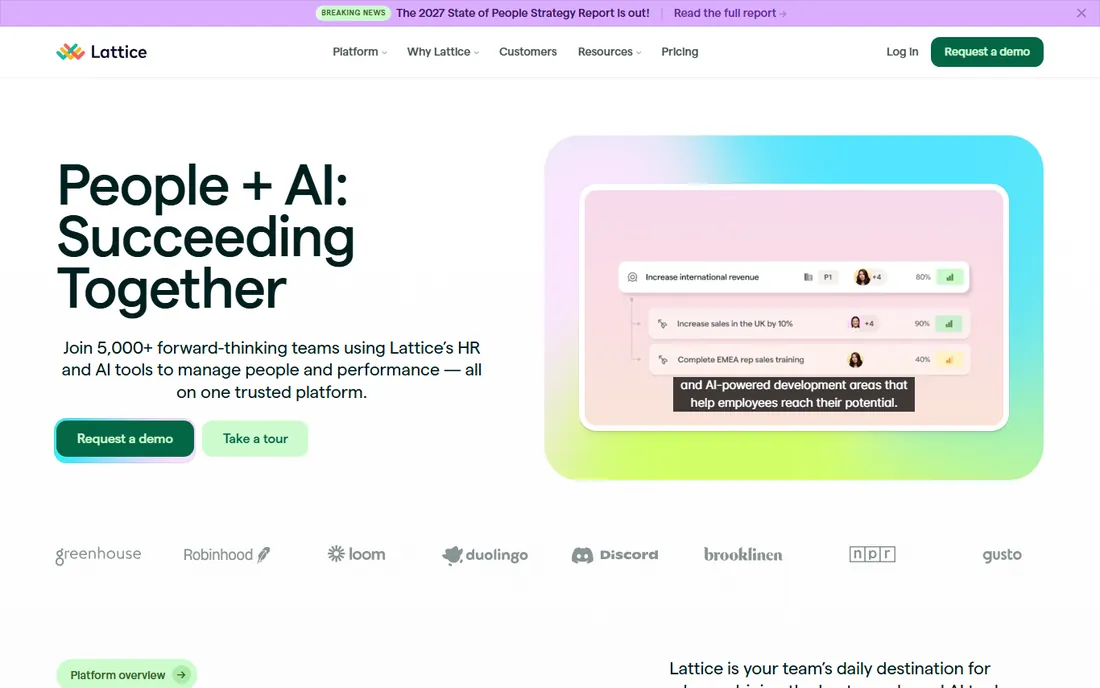
Lattice combines 360 reviews with goals, 1-on-1s, engagement surveys and core HR, so feedback lives alongside the rest of the people data. The review workflows are deep: calibration, custom questions and development planning.
Implementation takes planning and pricing reflects the platform scope. Lattice fits growth-stage companies that want performance management and HR fundamentals from one vendor.
What we like- Reviews, goals, engagement and a built-in HRIS in one platform
- Strong performance workflows
- Widely adopted by tech companies
Watch out for- Setup effort is real
- Pricing is quote-based
- Smaller companies may find it heavy
Starting priceSee website
Free planNo
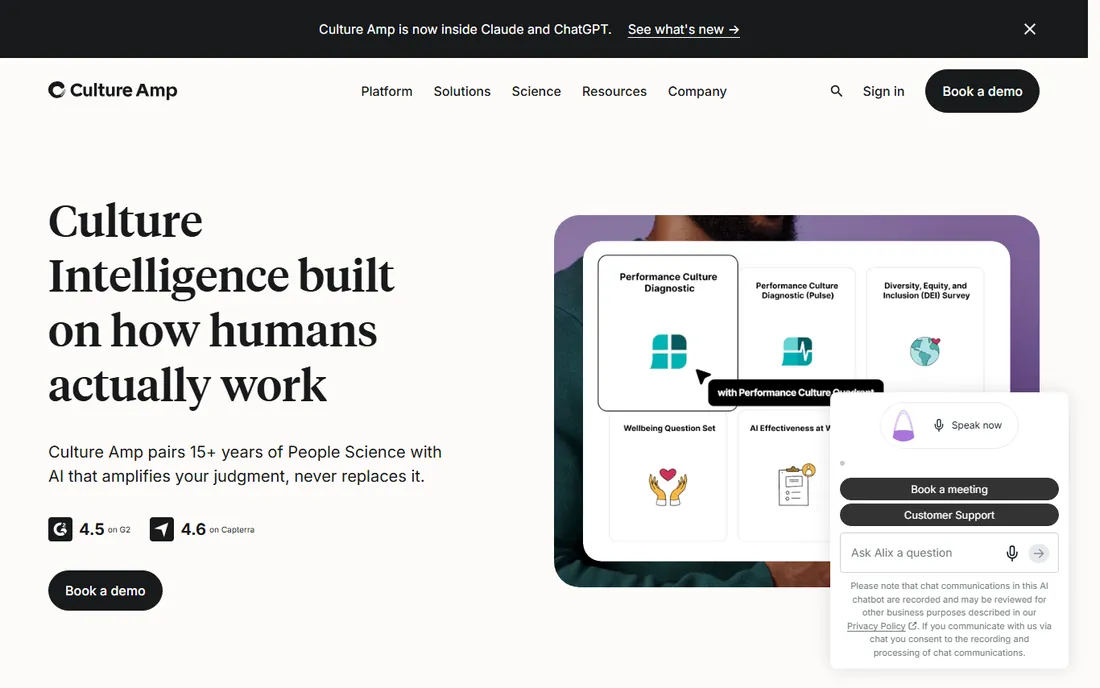
Culture Amp approaches 360s from engagement science: feedback and reviews informed by one of the industry's largest employee datasets, with benchmarking competitors cannot match. Calibration tools keep ratings fair across managers.
Pricing opacity complicates budgeting, and the platform shines brightest at scale. Culture Amp fits mid-size to enterprise companies where engagement analytics and fairness matter most.
What we like- Science-backed surveys with unmatched benchmarking across 5,000-plus companies
- Reviews tied to engagement insights
- Strong DEI tooling
Watch out for- Custom quotes only, no public pricing
- Admin interface can feel clunky
- Best at 300-plus employees
Starting price$4/user/month
Free planNo
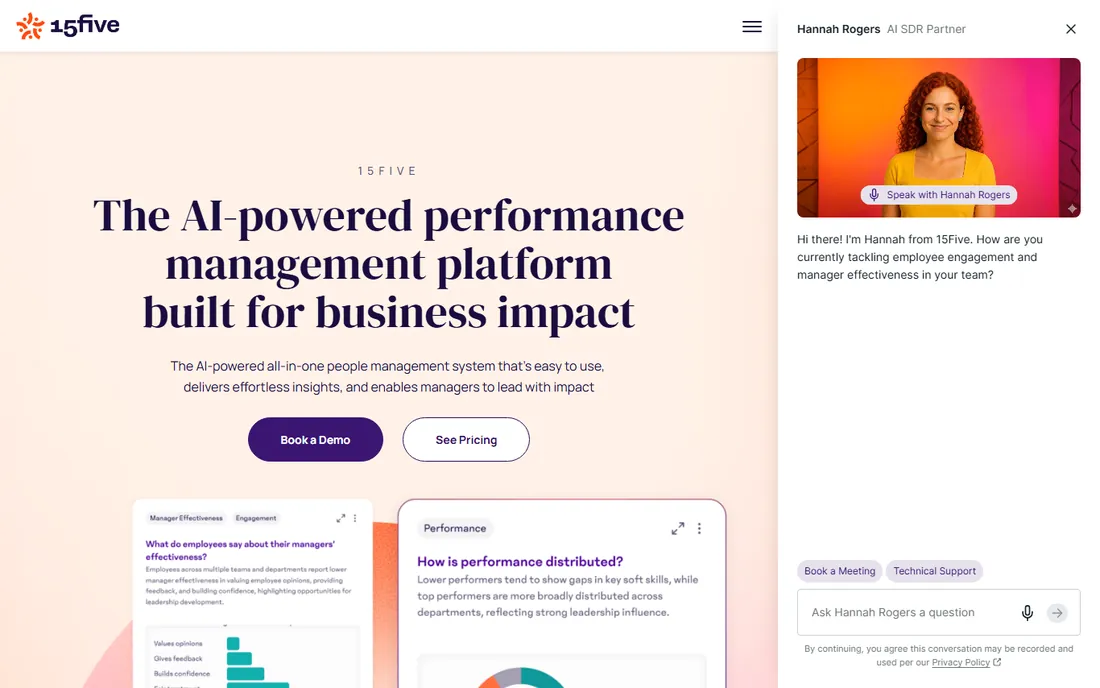
15Five's rare virtue is pricing transparency, published on its own site: three annual tiers from engagement surveys to the full platform with manager training. Weekly check-ins and 1-on-1s make feedback continuous rather than annual, and AI surfaces insights for managers.
Teams must commit to the cadence for value. 15Five fits SMBs and mid-market companies wanting structured performance management with honest pricing.
What we like- Public pricing: Engage $4, Perform $11, Total Platform $16 per user monthly
- Weekly check-ins build a feedback habit
- Manager coaching tools included
Watch out for- The check-in cadence needs cultural buy-in
- Advanced analytics trail Culture Amp
Starting priceSee website
Free planNo
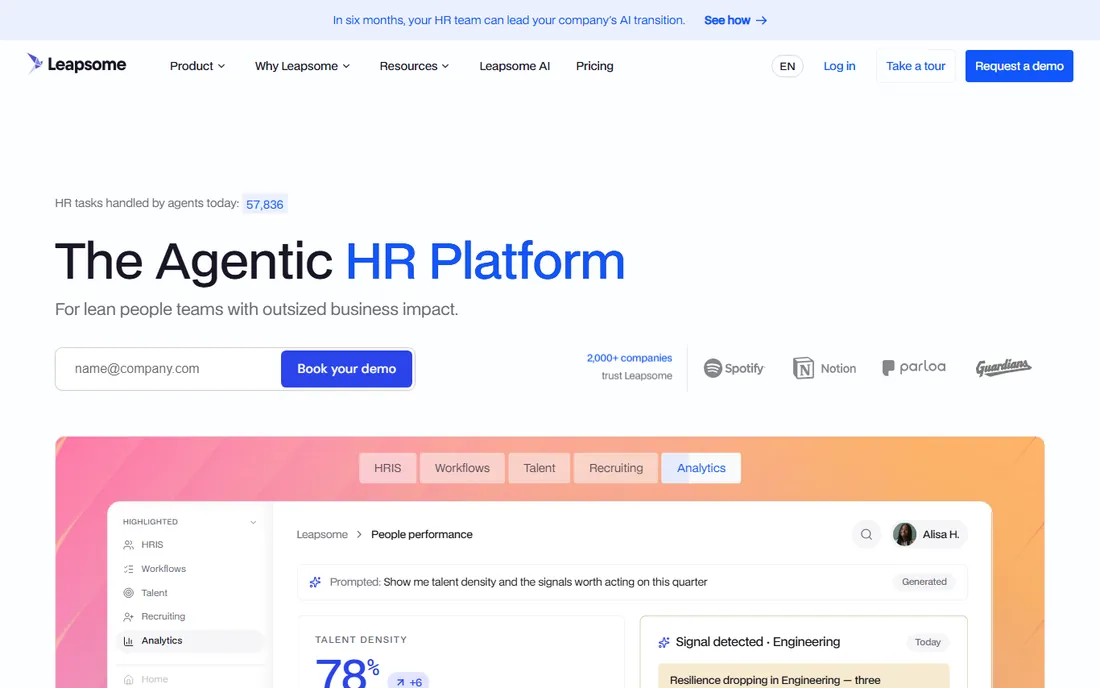
Leapsome blends 360 reviews with goals, engagement surveys, learning paths and HR basics like time tracking and documents. Reviewers consistently praise usability, and the platform scales across company sizes.
Pricing requires a conversation. Leapsome fits companies wanting an all-in-one people platform where 360s are one strong module among many.
What we like- Reviews, goals, engagement, learning and core HR in one
- Intuitive interface reviewers praise
- Scales from startups to enterprises
Watch out for- Quote-based pricing
- The breadth can exceed what small teams need
Starting priceSee website
Free planNo
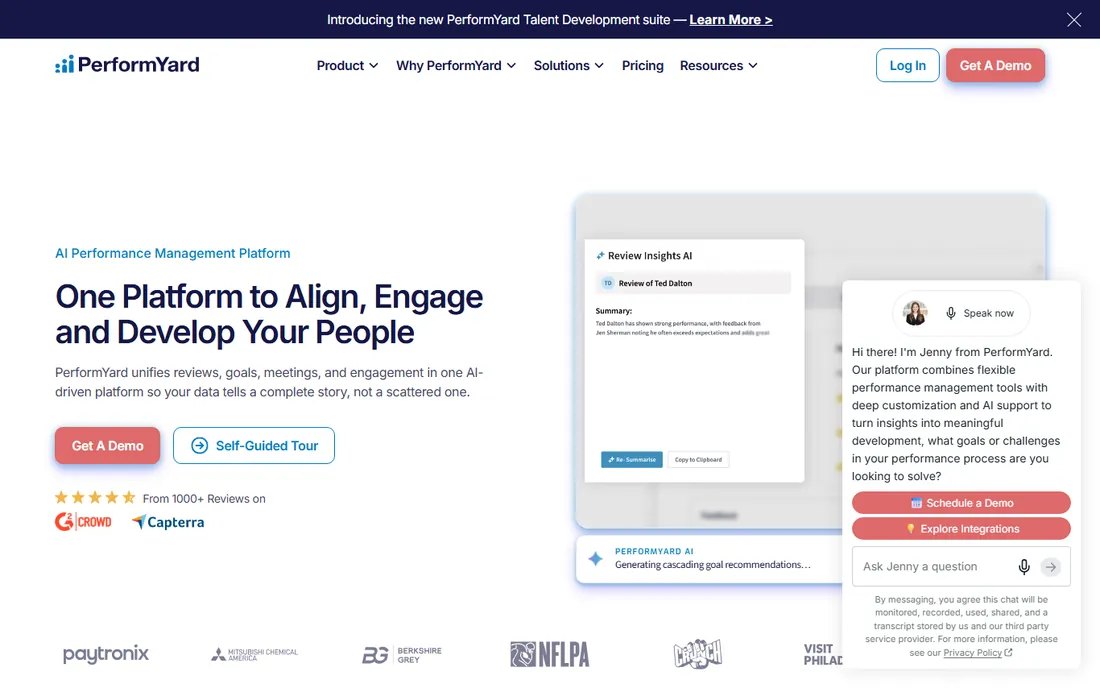
PerformYard focuses on doing reviews well: flexible cycles, custom rating scales, 360s and continuous feedback with an interface employees actually complete. HR teams praise the configurability and support.
It is less of a talent suite than Lattice or Engagedly. PerformYard fits mid-size companies that want review excellence without platform bloat.
What we like- Highly configurable review cycles and rating scales
- Simple employee experience
- Strong customer ratings for support
Watch out for- Smaller vendor with less brand recognition
- Engagement features are thinner than rivals
Starting priceSee website
Free planNo
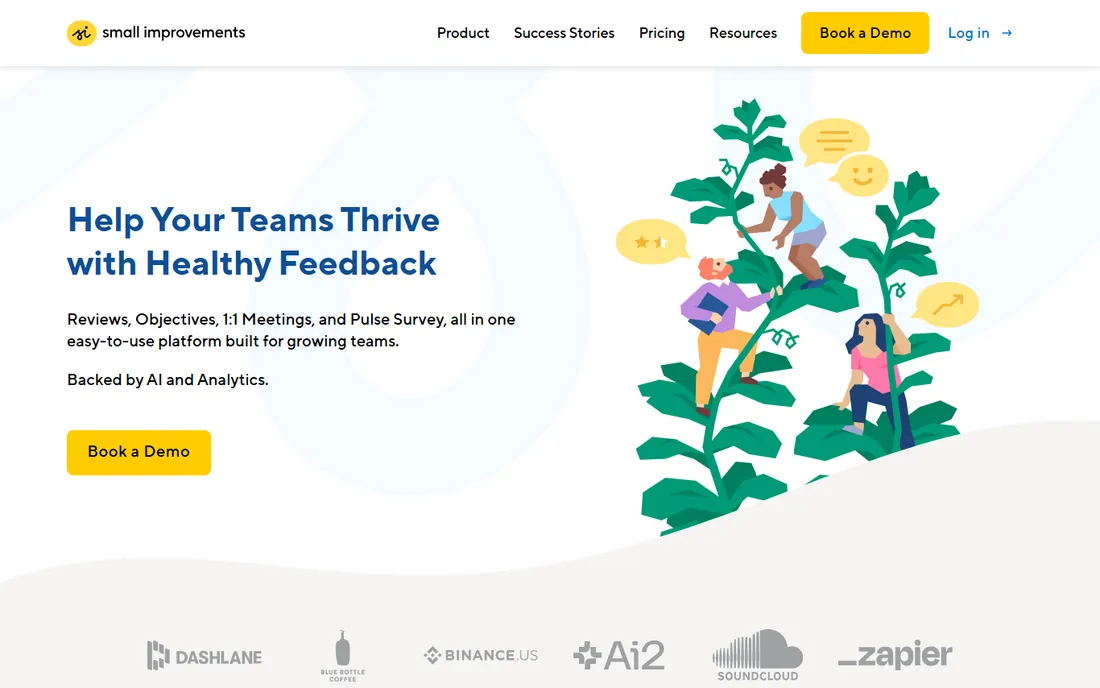
Small Improvements serves the mid-market sweet spot: performance reviews, 360-degree feedback, objectives and peer praise at accessible per-user pricing, designed for companies of 50 to 750 employees.
Enterprises will outgrow it. Small Improvements fits SMBs running their first structured review cycles without enterprise software overhead.
What we like- Accessible pricing from $3/user/month
- Reviews, 360s, 1-on-1s and praise in a clean package
- Built for 50-to-750-employee companies
Watch out for- Less depth for complex enterprises
- Analytics are basic
- The simplicity limits power users
Starting priceSee website
Free planNo
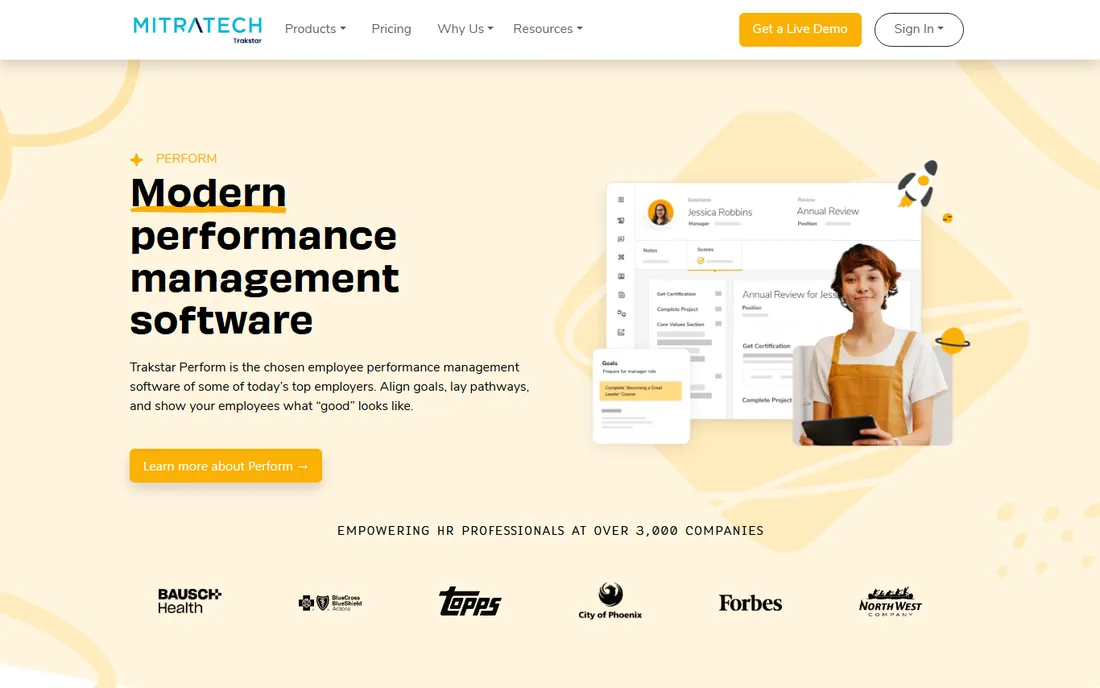
Trakstar (Mitratech) offers dependable performance management: evaluations aligned to goals, engagement surveys and talent workflows, with sibling products for hiring and learning.
It will not win on innovation. Trakstar fits traditional organizations wanting reliable review cycles inside a broader HR suite.
What we like- Simple evaluations, SMART goals and talent management
- Part of a broader hire-to-retire suite
- Easy to administer
Watch out for- Interface feels dated
- 360 features are solid but not standout
- Innovation pace trails leaders
Starting priceSee website
Free planNo
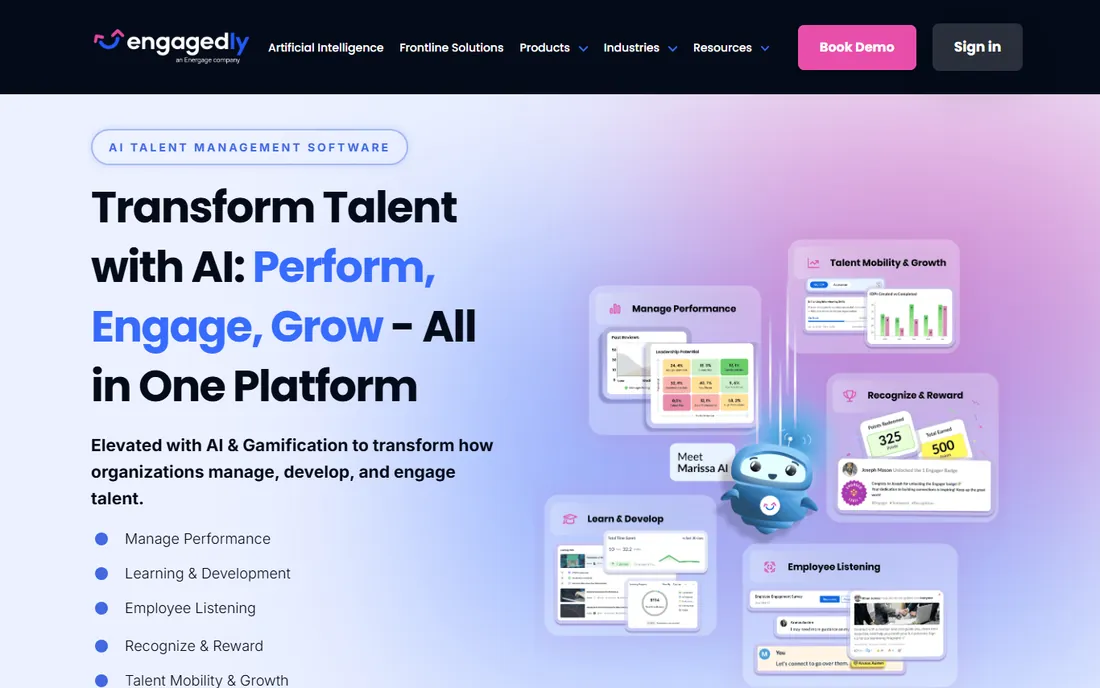
Engagedly extends past reviews into learning management, development plans, succession and recognition, with an AI assistant guiding managers. The 360 module is one part of a talent-management whole.
Review-only buyers get more than they need. Engagedly fits companies where review data should drive development, mobility and learning decisions.
What we like- Connects reviews to learning, succession and talent mobility
- Marissa AI assistant
- Gamified recognition
- Backed by Top Workplaces data
Watch out for- Broader than pure 360 needs
- Pricing is quote-based
- The suite can overwhelm review-focused buyers
What to check before you buy
Start with anonymity guarantees. 360 feedback fails when raters fear identification: verify minimum rater counts, aggregation rules and who sees raw versus summarized data.
Check the question library quality: validated competency models beat generic questions. Verify the calibration and reporting tools managers actually use; pretty dashboards nobody opens waste money. Confirm HRIS integration for employee data sync. Finally, assess the vendor's guidance on process, not just software: rater selection, communication templates and manager training decide whether 360s develop people or just generate anxiety.
How we chose
We selected 360 feedback and performance platforms with live products and real customer bases, spanning SMB to enterprise, using vendor sites, documentation and public reviews. 15Five's price comes from its own site; elsewhere we wrote See website where we could not verify a current figure on the vendor's own pricing page. We did not run review cycles.
Running your first 360 cycle without the drama
The first 360-degree feedback cycle sets the tone for every one after it. Get it right and participation becomes routine; get it wrong and employees dodge it for years. The difference is rarely the software.
Communicate the purpose before the invitations go out. Employees who first hear about 360s from a rater nomination email assume the worst: that it is a stealth performance review or a layoff precursor. A clear message from leadership (what it is, what it is not, who sees what) prevents the rumor mill from writing its own version. Emphasize development over evaluation, and mean it: if the first cycle feeds directly into compensation decisions, trust never recovers.
Choose raters carefully. The standard mix is manager, peers, direct reports and self, usually five to eight raters total. More is not better; rater fatigue produces generic responses. Let the subject nominate raters with manager approval, which balances comfort with honesty. Anonymous to the subject, visible to the administrator: that is the standard confidentiality model, and it must be explained plainly.
Write questions about observable behavior. "Demonstrates strategic thinking" invites guesswork; "communicates project risks before they become problems" invites evidence. Behavior-based questions produce feedback the recipient can act on. Keep the survey under twenty questions; completion rates fall off a cliff past that.
Train people to give useful feedback. Most employees have never written constructive feedback and default to either vague praise or anonymous sniping. A fifteen-minute guide with examples (specific, behavioral, actionable) dramatically improves quality. Show what good looks like: "Your status updates are clear" is weak; "your Friday updates helped me catch the API delay early twice this quarter" is useful.
Handle the results conversation with care. Dumping a report on someone's desk and wishing them luck is how 360s become traumatic. Managers should be trained to deliver results as a coaching conversation: start with strengths, explore two or three themes (not twenty data points), and co-create one or two development actions. The report is the beginning of the conversation, not the end.
Close the loop visibly. Six months later, ask what changed. When employees see that feedback led to real development (a training course, a new responsibility, a changed habit), the next cycle gets honest participation. When nothing happens, the next cycle gets polite fiction.
Frequently asked questions
What is 360-degree feedback?
Performance feedback collected from an employee's manager, peers, direct reports and sometimes clients or themselves, giving a rounded view versus top-down-only reviews.
How many raters should a 360 include?
Typically 5 to 10 raters plus self-assessment, with minimum aggregation thresholds (usually 3-plus per rater group) to protect anonymity.
Should 360 feedback affect compensation?
Most experts advise separating developmental 360s from compensation decisions, since tying pay to peer ratings distorts honesty. Use 360s for growth; use performance ratings for pay.
How often should we run 360 reviews?
Annually or biannually for formal cycles, supplemented by continuous feedback tools. More frequent formal 360s cause survey fatigue.
What makes 360 feedback fail?
Lack of anonymity, no manager follow-up on results, poor rater selection, generic questions and using results punitively. The software matters less than the process discipline.
Can small companies use 360 feedback software?
Yes. Tools like Small Improvements and 15Five target companies from 50 employees up. Below that, informal feedback often works better than formal 360 cycles.
How do you prevent 360 feedback from becoming a popularity contest?
Behavior-based questions and trained raters are the main defenses. Questions should ask about observable actions, such as sharing credit for team wins, rather than vague traits like being a good leader. Brief raters with examples of useful versus unhelpful feedback, and have administrators review comments for vagueness or personal attacks before reports go out. When people know what good feedback looks like, quality rises across the board.
Should 360 results affect compensation?
Most experts advise against linking the first few cycles to pay or promotions. The moment 360s determine bonuses, raters game them: inflating scores for allies and settling scores with rivals. Keep the initial cycles developmental to build trust in the process. If you later connect results to talent decisions, do it transparently, with clear communication about exactly how the data will be used.
How often should 360 reviews run?
Annually is the most common cadence, with some organizations running lighter pulse versions quarterly. More frequent than that creates survey fatigue; less frequent and the feedback goes stale. The right rhythm is the one your culture will sustain: a well-run annual cycle beats an ambitious quarterly program that collapses after two rounds.
Sources we checked (8)
- https://lattice.com
- https://www.cultureamp.com/
- https://www.15five.com/
- https://www.leapsome.com
- https://performyard.com
- https://www.small-improvements.com
- https://www.trakstar.com/solutions/performance-management-software/
- https://engagedly.com/
Is your product missing or out of date?
We review this list regularly. Vendors can request a listing, send updated pricing or ask about featured placement.

Shihab Mia · Founder, Rankite
Shihab has 5+ years in B2B and SaaS SEO. He writes Rankite's software buying guides from pricing pages, documentation and public user reviews. More about Shihab.