How we make this list: we compare pricing pages, product documentation and public user reviews. Ratings come from G2, Capterra or Trustpilot, with the date we checked them.
Key takeaways
- The best alternatives to Svelte in 2026 trade its compiler model for a larger ecosystem, a stricter enterprise structure, or an even smaller bundle.
- React leads for ecosystem and hiring, while Vue leads for a gentle learning curve with official router and state tools.
- Angular leads for large enterprise teams that want a batteries-included platform, while SolidJS leads for fine-grained reactivity at near-vanilla speed.
- Qwik leads for instant startup on public sites, Preact leads for a tiny React-compatible bundle, and Lit and Alpine.js lead for small embedded widgets.
- This guide lists alternatives only. Svelte itself is not listed, since the question is what to use instead of it.
Quick comparison
| Tool | Best for | Starting price | Free plan |
|---|
 React | Ecosystem and hiring | Free | Yes |
 Vue | Gentle learning curve | Free | Yes |
 Angular | Large enterprise teams | Free | Yes |
 SolidJS | Fine-grained reactivity | Free | Yes |
 Qwik | Instant startup | Free | Yes |
 Preact | Tiny React-compatible bundle | Free | Yes |
 Lit | Web components | Free | Yes |
 Alpine.js | Lightweight page interactivity | Free | Yes |
Is your product missing or out of date?
We review this list regularly. Vendors can request a listing, send updated pricing or ask about featured placement.
The best alternatives to Svelte
Starting priceFree
Free planYes
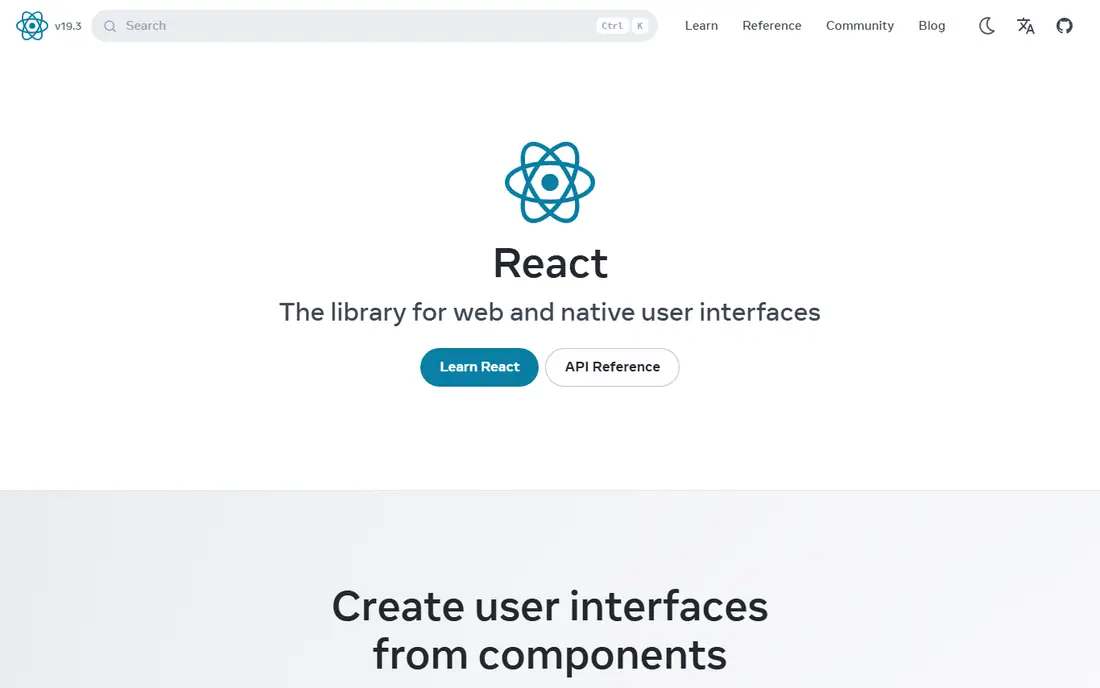
React is the safe default alternative, and its strength is scale. In the Stack Overflow 2025 survey, 44.7 percent of developers reported extensive React work in the past year, far ahead of rivals, which means more libraries, more candidates, and more answers to common problems. Next.js adds routing, server features, and rendering modes for full-stack React apps.
The trade is choice overload. React is a library, not a full framework, so routing, data fetching, and state need separate decisions or a meta-framework. Bundles also run larger than compiled options. For a team that wants the broadest ecosystem and hiring pool, React leads.
What we like- Largest ecosystem and hiring pool
- Mature meta-framework in Next.js
- Flexible architecture
Watch out for- More architecture choices to make
- Needs a meta-framework for full features
- Bundle larger than compiled options
Starting priceFree
Free planYes
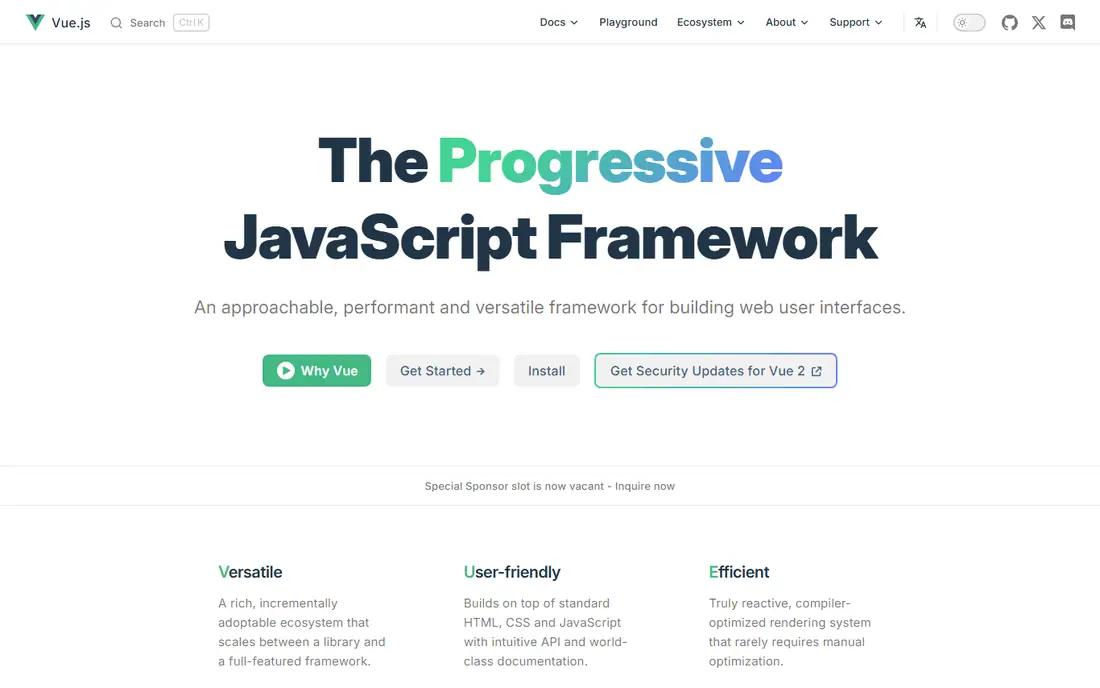
Vue suits teams that want a cohesive framework without a steep learning curve. Its templates read clearly, documentation is widely praised, and official tools cover routing with Vue Router, state with Pinia, and builds with Vite, so fewer decisions fall on the team. Vue also adopts progressively, so it can enhance one page or power a full single-page app.
The limits are ecosystem and version care. The hiring pool is smaller than React in some markets, and Vue 2 reached end of life in 2023, so new projects should use Vue 3. For a product team that values developer happiness and a gentle onboarding curve, Vue is the balanced pick.
What we like- Clear templates and docs
- Official router and Pinia state
- Progressive adoption
Watch out for- Smaller ecosystem than React in some markets
- Vue 2 reached end of life, so use Vue 3
Starting priceFree
Free planYes
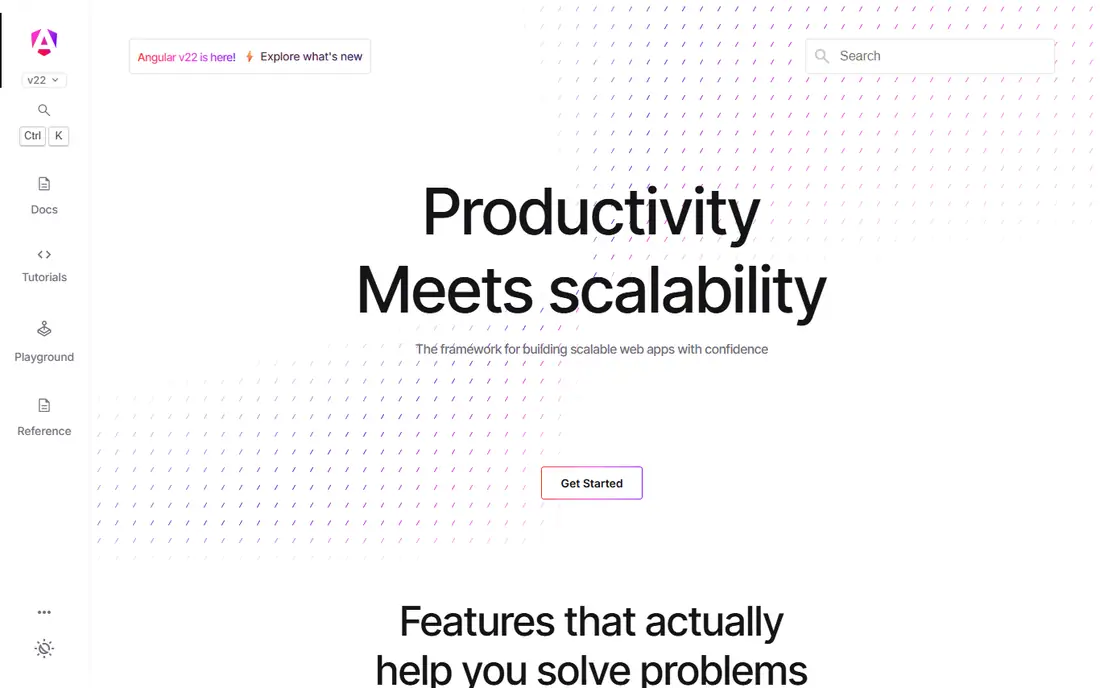
Angular suits large enterprise teams that benefit from strict conventions. It ships routing, forms, HTTP, testing, and a CLI in one platform, and its TypeScript-first design keeps large codebases consistent across many developers. Recent versions use standalone components and signals, which simplify older Angular tutorials.
The trade is commitment. Angular has the steepest learning curve in this list, its opinionated structure suits teams that accept it rather than fight it, and bundles run larger than compiled frameworks. For a large team on a long-lived internal platform, Angular is the enterprise standard.
What we like- Batteries-included platform
- TypeScript-first
- Strict conventions for large teams
Watch out for- Steepest learning curve here
- Opinionated structure
- Larger bundles than compiled options
Starting priceFree
Free planYes
SolidJS suits interaction-heavy dashboards where performance matters. Its fine-grained reactivity updates only the exact DOM nodes that change, rather than re-rendering whole components, which gives near-vanilla speed with React-like JSX ergonomics. Bundle sizes stay tiny, near 5 KB in some comparisons.
The limits are ecosystem depth. SolidJS has fewer component libraries and fewer candidates than React or Vue, and hiring varies by market. For a team that wants Svelte-like speed with JSX familiarity, SolidJS is the closest performance peer.
What we like- Fine-grained reactivity
- Near-vanilla performance
- React-like JSX ergonomics
Watch out for- Smaller ecosystem and hiring depth
- Fewer ready-made component libraries
- Community is younger
Starting priceFree
Free planYes
Qwik suits public sites where Time to Interactive is the priority. Its resumable model ships almost no JavaScript at load, then resumes interactivity on demand, so pages start fast even on slow phones. Fine-grained lazy loading keeps initial payloads small, and Qwik City adds routing and full-stack features.
The trade is novelty. The resumable model differs from other frameworks, serialization constraints shape how state works, and the ecosystem is smaller than React or Vue. For a content-heavy public site where startup speed is a feature, Qwik is the sharpest pick.
What we like- Resumable model with fast startup
- Fine-grained lazy loading
- Small shipped JavaScript
Watch out for- Different mental model
- Serialization constraints
- Smaller ecosystem
Starting priceFree
Free planYes
Preact suits widgets and apps where every kilobyte matters but React knowledge should carry over. At roughly 5 KB, it is a fraction of React size, yet it keeps most of the React API, so existing React components often run with little change. Widgets embedded in other sites benefit most, since a small bundle keeps host pages fast.
The limits are compatibility edges. Some React libraries need a compatibility layer, and the community is smaller than React. For a team that wants React skills with a tiny footprint, Preact is the pragmatic pick.
What we like- Only about 5 KB
- Mostly React-compatible
- Easy migration path
Watch out for- Some React libraries need compatibility layer
- Smaller community than React
- Fewer enterprise tools
Starting priceFree
Free planYes
Lit suits teams that want components that work anywhere. Built on native web components, Lit components run in any framework or plain HTML page, which suits design systems and widgets embedded across sites. Bundles stay small, near 6 KB in comparisons, and the output is framework-agnostic.
The trade is model difference. Lit components differ from framework components in lifecycle and templating, and the ecosystem is smaller than React or Vue. For a design system team that needs components usable in many stacks, Lit leads.
What we like- Native web components
- Small bundle
- Framework-agnostic output
Watch out for- Component model differs from frameworks
- Ecosystem smaller than React
- Needs build care for older browsers
Starting priceFree
Free planYes
Alpine.js suits pages that need light interactivity without a framework. Its declarative directives add dropdowns, modals, tabs, and toggles directly in HTML, with almost no setup and a tiny footprint. Server-rendered pages gain interactivity without rewriting the stack.
The limits are scale. Alpine.js lacks the routing, state management, and build system of a full framework, so large single-page apps outgrow it. For a content site that needs sprinkles of interactivity, Alpine.js is the lightest pick.
What we like- Tiny and declarative
- Drops into existing pages
- Minimal setup
Watch out for- Not suited to large single-page apps
- State management is limited
- No routing or build system
How we chose
We ranked frameworks by ecosystem depth, hiring pool, bundle size, learning curve, and fit for large or small projects. We favored frameworks with a clear adoption signal, such as React at 44.7 percent in the Stack Overflow 2025 survey, Angular at 18.2 percent, and Vue at 17.6 percent, since hiring and library availability decide long-term viability. We gave extra weight to bundle size and startup performance, since those are the reasons teams choose Svelte in the first place.
We also weighed learning curve honestly. Vue and Alpine.js suit fast onboarding, React suits teams that accept architecture choices, and Angular suits teams that accept strict conventions. All tools here are free and open source, so cost does not separate them, and the choice rests on team shape and product needs.
Buying guide
Start by naming your team and product shape. Large enterprise apps suit Angular, hiring-heavy product teams suit React, and small teams that value onboarding suit Vue. Performance-critical dashboards suit SolidJS, public sites that must start fast suit Qwik, and widgets suit Preact or Lit.
Next, prototype your two finalists. Build one real screen with routing, a form, and a data fetch in each, and measure bundle size, startup time, and how long the build takes your team. A framework that looks fast in a demo but slows your team down in real code is the wrong pick.
Finally, check the ecosystem for your specific needs. Confirm that auth, payment, chart, and component libraries exist for your finalist before committing, since a missing library costs more than a marginal bundle difference. Review the release policy and sponsor base too, since a framework that forces a rewrite mid-project costs far more than a slightly larger bundle.
Also plan the migration itself. Inventory your components, routes, and state patterns before moving, and decide whether to port incrementally or rewrite in one pass. Incremental ports keep the product shipping but mix two frameworks for a time, while a full rewrite is cleaner but pauses feature work. Either way, keep tests green through the move, since a framework switch that breaks existing behavior erases the gains it was meant to deliver.
Frequently asked questions
What is the best alternative to Svelte?
React leads for ecosystem and hiring, Vue leads for a gentle learning curve, and SolidJS leads for Svelte-like speed with JSX. The best pick follows team size and product needs.
Is Svelte itself listed here?
No. This guide lists alternatives only, so Svelte is not listed as its own alternative. The comparison covers what to use instead of it.
Which alternative has the smallest bundle?
Preact and SolidJS ship near 5 KB in comparisons, while Qwik ships almost no JavaScript at load through its resumable model. Alpine.js is smallest for light page interactivity.
Should I switch from Svelte to React?
Switch if hiring, ecosystem depth, or library availability matters more than bundle size. Stay with a compiled framework if small bundles and concise components are the priority.
Which alternative suits enterprise teams?
Angular suits large enterprise teams with strict conventions and TypeScript-first structure, while React with Next.js suits product teams that need flexibility and hiring depth.
Sources we checked (0)
Is your product missing or out of date?
We review this list regularly. Vendors can request a listing, send updated pricing or ask about featured placement.

Shihab Mia · Founder, Rankite
Shihab has 5+ years in B2B and SaaS SEO. He writes Rankite's software buying guides from pricing pages, documentation and public user reviews. More about Shihab.