How we make this list: we compare pricing pages, product documentation and public user reviews. Ratings come from G2, Capterra or Trustpilot, with the date we checked them.
Key takeaways
- Next.js is the most direct Nuxt equivalent for most teams, since it pairs a component framework with server rendering, routing, and deployment in one package.
- SvelteKit suits teams that want less JavaScript shipped to the browser, while Astro suits content sites that should ship almost no JavaScript by default.
- React Router suits teams already on React that want routing and data loading without adopting the full Next.js platform.
- Angular and Ember suit large teams that want strong conventions and long-term stability, while Gatsby suits content sites built from many data sources.
Quick comparison
| Tool | Best for | Starting price | Free plan |
|---|
 Next.js | React teams needing full stack | Free | Yes |
 SvelteKit | Low-JavaScript Svelte apps | Free | Yes |
 Astro | Content sites with islands | Free | Yes |
 React Router | React routing and data | Free | Yes |
 Angular | Large enterprise apps | Free | Yes |
 Gatsby | Data-driven content sites | Free | Yes |
 Ember | Convention-heavy apps | Free | Yes |
 SolidStart | Fine-grained reactivity | Free | Yes |
Is your product missing or out of date?
We review this list regularly. Vendors can request a listing, send updated pricing or ask about featured placement.
The best alternatives to Nuxt
Starting priceFree
Free planYes
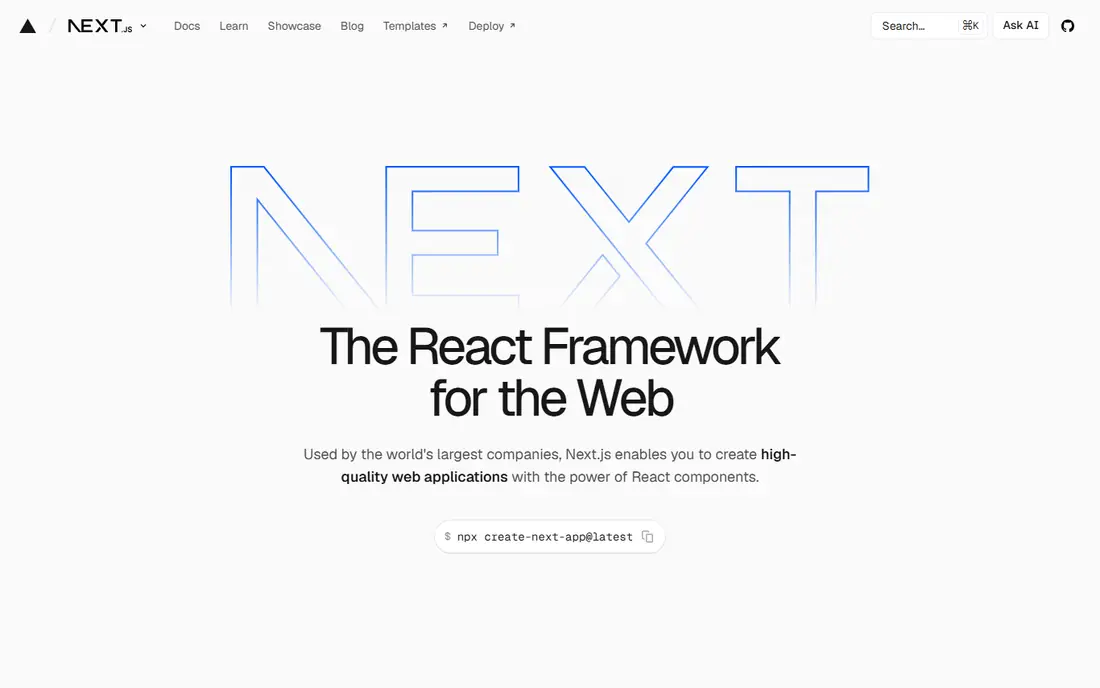
Next.js is the closest parallel to Nuxt in the React world, and it is the default choice for most teams leaving Vue. It provides file-based routing, server-side rendering, static generation, API routes, and image optimization in one framework, so a team can build marketing pages, dashboards, and APIs without assembling separate tools. The ecosystem around React also means libraries, hiring, and hosting options are abundant.
The trade-offs mirror Nuxt trade-offs in a different ecosystem. Next.js defaults lean toward Vercel hosting, and advanced features like caching and server actions take learning to use well. Large apps can also grow complex as rendering modes mix across pages. For React teams that want a batteries-included framework, Next.js is the natural Nuxt replacement.
What we like- File-based routing
- Server and static rendering
- Huge ecosystem
Watch out for- Vercel-centric defaults
- Complexity grows with app size
Starting priceFree
Free planYes
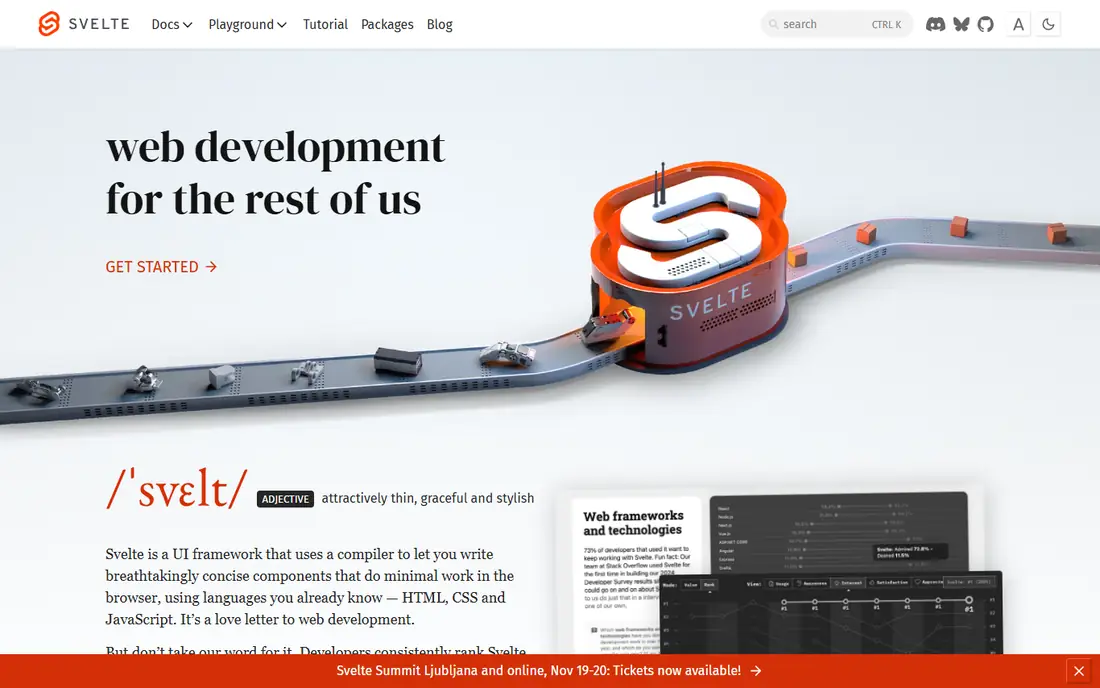
SvelteKit appeals to teams that liked Nuxt structure but want smaller JavaScript bundles. Svelte compiles components to efficient vanilla JavaScript, so pages ship less code and feel faster on slow devices. SvelteKit adds routing, layouts, server loads, and form actions in a shape that Nuxt users will recognize quickly, which shortens the learning curve for Vue developers moving over.
Ecosystem size is the limit. Svelte libraries cover the essentials, but niche needs often require building from scratch, and hiring Svelte developers is harder than hiring React developers. Teams that value performance and simplicity over ecosystem breadth will find SvelteKit a refreshing change from Nuxt.
What we like- Small bundles
- Simple reactivity
- Server and static rendering
Watch out for- Smaller ecosystem than React
- Fewer hiring options
Starting priceFree
Free planYes
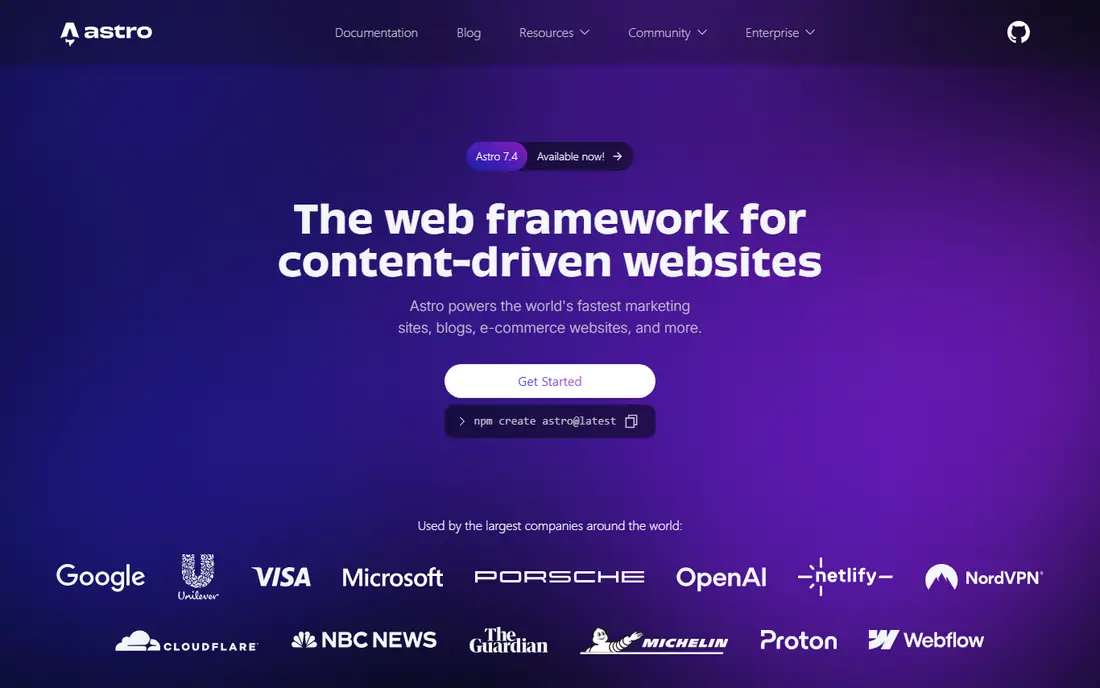
Astro suits content-heavy sites that Nuxt would over-engineer. By default, Astro ships zero JavaScript to the browser, adding interactive "islands" only where a page truly needs them, which makes blogs, docs, and marketing sites extremely fast. It also lets teams use React, Vue, Svelte, or plain components in the same site, so a Nuxt team can keep Vue components while moving to Astro.
Highly interactive applications fit Astro less well. Apps with heavy client state, real-time updates, and complex routing still suit Next.js or SvelteKit better, since Astro islands model adds friction there. For content sites where speed and SEO matter most, Astro is often the best Nuxt alternative available.
What we like- Ships almost no JavaScript by default
- Works with many frameworks
- Fast content sites
Watch out for- Less suited to heavy app state
- Islands model takes learning
Starting priceFree
Free planYes
React Router, the successor to Remix, suits React teams that want routing and data loading without the full Next.js platform. Its loaders and actions handle server data cleanly, nested routing keeps layouts organized, and framework mode adds server rendering and builds for teams that want a complete app setup. For teams already deep in React, it feels lighter and more composable than Next.js.
That lightness means more decisions. React Router does not bundle image optimization, caching presets, or deployment conventions the way Next.js does, so teams assemble those pieces themselves. It is best for teams that know React well and want control over their stack, rather than teams that want every default chosen for them.
What we like- Mature routing
- Data loading built in
- Framework mode for full apps
Watch out for- Less batteries-included than Next.js
- Setup needs more decisions
Starting priceFree
Free planYes
Angular suits large teams that want a complete, opinionated framework with long-term support. Routing, forms, HTTP, and dependency injection come built in, TypeScript is the default language, and Google long-term support gives enterprises confidence for multi-year projects. Teams that build internal tools, admin panels, and complex dashboards at scale often prefer Angular structure to looser frameworks.
Small projects pay for that completeness with verbosity and learning time. Angular concepts like modules, decorators, and RxJS take weeks to learn well, and simple marketing sites feel overbuilt in Angular. For enterprise applications where consistency across many developers matters most, Angular is a durable Nuxt alternative.
What we like- Full framework with routing and forms
- TypeScript by default
- Long-term support
Watch out for- Steep learning curve
- Verbose for small projects
Starting priceFree
Free planYes
Gatsby fits content sites that pull data from many sources into one fast static site. Its GraphQL data layer unifies CMS content, markdown, APIs, and files, and its image handling produces optimized images with little manual work. Marketing sites, blogs, and docs that need data from several systems benefit most, especially when the team already knows React.
Build performance is the known weakness. Large Gatsby sites can build slowly, and the framework momentum has cooled compared with Astro and Next.js, which affects plugin freshness. Teams starting fresh in 2026 should weigh Astro first for content, and pick Gatsby only when its data layer solves a specific multi-source problem.
What we like- Rich data layer
- Many source plugins
- Strong image handling
Watch out for- Build times grow with site size
- Smaller momentum than before
Starting priceFree
Free planYes
Ember suits teams that value convention over configuration and long-term stability. Its router, data layer, and build tools come as one coherent system, and its stability policy means upgrades rarely break applications unexpectedly. Teams that maintain large applications for years appreciate that predictability, since it reduces the churn that looser ecosystems create.
Community size is the drawback. Ember developers are fewer than React or Vue developers, and the library ecosystem is smaller, so hiring and niche integrations take more effort. For teams that already know Ember or that prize stability above hiring ease, it remains a principled Nuxt alternative.
What we like- Strong conventions
- Stable releases
- Built-in router and data layer
Watch out for- Smaller community
- Hiring is harder
Starting priceFree
Free planYes
SolidStart brings Solid fine-grained reactivity to a full-stack framework shape that Nuxt users will recognize. Components update only the exact DOM nodes that change, without a virtual DOM diff, which makes apps feel fast even on modest devices. File-based routing, server functions, and rendering modes cover the standard framework needs, and bundles stay small.
Youth is the trade-off. SolidStart ecosystem and learning resources are far thinner than Next.js or Nuxt, and hiring Solid developers is difficult. Teams that enjoy early adoption and want top runtime performance will like it, while teams that need proven libraries should stay with larger frameworks. For performance-focused builders, SolidStart is worth a prototype.
What we like- Very fast fine-grained reactivity
- Small bundles
- Familiar file routing
Watch out for- Young ecosystem
- Fewer learning resources
How we chose
We compared web frameworks on rendering options, routing, ecosystem depth, and hiring, using framework documentation and public usage evidence. Nuxt users were the reference buyer, so each pick was judged on how it replaces Nuxt strengths: file routing, server rendering, and a coherent full-stack setup. Where a framework is young or niche, we said so plainly. Price played no role here, since every framework on this list is free and open source, so the real costs are hiring, learning, and hosting.
How to pick the right replacement
Match your component ecosystem first
React teams should weigh Next.js and React Router, Vue teams should weigh Astro with Vue islands or a full move to SvelteKit, and enterprise teams should weigh Angular and Ember. Switching component ecosystems costs more than switching frameworks within one. That cost shows up in retraining, rewritten components, and slower delivery for months, so weigh it before chasing a new ecosystem.
Prototype with real data and real pages
Build one content page, one interactive page, and one form flow in your top two candidates. That trio exposes rendering, state, and deployment differences that feature lists hide. Include a real data source in the test, since mock data hides loading, caching, and error-handling problems that appear only with live APIs.
Check hosting and deployment fit
Confirm your host supports the rendering modes you need, since server rendering, edge rendering, and static builds differ across platforms. A framework that needs a specific host can raise costs unexpectedly.
Frequently asked questions
Is Next.js the best Nuxt alternative?
For most teams, yes, especially React teams, since it matches Nuxt on routing, rendering, and full-stack scope. Vue teams may prefer Astro with Vue components or SvelteKit for a smaller-bundle approach. Hiring ease also favors Next.js, since React developers are far more plentiful than Vue or Svelte developers.
Can I keep my Vue components when leaving Nuxt?
Yes, Astro supports Vue components as islands, so a team can migrate content pages gradually. Full application logic usually needs rewriting in the new framework, so plan a phased migration. Start with marketing and docs pages, which migrate cleanly, and leave complex app pages for later phases.
Is Astro good for web applications?
Astro suits content sites and lightly interactive apps best. Heavily interactive applications with complex client state usually fit Next.js, SvelteKit, or SolidStart better. If your app needs live dashboards, collaborative editing, or constant real-time updates, choose a framework built for that state load. Astro islands can still help on mostly static pages with a few interactive widgets. Test one interactive page early in the project to confirm the fit. Also check that your interactive components work as islands before committing fully. That early test saves a painful rewrite later. It also reveals state-sharing limits sooner. Plan shared state carefully before launch.
Should large enterprises pick Angular or Ember?
Angular suits most large enterprises thanks to its ecosystem, TypeScript default, and long-term support. Ember suits teams that prize stability and conventions above ecosystem size. Both demand a learning investment, so pick the one your team can staff and maintain for years, not just the one that demos best.
What happened to Remix?
Remix merged into React Router, which now carries its routing, data loading, and framework features forward. Existing Remix projects can migrate to React Router with guidance from its documentation. Migration is usually gradual, since routing and loader concepts carry over with modest changes. Teams should still budget testing time for edge cases in loaders and actions.
Sources we checked (8)
- https://nextjs.org
- https://kit.svelte.dev
- https://astro.build
- https://reactrouter.com
- https://angular.dev
- https://www.gatsbyjs.com
- https://emberjs.com
- https://start.solidjs.com
Is your product missing or out of date?
We review this list regularly. Vendors can request a listing, send updated pricing or ask about featured placement.

Shihab Mia · Founder, Rankite
Shihab has 5+ years in B2B and SaaS SEO. He writes Rankite's software buying guides from pricing pages, documentation and public user reviews. More about Shihab.