How we make this list: we compare pricing pages, product documentation and public user reviews. Ratings come from G2, Capterra or Trustpilot, with the date we checked them.
Key takeaways
- Qwik stands out for resumability, which lets pages become interactive without re-running code in the browser, so rivals are judged here on how much JavaScript they ship and hydrate.
- Astro and Svelte come closest on low JavaScript output, since Astro ships almost none by default and Svelte compiles to small bundles.
- Solid offers fine-grained reactivity with small bundles, while React and Next.js offer the largest ecosystems at the cost of heavier hydration.
- Vue and Angular suit teams that want a full framework with conventions, while Marko suits teams that want fast server rendering with a small runtime.
Quick comparison
| Tool | Best for | Starting price | Free plan |
|---|
 React | Largest ecosystem apps | Free | Yes |
 Vue | Approachable full framework | Free | Yes |
 Svelte | Small compiled bundles | Free | Yes |
 Solid | Fine-grained reactivity | Free | Yes |
 Astro | Near-zero JavaScript sites | Free | Yes |
 Next.js | Full-stack React apps | Free | Yes |
 Angular | Enterprise framework apps | Free | Yes |
 Marko | Fast server-rendered pages | Free | Yes |
Is your product missing or out of date?
We review this list regularly. Vendors can request a listing, send updated pricing or ask about featured placement.
The best alternatives to Qwik
Starting priceFree
Free planYes
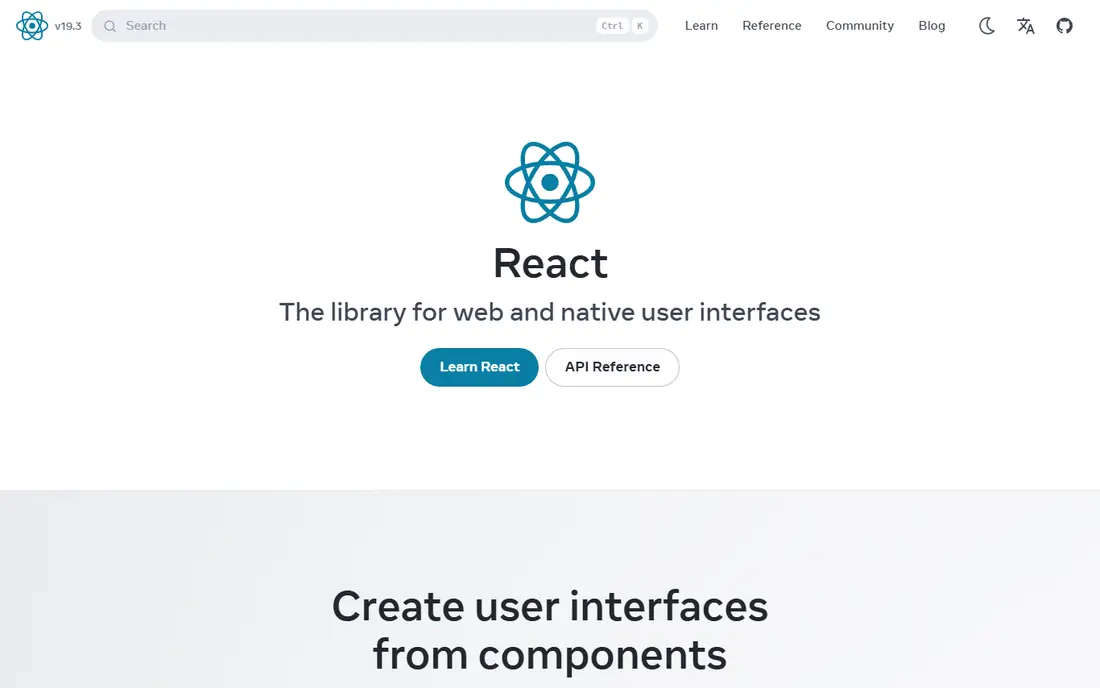
React is the safe default for teams leaving Qwik, since its ecosystem covers almost every need. Libraries exist for routing, state, forms, data fetching, and testing, and hiring React developers is easier than hiring for any rival here. Paired with Next.js or React Router, React covers full-stack apps, while on its own it suits interactive interfaces and component libraries.
Hydration is the gap versus Qwik. React pages typically download and re-run component code in the browser before becoming interactive, which costs time on slow devices and networks. Server components and partial hydration reduce that cost, but they do not match Qwik resumability. For ecosystem breadth and hiring, React still wins most comparisons.
What we like- Largest library ecosystem
- Huge hiring pool
- Flexible rendering choices
Watch out for- Hydration cost is high
- Needs a framework for full apps
Starting priceFree
Free planYes
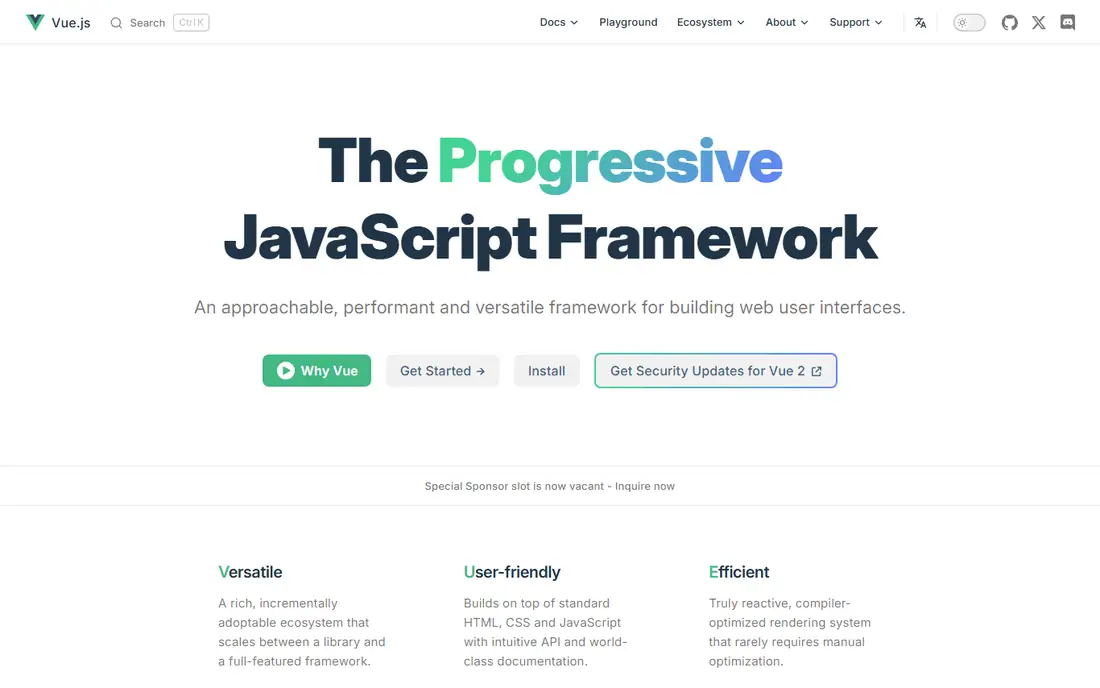
Vue suits teams that want a full framework without React complexity. Its template syntax reads clearly, its documentation is famously friendly, and its reactivity model feels intuitive to developers coming from Qwik or Nuxt. Vue works for single-page apps, server-rendered sites through Nuxt, and progressive enhancement on existing pages, which gives teams room to grow.
Ecosystem and hydration are the limits. Vue libraries cover the essentials but trail React depth, and Vue apps still hydrate in the browser, so they do not match Qwik instant interactivity. For teams that value approachability and a coherent framework, Vue is a comfortable Qwik alternative.
What we like- Gentle learning curve
- Clear docs
- Flexible rendering
Watch out for- Smaller ecosystem than React
- Hydration still applies
Starting priceFree
Free planYes
Svelte comes closest to Qwik on bundle size among mainstream frameworks, since it compiles components to efficient vanilla JavaScript instead of shipping a large runtime. That small output helps pages load and become interactive faster, especially on mobile devices. Svelte syntax is concise, reactivity needs no special APIs, and SvelteKit adds routing and server rendering for full apps.
Ecosystem size trails React and Vue, so niche libraries may need building from scratch, and hiring Svelte developers is harder. Svelte also hydrates, unlike Qwik, though its small bundles soften that cost. For teams that prioritize speed and simplicity over ecosystem breadth, Svelte is an excellent pick.
What we like- Compiles to small vanilla JavaScript
- Simple reactivity
- Fast runtime
Watch out for- Smaller ecosystem
- Fewer hiring options
Starting priceFree
Free planYes
Solid offers fine-grained reactivity that updates only the exact DOM nodes that change, without virtual DOM diffing. That design makes Solid apps fast and keeps bundles small, which narrows the performance gap with Qwik more than most frameworks manage. Its JSX syntax feels familiar to React developers, which shortens the learning curve for teams moving over.
Youth is the trade-off. Solid ecosystem, learning resources, and hiring pool are far smaller than React, so teams should expect to build more themselves. SolidStart adds a full-stack framework layer, but it is younger than Next.js or SvelteKit. For performance-focused teams that enjoy early adoption, Solid is a compelling Qwik alternative.
What we like- Updates only changed DOM nodes
- Small bundles
- React-like syntax
Watch out for- Young ecosystem
- Fewer learning resources
Starting priceFree
Free planYes
Astro matches Qwik philosophy most closely on content sites: ship as little JavaScript as possible. By default Astro sends zero JavaScript to the browser, adding interactive islands only where needed, so content pages load fast and feel instant. It also supports React, Vue, Svelte, and Solid components as islands, letting teams keep existing components while cutting shipped code.
Heavy application state fits Astro less well. Apps with complex client state, real-time updates, and deep routing suit Next.js or Solid better, since Astro islands model adds friction there. For blogs, docs, and marketing sites where Qwik speed appealed most, Astro often beats Qwik on simplicity.
What we like- Ships almost no JavaScript by default
- Island architecture
- Multi-framework support
Watch out for- Less suited to heavy app state
- Islands model takes learning
Starting priceFree
Free planYes
Next.js is the full-stack React answer for teams that want routing, rendering, and APIs in one framework. File-based routing, server components, static generation, and image optimization cover most app needs, and the React ecosystem adds libraries for everything else. Deployment and hosting options are broad, though defaults lean toward Vercel.
Hydration remains the Qwik gap. Next.js server components reduce shipped JavaScript, but interactive parts still hydrate, so pages do not match Qwik instant-on behavior. Complexity also grows as rendering modes mix. For React teams that want a complete framework, Next.js is the standard choice.
What we like- File routing
- Server and static rendering
- Huge ecosystem
Watch out for- Hydration cost
- Vercel-centric defaults
Starting priceFree
Free planYes
Angular suits enterprise teams that want a complete framework with strong conventions and long-term support. Routing, forms, HTTP, and dependency injection come built in, TypeScript is default, and Google support gives large organizations confidence for multi-year projects. That completeness helps big teams stay consistent across many developers and codebases.
Bundle size and learning curve are the Qwik contrasts. Angular apps ship more JavaScript than Qwik or Svelte apps, and concepts like modules and RxJS take weeks to learn. Small projects feel overbuilt in Angular. For enterprise applications where consistency matters more than minimal JavaScript, Angular remains a durable pick.
What we like- Complete framework
- TypeScript default
- Long-term support
Watch out for- Large bundles
- Steep learning curve
Starting priceFree
Free planYes
Marko, from eBay, suits teams that care about server rendering speed above all. It compiles templates efficiently, streams HTML to the browser progressively, and keeps its runtime small, which makes pages feel fast even under load. Teams that render large catalogs or content feeds benefit most, since Marko was built for exactly that workload at eBay scale.
Community size is the limit. Marko developers, libraries, and learning resources are far scarcer than React or Vue, so hiring and niche integrations take effort. For teams that prioritize server rendering performance and accept a niche framework, Marko is a distinctive Qwik alternative.
What we like- Fast server rendering
- Small runtime
- Streaming support
Watch out for- Small community
- Fewer libraries and resources
How we chose
We compared web frameworks on shipped JavaScript, hydration behavior, rendering options, and ecosystem depth, using framework documentation and public performance evidence. Qwik users were the reference buyer, so each pick was judged on how close it comes to fast, low-JavaScript interactivity, not just on popularity. Where a framework hydrates heavily, we said so plainly. Price played no role here, since every framework on this list is free and open source, so the real costs are hiring, learning, and hosting.
How to pick the right replacement
Measure shipped JavaScript first
Compare bundle sizes and time-to-interactive on your real pages, not on demo sites. A framework that looks fast in a benchmark may still ship heavy code once your libraries are included. Measure on a mid-range phone over a typical mobile connection, since desktop broadband hides problems your users will feel.
Match the framework to the page type
Content sites should weigh Astro and Marko, app-heavy products should weigh Next.js, Solid, and SvelteKit, and enterprise systems should weigh Angular. Page type predicts the right trade-off better than framework fashion. A site that is mostly content rarely needs a full app framework, no matter how popular it is.
Prototype the heaviest page
Build your slowest, most interactive page in your top two candidates and measure it on a mid-range phone. That single test reveals hydration and bundle problems that feature lists hide. Include real third-party scripts in the test, since analytics and chat widgets often dwarf framework differences.
Frequently asked questions
What makes Qwik different from React?
Qwik uses resumability, which lets the browser resume an app without re-running component code, while React hydrates by downloading and re-running code before interactivity. That difference makes Qwik pages interactive faster on slow networks. It matters most on mobile devices and weak connections, where hydration cost is highest. Desktop users on fast broadband notice it far less. For mobile-heavy audiences, though, the difference is hard to ignore. Test on real devices, since lab results often understate the gap. Include low-end phones in the test set. Measure interaction times, not just load times. Track results across several network conditions. Repeat tests after framework updates. Document the test setup for future comparisons. Share results with the design team.
Is Astro better than Qwik for content sites?
Astro is often simpler for content sites, since it ships almost no JavaScript by default and supports many component frameworks. Qwik still leads for highly interactive apps that need resumability across many components. Choose Astro when pages are mostly content, and choose Qwik when interactivity spans the whole page. Mixed sites can use Astro for content and a framework app for interactive sections. That split keeps content pages fast without giving up app features. It also lets teams adopt each tool where it fits best. Review the split again as the site grows. Document which pages use which approach. Share that document with new team members.
Can Solid replace Qwik for performance?
Solid narrows the gap with fine-grained reactivity and small bundles, but it still hydrates, so it does not fully match Qwik resumability. For many apps, Solid speed is close enough that ecosystem and hiring matter more. Measure on your heaviest page before deciding, since average pages hide the difference. That measurement also tells you whether the gap matters for your actual users. Real user data beats benchmark pages every time. Collect field metrics after launch to confirm the choice. Revisit the decision after major framework updates.
Should I pick Next.js if I know React?
Yes, Next.js is the standard full-stack path for React teams, with routing, rendering, and APIs built in. Its hydration cost is real, but its ecosystem and hiring advantages usually outweigh it.
Is Marko used in production at scale?
Yes, Marko powers large eBay surfaces, which proves its server rendering at scale. Its community is small, so teams should weigh that against its performance strengths.
Sources we checked (8)
- https://react.dev
- https://vuejs.org
- https://svelte.dev
- https://www.solidjs.com
- https://astro.build
- https://nextjs.org
- https://angular.dev
- https://markojs.com
Is your product missing or out of date?
We review this list regularly. Vendors can request a listing, send updated pricing or ask about featured placement.

Shihab Mia · Founder, Rankite
Shihab has 5+ years in B2B and SaaS SEO. He writes Rankite's software buying guides from pricing pages, documentation and public user reviews. More about Shihab.