How we make this list: we compare pricing pages, product documentation and public user reviews. Ratings come from G2, Capterra or Trustpilot, with the date we checked them.
Key takeaways
- Java is the direct replacement for most Kotlin work: same JVM, same Android platform, same libraries, with a larger hiring pool and no conversion step.
- Scala and Groovy serve JVM teams that want to stay on the platform but change the trade offs, Scala toward functional depth, Groovy toward scripting speed.
- Swift and Dart answer the mobile question differently: Swift for native iOS quality, Dart with Flutter for one codebase across platforms.
- C Sharp, Rust, and Go are the exits from the JVM entirely, for Microsoft shops, systems work, and cloud services respectively.
Quick comparison
| Tool | Best for | Starting price | Free plan |
|---|
 Java | Android and JVM backends without conversion | Free | Yes |
 Scala | Functional programming on the JVM | Free | Yes |
 Groovy | JVM scripting and build automation | Free | Yes |
 Swift | Native iOS and macOS apps | Free | Yes |
 Dart | One codebase for mobile, web, and desktop | Free | Yes |
 C# | Microsoft stack and Unity games | Free | Yes |
 Rust | Systems code where safety is critical | Free | Yes |
 Go | Cloud services and command line tools | Free | Yes |
Is your product missing or out of date?
We review this list regularly. Vendors can request a listing, send updated pricing or ask about featured placement.
The best alternatives to Kotlin
#1
Java
Best for: Android and JVM backends without conversion
Visit java.com
Starting priceFree
Free planYes
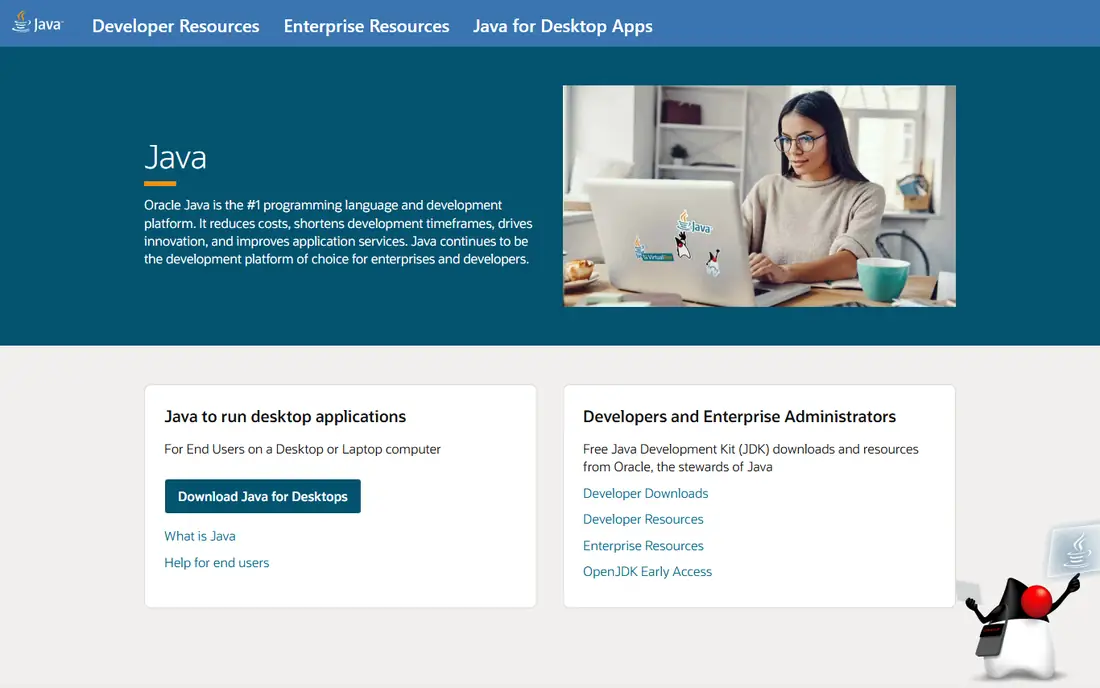
What we like- Java is the zero friction alternative because Kotlin runs on the JVM and interoperates with Java completely: an Android or backend team can stop writing new Kotlin and write Java in the same project, using the same libraries, the same Spring or Android SDK, and the same build. Modern Java has closed much of the gap that created Kotlin, with records, pattern matching, and a faster release cycle, and it has the largest developer hiring pool of any language here. Tooling in IntelliJ, Eclipse, and VS Code is mature and free.
Watch out for- Java stays more verbose than Kotlin for data classes and asynchronous code, and it lacks Kotlin's built in null safety discipline, so the null pointer bugs Kotlin prevents come back as a coding standards problem. Android's newest libraries and sample code are Kotlin first, so a Java Android team reads documentation written for another language. Coroutines have no direct equal
- You work with threads, futures, or reactive libraries instead.
#2Scala
Best for: Functional programming on the JVM4.1/5 on
G2 (30 reviews, checked Oct 2026)
Visit scala-lang.org
Starting priceFree
Free planYes
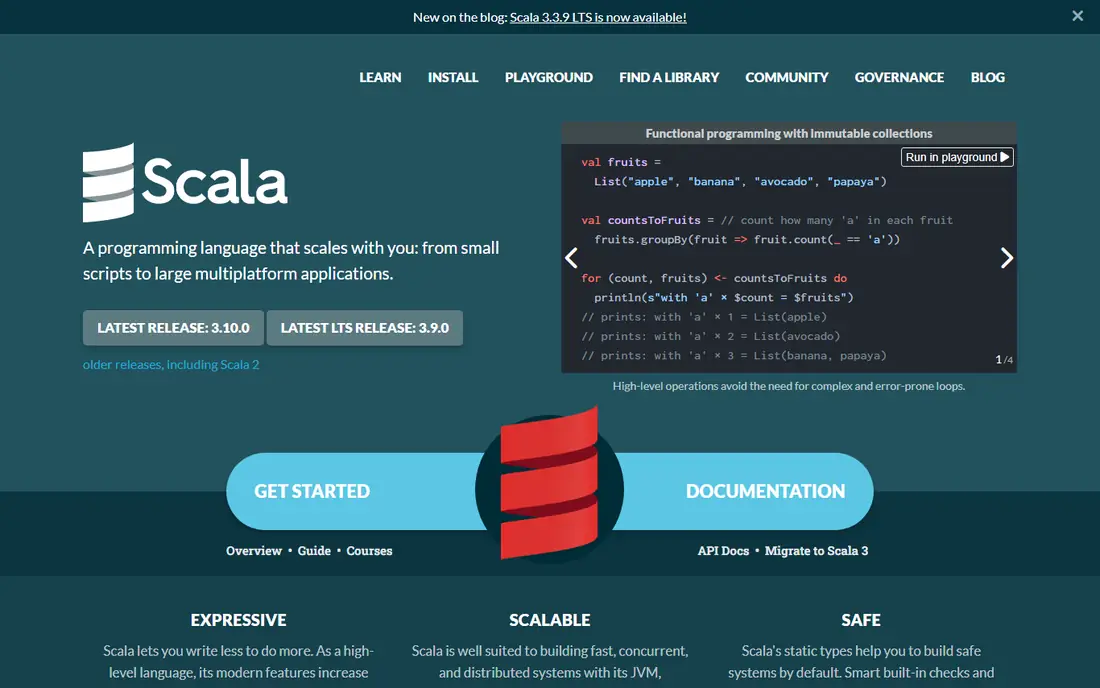
What we like- Scala stays on the JVM while going further than Kotlin in functional programming: a powerful type system, pattern matching, and libraries such as Cats and ZIO for teams building data intensive and concurrent systems. It underpins much of the big data world through Apache Spark, so data engineering teams often already have Scala in the building. Like Kotlin it interoperates with Java libraries, and its build tooling and IntelliJ support are established.
Watch out for- Scala's power is its cost: the language is harder to learn, compile times are slower, and idiomatic styles vary so much between teams that code bases can feel like different languages. Hiring is harder and salaries run higher than for Java or Kotlin developers. For ordinary business backends, the extra power rarely pays for the extra difficulty.
Starting priceFree
Free planYes
What we like- Groovy is the JVM's scripting language: dynamic, terse, and forgiving, used most famously in Gradle build scripts and Jenkins pipelines, and in the Spock testing framework. A Kotlin team that uses Gradle already touches Groovy's world, and for automation, glue code, and tests it is faster to write than either Kotlin or Java. It runs on the JVM, calls Java libraries directly, and costs nothing to adopt in a corner of the project.
Watch out for- Groovy is nobody's first choice for a large application in 2026: its mindshare and hiring pool have shrunk as Kotlin and other languages grew, and dynamic typing gives up the compile time safety Kotlin developers rely on. Performance trails the static JVM languages. Treat it as a specialist for builds and scripts rather than a Kotlin replacement for product code.
Starting priceFree
Free planYes
What we like- Swift is Apple's language and the native answer to the question Kotlin Multiplatform tries to answer from the other side: instead of sharing Kotlin code into an iOS app, you write the iOS app in the language Apple's frameworks, documentation, and SwiftUI are built for. Performance, platform features on day one, and App Store fit are all native grade, and Swift is now open source with growing server and cross platform use. For an iOS led product, Swift is the professional default.
Watch out for- Swift does nothing for Android, so a two platform product pays for a second codebase or a shared layer in another language anyway. The language evolves quickly and older code needs migration work between major versions. The hiring pool outside Apple platform work is small, and Windows and Linux use, while real, is a minority pursuit.
#5
Dart
Best for: One codebase for mobile, web, and desktop
Visit dart.dev
Starting priceFree
Free planYes
What we like- Dart exists to serve Flutter, Google's UI toolkit, and together they are the main alternative when the real complaint about Kotlin is maintaining separate Android and iOS apps. Dart is easy to learn for anyone coming from Kotlin or Java, with a similar feel, sound null safety, and hot reload that makes UI work fast. Flutter's widget model gives consistent interfaces across mobile, web, and desktop from one code base, and the combined stack is free and backed by Google.
Watch out for- Flutter apps carry a runtime and do not feel identical to native apps in every detail, which matters for platform purist products and heavy platform integration. The Dart ecosystem outside Flutter is small
- Almost nobody chooses Dart alone. Package depth for specialized native features trails the native platforms, so unusual hardware or OS features can mean writing platform code anyway.
Starting priceFree
Free planYes
What we like- C Sharp with .NET is the complete alternative ecosystem: a modern language that Kotlin borrowed from and lent to, a huge framework covering web, desktop, cloud, and mobile through .NET MAUI, and the language of Unity, the dominant game engine. Tooling in Visual Studio and the free VS Code is excellent, hiring is easy, and Microsoft's stewardship keeps the platform current. A team leaving the JVM entirely for a Microsoft centred shop loses nothing in language quality.
Watch out for- Changing to C Sharp means changing everything at once: runtime, frameworks, libraries, and deployment habits, unlike the JVM internal moves above. Mobile development through MAUI is a smaller world than native or Flutter, with a thinner community. The best tooling experience still leans Windows, even though the runtime is fully cross platform now.
Starting priceFree
Free planYes
What we like- Rust answers the cases where Kotlin's JVM is the problem: performance critical services, embedded and systems code, WebAssembly, and anywhere memory safety without a garbage collector matters. Its ownership model prevents whole classes of bugs at compile time, it keeps winning most loved language surveys among developers, and companies from Microsoft to Google use it in infrastructure. The Cargo tooling is the best in class package and build experience.
Watch out for- Rust has the steepest learning curve on this list
- The borrow checker fights new developers for months, and compile times are slow. Development speed for ordinary business software is lower than Kotlin, and the hiring pool, while growing, is small and expensive. Choosing Rust for a normal backend is a specialist decision, not a default.
#8
Go
Best for: Cloud services and command line tools
Visit go.dev
Starting priceFree
Free planYes
What we like- Go is the cloud infrastructure language: Docker, Kubernetes, and much of the tooling around them are written in it. It compiles to a single binary, starts instantly, handles concurrency with goroutines that are simpler than Kotlin coroutines to reason about, and the language is deliberately small enough to learn in weeks. For backend services and internal tools, teams routinely report shipping faster in Go than on the JVM, with far lower memory use.
Watch out for- Go's simplicity is also a ceiling: no generics maturity until recently and still a spare type system, verbose error handling, and no answer at all for Android or iOS apps. Its GUI and desktop story is weak. A Kotlin team moving to Go trades a rich ecosystem and expressive language for operational simplicity, which is a good trade for services and a bad one for apps.
How we chose
We selected languages that genuinely replace Kotlin in one of its real jobs: Android development, JVM backends, cross platform mobile, or the systems and cloud work JVM teams also cover. Each entry is free and open source in its core, so we judged them on tooling quality, ecosystem and library depth for that job, hiring pool in the US market, and stewardship, JetBrains, Oracle, Apple, Google, Microsoft, or a foundation. We excluded languages with no realistic overlap with Kotlin's jobs, however good they are elsewhere.
How to choose the right Kotlin alternative
Name the job before the language. If the work is Android, the honest shortlist is Java or staying with Kotlin, because the platform, the libraries, and Google's documentation all assume one of the two. If the work is JVM backend and the pain is expressive power, Scala is the upgrade path; if the pain is ceremony and hiring, Java with its modern features is the pragmatic one. If the work is mobile on both platforms with one team, Dart and Flutter are the only entry here designed for exactly that.
If the work is leaving the JVM, let the destination decide: Microsoft shops go to C Sharp, cloud platform teams go to Go, and performance or safety critical components go to Rust, ideally as a component inside a larger system rather than a wholesale rewrite. Whatever you pick, the migration cost lives in libraries, build pipelines, and team habits, not syntax, so prototype one real feature, with your real dependencies, before committing a road map. Languages are free; rewrites are not.
Frequently asked questions
Is Java really a step forward from Kotlin, or a step back?
For Android and JVM work it is a sideways step with trade offs. Modern Java has records, sealed classes, and pattern matching, which closed much of the conciseness gap, and it wins on hiring and library reach. Kotlin still wins on null safety, coroutines, and conciseness for data heavy code. Teams move for ecosystem and staffing reasons, not because one language is plainly better.
Which alternative is best for Android development?
Java, because it is a first class Android language with full access to the SDK and every library, and an existing Kotlin project can adopt it file by file with no rewrite. Dart with Flutter is the alternative when the same team must also ship iOS from one codebase and accepts a non native UI layer.
Can I mix Kotlin with these languages in one project?
With the JVM languages, yes: Java, Scala, and Groovy all share the JVM and can call Kotlin code and be called by it, which makes gradual migration realistic. Swift, Dart, C Sharp, Rust, and Go mean separate components or a rewrite, though Rust and Go services commonly sit beside JVM systems in a microservice setup.
Which alternative is easiest to learn from Kotlin?
Dart and Java feel closest: Dart shares Kotlin's modern feel and null safety, and Java shares the platform and much of the vocabulary while being more verbose. Go is also quick to learn because the language is small. Rust is the hardest jump on this list by a wide margin.
Are all of these languages really free?
Yes. Every language here has a free, open source core implementation and free standard tooling, including the compilers and package managers. Costs appear in optional commercial tooling, such as advanced IDE editions, and in the real budget lines: developer salaries, training time, and the productivity dip during a team's first months on a new language.
Sources we checked (0)
Is your product missing or out of date?
We review this list regularly. Vendors can request a listing, send updated pricing or ask about featured placement.

Shihab Mia · Founder, Rankite
Shihab has 5+ years in B2B and SaaS SEO. He writes Rankite's software buying guides from pricing pages, documentation and public user reviews. More about Shihab.