How we make this list: we compare pricing pages, product documentation and public user reviews. Ratings come from G2, Capterra or Trustpilot, with the date we checked them.
Key takeaways
- Render is the best free hobby pick, with free web services at 750 hours per month, though services spin down after 15 minutes idle.
- Railway offers the fastest zero-to-deployed experience, with Hobby at $5 per month including $5 of usage.
- Fly.io suits global hobby apps, with the smallest always-on app near $2.19 per month on pay-as-you-go billing.
- Heroku itself ended free dynos in 2022, so the cheapest dyno is Eco at $5 per month, which sleeps after 30 minutes of inactivity.
- Free Postgres on Render expires after 30 days with a 14-day grace period, so hobby databases need a paid plan or an external free tier.
- If your app must answer instantly at 3 a.m., none of the free tiers is for you, so pay for always-on on any platform.
Quick comparison
Is your product missing or out of date?
We review this list regularly. Vendors can request a listing, send updated pricing or ask about featured placement.
The best alternatives to Heroku for hobby projects

#1Render
Best for: Free hobby hosting4.7/5 on
G2 (84 reviews, checked Oct 2026)
Visit render.com
Starting priceFree
Free planYes
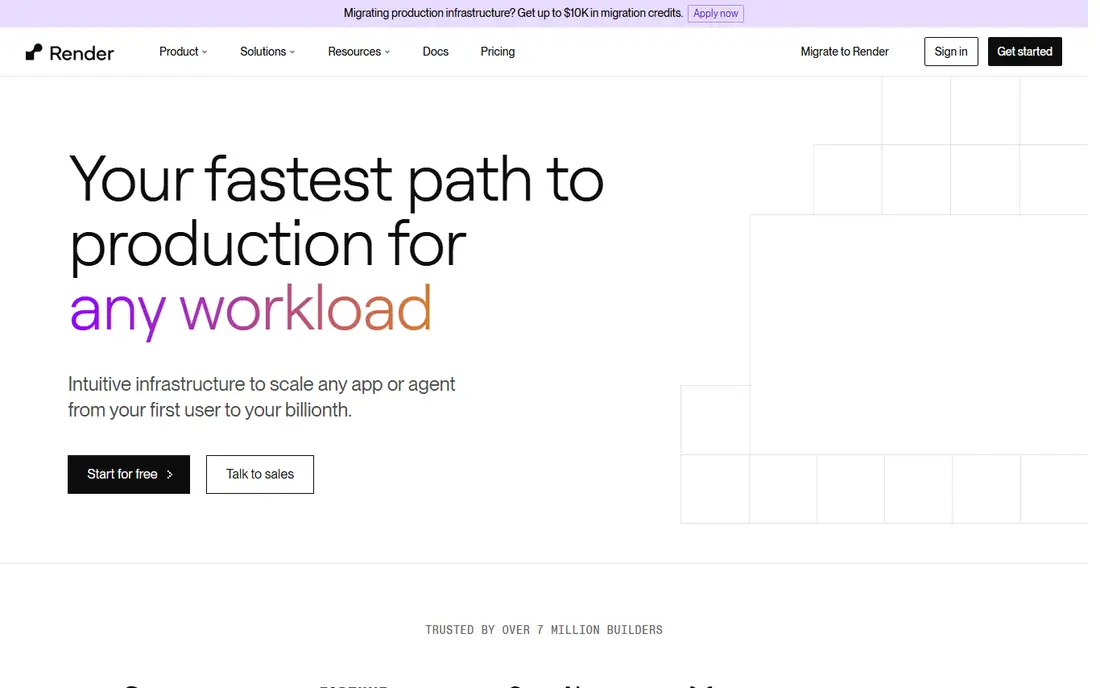
Render is the best free hobby pick for developers who want a modern Heroku alternative with managed databases in the same dashboard. Connect a repo, pick a runtime such as Node, Python, or Docker, set environment variables, and deploy, with clean build logs and first-class Dockerfile support. Free web services cover 750 hours per month per workspace, which is enough for one hobby app running around the clock.
The catches are sleep and database expiry. Free services spin down after 15 minutes without traffic and take about a minute to wake, so a hobby app answers slowly on first visit after idle time. Free Postgres expires after 30 days with a 14-day grace period, so hobby databases need a paid plan from $6 to $7 per month or an external free database. Paid Starter instances cost $7 per month for always-on service, which is still cheaper than a Heroku Standard dyno.
What we like- Free web services with 750 hours per month
- Git-push deploys
- Managed Postgres and Redis
- Clean build logs
Watch out for- Free services spin down after 15 minutes idle and take about a minute to wake
- Free Postgres expires after 30 days
Starting price$5/month
Free planYes
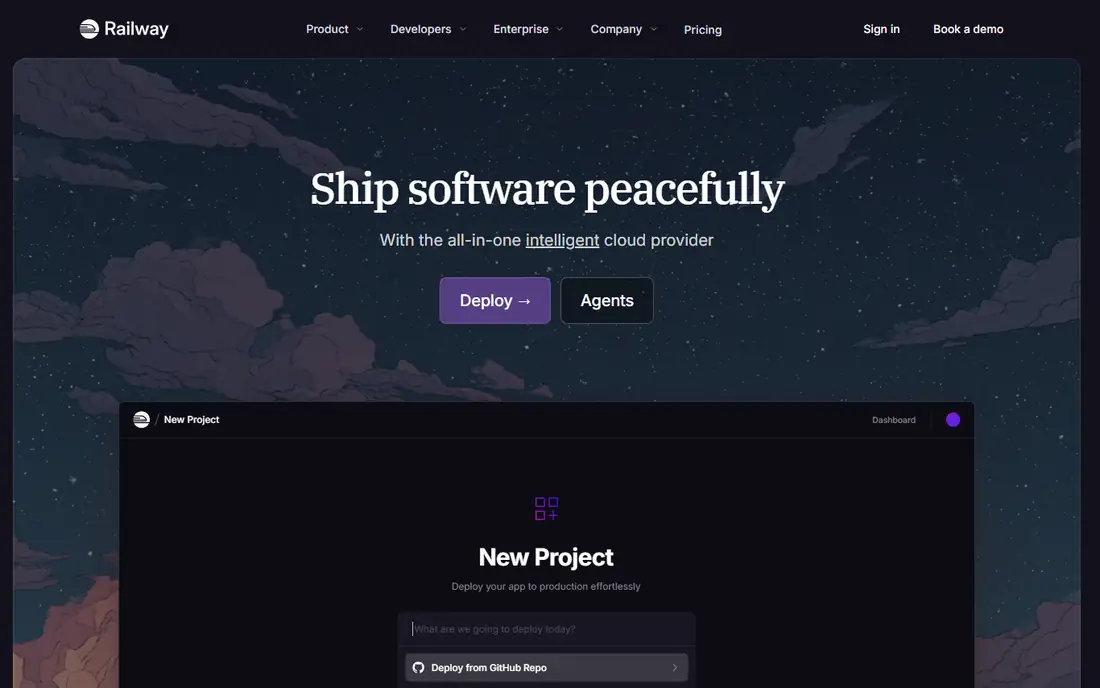
Railway offers the fastest zero-to-deployed experience of the Heroku alternatives. It detects your framework, generates the build command, and deploys from the dashboard or the railway up CLI, with strong Nixpacks support that builds even projects without Dockerfiles correctly. The template catalog covers databases, queues, and full-stack starters, so a hobby project can start from a working template in minutes.
Pricing starts with a 30-day trial carrying $5 in credits, then a Free plan at $1 per month with $5 of usage credits in some listings, and Hobby at $5 per month including $5 of usage. Free services are limited to 0.5 GB RAM and 0.5 GB of volume, and metered billing means costs vary with usage, which suits bursty hobby apps but needs monitoring. A production SaaS MVP on Railway runs about $14 to $22 per month in published scenario models, well below Render equivalent for the same stack.
What we like- Fastest zero-to-deployed experience
- Framework detection
- Big template catalog
- Metered billing per second
Watch out for- Free plan limited to $1 per month of usage after trial
- 0.5 GB RAM per service on Free
- Costs vary with usage
Starting price$2.19/month
Free planNo
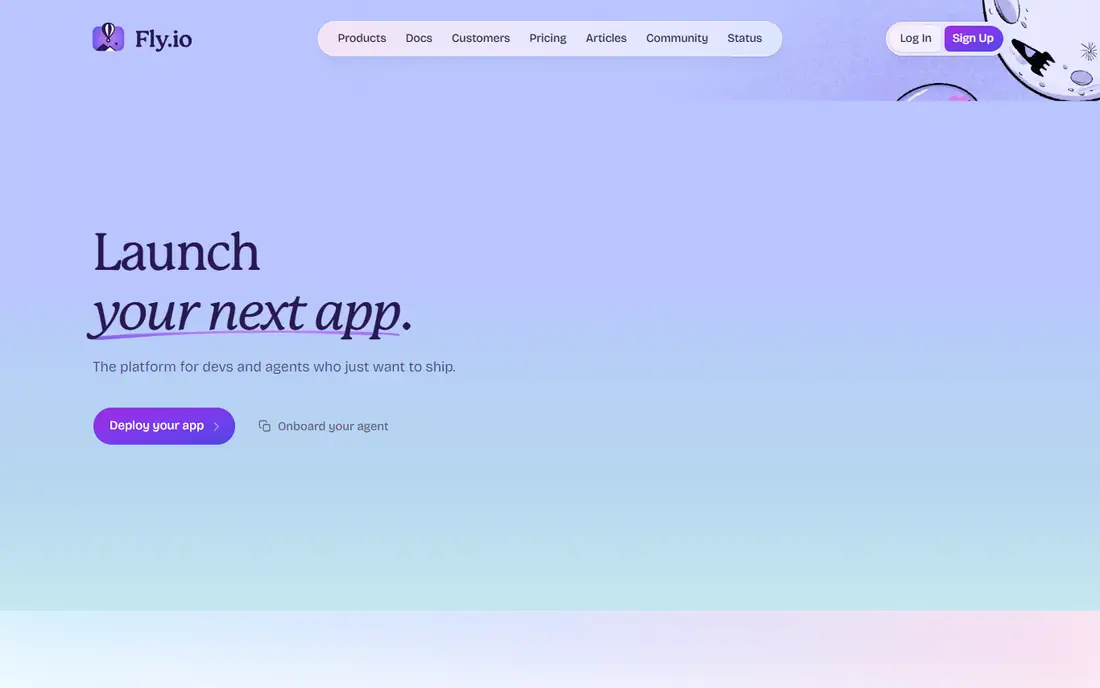
Fly.io suits Docker-savvy hobby developers who want full-stack apps close to users worldwide. Machines run as microVMs in regions across the US, Europe, and Asia, with Anycast routing that sends users to the nearest region. Bandwidth beyond 100 GB costs only $0.02 per GB in North America and Europe, roughly 5 times cheaper than rivals for data-heavy APIs in published comparisons.
The smallest always-on app costs about $2.19 per month for a 256 MB machine, the cheapest always-on hobby price on this list. There is no ongoing free tier, only a trial of 2 hours of machine runtime or 7 days, and setup is more manual, with flyctl launch generating a fly.toml config and Docker as the primary deployment path. Managed Postgres starts near $38 per month, so hobby developers usually run Postgres as a machine or use an external free database. Global hobby apps get the best latency per dollar here.
What we like- Global edge deployment
- Cheapest always-on hobby app
- Low bandwidth costs
- Docker-first workflow
Watch out for- Trial only, no ongoing free tier
- More manual setup
- Managed Postgres from $38 per month
- Docker knowledge needed

#4DigitalOcean App Platform
Best for: DigitalOcean users4.6/5 on
G2 (757 reviews, checked Oct 2026)
Visit digitalocean.com
Starting price$5/month
Free planYes
DigitalOcean App Platform suits developers already using DigitalOcean who want predictable VPS-style costs without hyperscaler complexity. Containers start at $5 per month, static sites are free for up to 3 apps, and the platform handles builds, deploys, and SSL from a git repo. That simplicity appeals to hobby developers who already run Droplets and want apps beside them.
There is no free container tier, so every always-on hobby app costs at least $5 per month, and managed Postgres starts near $15.15 per month in published benchmarks. Template variety is thinner than Railway, and the platform suits steady services better than bursty experiments. DigitalOcean users get the most predictable hobby hosting here, with flat tiers that read like a dyno price list.
What we like- Predictable flat container tiers
- Static sites free up to 3 apps
- Simple pricing
- Good for existing DigitalOcean users
Watch out for- No free container tier
- Managed Postgres from $15.15 per month
- Fewer hobby templates than Railway

#5Vercel
Best for: Frontend hobby projects4.7/5 on
G2 (87 reviews, checked Oct 2026)
Visit vercel.com
Starting priceFree
Free planYes
Vercel is the best hobby platform for frontend-led projects, especially Next.js and React apps. The Hobby plan is free for personal non-commercial use, with git-push deploys, preview deployments for every pull request, and a global edge network that serves static and serverless content fast. Setup takes minutes for a frontend repo, and the dashboard is the cleanest in this category.
Hobby is limited to personal non-commercial use, so commercial hobby projects need Pro at $20 per user per month. Backend-heavy apps with persistent servers or databases need companion services, since Vercel focuses on frontend and serverless functions. Frontend hobby developers get the shortest path from git push to production here, with no server to manage.
What we like- Free Hobby plan for personal non-commercial use
- Fastest Next.js deploys
- Preview deployments
- Global edge network
Watch out for- Hobby limited to personal non-commercial use
- Pro costs $20 per user per month
- Backend workloads need other services

#6Netlify
Best for: Static and fullstack hobby sites4.5/5 on
G2 (83 reviews, checked Oct 2026)
Visit netlify.com
Starting priceFree
Free planYes
Netlify suits developers and agencies shipping marketing sites, portfolios, docs, and fullstack apps from git. The free plan includes 300 usage credits per month, with forms, serverless functions, and edge handlers covering most hobby site needs. Deploys run from git pushes with preview URLs, and the interface stays approachable for non-backend developers.
Credits cap monthly usage, so a hobby site with heavy function traffic can exhaust the free allowance, and Personal costs $9 per month while Pro costs $20. Backend workloads with persistent servers fit Render or Railway better, since Netlify focuses on static and serverless patterns. Hobby sites that are mostly frontend with light functions will find Netlify the simplest free option.
What we like- Free plan with 300 credits per month
- Easy git deploys
- Forms and functions included
- Good for portfolios and docs
Watch out for- Credits cap usage
- Personal at $9 and Pro at $20 per month
- Backend workloads limited compared with Render

#7Google Cloud Run
Best for: Variable traffic serverless4.6/5 on
G2 (243 reviews, checked Oct 2026)
Visit cloud.google.com
Starting priceFree
Free planYes
Google Cloud Run suits hobby projects with variable traffic that want serverless containers without a platform fee. The free tier covers 2 million requests per month, billing is usage-based beyond that, and services scale to zero when idle, so a quiet hobby app costs almost nothing. New Google Cloud customers also receive $300 in welcome credit over 90 days, which covers Cloud Run and other products during a trial.
There is no platform fee, but teams pay only for the AWS-style resources they create, which in Google case means Cloud Run compute, storage, and networking. Container knowledge is needed, since deployment runs from container images, and cold starts affect scale-to-zero services. Hobby developers comfortable with containers get the most generous free request allowance here.
What we like- 2 million requests per month free
- Usage-based billing
- Scales to zero
- $300 welcome credit for new customers
Watch out for- No platform fee but resource costs apply
- Container knowledge needed
- Cold starts on scale-to-zero
- Google Cloud complexity
Starting priceFree
Free planYes
Coolify is a self-hostable Heroku alternative for developers who want complete control without a platform bill. It deploys to your own servers via SSH, with git integration for automatic deployments, built-in database support, automatic SSL certificate management, and team collaboration features. A $4 per month VPS can host several hobby apps, which beats every hosted plan on cost for multi-app hobbyists.
The trade-off is responsibility: you pay for your own infrastructure and manage updates, security, and backups yourself, and setup takes more time than a hosted platform. Dokku offers a similar lightweight self-hosted PaaS described as a mini Heroku, with Docker containerization and a plugin ecosystem. Hobby developers who enjoy running servers will find Coolify the cheapest long-term Heroku alternative.
What we like- Free and open source
- Deploy to your own servers via SSH
- Git integration
- Built-in databases
- Automatic SSL
Watch out for- You pay for your own server
- You manage updates and security
- Setup takes more time than hosted PaaS
How we chose
We compared Heroku alternatives on free tier generosity, always-on cost, database options, setup speed, and fit for hobby workloads. Heroku itself ended free dynos in 2022, with Eco dynos at $5 per month that sleep after 30 minutes of inactivity and Basic at $7 per month for always-on service, plus Essential Postgres from $5 per month. We therefore weighted genuinely free tiers and honest always-on prices over headline free claims, and we flagged sleep behavior and database expiry wherever published comparisons reported them. Prices come from vendor pricing pages and published comparisons from September and October 2026, and they change often, so confirm the current price before purchase.
How to choose the right Heroku alternative for hobby projects
Start with your app type. Frontend hobby projects should test Vercel or Netlify free first, while full-stack hobby apps with a database should test Render free or Railway Hobby, since both offer the fastest setup with managed databases nearby. Global hobby apps should test Fly.io pay-as-you-go, and developers who already run servers should test Coolify on a cheap VPS.
Next, check the free tier catches before building: Render free services sleep after 15 minutes idle, Render free Postgres expires after 30 days, Railway free caps RAM and volume, and Fly.io offers only a trial. If your hobby app must answer instantly at any hour, pay for always-on service, which costs $7 per month on Render, $5 per month on Railway Hobby, or about $2.19 per month on Fly.io for the smallest machine. Finally, keep hobby databases portable, since free database tiers change often and a paid $5 to $7 Postgres plan is usually the first upgrade worth buying.
Frequently asked questions
What is Heroku?
Heroku is a platform as a service for deploying, managing, and scaling apps from git, with dynos for compute and add-ons for databases and services. It ended free dynos in 2022 and now starts at $5 per month for Eco dynos.
Is there a free Heroku alternative?
Render offers free web services at 750 hours per month, Railway offers a free plan after trial, Vercel and Netlify offer free hobby plans, and Google Cloud Run offers 2 million requests per month free. Coolify is free and open source for self-hosting.
Which Heroku alternative is cheapest for hobby projects?
Fly.io offers the cheapest always-on hobby app near $2.19 per month for a 256 MB machine. Render free and Railway Hobby at $5 per month are the cheapest hosted options with managed databases nearby.
Does Render free tier sleep?
Yes, Render free web services spin down after 15 minutes without traffic and take about a minute to wake. Paid Starter instances at $7 per month stay always on.
Does Railway have a free plan?
Yes, Railway offers a 30-day trial with $5 in credits, then a Free plan at $1 per month with usage credits in published listings, plus Hobby at $5 per month including $5 of usage.
Can I migrate an app from Heroku?
Yes, most tools here deploy from git repos and Dockerfiles, so migration usually means connecting the repo, setting environment variables, and provisioning a database. Test the new deployment with a staging app before cutting over production traffic.
Sources we checked (0)
Is your product missing or out of date?
We review this list regularly. Vendors can request a listing, send updated pricing or ask about featured placement.

Shihab Mia · Founder, Rankite
Shihab has 5+ years in B2B and SaaS SEO. He writes Rankite's software buying guides from pricing pages, documentation and public user reviews. More about Shihab.
 Railway
 Fly.io
 Coolify