How we make this list: we compare pricing pages, product documentation and public user reviews. Ratings come from G2, Capterra or Trustpilot, with the date we checked them.
Key takeaways
- The largest tech companies in 2026 are led by Apple, Microsoft, Alphabet, and NVIDIA, each worth trillions of dollars by market value.
- Scale alone does not make a company the best, so this list weighs revenue, profit, product reach, and influence on work and daily life.
- Chip makers like NVIDIA and TSMC matter more than ever, because artificial intelligence runs on their hardware and factories.
- Cloud and software companies earn steady subscription income, which makes them more durable than firms that depend on one device cycle.
- No ranking stays fixed for long, since chip cycles, regulation, and AI shifts can reorder the top ten within a year or two.
Quick comparison
| Tool | Best for | Starting price | Free plan |
|---|
 Apple | Consumer devices and services | See website | No |
 Microsoft | Cloud and workplace software | See website | No |
 Alphabet | Search, video, and cloud | See website | No |
 NVIDIA | AI chips and computing | See website | No |
 Amazon | Cloud and online retail | See website | No |
 TSMC | Chip manufacturing | See website | No |
 Meta | Social platforms and AI | See website | No |
 Samsung | Devices and components | See website | No |
Is your product missing or out of date?
We review this list regularly. Vendors can request a listing, send updated pricing or ask about featured placement.
The best tech companies in the world
Starting priceSee website
Free planNo
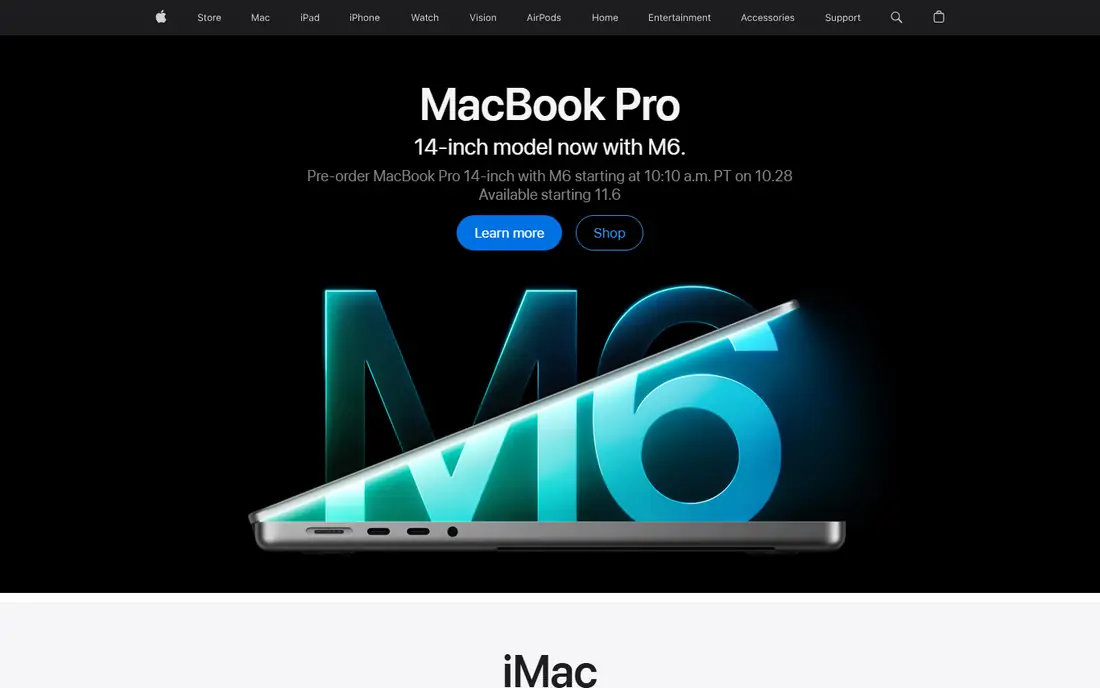
Apple remains the most valuable consumer tech company in the world, built on the iPhone, Mac, iPad, Watch, and a services business that now covers music, video, cloud storage, payments, and app distribution. That combination is hard to match: hardware sales bring users in, and services keep revenue flowing between device upgrades. Apple also holds very large cash reserves, which let it fund chip design, health features, and long product cycles without borrowing heavily.
The risks are concentration and regulation. The iPhone still drives a large share of revenue, so a weak phone cycle hurts the whole company. App Store rules face court and regulator scrutiny in the United States and Europe, and that pressure could change how Apple charges developers. Even with those risks, no other company matches Apple across devices, software, and services at the same time.
What we like- Huge installed base of devices
- Services revenue grows steadily
- Strong brand loyalty and cash reserves
Watch out for- Growth depends on iPhone cycles
- Services face antitrust pressure
- Manufacturing is concentrated in Asia
#2Microsoft
Best for: Cloud and workplace software4.6/5 on
G2 (11 reviews, checked Oct 2026)
Visit microsoft.com
Starting priceSee website
Free planNo
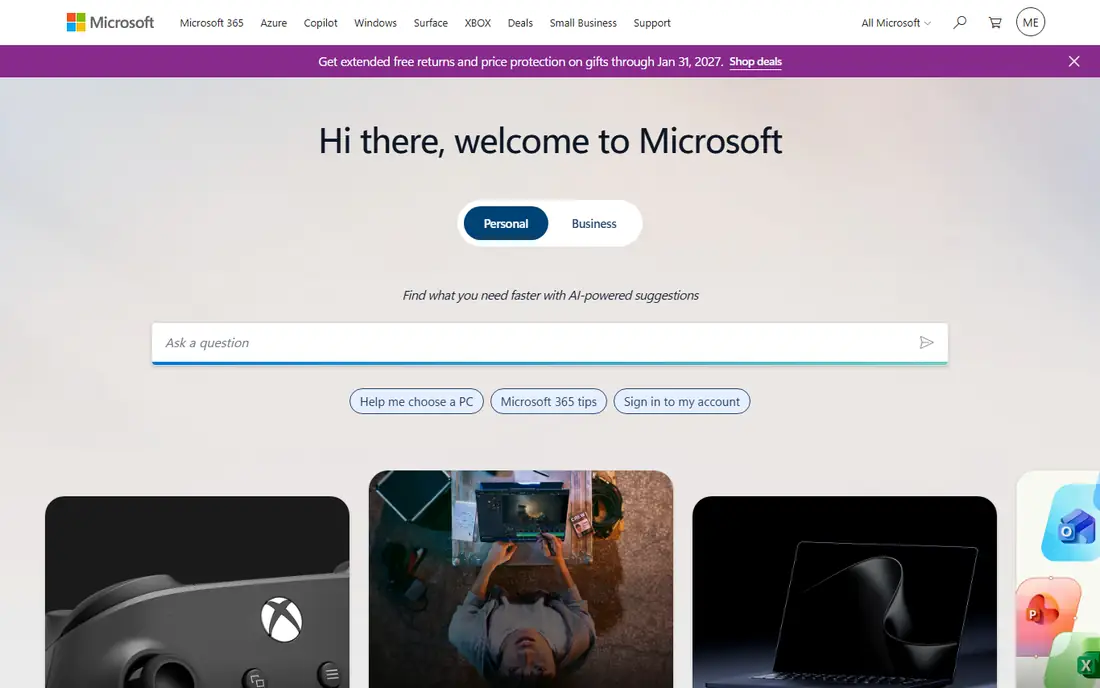
Microsoft pairs the Azure cloud platform with Office, Windows, LinkedIn, GitHub, and Xbox, giving it revenue from businesses, developers, and consumers at once. Azure is the second largest public cloud, and Office remains the default productivity suite in most large companies. That mix produces steady subscription income, which is more predictable than one-time product sales and helps Microsoft fund heavy AI investment.
The main risk is cost. Building AI data centers and buying advanced chips costs tens of billions of dollars a year, and the payoff depends on customers paying for AI features inside Office and Azure. Competition from Amazon and Google in cloud, and from open source tools in development, keeps pressure on prices. Even so, Microsoft's breadth across cloud, software, and developer tools makes it one of the most durable companies on this list.
What we like- Azure cloud growth
- Office and Windows reach nearly every office
- Diversified revenue across business and consumer lines
Watch out for- Cloud growth faces strong rivals
- AI spending is very large
- Enterprise contracts are slow to change
Starting priceSee website
Free planNo
Alphabet owns Google Search, YouTube, Android, Google Cloud, and the DeepMind AI lab, which together touch billions of users every day. Search advertising still supplies most of its profit, and YouTube is the largest video platform in the world. Google Cloud has grown into a serious third cloud provider, and DeepMind gives Alphabet research depth that few rivals can match in AI.
The challenges are legal and structural. Antitrust cases in the United States and Europe target search distribution and advertising technology, and remedies could reshape parts of the business. AI answers in search may also change how users click through to websites, which affects the ad model. Even with those pressures, Alphabet's control of search, video, mobile software, and cloud keeps it near the top of any global tech ranking.
What we like- Google Search dominance
- YouTube scale
- Google Cloud growth and AI research depth
Watch out for- Advertising cycles affect revenue
- Antitrust cases in the US and EU
- AI search changes could shift traffic
Starting priceSee website
Free planNo
NVIDIA designs the graphics and AI accelerator chips that power most large AI training systems, and its data center business has grown faster than almost any large company in history. The key advantage is not only the hardware but the CUDA software platform, which developers have used for years and which makes switching to rival chips costly. NVIDIA also sells full server systems and networking, so it captures more of each data center build than a chip-only vendor would.
The risks are concentration and politics. A small number of cloud companies buy a large share of NVIDIA chips, so any pause in their spending hits revenue hard. Export controls restrict sales of advanced chips to China, and rivals such as AMD, Google, and Amazon are building their own accelerators. Even so, NVIDIA sits at the center of the AI build-out, and that position earns its place near the top of this list.
What we like- Dominant AI accelerator position
- CUDA software moat
- Data center revenue growth
Watch out for- Customer concentration among big cloud firms
- Export controls limit some sales
- Valuation assumes AI demand keeps rising
Starting priceSee website
Free planNo
Amazon runs two very different giants under one roof: Amazon Web Services, the largest public cloud provider, and the largest online retail business in the United States, plus a fast-growing advertising unit. AWS supplies most of Amazon's operating profit, while retail and Prime memberships give it unmatched reach into households. That combination lets Amazon fund logistics, devices, and AI from cash generated across the group.
The limits are margin and scrutiny. Retail profit margins stay thin because delivery and warehousing cost so much, and regulators in the United States and Europe have challenged marketplace rules and past acquisitions. Labor costs and delivery expectations also keep rising. Even with those pressures, Amazon's cloud leadership and retail scale make it one of the most influential companies in the world economy.
What we like- AWS is the largest public cloud
- Retail scale and logistics
- Advertising growth
Watch out for- Retail margins are thin
- Regulatory scrutiny of marketplace practices
- Heavy spending on logistics and AI
Starting priceSee website
Free planNo
TSMC, Taiwan Semiconductor Manufacturing Company, makes the chips designed by Apple, NVIDIA, AMD, Qualcomm, and many others, and it is the only foundry producing the most advanced process nodes at full scale. Without TSMC, the smartphone, AI, and PC industries would stall, which makes it one of the most strategically important companies on earth. Its manufacturing lead comes from decades of investment in lithography, yields, and process engineering.
The main risk is geography. Most of TSMC's advanced production sits in Taiwan, which faces geopolitical tension, and customers and governments want more production elsewhere. TSMC is building plants in Arizona, Japan, and Germany, but those will take years to match Taiwan's scale. Even with that risk, no ranking of the best tech companies is complete without the factory that builds the modern world's chips.
What we like- Makes the most advanced chips in the world
- Serves Apple, NVIDIA, and AMD
- Huge technology lead in fabrication
Watch out for- Geographic concentration in Taiwan
- Geopolitical risk
- Fabrication plants cost tens of billions each
Starting priceSee website
Free planNo
Meta owns Facebook, Instagram, WhatsApp, and Messenger, giving it the largest social and messaging audience in the world, and it turns that audience into advertising revenue at enormous scale. WhatsApp is especially important outside the United States, where it is the default messaging app in many countries. Meta also invests heavily in AI models and in Reality Labs, its virtual and augmented reality division.
The risks are platform dependence and spending. Changes to phone privacy rules have already hurt ad targeting, and Reality Labs loses billions of dollars a year while its headsets remain a small business. Regulators also watch Meta closely on privacy and competition. Even so, the sheer size of its daily audience and its advertising profits keep Meta among the world's leading tech companies.
What we like- Facebook, Instagram, and WhatsApp reach billions
- Advertising scale
- Reality Labs and AI investment
Watch out for- Advertising depends on phone platform rules
- Reality Labs losses are large
- Privacy regulation pressure
Starting priceSee website
Free planNo
Samsung Electronics is the largest smartphone maker in the world by unit volume and a leading producer of memory chips, displays, and home appliances. That breadth is its strength: when phone sales slow, the components division can carry results, and when memory prices fall, devices help offset the drop. Samsung also supplies screens and chips to other phone makers, including some of its own rivals, which widens its reach.
The limits are competition and cycles. Apple takes most of the premium phone profit, Chinese brands press hard on price, and memory chip prices swing with global demand, which makes earnings uneven. The Samsung group structure is also complex, with cross-holdings that confuse investors. Even with those issues, Samsung's scale across devices and components earns it a place among the world's best tech companies.
What we like- Largest smartphone maker by volume
- Memory chips and displays
- Diversified electronics business
Watch out for- Smartphone competition from Apple and Chinese brands
- Memory prices are cyclical
- Complex group structure
How we chose
We ranked companies by market value, revenue, profit, and breadth of influence, favoring firms whose products underpin large parts of the economy rather than a single popular app. We gave extra weight to chip makers and cloud providers, because AI, phones, and business software all depend on them. We also weighed durability: steady subscription and services income counts for more than one strong product cycle. Private companies and firms whose main business sits outside technology were excluded, even when they are very large.
Buying guide
This list is a company ranking, so use it differently from a product buying guide. If you are choosing where to work, weigh the company's growth, pay, and stability rather than its rank alone, since the best-known firm is not always the best employer for your role. If you are investing, treat this ranking as background only, not as financial advice, and check current market values and earnings before acting, since rankings shift with share prices.
If you are choosing products, start from your own needs rather than the company name. A top-ranked firm can still make the wrong product for you, and a smaller vendor can be better for a narrow job. Compare device, software, and service terms on their own merits, and check privacy and support terms before committing to an ecosystem that is hard to leave.
Frequently asked questions
Who is the largest tech company in the world?
By market value, Apple and Microsoft have traded the top spot in recent years, with NVIDIA close behind during AI hardware booms. The order changes with share prices, so check current market values for the latest ranking.
What makes a tech company the best?
Scale matters, but so do profit, product reach, and influence on the wider economy. A company that supplies chips, cloud platforms, or operating systems affects thousands of other businesses, which counts for more than a single popular app.
Why is TSMC on this list if most people never buy its products?
Because TSMC makes the chips inside phones, laptops, and AI servers designed by other companies. Without its factories, Apple, NVIDIA, and AMD could not ship their flagship products at scale.
Do these rankings change often?
Yes. Chip cycles, AI demand, regulation, and share price moves can reorder the top ten within a year. Treat any ranking as a snapshot of a moment, not a permanent order.
Is this list financial advice?
No. This list ranks companies by business scale and influence. It is not a recommendation to buy shares or products, and investment decisions should rest on your own research or advice from a licensed professional.
Sources we checked (0)
Is your product missing or out of date?
We review this list regularly. Vendors can request a listing, send updated pricing or ask about featured placement.

Shihab Mia · Founder, Rankite
Shihab has 5+ years in B2B and SaaS SEO. He writes Rankite's software buying guides from pricing pages, documentation and public user reviews. More about Shihab.