How we make this list: we compare pricing pages, product documentation and public user reviews. Ratings come from G2, Capterra or Trustpilot, with the date we checked them.
Key takeaways
- Ghost is the closest WordPress replacement for serious publishers: your own site, built in newsletters and paid memberships, with no platform cut of subscription revenue.
- Substack and Medium trade ownership for audience: free to start, with discovery built in, but Substack takes 10 percent of paid subscriptions and neither gives you a real website.
- Squarespace, Wix and Webflow are website builders with blogs attached, best when the blog supports a business rather than being the business.
- Blogger and Write.as cover the free and simple ends: zero cost, zero maintenance, and clear limits to match.
Quick comparison
| Tool | Best for | Starting price | Free plan |
|---|
 Ghost | Publishers who want ownership plus newsletters | See website | No |
 Substack | Writers who want built in discovery | Free | Yes |
 Medium | Occasional writers who want readers now | Free | Yes |
 Squarespace | Design led business sites with a blog | See website | No |
 Wix | Beginners who want one builder for everything | $17 per month | Yes |
 Webflow | Designers who need precise visual control | See website | Yes |
 Blogger | A free blog that asks nothing of you | Free | Yes |
 Write.as | Minimal, private, distraction free writing | See website | Yes |
Is your product missing or out of date?
We review this list regularly. Vendors can request a listing, send updated pricing or ask about featured placement.
The best WordPress blog alternatives
#1Ghost
Best for: Publishers who want ownership plus newsletters4.0/5 on
G2 (40 reviews, checked Oct 2026)
Visit ghost.org
Starting priceSee website
Free planNo
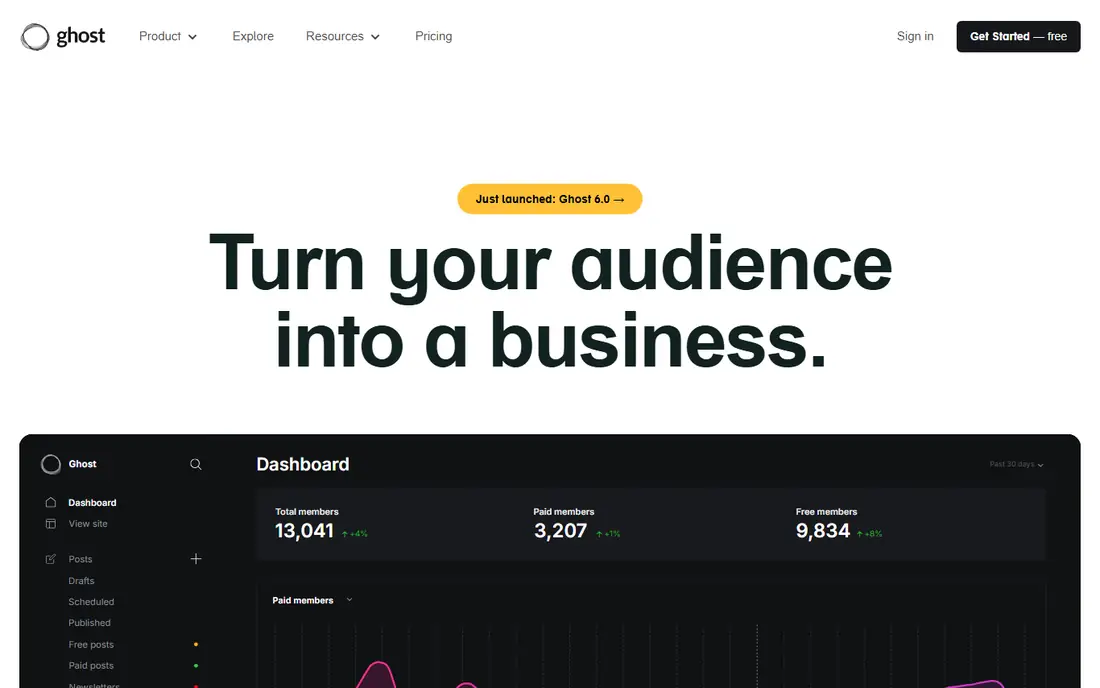
Ghost is the answer for the writer whose blog became a business. A newsletter, a paid tier and a fast site under your own domain, with no landlord taking a cut, is precisely the deal WordPress users thought they had before the plugin stack grew teeth.
The self host route is genuinely free but genuinely yours to run: updates, deliverability and backups land on you. Most solo publishers are better served by the hosted plan and their own writing time.
What we like- Ghost was built by former WordPress people to do one job, publishing, and it shows: a clean editor, fast pages, built in email newsletters and paid memberships, and member management inside the same tool instead of through plugins. Crucially, Ghost takes 0 percent of your subscription revenue
- You keep everything except Stripe's card fees. It is open source, so you can self host it free or pay for the official Ghost(Pro) hosting, which includes sending infrastructure, backups and updates. Themes and SEO basics are strong out of the box.
Watch out for- Hosted pricing scales with your member count and current entry figures conflict between sources, starting in the mid teens per month, so model your list size on the pricing page before committing. There is no free hosted tier, only a trial or self hosting. The integration ecosystem is far smaller than WordPress's plugin library. Design changes beyond theme settings mean editing code. Payments run through Stripe only, which excludes writers in countries Stripe does not serve.
#2Substack
Best for: Writers who want built in discovery4.3/5 on
G2 (17 reviews, checked Oct 2026)
Visit substack.com
Starting priceFree
Free planYes
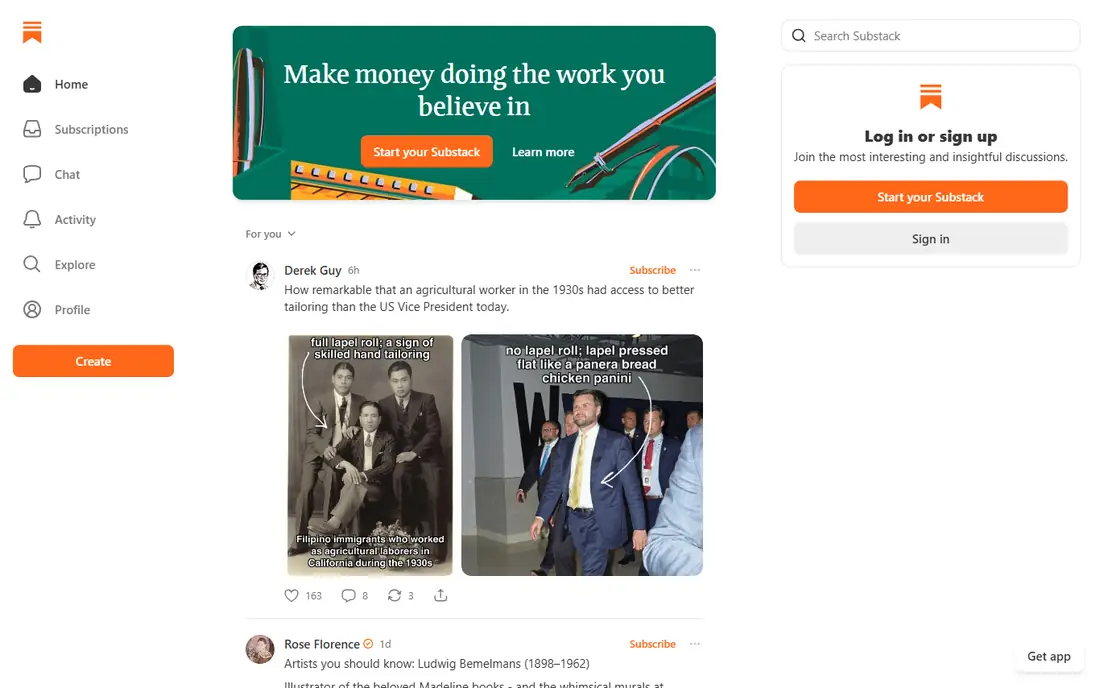
Substack suits the writer starting from zero audience. The network effect is worth the 10 percent while discovery is your problem, because 90 percent of something beats 100 percent of an empty room.
Revisit the maths yearly. A publication earning well on Substack is paying rent that would cover Ghost hosting many times over, and the export tools make leaving possible when the numbers argue for it.
What we like- Substack removes every technical decision: sign up, write, publish to web and email at once, and turn on paid subscriptions whenever you are ready, with no hosting bill ever. Its recommendation network is the strongest discovery engine in this list
- A real share of many writers' new subscribers arrive through other Substack publications. Notes, its social layer, adds another route to readers. You can use a custom domain, and your email list exports if you leave.
Watch out for- The price of free is 10 percent of every paid subscription, plus card fees, forever, which becomes a large tax on a successful publication. Design control is minimal: your page looks like Substack. There is no real website toolkit, no plugins, no store to speak of. You build on rented ground, and Substack's own promotion of competing writers inside your reader experience is part of the deal.
Starting priceFree
Free planYes
Use Medium the way good publishers use it: as a syndication and discovery channel. Post there to find readers, and keep your canonical home somewhere you own, whether that is Ghost or the WordPress site you already run.
As your only blog, it is a borrowed room. Fine for essays and experiments, wrong for an asset.
What we like- Medium gives a new writer the one thing a fresh WordPress install cannot: readers on day one. Publishing is free and takes minutes, posts are distributed by topic to an existing audience, and the Partner Program can pay writers based on member reading time. There is nothing to install, secure or update. Publications let groups and small magazines run a shared magazine style blog. For testing ideas before committing to a platform, it is unmatched.
Watch out for- You own almost nothing here: no custom domain on your own site in the classic sense, no email list you control, minimal design choices, and earnings that depend on an algorithm and a membership pool you cannot influence. Publications have been deprioritised over the years. A business cannot build its home on Medium
- It is a distribution channel, not a platform strategy. Search value accrues mostly to Medium, not to you.
#4Squarespace
Best for: Design led business sites with a blog4.4/5 on
G2 (1,133 reviews, checked Oct 2026)
Visit squarespace.com
Starting priceSee website
Free planNo
Squarespace is right when the blog markets the business rather than being the business. A photographer, consultant or restaurant gets a handsome site, a working blog and zero maintenance in one subscription.
A writer whose income is the blog should look at Ghost instead. The distinction is what the blog is for, and answering it honestly saves a migration later.
What we like- Squarespace sells a finished look: polished templates, a drag and drop builder, hosting, domain and support in one bill, and a blogging engine that covers the needs of a business blog well, with scheduling, categories and basic SEO controls. Email campaigns and commerce attach inside the same account, so a studio, coach or shop can run site, blog and store without plugins. Nothing needs updating or securing by hand. Current plans start in the mid to high teens per month on annual billing.
Watch out for- Published entry prices differ by region and billing period, so confirm on the site. The blog engine is a feature of a website builder, not a publishing platform: no memberships to rival Ghost, weaker newsletter tooling than the newsletter first tools, and template limits that serious publishers feel quickly. Exporting a blog out is partial. You are also inside a closed system with no server access of any kind.
#5Wix
Best for: Beginners who want one builder for everything4.2/5 on
G2 (1,888 reviews, checked Oct 2026)
Visit wix.com
Starting price$17 per month
Free planYes
Wix earns its place on ease. A beginner can have a respectable site and first post live in an evening, which is when most blogs die if the tooling fights back.
Grow into its limits knowingly. A blog that becomes a publication will want out within a few years, and leaving takes work.
What we like- Wix is the most beginner friendly builder here: a free plan with Wix branding to start, paid plans from about 17 dollars a month on yearly billing, hundreds of templates, an AI site builder, and an app market that adds bookings, stores, events and forums around the blog. The editor is forgiving, and the blog tool covers categories, drafts and member areas. For a small business owner who wants one login for a whole online presence, the breadth is the point.
Watch out for- Breadth brings clutter, and heavy Wix pages can load slowly compared with Ghost or a well run WordPress site. The free plan carries Wix adverts and a Wix subdomain, so it is a trial in practice. Changing templates later means rebuilding rather than restyling. Blog export options are limited, and power users hit the ceiling of the drag and drop model. Pricing tiers and feature gates take care to read.
#6Webflow
Best for: Designers who need precise visual control4.4/5 on
G2 (995 reviews, checked Oct 2026)
Visit webflow.com
Starting priceSee website
Free planYes
Webflow is for the blog that is also a portfolio piece: design studios, agencies and product companies whose site must look exact. Its CMS is a genuine blogging engine when the design demands it.
For pure writing, it is a racing bicycle bought to fetch groceries. Admire it, then choose something simpler unless the design really is the point.
What we like- Webflow gives designers pixel level control over layout and interaction in a visual canvas that outputs clean, fast pages, with a real CMS underneath for structured blog content: custom fields, collections and templates driven by data rather than pasted pages. A free starter plan allows two unhosted projects, and paid site plans add custom domains and CMS scale. Agencies use it to hand clients a site they can edit without breaking the design. Hosting is fast and managed.
Watch out for- The learning curve is the steepest among the builders here
- The canvas rewards people who understand how web pages are structured. Site plan pricing and limits have been restructured more than once and differ by CMS size, so read the current plan table closely. There is no built in newsletter or membership engine to rival Ghost. A writer without design ambitions is paying for control they will never use.
Starting priceFree
Free planYes
Blogger is the honest free option for a blog with no commercial ambition: the village newsletter, the travel diary, the teacher's class page. It costs nothing and it will be there when you come back to it.
The moment the blog needs subscribers, income or a brand, it has done its job and the tools above take over.
What we like- Blogger, Google's long running free service, remains the zero cost, zero maintenance way to keep a blog: no hosting bill, no updates, no plugins, custom domain support if you bring your own, and integration with a Google account the writer already has. It has run personal blogs reliably for decades, allows AdSense for those who want it, and asks almost nothing in return. For a diary, a community noticeboard or a club newsletter site, it still does the job.
Watch out for- Development is minimal and the templates show their age
- A Blogger site looks like a Blogger site. There is no newsletter engine, no memberships, no meaningful ecosystem, and Google's history of closing products hangs over any long term plan, even one this old. Export exists but design and features do not travel. Professional use cases outgrow it quickly.
#8Write.as
Best for: Minimal, private, distraction free writing4.4/5 on
G2 (33 reviews, checked Oct 2026)
Visit write.as
Starting priceSee website
Free planYes
Write.as serves writers who found WordPress's dashboard, and every platform's growth machinery, to be the problem. It is a quiet room for text, and for blogs kept for the writing itself, that is a feature no rival here matches.
Choose it for a journal, a pseudonymous project or a simple publication. Choose Ghost or Substack when readers and revenue enter the plan.
What we like- Write.as strips blogging to the act of writing: a plain editor, instant publishing, no likes or follower counts engineered to distract, and a reading experience with no clutter. It supports anonymous or pseudonymous blogs, custom domains on paid plans, and federation into the wider open social web, so posts can reach readers beyond the platform. A free tier covers a public blog, and paid plans are a few dollars a month. It is run by a small independent company with a privacy first posture.
Watch out for- Minimal is the whole deal: few themes, few design options, no plugin ecosystem, no built in paid membership machinery to rival Ghost or Substack, and analytics are deliberately light. An audience must be brought, not found
- There is no discovery engine. A business needing marketing features will feel the absences at once. The small team behind it means development moves at a gentle pace.
How we chose
We picked blogging platforms a writer can switch to in October 2026 across the actual reasons people leave WordPress: maintenance fatigue, wanting built in newsletters and memberships, wanting an audience provided, needing a business website with a blog attached, or wanting to spend nothing. Every platform is actively sold or maintained. Where entry prices conflict between current sources, the entry says see website rather than printing a figure we could not stand over. WordPress.com is deliberately absent because it is WordPress. No platform was hands on tested; judgements rest on vendor documentation, pricing pages and current comparison reporting.
How to pick a WordPress blog alternative
Decide what the blog is for. If it is a publication business, the choice narrows to Ghost for ownership or Substack for discovery, and the deciding figure is the platform cut: 0 percent against 10 percent of subscriptions, set against the value of the readers Substack sends you.
If the blog supports a business, pick the builder that fits your skill: Squarespace for polish with the least effort, Wix for the easiest start, Webflow when a designer needs full control. Your blog posts become marketing assets inside a site that sells something else.
If it is neither, spend nothing. Blogger for a public diary with zero upkeep, Write.as for a quiet writing habit, Medium for testing whether anyone wants to read you at all. You can move up this list when the blog earns it.
Frequently asked questions
What is the best WordPress alternative for a serious blogger?
Ghost. It keeps the parts that matter, your domain, your design, your subscriber list, and removes the maintenance and plugin sprawl, adding newsletters and paid memberships as core features rather than add ons. It is the only option here that feels like a publishing platform rather than a builder or a network.
Can I move my WordPress posts to these platforms?
Yes, with different amounts of help. Ghost offers a WordPress migration path and import tools, Substack imports posts and subscriber lists, and the builders provide importers of varying quality. Images and internal links need checking after any move, and redirects from your old URLs protect your search traffic. Keep the old site live until redirects are proven.
Which alternative is best for a newsletter?
Ghost and Substack lead, for opposite reasons. Ghost sends newsletters from your own publication with no revenue cut, and suits a writer with an audience or a search presence. Substack suits a writer starting empty, because its recommendations bring readers. Both handle free and paid tiers; the difference is who owns the growth engine.
Is there a completely free way to blog in 2026?
Yes. Blogger costs nothing with no time limit, Write.as has a free tier, Substack and Medium charge nothing to publish, and Wix and Webflow have free starter plans with branding limits. The free routes trade away design control, your own domain on some plans, or a cut of future revenue, so read the trade rather than the price.
What do I lose by leaving WordPress?
The plugin ecosystem and total control. No alternative here can add almost any feature ever invented the way a WordPress plugin can, and none gives the same server level freedom. What you gain is time and simplicity. For most bloggers, the plugins they actually use number in the single digits, and each platform above covers those jobs natively.
Sources we checked (0)
Is your product missing or out of date?
We review this list regularly. Vendors can request a listing, send updated pricing or ask about featured placement.

Shihab Mia · Founder, Rankite
Shihab has 5+ years in B2B and SaaS SEO. He writes Rankite's software buying guides from pricing pages, documentation and public user reviews. More about Shihab.