How we make this list: we compare pricing pages, product documentation and public user reviews. Ratings come from G2, Capterra or Trustpilot, with the date we checked them.
Key takeaways
- Adobe Experience Manager is powerful but expensive and heavy, so most teams leave it for cost, complexity, or a headless architecture.
- Contentful and Contentstack suit large teams that need strong governance, localization, and multi-site publishing.
- Sanity and Strapi give developers the most control, with Sanity hosted and Strapi self-hosted.
- Storyblok is the friendliest option for marketing teams that want visual editing without developer help.
- Directus and Hygraph offer flexible API-first content at lower entry prices than the enterprise leaders.
Quick comparison
| Tool | Best for | Starting price | Free plan |
|---|
 Contentful | Large multi-market teams | See website | Yes |
 Sanity | Developer-led structured content | $15 per seat/month | Yes |
 Strapi | Self-hosted open source CMS | $0 self-hosted | Yes |
 Contentstack | Enterprise composable DXP | See website | Yes |
 Storyblok | Marketing-led visual editing | See website | Yes |
 Hygraph | GraphQL-native content | See website | Yes |
 Directus | API-first content over existing data | See website | Yes |
 Optimizely | Full digital experience platform | See website | No |
Is your product missing or out of date?
We review this list regularly. Vendors can request a listing, send updated pricing or ask about featured placement.
The best AEM alternatives
#1Contentful
Best for: Large multi-market teams4.3/5 on
G2 (399 reviews, checked Oct 2026)
Visit contentful.com
Starting priceSee website
Free planYes
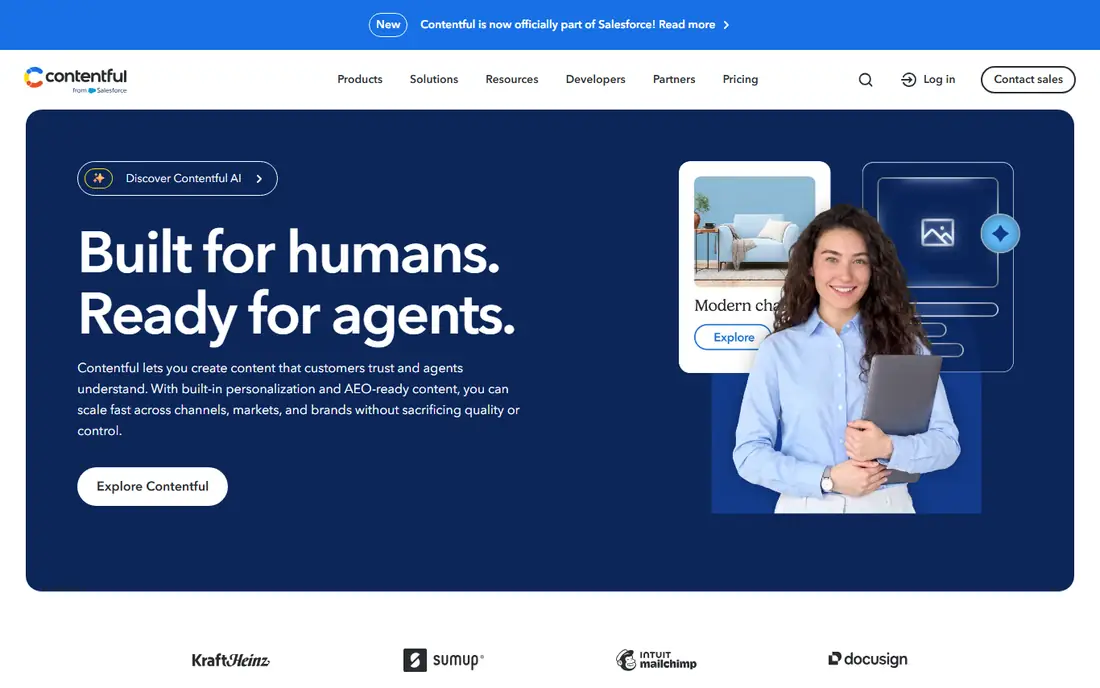
Contentful is the most common landing spot for teams leaving AEM. It is a headless content platform, which means content is managed in one place and delivered by API to websites, apps, and other channels. Editors get a clean interface, while developers get REST and GraphQL APIs plus a large marketplace of integrations.
The free plan works for small projects and trials, but published comparisons put paid entry around $300 per month, with enterprise pricing quoted. Costs can climb through API usage, extra spaces, and support packages, so budget for growth rather than the entry figure alone. If your team runs many markets and languages and needs strict roles and workflows, Contentful is a safe, well-proven choice. If cost is the main reason you left AEM, compare Sanity and Strapi before committing.
What we like- Strong localization and roles
- Large app marketplace
- Proven at enterprise scale
Watch out for- Costs rise fast with usage
- API limits on lower plans
- Pricing page is quote-led for larger teams
#2Sanity
Best for: Developer-led structured content4.7/5 on
G2 (926 reviews, checked Oct 2026)
Visit sanity.io
Starting price$15 per seat/month
Free planYes
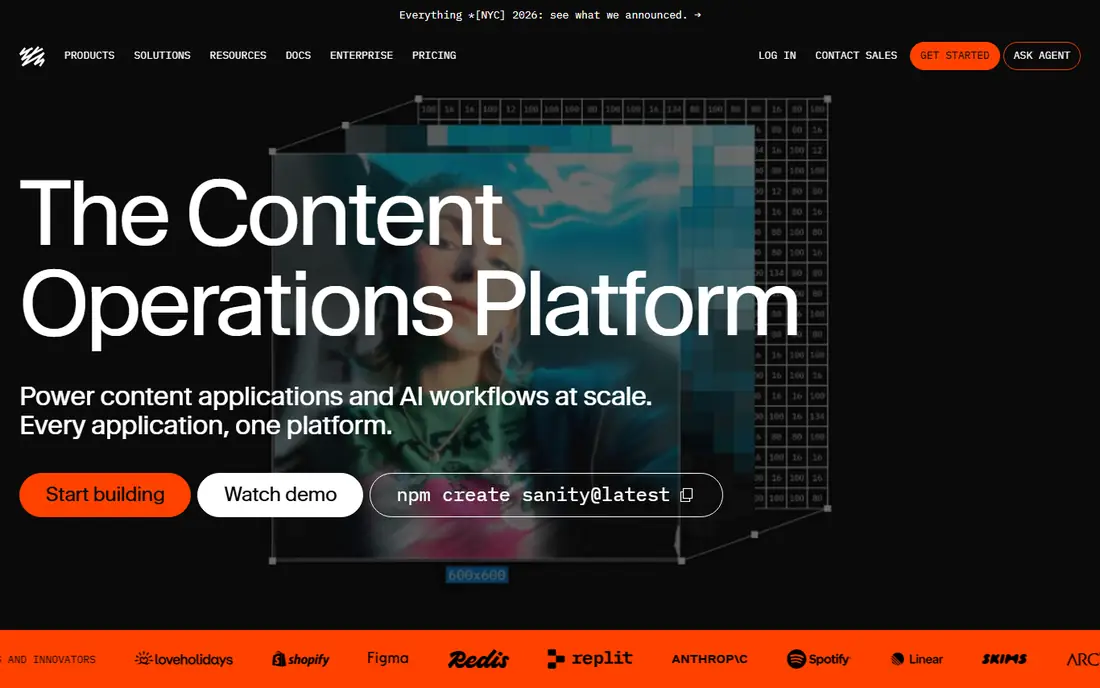
Sanity stores content in a hosted Content Lake and lets developers define content models in code. That approach gives unusual freedom: content types, validation, and editorial workflows can match your exact product instead of forcing your product into fixed templates. Editors work in Sanity Studio, an open source React app, with real-time collaboration built in.
The free plan covers small teams, and Growth seats are published around $15 per seat per month. Viewers are free, which helps when many people need to read content without editing it. The trade-off is setup effort. A developer must build and deploy the Studio and wire up the front end, so marketing teams cannot simply sign up and publish on day one. For developer-led teams that want structured content as a service, Sanity is one of the strongest AEM alternatives available.
What we like- Schema defined in code
- Real-time collaboration
- Generous free plan for small teams
Watch out for- Studio setup needs developer time
- Enterprise governance costs more
- No direct database access
#3Strapi
Best for: Self-hosted open source CMS4.5/5 on
G2 (204 reviews, checked Oct 2026)
Visit strapi.io
Starting price$0 self-hosted
Free planYes
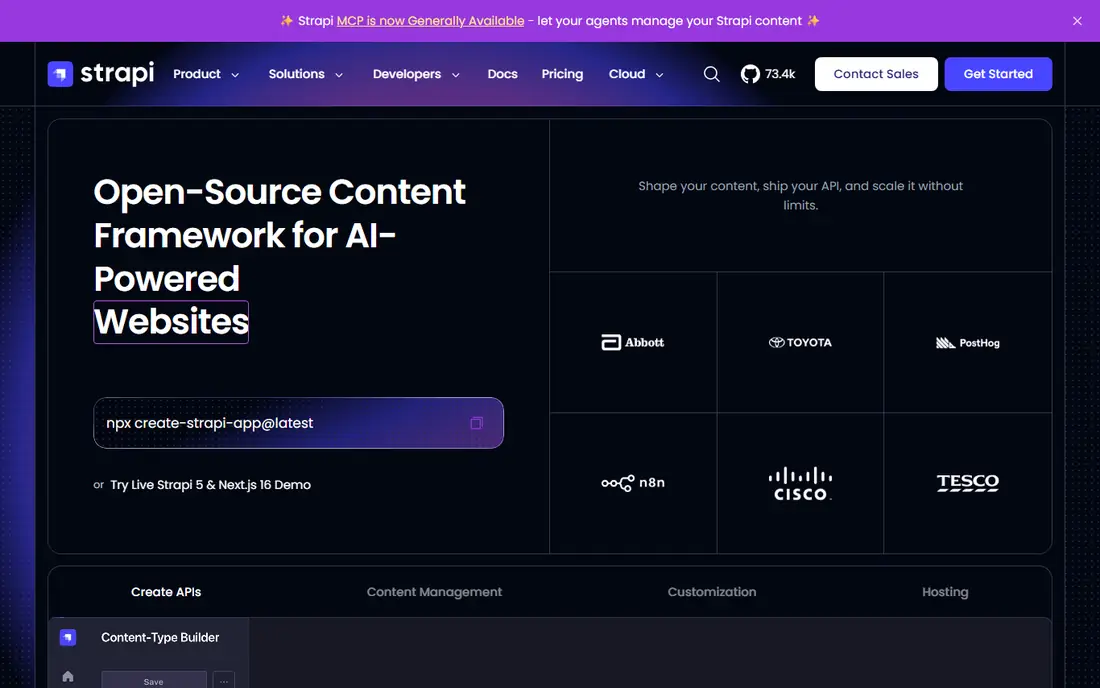
Strapi is the open source answer to AEM for teams that want to own their stack. It is a Node.js application you deploy on your own server with your own database, and it ships with an admin panel, role controls, and both REST and GraphQL APIs. The community edition is free, with no seat limits in the core, which makes it attractive for data-sensitive organizations.
Self-hosting means you own the operational work: Node upgrades, dependency patches, backups, and incident response. Strapi Cloud removes much of that load, with published project pricing starting around $35 per month for starter projects and higher tiers for always-on runtime and SLAs. Governance extras such as review workflows and audit logs sit on paid tiers. Choose Strapi when control and data ownership matter most, and make sure someone on the team owns server upkeep.
What we like- MIT-licensed open source core
- Full control over data and hosting
- REST and GraphQL APIs
Watch out for- You own updates and security
- Enterprise features are paid
- Cloud pricing is per project
Starting priceSee website
Free planYes
Contentstack positions itself as a composable digital experience platform, not just a CMS. Content, personalization, and related tools can be combined around an API-first core, which suits large organizations that already buy best-of-breed tools. Governance is a strength, with custom roles, workflows, and multi-region support that large teams expect.
Pricing is quote-based for enterprise use, and published comparisons have put entry figures anywhere from a few hundred dollars per month to four figures, so treat any single number with care and request a quote for your exact usage. The free plan helps with evaluation but is not a production tier for large sites. Contentstack fits enterprises that want AEM-level governance without Adobe's stack, and that can fund a proper implementation.
What we like- Mature enterprise governance
- Strong localization
- Composable suite beyond the CMS
Watch out for- Enterprise pricing is quote-based
- Smaller community than Contentful
- Learning curve for new editors
#5Storyblok
Best for: Marketing-led visual editing4.5/5 on
G2 (592 reviews, checked Oct 2026)
Visit storyblok.com
Starting priceSee website
Free planYes
Storyblok is built around a visual editor that lets marketers assemble pages from components and see the result as they work. That design fixes the most common complaint about headless tools: editors feeling locked out of page building. Teams can publish landing pages, campaign pages, and product content without waiting on developer tickets.
Published comparisons put paid entry around $99 per month, with higher tiers for larger teams, so confirm current pricing on the vendor page. The trade-off is governance depth. Storyblok covers roles and workflows, but it is lighter than Contentful or Contentstack for complex enterprise controls. It is also page-centric, so teams with heavy structured-data needs may prefer Sanity or Hygraph. For marketing-led teams, Storyblok is often the fastest path to independence from developers.
What we like- Visual editor marketers enjoy
- Component-based pages
- Quick publishing without developers
Watch out for- Enterprise governance is lighter
- Paid tiers rise with traffic
- Less flexible for complex data models
#6Hygraph
Best for: GraphQL-native content4.4/5 on
G2 (735 reviews, checked Oct 2026)
Visit hygraph.com
Starting priceSee website
Free planYes
Hygraph, formerly GraphCMS, is a headless CMS built entirely around GraphQL. That focus pays off for teams already using GraphQL, since queries can fetch exactly the fields a page needs and federate content from multiple sources. The platform handles hosting, scaling, and delivery, so developers can concentrate on the front end.
The free hobby plan suits trials and small projects, while published comparisons put paid growth pricing around $199 per month. Teams that rely on REST will need to adapt, since Hygraph does not offer a REST API. The marketplace is also smaller than Contentful's. If your stack is GraphQL-native and you want a managed content API without running servers, Hygraph is a focused and capable AEM alternative.
What we like- GraphQL-only API keeps queries precise
- Content federation
- Solid enterprise hosting
Watch out for- No REST API for teams that need it
- Paid entry is higher than some rivals
- Smaller marketplace
Starting priceSee website
Free planYes
Directus takes a different route from most headless tools. Instead of storing content in its own system, it wraps an existing SQL database and instantly provides REST and GraphQL APIs plus an admin app. That makes it ideal for teams that already have data in Postgres or MySQL and want a content layer on top without migrating everything.
Self-hosting is free for smaller organizations under published terms, with commercial licences and cloud plans for larger use. Cloud pricing has been published around $15 to $99 per project per month, depending on tier. The admin interface is capable but less polished than Storyblok or Contentful, and setup still needs technical skill. For teams that value data ownership and want APIs over their own database, Directus is a flexible and low-cost option.
What we like- Wraps any SQL database with APIs
- No vendor lock-in on data
- Self-hosted option
Watch out for- Needs technical setup
- Admin UI is functional rather than polished
- Cloud pricing is per project
Starting priceSee website
Free planNo
Optimizely is the closest like-for-like replacement for AEM as a full digital experience platform. It combines content management with experimentation, personalization, and commerce capabilities, which suits large organizations that run many sites and campaigns from one platform. Enterprise support and services are a genuine strength for teams that want a vendor partner, not just software.
Pricing is quote-based and implementation is a real project, not a weekend migration. Smaller teams will find Optimizely heavy and expensive for a simple website or blog. It earns its place here for enterprises that use AEM as a platform, not just a CMS, and want experimentation and personalization in the same stack. If you only need content delivery, a headless tool on this list will be cheaper and faster.
What we like- CMS plus experimentation and personalization
- Strong enterprise support
- Broad feature set
Watch out for- Quote-based pricing
- Complex platform to implement
- Overkill for simple sites
How we chose
We compared published pricing pages, licence terms, and feature documentation, plus recent headless CMS comparisons that rank these platforms for enterprise use. A tool made this list only if it can serve as a real AEM replacement for at least one common use case: enterprise governance, headless delivery, visual editing, or self-hosting. Prices marked "See website" reflect conflicting published figures or quote-based enterprise pricing, and we chose not to present a single unverified number as fact. Check the vendor pricing page for your region and usage before budgeting.
What to check before you switch
Start with your content model, not the feature list. AEM sites often carry years of templates, components, and custom code, and not every model maps cleanly to a headless schema. Inventory your content types, locales, and workflows before choosing, and run a pilot migration on one site section. Next, count your editors and approvers. Seat-based pricing can look cheap until dozens of editors are added, while usage-based pricing can surprise teams with traffic spikes.
Also weigh who builds pages. If marketers must publish without developers, Storyblok or a strong visual editor matters more than API purity. If developers own the front end and want schema control, Sanity or Strapi will feel better. Finally, plan for the front end. Headless tools deliver content by API, so you need a website or app to consume it. Budget for that build alongside the CMS licence, or the migration will stall after the content moves.
Frequently asked questions
Is there a free AEM alternative?
Yes. Strapi's community edition, Sanity's free plan, and Directus self-hosted are all free to start. Free plans suit trials and small sites, but production enterprise sites usually need a paid tier for support, SLAs, and governance features.
Which AEM alternative is best for large enterprises?
Contentful and Contentstack are the safest enterprise picks, with mature governance, localization, and support. Optimizely fits teams that want a full experience platform with experimentation. All three use quote-based enterprise pricing, so request quotes based on real usage.
Can I migrate AEM content to a headless CMS?
Yes, but it is a project, not an export. Content types must be remodeled, templates rebuilt as components or front-end code, and assets migrated. Plan a pilot on one section first, and keep AEM running until the new site is proven.
Do I need developers for a headless CMS?
For setup and the front end, yes. Editors can publish content once the system is built, but the initial build needs developers. Storyblok reduces that burden for page building, while Sanity and Strapi need more developer involvement up front.
Is Strapi really free?
The Strapi community edition is free under an MIT licence, and you can self-host it at no software cost. You still pay for hosting, and paid cloud plans and enterprise features cost extra. Budget for server upkeep as well as the licence.
What is the difference between headless and traditional CMS?
A traditional CMS like AEM couples content management with page rendering. A headless CMS manages content and delivers it by API, so any website, app, or device can consume it. Headless gives front-end freedom but requires a separate front-end build.
Sources we checked (8)
- https://www.contentful.com/pricing
- https://www.sanity.io/pricing
- https://strapi.io/pricing
- https://www.contentstack.com/pricing
- https://www.storyblok.com/pricing
- https://hygraph.com/pricing
- https://directus.io/pricing
- https://www.optimizely.com/pricing
Is your product missing or out of date?
We review this list regularly. Vendors can request a listing, send updated pricing or ask about featured placement.

Shihab Mia · Founder, Rankite
Shihab has 5+ years in B2B and SaaS SEO. He writes Rankite's software buying guides from pricing pages, documentation and public user reviews. More about Shihab.