How we make this list: we compare pricing pages, product documentation and public user reviews. Ratings come from G2, Capterra or Trustpilot, with the date we checked them.
Key takeaways
- Wiz leads on agentless visibility across clouds, with a graph that connects misconfigurations to real attack paths.
- Orca suits teams that want full coverage without agents, including side-scan detection of vulnerabilities and secrets.
- Prisma Cloud and Defender for Cloud suit teams already committed to Palo Alto or Microsoft ecosystems.
- Cloud security pricing is mostly quote-based, so compare coverage, agent needs, and alert quality rather than headline prices.
Quick comparison
Is your product missing or out of date?
We review this list regularly. Vendors can request a listing, send updated pricing or ask about featured placement.
The best cloud security services

#1Wiz
Best for: Agentless multi-cloud visibility4.7/5 on
G2 (863 reviews, checked Oct 2026)
Visit wiz.io
Starting priceSee website
Free planFree trial
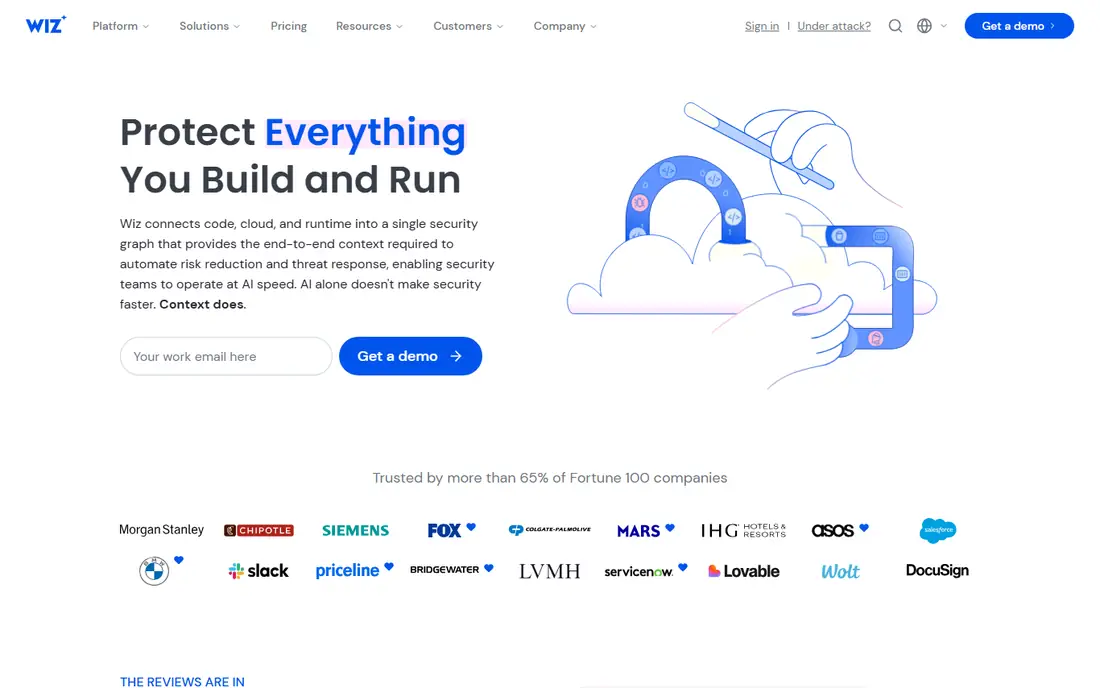
Wiz connects to cloud accounts through APIs and scans without agents, mapping workloads, identities, data stores, and network paths into one graph. That graph is its core strength: instead of listing thousands of isolated findings, it shows which combinations create a real path to sensitive data. Teams can prioritize the handful of issues that matter over long lists of low-risk misconfigurations.
Pricing is quote-based and positioned at the premium end, and alert tuning still takes work during rollout. Wiz also offers runtime and code scanning as add-ons, which teams can adopt after posture coverage is stable rather than buying everything at once. Wiz fits multi-cloud teams that want fast, broad visibility without deploying agents everywhere, and that have the staff to act on prioritized findings.
What we like- Agentless scanning
- Attack-path graph
- Broad cloud coverage
Watch out for- Quote-based pricing
- Alert tuning takes time
- Premium positioning
Starting priceSee website
Free planFree trial
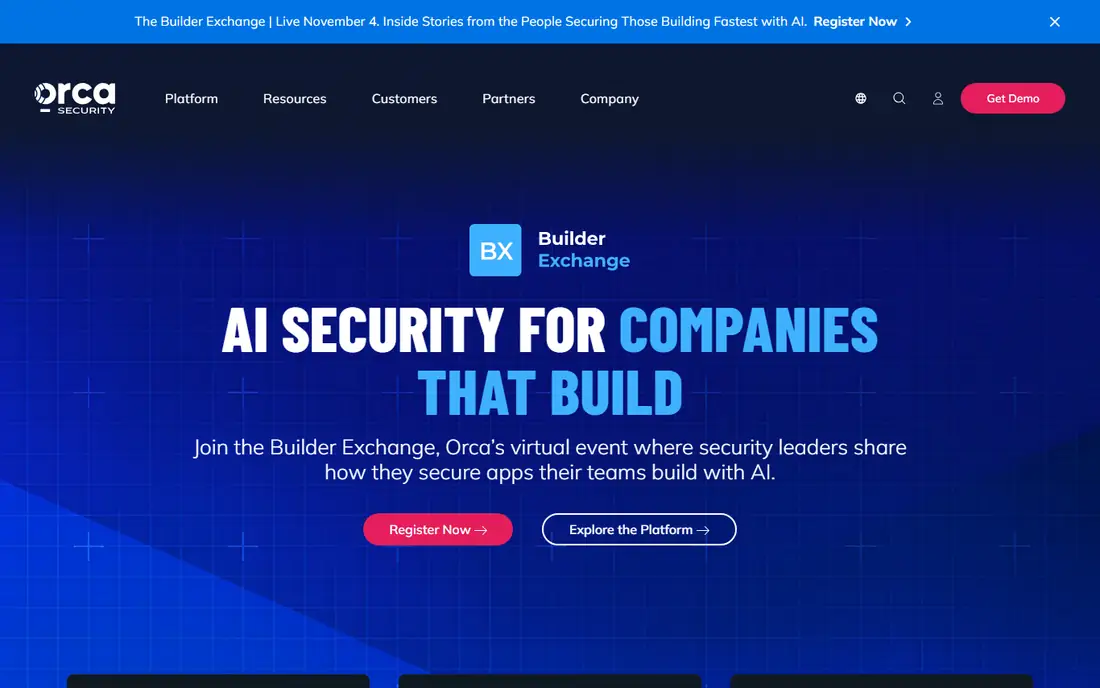
Orca's SideScanning reads cloud workloads from outside, without installing agents, covering virtual machines, containers, serverless functions, and data stores. That approach gives full-stack visibility with minimal deployment friction, including vulnerability, secret, and malware detection in one pass. Its prioritization engine links findings to internet exposure and sensitive data.
Orca is a newer vendor than the platform giants, so ecosystem depth differs, and pricing is quote-based. It fits teams that want agentless coverage across clouds and workload types, with fast deployment and a single pane for prioritized risk.
What we like- SideScanning without agents
- Covers VMs, containers, and serverless
- Strong prioritization
Watch out for- Quote-based pricing
- Newer vendor than Palo Alto or Microsoft
Starting priceSee website
Free planFree trial
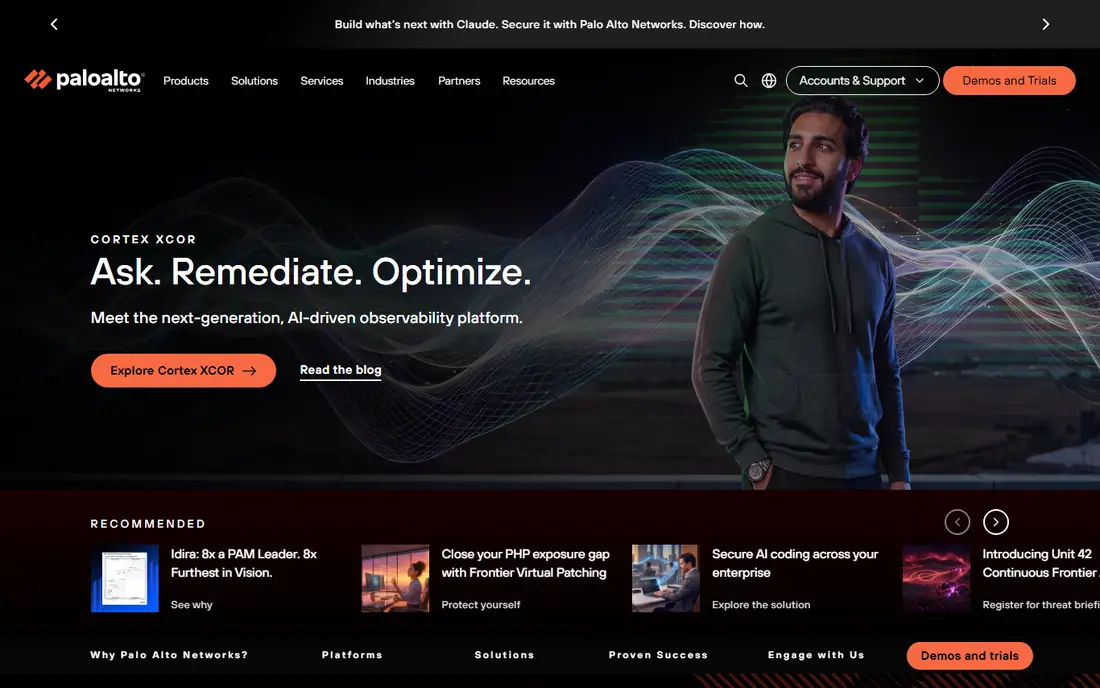
Prisma Cloud, from Palo Alto Networks, covers cloud security posture, workload protection, code security, and data security in one platform. Teams already using Palo Alto firewalls or Cortex products gain consistent policy and reporting, and the platform traces risk from code repositories through deployment to running workloads. Compliance frameworks come built in for regulated industries.
The platform is broad and complex, with a learning curve that matches its scope, and pricing is quote-based. Prisma Cloud fits enterprises already invested in Palo Alto, or teams that want one vendor across network, cloud, and code security rather than several point tools.
What we like- Broad platform coverage
- Code-to-cloud visibility
- Strong compliance tooling
Watch out for- Complex platform
- Quote-based pricing
- Palo Alto centered
Starting priceSee website
Free planFree trial
Microsoft Defender for Cloud is the native choice for Azure estates, with posture management, workload protection, and threat detection built into the Azure portal. It draws on Microsoft threat intelligence and integrates with Sentinel and Defender XDR for teams already on Microsoft security tooling. Multi-cloud support exists for AWS and Google Cloud, though depth is greatest on Azure.
Pricing rides on cloud usage and plan tiers, which makes exact costs hard to predict before deployment. Defender for Cloud fits organizations standardized on Microsoft, where native integration and single-vendor reporting outweigh best-of-breed depth in any one area.
What we like- Native Azure integration
- Unified security posture
- Microsoft threat intelligence
Watch out for- Deepest on Azure
- Multi-cloud features are thinner
- Pricing tied to usage
Starting priceSee website
Free planFree trial
Sysdig stands out at runtime: it watches container and Kubernetes behavior in real time, catching anomalous activity that static scans miss. Its roots in the open source Falco project give it credibility with platform teams, and its posture and vulnerability features round out cloud native protection. Teams running heavy container estates value its runtime depth.
Posture management alone trails dedicated CNAPP platforms, so teams wanting posture-first coverage may pair Sysdig with another tool. Sysdig fits container-heavy organizations where runtime threats, not just misconfigurations, drive the security program.
What we like- Strong runtime detection
- Container and Kubernetes focus
- Falco open source roots
Watch out for- Container-centered
- Posture features trail pure CNAPP rivals
Starting priceSee website
Free planFree trial
Aqua Security covers the cloud native application lifecycle, from image scanning and code checks through runtime protection and posture management. Its container image scanning is thorough, and policy controls let teams block risky deployments before they reach production. That lifecycle view suits teams that ship containers constantly.
The platform is broad, so tuning policies and alerts takes effort during rollout, and pricing is quote-based. Aqua fits engineering-led organizations that want security embedded across build, deploy, and run stages rather than bolted on at the end.
What we like- Full cloud native lifecycle
- Strong container image scanning
- Policy controls
Watch out for- Quote-based pricing
- Broad platform needs tuning
Starting priceSee website
Free planFree trial
Lacework, now part of Fortinet, uses behavioral analysis to baseline normal cloud activity and flag anomalies, which cuts alert noise compared with rule-only tools. It covers cloud posture, workload, and identity risks, with an emphasis on finding the unusual rather than listing every deviation. Fortinet ownership adds network security depth for existing Fortinet customers.
Acquisition transitions always deserve attention: roadmaps and support can shift after a purchase. Lacework fits teams drowning in noisy alerts who want behavior-based prioritization, and Fortinet customers who gain from a combined network and cloud story.
What we like- Behavioral anomaly detection
- Low-noise alerting
- Now part of Fortinet
Watch out for- Quote-based pricing
- Acquisition transition to watch
Starting priceSee website
Free planFree trial
CrowdStrike Falcon Cloud Security extends the Falcon platform into cloud posture, workload protection, and container security, sharing agents and threat intelligence with endpoint protection. Existing CrowdStrike customers deploy quickly, since agents and consoles are already in place, and cloud findings join endpoint alerts in one workflow.
Standalone buyers gain less, since the value compounds inside the CrowdStrike ecosystem, and pricing is quote-based. It fits organizations already running Falcon that want cloud security in the same console, with the same threat intelligence behind it.
What we like- Unified endpoint and cloud agent
- Strong threat intelligence
- Fast deployment for customers
Watch out for- Best within CrowdStrike ecosystem
- Quote-based pricing
How we chose
We compared pricing pages, product documentation, and public user reviews for cloud security services that are actively sold in 2026. We favored services with multi-cloud or deep single-cloud coverage, agentless or agent-based options clearly stated, and a real prioritization story beyond raw finding counts. We left out discontinued products and checked that each vendor still sells its current platform rather than relying on old listings.
The answer depends on your cloud estate
There is no single best cloud security service, because the right pick follows your clouds, your workloads, and your existing vendors. A multi-cloud team with no agents wants Wiz or Orca. A Microsoft shop gains most from Defender for Cloud. A Palo Alto shop gains most from Prisma Cloud. Start from your estate, not from a ranking, and shortlist two tools for a real trial.
Test prioritization, not finding counts
Every vendor finds thousands of issues in a real cloud account. The useful test is what rises to the top: run each trial against the same accounts, compare the top twenty findings, and judge which list your team would actually act on. A tool that surfaces five real attack paths beats one that lists five thousand misconfigurations with no ranking.
Run a trial on your real accounts
Vendor demos use clean accounts, while real clouds are messy, with legacy resources, shared accounts, and exceptions nobody documented. Run each shortlisted trial against a copy or a limited scope of your real estate, and measure how long setup takes, how many findings need tuning, and how the team reacts to the first week of alerts. A tool that looks clean on a demo but floods your team in production will be ignored within a month, no matter how strong its feature list.
Count the total cost of coverage
Quote-based pricing hides the real comparison, so ask each vendor to price your actual account count, workload count, and data volume. Add agent deployment effort, alert tuning time, and any platform fees. A cheaper license that needs months of tuning can cost more than a pricier tool your team adopts in weeks.
Check identity and data risk, not just workloads
Modern cloud breaches often run through identities and data stores rather than unpatched servers. Confirm that a shortlisted tool covers identity permissions, over-privileged roles, and sensitive data exposure, not only virtual machines and containers. The best posture tools connect those pieces into attack paths your team can close.
Frequently asked questions
Do I need agents for cloud security?
Not always. Wiz and Orca scan agentlessly through cloud APIs, which deploys fast and covers most posture needs. Runtime protection for containers and hosts usually needs an agent, so teams with strict runtime needs should expect some agent deployment regardless of the posture tool they pick.
What is CNAPP, in plain terms?
Cloud Native Application Protection Platform is the bundle name for posture management, workload protection, code security, and runtime defense in one product. Vendors use the term loosely, so compare actual features rather than trusting the label alone.
Can one tool cover AWS, Azure, and Google Cloud?
Yes, with varying depth. Wiz, Orca, Prisma Cloud, and Aqua cover all three, while Defender for Cloud is deepest on Azure. Test each candidate against your real accounts in all three clouds before deciding, since depth varies by cloud.
How much does cloud security software cost?
Most enterprise tools are quote-based, priced by accounts, workloads, and data volume, so published prices are rare. Expect a sales conversation and a trial to get real numbers, and compare total cost including tuning and deployment effort.
Should small teams buy a CNAPP at all?
Small teams with one cloud and few workloads may do well with native tools like Defender for Cloud or AWS Security Hub plus good configuration hygiene. A dedicated CNAPP earns its cost when accounts, workloads, or compliance needs grow beyond what native tools prioritize clearly, and when audit evidence matters for customers or regulators.
Sources we checked (8)
- https://www.wiz.io
- https://orca.security
- https://www.paloaltonetworks.com
- https://azure.microsoft.com
- https://sysdig.com
- https://www.aquasec.com
- https://www.lacework.com
- https://www.crowdstrike.com
Is your product missing or out of date?
We review this list regularly. Vendors can request a listing, send updated pricing or ask about featured placement.

Shihab Mia · Founder, Rankite
Shihab has 5+ years in B2B and SaaS SEO. He writes Rankite's software buying guides from pricing pages, documentation and public user reviews. More about Shihab.
 Orca Security
 Prisma Cloud
 Microsoft Defender for Cloud
 Sysdig
 Aqua Security
 Lacework
 CrowdStrike Falcon Cloud Security