How we make this list: we compare pricing pages, product documentation and public user reviews. Ratings come from G2, Capterra or Trustpilot, with the date we checked them.
Key takeaways
- Google Flights is the best research desk: the fastest search, honest price history and tracking, and it sends you to book with the airline or a known seller.
- Skyscanner finds the fares Google misses, especially budget airlines and smaller booking sites, at the cost of more ghost fares to filter out.
- No price in any app is final until the airline or hotel confirms it at checkout; the comparison price is a lead, not a promise.
- Use Hopper and Kayak for the buy or wait signal, then book direct with the airline whenever the fare matches, because direct bookings are far easier to fix when plans break.
Quick comparison
| Tool | Best for | Starting price | Free plan |
|---|
 Google Flights | Fastest research and price history | Free | Yes |
 Skyscanner | Budget airlines and flexible search | Free | Yes |
 Kayak | Filters, forecasts and mixed airline fares | Free | Yes |
 Hopper | Buy or wait predictions in an app | Free | Yes |
 Momondo | Cheap international fares | Free | Yes |
 Expedia | Flight and hotel bundles | Free | Yes |
 Kiwi.com | Clever multi airline combinations | Free | Yes |
 Priceline | Opaque and last minute deals | Free | Yes |
Is your product missing or out of date?
We review this list regularly. Vendors can request a listing, send updated pricing or ask about featured placement.
The best travel price comparison apps
Starting priceFree
Free planYes
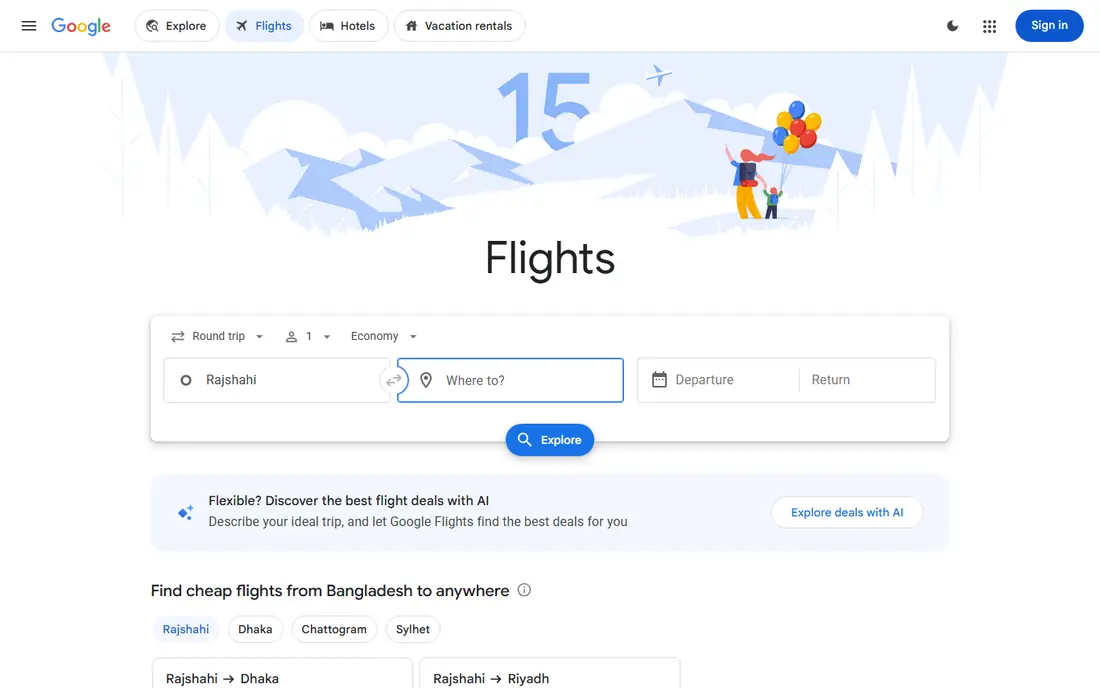
If you install one habit from this guide, make it this: start every trip search on Google Flights. It gives you the honest baseline, what this route normally costs and what it costs today, faster than any rival.
That baseline is the protection against every trick below. A fare is only a deal relative to the route's normal price, and Google is the app that shows you that normal price without being asked.
What we like- Google Flights is the quickest fare search most travellers will ever use: instant results, a calendar view that prices a whole month at a glance, an explore map for open ended trips, and filters that behave. Its price tracking emails you when a route moves, and its price insights show whether today's fare is typical or high for the route, based on real history. On some US routes a price guarantee programme refunds the difference if a tagged fare drops after booking. Crucially, it mostly sends you to the airline to book, keeping the relationship direct.
Watch out for- It does not sell tickets itself, so there is no Google checkout to rescue a failed booking. Some budget airlines and many small travel agencies do not appear, so the absolute cheapest fare on a route sometimes hides elsewhere. Hotel coverage exists but is a thinner product than its flights. Occasional ghost fares survive into results, as everywhere in this category.
Starting priceFree
Free planYes
Skyscanner is the second search, run after Google, to catch the fares the tidy engine missed. Discipline matters: sort by seller rating as well as price, and treat a fare far below every other result as a lead to verify on the airline's own site.
Used that way, it saves real money, especially on budget airlines and outside the US. Used carelessly, it sells you a cheap ticket from a company you cannot reach by phone.
What we like- Skyscanner searches the widest net here, hundreds of airlines including the budget carriers Google can miss, plus a long tail of smaller booking agencies, across some 180 countries and in local currencies. Its flexible tools are the best in the list: search a whole month, search to everywhere, and build multi city trips easily. Price alerts are free and reliable. For international and budget travel especially, it regularly surfaces a fare the cleaner engines never saw.
Watch out for- The wide net catches junk: some listed agencies have poor service records, and Skyscanner rates sellers so you can avoid the worst, but the homework is yours. Ghost fares appear more often than on Google. Skyscanner does not book most trips itself, so your contract is with an agency you may never have heard of. Customer service for a failed booking sits with that agency, not with Skyscanner.
#3
Kayak
Best for: Filters, forecasts and mixed airline fares
Visit kayak.com
Starting priceFree
Free planYes
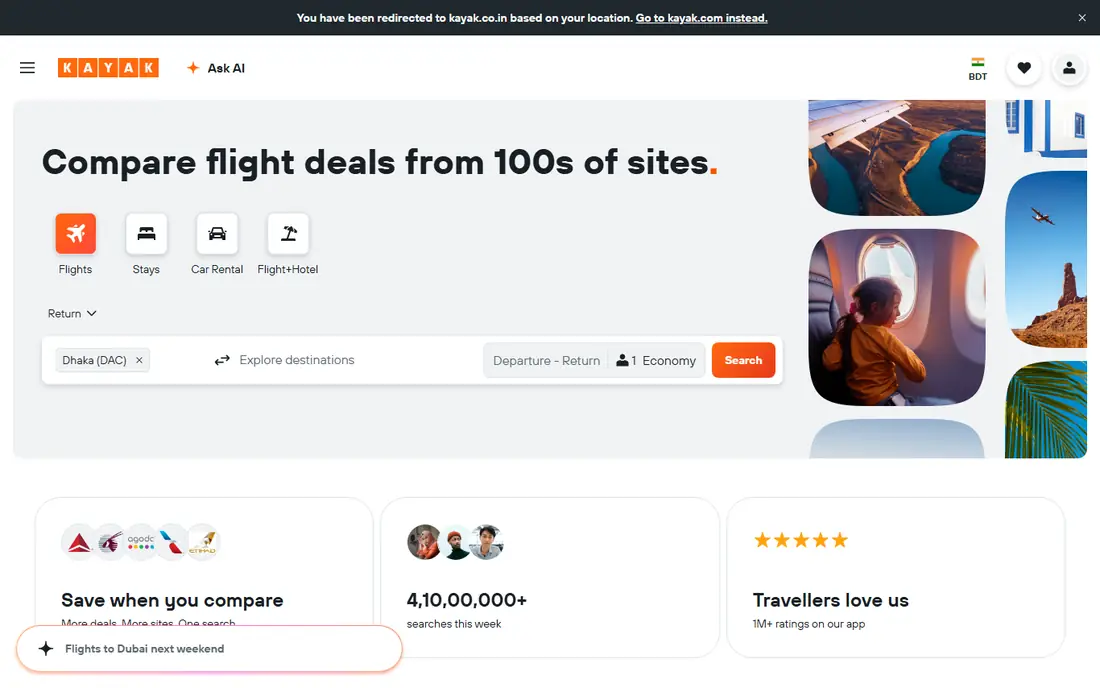
Kayak earns its place on the hard searches: three cities, a stopover you actually want, a refusal to fly one alliance. Its filters do in seconds what takes an hour of tab juggling elsewhere.
For a simple return flight, it is more machine than the job needs. Reach for it when the itinerary, not the headline price, is the puzzle.
What we like- Kayak is the power user's search: the deepest filters in this group, by airline, alliance, aircraft, layover and more, a price forecast that advises buying or waiting on many routes, and Hacker Fares that combine two one way tickets on different airlines into a cheaper round trip the airlines do not sell themselves. It searches hotels, cars and packages beside flights, runs free price alerts, and shows fees more honestly than most. Its tools suit complex trips, multi city and mixed cabin, better than any rival.
Watch out for- The interface is busy and ad carrying, and searches run slower than Google's. It hands you to agencies and airlines to book, with the same ghost fare and seller quality homework as Skyscanner. Some forecasts are confident beyond their evidence. The app experience trails the desktop site.
Starting priceFree
Free planYes
Use Hopper as the oracle, not the shop. Its forecast is among the best signals in this category, and the wise traveller reads the signal, then books the same flight with the airline at the same price.
If the fare exists only inside Hopper, weigh the small saving against holding a ticket an airline must service directly when the weather turns. During disruption waves, direct bookers get fixed first.
What we like- Hopper is a phone only app built around one question: should you buy this flight now or wait? Its colour coded calendar and price predictions, which the company says draw on billions of fares, tell you the expected direction and the likely cheapest window, and its price watch pushes an alert when your route drops. It can also freeze a fare for a fee while you decide. For travellers who check prices obsessively, the buy signal ends the dithering. Hotel predictions work the same way.
Watch out for- Hopper books in app, which puts a middleman between you and the airline, and its customer service record during disruption is the standing complaint in reviews. Add ons at checkout, freezes, tips and protection products, need declining with care, and some carry real fees. Predictions are probabilities, not promises
- A schedule change can void a forecast overnight. There is no proper desktop product.
Starting priceFree
Free planYes
Momondo is the fare hunter's second opinion, especially outside the US. Run it beside Google on any international trip and it will win often enough to justify the habit.
Apply the same seller discipline as Skyscanner: a fare is real when a seller you can name and reach confirms it at the final price.
What we like- Momondo, Kayak's sibling under the same parent, consistently performs at the top of independent cheapest fare tests, particularly on international routes, because it digs into smaller booking sites and regional airlines the bigger engines skip. Its results label the cheapest, quickest and best overall options separately, which is a saner way to read a fare list than one sorted price. Flight insight data explains what drives a route's price, by day and booking window. Alerts are free.
Watch out for- Like Skyscanner, it sends you onward to sellers of varying quality, and the cheapest result is often a small agency you must judge for yourself. Some headline fares grow at the seller's checkout when fees appear. Its US domestic coverage is less dominant than its international strength. The app is less central to the product than the website.
Starting priceFree
Free planYes
Expedia makes sense for the packaged holiday: one trip, one payment, rewards accruing. Price the bundle against the flight on Google plus the hotel direct before assuming the bundle wins; sometimes it does, sometimes the package is a frame around ordinary prices.
For flights alone, the research tools above are sharper and the direct booking safer.
What we like- Expedia differs from the metasearch crowd by being the shop: it sells the flights, hotels, cars and activities it lists, under brands that include Hotels.com and Vrbo in the same group. Its strength is the bundle, where flight plus hotel pricing can undercut buying separately, and its loyalty programme, One Key, returns cash like rewards across the group's brands. For a traveller who wants one checkout and one support line for a whole holiday, that completeness is the appeal.
Watch out for- As the seller, Expedia owns your problem when plans change, and its service record in disruption is the recurring criticism in traveller reviews
- Changing an Expedia flight often means dealing with Expedia and the airline's rules through Expedia's queue. Bundle savings vary and should be checked against booking the same hotel direct. Paid add ons such as price drop protection appear at checkout on selected flights. Standalone flight search is less sharp than Google or Kayak.
Starting priceFree
Free planYes
Kiwi is a specialist tool for travellers who understand exactly what a self transfer is and price the risk honestly. A long layover, hand luggage only and a cheap fare can make it a rational gamble.
Bought innocently for a tight connection with checked bags, it is how holidays end at an airport service desk. Read the itinerary's warnings; Kiwi does print them.
What we like- Kiwi.com finds routes nobody else assembles: it combines flights from airlines that do not partner, including separate tickets with a self transfer, into one itinerary, which can produce strikingly cheap or otherwise impossible routings across Europe and beyond. Its search is creative with dates and nearby airports, and it sells the itinerary itself with an optional guarantee product covering the self transfer risk for an added fee. For backpackers and flexible travellers, it opens maps that alliance booking cannot.
Watch out for- The self transfer is a real risk, and it must be understood before buying: separate tickets mean that if the first flight lands late, the second airline owes you nothing, and you may need to collect bags, cross borders and check in again between flights. Without its paid guarantee, you carry that risk personally. Its customer service reputation in disruption is the weakest in this list. Immigration rules can also bite: some countries require a visa for the landside transfer Kiwi assumes you can make.
Starting priceFree
Free planYes
Priceline is the flexible traveller's discount bin. If the trip matters more than the details, its deals can be the cheapest way into a seat or a room.
If the details are the trip, fixed times, a specific hotel, a tight onward plan, buy them in the open market and let someone else have the mystery fare.
What we like- Priceline, in the Booking Holdings family, sells flights, hotels and cars with two distinctive levers: Express Deals, where the exact hotel or flight details are revealed after payment at a discount, and bundled trip pricing that can undercut list prices for flexible travellers. Its flight search is competent, its app handles last minute bookings smoothly, and its hotel inventory is deep in the US. For a traveller flexible about brand and time, the opaque deals still produce genuine savings.
Watch out for- Opaque means opaque: an Express Deal flight may land at an hour you would not have chosen, and changes are heavily restricted. Flight search features and price tracking trail Google and Kayak. As an agency booking, changes and refunds run through Priceline under the airline's rules. International flight depth is thinner than Skyscanner or Momondo.
How we chose
We picked travel search and booking apps a traveller can use in October 2026 that cover the real jobs in price comparison: fast baseline research, the widest fare net, complex itinerary search, buy or wait prediction, bundles, creative routings and opaque deals. All are free to search. We weighted what happens after the search, who sells the ticket and how a booking is serviced in disruption, because a comparison price is only a lead until a seller confirms it. No app was hands on tested for this guide; judgements rest on vendor product pages and current comparison reporting.
How to compare travel prices without being fooled
Run two searches, not one. Google Flights for the honest baseline and price history, then Skyscanner or Momondo for the wider net. When both agree on a fare, it is probably the market price. When one is dramatically lower, suspect a ghost fare or a fragile seller and verify before celebrating.
Compare the final price, not the headline. The number that counts is the total at the seller's last screen, with bags, seats and payment fees in, against the same total on the airline's own site. If they match, book with the airline: the small convenience of an app is worth nothing beside a direct contract when a flight is cancelled.
Set alerts instead of refreshing. Every app here will watch a route free. Checking prices daily by hand mostly trains you to buy in a panic; an alert when the fare drops to the route's normal low is the same information with the emotion removed.
Frequently asked questions
Which app finds the genuinely cheapest flights?
No single one, every time. Google Flights wins on speed and honest baselines, Skyscanner and Momondo win a share of cheapest fare tests by searching smaller sellers and budget airlines, and Kayak's Hacker Fares build combinations others miss. The reliable method is two searches and a final check on the airline's site, not loyalty to one app.
Why did the price change at checkout?
Because fares are live inventory. The comparison app cached a price that another buyer took, or the seller's fees appeared late in its own flow. This is the ghost fare problem, and it affects every app here. A price is only real on the final payment screen; until then, treat it as an estimate with good intentions.
Should I book through the app or the airline?
With the airline, whenever the total price is the same or close. A direct booking gives you the airline's own changes, refunds and disruption handling, with no agency queue in between. Comparison reporting through recent disruption waves consistently shows direct bookers getting resolutions faster. Use the apps to find and time the fare, then buy it at the source.
Are price predictions worth trusting?
As a guide, yes; as a guarantee, no. Hopper and Kayak forecasts are built on large fare histories and are right often enough to inform timing on flexible trips. They cannot foresee schedule cuts, fuel spikes or a competitor's sale. If the fare today is already at the route's normal low and your dates are fixed, buy it; a forecast is not worth losing the seat.
What is a self transfer, and should I book one?
It is an itinerary built from separate tickets, sold by Kiwi and shown by some Hacker Fares, where you change planes as two unrelated bookings. If the first flight is late, the second airline has no duty to help. Book one only with a long gap, hand luggage if you can, and full knowledge of any visa rules for entering the connection country in between.
Sources we checked (0)
Is your product missing or out of date?
We review this list regularly. Vendors can request a listing, send updated pricing or ask about featured placement.

Shihab Mia · Founder, Rankite
Shihab has 5+ years in B2B and SaaS SEO. He writes Rankite's software buying guides from pricing pages, documentation and public user reviews. More about Shihab.