How we make this list: we compare pricing pages, product documentation and public user reviews. Ratings come from G2, Capterra or Trustpilot, with the date we checked them.
Key takeaways
- The best online mental health service depends on whether you need therapy, psychiatry, or both, since few platforms do both equally well.
- BetterHelp and Talkspace lead on talk therapy access, while Cerebral and Brightside focus on psychiatry and medication management.
- Check therapist licensing in your state, since online therapists must be licensed where you live.
- Prices vary by plan and frequency, and insurance coverage differs widely, so confirm costs before your first session.
- Online therapy does not replace crisis help. If you feel unsafe, call or text 988 in the US for the Suicide and Crisis Lifeline, or contact local emergency services.
Quick comparison
| Tool | Best for | Starting price | Free plan |
|---|
 BetterHelp | Talk therapy access | See website | No |
 Talkspace | Therapy and psychiatry | See website | No |
 Cerebral | Psychiatry and medication | See website | No |
 Brightside | Depression and anxiety care | See website | No |
 MDLIVE | General telehealth with therapy | See website | No |
 Amwell | Telehealth therapy visits | See website | No |
 Teladoc Health | Large telehealth network | See website | No |
 7 Cups | Peer support and low cost chat | Free | Free |
Is your product missing or out of date?
We review this list regularly. Vendors can request a listing, send updated pricing or ask about featured placement.
The best online mental health service
Starting priceSee website
Free planNo
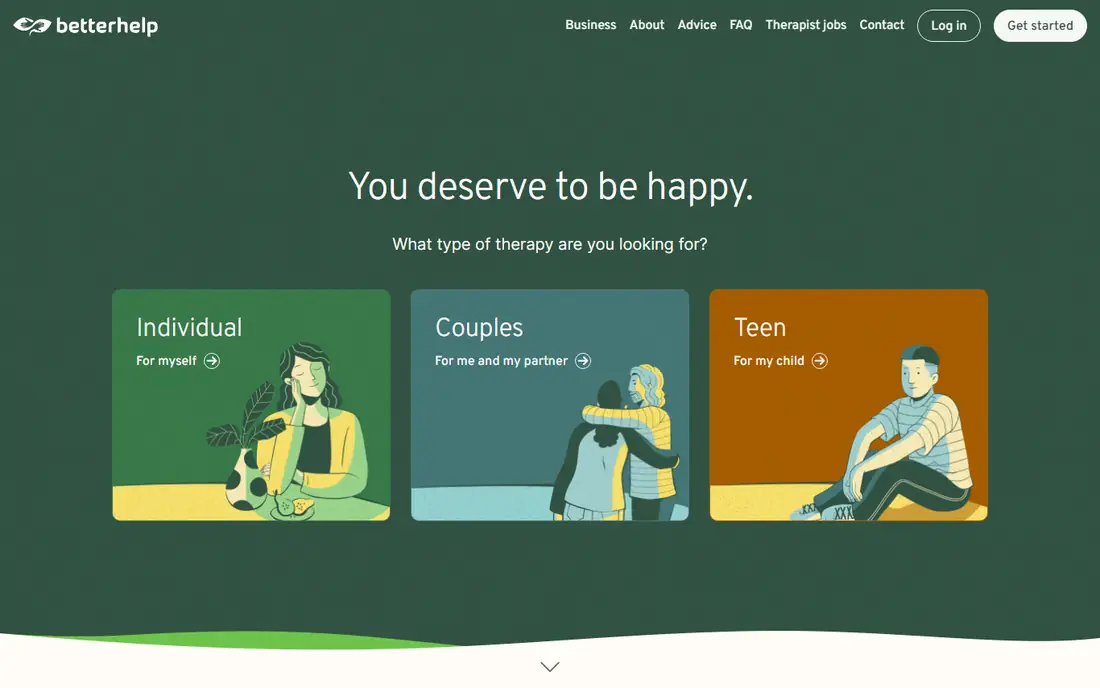
BetterHelp matches users with a licensed therapist after a questionnaire, with messaging, live chat, phone, and video sessions included in a weekly subscription. Switching therapists is free and simple, which helps when the first match does not fit. The large network means most users find a therapist within days, including specialists for anxiety, depression, and relationships.
The subscription costs more than some rivals over time, and BetterHelp generally does not accept insurance, so users pay out of pocket. It also does not suit crisis situations, severe conditions needing in person care, or court ordered treatment. For accessible talk therapy with flexible messaging, BetterHelp remains the most widely used option.
What we like- Large therapist network
- Messaging plus live sessions
- Easy therapist switch
Watch out for- Subscription cost
- Not for crisis care
- Insurance rarely accepted
Starting priceSee website
Free planNo
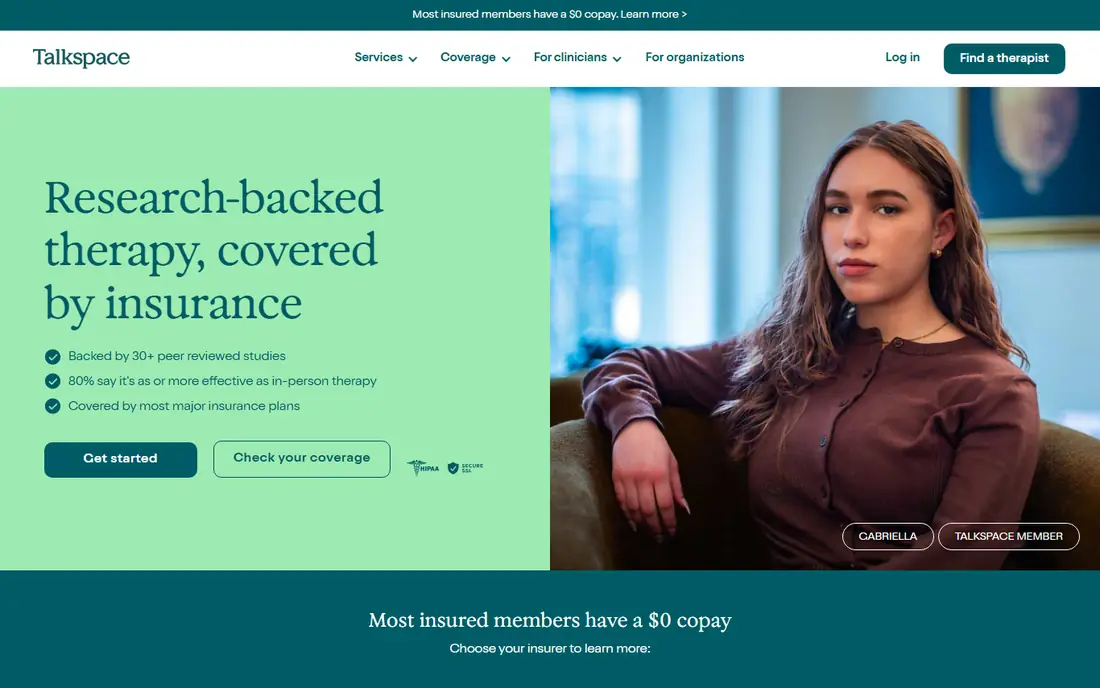
Talkspace offers both therapy and psychiatry, with messaging, audio, and video sessions, plus medication management where appropriate. Many insurance plans and employee assistance programs cover Talkspace, which can cut costs sharply compared with subscription only rivals. Therapists are licensed in the user state, and matching considers specialty and preferences.
Plan tiers vary in live session frequency, so a low tier with mostly messaging may frustrate users who want weekly video sessions. Read the plan details before signing, since session counts differ. For therapy plus psychiatry with insurance options, Talkspace gives the broadest coverage.
What we like- Therapy plus psychiatry
- Insurance accepted on many plans
- Messaging options
Watch out for- Plan tiers confuse
- Live session frequency varies by plan
Starting priceSee website
Free planNo
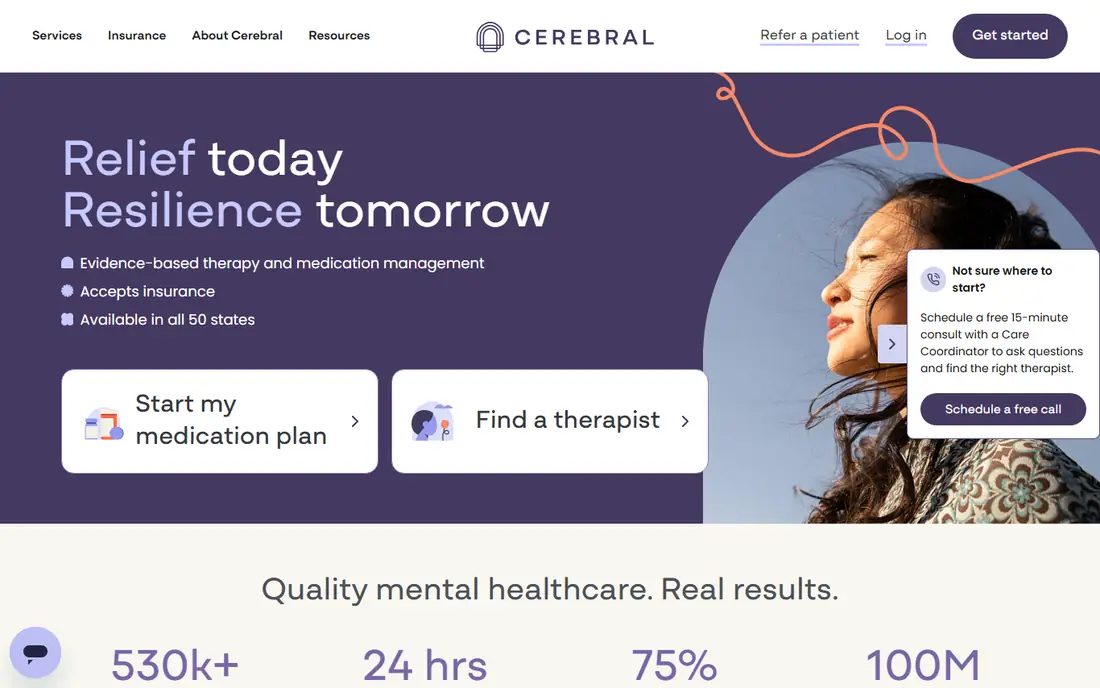
Cerebral focuses on psychiatry and medication management for anxiety, depression, insomnia, and related conditions, with prescribers who review history, adjust doses, and monitor progress. Therapy add ons exist, but psychiatry leads the service. Care coordinators help with scheduling and follow up, which suits users who need steady medication oversight.
Therapy depth is thinner than BetterHelp or Talkspace, and Cerebral faced regulatory scrutiny over prescribing practices in past years, so users should check current policies. For medication management with regular prescriber contact, Cerebral offers a focused, accessible path.
What we like- Psychiatry focus
- Medication delivery
- Care coordination
Watch out for- Therapy options are thinner
- Past regulatory scrutiny
Starting priceSee website
Free planNo
Brightside treats depression and anxiety with measurement based care, tracking symptoms with regular questionnaires and adjusting treatment based on scores. Plans combine psychiatry and therapy, with prescribers and therapists working from the same progress data. That measurement focus helps users see whether treatment is working, rather than guessing.
Condition focus is narrower than general platforms, so users with other needs may need a different service. Insurance acceptance varies by plan and state. For depression and anxiety care with clear progress tracking, Brightside offers a structured, evidence minded approach.
What we like- Measurement based care
- Psychiatry plus therapy
- Progress tracking
Watch out for- Narrower condition focus
- Insurance varies
Starting priceSee website
Free planNo
MDLIVE provides general telehealth, including therapy and psychiatry alongside urgent care and primary care visits, which suits users who want one telehealth account for several needs. Licensed therapists and psychiatrists offer video sessions, and many insurance plans cover visits. Scheduling is usually fast, with same day or next day availability in many areas.
Mental health depth varies, since MDLIVE is a general platform rather than a therapy specialist, and long term therapy relationships may suit dedicated platforms better. For a user who already uses MDLIVE for medical care and wants therapy in the same place, it offers convenience and insurance reach.
What we like- Therapy plus medical telehealth
- Large provider network
- Insurance options
Watch out for- Mental health is one part of a wider service
- Session depth varies
Starting priceSee website
Free planNo
Amwell offers therapy and psychiatry visits on a pay per visit basis, with provider profiles that let users choose by specialty, language, and availability. Insurance often covers visits, and the platform also handles urgent care and specialty medical visits. Video quality and scheduling are generally reliable.
Pay per visit costs add up for weekly therapy compared with subscription plans, and messaging between sessions is limited. For a user who wants occasional therapy visits with insurance coverage and provider choice, Amwell gives flexibility without a subscription.
What we like- Therapy and psychiatry visits
- Insurance accepted
- Provider choice
Watch out for- Pay per visit model
- Less messaging between sessions
Starting priceSee website
Free planNo
Teladoc Health runs one of the largest telehealth networks, with therapy, psychiatry, primary care, and specialty visits, often through employer or health plan benefits. Users can pick providers by specialty and availability, and many visits are covered fully or partly by employer plans. The scale means availability is usually strong.
Experience varies by provider, as with any large network, and navigating the many service lines can feel complex at first. For a user whose employer or health plan includes Teladoc, it offers the widest telehealth access in one account.
What we like- Huge provider network
- Therapy, psychiatry, and medical care
- Employer plans
Watch out for- Experience varies by provider
- Navigation can feel complex
Starting priceFree
Free planFree
7 Cups offers free peer support through trained volunteer listeners, plus community forums and a low cost therapy option with licensed therapists. The free tier suits users who want someone to talk to at low cost, especially at night when other services are closed. Growth paths and exercises add self help structure.
Listeners are volunteers, not licensed therapists, so quality varies and 7 Cups does not suit serious mental health conditions, crisis care, or medication needs. For low cost support, a listening ear, and a first step toward therapy, 7 Cups fills a gap that paid platforms do not.
What we like- Free peer listeners
- Community forums
- Low cost therapy option
Watch out for- Listeners are not therapists
- Quality varies
- Not for serious conditions
How we chose
We compared therapy and psychiatry scope, therapist licensing, session formats, insurance acceptance, pricing transparency, crisis handling, and public user feedback. We favored services with licensed providers in the user state, clear session terms, and honest limits about crisis care. No hands on testing is claimed, and prices are shown as See website where plans vary by state, frequency, and insurance. This article is general information, not medical advice.
Choosing the right service for your needs
Start by naming what you need, since therapy, psychiatry, and peer support solve different problems. Talk therapy suits stress, relationships, grief, and mild to moderate anxiety and depression, while psychiatry suits conditions that may need medication, with a prescriber overseeing treatment. If you need both, pick a platform that offers both, such as Talkspace or Brightside, rather than juggling two accounts.
Safety, privacy, and first sessions
Check that your therapist or prescriber is licensed in your state, and ask about their specialty and approach in the first session. Use a private space for video sessions, and check the platform privacy policy for how messages and session data are stored. If a match feels wrong, switch early, since fit predicts outcomes more than any single technique. If you ever feel unsafe, call or text 988 in the US, or contact local emergency services at once, since online platforms are not crisis services.
Cost, insurance, and commitment
Confirm total cost before you start, including session frequency, messaging limits, and psychiatry fees, since headline weekly prices hide tier differences. Ask your insurer or employer whether the platform is covered, and check employee assistance programs, which often include free sessions. Start with a short commitment, review progress after four to six sessions, and change plan or provider if you see no benefit. Good care should feel helpful within a few weeks, even if full progress takes longer.
Before you decide
Keep notes after each session on what helped and what did not, since clear notes help your next therapist or prescriber pick up faster if you switch providers. Review your plan each month for session counts and costs, since needs change and a tier that fit at first may cost more than you use later. A short monthly check keeps care affordable.
Frequently asked questions
Is online therapy as effective as in person therapy?
Research shows online therapy helps many people with anxiety, depression, and stress at rates similar to in person care, especially for mild to moderate conditions. Severe conditions, crisis needs, and some diagnoses still suit in person care better. Fit with your therapist matters more than format, so switch if the match feels wrong.
Can online psychiatrists prescribe medication?
Yes, licensed prescribers on platforms such as Cerebral, Talkspace, and Brightside can prescribe many medications after an evaluation, subject to state rules. Controlled substances face stricter rules and may need in person visits. Ask the platform about prescribing limits in your state before you sign up.
Does insurance cover online therapy?
Often, but it varies by platform, plan, and state, since Talkspace, Amwell, MDLIVE, and Teladoc accept many insurance plans, while BetterHelp generally does not. Check coverage with your insurer and the platform before your first session, and confirm copay and session limits in writing.
What if I feel unsafe during online care?
Contact crisis help at once, since online therapy platforms are not crisis services. In the US, call or text 988 for the Suicide and Crisis Lifeline, or call local emergency services for immediate danger. Tell a trusted person nearby, and use the platform crisis resources only as a backup, not as a first response.
How do I switch therapists online?
Most platforms let you switch therapists free from your account settings, with a short questionnaire to guide the new match. Tell your new therapist what did not work before, so the next match fits better. Switching early saves time, since a poor fit rarely improves with more sessions.
Sources we checked (8)
- https://www.betterhelp.com
- https://www.talkspace.com
- https://cerebral.com
- https://www.brightside.com
- https://www.mdlive.com
- https://www.amwell.com
- https://www.teladochealth.com
- https://www.7cups.com
Is your product missing or out of date?
We review this list regularly. Vendors can request a listing, send updated pricing or ask about featured placement.

Shihab Mia · Founder, Rankite
Shihab has 5+ years in B2B and SaaS SEO. He writes Rankite's software buying guides from pricing pages, documentation and public user reviews. More about Shihab.