How we make this list: we compare pricing pages, product documentation and public user reviews. Ratings come from G2, Capterra or Trustpilot, with the date we checked them.
Key takeaways
- The USA has three national networks, T-Mobile, Verizon, and AT&T, plus many smaller brands that rent space on those networks at lower prices.
- Coverage where you live and work matters more than national speed rankings, because the best network on paper can be weak at your address.
- Budget brands such as Visible, Mint Mobile, and US Mobile now offer unlimited plans from 25 to 44 dollars per month, well below the large carriers.
- Premium plans from the large carriers add perks such as streaming bundles, large hotspot allowances, and international data, which can justify the higher price for some users.
- Taxes and fees are often added on top of advertised prices at the large carriers, while some smaller brands include them, so compare the final bill, not the headline price.
Quick comparison
| Tool | Best for | Starting price | Free plan |
|---|
 T-Mobile | Fastest 5G and most perks | $85 per month | No |
 Verizon | Rural coverage and reliability | $80 per month | No |
 AT&T | Balanced coverage and family plans | $70 per month | No |
 Visible | Cheapest unlimited on Verizon network | $25 per month | No |
 Mint Mobile | Cheap unlimited on T-Mobile network | $30 per month | No |
 US Mobile | Choice of all three networks | $44 per month | No |
 Google Fi | Flexible plans and international travel | $50 per month | No |
 Consumer Cellular | Simple plans for light users | $35 per month | No |
Is your product missing or out of date?
We review this list regularly. Vendors can request a listing, send updated pricing or ask about featured placement.
The best phone service providers
Starting price$85 per month
Free planNo
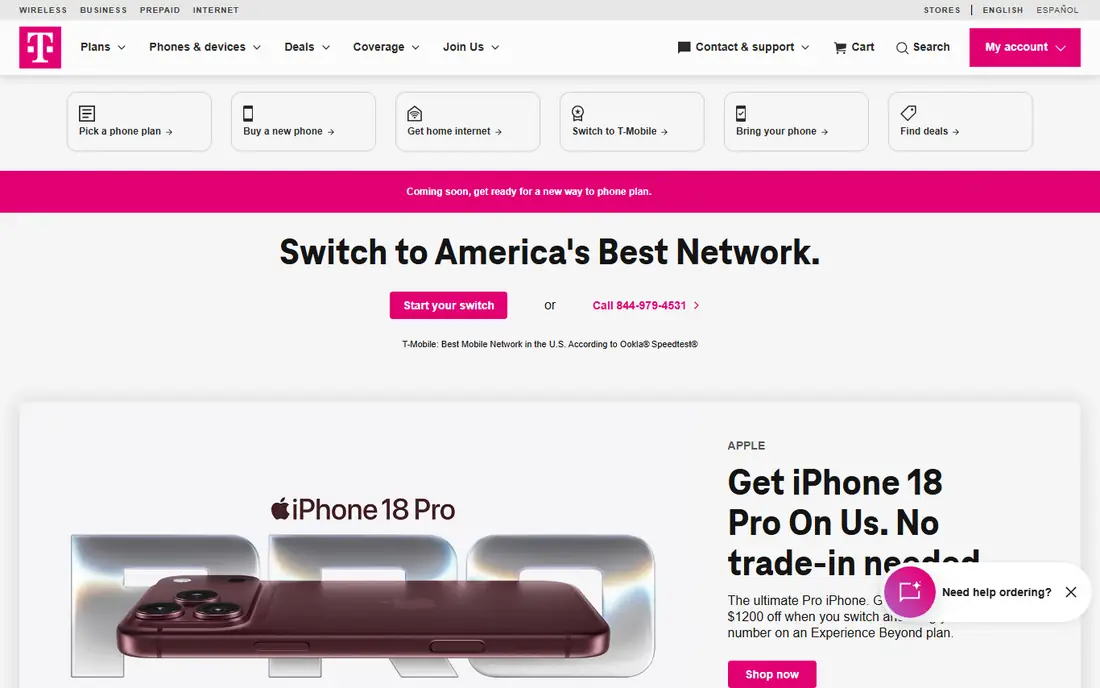
T-Mobile runs the largest 5G network in the USA and its Experience More plan, at 85 dollars per month for one line, includes perks such as Netflix and Apple TV plus 60GB of high speed hotspot data. The carrier also offers satellite coverage that reaches areas without cell towers, which helps travelers and rural users who pass through dead zones. For heavy data users who want the fastest typical 5G speeds and bundled entertainment, T-Mobile is the strongest premium pick.
The drawbacks are price and added fees. At 85 dollars, Experience More costs more than comparable premium plans from Verizon and AT&T, and taxes and fees of around 5 dollars per line are added to the bill. Budget users can choose the cheaper Essentials plans, but those offer slower hotspot speeds and fewer perks. T-Mobile suits users who value speed and perks and are willing to pay for them.
What we like- Broadest 5G footprint
- Experience More includes streaming perks
- Satellite coverage in dead zones
Watch out for- Highest premium price on this list
- Taxes and fees added
- Rural coverage trails Verizon in some areas
Starting price$80 per month
Free planNo
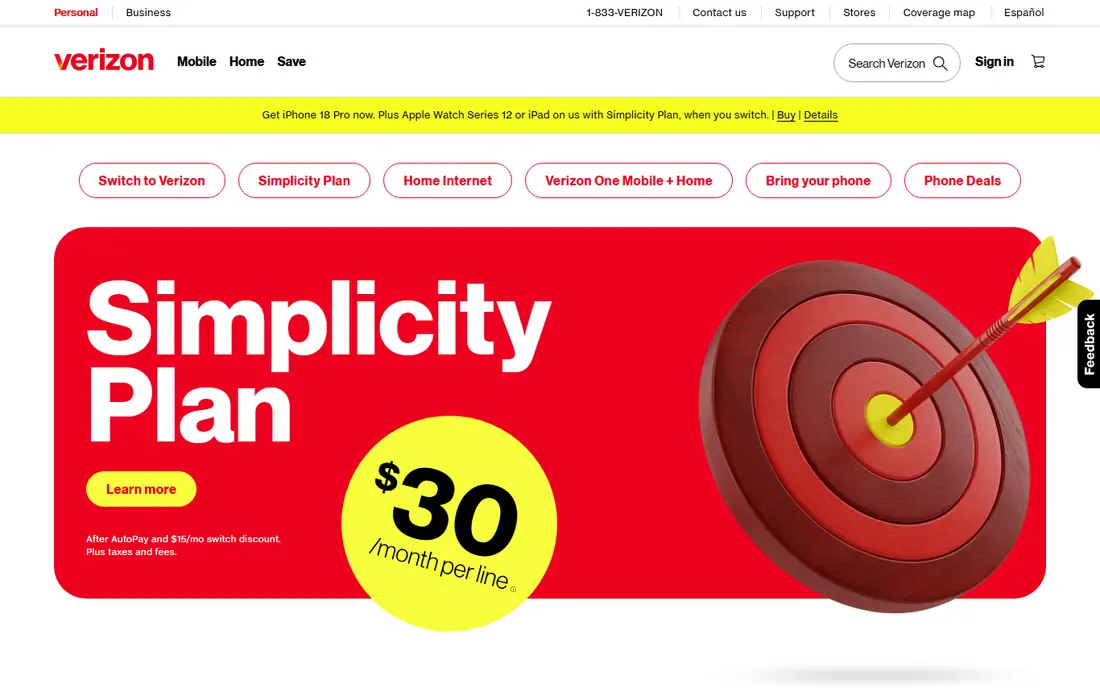
Verizon is widely rated as the most reliable network in rural areas, which matters if you live or travel outside cities. Its Unlimited Plus plan costs 80 dollars per month for one line and includes 30GB of high speed hotspot data, while the cheaper Unlimited Welcome plan at 65 dollars has no hotspot at all. Verizon also lets users add perks such as streaming bundles for a monthly fee, so you can build a plan around the services you already pay for.
The limits are cost and fees. Verizon adds taxes and a surcharge to the bill, so the final price is higher than the advertised rate. Its premium Unlimited Ultimate plan at 95 dollars adds unlimited hotspot data and international benefits, but that price is hard to justify unless you travel often. Verizon is the best pick when coverage in rural or remote areas is your top priority.
What we like- Strongest rural reliability
- Unlimited Plus includes 30GB hotspot
- Three year price lock on some plans
Watch out for- Premium price
- Taxes and fees added
- Cheapest plan has no hotspot
#3
AT&T
Best for: Balanced coverage and family plans
Visit att.com
Starting price$70 per month
Free planNo
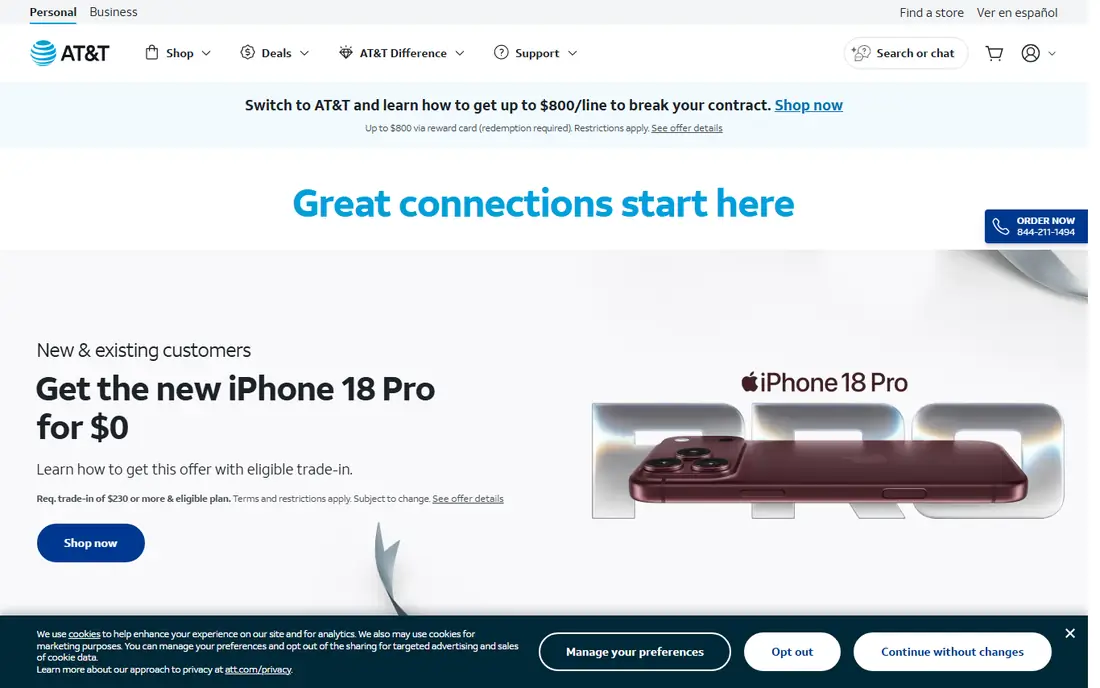
AT&T offers a middle path between T-Mobile speed and Verizon rural strength, with solid coverage across cities and suburbs. Its Extra plan at 70 dollars per month includes 100GB of premium data and 50GB of hotspot, which is generous for the price, while the Premium plan at 90 dollars adds 100GB of hotspot. AT&T also includes security features such as ActiveArmor spam and fraud protection, and its family plans bring the per-line price down sharply with four lines.
The drawbacks are the entry plan and fees. The cheapest Value plan at 50 dollars includes only 5GB of data, which is too little for most users, and taxes and fees are added to every plan. AT&T suits families and users who want balanced coverage with a strong hotspot allowance at a mid range premium price.
What we like- Solid nationwide coverage
- Extra plan includes 50GB hotspot
- Strong family pricing
Watch out for- Taxes and fees added
- Cheapest plan has only 5GB of data
- Fewer streaming perks than T-Mobile
Starting price$25 per month
Free planNo
Visible is owned by Verizon and sells a single unlimited plan for 25 dollars per month with taxes and fees included, which makes the final bill exactly 25 dollars. You get unlimited data, talk, and text on the Verizon network, plus unlimited hotspot, though hotspot speeds are capped at 5 Mbps, which is fine for email and light browsing but slow for video. There are no stores, so setup and support happen online, and there is no annual contract or credit check hurdle.
The main limits are congestion and hotspot speed. Visible data can slow during busy periods, since Verizon postpaid customers get priority, and the 5 Mbps hotspot cap rules out heavy laptop tethering. For a single user who mainly uses a phone and wants the lowest possible unlimited bill on a strong network, Visible is hard to beat.
What we like- Unlimited data on the Verizon network
- Taxes and fees included
- No annual contract
Watch out for- Hotspot capped at 5 Mbps
- No physical stores
- Data can slow during congestion
Starting price$30 per month
Free planNo
Mint Mobile runs on the T-Mobile network and sells its unlimited plan for 30 dollars per month, with 50GB of premium data and 20GB of hotspot. The catch is payment structure: the lowest advertised rates require paying for several months upfront, and the best rate comes with a 12 month payment. Mint also sells smaller data plans, starting with 5GB for 15 dollars per month on an annual payment, which suits light users who mostly use Wi-Fi.
The limits are congestion priority and support. Like other budget brands, Mint data can slow when the network is busy, and there are no physical stores for in-person help. For users who are comfortable paying upfront and managing their account online, Mint offers T-Mobile coverage at a fraction of T-Mobile prices.
What we like- Unlimited plan at 30 dollars
- Runs on T-Mobile 5G
- 20GB hotspot included
Watch out for- Best price needs upfront payment
- Data can slow during congestion
- Support is online only
Starting price$44 per month
Free planNo
US Mobile stands out because it lets you choose which of the three national networks your plan runs on, and you can switch networks later if coverage disappoints. Its Unlimited Premium plan costs 44 dollars per month with taxes and fees included, and it includes 100GB of high speed hotspot data, which beats most budget rivals. Independent testing in 2026 rated US Mobile highly for value, and its customer service scores well in user reviews.
The drawbacks are fewer discounts and some complexity. Unlimited plans have no multi-line discount, so families may pay more per line than at the large carriers, and some plan details change depending on the network you pick. For a single user who wants network choice and a low final bill, US Mobile is one of the best options available in 2026.
What we like- Lets you pick AT&T, T-Mobile, or Verizon network
- Taxes and fees included
- 100GB hotspot on Premium
Watch out for- No multi-line discount on unlimited
- Plan details vary by network
- Newer brand with fewer stores
Starting price$50 per month
Free planNo
Google Fi offers an Unlimited Standard plan at 50 dollars per month with hotspot included, and it is known for simple billing and smooth international roaming, with data working in many countries at no extra charge on higher plans. Fi runs on the T-Mobile network in the USA, and its app makes it easy to pause service, check usage, and manage a family group. For travelers who cross borders often, Fi removes much of the hassle of local SIM cards and roaming fees.
The limits are price and perks. At 50 dollars, Fi costs more than Visible, Mint, and US Mobile, and it offers fewer entertainment perks than T-Mobile or Verizon premium plans. Some advanced features, such as network switching, work best on phones designed for Fi. Google Fi suits travelers and Google ecosystem users who value simple international service over the lowest price.
What we like- Simple billing
- Good international roaming
- Runs on T-Mobile network
Watch out for- Higher price than other budget brands
- Fewer perks
- Phone selection matters for full features
Starting price$35 per month
Free planNo
Consumer Cellular runs on the AT&T network and sells an unlimited talk, text, and data plan for 35 dollars per month, with 35GB of premium data and hotspot included. The company targets users who want simple service without contracts, and it is known for patient, US based customer support, which appeals to older users and anyone who dislikes automated phone trees. Plans can be changed month to month, so you can step up or down as your usage changes.
The drawbacks are data caps and priority. After 35GB, speeds slow, and Consumer Cellular data can be deprioritized during congestion on the AT&T network. Phone deals are also less aggressive than at the large carriers. For light to moderate users who value simple billing and helpful support, Consumer Cellular is a strong, low stress choice.
What we like- Simple plans with no contract
- Runs on AT&T network
- US based support with a good reputation
Watch out for- Premium data capped at 35GB
- Slower speeds during congestion
- Fewer high end phone deals
How we chose
We compared advertised single-line prices, premium data allowances, hotspot amounts, network coverage, and whether taxes and fees are included, using 2026 plan comparisons and carrier pricing pages. We favored providers that publish clear terms and that cover the three national networks, so readers on any network can find a fit. We did not rank providers on speed tests alone, because coverage at your address matters more than a national average, and we noted where budget brands face congestion priority limits.
How to choose the best phone service provider
Start by checking coverage at your home, workplace, and commute, using each carrier coverage map and asking neighbors which network works well. Next, look at your last three months of data usage to see whether you need unlimited data or a smaller plan, and check how much hotspot data you actually use. Then compare the final bill, including taxes and fees, and note whether the best price requires autopay, a multi-month payment, or a multi-line plan. Finally, confirm that your phone is compatible with the network you pick, especially for 5G bands, before you port your number.
Frequently asked questions
Which phone carrier has the best coverage in the USA?
Verizon is generally rated strongest for rural reliability, T-Mobile leads on 5G footprint size, and AT&T sits between them. The right answer depends on your address, so check each carrier map for your home and workplace before deciding.
Are budget carriers really on the same networks as the big carriers?
Yes. Visible uses Verizon, Mint Mobile uses T-Mobile, Consumer Cellular uses AT&T, and US Mobile lets you pick any of the three. The difference is priority during congestion, support channels, and perks, not the towers themselves.
How much data does the average person need per month?
Most users who stream some video and use social apps need 10 to 30GB per month, while heavy streamers and hotspot users may need 50GB or more. Check your current usage in your phone settings before paying for unlimited data you may not need.
Do I need to buy a new phone when I switch carriers?
Not always, but your phone must support the new network bands and be free of carrier lock. Most phones sold in the past few years work across carriers, though some features such as Wi-Fi calling may vary by model.
What is deprioritization and should I worry about it?
Deprioritization means your data can slow during busy periods when postpaid customers get priority. It matters most in crowded places such as stadiums and busy downtown areas, and matters little for typical daily use in most locations.
Can I keep my phone number when I switch providers?
Yes, number porting is free in the USA. Do not cancel your old service before the port completes, and keep your account number and porting PIN ready when you start the switch.
Sources we checked (0)
Is your product missing or out of date?
We review this list regularly. Vendors can request a listing, send updated pricing or ask about featured placement.

Shihab Mia · Founder, Rankite
Shihab has 5+ years in B2B and SaaS SEO. He writes Rankite's software buying guides from pricing pages, documentation and public user reviews. More about Shihab.