How we make this list: we compare pricing pages, product documentation and public user reviews. Ratings come from G2, Capterra or Trustpilot, with the date we checked them.
Key takeaways
- Verizon has the best geographic 5G coverage in the United States on the main published measures: first in Ookla's first half 2026 coverage scoring and winner of Opensignal's US Coverage Experience award.
- AT&T places second on coverage in Opensignal's July 2026 US report, a point behind Verizon and ahead of T-Mobile.
- T-Mobile's coverage is strongest where people live: it won the large country 5G coverage title in Opensignal's 2026 global awards, and its users spend the most time on 5G.
- Coverage has three meanings, land covered, people covered, and time connected, and each carrier can honestly claim one of them.
- Resellers inherit their host's coverage exactly, so a budget brand on Verizon covers the same map as Verizon.
Quick comparison
| Tool | Best for | Starting price | Free plan |
|---|
 Verizon | Widest geographic 5G coverage | See website | No |
 AT&T | Near top coverage with improving speed | See website | No |
 T-Mobile | Coverage where people live and most time on 5G | See website | No |
 Visible | Verizon coverage at a budget price | See website | No |
 Cricket Wireless | AT&T coverage with family prepaid pricing | See website | No |
 Boost Mobile | AT&T carried coverage with its own 5G core | See website | No |
 US Mobile | A choice of all three networks in one account | See website | No |
 Metro by T-Mobile | T-Mobile coverage through prepaid stores | See website | No |
Is your product missing or out of date?
We review this list regularly. Vendors can request a listing, send updated pricing or ask about featured placement.
The best 5G coverage by company
Starting priceSee website
Free planNo
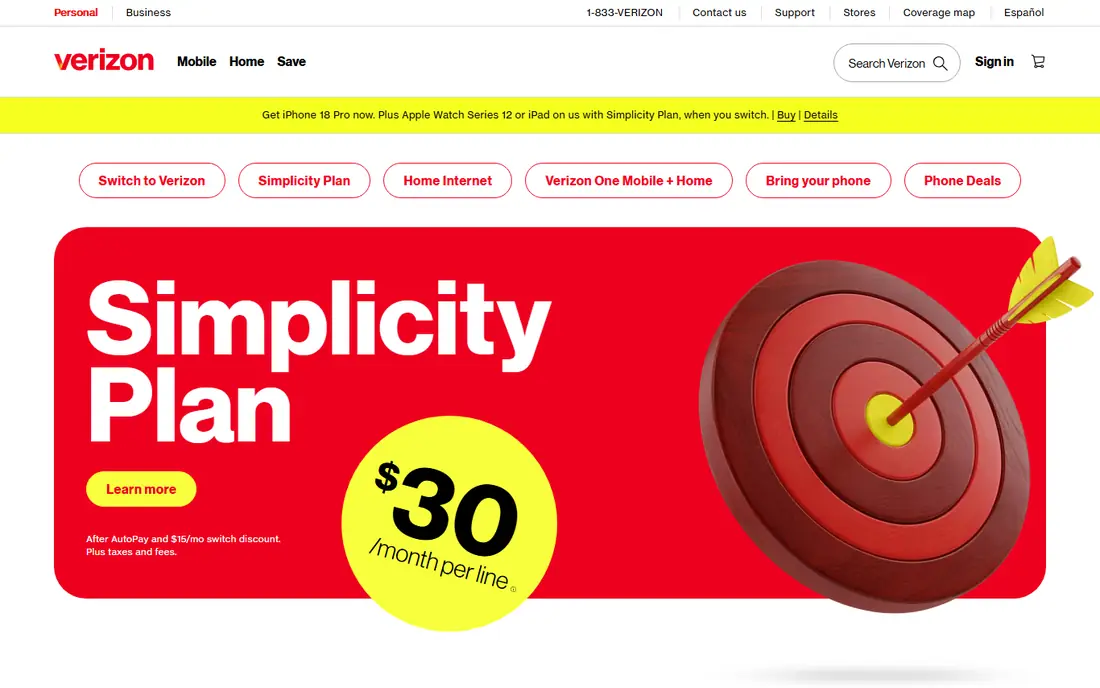
Verizon wins this article's question. Ookla's first half 2026 report scored its US coverage at 30.4 percent, ahead of AT&T at 26.8 percent and T-Mobile at 24.8 percent, and Opensignal's July 2026 US report gave Verizon its Coverage Experience award with a score of 9.7 out of 10. Decades of building for reach, including in rural counties the others serve thinly, show up in those numbers.
The fine print is that much of Verizon's wide map is its slower low band 5G, and its fastest tier concentrates in cities and venues. Opensignal also measured Verizon users spending less time on 5G than rivals' users. Still, if the question is where a 5G signal exists, Verizon answers it for the largest share of the country.
What we like- First in Ookla's 1H 2026 US coverage scoring at 30.4 percent
- Coverage Experience winner in Opensignal's July 2026 US report
- Deepest rural and interstate reach
- 4G fallback is also the widest, which matters beyond 5G areas
Watch out for- 5G availability measured lower than rivals in Opensignal's US report
- Fastest ultra wideband 5G is urban only
- Premium prices
- Coverage lead is about reach, not speed
#2
AT&T
Best for: Near top coverage with improving speed
Visit att.com
Starting priceSee website
Free planNo
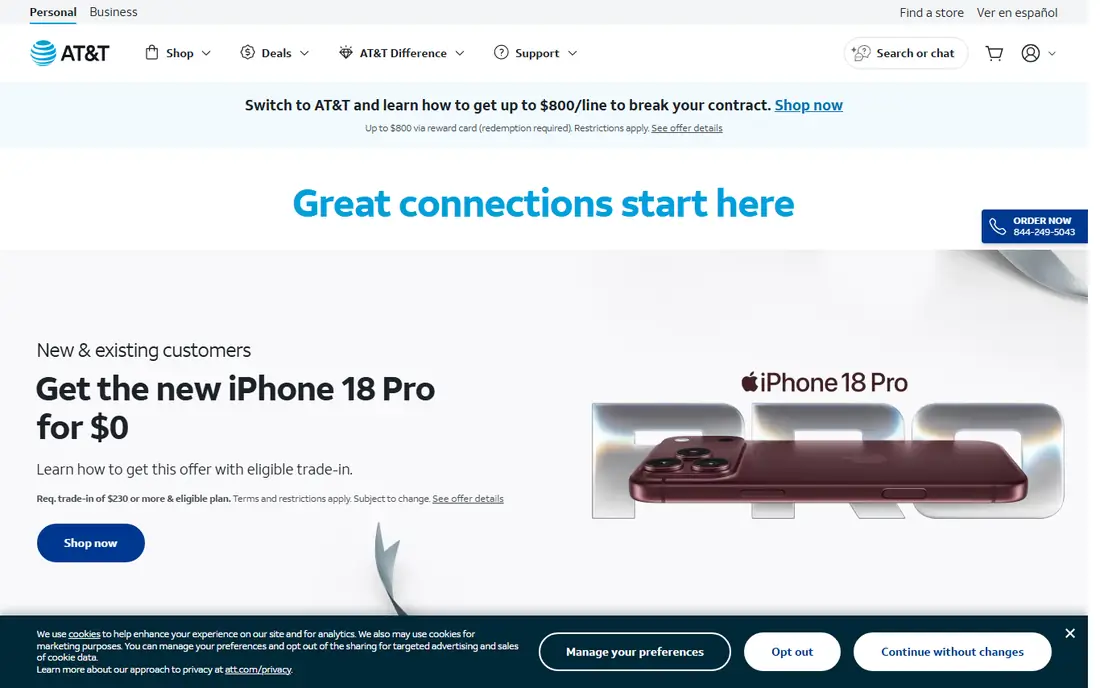
AT&T runs the second widest 5G coverage in the country. In Opensignal's July 2026 US report its Coverage Experience score sat between Verizon's 9.7 and T-Mobile's 9.1, and Ookla's coverage scoring also placed it second. It won Opensignal's Time on Network award, a sign its customers stay connected to its network, 4G or 5G, more of the time.
AT&T also spent about $23 billion on extra low and mid band spectrum, which reporting through 2026 links to its improving speed and coverage results. For buyers outside the biggest cities, AT&T is the realistic alternative when Verizon disappoints, and in many suburbs the two are effectively tied. Check your own address on both maps before deciding.
What we like- Second in Opensignal's US coverage scoring, a point behind Verizon
- Strong suburban and rural footprint
- Time on Network winner in Opensignal's US report
- New spectrum purchases point to a denser map
Watch out for- Third of the three on headline 5G speed scores
- Standalone 5G still reaches users a small share of the time
- Coverage map claims need address level checks like every carrier
- Premium pricing
Starting priceSee website
Free planNo
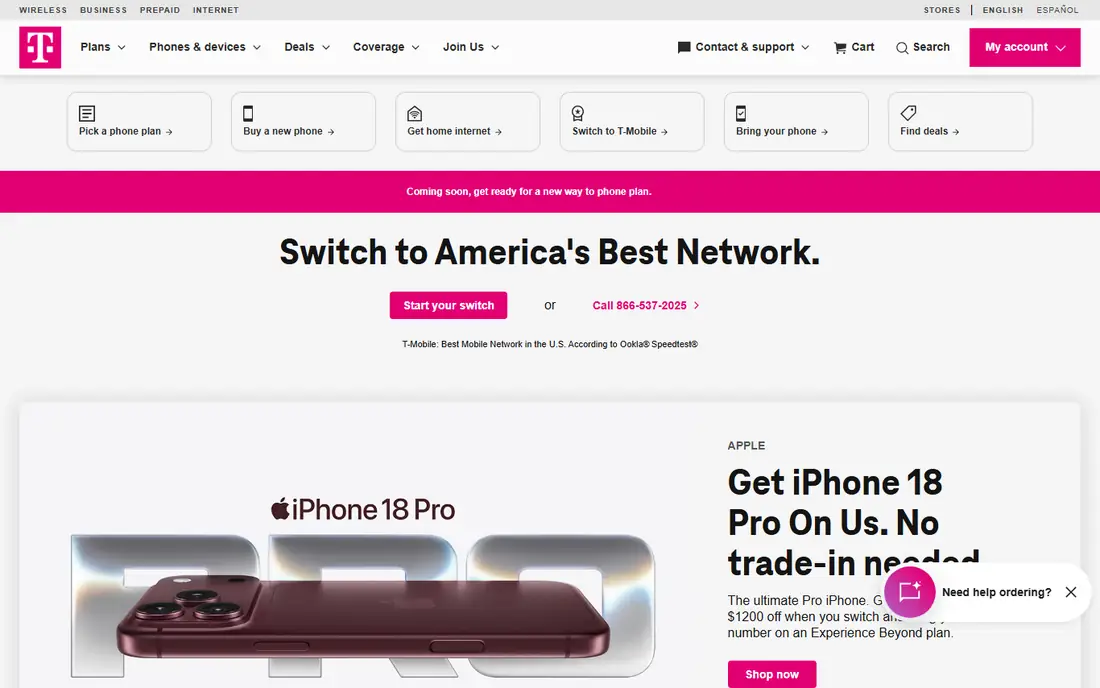
T-Mobile's coverage claim rests on a fair point: empty land does not use phones. In Opensignal's 2026 global awards, which weight coverage by where people are, T-Mobile won the large land area 5G Coverage title outright, plus the new Time on 5G category, with its users connected to 5G 79.7 percent of the time. Its mid band network covers the large majority of the US population.
Geography is where it loses. Ookla's land based coverage score put T-Mobile third at 24.8 percent, and drivers crossing rural states will find its gaps first. So T-Mobile has the best populated coverage and the worst empty map coverage of the three, and both statements come from the same season of reports.
What we like- Won large country 5G Coverage in Opensignal's 2026 global awards
- Users on 5G about 80 percent of the time in global awards data
- Standalone 5G reaches users about 71 percent of time
- Population coverage is effectively nationwide
Watch out for- Third in Ookla's geographic coverage scoring
- Rural stretches still fall back or drop
- Building penetration on mid band is weaker than low band rivals
- Geographic map still shows the most gaps of the three
Starting priceSee website
Free planNo
Visible exists for one reason: Verizon's coverage without Verizon's prices. Because Verizon owns it, Visible customers connect to the same towers and the same 5G map that top this ranking. The service differs in priority, support, and perks, not in where the signal reaches.
That makes Visible the smart way to test this article's answer. Activate it on eSIM for a month, drive your routes, and you have measured Verizon coverage at your own addresses for a prepaid price. If the coverage holds and speeds suit you, the decision between Visible and Verizon becomes a question about priority and service, not about the map.
What we like- Same coverage map as Verizon, the geographic leader
- Low simple unlimited pricing
- Owned by Verizon, so no middleman network deals
- ESIM makes testing coverage at your address cheap
Watch out for- Data priority below Verizon's direct customers
- No stores for help
- Base plan hotspot is limited in speed
- Coverage is identical to Verizon, including its weak spots
Starting priceSee website
Free planNo
Cricket is AT&T's prepaid brand, so its coverage is AT&T's coverage: the second widest 5G map in the country by the measures used here, with the same strengths in suburbs and the same rural thin spots. Cricket's reason to exist is price structure, especially multi line family plans that bring the per line cost down sharply.
Coverage shoppers should read Cricket as a cheaper door into the number two network. Where AT&T works for you, Cricket works identically for signal. The trade offs are speed caps on some plans and lower priority when towers are busy, which affect speed, not the coverage map.
What we like- AT&T's second ranked coverage at prepaid prices
- Strong multi line family discounts
- Stores in most towns
- Simple plans with few surprises
Watch out for- Some plans cap data speeds
- Priority below AT&T's own customers
- Rural AT&T gaps apply unchanged
- Phone promotions are modest
Starting priceSee website
Free planNo
Boost Mobile's coverage story changed in 2025. After building part of its own network, its parent EchoStar agreed to carry Boost traffic mainly on AT&T's towers while keeping Boost's own 5G core. In practice, a Boost customer today gets coverage close to AT&T's map at prepaid prices, which places it well in this ranking.
The caution is structural, not technical. Spectrum sales and restructuring at the parent mean Boost's arrangements could shift again, and travellers may find market by market differences. For now, it is a budget route onto a top two coverage footprint, with stores for support.
What we like- Since late 2025 most Boost traffic rides AT&T's network, so coverage tracks the number two map
- Low prepaid prices
- Physical stores in many areas
- Own 5G core keeps some network features in house
Watch out for- Its own tower network is being reduced, so coverage depends on the AT&T deal
- Parent company finances have been unsettled
- Coverage details vary by market
- Not the pick for a set and forget decade long account
Starting priceSee website
Free planNo
US Mobile sells a clever answer to the coverage question: pick per line. Its plans let a customer put each phone on one of the three national networks, Verizon, AT&T, or T-Mobile, under their own brand names, and many plans allow moving a line between networks. A family split between a Verizon strong town and a T-Mobile strong office can cover both in one bill.
The coverage you get is exactly the host's coverage, with reseller priority. US Mobile does not fix a dead zone on any network. But for households and small teams whose people live under different maps, it is the most flexible coverage purchase on this list.
What we like- Lets each line choose Verizon, AT&T, or T-Mobile coverage
- Switching networks inside the account is offered on many plans
- Sharp pricing for light and heavy users
- Strong fit for mixed coverage households
Watch out for- A reseller, so priority sits below each host's own customers
- Network names are branded, which confuses first time buyers
- Features vary by which network a line uses
- Support is online only
Starting priceSee website
Free planNo
Metro by T-Mobile sells T-Mobile's coverage map, the one that leads on time connected and populated reach, through prepaid stores with taxes included in the advertised price. For city and suburb customers, that means the same 5G availability T-Mobile's own customers get, at a lower monthly cost.
The map is the map, so T-Mobile's rural gaps are Metro's gaps too, and busy hour priority favours the parent brand. Metro's edge is human: thousands of stores where a person can check your address, set up your phone, and fix problems face to face. For prepaid buyers who want the third network's coverage with help included, Metro is the route.
What we like- T-Mobile's populated coverage at prepaid prices
- Taxes and fees included in plan prices
- Large store network for local help
- Coverage includes T-Mobile's wide mid band 5G areas
Watch out for- Rural T-Mobile gaps apply unchanged
- Priority below T-Mobile direct customers
- Offers often require new lines
- Some plans limit video quality and hotspot
How we chose
We ranked by measured coverage, not by carrier claims. The main sources are Ookla's US Connectivity Report for the first half of 2026, which scores geographic coverage, and Opensignal's July 2026 US Mobile Network Experience Report and its 2026 global 5G awards, which score coverage experience and time connected. Where the two methods disagree, the entries say so rather than picking a winner the data does not support. Resellers were included and placed by their host network's coverage, since coverage, unlike speed, passes through unchanged. We did not test coverage ourselves.
What to look for in 5G coverage
Separate the three definitions before you shop. Geographic coverage counts land with a signal, and Verizon leads it. Population coverage counts where people live, and all three networks cover the large majority of Americans with 5G. Availability measures how often a user's phone is actually on 5G, where T-Mobile leads in Opensignal's US data. A carrier can win one and lose the others, and adverts rarely say which one they mean.
Then test your own map. Carrier maps are marketing documents with optimistic edges, and one hill or one building can decide your service. Use a prepaid month or an eSIM trial on the network you favour, at home, at work, and on your regular routes. Building materials matter too: low band 5G from Verizon and AT&T pushes through walls better than the mid band signals T-Mobile relies on, which is why indoor results often differ from street results.
Frequently asked questions
Which cell phone company has the best 5G coverage in 2026?
Verizon, for geographic reach. It placed first in Ookla's first half 2026 US coverage scoring at 30.4 percent and won Opensignal's US Coverage Experience award. AT&T is second on both sources. T-Mobile leads if coverage means time spent connected to 5G and coverage where people live, which is why its users report strong service despite a thinner rural map.
Does T-Mobile or Verizon cover more of the US?
By land, Verizon. By people and by time connected, T-Mobile. Ookla's land based scoring gives Verizon 30.4 percent against T-Mobile's 24.8 percent. Opensignal's population weighted global awards gave T-Mobile the large country coverage title, and its users were on 5G 79.7 percent of the time. Your answer depends on whether you live on the map's busy or empty parts.
Is 5G coverage the same on prepaid brands?
Yes for signal. Visible covers what Verizon covers, Cricket covers what AT&T covers, and Metro covers what T-Mobile covers. What changes is data priority at busy times, some speed caps, and support. If a prepaid brand's host network fails at your house, the prepaid brand fails there too.
How can I check 5G coverage at my house?
Start with each carrier's address level coverage map, then verify with a trial. Maps overstate edges. A prepaid eSIM month on the network you are considering, used at home and at work, is the cheapest reliable test. The FCC's national broadband map also publishes carrier coverage data, which is less generous than carrier marketing maps and worth comparing.
Sources we checked (0)
Is your product missing or out of date?
We review this list regularly. Vendors can request a listing, send updated pricing or ask about featured placement.

Shihab Mia · Founder, Rankite
Shihab has 5+ years in B2B and SaaS SEO. He writes Rankite's software buying guides from pricing pages, documentation and public user reviews. More about Shihab.