How we make this list: we compare pricing pages, product documentation and public user reviews. Ratings come from G2, Capterra or Trustpilot, with the date we checked them.
Key takeaways
- The largest software companies now sell platforms, not single products. Microsoft, Oracle and Salesforce each cover a full stack from data to AI agents.
- Creative and commerce specialists still win their niches. Adobe owns creative work and Shopify owns independent online selling.
- Enterprise pricing is almost always custom. Expect demos and quotes rather than public prices for Oracle, SAP and ServiceNow.
- A company's size is not a buying signal by itself. Fit depends on your stack, your team size and the product line you actually use.
Quick comparison
| Tool | Best for | Starting price | Free plan |
|---|
 Microsoft | Breadth across work, cloud and AI | See website | Yes |
 Oracle | Databases and enterprise cloud | See website | No |
 Salesforce | CRM and customer platforms | See website | Free trial |
 Adobe | Creative and document work | See website | Free trial |
 SAP | Large-company ERP | See website | Free trial |
 ServiceNow | Workflows and IT service | See website | No |
 Intuit | Small business finance | See website | Yes |
 Shopify | Independent online selling | See website | Free trial |
Is your product missing or out of date?
We review this list regularly. Vendors can request a listing, send updated pricing or ask about featured placement.
The best software companies
#1Microsoft
Best for: Breadth across work, cloud and AI4.6/5 on
G2 (11 reviews, checked Oct 2026)
Visit microsoft.com
Starting priceSee website
Free planYes
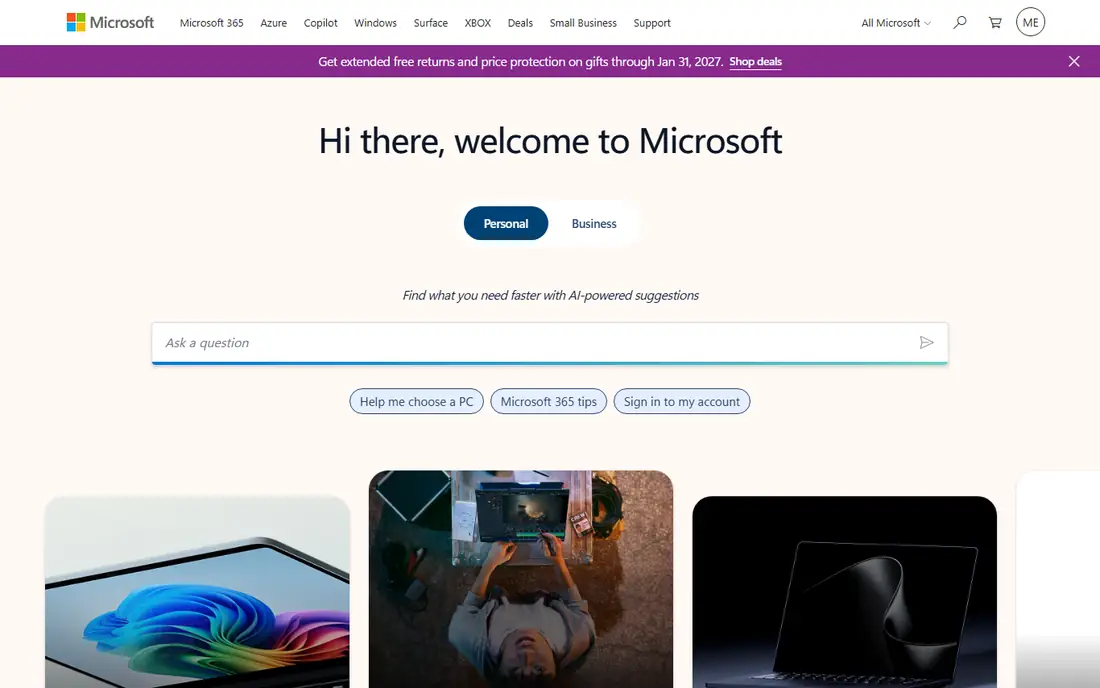
Microsoft is the broadest software company on this list, and that breadth is the point. One vendor covers Windows, Microsoft 365 productivity apps, Teams collaboration, the Azure cloud and Copilot AI features across all of them. For a business that wants fewer vendors and one identity system, that coverage is hard to match.
The cost of breadth is complexity. Microsoft licensing has many tiers, bundles and add-ons, and comparing plans takes real effort. Small businesses usually buy through a partner or a simple Microsoft 365 plan, while larger companies negotiate enterprise agreements. Free versions of some products exist, but the serious plans are paid and priced per user.
What we like- Widest product range here
- Azure cloud plus Microsoft 365 plus Windows
- Copilot AI across apps
Watch out for- Licensing is complex
- Enterprise deals need negotiation
Starting priceSee website
Free planNo
Oracle built its name on databases, and that foundation still shapes the company. Its Autonomous and AI Database runs on high-performance hardware and is now available in Amazon, Google, Microsoft and Oracle clouds, which suits companies that refuse to depend on one provider. The cloud infrastructure business has grown fast on AI training demand from large technology customers.
The honest limit is audience. Oracle products are designed for enterprises with dedicated IT teams, and pricing is quoted rather than published for most deals. Small businesses will find simpler and cheaper options elsewhere, including Oracle's own NetSuite unit for mid-market ERP. Buy Oracle when data scale and reliability matter more than simplicity.
What we like- Database technology trusted by large enterprises
- Cloud built for AI workloads
- Multicloud availability
Watch out for- Pricing is opaque
- Products suit large companies better than small teams
#3Salesforce
Best for: CRM and customer platforms4.4/5 on
G2 (27,566 reviews, checked Oct 2026)
Visit salesforce.com
Starting priceSee website
Free planFree trial
Salesforce remains the default CRM for companies that live on customer relationships. The platform now centers on Agentforce, AI agents that handle research, validation and repetitive work inside guardrails, plus Data 360 for unifying customer data. Slack, acquired years ago, adds team messaging to the same stack, and the AppExchange marketplace covers most integration needs.
The catch is total cost. The entry CRM price looks modest, but AI features, data tools and industry clouds add up, and most serious deployments need an administrator or a partner. Small teams should start with a basic edition and add only the clouds they will actually use. For a sales-led company that needs one customer record, Salesforce is still the safest choice.
What we like- Deepest CRM ecosystem
- Agentforce AI agents
- Huge app marketplace
Watch out for- Costs grow with add-ons
- Configuration needs skilled admins
Starting priceSee website
Free planFree trial
Adobe owns the creative workflow in a way no rival matches. Photoshop, Illustrator, Premiere and Acrobat are the default tools in design studios, agencies and marketing teams, and Firefly adds generative AI trained on licensed content. Students and teachers get steep discounts, which keeps the next generation of designers inside the Adobe ecosystem.
The subscription model draws the most complaints. There is no perpetual license anymore, and the full Creative Cloud plan is a meaningful monthly cost for freelancers. Casual creators can use cheaper single-app plans or free alternatives, but professionals who exchange files with clients usually need the real Adobe apps. Free trials let you test before committing.
What we like- Industry-standard creative tools
- Firefly generative AI
- Acrobat document workflow
Watch out for- Subscription-only model
- Prices rise for full Creative Cloud
Starting priceSee website
Free planFree trial
SAP runs the back office of many of the world's largest companies. Its ERP covers finance, supply chain, manufacturing, human resources and procurement in one system, with industry suites for more than two dozen sectors. For a multinational that needs one system of record across countries and currencies, SAP is often the only realistic option.
That scale comes with weight. SAP implementations take months or years and need specialist consultants, so total cost goes far beyond licenses. Small and mid-size companies should look at SAP's cloud offerings or at mid-market rivals instead. One note on our check: the SAP homepage returned only a thin extract during verification, so this entry rests partly on vendor documentation rather than a full homepage view.
What we like- Deepest ERP coverage for manufacturing, finance and supply chain
- Industry suites for 25 industries
Watch out for- Implementations are long and costly
- Overkill for small companies
Starting priceSee website
Free planNo
ServiceNow turned IT service desks into a platform for all enterprise workflows. The same system that handles IT tickets now runs HR requests, customer service cases, security operations and custom apps, with AI agents that resolve requests across Slack, Teams and email. The company reports that 85 percent of the Fortune 500 use its platform, which explains its staying power.
The pricing model fits enterprises, not small teams: expect demos and custom quotes rather than a public price list. Value also depends on breadth, since a ServiceNow deployment used only for tickets wastes most of the platform. Companies standardizing many workflows on one system get the best return.
What we like- Single platform for IT, HR and customer workflows
- Strong AI workflow automation
- High renewal rates
Watch out for- Enterprise pricing
- Best value needs broad deployment
Starting priceSee website
Free planYes
Intuit is the rare large software company built mainly for small businesses. QuickBooks handles accounting, TurboTax handles taxes, and Mailchimp handles marketing, with AI agents and human experts layered across them. That combination suits a business owner who wants finance, tax and marketing handled without hiring a finance team.
The weakness is the sales funnel inside the products. Users often report aggressive upselling to higher tiers and expert services, and the pricing of add-ons can surprise. Larger companies with complex finance needs will outgrow QuickBooks and need an ERP. For a small business or freelancer, though, Intuit's breadth at a small-business price is unmatched.
What we like- QuickBooks, TurboTax and Mailchimp under one roof
- AI agents plus human experts
- Strong small business focus
Watch out for- Upselling inside products frustrates users
- Enterprise finance needs heavier tools
#8Shopify
Best for: Independent online selling4.4/5 on
G2 (5,144 reviews, checked Oct 2026)
Visit shopify.com
Starting priceSee website
Free planFree trial
Shopify is the default platform for independent online stores. It covers storefronts, checkout, payments, point of sale and social selling in one system, with an app store of more than 21,000 apps for specialized features. The checkout converts well, which matters more than any single feature, since a faster checkout directly raises revenue.
The cost structure needs attention. Monthly plans are only part of the bill: transaction fees apply unless you use Shopify Payments, and paid apps and themes add up. Even so, the total usually stays below building and hosting a custom store. For a brand that wants to own its customer relationship instead of renting space on a marketplace, Shopify remains the leading choice.
What we like- Best-converting checkout
- 21,000 plus app store apps
- Sells online, in person and on social
Watch out for- Transaction fees unless you use Shop Pay
- Costs rise with apps and themes
How we chose
We compared vendor homepages, product documentation and public company descriptions in October 2026, and opened each homepage to confirm it loads and belongs to the company named. SAP's homepage returned only a thin extract, so that entry rests partly on vendor documentation. We picked companies for breadth, market position and relevance to US buyers rather than ranking by any single revenue or market value figure, since those numbers change quarterly and do not tell a buyer which product fits.
How to use a list like this
Treat company size as context, not as a recommendation. A top company can still sell you the wrong product line, and a smaller vendor can beat it in one niche. Start from the job: CRM points to Salesforce, creative work points to Adobe, ERP points to SAP or Oracle, small business finance points to Intuit, and online selling points to Shopify.
Then check the buying shape. Enterprise vendors sell through demos and negotiated quotes, which means longer decisions and higher total costs. Self-serve vendors publish prices and offer trials, which suits smaller teams. Ask for total cost including add-ons, implementation and the admin time your team will spend, since the license price alone understates the real bill.
Finally, weigh lock-in. Platforms reward you for going deeper: shared data, shared identity and shared workflows make switching painful later. That is fine when the platform fits, and costly when it does not. Pilot one product line before standardizing a whole company on a single vendor.
Also check support quality before you buy. Large vendors vary widely in response times, and community forums often answer faster than official channels. Look for documentation depth, training options and a partner network in your region, since a strong local partner can matter more than a feature list when something breaks.
Frequently asked questions
What is the biggest software company?
By most measures, Microsoft, thanks to Windows, Microsoft 365, Azure and gaming combined. Oracle, Salesforce and Adobe follow in different segments, but size alone does not make a company the right vendor for your job.
Which software company is best for small businesses?
Intuit and Shopify lead for small businesses, since both are built around owner-operated companies rather than enterprises. Microsoft 365 also suits small teams that want email, documents and meetings in one subscription.
Do these companies offer free plans?
Some do. Microsoft and Intuit offer free versions of some products, while Salesforce, Adobe, SAP and Shopify offer free trials. Oracle and ServiceNow sell through demos and quotes, with no general free plan.
Why are enterprise software prices rarely published?
Enterprise deals depend on user counts, modules, contract length and support tiers, so vendors quote per customer. Published prices would mislead buyers whose needs differ, though the lack of transparency also makes comparison shopping harder.
Should I buy everything from one vendor?
Only if the products genuinely fit. A single vendor simplifies identity, billing and support, but it also deepens lock-in. Many companies mix vendors: Microsoft for productivity, Salesforce for CRM and Shopify for selling, for example.
Sources we checked (8)
- https://www.microsoft.com
- https://www.oracle.com
- https://www.salesforce.com
- https://www.adobe.com
- https://www.sap.com
- https://www.servicenow.com
- https://www.intuit.com
- https://www.shopify.com
Is your product missing or out of date?
We review this list regularly. Vendors can request a listing, send updated pricing or ask about featured placement.

Shihab Mia · Founder, Rankite
Shihab has 5+ years in B2B and SaaS SEO. He writes Rankite's software buying guides from pricing pages, documentation and public user reviews. More about Shihab.