How we make this list: we compare pricing pages, product documentation and public user reviews. Ratings come from G2, Capterra or Trustpilot, with the date we checked them.
Key takeaways
- Only two vendors in this list publish pricing we could confirm on their own pages: HubSpot Sales Hub (from $9 per seat per month billed annually) and Regie.ai (Pro at $41 per month billed annually, Team at $125 per seat per month). The rest sell through quotes or tiers that change often, so we say "See website".
- "AI sales assistant" covers three different jobs: finding and writing to prospects (Apollo, Clay, Amplemarket, Regie.ai), running outbound at scale (Outreach, Salesloft), and coaching reps on live deals (Gong). Pick the job first, then the tool.
- Conversation and engagement platforms (Gong, Outreach, Salesloft) are built for teams with a sales manager and usually an annual contract. Small teams will get more from HubSpot, Apollo or Regie.ai.
- Credit-based pricing (Clay, Regie.ai) can look cheap on the page and cost more once your team runs enrichment and drafting every day. Estimate monthly credit use before you commit.
- Free tiers exist at HubSpot, Regie.ai and (according to public reviews) Apollo and Clay, which makes a two-week pilot with real prospects easy.
Quick comparison
| Tool | Best for | Starting price | Free plan |
|---|
 Apollo | Prospect database and outreach in one tool | See website | Yes |
 HubSpot Sales Hub | Teams that want a CRM with AI built in | $9 per seat/month (billed annually) | Yes |
 Gong | Coaching and deal visibility for larger teams | See website | No |
 Outreach | High-volume outbound with managers in control | See website | No |
 Salesloft | Signal-driven cadences for mid-market teams | See website | No |
 Clay | Custom research and enrichment workflows | See website | Yes |
 Amplemarket | Small outbound teams wanting an AI copilot | See website | Free trial |
 Regie.ai | Solo sellers and small teams prospecting with AI | $41 per month (Pro, billed annually); Team $125 per seat/month (billed annually) | Yes |
Is your product missing or out of date?
We review this list regularly. Vendors can request a listing, send updated pricing or ask about featured placement.
The best AI sales assistant software for B2B teams
#1Apollo
Best for: Prospect database and outreach in one tool4.7/5 on
G2 (9,847 reviews, checked Oct 2026)
Visit apollo.io
Starting priceSee website
Free planYes
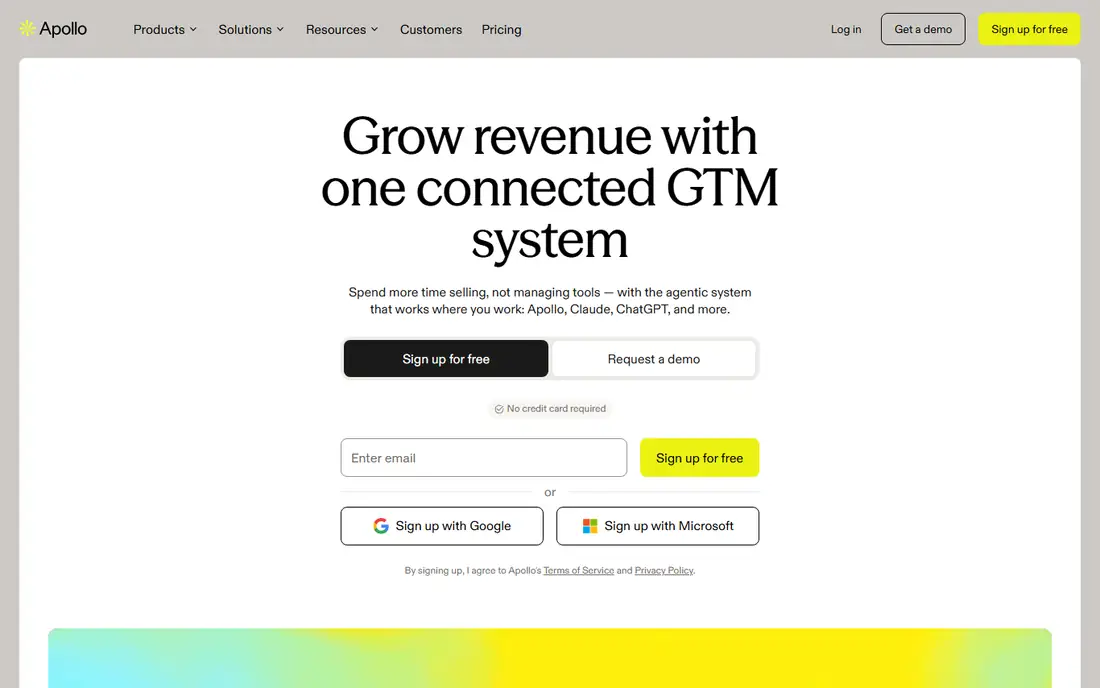
Apollo is the tool most small B2B teams meet first, because it bundles a contact database with email sequences, calling and an AI layer for writing and prioritizing. You search for accounts by title, industry and size, then send from the same screen. For a team of two to ten reps with no ops person, that single login matters more than any one feature.
The strength is breadth for the money. Public pricing guides describe a free tier with a small monthly credit allowance and paid tiers priced per user, which is far below what engagement suites cost. We could not open Apollo's own pricing page during research, so check current plan names and credit counts there before you budget.
The catch is data quality and credit math. Reviewers on G2 and Reddit regularly mention bounced emails and outdated titles, so you will want to verify addresses before a big send. Heavy exporters also run into credit caps, which is where the cheap headline price starts to rise.
What we like- Large searchable contact database
- Sequences, dialer and email in one place
- Low entry cost compared with enterprise suites
Watch out for- Data accuracy varies by region and role
- Credit limits can bite on lower plans
#2HubSpot Sales Hub
Best for: Teams that want a CRM with AI built in4.4/5 on
G2 (14,364 reviews, checked Oct 2026)
Visit hubspot.com
Starting price$9 per seat/month (billed annually)
Free planYes
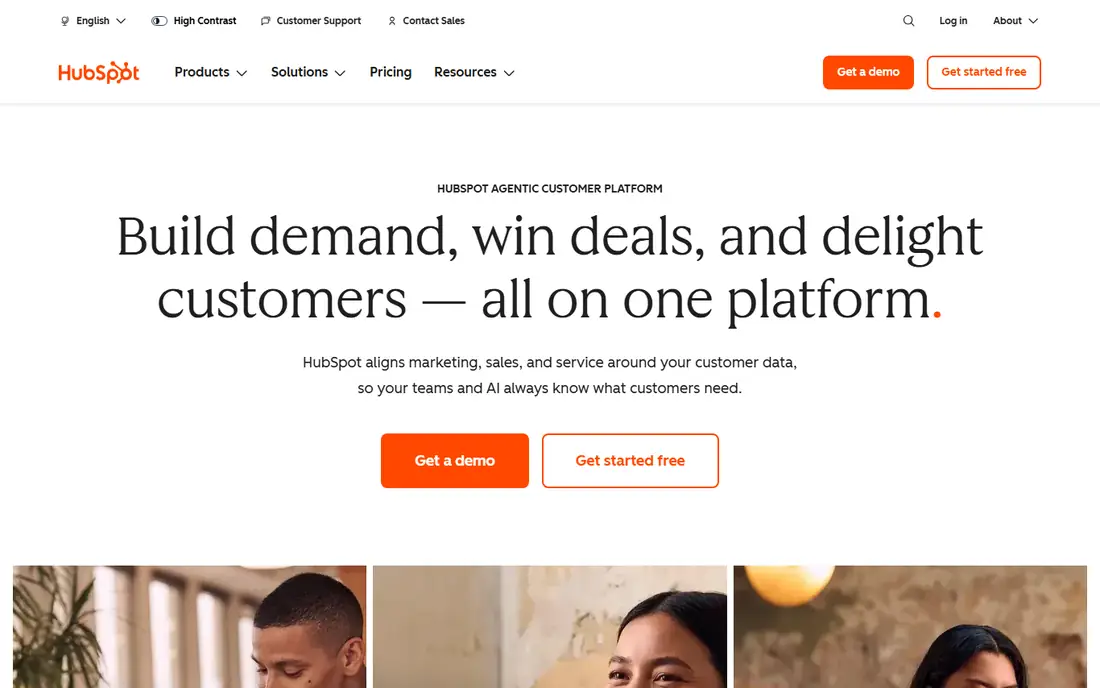
HubSpot makes sense when your pain is scattered data, not a lack of prospects. Its AI features (drafting emails, summarizing calls and records, suggesting next steps) sit on top of contact and deal data you already keep there. If marketing runs on HubSpot too, reps see email opens and form fills without any sync work.
HubSpot's own pricing guide lists a free tools tier with two seats. It lists Starter at $9 per seat per month billed annually ($15 monthly) and Professional at $90 per seat per month billed annually ($100 monthly). That same guide shows a one-time onboarding fee of $1,500 for Professional and $3,500 for Enterprise, which many buyers miss when they compare totals.
The weakness is the step between tiers. Starter is light on automation, and the sequences and workflow features most outbound teams want sit in Professional. A ten-seat team on Professional is already a five-figure annual commitment before add-ons.
What we like- AI features live inside the CRM you already use
- Clear tiered pricing
- Very large integration marketplace
Watch out for- Professional tier needs a paid onboarding fee
- Costs climb quickly as seats and add-ons grow
#3Gong
Best for: Coaching and deal visibility for larger teams4.7/5 on
G2 (6,679 reviews, checked Oct 2026)
Visit gong.io
Starting priceSee website
Free planNo
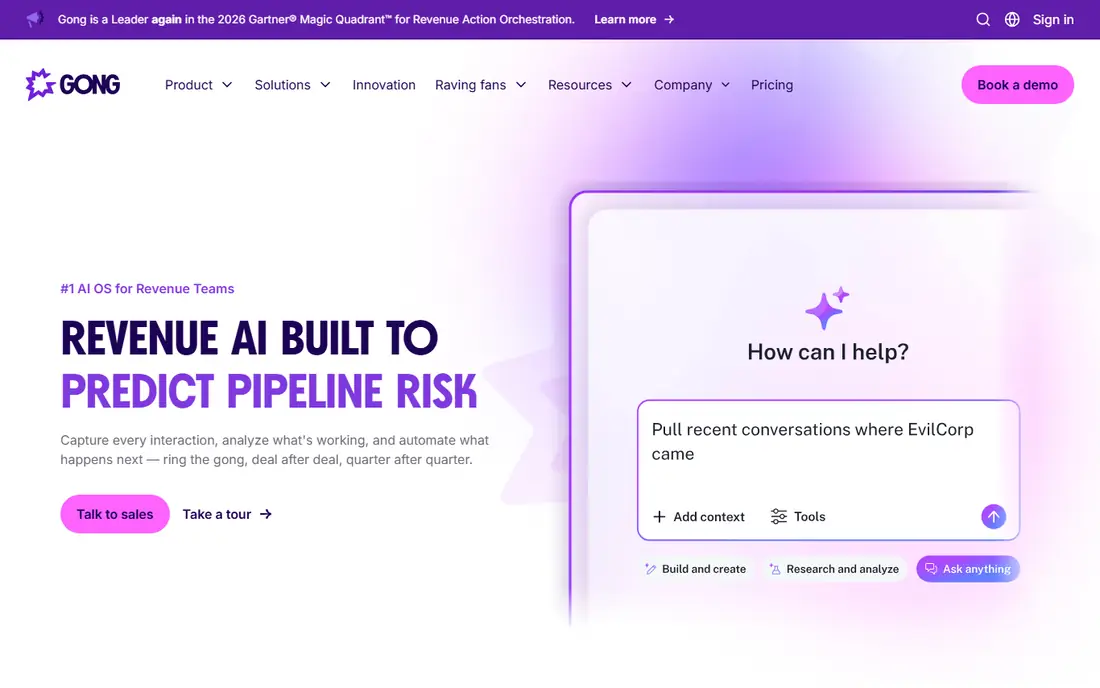
Gong records and analyzes sales calls, then turns them into summaries, deal alerts and coaching material for managers. It is less about finding new prospects and more about understanding why deals move or stall. If your VP of Sales keeps asking what is actually happening in late-stage deals, this is the category you want.
Gong does not publish a price list. Procurement data from Vendr suggests mid-market and enterprise buyers commonly pay somewhere between $1,200 and $2,400 per seat per year, depending on contract size and term, and that figure is a third-party estimate, not a quote. Expect platform fees and onboarding on top, and expect to negotiate.
The honest drawback is fit. A five-person team will use perhaps a third of what Gong offers and pay for all of it. It also needs managers who will actually review calls, because the value comes from coaching habits, not from the dashboard alone.
What we like- Deep call and meeting analysis
- Strong forecasting and deal-risk views
- Widely used, so reviews and benchmarks are easy to find
Watch out for- Quote-only pricing with annual contracts
- Overkill for teams under about 10 reps
#4Outreach
Best for: High-volume outbound with managers in control4.3/5 on
G2 (3,671 reviews, checked Oct 2026)
Visit outreach.io
Starting priceSee website
Free planNo
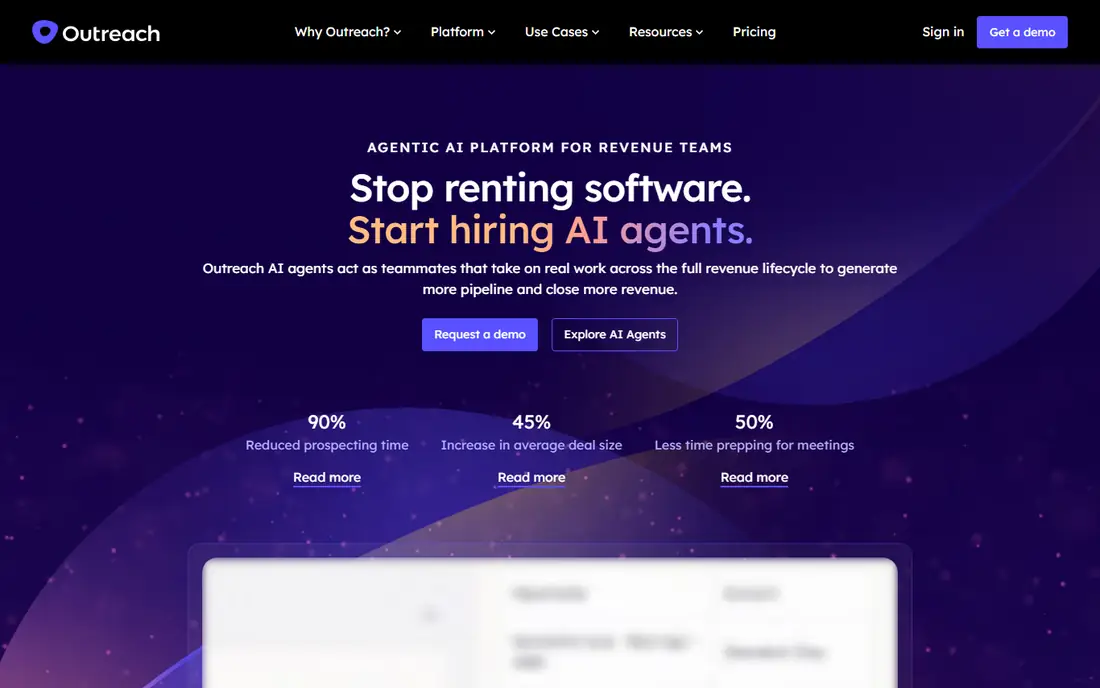
Outreach is a sales execution platform for teams that run structured, high-volume outbound and want managers to see and control every step. Its AI helps with drafting, prioritizing accounts and surfacing deals at risk. Admins can set guardrails on who emails whom and how often, which matters once you have 30 reps and a brand to protect.
Outreach does not publish prices either. A third-party guide from RevenueGrid reports roughly $100 to $150 per user per month for core sales engagement on annual contracts, with a 50-seat deployment commonly landing in the tens of thousands of dollars per year before add-ons. Treat that as a planning range only.
The trade-off is weight. You will want someone who owns configuration, sequences and reporting, ideally a sales ops hire. Teams without that person often find the tool underused after the first quarter.
What we like- Mature sequencing with detailed controls and approvals
- Strong reporting for managers
- Works well with Salesforce-centered teams
Watch out for- No public pricing and annual contracts
- Setup and admin take real time
#5Salesloft
Best for: Signal-driven cadences for mid-market teams4.5/5 on
G2 (9,907 reviews, checked Oct 2026)
Visit salesloft.com
Starting priceSee website
Free planNo
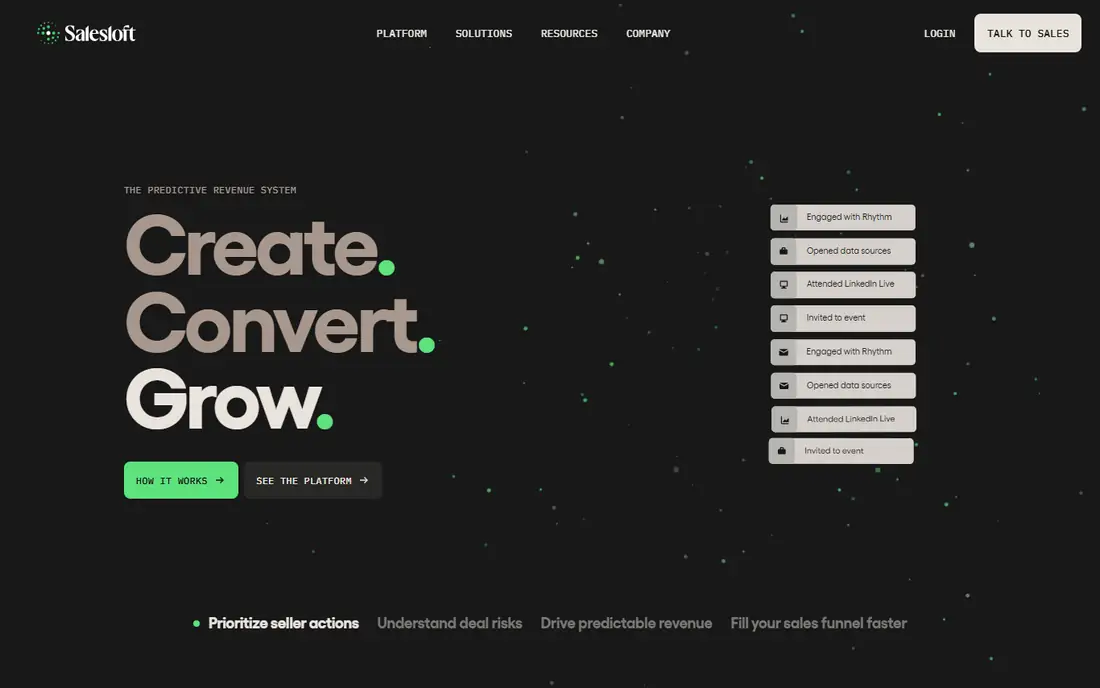
Salesloft is the closest rival to Outreach and appeals to the same mid-market and enterprise buyers. Its Rhythm feature takes buying signals and turns them into a prioritized list of actions for each rep, which is a practical use of AI for people who otherwise start every morning with a blank to-do list.
Third-party guides estimate typical mid-market deals at around $125 to $165 per user per month, but the vendor sells through sales conversations, so your quote will differ. Ask what is bundled (conversation intelligence, forecasting, data) and what is billed separately.
The catch is that packaging can be hard to compare. Two quotes that look similar may include different modules, so get both vendors to price the same list of features. Salesloft also expects admin attention in the same way Outreach does.
What we like- Rhythm feature ranks daily actions from buyer signals
- Solid cadence and dialer tools
- Good fit for reps who work a queue all day
Watch out for- Quote-only pricing
- Features are split across packages, so the real cost depends on what you add
#6Clay
Best for: Custom research and enrichment workflows4.6/5 on
G2 (234 reviews, checked Oct 2026)
Visit clay.com
Starting priceSee website
Free planYes
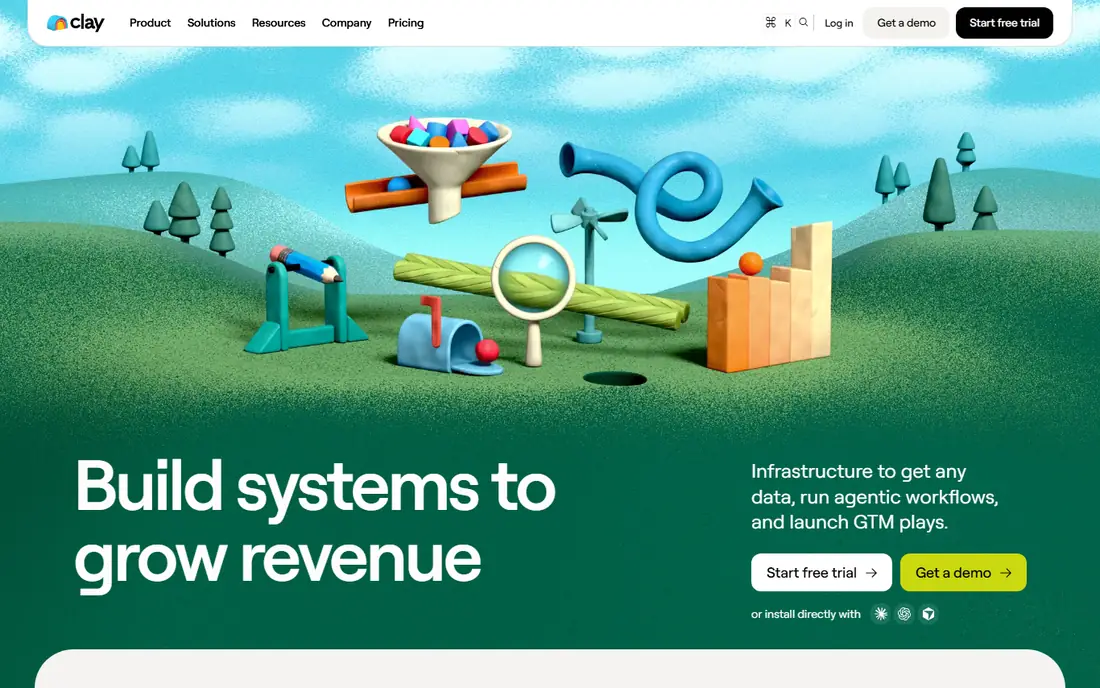
Clay is a spreadsheet-style workspace where you combine data providers and AI steps to research accounts and build lists. A rep or ops person might pull a target account list, check hiring pages and recent news, then write a first line for each contact. You then push the result into your CRM or a sending tool.
That flexibility is why growth teams like it. It is also why Clay is not a plug-and-play assistant. Public pricing guides show plans in the low hundreds of dollars per month with annual credit pools, and note that people and company searches, enrichments and AI steps all spend credits. Verify the current tiers on Clay's own site.
The honest limit is the learning curve. Expect a few days to get a useful workflow running and ongoing tinkering after that. Clay does not replace a sequencer, so you still need a sending tool alongside it.
What we like- Pulls data from many providers into one table
- Flexible AI research steps for personalized messaging
- Works with most CRMs and sequencers
Watch out for- Credit-based pricing is hard to forecast
- Needs someone comfortable building workflows
#7Amplemarket
Best for: Small outbound teams wanting an AI copilot4.6/5 on
G2 (691 reviews, checked Oct 2026)
Visit amplemarket.com
Starting priceSee website
Free planFree trial
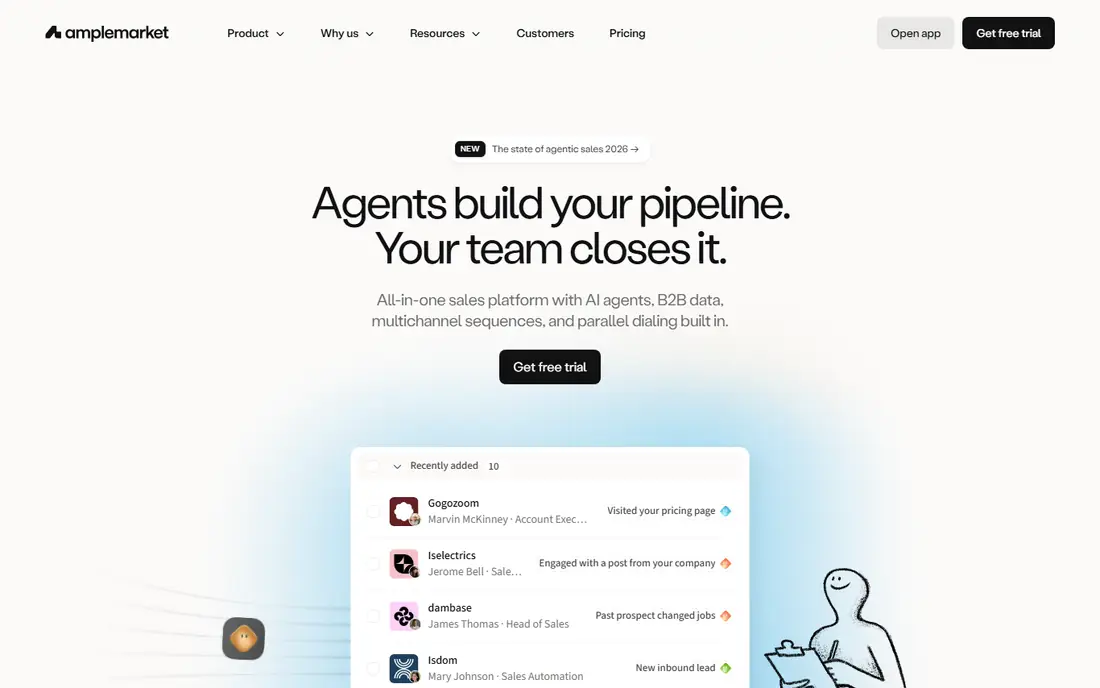
Amplemarket targets outbound-heavy B2B teams that want one platform for lead data, LinkedIn and email outreach, and an AI assistant that proposes who to contact. Its copilot, called Duo, is meant to build lists and draft outreach with less manual setup than a tool like Clay.
Capterra lists the entry Startup plan at a flat $600 per month, with a trial available and no free version. That flat-rate structure suits a team of three to eight reps better than a solo founder. Confirm the current figure on the vendor's pricing page, since it was not available to us directly.
The drawback is cost relative to team size and a younger track record than Outreach or Salesloft. Annual contracts are common in this segment, so ask about term length and what happens to your data if you leave.
What we like- Combines data, intent signals and multichannel sequences
- AI copilot suggests leads and drafts messages
- Flat pricing instead of per-seat on entry plan
Watch out for- Entry price is high for tiny teams
- Less proven at large enterprise scale
#8Regie.ai
Best for: Solo sellers and small teams prospecting with AI4.4/5 on
G2 (355 reviews, checked Oct 2026)
Visit regie.ai
Starting price$41 per month (Pro, billed annually); Team $125 per seat/month (billed annually)
Free planYes
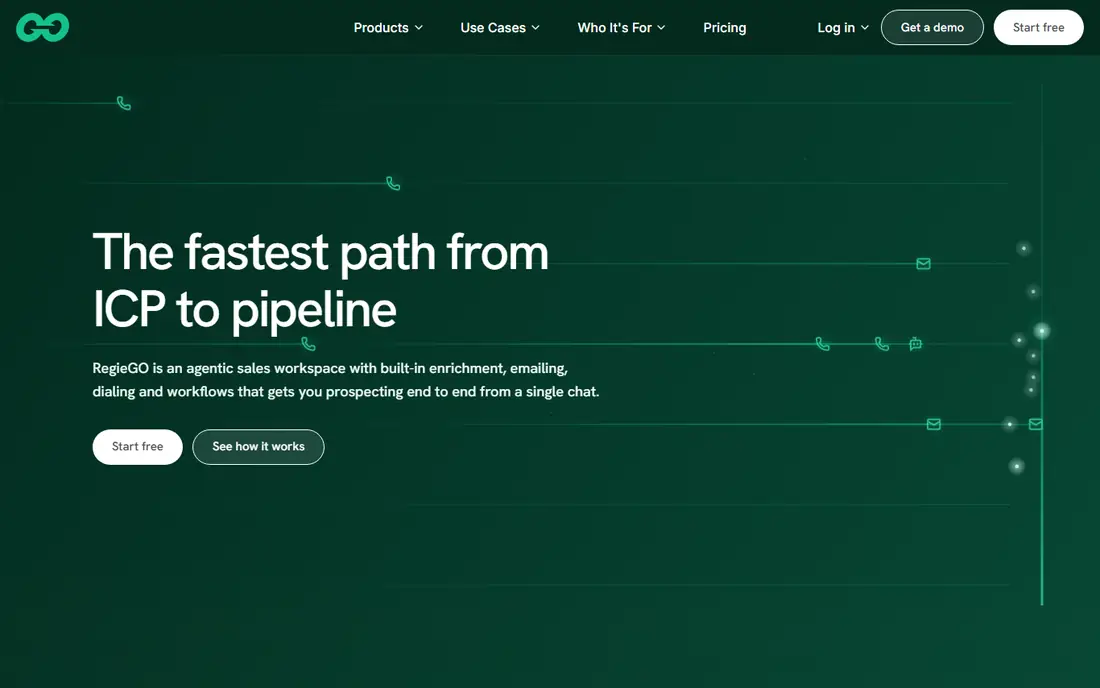
Regie.ai now centers on RegieGO, an agentic workspace for researching accounts, drafting messages, enriching contacts and dialing. It suits founders, SDRs and small teams who want AI to do prospecting groundwork without an ops project. You can start without a CRM, because it includes its own, or sync with HubSpot, Salesforce or Monday CRM.
Pricing is unusually easy to read. According to the vendor's pricing page, Free gives each person 250 credits one time, Pro costs $41 per month billed annually and includes 5,000 credits per month, and Team costs $125 per seat per month billed annually ($150 monthly) with 15,000 credits per seat and a minimum of two seats. Pro and Team have no contract, and enterprise is custom.
The catch is the credit model. Researching, drafting, enriching and dialing all draw from the pool, paid-plan credits reset each period instead of rolling over, and extra credits cannot be bought on their own (the workspace owner can switch on capped overage billing instead). Run a pilot to learn how fast your reps burn through them.
What we like- Self-serve with no contract
- Built-in CRM plus a power dialer
- Clear public pricing and a free start
Watch out for- Credits do not roll over
- Each workspace connects only one CRM
How we chose
We did not run hands-on tests of these products. Our method was desk research: vendor pricing pages and documentation where they were reachable, product pages, and public reviews on G2, Capterra and Reddit for recurring praise and complaints. We also compared third-party procurement and pricing guides, and we labeled their numbers as estimates when the vendor does not publish a price.
We looked at what each product actually does with AI (writing, research, prioritizing, call analysis), who it fits by team size, how it connects to a CRM, how pricing scales per seat or per credit, and how hard it is to leave. We aimed for a mix of established platforms and smaller or newer vendors. Prices change often, so confirm every figure on the vendor's website before you buy.
How to pick the right AI sales assistant for your team
The label "AI sales assistant" is loose, so start by naming the problem you want solved. Most B2B teams are fixing one of three things, and each points to a different part of this list.
Match the tool to the job
If reps struggle to find and personalize outreach to the right accounts, look at Apollo, Clay, Amplemarket or Regie.ai. If outbound is working but managers lack control and reporting, Outreach and Salesloft are built for that. If deals are stalling and nobody knows why, Gong gives managers the evidence. HubSpot fits when the real issue is that data and activity live in too many places.
Check team size and admin capacity
Platforms like Outreach, Salesloft and Gong assume someone will own setup and training. Without a sales ops person, adoption drops and you pay for unused seats. Teams under ten reps usually get more value from a lighter tool with a short setup, measured in days rather than weeks.
Model the real cost
Add up seats, platform fees, onboarding, data credits and any separate dialer or data subscription. Ask for the total for 12 months at your headcount, in writing. For credit-based tools, ask the vendor how many credits a typical rep uses per week, then multiply.
Ask about contracts and data
Annual contracts with auto-renewal are common in this category. Ask about the cancellation window, whether you can reduce seats at renewal, and how you export contacts, call recordings and activity history if you leave. Also check where AI-written email sends from, because sending from your own domain affects deliverability and your sender reputation.
Pilot with real prospects
Run two to four weeks with a small group and track replies, meetings booked and time saved per rep. Compare against your current baseline, not against the vendor's case studies. A tool that saves reps an hour a day but lowers reply quality is not a win.
Frequently asked questions
What is an AI sales assistant?
It is software that uses AI to take over parts of a seller's routine work. That can mean finding prospects, drafting emails, summarizing calls, suggesting next steps or updating the CRM. Some tools do one of these jobs, while others cover several.
How much does AI sales assistant software cost?
It ranges from free tiers and plans under $50 per month to enterprise contracts that run well into five or six figures per year. Among the vendors here, HubSpot starts at $9 per seat per month billed annually and Regie.ai Pro at $41 per month billed annually. Gong, Outreach and Salesloft sell through quotes, so budget for a sales conversation.
Do I need a CRM to use these tools?
Most of them work alongside a CRM and sync contacts, activity and deals with it. HubSpot is a CRM itself, and Regie.ai includes a built-in one if you do not have anything yet. If you already use Salesforce or HubSpot, check that the integration supports write-back before you buy.
Will AI-written outreach hurt my email deliverability?
It can if you send high volumes of generic messages or use unverified contact lists. Send from properly set up domains, verify addresses, throttle volume and keep messages specific to the recipient. Read how each vendor handles unsubscribes and sending limits.
Which tool is best for a small B2B team?
Small teams usually do best with Apollo, HubSpot or Regie.ai because they are quick to start and priced for few seats. Amplemarket suits a small team that wants an outbound-focused platform and has the budget for a flat monthly fee. Gong, Outreach and Salesloft tend to make sense once you have a manager reviewing activity across a larger team.
Sources we checked (9)
- https://regie.ai/pricing
- https://blog.hubspot.com/sales/hubspot-sales-hub-pricing
- https://www.salesloft.com/platform/rhythm
- https://www.vendr.com/marketplace/gong
- https://revenuegrid.com/blog/outreach-pricing/
- https://www.cloudtalk.io/blog/salesloft-pricing/
- https://www.warmly.ai/p/blog/clay-pricing
- https://www.capterra.com/p/189573/Amplemarket/pricing/
- https://www.uplead.com/apollo-io-pricing/
Is your product missing or out of date?
We review this list regularly. Vendors can request a listing, send updated pricing or ask about featured placement.

Shihab Mia · Founder, Rankite
Shihab has 5+ years in B2B and SaaS SEO. He writes Rankite's software buying guides from pricing pages, documentation and public user reviews. More about Shihab.