How we make this list: we compare pricing pages, product documentation and public user reviews. Rankite is independent; if a vendor ever pays for a featured spot, that listing is clearly labeled Partner.
Key takeaways
- Cvent is the enterprise standard for large conferences and corporate events, with depth no competitor matches.
- Whova is the attendee-favorite for mid-size conferences, with an app people actually use for networking.
- Bizzabo and Goldcast lead the virtual and hybrid event space, with Goldcast built specifically for B2B marketers.
- RingCentral Events (formerly Hopin) and vFairs handle large virtual conferences, while Accelevents suits organizers wanting flexibility.
Quick comparison
| Tool | Best for | Starting price | Free plan |
|---|
 Cvent Cvent | Large enterprise conferences and meetings | See website | No |
 Eventbrite Eventbrite | Simple events needing ticketing and discovery | See website | Free to list |
 Whova Whova | Conferences where attendee networking matters | See website | No |
 Bizzabo Bizzabo | B2B marketers running event programs | See website | No |
 RingCentral Events RingCentral Events | Large-scale virtual conferences | See website | Free trial |
 vFairs vFairs | Immersive virtual and hybrid experiences | See website | No |
 Accelevents Accelevents | Flexible virtual, hybrid and in-person events | See website | Free trial |
 Stova Stova | Enterprise event technology consolidation | See website | No |
 Goldcast Goldcast | B2B marketers running virtual events for pipeline | See website | No |
 Airmeet Airmeet | Interactive virtual summits and meetups | See website | Free tier |
Is your product missing or out of date?
We review this list regularly. Vendors can request a listing, send updated pricing or ask about featured placement.
The top 10 event management software
#1
Cvent
Best for: Large enterprise conferences and meetings
Visit cvent.com
Starting priceSee website
Free planNo
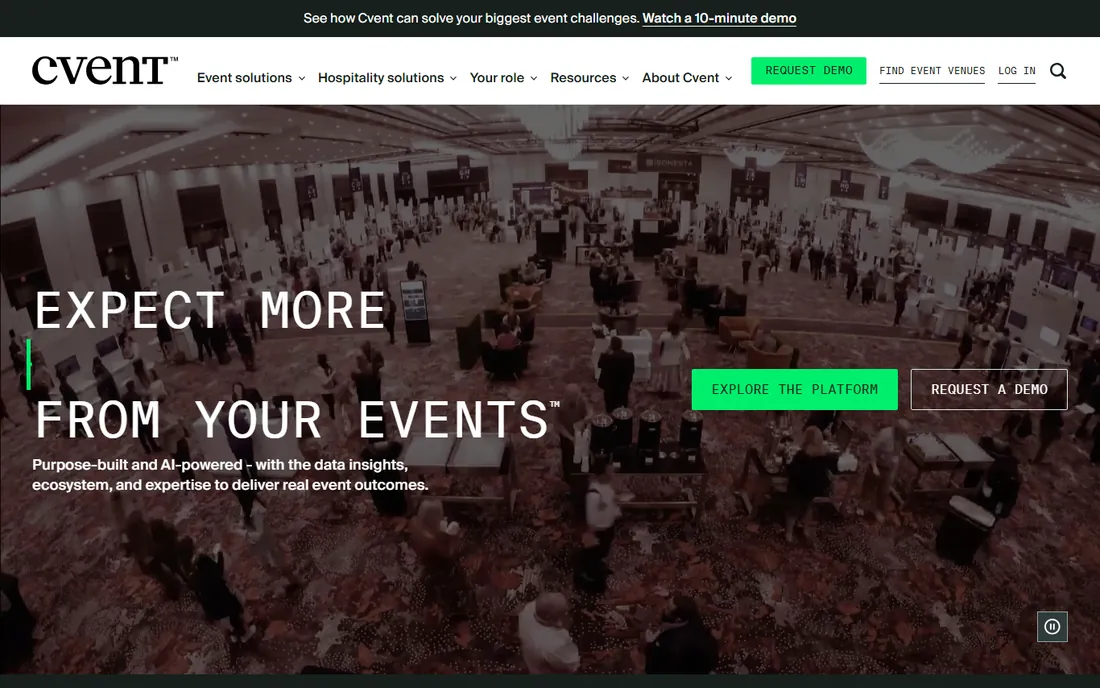
Cvent is the enterprise event platform: registration, venue sourcing, budgeting, attendee management, mobile apps and reporting for conferences with thousands of attendees. Corporate event teams run their entire portfolio on it. The depth covers scenarios smaller tools never considered.
The cost and complexity match the capability. Small organizers will drown. But for enterprises running dozens of events a year with compliance and reporting requirements, Cvent is the standard everything else is compared to.
What we like- Deepest feature set for complex events
- Venue sourcing and budgeting
- Trusted by the largest enterprises
Watch out for- Expensive
- Implementation is a project
Starting priceSee website
Free planFree to list
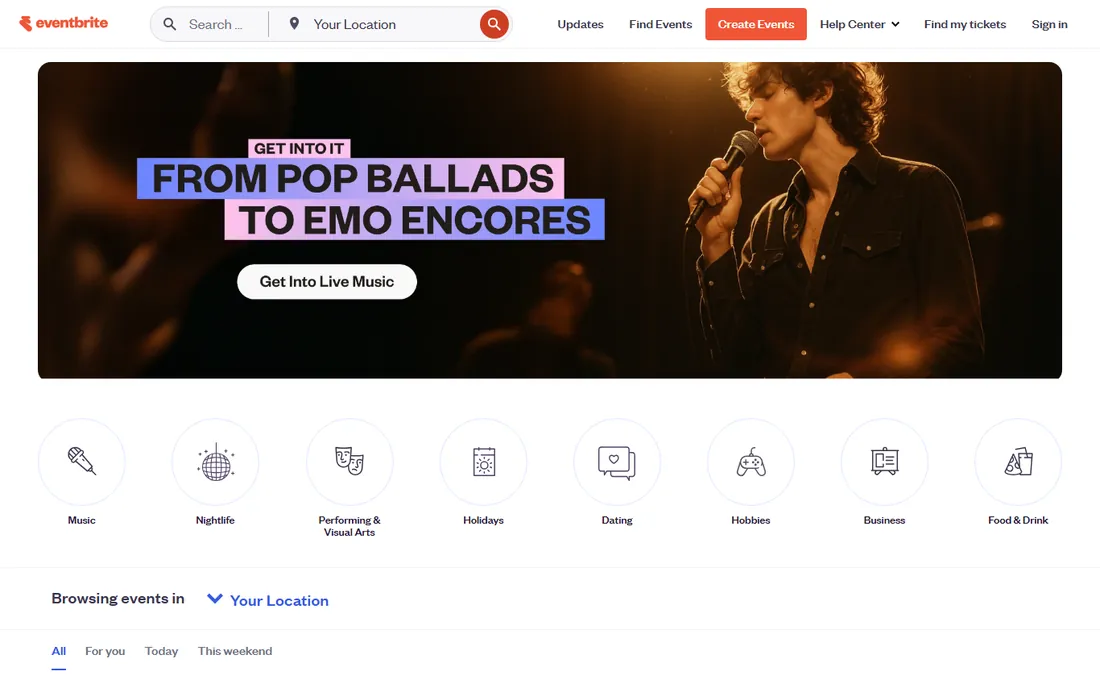
Eventbrite belongs on this list for the events where ticketing is the management: classes, workshops, concerts and community events. The marketplace drives discovery, setup takes minutes, and the organizer app handles check-in well.
It is not built for multi-track conferences or corporate event portfolios. But when the event is simple and selling tickets is the job, Eventbrite's reach beats every management feature.
What we like- Huge marketplace audience
- Easy setup
- Solid check-in tools
Watch out for- Not a full event management platform
- Fees are high
#3
Whova
Best for: Conferences where attendee networking matters
Visit whova.com
Starting priceSee website
Free planNo
Whova's reputation comes from the attendee side: the app's networking, agenda and community features get real usage, which is rare in event tech. Organizers get registration, ticketing, agendas and analytics that cover mid-size conferences completely.
Enterprise planners will find the backend lighter than Cvent's. But for conferences where attendee experience decides success, Whova's engagement is the differentiator.
What we like- Attendee app people actually use
- Strong networking features
- Good agenda and logistics
Watch out for- Organizer backend is less deep than Cvent
- Pricing is quote-based
Starting priceSee website
Free planNo
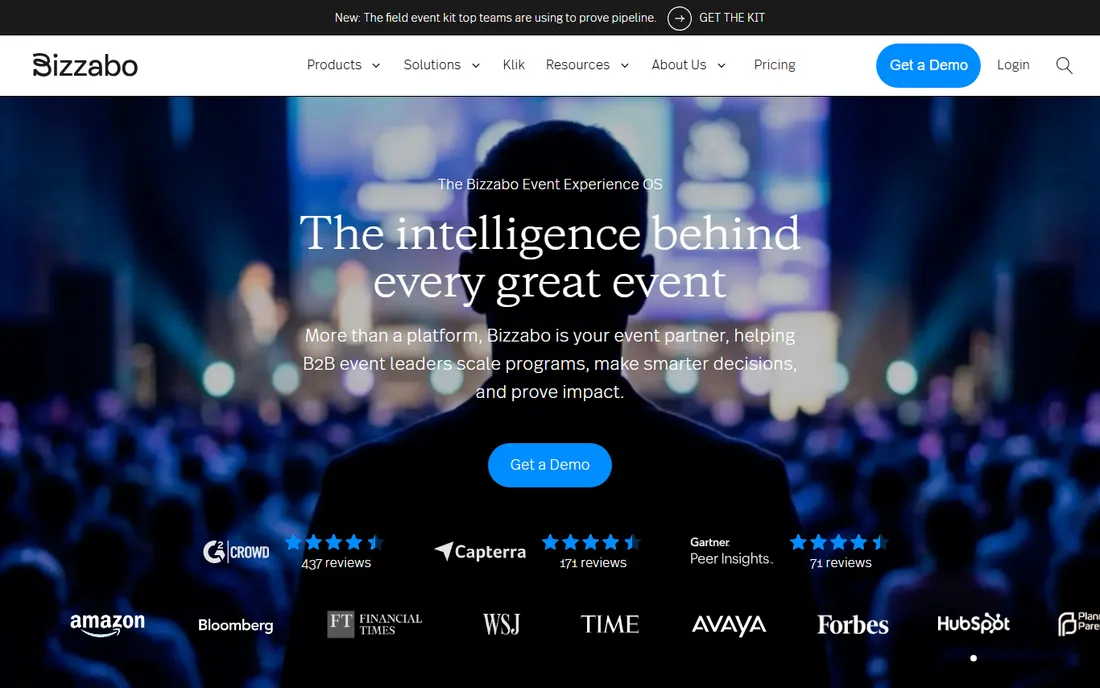
Bizzabo positions events as a marketing channel: registration, promotion, virtual and in-person delivery, and analytics that tie attendance to pipeline. B2B marketing teams run webinars through flagship conferences on one platform with CRM integration throughout.
The pricing and positioning assume a marketing organization. Pure logistics planners will find it marketing-heavy. But when events must prove revenue impact, Bizzabo's measurement is the point.
What we like- Strong marketing integrations
- Hybrid event support
- Good analytics for pipeline
Watch out for- Enterprise pricing
- Best for marketing-driven organizations
Starting priceSee website
Free planFree trial
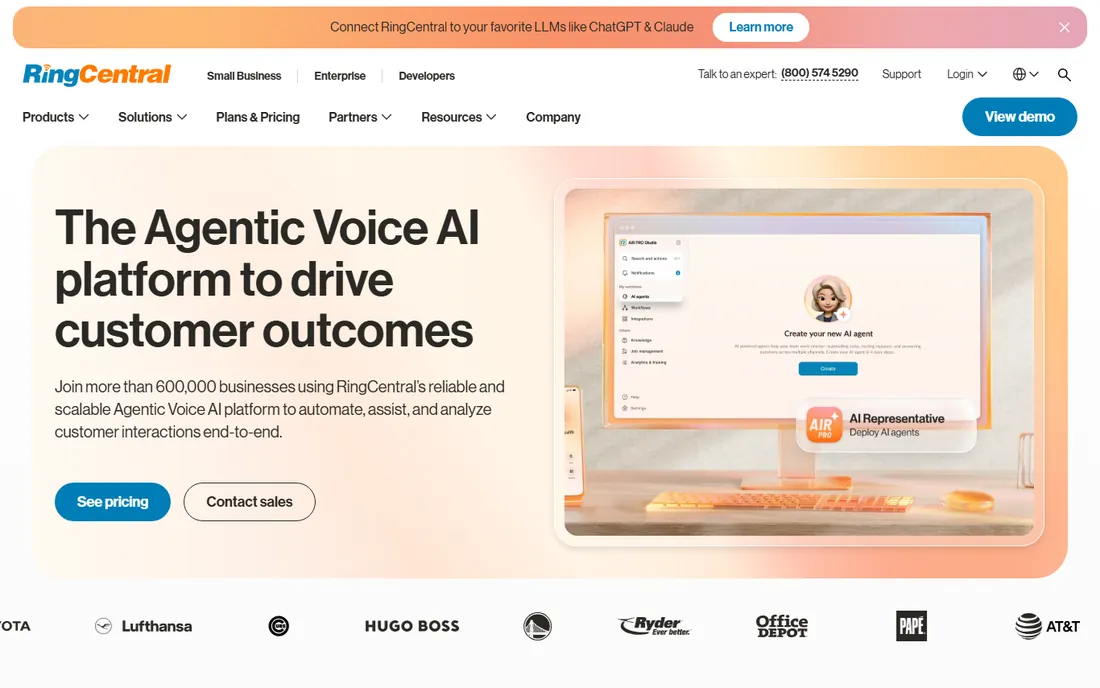
RingCentral Events (the former Hopin) was built for virtual conferences at scale: main stages, breakout sessions, expo areas and networking for tens of thousands of attendees. The RingCentral acquisition brought enterprise backing and integration with its communications portfolio.
The product continues to evolve post-acquisition, so verify the current packaging. Virtual-first means in-person features trail. But for large virtual events, the scale engineering is proven.
What we like- Built for very large virtual audiences
- Stages, sessions and networking
- Backed by RingCentral
Watch out for- Hopin acquisition history means evolving product
- Virtual-first
Starting priceSee website
Free planNo
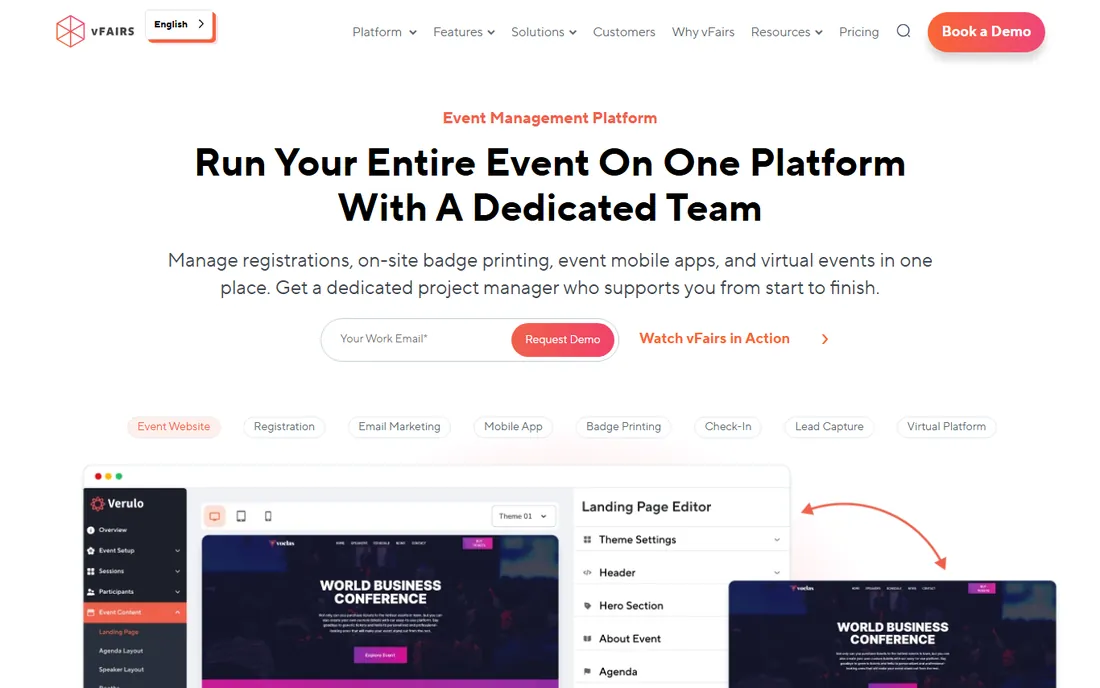
vFairs specializes in immersive virtual events: 3D lobbies, virtual booths and environments that mimic physical venues. Virtual job fairs, expos and trade shows benefit most, where booth-style interaction matters. Managed services help organizers who want it done for them.
The immersive approach demands more from attendees' devices and connections. And pricing requires a conversation. But for virtual events that need to feel like a place rather than a webinar, vFairs leads.
What we like- 3D virtual environments
- Strong for job fairs and expos
- Managed services available
Watch out for- Quote-based pricing
- Immersive features need attendee bandwidth
Starting priceSee website
Free planFree trial
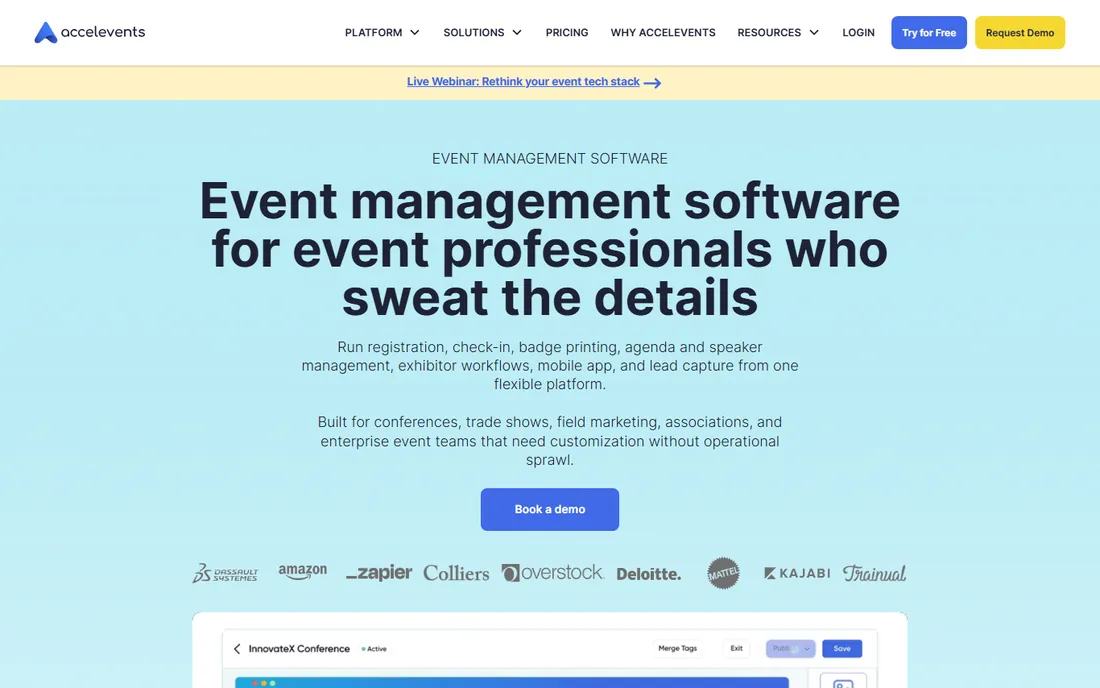
Accelevents covers virtual, hybrid and in-person events in one flexible platform, with particular strength in fundraisers, galas and mid-size conferences. Pricing is more accessible than the enterprise tools, and the free trial lets organizers test with real events.
Large enterprises will want Cvent's depth. But organizers running varied event types who need one adaptable tool will find Accelevents refreshingly capable for the price.
What we like- Handles all three formats well
- Affordable tiers
- Good for fundraisers and mid-size events
Watch out for- Less enterprise depth than Cvent
- Brand recognition is lower
#8
Stova
Best for: Enterprise event technology consolidation
Visit stova.io
Starting priceSee website
Free planNo
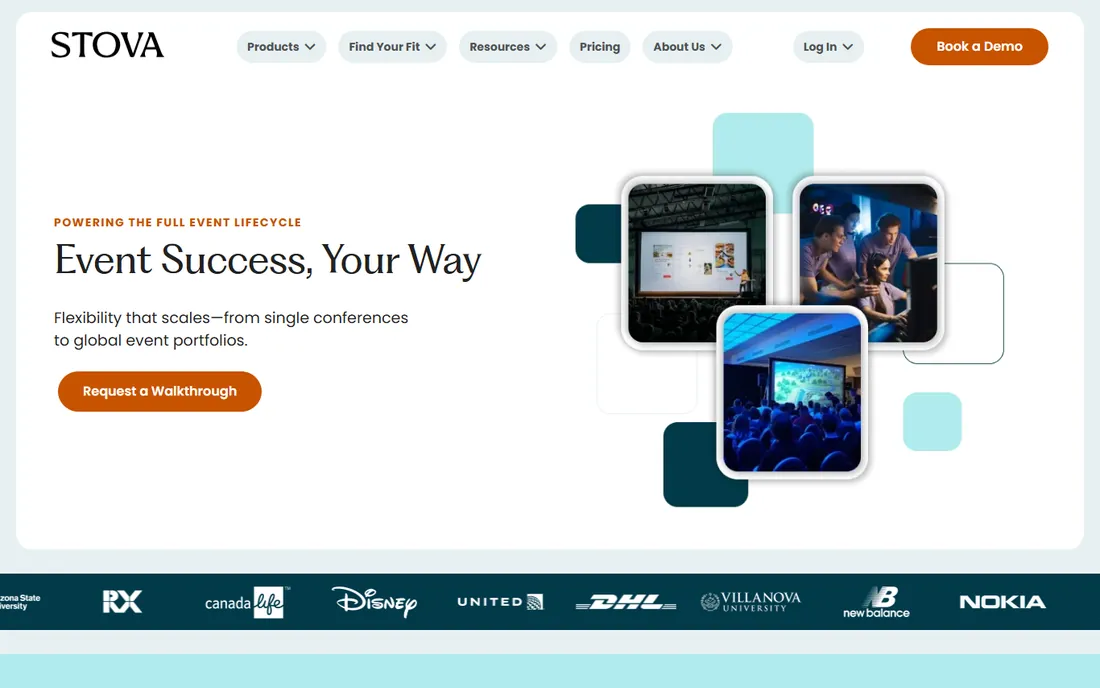
Stova (the combination of Aventri and MeetingPlay) offers enterprise event technology: registration, mobile apps, virtual events and meeting management for corporate portfolios. Organizations consolidating multiple event tools get one vendor.
The rebrand from two known names created market confusion, so clarify exactly what you are buying. But the combined portfolio covers the corporate event lifecycle well.
What we like- Combines meeting and event tech (Aventri plus MeetingPlay)
- Strong for corporate portfolios
- Mobile apps
Watch out for- Rebrand history confuses the market
- Enterprise sales process
#9
Goldcast
Best for: B2B marketers running virtual events for pipeline
Visit goldcast.io
Starting priceSee website
Free planNo
Goldcast is virtual events for B2B marketers: webinars, summits and digital events designed to generate pipeline, with deep CRM and marketing automation integration. Engagement data flows into sales workflows, which is what marketing leaders actually need.
In-person event features are not the focus. But for digital-first event programs measured on revenue, Goldcast's marketer-centric design beats generic virtual platforms.
What we like- Built for marketer-led virtual events
- Strong HubSpot and Salesforce integration
- Good engagement data
Watch out for- Virtual-focused
- Newer than established rivals
Starting priceSee website
Free planFree tier
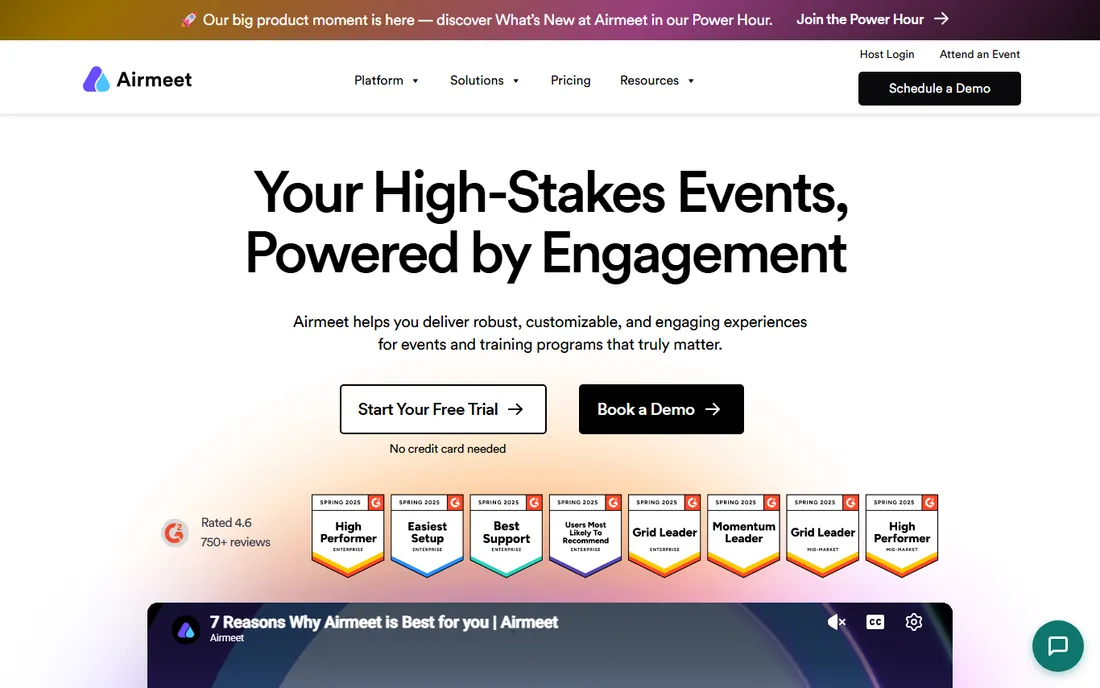
Airmeet's signature is the social lounge: virtual tables where attendees mingle like a real reception. Summits, meetups and community events feel more human than webinar grids. A free tier covers small events genuinely.
Massive expos and complex agendas need more. But for events where conversation is the content, Airmeet's format creates the interaction other platforms promise and rarely deliver.
What we like- Social lounge networking format
- Free tier for small events
- Easy for attendees
Watch out for- Less suited to huge expos
- Feature depth trails enterprise tools
The event management market splits by format, and buying the wrong format fit wastes money. Pure virtual events need stage, networking and engagement tools; in-person conferences need registration, badging, agendas and logistics; hybrid needs both plus the integration between them.
Be honest about your actual mix. Many organizers buy hybrid capability for events that stay firmly in one format. And test the attendee experience yourself: join a demo event as an attendee before you commit, because organizer dashboards always look better than the attendee reality.
How we chose
We compared platforms on registration and ticketing, attendee experience, virtual and hybrid capability, marketing integrations, analytics and pricing models. We verified each vendor's homepage and current positioning, reviewed organizer feedback on G2, Capterra and event industry sources, and noted acquisitions affecting product lineups. We did not run live events on these platforms.
Building an event tech stack that actually connects
No single platform does everything, so plan the integrations deliberately. The core stack is usually four pieces: the event platform for registration and delivery, the CRM for attendee data and follow-up, the marketing automation for promotion, and the finance system for revenue reconciliation. Map the data flow between them before buying anything.
The CRM integration is the one that matters most. Every registration, session attendance and engagement signal should land in the CRM attached to the right contact, because post-event follow-up is where event ROI is realized. Test this integration with real data during the trial, not with the vendor's demo account. Broken contact matching or missing custom fields will haunt you after the event.
Do not neglect the check-in and on-site layer. Badge printing, session scanning and lead retrieval for sponsors all need to work when the venue wifi falters. Ask vendors about offline modes and have a paper backup plan for registration. The fanciest platform is worthless if the registration line stops moving.
Finally, budget for the people, not just the software. Someone has to build the registration forms, configure the app, train the staff and run the on-site tech. Understaffed event tech is the most common cause of event-day failures, and no platform fixes an absent operator.
Event tech mistakes to avoid
The biggest is choosing the platform before defining the event. A tool perfect for virtual summits may be wrong for your in-person gala, and vice versa. Document the event format, attendee count, ticketing needs and must-have integrations first, then shortlist tools against that spec. Software-first selection produces expensive mismatches.
Second is skipping the attendee experience test. Organizers evaluate dashboards; attendees live in the app or the venue. Register for the demo event as an attendee, try the mobile app on a real phone, and attempt every action your guests will take. Friction you feel in testing is friction a thousand attendees will feel live.
Third is underestimating content and setup labor. The platform does not write your session descriptions, design your agendas or configure your registration questions. Budget real staff time for content entry and configuration in the weeks before the event, not just the license fee.
Fourth is neglecting the wifi and on-site tech plan. Registration, badge printing, session scanning and live streaming all depend on connectivity that venues routinely oversell. Get the wifi specs in writing, bring backups for critical functions, and test everything the day before. Hope is not a network strategy.
Finally, forgetting the post-event follow-up plan. The event's value is realized in the weeks after: lead follow-up, content distribution, feedback analysis. Configure the CRM sync and the follow-up sequences before the event, not after, when the team is exhausted and the data goes cold.
Frequently asked questions
How much does event management software cost?
Simple ticketing is free to list with per-ticket fees. Mid-size conference platforms typically run a few thousand per event or annually. Enterprise tools like Cvent are quote-based and can reach five or six figures for large portfolios.
Can one platform handle virtual and in-person?
Accelevents, Bizzabo, Stova and RingCentral Events all claim hybrid. Verify the specific hybrid workflows you need: unified registration, shared agendas and integrated analytics are where hybrid promises often break.
What is the difference between event management and event ticketing?
Ticketing sells admission. Event management adds registration workflows, agendas, speaker management, attendee engagement, analytics and often marketing. Simple events need only ticketing; conferences need management.
How do I choose for a first conference?
Start with your attendee count and format. Under 200 attendees, Whova or Accelevents usually suffice. Over 1,000 or multi-track, evaluate Cvent or Stova. Always trial the attendee app yourself.
Do these tools integrate with our CRM?
Bizzabo and Goldcast lead on marketing CRM integration. Most platforms offer Salesforce and HubSpot connectors at various tiers. Confirm the integration depth: lead sync is table stakes, engagement data sync is the real value.
What about event apps?
Whova's attendee app gets the best usage reports. Cvent, Stova and most others include branded apps. Adoption depends more on your promotion than the app itself: tell attendees why to download it.
Sources we checked (10)
- https://www.cvent.com/
- https://www.eventbrite.com/
- https://whova.com/
- https://www.bizzabo.com/
- https://www.ringcentral.com/
- https://www.vfairs.com/
- https://www.accelevents.com/
- https://www.stova.io/
- https://goldcast.io/
- https://www.airmeet.com/
Is your product missing or out of date?
We review this list regularly. Vendors can request a listing, send updated pricing or ask about featured placement.

Shihab Mia · Founder, Rankite
Shihab has spent more than a decade helping SaaS and e-commerce brands grow through search. He writes Rankite's software buying guides from pricing pages, documentation and public user reviews. More about Shihab.