How we make this list: we compare pricing pages, product documentation and public user reviews. Ratings come from G2, Capterra or Trustpilot, with the date we checked them.
Key takeaways
- Shortcut, formerly Clubhouse, costs $8.50 a user a month billed yearly for Team and $12 for Business, with a free plan for up to 10 users.
- Linear is the closest match for engineering teams: fast, keyboard-first, with AI triage and cycles that work like Shortcut iterations.
- Trello is the cheapest credible sprint board, at $5 a user a month billed yearly, and its free plan covers small teams.
- Jira is the best pick for large or regulated teams, with Standard at $9.70 a user a month for the first 100 users.
- Basecamp is the only flat-priced option here: $29 a month for Freelancer, and Pro Unlimited at $199 a month billed yearly for any number of users.
Why do teams look for a Shortcut alternative?
Shortcut is a project management platform for software, product and design teams, formerly called Clubhouse before the September 2021 rebrand. It covers stories, epics, iterations, objectives and docs, with Kanban boards, roadmaps, reports and integrations with GitHub, Slack and Figma. Teams usually look elsewhere for four reasons. First, scale: the free plan stops at 10 users and one team, one workspace and one workflow, so a growing team pays from the eleventh person. Second, reporting: Shortcut reports are solid but lighter than Jira or Asana for portfolio planning. Third, price: Team at $8.50 a user a month is fair, but Business at $12 adds SSO and SCIM as paid add-ons, which other tools include. Fourth, the AI gap: Shortcut launched an AI product manager called Korey, but Linear and ClickUp have moved faster on AI triage and coding agents.
What should a Shortcut alternative do differently?
Match the alternative to the workflow you run. If you run sprints with story points, Linear and Jira both handle cycles and estimation natively, while Trello needs Premium views for the same job. If you run Kanban only, Trello and monday.com are simpler and cheaper than Shortcut. If you work with clients, Basecamp flat pricing means clients cost nothing extra within the user cap, and Asana offers unlimited free guests on paid plans. If you need docs next to your stories, Notion and ClickUp both combine docs and tasks, while Linear and Jira keep docs separate. Check the GitHub integration before you commit: Linear, Jira and Shortcut all link pull requests to stories, and the quality of that link is the difference between a tool your engineers love and one they ignore.
How much do Shortcut alternatives cost?
| Tool | Starting price | Free plan | Best for |
| Linear | $10 per user per month, billed yearly | Yes | Fast issue tracking for engineers |
| Jira | $9.70 per user per month | Yes | Custom workflows at scale |
| Asana | $10.99 per user per month, billed yearly | Yes | Cross-team projects and portfolios |
| ClickUp | $9 per user per month, billed yearly | Yes | The most features for the lowest price |
| Trello | $5 per user per month, billed yearly | Yes | Simple Kanban sprint boards |
| Basecamp | $29 per month, flat | Yes | Flat pricing with no per-seat fees |
| monday.com | $9 per seat per month, billed yearly | Yes | Visual boards and automations |
| Notion | $10 per member per month, billed yearly | Yes | Docs and tasks in one place |
A ten-person team pays about $85 a month for Shortcut Team, $100 for Linear Basic, $97 for Jira Standard, $109.90 for Asana Starter, $90 for ClickUp Core, $50 for Trello Standard, $29 for Basecamp Freelancer, and $90 for monday.com Basic. Trello and Basecamp are the only options that undercut Shortcut on price for a small team, and both do it by simplifying the workflow rather than matching Shortcut feature for feature.
Quick comparison
| Tool | Best for | Starting price | Free plan |
|---|
 Linear | Product and engineering teams that want the fastest sprint workflow available | $10 per user per month, billed yearly (Basic; about $12 billed monthly) | Yes. Free plan with unlimited members and 250 issues. |
 Jira | Large or regulated teams that need deep customisation and formal workflows | $9.70 per user per month (Standard, users 1 to 100, monthly billing; annual plans sold by user tier) | Yes. Free plan for up to 10 users. |
 Asana | Teams that need projects, portfolios and timelines beyond engineering | $10.99 per user per month, billed yearly (Starter; $13.49 billed monthly) | Yes. Personal plan free for up to two users, with unlimited tasks and projects. |
 ClickUp | Teams that want the most features per dollar, with docs, goals and time tracking included | $9 per user per month, billed yearly (Core; $12 billed monthly) | Yes. Free Forever plan with unlimited members and tasks, 60 MB of storage. |
 Trello | Small teams that want a simple, visual Kanban board for sprints | $5 per user per month, billed yearly (Standard; $6 billed monthly) | Yes. Free plan with up to 10 collaborators per Workspace and 10 open boards. |
 Basecamp | Teams that want flat pricing and a simple mix of boards, to-dos and chat | $29 per month, flat (Freelancer; up to 5 users, 3 active projects) | Yes. Free plan with 1 project, 1 GB of storage and 3 users. |
 monday.com | Teams that want visual boards, automations and dashboards without setup work | $9 per seat per month, billed yearly (Basic; $12 billed monthly) | Yes. Free plan for up to two seats. |
 Notion | Teams that want docs, wikis and tasks in one flexible workspace | $10 per member per month, billed yearly (Plus; $12 billed monthly) | Yes. Free plan for solo use with unlimited pages. |
Is your product missing or out of date?
We review this list regularly. Vendors can request a listing, send updated pricing or ask about featured placement.
The 8 best Shortcut alternatives
#1Linear
Best for: Product and engineering teams that want the fastest sprint workflow available4.6/5 on
G2 (124 reviews, checked Oct 2026)
Visit linear.app
Starting price$10 per user per month, billed yearly (Basic; about $12 billed monthly)
Free planYes. Free plan with unlimited members and 250 issues.
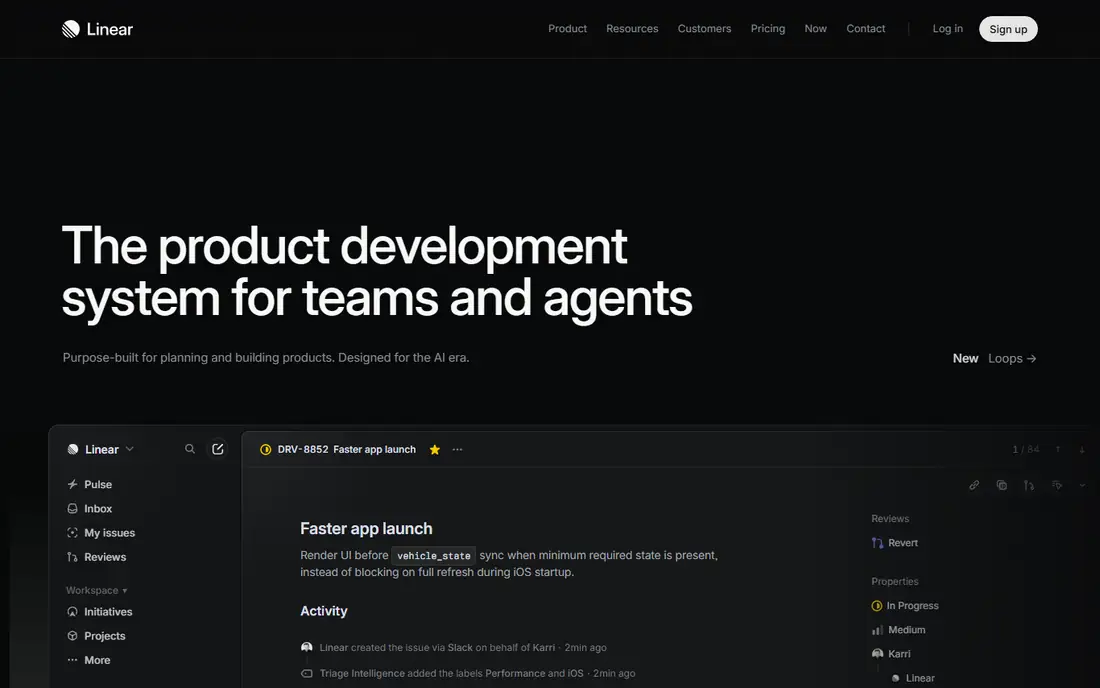
Linear is the closest Shortcut replacement for an engineering team. It is a keyboard-first issue tracker with issues, projects, cycles, roadmaps, triage and analytics, and its AI converts customer feedback into structured tickets, triages bugs and runs coding agents inside issue threads. Basic at $10 a user a month billed yearly includes unlimited issues, five teams and admin roles. Business at $16 adds unlimited teams, private teams, guests, Linear Insights, Asks and triage intelligence. The free plan covers unlimited members but only 250 issues, which a busy team hits fast. The weakness is scope: Linear is an issue tracker, not a general project tool, so docs live elsewhere and time tracking needs an integration.
What we like- Very fast, keyboard-first interface, cycles that work like Shortcut iterations, AI triage and coding agents, deep GitHub integration
Watch out for- The free plan caps at 250 issues, private teams and guests need Business at $16 a user a month, and it has no built-in docs or time tracking
#2Jira
Best for: Large or regulated teams that need deep customisation and formal workflows4.3/5 on
G2 (7,984 reviews, checked Oct 2026)
Visit atlassian.com
Starting price$9.70 per user per month (Standard, users 1 to 100, monthly billing; annual plans sold by user tier)
Free planYes. Free plan for up to 10 users.
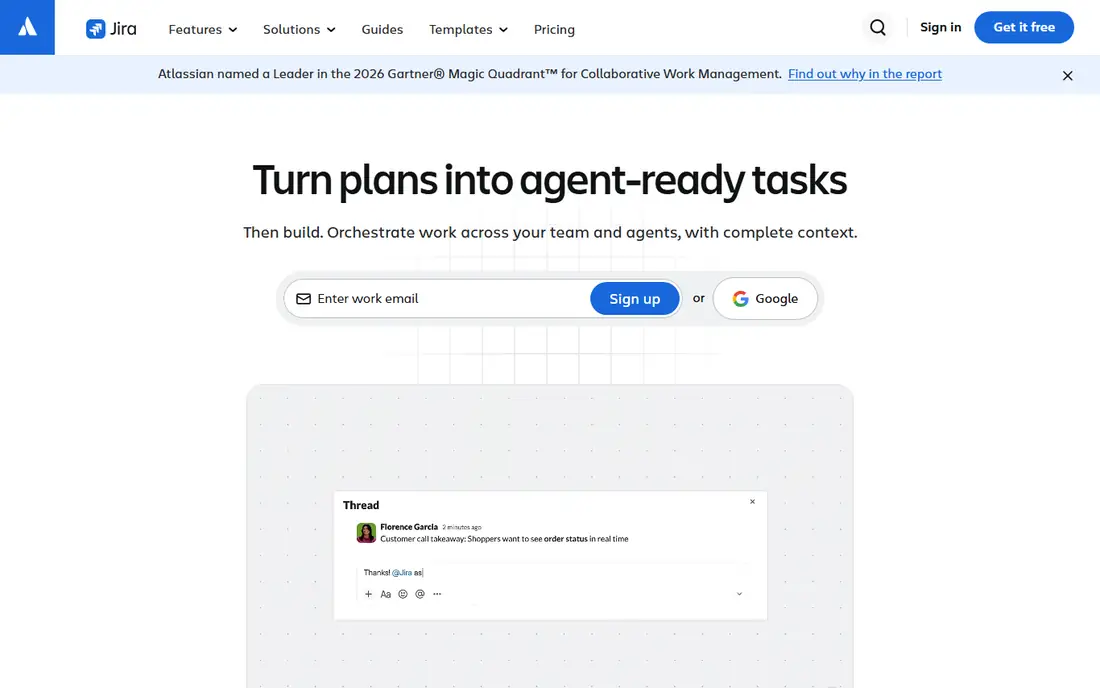
Jira is the enterprise Shortcut alternative. Standard at $9.70 a user a month for the first 100 users on monthly billing includes user roles and permissions, 250 GB of storage, 400 automation steps a user a month and Rovo AI credits. Premium at $19.60 adds cross-team planning, unlimited storage, 750 automation steps and 24/7 support for critical issues. Atlassian raised Jira cloud prices on 13 Oct 2026, so older guides that quote $7.75 or $7.91 for Standard are out of date. The free plan covers up to 10 users. The drawback is complexity: Jira is powerful but heavy, with a marketplace of apps that can add cost, and its interface is slower than Shortcut or Linear. For a small team, Jira is more tool than needed.
What we like- Powerful custom workflows, Scrum and Kanban boards, huge marketplace of apps, cross-team planning on Premium
Watch out for- Prices are banded, so the per-user rate changes with team size, and the interface is heavier and slower than Shortcut or Linear
#3Asana
Best for: Teams that need projects, portfolios and timelines beyond engineering4.4/5 on
G2 (13,930 reviews, checked Oct 2026)
Visit asana.com
Starting price$10.99 per user per month, billed yearly (Starter; $13.49 billed monthly)
Free planYes. Personal plan free for up to two users, with unlimited tasks and projects.
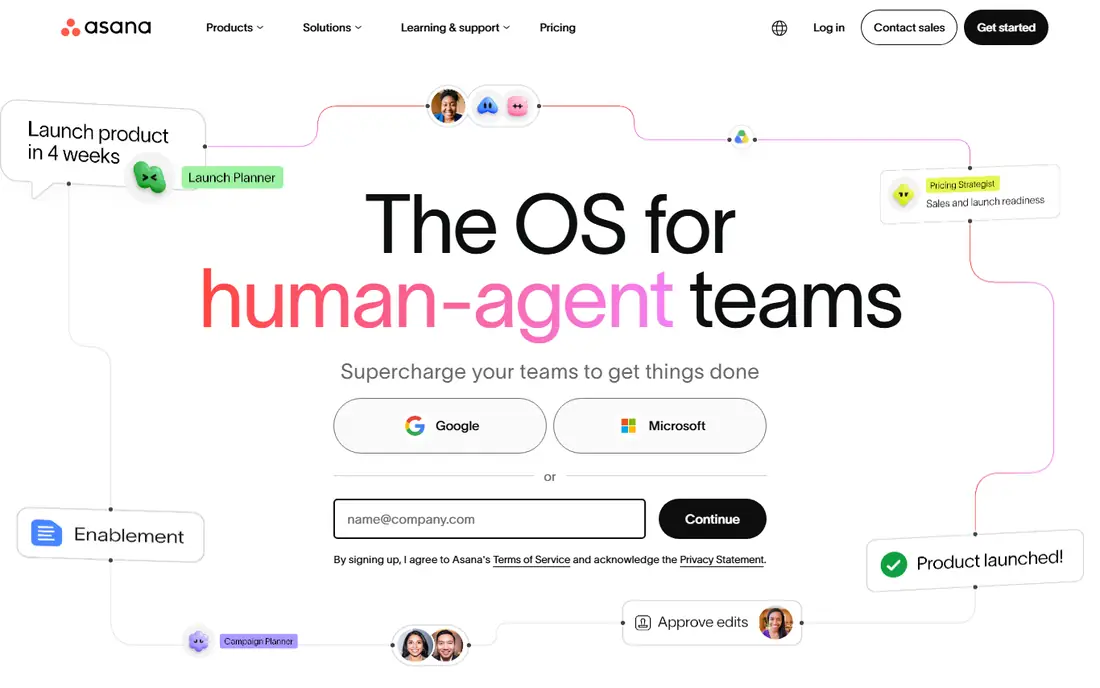
Asana is the safest Shortcut replacement for a whole company, not just engineering. Starter at $10.99 a user a month billed yearly adds timeline and Gantt views, dashboards, forms, custom fields, unlimited automations and unlimited free guests. Advanced at $24.99 adds portfolios, goals, workload, approvals and proofing, native time tracking and formulas. The AI layer, with AI Teammates and AI Studio credits, is included on paid plans. The drawback is the seat math: Asana sells seats in set increments, and the free Personal plan covers only two people, so even a three-person team pays. Advanced is also more than double the price of Starter, and the features that make Asana feel finished, like workload and portfolios, live there. For a team that used Shortcut across departments, Asana is the most complete replacement.
What we like- Timeline and Gantt views, portfolios and goals, unlimited automations, strong reporting and unlimited free guests
Watch out for- The free plan stops at two users, so a team of three pays from the start, and the useful portfolio and workload features need Advanced at $24.99 a user a month
#4ClickUp
Best for: Teams that want the most features per dollar, with docs, goals and time tracking included4.6/5 on
G2 (14,878 reviews, checked Oct 2026)
Visit clickup.com
Starting price$9 per user per month, billed yearly (Core; $12 billed monthly)
Free planYes. Free Forever plan with unlimited members and tasks, 60 MB of storage.
ClickUp is the value pick among Shortcut alternatives. Core at $9 a user a month billed yearly includes unlimited storage, spaces, Gantt charts and integrations, and Business at $17 adds advanced dashboards, 10,000 automations a month, timesheets and private views. The free plan is unusually generous, with unlimited members and tasks, although storage is capped at 60 MB. ClickUp also keeps the old Unlimited line at $7 a user a month for existing workspaces, but new signups are offered the Core line at $9. The drawback is the AI pricing: Brain AI costs $9 a user a month on top of the plan, so a Business seat with full AI is $26 a user a month, and the interface can feel crowded because ClickUp tries to replace docs, chat, goals and time tracking in one place.
What we like- Docs, goals, time tracking, whiteboards and chat in one tool, generous free plan, strong automations and sprint support
Watch out for- AI is a separate add-on, Brain AI at $9 a user a month, and the interface can feel crowded because it tries to do everything
#5Trello
Best for: Small teams that want a simple, visual Kanban board for sprints4.4/5 on
G2 (14,064 reviews, checked Oct 2026)
Visit trello.com
Starting price$5 per user per month, billed yearly (Standard; $6 billed monthly)
Free planYes. Free plan with up to 10 collaborators per Workspace and 10 open boards.
Trello is the simplest Shortcut alternative, and the cheapest. Standard at $5 a user a month billed yearly adds unlimited boards and collaborators, custom fields, advanced checklists, card mirroring and 1,000 automation runs a month. Premium at $10 adds calendar, timeline, table, dashboard and map views, unlimited automation and admin controls. Enterprise at $17.50 a user a month billed yearly needs at least 50 seats. The free plan covers up to 10 collaborators and 10 open boards, which fits a small team. The drawback is the sprint gap: Trello has no native story points or sprint reporting, so a team that runs proper Scrum needs Premium views or a power-up. For a team that runs Kanban in Shortcut and does not need estimation or burndown charts, Trello is the best value in this list.
What we like- The simplest board in this list, cheap Standard plan, Butler automations, strong mobile apps
Watch out for- No native story points or sprint reporting on Standard, timeline and calendar views need Premium at $10 a user a month, and the free plan caps at 10 collaborators
#6Basecamp
Best for: Teams that want flat pricing and a simple mix of boards, to-dos and chat4.1/5 on
G2 (5,488 reviews, checked Oct 2026)
Visit basecamp.com
Starting price$29 per month, flat (Freelancer; up to 5 users, 3 active projects)
Free planYes. Free plan with 1 project, 1 GB of storage and 3 users.
Basecamp is the flat-priced Shortcut alternative. It charges per account, not per user: Freelancer at $29 a month covers 3 active projects and up to 5 users, Pro at $79 covers 8 projects and 10 users, Pro Plus at $99 covers 12 projects and 15 users, and Pro Unlimited at $199 a month billed yearly covers unlimited projects and users. No plan charges per user, and the old $15 a user and $299 flat figures in older guides are out of date. Basecamp organises work around message boards, to-do lists, schedules, files and chat, which suits client work and simple projects. The drawback is the missing engineering features: there are no sprints, no story points and no Gantt charts, so a team that runs Scrum in Shortcut will feel the gap. For a team that wants simple project work with clients at a flat price, Basecamp is the best fit here.
What we like- Flat pricing with no per-seat fees, message boards, to-dos, schedules and files in one place, clients count as users within the cap
Watch out for- No sprints, no story points and no Gantt charts, and the user caps mean the sixth person moves you from $29 to $79 a month
#7monday.com
Best for: Teams that want visual boards, automations and dashboards without setup work4.7/5 on
G2 (17,182 reviews, checked Oct 2026)
Visit monday.com
Starting price$9 per seat per month, billed yearly (Basic; $12 billed monthly)
Free planYes. Free plan for up to two seats.
monday.com is the most visual Shortcut alternative, built around boards, columns and colour-coded status. Basic at $9 a seat a month billed yearly gives unlimited boards and 5 GB of storage, but no automations and no integrations, which defeats the purpose for most teams. Standard at $12 adds 250 automations and integrations a month, timeline and Gantt views, and a calendar. Pro at $19 adds time tracking, 25,000 automations and integrations a month and private boards. The pricing quirk is the seat bucket: paid plans start at three seats and are sold in multiples of five, so a four-person team pays for five seats. For a team that used Shortcut for engineering sprints, monday.com feels different, because it is a board tool first and an issue tracker second.
What we like- Colourful visual boards, 250 automations a month on Standard, timeline and Gantt views, strong templates
Watch out for- Basic has no automations or integrations at all, so Standard at $12 a seat a month is the real entry price, and seats are sold in buckets with a three-seat minimum
#8Notion
Best for: Teams that want docs, wikis and tasks in one flexible workspace4.6/5 on
G2 (13,834 reviews, checked Oct 2026)
Visit notion.com
Starting price$10 per member per month, billed yearly (Plus; $12 billed monthly)
Free planYes. Free plan for solo use with unlimited pages.
Notion is the flexible Shortcut alternative. Plus at $10 a member a month billed yearly adds unlimited file uploads, 30-day page history, custom sites and forms, charts and unlimited guests. Business at $20 adds full Notion AI, including the Agent, AI Meeting Notes and Enterprise Search, plus SAML SSO and private teamspaces. The free plan covers solo use with unlimited pages. The drawback is the AI gate: the full AI suite only comes with Business, so a team that wants AI help pays double the Plus price, with no AI add-on on Plus to fill the gap. Notion is also a general workspace, not a dedicated issue tracker, so sprint planning, story points and burndown charts need database setup work. For a team that used Shortcut for specs, docs and tasks together, Notion is the best replacement.
What we like- Flexible databases, docs and wikis in one place, strong templates, AI included on Business
Watch out for- Full AI, including the Notion Agent and AI Meeting Notes, needs Business at $20 a member a month, and it has no native time tracking or sprint reporting
How we picked these alternatives
We checked each vendor pricing page on 15 Nov 2026, and we used the annual billing rate where the vendor lists one. Shortcut prices were read from its pricing page on 13 Nov 2026, Linear from linear.app/pricing on 19 Oct 2026, Jira on 10 Nov 2026, Asana on 6 Nov 2026, ClickUp on 5 Nov 2026, Trello on 2 Sep 2026, Basecamp on 10 Nov 2026, monday.com on 14 Nov 2026 and Notion on 12 Oct 2026. Prices change, so confirm the current figure on the vendor page before you pay. Last verified: 15 Nov 2026.
Frequently asked questions
Is Shortcut still available?
Yes. Shortcut is a live product, formerly Clubhouse before the September 2021 rebrand, and it sells Free, Team, Business and Enterprise plans. This guide is for teams that want a different workflow, a lower price or stronger AI, not because Shortcut closed. Do not confuse Shortcut with Height, which did shut down on 24 Sep 2025.
What is the closest alternative to Shortcut?
Linear is the closest match for engineering teams, because it shares Shortcut speed, keyboard-first issue tracking and sprint cycles, with better AI triage. Jira is the closest match for teams that need deep customisation. Trello is the closest match for teams that only use Kanban boards.
Which Shortcut alternative is cheapest?
Trello Standard at $5 a user a month billed yearly is the cheapest per-seat plan in this list. Basecamp Freelancer at $29 a month flat is cheaper still for a team of five, because the price does not rise per person. Linear Basic at $10 a user a month is the cheapest option that matches Shortcut engineering workflow properly.
Can I migrate my Shortcut stories to another tool?
Most of these tools accept CSV import, including Asana, ClickUp, Jira, monday.com and Trello. Shortcut exports stories, epics and iterations, so map the columns for title, status, assignee, labels and due date during import. Test the import with a small batch before you move the whole workspace, and check that story points carry over.
Which Shortcut alternative has the best GitHub integration?
Linear has the strongest GitHub integration in this list, with pull requests linked to issues, branch names and status sync. Jira also links pull requests and branches, with deeper reporting through its marketplace apps. Trello and monday.com link to GitHub through integrations, but the link is lighter than Linear or Jira.
Sources we checked (9)
- https://shortcut.com/pricing
- https://linear.app/pricing
- https://www.atlassian.com/software/jira/pricing
- https://asana.com/pricing
- https://clickup.com/pricing
- https://trello.com/pricing
- https://basecamp.com/pricing
- https://monday.com/pricing
- https://www.notion.com/pricing
Is your product missing or out of date?
We review this list regularly. Vendors can request a listing, send updated pricing or ask about featured placement.

Shihab Mia · Founder, Rankite
Shihab has 5+ years in B2B and SaaS SEO. He writes Rankite's software buying guides from pricing pages, documentation and public user reviews. More about Shihab.