How we make this list: we compare pricing pages, product documentation and public user reviews. Ratings come from G2, Capterra or Trustpilot, with the date we checked them.
Key takeaways
- Xero costs $27 to $97 per month, while Sage Intacct is quote only, with third-party ranges at $10,000 to $35,000 per year.
- Sage Intacct is built for companies with several entities, while Xero is built for one small business at a time.
- Sage Intacct fits companies above roughly $4 million in revenue or with 20 or more employees, according to the vendor.
- QuickBooks Online is the practical middle step for businesses that have outgrown Xero but are not ready for Sage Intacct.
- NetSuite is the step after Sage Intacct, for companies that also need ERP, inventory and CRM in one system.
Which is better, Sage Intacct or Xero?
Xero is better for most small businesses, and Sage Intacct is better for larger, multi-entity companies. The two products serve different stages of a business, so the right answer depends on how many entities you run and how complex your reporting has become. Xero gives a small team invoicing, bank reconciliation, expense claims and payroll add-ons in a clean interface that a non-accountant can learn in a week. Sage Intacct gives a finance team dimensions, consolidations and audit trails, and expects trained users. A business with one entity, under $4 million in revenue and a handful of users gets more value from Xero at $97 a month than from a platform that costs ten times as much. A business with five subsidiaries and intercompany transactions will find Xero's reporting too thin, and that is where Sage Intacct earns its price.
How much does Sage Intacct cost compared with Xero?
Xero is far cheaper, and the gap is large enough to decide the question for most buyers. Xero's top plan, Established, costs $97 per month ($1,164 per year) and covers unlimited users, multi-currency, project tracking and expense claims. Sage Intacct does not publish a price, and third-party planning ranges put a typical deployment at $10,000 to $35,000 per year before implementation, which is roughly 9 to 30 times the cost of Xero Established. A worked example makes the gap concrete. Take a 10-person business with one entity and 200 invoices a month. On Xero Established it pays $1,164 a year, with no implementation fee and no per-user charge. The same business on Sage Intacct would pay a five-figure annual subscription plus an implementation project that the vendor says takes 3 to 6 months.
What should a growing business look for before choosing?
A growing business should look for multi-entity support, dimensional reporting, audit trails and price transparency before choosing. Multi-entity support matters because consolidating five companies in spreadsheets is the work that breaks a small-business tool first. Dimensional reporting matters because tagging every transaction by department, location, customer and project replaces a chart of accounts with hundreds of lines. An audit trail matters once an external accountant or auditor asks who changed a number and when. Price transparency matters because a quote-only product can double in cost at renewal without a published list to check it against. Integration depth matters too: Xero connects to more than 1,000 apps, while Sage Intacct connects deeply to Salesforce and payroll systems.
When does it make sense to move from Xero to Sage Intacct?
It makes sense to move when consolidations, revenue recognition or audit requirements start taking more time than the accounting itself. The clearest triggers are running three or more entities, closing the books across subsidiaries every month, recognising revenue on multi-year contracts, or preparing for an audit that needs a full trail of who posted, approved and changed each entry. Headcount is another trigger: past 20 finance staff, the approval chains and role-based permissions in Sage Intacct start to pay for themselves. If none of those triggers apply, the move is premature, and QuickBooks Online or a Xero add-on will cover the gap for far less money.
Quick comparison
| Tool | Best for | Starting price | Free plan |
|---|
 Sage Intacct | Multi-entity companies that need dimensional reporting, consolidations and audit trails | Quote only; third-party planning ranges put a typical deployment at $10,000 to $35,000 per year | None; demo available on request |
 Xero | Small businesses that want simple cloud accounting with unlimited users at a published price | Early $27 per month, Growing $59 per month, Established $97 per month, after the 1 October 2026 price rise | None; 30-day free trial |
 QuickBooks Online | Growing businesses that need stronger reporting than Xero without moving to a mid-market ERP | Solopreneur $20 per month, Simple Start $38, Essentials $85, Plus $140, Advanced $340, after the 1 August 2026 rise; 70 percent off for 3 months until 29 November 2026 | None; 30-day free trial |
 NetSuite | Companies that need accounting, inventory, CRM and ERP in one system | Quote only | None |
 FreshBooks | Freelancers and service businesses that invoice by the hour and track time | Lite $23 per month, Plus $43, Premium $70, from 5 March 2026; annual billing $248.40, $464.40 and $756 | None; 30-day free trial |
 Zoho Books | Small businesses already using Zoho apps that want accounting at a low price | Free $0 under $50,000 revenue; Standard $20 per month ($15 annual), Professional $50 ($40), Premium $70 ($60), Elite $150 ($120), Ultimate $275 ($240) | Yes, free under $50,000 annual revenue |
 Wave | Very small businesses and sole traders that want accounting for free | Starter $0 per month, Pro $19 per month or $190 per year; Payroll $40 per month plus $6 per person; bookkeeping from $149 per month | Yes, Starter is free |
 FreeAgent | Freelancers and small UK businesses, especially those banking with NatWest, RBS, Ulster Bank or Mettle | US $10 per month for 6 months then $20 per month | Free with NatWest, Royal Bank of Scotland, Ulster Bank and Mettle business accounts in the UK; 30-day free trial elsewhere |
Is your product missing or out of date?
We review this list regularly. Vendors can request a listing, send updated pricing or ask about featured placement.
#1Sage Intacct
Best for: Multi-entity companies that need dimensional reporting, consolidations and audit trails4.3/5 on
G2 (4,521 reviews, checked Oct 2026)
Visit sageintacct.com
Starting priceQuote only; third-party planning ranges put a typical deployment at $10,000 to $35,000 per year
Free planNone; demo available on request

Sage Intacct is the finance system a company buys when spreadsheets and small-business ledgers stop keeping up. Its core idea is dimensions: instead of building a chart of accounts with hundreds of lines, you tag each transaction with the department, location, project, customer and employee it belongs to, and then you cut reports any way the board asks. Consolidations across entities, intercompany eliminations and revenue recognition for subscription contracts are built in rather than bolted on, and every entry carries a full audit trail. The vendor positions it for companies above roughly $4 million in revenue or with 20 or more employees, and that positioning is honest.
What we like- Dimensional general ledger tags every transaction by department, location, project and customer
- Multi-entity consolidations and intercompany eliminations are built in
- Strong audit trail and role-based approvals
- Deep Salesforce and payroll integrations
Watch out for- Quote-only pricing hides the true cost until a sales conversation
- Implementation typically takes 3 to 6 months
- Needs trained finance staff, so a small team will underuse it
- Annual subscription only, with no monthly option published
#2Xero
Best for: Small businesses that want simple cloud accounting with unlimited users at a published price4.4/5 on
G2 (1,832 reviews, checked Oct 2026)
Visit xero.com
Starting priceEarly $27 per month, Growing $59 per month, Established $97 per month, after the 1 October 2026 price rise
Free planNone; 30-day free trial
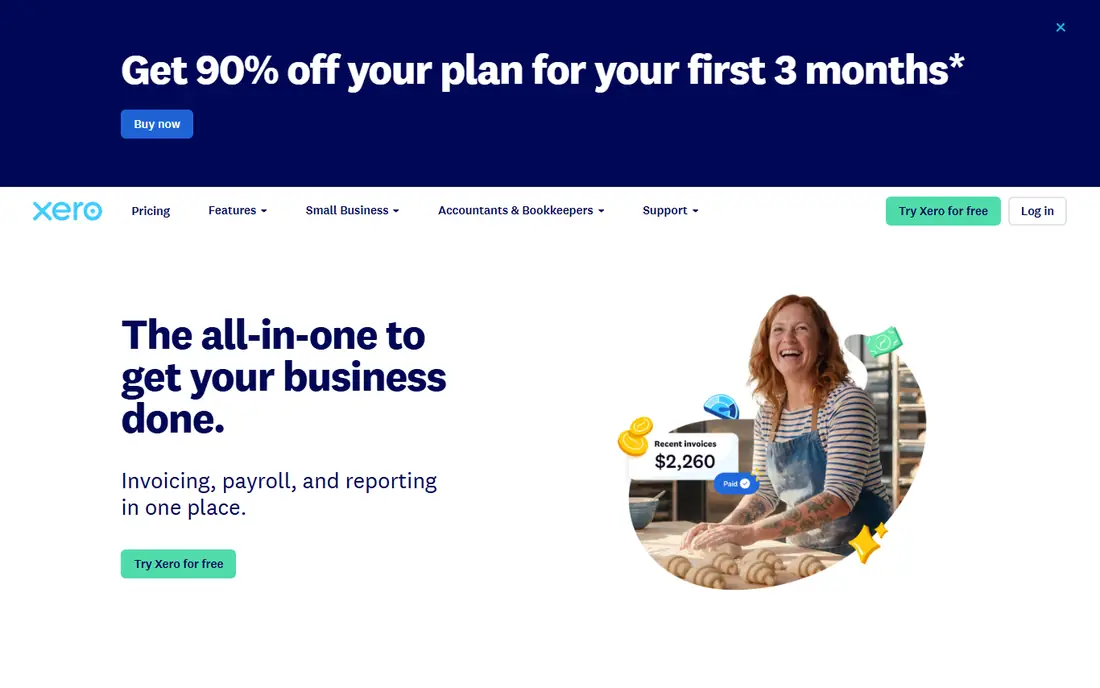
Xero is the default cloud ledger for small businesses that want the books done without hiring a bookkeeper to run the software. Invoicing, bank feeds, reconciliation, expense claims and quotes all sit in one dashboard, and because there is no per-user fee, the owner, the bookkeeper and the accountant can all work in the same file at the same time. The Established plan at $97 a month adds multi-currency, project tracking and expense claims. The limit shows up when a business adds a second entity or needs consolidated reporting, because Xero is built around one company file.
What we like- No per-user fees on any plan, so the whole team can log in
- Clean interface that non-accountants learn quickly
- More than 1,000 app integrations
- Multi-currency and project tracking on the top plan
Watch out for- Reporting is thin for multi-entity groups, with no built-in consolidations
- Payroll is an add-on in many regions rather than built in
- Inventory tracking is basic
- Support is online only, with no phone line on lower plans
#3QuickBooks Online
Best for: Growing businesses that need stronger reporting than Xero without moving to a mid-market ERP4.0/5 on
G2 (3,871 reviews, checked Oct 2026)
Visit quickbooks.intuit.com
Starting priceSolopreneur $20 per month, Simple Start $38, Essentials $85, Plus $140, Advanced $340, after the 1 August 2026 rise; 70 percent off for 3 months until 29 November 2026
Free planNone; 30-day free trial
It keeps the small-business simplicity of invoicing and bank feeds, then adds the reporting depth that growing companies ask for first: class and location tracking, project profitability, inventory on the Plus plan, and batch transactions on Advanced. The August 2026 price rise moved Plus to $140 a month and Advanced to $340, which is still far below Sage Intacct, and the 70 percent discount for three months softens the first bill. The trade-off is per-user pricing and a busier interface, but for a business with one entity and a finance team of five to twenty people, it is usually the right next step.
What we like- Widest accountant familiarity of any small-business ledger, so help is easy to find
- Plus adds inventory, project profitability and class tracking
- Advanced adds batch transactions, custom roles and dedicated support
- Large app marketplace
Watch out for- Prices rose sharply in August 2026, and older $75, $115 and $275 reads are now stale
- Per-user fees climb fast on higher plans
- The interface can feel crowded as features pile up
- Payroll is a paid add-on
#4NetSuite
Best for: Companies that need accounting, inventory, CRM and ERP in one system4.1/5 on
G2 (4,963 reviews, checked Oct 2026)
Visit netsuite.com
Starting priceQuote only
Free planNone
NetSuite is the step after Sage Intacct, for companies whose problem is no longer just accounting. It combines the general ledger with inventory, order management, CRM, procurement and HR, so a business that sells products, holds stock and manages a sales team can run the whole operation on one database instead of stitching five tools together. Multi-subsidiary consolidations and multi-currency are native. The cost is the catch: everything is quoted, implementation runs for months, and a small team will pay for breadth it never touches.
What we like- Full ERP scope covers financials, inventory, order management, CRM and HR in one database
- Strong multi-subsidiary consolidations and multi-currency
- Large partner network for implementation
- Scales from mid-market to enterprise
Watch out for- Quote-only pricing means the cost is unknown until a sales process
- Implementation is a project measured in months, not days
- The interface is dense and needs training
- Small teams pay for ERP breadth they never use
#5FreshBooks
Best for: Freelancers and service businesses that invoice by the hour and track time4.5/5 on
G2 (981 reviews, checked Oct 2026)
Visit freshbooks.com
Starting priceLite $23 per month, Plus $43, Premium $70, from 5 March 2026; annual billing $248.40, $464.40 and $756
Free planNone; 30-day free trial
FreshBooks is built for people who sell their time. Invoicing takes minutes, time tracking feeds straight into the invoice, and automatic late-payment reminders chase clients so the owner does not have to. Underneath the simple interface sits real double-entry accounting, so the books stay correct without the owner thinking about debits and credits. The March 2026 prices put Lite at $23 a month, Plus at $43 and Premium at $70, with annual billing cutting roughly 10 percent. The limits are clear: no inventory, no multi-entity consolidation and no built-in payroll.
What we like- Fastest invoicing workflow of any tool here, with time tracking built in
- Client portal and late-payment reminders reduce chasing
- Double-entry accounting runs quietly underneath
- Good mobile app
Watch out for- No inventory management to speak of
- Limited multi-entity and consolidation support
- Payroll is not built in
- The Lite plan caps billable clients at 5
#6Zoho Books
Best for: Small businesses already using Zoho apps that want accounting at a low price4.4/5 on
G2 (329 reviews, checked Oct 2026)
Visit zoho.com
Starting priceFree $0 under $50,000 revenue; Standard $20 per month ($15 annual), Professional $50 ($40), Premium $70 ($60), Elite $150 ($120), Ultimate $275 ($240)
Free planYes, free under $50,000 annual revenue
Zoho Books is the value pick for a business already inside the Zoho world. The free plan covers businesses under $50,000 in annual revenue, and the paid plans start at $15 a month on annual billing, which is the lowest entry price in this comparison. Invoicing, expense tracking, bank feeds, inventory and a client portal are all included, and the integration with Zoho CRM and Zoho Inventory is genuinely tight. The trade-offs are reporting depth and ecosystem breadth: it cannot match QuickBooks Online for accountant familiarity or third-party apps, and the free plan ends as soon as revenue grows.
What we like- Genuine free plan for very small businesses
- Tight integration with Zoho CRM, Inventory and People
- Workflow automation and client portal included
- Lowest paid starting price in this list
Watch out for- The free plan ends once revenue passes $50,000
- Reporting is weaker than QuickBooks Online
- Third-party integrations outside Zoho are thinner
- Support response times vary by plan
#7Wave
Best for: Very small businesses and sole traders that want accounting for free4.3/5 on
G2 (328 reviews, checked Oct 2026)
Visit waveapps.com
Starting priceStarter $0 per month, Pro $19 per month or $190 per year; Payroll $40 per month plus $6 per person; bookkeeping from $149 per month
Free planYes, Starter is free
Wave is the free starting point for a sole trader or a two-person business. The Starter plan costs nothing and covers invoicing, accounting, receipt scanning and bank connections. Pro at $19 a month adds unlimited receipt scanning, no ads and priority support, while payroll costs $40 a month plus $6 per person. The limits are honest: there is no inventory, reporting is basic, and integrations outside North America are thin. For a business with no employees and simple books, Wave is the cheapest correct answer.
What we like- Real free plan with invoicing, accounting and receipt scanning
- No per-user fees
- Simple enough for a sole trader with no accounting background
- Payroll add-on is straightforward
Watch out for- No inventory management
- Reporting is basic compared with paid ledgers
- Limited integrations outside North America
- Paid bookkeeping service is a separate cost that adds up
#8FreeAgent
Best for: Freelancers and small UK businesses, especially those banking with NatWest, RBS, Ulster Bank or Mettle4.3/5 on
G2 (45 reviews, checked Oct 2026)
Visit freeagent.com
Starting priceUS $10 per month for 6 months then $20 per month
Free planFree with NatWest, Royal Bank of Scotland, Ulster Bank and Mettle business accounts in the UK; 30-day free trial elsewhere
FreeAgent is the quiet favourite of UK freelancers, and the reason is simple: it is free if you bank with NatWest, Royal Bank of Scotland, Ulster Bank or Mettle. The product itself is built around UK tax, with self-assessment, VAT and Corporation Tax handled in plain language, and invoicing, expenses and time tracking are all included. In the US it costs $10 a month for six months and then $20, which is still cheap, but the tax features are UK-first. The limits are the usual ones for a freelancer tool: no inventory, simple reporting and no multi-entity support.
What we like- Built around UK tax, including self-assessment and VAT
- Free for customers of four major UK banks
- Simple invoicing, expenses and time tracking
- Good mobile app for on-the-go capture
Watch out for- UK-focused, so US tax features are thinner
- No inventory management
- Reporting is simpler than QuickBooks Online
- The free bank deal does not apply outside the UK
Comparison table
| Tool |
Best for |
Starting price |
Free plan |
| Sage Intacct |
Multi-entity companies needing dimensional reporting |
Quote only |
None |
| Xero |
Small businesses wanting simple cloud accounting |
$27 per month |
None, 30-day trial |
| QuickBooks Online |
Growing businesses between Xero and mid-market ERP |
$20 per month |
None, 30-day trial |
| NetSuite |
Companies needing accounting plus ERP in one system |
Quote only |
None |
| FreshBooks |
Freelancers and service businesses invoicing by the hour |
$23 per month |
None, 30-day trial |
| Zoho Books |
Small businesses already using Zoho apps |
$0 under $50,000 revenue |
Yes |
| Wave |
Very small businesses and sole traders |
$0 |
Yes |
| FreeAgent |
UK freelancers and small businesses |
$10 per month for 6 months, then $20 |
Free with four UK banks |
Frequently asked questions
Is Sage Intacct better than Xero?
Sage Intacct is better for multi-entity companies that need consolidations, dimensional reporting and audit trails, while Xero is better for single-entity small businesses. The two products serve different stages, so the better choice is the one that matches your entity count and reporting complexity. A business with one entity and a small finance team will get more value from Xero at $97 a month than from a platform that costs ten times as much.
How much does Sage Intacct cost per month?
Sage Intacct does not publish a monthly price, and buyers must request a quote. Third-party planning ranges put a typical deployment at $10,000 to $35,000 per year, which works out to roughly $830 to $2,900 per month before implementation costs. Compare that with Xero Established at $97 per month, and the scale of the difference is clear.
Can Xero handle multiple companies?
Xero handles multiple companies only as separate subscriptions, with no built-in consolidation. Each entity needs its own Xero organisation and its own monthly fee, and consolidated reporting has to be built in a spreadsheet or an add-on. That works for two or three small entities, but it breaks down once intercompany transactions and monthly consolidations become routine. Sage Intacct and NetSuite consolidate entities inside one system.
Should I move from Xero to QuickBooks Online first?
Yes, for most businesses QuickBooks Online is the right step before Sage Intacct. It adds class tracking, project profitability, inventory and batch transactions without a multi-month implementation or a five-figure subscription. The Plus plan at $140 a month covers a business with one entity and a finance team of five to twenty people. Move to Sage Intacct only when consolidations or revenue recognition force the change.
Does Sage Intacct integrate with Salesforce?
Yes, Sage Intacct integrates deeply with Salesforce, and the connection is one of its selling points. Quotes and orders in Salesforce can flow into billing and revenue recognition in Sage Intacct without retyping, and the integration supports multi-entity setups. Xero connects to Salesforce through third-party apps, but the connection is lighter.
How we picked
We picked the eight tools by starting with the two products in the keyword, then adding the platforms buyers most often compare against them: QuickBooks Online and NetSuite for the step up, and FreshBooks, Zoho Books, Wave and FreeAgent for smaller businesses. Prices were checked against vendor pricing pages and vendor-published reads on 20 November 2026.
Last verified: 20 November 2026
Sources we checked (8)
- https://www.sageintacct.com
- https://www.xero.com
- https://quickbooks.intuit.com
- https://www.netsuite.com
- https://www.freshbooks.com
- https://www.zoho.com/books
- https://www.waveapps.com
- https://www.freeagent.com
Is your product missing or out of date?
We review this list regularly. Vendors can request a listing, send updated pricing or ask about featured placement.

Shihab Mia · Founder, Rankite
Shihab has 5+ years in B2B and SaaS SEO. He writes Rankite's software buying guides from pricing pages, documentation and public user reviews. More about Shihab.